Your Guide to the 21 Day No Sugar Challenge
So, you're thinking about taking on a 21 day no sugar challenge. What does that actually mean? It’s all about cutting out added sugars and sweeteners for three weeks to basically reset your body's palate and build some healthier habits.
People who do this often see changes surprisingly fast. Within the first week, it's common to feel less bloated and even see a little weight loss. By the end of the three weeks, many report having way more stable energy and even clearer skin. Think of it as a powerful reset button that helps you break the cycle of sugar cravings and mindless snacking.
What Really Happens When You Quit Sugar
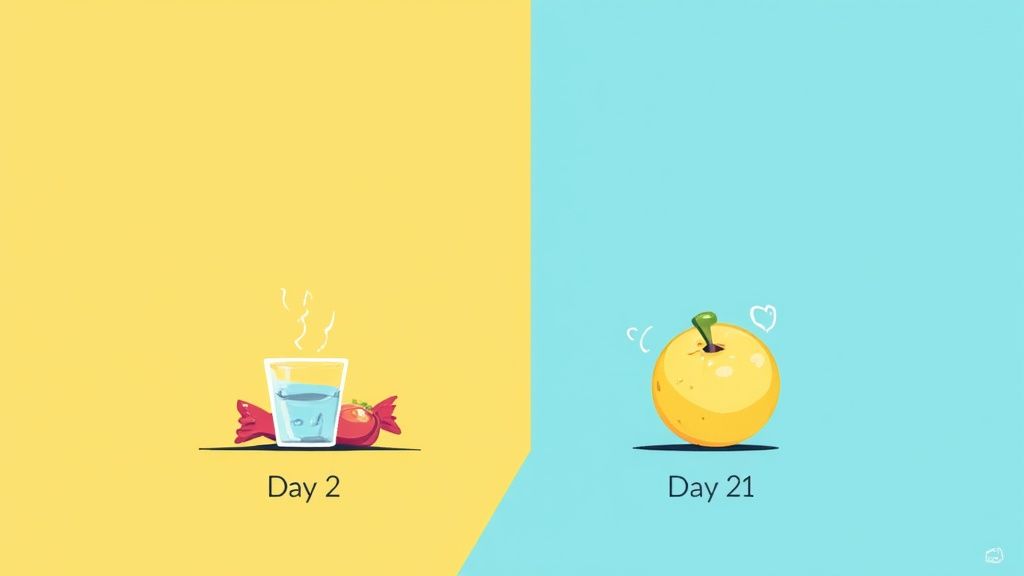
Going sugar-free for 21 days is a real commitment, but knowing what's coming can make a huge difference. This isn't just about willpower; it’s about understanding the real, physical changes your body goes through as it adapts.
Let’s be honest, the first few days can be tough. As your body goes through a sugar detox, you might get hit with headaches, feel a bit cranky, or experience some brain fog. This is totally normal—it's a lot like caffeine withdrawal. Your system is just recalibrating how it gets its energy.
The Initial Physical Response
One of the first things you'll likely notice is a major reduction in bloating. It's an almost immediate and very motivating change. When you stop eating processed sugars and refined carbs, your body lets go of a lot of excess water it was retaining. This makes you feel lighter right away and often leads to some quick initial weight loss.
For example, it's not unusual to drop about five pounds in the first few days alone. Over the full 21 days, it’s common for people to lose anywhere from 5 to 15 pounds, which is a combination of that initial water weight and some fat loss. If you want a more detailed look at what to expect, you can explore more about no-sugar weight loss expectations.
The biggest shift isn't just physical; it's psychological. You start to recognize how often you reached for sugar out of habit, boredom, or stress, rather than actual hunger. This awareness is the foundation for lasting change.
The Mental and Sensory Shift
Besides what you see on the scale, one of the most incredible changes happens to your taste buds. After about a week, your palate starts to reset. All of a sudden, fruits like strawberries or blueberries taste intensely sweet and delicious. This natural recalibration makes you appreciate whole foods more and dials down the craving for super-sugary snacks.
This change comes with a few other amazing perks:
- Steady Energy Levels: No more sugar highs and lows. Your energy becomes much more consistent, and that dreaded 3 PM slump often vanishes completely.
- Improved Mood and Focus: Blood sugar swings can wreak havoc on your mood and concentration. With stable glucose levels, you’ll likely feel more mentally clear and emotionally balanced.
- Better Sleep Quality: So many people find they sleep deeper and wake up more refreshed once they cut out sugar, especially if they were used to having it in the evening.
A Realistic Timeline for Your No Sugar Challenge
Here is a quick summary of the physical and mental shifts you can anticipate during each phase of the 21 days. It’s a journey with distinct stages, each with its own challenges and rewards.
| Challenge Phase | What You Can Expect to Feel |
|---|---|
| Days 1-3 (The Detox) | Cravings are at their peak. You might feel irritable, tired, or have a headache. It's a real detox. |
| Days 4-7 (Turning a Corner) | The worst is usually over. Cravings lessen, and you'll notice less bloating and more stable energy. |
| Days 8-14 (Finding Your Groove) | Your taste buds are resetting. Natural foods taste sweeter, and you'll feel sharper and more focused. |
| Days 15-21 (The New Normal) | Sugar cravings are mostly gone. You're sleeping better, your skin may look clearer, and this feels sustainable. |
Seeing the journey laid out like this can help you prepare for the ups and downs. This experience is a powerful way to see just how much sugar was impacting your life, from your physical health to your mental sharpness.
Why Bother with a Sugar Detox?
Let's be honest, we're swimming in a sea of sugar. It’s not just in the obvious places like cookies and soda. Sugar has quietly crept into just about everything we eat, from the bread for our sandwiches to the pasta sauce for dinner. Understanding this is the first step to seeing why a 21-day no sugar challenge isn't just a fad—it's almost a necessity today.
The numbers are pretty shocking. One study found that in the U.S. alone, there are over 69 kilograms (that's about 153 pounds!) of added sugars and sweeteners available for every single person, every year. That constant overload is directly linked to some of our biggest health problems, like obesity and heart disease. If you're curious about the data, you can read the full research on sugar consumption and health risks yourself.
How Sugar Messes with Your Health
It's not just about empty calories. When you're eating that much sugar, it sets off a chain reaction inside your body that can do some real damage over time.
Here's a quick look at what's happening under the hood:
- Insulin Resistance: Every time you eat sugar, your body releases insulin to manage it. Do this too often, and your cells start to ignore the signal. This is a slippery slope straight toward type 2 diabetes.
- Wrecked Cholesterol Levels: A high-sugar diet can crank up your "bad" LDL cholesterol and triglycerides while tanking your "good" HDL cholesterol. That's a terrible combination for your heart.
- Chronic Inflammation: Think of sugar as fuel for inflammation. A little bit here and there is fine, but a constant supply creates low-grade, body-wide inflammation, which is a known trigger for everything from arthritis to heart conditions.
A sugar detox is more than just a diet. It’s a powerful way to hit the reset button on your metabolism and reclaim your health from a food industry that's hooked on sweeteners.
Taking a deliberate break from sugar gives your body a chance to recover and find its balance again. This isn't about punishment; it's about giving yourself a fighting chance to feel good. Let that be the motivation that gets you started.
Your Week-by-Week Roadmap to a Sugar-Free 21 Days
Taking on a 21 day no sugar challenge can feel like a pretty big deal. I get it. The key is to break it down into smaller, more manageable chunks. Think of this roadmap less as a strict set of rules and more as a friendly guide to help you navigate each stage of the journey. We'll walk through what you can expect, week by week.
It’s pretty wild how much our sugar intake has ballooned over the last few decades. This timeline really puts it into perspective.
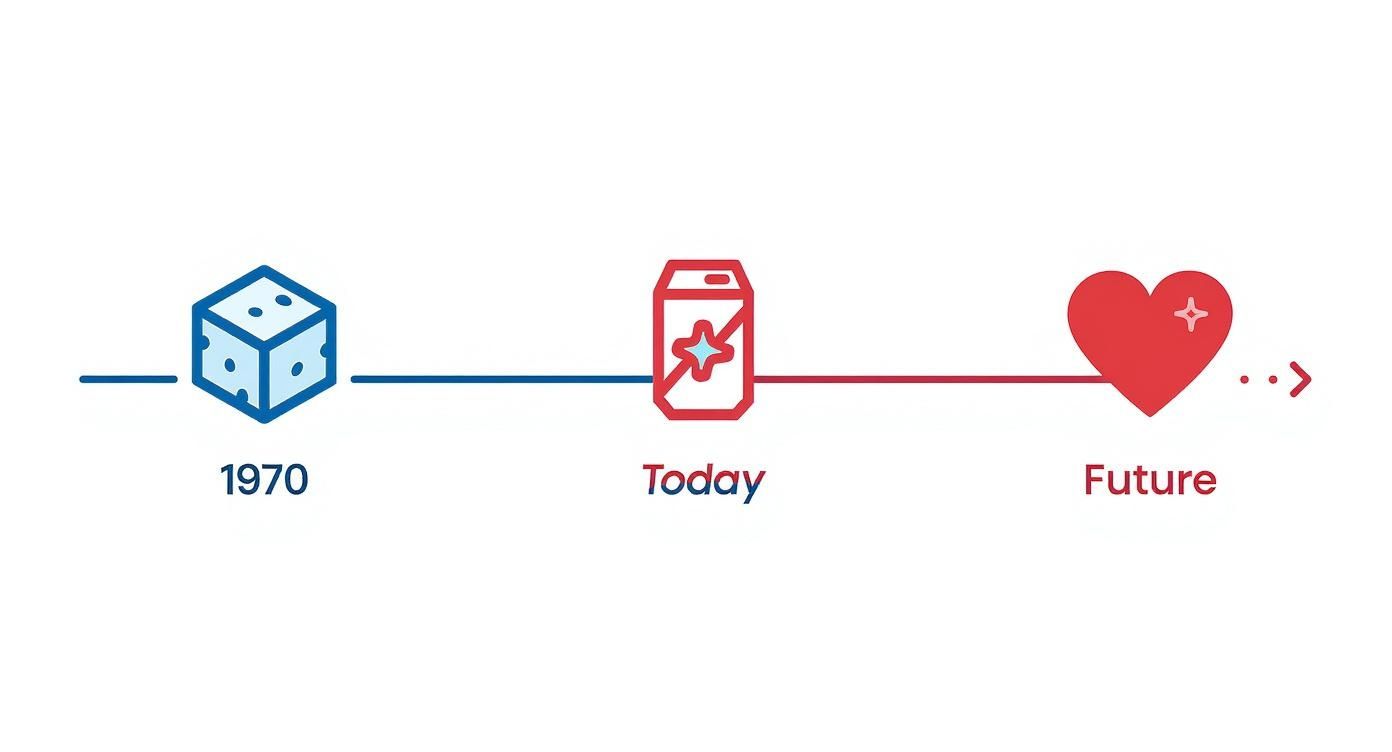
Seeing it laid out like that shows just how much our food environment has changed. It makes a conscious break from sugar feel more important than ever for hitting the reset button on our health.
Week 1 (Days 1-7): The Detox Phase
Let's be real: the first week is all about getting through it. This is the detox phase. Your body has likely gotten used to a steady stream of sugar, and it's going to let you know it's not happy about the change.
Cravings will probably be at an all-time high, especially in those first three days. It's not uncommon to feel some headaches, a bit of irritability, or just plain tired. These are all totally normal signs of withdrawal, so don't panic.
Your two best friends this week are hydration and preparation. Drink way more water than you think you need—it genuinely helps flush your system and can take the edge off a craving. Also, plan and prep your meals. When you're hungry and tired, the last thing you want is to have to figure out what to cook. Having simple, whole-food meals ready to go will save you from grabbing something convenient (and likely full of sugar).
- Tip for Success: Don't try to be a superhero this week. If you're feeling exhausted, listen to your body. Rest. Take a short nap if you can. It’s doing some serious work behind the scenes.
- Actionable Step: Get ruthless with your pantry. Go through and remove all the tempting sweets, sugary sauces, and processed snacks. Creating a supportive environment from the get-go makes a huge difference.
The initial discomfort is temporary, but getting through it is what breaks sugar's powerful hold on you, both physically and psychologically. This is often the hardest part, but it lays the foundation for all the good stuff to come.
Week 2 (Days 8-14): Finding Your Rhythm
Once you hit week two, you should be over the worst of it. The intense physical withdrawal symptoms usually start to fade, and you'll begin noticing some real positives. Many people report having more stable energy throughout the day, without the usual afternoon slump. Less bloating is another common perk.
This is the week where the challenge shifts from a constant struggle to a new, empowering routine. It's a great time to bring in some light physical activity if you haven't already. A brisk walk or some gentle stretching can do wonders for your mood and energy.
Something really cool happens this week, too: your taste buds start to recalibrate. You'll find that natural foods, like a fresh strawberry or a slice of apple, taste incredibly sweet. If you want to nerd out on what’s happening inside your body, our guide on the sugar detox timeline breaks down these biological shifts in more detail.
Week 3 (Days 15-21): Building a Sustainable Habit
You've made it to the home stretch! By week three, cravings are often minimal or have vanished completely. You're probably sleeping more soundly, thinking with more clarity, and feeling a sense of control over your food choices that you might not have felt in a long, long time.
This final week is all about cementing your new habits and looking ahead. Start thinking about what life looks like after the 21 days. The goal isn't to demonize sugar and banish it forever; it's about learning to enjoy it mindfully and on your own terms.
Really tune in to how good you feel right now. This feeling—of energy, clarity, and control—is your new baseline. It’s the best motivation for maintaining a healthier, more intentional relationship with sugar for the long haul.
Smart Swaps and Snacks to Beat Cravings
Let's be honest, the success of a 21 day no sugar challenge often boils down to one simple thing: what you do when a craving hits. Having a game plan is everything. It's the difference between caving and conquering.
This isn't about white-knuckling it with a sad piece of fruit. It's about finding genuinely delicious alternatives that satisfy you, whether you're craving something sweet, salty, or savory.
Build Your No-Sugar Snack Arsenal
A solid list of go-to snacks is your secret weapon. The trick is to pick foods that are full of healthy fats, protein, and fiber. These are the nutrients that keep you feeling full and your blood sugar from going on a rollercoaster ride.
Here are a few of my favorites that are easy to prep:
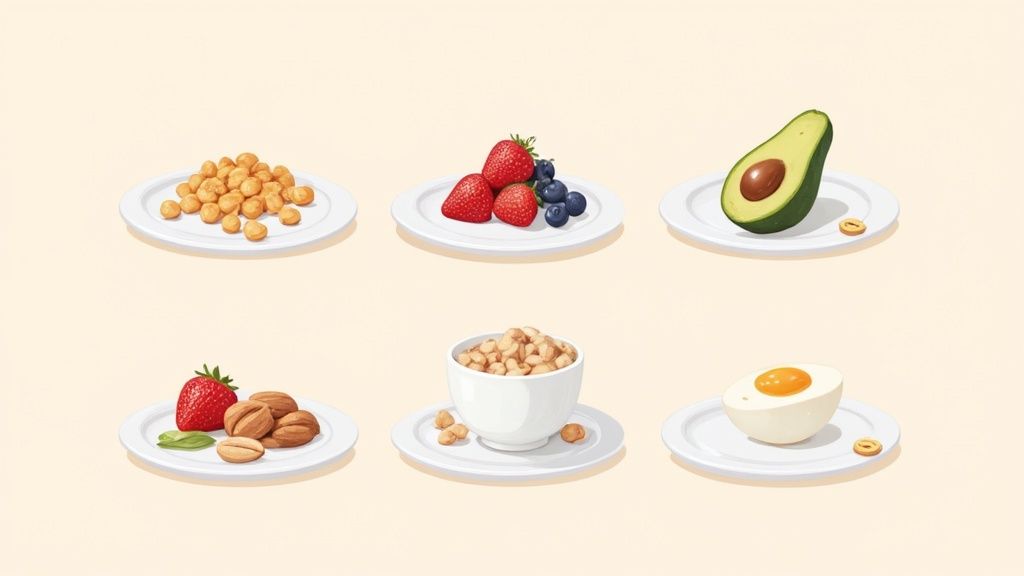
- Craving Salt? Grab a handful of spicy roasted chickpeas or slice up half an avocado with a sprinkle of flaky sea salt. The flavor is intense, and the healthy fats are incredibly satisfying.
- Need Something Sweet? A small bowl of frozen berries with a dash of cinnamon is a game-changer. The icy texture and natural sweetness feel like a real treat.
- Want Creamy and Rich? Full-fat plain Greek yogurt with a swirl of unsweetened nut butter is my go-to. It packs a protein punch that will keep you going for hours.
If you're looking for more inspiration to keep things interesting, checking out some dedicated sugar-free snack recipes is a great way to expand your options. You can find a whole collection of ideas right here: https://stopsugar.app/blog/sugar-free-snack-recipes
The biggest shift happens in your mindset. Stop thinking about what you're giving up. Instead, get excited about all the new, vibrant foods you get to discover. This change in perspective is what makes it stick.
Master the Art of Smart Swaps
Snacks are crucial, but what about the hidden sugars in your everyday meals? So many common pantry items are packed with the stuff. A few simple swaps can slash your sugar intake without you even noticing a difference.
Take a look at your daily habits. For example, maybe you unwind with a drink at night. Many cocktails, wines, and beers are loaded with sugar. If you're looking for an alternative, something like a Michelob Ultra Zero beer can satisfy that ritual without the sugar load. Small changes like this really add up over 21 days.
Making these swaps is easier than you think. You just need to know what to look for.
Easy Sugar Swaps for Everyday Foods
Replace these common high-sugar items with healthier, satisfying alternatives to stay on track during your challenge.
| Instead of This (High Sugar) | Try This Instead (No Added Sugar) |
|---|---|
| Sugary Breakfast Cereal | Rolled oats with berries and nuts |
| Sweetened Yogurt | Plain full-fat Greek yogurt with cinnamon |
| Bottled Salad Dressing | A simple mix of olive oil, lemon juice, and herbs |
| Ketchup or BBQ Sauce | Unsweetened tomato paste with spices or a sugar-free salsa |
When you start making these little adjustments, you empower yourself. Your kitchen becomes your ally, helping you succeed in the challenge instead of tempting you at every turn.
The Unexpected Wins of Quitting Sugar
https://www.youtube.com/embed/86uC5fgraiI
While dropping a few pounds might be what gets you to start a 21 day no sugar challenge, the most powerful changes often have nothing to do with the scale. It’s more like a total quality-of-life upgrade. Honestly, most people are shocked by the positive shifts they feel.
This journey is about so much more than weight. It's about calming the systemic inflammation that sugar constantly pours fuel on. Once you make that one change, it can set off a domino effect of benefits that make you feel better from the moment you wake up.
Beyond the Scale: Deeper Health Benefits
One of the first things you'll likely notice is a huge improvement in your gut health. Those nagging issues—bloating, gas, and general stomach discomfort you might have written off as "normal"—often start to disappear within the first week. This isn't just a happy accident; it's your gut microbiome finally getting a chance to heal.
A deep dive into challenge experiences turned up some amazing results. Sure, approximately 45% of people lost an average of 5 to 6 pounds without even trying, but the wins they celebrated most were things like more energy, a stable mood, and way fewer cravings. Some even saw chronic migraines and digestive problems vanish completely during the 21 days.
The real victory isn't just about what you lose, like weight or inches. It's about what you gain: mental clarity, consistent energy, and a feeling of being truly in tune with your body.
A Clearer Mind and Brighter Skin
The improvements don't stop with your internal systems. Many people who finish the challenge see huge changes in two key areas that directly boost their confidence and day-to-day life.
- Vanishing Brain Fog: You know that sluggish, can't-focus feeling that hits in the afternoon? It often just… disappears. When your blood sugar is stable, your brain gets a steady stream of fuel, leading to sharper focus and clearer thinking.
- A Healthy Glow: Sugar is a known trigger for inflammatory skin conditions like acne and rosacea. Cutting it out can lead to a calmer, clearer complexion, giving you a natural radiance that no cream can replicate.
On top of these health perks, many find that a sugar-free diet gives their energy and stamina a major boost, which is a huge advantage for anyone who's physically active. You can see how solid nutrition tips for optimal running performance fit into this, helping you go farther and faster.
These are the kinds of unexpected wins that turn a 21-day experiment into a lasting lifestyle change. For a full rundown of what you have to look forward to, check out our guide on the incredible benefits of a sugar detox.
Got Questions About the Challenge? Let's Get Them Answered
Starting a 21-day no sugar challenge is exciting, but it naturally comes with a lot of "what if" scenarios. Getting clear on these from the get-go can be the difference between sticking with it and feeling totally lost. Let's dig into some of the most common questions that come up.
The social side of things is often the first hurdle. What do you do when you’re invited to a party or a dinner where dessert is the main event? It can feel a little weird to be the one saying no, but it doesn't have to be a big deal.
I’ve found that just being upfront works wonders. A simple, "I'm doing a no-sugar challenge right now" is usually all it takes. Most people are curious and supportive, and it saves you from having to explain why you're passing on the birthday cake.
What’s the Deal with Natural Sugars?
This is probably the biggest point of confusion. Does "no sugar" mean no fruit? No dairy? Not at all. For this challenge, we're targeting added sugars.
The natural sugars found in whole foods—like the fructose in a crisp apple or the lactose in a bowl of plain Greek yogurt—are fair game. Why? Because they come bundled with fiber, vitamins, and other good stuff that your body needs. This packaging helps your body process the sugar slowly and gives you actual nutrition.
It's the added sugars in processed foods that we're cutting out. Those are the ones that offer nothing but empty calories and send your blood sugar on a rollercoaster. So, an orange is great; a glass of orange juice is a no-go.
How Can I Possibly Eat Out at a Restaurant?
Dining out can feel like you're trying to solve a puzzle, especially when menus don't exactly list every single ingredient. You just have to become a bit of a food detective.
Here are a few tricks I've learned:
- Stick to the Basics: Grilled fish or chicken with steamed veggies is almost always a safe bet. Salads are great too, but always get the dressing on the side—most are loaded with sugar. A simple olive oil and vinegar is your best friend.
- Speak Up: Don't be shy about asking your server if there's sugar in a sauce or marinade. A quick, "Does the teriyaki glaze have sugar in it?" can save you.
- Watch Out for Bread: That "complimentary" bread basket is tempting, but most commercially made bread contains added sugar. It's often easier to just ask them not to bring it.
The real goal here isn't about being perfect. It's about building awareness. Every time you read a label or ask a question about your food, you're flexing a new muscle. That alone is a huge win.
Help! I Messed Up and Ate Sugar. Now What?
First off, take a deep breath. A slip-up is not a failure. This isn't a test with a pass/fail grade; it’s a process. One cookie doesn't undo all your hard work.
If you eat something sugary, just acknowledge it and move on. The most important thing is to get right back on track with your very next meal. Don't let a moment of weakness spiral into a whole day—or week—of bad choices.
Think of it as a learning opportunity. What triggered it? Were you stressed, bored, or just unprepared? Figuring that out is gold. It gives you the insight you need to handle it better next time. No guilt, just forward progress.