Accountability for Weight Loss That Actually Works
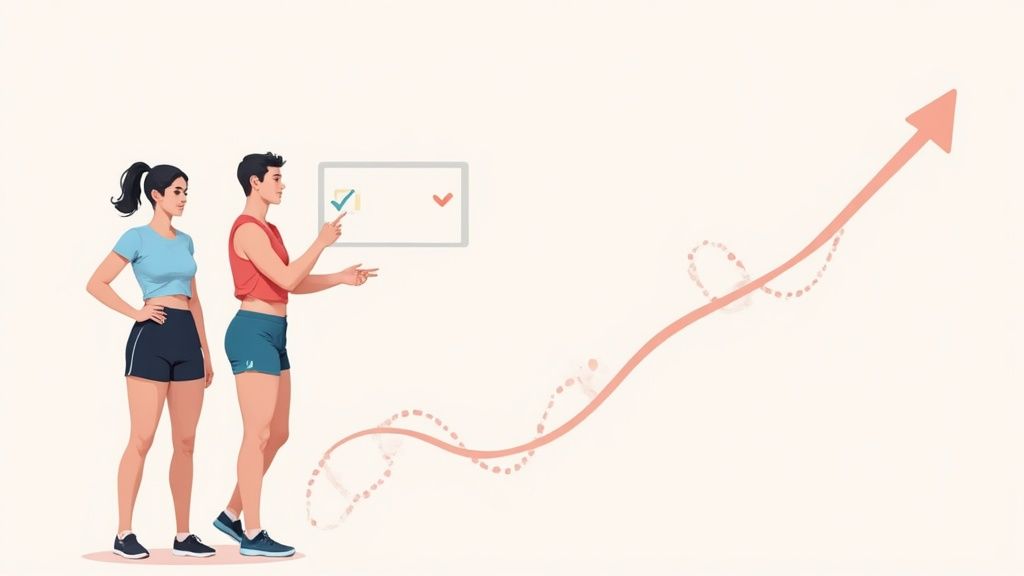
Accountability for weight loss is pretty simple: it’s about sharing your goals to build a support system outside of your own head. It’s what turns "I should lose weight" into a real, actionable plan, giving you a much better shot at success when pure willpower just isn't cutting it.
Why Accountability Is Your Secret Weapon
Let's be real—motivation is fickle. It comes and goes. One morning you might feel ready to crush a workout and meal prep for the week, but the next day, the siren song of the couch and a pizza is all you can hear. This is exactly why relying on willpower alone is a recipe for failure. Willpower is like a muscle; it gets tired from stress, a bad night's sleep, or just the grind of daily life.
That’s where accountability for weight loss comes in. It’s that external nudge that gets you moving when your internal motivation has clocked out for the day. This isn't about being shamed or pressured. It’s about making a promise that’s bigger than your mood at any given moment. Knowing someone is waiting for your check-in makes you far more likely to stick to the plan.

From Intention to Action
When you share your goals, you're doing more than just asking for a cheerleader. You're making a psychological commitment. Just saying your goal out loud to someone you trust makes it feel real—something you can't just ignore. It's the bridge that helps you cross from wanting to lose weight to actually doing the things that make it happen.
Having this kind of structured support brings a ton of benefits:
- Keeps You Consistent: It pushes you to stick with it, even on the days you just don't feel like it.
- Boosts Self-Awareness: When you have to track and report your actions, you start to see patterns you never noticed before, like what triggers your stress-eating.
- Helps You Problem-Solve: A good accountability partner can offer a fresh set of eyes when you hit a frustrating plateau or run into a challenge.
Accountability is what separates a wish from a goal. It gives you the framework to turn small, daily choices into the kind of sustainable habits that deliver real, lasting results.
A Tale of Two Journeys
Imagine two people who both want to lose 20 pounds. The first person decides to go it alone, relying entirely on their own motivation. They start off great, but after a tough week at work, they skip a few gym sessions and lean on takeout for comfort. Since nobody knows or expects an update, those small slips quietly snowball, and before they know it, they've completely fallen off track.
Now, picture the second person. They tell a friend they’re going to text them after every workout and share a picture of their Sunday meal prep. When that same stressful week hits, the thought of having to send a "didn't make it" text is just enough to get them to do a quick 15-minute workout at home. That one small action keeps the momentum going. This is the power of effective behavioral intervention strategies in a nutshell.
A huge part of this is making smarter choices with food, too. For instance, having some go-to high-protein snacks for weight loss on hand can be a game-changer, and that's the kind of practical tip a good support system can help you remember. In the end, accountability isn't a burden—it's the strategic edge you've been missing.
Creating Goals That Fuel Your Motivation
A powerful accountability plan starts with the right kind of goals. So many of us begin with a fuzzy idea like, "I want to lose weight," but that’s a wish, not a plan. It's almost impossible to hold yourself accountable for something so vague. There’s no map, no clear next step, which makes it incredibly easy to get discouraged and quit.
To make accountability work, your goals need to be something you can see, measure, and act on. They need to answer both the "what" and the "how" of your journey. The secret lies in pairing two distinct types of goals together.
Pair Outcome Goals with Process Goals
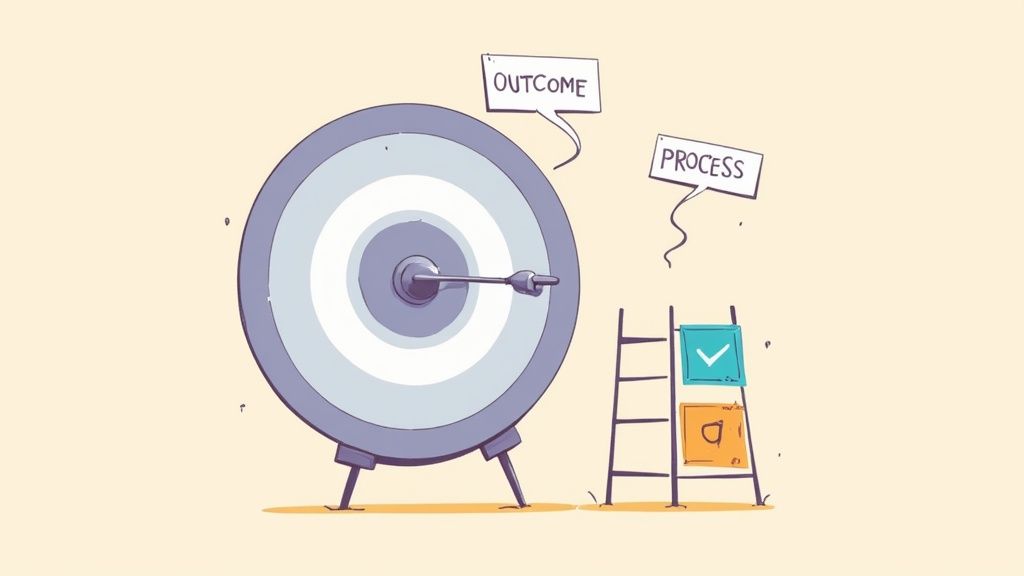
Let's break this down. An outcome goal is your destination—the big-picture result you’re aiming for. A perfect example is "lose 15 pounds in three months." It's motivating, for sure, but you don't have total control over the number on the scale from one week to the next.
That’s where process goals come in. These are the specific, controllable actions you take every day to reach that destination. Think of them as the rungs on the ladder. A process goal could be "drink 8 glasses of water daily" or "complete three 30-minute workouts this week." You have 100% control over these actions.
By shifting your focus to the daily and weekly actions you can control, you build momentum. Each small success fuels your motivation, and the outcome—the weight loss—becomes the natural result of your consistent effort.
Break Big Goals into Weekly Wins
Staring up at a huge goal like losing 15 pounds can feel paralyzing. The trick is to break it down into small, bite-sized weekly targets. This approach makes the entire process feel less intimidating and gives you frequent opportunities to celebrate wins, which is absolutely vital for staying in the game.
Here's what that looks like in the real world:
- Big Outcome Goal: Lose 15 pounds.
- Monthly Milestone: Lose 5 pounds this month.
- Weekly Process Goal: Prep healthy lunches for 4 workdays.
- Daily Process Goal: Get 8,000 steps each day.
This kind of structure gives you a clear roadmap. Every Sunday, you can look at the week ahead and know exactly what you need to do. This is a cornerstone of accountability for weight loss because it provides concrete actions for you and your accountability partner to track. For more on this, check out our guide on https://stopsugar.app/blog/building-healthy-habits that actually stick.
From Vague Ideas to Actionable Goals
Let’s look at the difference between a goal that fizzles out and one that’s built for a solid accountability system. Turning vague intentions into concrete actions is the first step.
| From Vague Ideas to Actionable Goals | |
|---|---|
| Ineffective Goal | Accountability-Ready Goal |
| "I'm going to eat healthier." | "I will add a vegetable to my dinner every night this week." |
| "I want to exercise more." | "I will go for a 20-minute walk on Tuesday, Thursday, and Saturday." |
| "I'll try to lose some weight." | "My goal is to lose 1-2 pounds this week by tracking my meals daily." |
When your goals are specific and action-oriented, they stop being wishes and become non-negotiable items on your to-do list. This clarity is everything. It makes it easier for you to follow through and lets your support system know exactly how to cheer you on. Of course, setting the goal is only part of the equation; learning how to start and stay motivated for your fitness journey is key to seeing it through.
How to Find the Right Support System
Choosing the right person or group to have in your corner can make all the difference. Think of an accountability partner as more than just a cheerleader. They’re the person who helps keep you honest, offers a fresh perspective when you’re stuck in a rut, and genuinely celebrates your wins with you.
Your support system can look a few different ways. Maybe it’s a close friend with similar goals, a family member you trust implicitly, a professional coach, or even an online community full of people on the same path. There’s no single right answer, so think about what you actually need. Do you do better with one-on-one encouragement, or does the buzz of a group keep you motivated?

What to Look for in a Partner
When you're picking someone to share this journey with, a few qualities are absolutely essential. You want someone who is reliable and truly wants to see you succeed. They need to be a good listener who can support you without making it all about them.
Here are the key traits of a great accountability partner:
- A No-Judgment Zone: You need to feel safe telling them, "I completely blew my meal plan today," without getting a lecture.
- Reliability: This is huge. If you agree to check-ins, you need someone who actually shows up. Spotty support just doesn't work.
- Honesty with Heart: A good partner isn't afraid to give you a little tough love, but it always comes from a place of genuine care.
A strong accountability relationship is built on mutual respect. It’s a supportive team, not a parent-child dynamic where one person is policing the other. The goal is empowerment, not control.
Setting Clear Expectations Together
To make sure you're both on the same page and to avoid any weirdness down the line, it’s a great idea to have a chat and set some ground rules. Think of it as a casual "partnership agreement." Talking about this stuff upfront makes sure the whole system feels helpful, not stressful.
Here are a few questions to hash out together:
- How often will we connect? A daily text? A weekly phone call?
- What will we talk about? Are we sharing workouts, food logs, or just general progress?
- How do we handle a slip-up? Do you want encouragement or help brainstorming what went wrong?
- How will we celebrate wins? A shout-out? A fun (non-food) activity?
This kind of structured support is becoming more mainstream. In fact, the market for weight loss supplements is expected to reach USD 71.59 billion by 2030, partly because people are looking for solutions that fit into their lives. Many of these products are paired with digital apps that send reminders and track progress—proof that accountability is a massive piece of the puzzle. You can read more about the growth of the weight management market on grandviewresearch.com.
By setting these clear rules of engagement from the start, you’re building a powerful support system that’s truly designed to help you win.
Using Apps and Tech to Stay on Track
Let's be honest, your phone is probably with you 24/7. So why not turn it into one of your best allies for weight loss? When you use it right, technology offers instant feedback and constant support, transforming your goals from something abstract into a series of concrete, daily actions. It's less about raw willpower and more about building a smart system that fits right in your pocket.
Whether it’s a fitness watch counting your steps or an app where you log your meals, technology gives you the cold, hard data you need to stay honest with yourself. This cuts through the guesswork and emotion, showing you exactly where you stand. The convenience is just a bonus—it’s the consistency it encourages that really makes the difference.
Choosing Your Digital Accountability Partner
The app store is a crowded place, but the best weight loss apps all have a few key features designed to keep you accountable. Don't just get bogged down in calorie counting; look for apps that actively pull you into the process.
Here’s what you should really be looking for:
- Progress Visualization: Seeing your progress laid out in charts and graphs is incredibly motivating. It turns all your hard work into a tangible success story right on your screen.
- Daily Reminders and Notifications: Sometimes all you need is a simple nudge to log a meal, drink water, or get up for a walk. These little pings can be lifesavers on a busy day.
- Community and Social Sharing: Many apps have a social feature, connecting you with other people on the same path. A little encouragement from someone who gets it can go a long way.
Finding the right app can honestly feel like a game-changer. If you want a deep dive, check out our guide on the best habit tracking apps to see which one might click with your lifestyle.
Making Technology Work For You
The trick is to weave technology into your daily routine so smoothly that it doesn’t feel like another chore. Think about pairing a fitness watch with a food-tracking app. Your watch automatically logs your activity, and you just have to manually log what you eat.
This screenshot gives you a good idea of what a typical fitness app interface looks like, showing metrics like steps, distance, and calories burned.
The data is simple and clear, giving you an at-a-glance summary of your activity. It creates a simple, effective feedback loop.
This combination creates a powerful, almost automated system of accountability. At the end of the day, you have a clear, unbiased picture of your "calories in versus calories out." This data-driven approach takes the emotion out of the equation and helps you make smarter decisions tomorrow.
The real power of using technology for weight loss is the objective, real-time feedback. It’s like having a non-judgmental coach in your corner 24/7, keeping you focused on the goals you set for yourself.
The popularity of these tools makes perfect sense. Accountability is a well-known secret to long-term success, and it's no surprise the global weight loss market is projected to hit US$590.13 billion by 2033. Wearable tech and personalized plans are at the heart of this growth, all because they deliver the measurable results and progress tracking people need. You can find more insights on the booming technology-enabled weight loss market on businesswire.com.
Ultimately, using tech wisely is about creating a support system that helps you on your journey without adding more stress to it.
How to Bounce Back from Setbacks
Let's be real: everyone has an off day. You skip a workout, say yes to a second slice of cake at a party, or just lose your motivation for a week. The real secret to making progress isn't about avoiding these moments—it's about learning how to recover from them quickly and without beating yourself up.
Perfection is a myth. Progress is the goal.
A single slip-up doesn’t undo all your hard work. The real danger isn't the setback itself; it's the all-or-nothing thinking that can creep in afterward. That little voice that says, "Well, I've already blown it for the week, so I might as well give up," is what truly gets you off track.
Instead, let's reframe these moments. They aren't failures; they're feedback. They're valuable learning opportunities that can actually make you stronger.
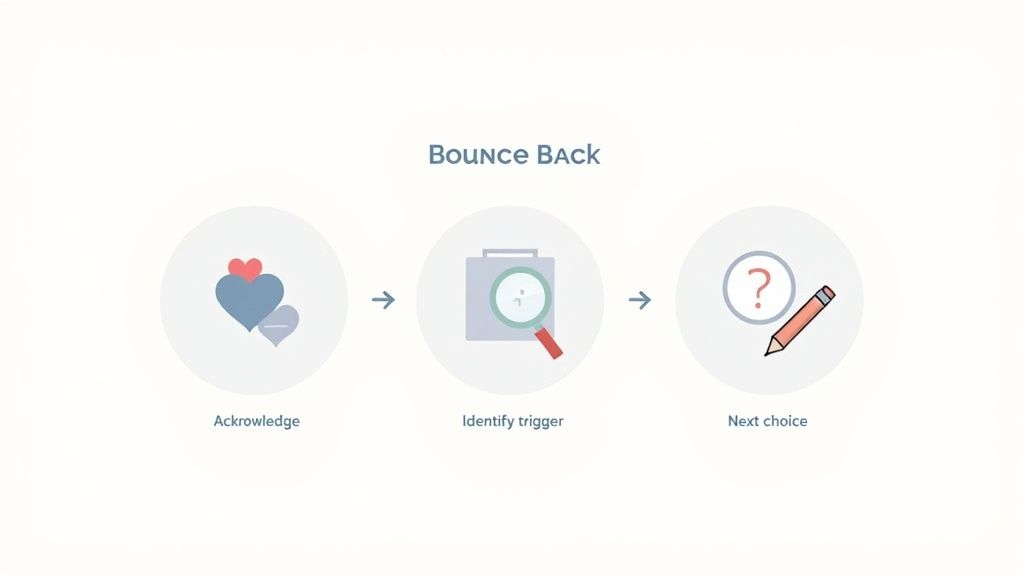
Acknowledge Without Judgment
First things first: just acknowledge what happened. You ate the cake. You missed the gym. It happened. The trick is to do this without piling on guilt or shame, because that negative self-talk just digs a deeper hole.
Instead of scolding yourself, try stating the facts neutrally. For example, "I ate more than I had planned at dinner tonight." That’s it. This simple observation takes the emotion out of it, letting you see the situation clearly and get ready to move on.
Identify the Trigger
Once you’ve acknowledged the slip-up, ask a simple question: What led to that choice? This isn't about making excuses—it's about gathering clues. Pinpointing your triggers is one of the most powerful things you can do to prevent the same situation from happening again.
Were you stressed out? Bored? Exhausted? Maybe you were in a social situation you hadn't planned for, or you simply didn't eat enough earlier in the day and were ravenous by dinnertime.
- Emotional Trigger: A tough day at work had you reaching for your favorite comfort food.
- Environmental Trigger: Your coworkers ordered pizza for lunch, and it was right there in front of you.
- Physiological Trigger: You skipped breakfast, which led to intense cravings in the afternoon.
When you can identify the root cause, you stop feeling like a failure and start acting like a detective. This simple mindset shift helps you build smarter strategies for next time instead of just relying on sheer willpower.
Make a Specific Plan for Your Next Choice
This is the most important part. Immediately decide on your very next positive action. Don't get overwhelmed thinking about the rest of the week or month. Just focus on one thing. Right now. This makes the problem feel small and puts you back in the driver's seat.
If you overate at dinner, your next choice might be to drink a big glass of water before bed. If you missed your morning workout, maybe you can plan a 15-minute walk during your lunch break.
The key is to make the action small, specific, and immediate. This creates instant positive momentum and proves to yourself that you are still in charge. It’s this forward-looking approach that builds real, sustainable accountability.
Got Questions About Weight Loss Accountability? We've Got Answers
Even the best-laid plans can hit a snag. When you're building a new system for keeping yourself on track with weight loss, it's only natural for questions and doubts to pop up. Let's walk through some of the most common ones I hear.
What If I’m Just Not Good at Holding Myself Accountable?
First off, you're not alone. Sticking to a plan by yourself is tough, especially when you're just starting out. If you feel like you're constantly slipping, that's not a personal failing—it's usually just a sign that you need to bring in some outside support.
This is the perfect moment to find an accountability partner. Or maybe join an online group that shares your goals. Some people even decide to work with a coach. The idea isn't to become dependent on someone else forever, but to use their support as a set of training wheels while you build your own internal motivation and habits.
I’m Worried My Accountability Partner Will Judge Me. What Then?
This is a big one, and it's a completely valid fear. Let's be clear: an accountability partnership is supposed to be a safe, supportive space. If you feel like you have to hide a bad day or you're afraid of being shamed for a slip-up, then that person is not the right partner for you. Period.
A good partner is a problem-solver, not a critic. They should be there to help you figure out what went wrong and how to get back on track, not to make you feel guilty.
An accountability system has to be built on trust and encouragement. If your current one makes you feel anxious or ashamed, it’s broken. It's time to find a new partner or a different method that lifts you up.
Before you team up with someone, have a frank conversation about what you both expect. A true partner will make it clear they’re there to support you through the good and the bad, no judgment allowed.
Should I Track My Actions or My Results?
Fantastic question. The short answer is both, but your day-to-day focus should be squarely on your actions. Why? Because you can't directly control the number on the scale every morning, but you can control whether you prep your lunch or go for that walk.
Think of it like this:
- Track Your Actions Daily: These are the small wins. Did you drink your water? Did you hit your step goal? Ticking these boxes creates momentum and a sense of accomplishment right away.
- Track Your Results Weekly: This is the bigger picture—your weight, your measurements, or even just how your favorite jeans fit. This is where you see the cumulative effect of all those daily actions.
When you focus on the habits you have power over, the results will eventually take care of themselves. This mindset helps you sidestep the frustration of normal weight fluctuations and stay motivated for the long haul. It's no surprise that the global weight management market is projected to hit USD 59.8 billion by 2032, largely because people are looking for structured ways to track their progress. If you're interested, you can find more details about the growing weight management market on biospace.com.