7 Best Drinks Without Caffeine and Sugar for 2025

Are you stuck in a cycle of sugary sodas and caffeinated beverages that promise a lift but deliver a crash? Making the switch to drinks without caffeine and sugar is a powerful step toward stable energy levels, improved mood, and better overall health. It's a cornerstone of mindful consumption, a principle that many leading workplace nutrition programs now emphasize for sustained productivity and well-being. This guide moves beyond plain water to offer a curated list of flavorful, accessible, and genuinely satisfying alternatives.
Forget boring or complicated options. We're here to provide a practical toolkit of seven fantastic drink categories that will keep you hydrated and happy without the unwanted additives. For each suggestion, we’ll provide specific preparation tips, ideas on when to enjoy them for maximum benefit, and simple ways to incorporate them into your daily routine. We will also touch on how tracking your new choices with an app like StopSugar can help solidify these positive habits for the long term. Get ready to discover a world of delicious, nourishing possibilities that will transform how you hydrate.
1. Herbal Tea (Caffeine-Free Varieties)
Herbal teas, also known as tisanes, are a fantastic choice for anyone seeking flavorful drinks without caffeine and sugar. Unlike traditional teas (black, green, white) which come from the Camellia sinensis plant and contain caffeine, herbal infusions are made from a blend of dried flowers, fruits, herbs, and spices. This makes them naturally free of both stimulants and sweeteners, offering a warm, comforting, and hydrating alternative.

The variety is immense, with each type providing a unique flavor profile and potential wellness benefits. From the calming floral notes of chamomile to the zesty kick of ginger, there's a blend for every mood and moment.
How to Enjoy Herbal Tea
Choosing the right herbal tea depends on your goal. Looking for a way to unwind before bed or a flavorful afternoon pick-me-up? There’s an herbal tea for that.
- For Relaxation: A cup of chamomile or lavender tea in the evening can help signal to your body that it's time to rest.
- For Digestion: Peppermint or ginger tea are excellent choices after a meal to help soothe your stomach.
- For a Refreshing Boost: Iced hibiscus tea provides a tart, cranberry-like flavor that’s incredibly refreshing on a warm day, while rooibos offers a rich, slightly nutty taste that can replace your afternoon black tea.
Quick Tips for the Perfect Brew
To get the most out of your herbal tea, follow these simple preparation tips:
- Use the Right Water Temperature: Most herbal infusions do best with water just off the boil (around 200-212°F or 93-100°C).
- Steep for 5-10 Minutes: This allows the flavors and beneficial compounds to fully infuse into the water without becoming bitter.
- Store Properly: Keep your dried herbs in an airtight container away from direct sunlight and moisture to maintain their freshness and potency.
- Get Creative: Don't be afraid to mix different herbs to create your own custom blends. For those interested in making their own, exploring various herbal tea seed packs can be a great starting point for a home garden.
Pro Tip: Using filtered water can significantly improve the taste of your tea, allowing the delicate notes of the herbs to shine through. Certain teas can also be a powerful tool in managing cravings. You can learn more about using tea to curb sugar cravings and find blends that help.
2. Infused Water
Infused water is a simple yet elegant way to enjoy refreshing drinks without caffeine and sugar. This method involves steeping fresh fruits, vegetables, and herbs in plain water, allowing their natural flavors and subtle nutrients to infuse the liquid. It transforms ordinary water into a delicious, hydrating beverage without any artificial ingredients, sweeteners, or stimulants, making it an ideal choice for healthy hydration.
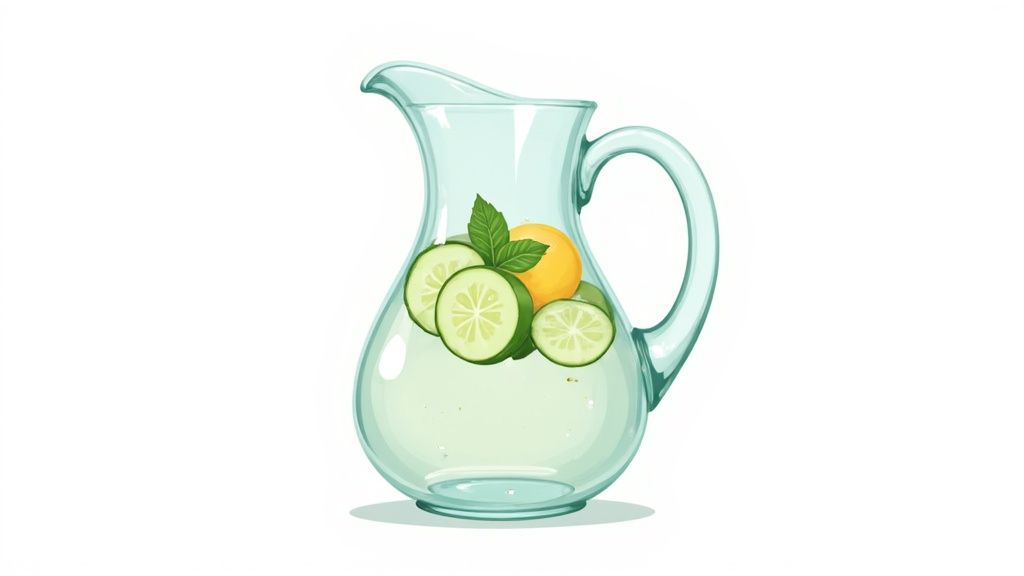
From crisp cucumber-lime to sweet strawberry-basil, the flavor combinations are virtually endless. This versatility makes it easy to create a drink that perfectly suits your taste preferences and adds a touch of sophistication to your daily routine.
How to Enjoy Infused Water
Choosing your infusion blend can be tailored to the occasion or your health goals. Whether you need a spa-like retreat at home or a vibrant drink for a summer gathering, infused water is a perfect fit.
- For Spa-Like Hydration: Combine cucumber and lime for a crisp, clean flavor that feels incredibly rejuvenating and calming.
- For a Sweet Treat: A mix of strawberries and basil offers a slightly sweet, aromatic profile that's perfect for satisfying sugar cravings on a warm afternoon.
- For a Zesty Boost: The combination of lemon and ginger is not only invigorating but also known to aid digestion and provide a gentle energy lift.
- For All-Day Refreshment: A vibrant blend of mixed berries and fresh mint is a crowd-pleaser that stays delicious and refreshing throughout the day.
Quick Tips for the Perfect Infusion
To create flavorful and safe infused water, follow these simple preparation tips:
- Slice Ingredients Thinly: Thin slices of fruits and vegetables expose more surface area, allowing flavors to infuse more effectively into the water.
- Let It Steep: For the best taste, refrigerate your infusion for at least 2 to 4 hours. For a more intense flavor, you can let it steep for up to 8 hours.
- Use an Infuser Pitcher: A pitcher with a built-in infuser basket makes it easy to add and remove ingredients, keeping your water clear and easy to pour.
- Refresh Daily: For optimal freshness and to prevent bacteria growth, it's best to discard the ingredients and make a new batch every 24 hours.
Pro Tip: Always wash your produce thoroughly before adding it to your water. Using organic fruits and vegetables when possible can also help minimize exposure to pesticides.
3. Sparkling Water (Plain or Naturally Flavored)
For those craving the fizzy satisfaction of soda, sparkling water is an exceptional substitute among drinks without caffeine and sugar. This beverage is simply carbonated water, offering hydration and a pleasant sensory experience without any sweeteners, calories, or stimulants. It provides the same refreshing bubbles as sugary soft drinks, making it an ideal choice for breaking a soda habit.
The market offers a wide array of options, from unflavored mineral waters to those infused with natural fruit essences. This variety ensures there is a sparkling water to suit any preference, whether you enjoy a clean, crisp taste or a hint of fruit.
How to Enjoy Sparkling Water
Sparkling water is incredibly versatile and can be enjoyed in many situations where you might otherwise reach for a less healthy option. It's a fantastic standalone drink or a base for creative, healthy mocktails.
- As a Soda Alternative: Brands like LaCroix offer a wide range of fruit-essenced flavors, while Spindrift includes a small amount of real fruit juice for a more pronounced taste, all without added sugar.
- For a Classic Experience: Perrier or other mineral waters provide a more robust carbonation and a clean, crisp taste that’s perfect on its own or with a slice of lime.
- On a Budget: Most grocery stores offer their own affordable brands of plain and flavored sparkling water, making it an accessible choice for daily hydration.
Quick Tips for the Perfect Fizz
To make your sparkling water experience even better, keep these simple tips in mind:
- Read the Label: Always check the ingredients list to ensure there are no hidden sugars or artificial sweeteners. Look for terms like "natural essence" or "natural flavors."
- Add Your Own Twist: Enhance plain sparkling water by adding fresh mint leaves, a squeeze of lemon or lime, or a handful of muddled berries for a custom flavor.
- Serve Chilled: Sparkling water is always most refreshing when served cold. Store it in the refrigerator to keep it ready to drink.
- Consider a Home System: If you drink sparkling water regularly, investing in a home carbonation system like a SodaStream can be a cost-effective and environmentally friendly option.
Pro Tip: Pay attention to the sodium content on the label, especially if you are monitoring your sodium intake. While most sparkling waters are low in sodium, some mineral waters may contain higher levels.
4. Coconut Water
Often called "nature's sports drink," coconut water is the clear liquid found inside young, green coconuts. It’s a naturally hydrating beverage that serves as an excellent option for those looking for drinks without caffeine and sugar, though it's important to choose brands wisely. While not entirely sugar-free, unsweetened versions contain only natural sugars and are packed with electrolytes like potassium, making them a far healthier alternative to sugary sports drinks or juices.
The subtle, slightly sweet, and nutty flavor makes it a refreshing choice on its own. Its hydrating properties and mineral content make it particularly beneficial for replenishing fluids and electrolytes after physical activity or on a hot day.
How to Enjoy Coconut Water
Coconut water is most effective when used for hydration and replenishment. Its natural electrolyte profile makes it a smart choice for active individuals or anyone needing a quick fluid boost.
- For Post-Workout Recovery: The potassium in coconut water helps prevent muscle cramps and replenishes electrolytes lost through sweat, making it a great post-exercise drink.
- As a Juice Alternative: If you’re craving something sweeter than water, coconut water offers a flavorful substitute without the high sugar content of fruit juice. Popular brands like Vita Coco and ZICO are widely available.
- For a Natural Energy Boost: Feeling a bit sluggish? A glass of coconut water can provide a quick, natural lift thanks to its hydrating effects and minimal natural sugars, without the crash associated with caffeine.
Quick Tips for the Perfect Choice
To ensure you're getting a healthy product, a little label-reading goes a long way.
- Check the Ingredients: Opt for brands with only one ingredient: coconut water. Brands like Harmless Harvest are known for their pure, organic sourcing.
- Avoid Added Sugars: Many flavored or blended coconut waters contain added sugars, which defeats the purpose. Always choose the "unsweetened" or "original" version.
- Dilute if Needed: If you find it too sweet or want to lower the natural sugar content even further, mix it with an equal part of still or sparkling water.
- Drink it Chilled: Coconut water tastes best when served cold, which enhances its refreshing qualities.
Pro Tip: When you log your drinks, be mindful of coconut water's natural sugar content. Tracking it in an app like StopSugar helps you stay aware of your total daily sugar intake while still enjoying its hydrating benefits.
5. Mineral Water and Spring Water
For those seeking the purest form of hydration, mineral and spring water are excellent drinks without caffeine and sugar. Sourced directly from natural underground springs and aquifers, this water is naturally filtered through layers of rock, which enriches it with trace minerals like calcium, magnesium, and potassium. This process gives it a distinct, subtle taste and a beneficial mineral profile, setting it apart from purified tap water.
Unlike distilled water, which is stripped of all its contents, mineral and spring water retain their natural electrolytes, making them a superior choice for rehydration. They offer a clean, crisp, and refreshing experience without any additives, stimulants, or sweeteners, making them a foundational part of a healthy, sugar-free lifestyle.
How to Enjoy Mineral and Spring Water
Choosing the right water can enhance your hydration habits and add a touch of sophistication to your daily routine. Different sources offer unique mineral compositions and taste profiles.
- For Daily Hydration: Brands like Evian or Fiji offer a soft, smooth taste that is perfect for everyday drinking and staying properly hydrated.
- For a Sparkling Alternative: Carbonated mineral waters like San Pellegrino or Perrier provide a fizzy, zero-calorie option that can replace sugary sodas and add excitement to meals.
- For a Unique Profile: Waters from specific sources, like Voss from Norwegian springs, offer a crisp and clean taste that many connoisseurs appreciate.
Quick Tips for the Perfect Sip
To get the most out of your mineral and spring water, a few simple practices can make a significant difference.
- Check the Label: Pay attention to the Total Dissolved Solids (TDS) and mineral composition listed on the bottle to find a taste profile you enjoy.
- Store Properly: Keep your water in a cool, dark place away from direct sunlight to preserve its taste and freshness.
- Choose Glass Bottles: Whenever possible, opt for glass bottles to avoid potential chemical leaching from plastic and reduce your environmental impact.
- Add Natural Flavor: If you want a hint of flavor, add a slice of lemon, a sprig of mint, or a few berries to your glass for a natural infusion.
Pro Tip: Serving mineral water slightly chilled enhances its crispness and refreshing qualities. For sparkling varieties, pouring it into a glass rather than drinking from the bottle helps release its carbonation and aroma.
6. Vegetable Juices (Low-Sugar Varieties)
Vegetable juices are a potent way to get a concentrated dose of vitamins and hydration, making them an excellent choice for those seeking drinks without caffeine and sugar. Unlike fruit juices, which are often high in natural sugars, juices made primarily from low-glycemic vegetables provide nutrients and hydration with a significantly lower sugar content. When prepared correctly, they offer a savory, refreshing, and energizing alternative.
The key is to focus on non-starchy vegetables. Think vibrant green juices made from leafy greens, crisp celery, and hydrating cucumber, rather than sweeter options like beet or carrot juice. This approach delivers a nutrient-dense beverage that supports stable energy levels without the sugar crash.
How to Enjoy Vegetable Juice
Choosing the right vegetable juice is about balancing flavor with nutritional goals. They are perfect for a morning boost or a mid-afternoon pick-me-up when you need nutrients without a stimulant.
- For a Clean Green Boost: A juice made from spinach, cucumber, celery, and a squeeze of lemon offers a classic, nutrient-rich start to your day.
- For a Savory Snack: A glass of low-sodium V8 or a homemade blend of tomato, bell pepper, and parsley can curb savory cravings and keep you full between meals.
- For a Zesty Kick: Adding a small piece of ginger to any vegetable juice blend not only adds a spicy flavor but also aids in digestion.
Quick Tips for the Perfect Juice
To ensure your vegetable juice is both delicious and healthy, follow these simple tips for preparation and selection:
- Make it Fresh: Juicing at home allows you to control the ingredients and avoid hidden sugars or preservatives. Drink it immediately for maximum nutrient absorption.
- Read Commercial Labels: If buying store-bought juice, always check the nutrition label for added sugars and high sodium content. Look for "100% vegetable juice" with no fruit juice concentrates.
- Start with Mild Flavors: If you're new to vegetable juice, start with milder-tasting vegetables like cucumber and celery before moving on to stronger flavors like kale or parsley.
- Add Herbs for Complexity: Fresh herbs like mint, cilantro, or basil can elevate the flavor of your juice without adding any sugar or calories.
Pro Tip: While juicing removes fiber, it makes nutrients more easily absorbable. If you prefer a more filling option with fiber intact, you can explore low-sugar, high-protein smoothies that use similar vegetable ingredients.
7. Kombucha (Sugar-Free or Minimal Sugar Varieties)
Kombucha is a fermented tea beverage that offers a tangy, slightly effervescent alternative to sugary sodas. While it starts with sugar and caffeinated tea, the fermentation process, driven by a SCOBY (Symbiotic Culture Of Bacteria and Yeast), transforms these ingredients. The yeast and bacteria consume the vast majority of the sugar and caffeine, converting them into beneficial probiotics, organic acids, and enzymes. This makes many commercially available kombuchas very low in sugar and caffeine, positioning them as excellent drinks without caffeine and sugar for those seeking gut-health benefits.
The final product is a complex, flavorful drink that can support a healthy digestive system. Brands like Remedy Kombucha specialize in zero-sugar varieties, while others like GT's Living Foods and Health-Ade offer options with minimal residual sugar (typically 1-3 grams per serving), a result of the natural fermentation process.
How to Enjoy Kombucha
Choosing the right kombucha is key to keeping your sugar intake low while enjoying its probiotic perks. It's an ideal replacement for an afternoon soda or a flavorful, functional beverage to sip on its own.
- For Gut Health: The live probiotics in kombucha can help support a balanced gut microbiome. Enjoy a small glass (4-6 oz) with a meal to aid digestion.
- For a Soda Alternative: When you crave something fizzy and flavorful, reach for a low-sugar kombucha. Its natural carbonation and tartness satisfy the craving without the sugar crash.
- As a Mocktail Base: Use plain or ginger-flavored kombucha as a sophisticated, bubbly base for a non-alcoholic mixed drink. Add a squeeze of lime and some fresh mint.
Quick Tips for Choosing and Using Kombucha
To ensure you're getting the benefits without unwanted additives, keep these tips in mind:
- Read the Label: Always check the nutrition panel for sugar content. Choose brands that explicitly state "0g sugar" or have less than 4g per serving.
- Start Small: If you are new to kombucha, begin with a small serving (about 4 ounces) to see how your digestive system responds to the probiotics.
- Keep it Chilled: Always store kombucha in the refrigerator. This slows the fermentation process and prevents it from becoming overly acidic or alcoholic.
- Consider Home Brewing: For full control over ingredients, you can brew your own. Monitor the fermentation time (usually 7-30 days) to achieve the desired balance of sweetness and tartness.
Pro Tip: The probiotics found in kombucha can play a role in balancing your gut, which may influence your food choices. You can explore more about how probiotics might help with sugar cravings to better understand the connection.
7 Caffeine- & Sugar-Free Drinks Comparison
| Item | Implementation Complexity 🔄 | Resource & Speed ⚡ | Expected Outcomes 📊 | Ideal Use Cases 💡 | Key Advantages ⭐ |
|---|---|---|---|---|---|
| Herbal Tea (Caffeine-Free Varieties) | 🔄 Low — simple steeping (5–10 min) | ⚡ Low resources (dried herbs, hot water); moderate prep time | 📊 Relaxation, digestive support; zero calories unsweetened | 💡 Evening calming drink, digestive aid, customizable blends | ⭐⭐⭐⭐ Naturally caffeine‑free, wide flavor range |
| Infused Water | 🔄 Low — assemble and refrigerate (2–8 hrs) | ⚡ Low resources (fresh produce, pitcher); slower infusion | 📊 Enhanced hydration, subtle nutrients; zero calories | 💡 Daily hydration, spa-like refreshments, reduce sugary drinks | ⭐⭐⭐⭐ Highly customizable, encourages water intake |
| Sparkling Water (Plain/Naturally Flavored) | 🔄 Very low — ready to drink | ⚡ Minimal resources; instantaneous refreshment | 📊 Satisfies soda cravings; supports hydration without calories | 💡 Soda substitution, on‑the‑go refreshment, mixers | ⭐⭐⭐⭐ Carbonation mimic of soda; zero sugar (when unsweetened) |
| Coconut Water | 🔄 Very low — ready to drink; check labels | ⚡ Moderate resources (packaged fresh); instant use | 📊 Electrolyte replenishment; contains natural sugars (~8–9g) | 💡 Post‑workout recovery, electrolyte needs, tropical alternative | ⭐⭐⭐ Electrolytes/potassium benefit; not sugar‑free |
| Mineral Water and Spring Water | 🔄 Very low — ready to drink | ⚡ Minimal resources; instant and long shelf life | 📊 Pure hydration with trace minerals; zero calories | 💡 Everyday hydration, mineral supplement, travel | ⭐⭐⭐⭐⭐ Zero sugar, natural minerals, broad availability |
| Vegetable Juices (Low‑Sugar Varieties) | 🔄 Moderate — juicing equipment and prep | ⚡ Higher resources (fresh vegetables, juicer); short shelf life | 📊 Nutrient‑dense, low sugar vs fruit juice; fiber if fresh | 💡 Nutrient boost, increase veg intake, savory alternatives | ⭐⭐⭐⭐ High vitamins/minerals; lower glycemic impact than fruit juice |
| Kombucha (Sugar‑Free/Minimal Sugar) | 🔄 Moderate–High — fermentation knowledge and safety | ⚡ Moderate resources (SCOBY, fermenting time days); refrigerated storage | 📊 Probiotics, natural carbonation, low residual sugar (not zero) | 💡 Gut‑health support, soda alternative with probiotics | ⭐⭐⭐ Probiotic benefits and carbonation; requires careful brewing |
Make Your Hydration Habits Stick
You’ve explored a vibrant world of hydration that goes far beyond sugary sodas and caffeinated energy drinks. From the soothing warmth of herbal teas to the crisp fizz of sparkling water and the nutrient-dense profile of vegetable juices, you now have a full menu of delicious and energizing options. The journey to better health isn't about restriction; it's about discovery and making empowered choices. Each time you reach for one of these drinks without caffeine and sugar, you are actively investing in your well-being, stabilizing your energy levels, and nourishing your body from the inside out.
The real challenge, however, isn't knowing what to drink, it's building the habit. This is where intention and consistency become your greatest tools. The options presented in this guide, like a refreshing mint-infused water or a savory cup of bone broth, are designed to be simple swaps that fit seamlessly into your existing routine.
Your Action Plan for Lasting Change
To transform this knowledge into a sustainable lifestyle, focus on small, manageable steps. Don't try to overhaul everything at once. Instead, build momentum with a clear and simple plan.
- Start Small: Choose just one new drink from this list to try this week. Maybe it's swapping your afternoon soda for a naturally flavored sparkling water or replacing your evening latte with a calming chamomile tea.
- Prepare Ahead: Success loves preparation. Slice lemons and cucumbers for infused water and store them in the fridge. Brew a large pitcher of your favorite herbal iced tea. Having these options readily available makes the healthy choice the easy choice.
- Track Your Progress: Awareness is the catalyst for change. Use a tool like the StopSugar app to log your daily sugar-free drink choices. Tracking creates accountability and allows you to see the direct connection between what you drink and how you feel. Notice your mood, your energy, and your sleep quality improve over time.
The Power of Mindful Choices
Mastering your beverage choices is about more than just avoiding empty calories. It's about reclaiming control over your energy, mood, and long-term health. When you consciously opt for drinks without caffeine and sugar, you are breaking a powerful cycle of cravings and crashes. You're teaching your body to thrive on natural hydration and whole-food nutrients, leading to more stable energy, clearer thinking, and a profound sense of well-being.
Key Takeaway: The goal is not perfection, but progress. Every single choice to hydrate healthily is a victory that compounds over time, leading to transformative results.
Your journey towards a healthier, more vibrant you can start with your very next glass. Pick a new favorite, make it accessible, and enjoy the refreshing taste of a truly beneficial habit. You have the knowledge and the tools; now it’s time to take that first energizing sip.