8 Powerful Habit Stacking Examples to Transform Your Life in 2025

Welcome to the ultimate guide on building a better, more efficient life through the power of habit stacking. You have likely heard the term, but what does it actually look like in practice? The concept, popularized by James Clear in 'Atomic Habits', is simple: link a new habit you want to build with an existing one you already do automatically. Instead of relying on willpower, you leverage momentum. This simple shift is the key to making new behaviors feel effortless rather than like a chore.
This article breaks down 8 powerful habit stacking examples across different life areas, from boosting your morning productivity to reducing sugar cravings and improving your finances. We will analyze the strategy behind each stack, offer specific tactics for implementation, and show you how to adapt them for your own goals. You will learn how the StopSugar app can help you seamlessly track your new sugar-reduction habits. Get ready to transform your routine with these replicable, actionable strategies.
1. Morning Routine Stacking: Wake-Up → Exercise → Shower → Healthy Breakfast
This foundational habit stack is one of the most powerful habit stacking examples because it creates a chain reaction of positive behaviors that sets the tone for your entire day. It uses a strong, unavoidable anchor: waking up. The logic is simple and effective: your existing habit of waking up triggers the new habit of exercising, which naturally leads to showering, followed by preparing a healthy, low-sugar breakfast.
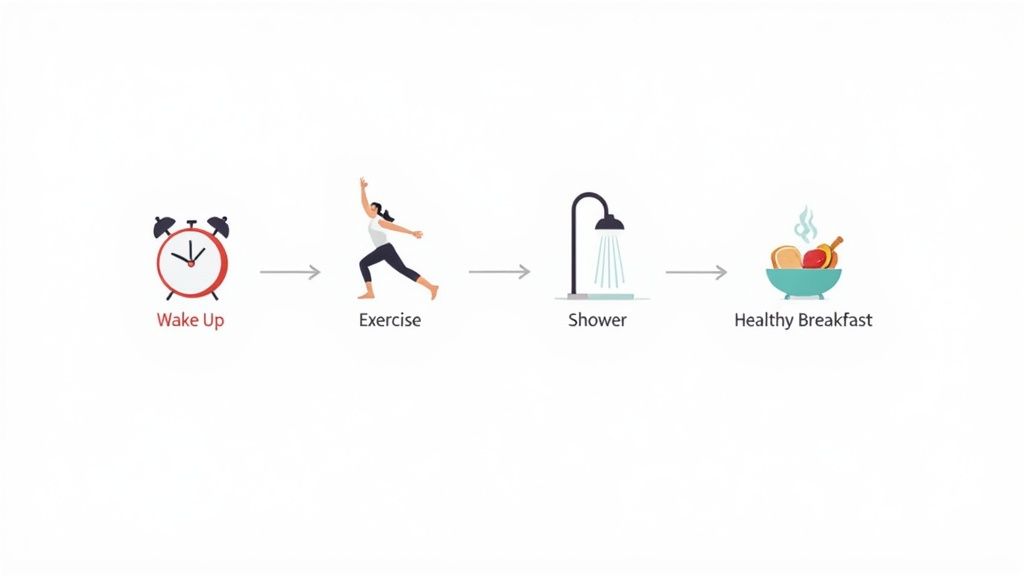
This approach creates a powerful, self-reinforcing loop. By conquering these small wins before the rest of the world wakes up, you build momentum and reduce decision fatigue, making it easier to make healthier choices all day long.
Strategic Breakdown
- The Trigger: Waking up. This is a non-negotiable daily event, making it the perfect anchor for a new routine.
- The Chain:
- After I wake up, I will immediately put on my workout clothes.
- After I finish my workout, I will take a shower.
- After I shower, I will make a healthy, no-sugar-added breakfast.
- The Reward: You start your day feeling accomplished, energized, and mentally clear, having already prioritized your physical well-being. This proactive start helps you resist sugar cravings later.
Key Insight: This stack capitalizes on "pre-decision." By having a set plan, you eliminate the mental debate about whether or not to exercise or what to eat for breakfast. The path is already laid out.
Actionable Takeaways
To implement this stack successfully, start small and prepare ahead.
- Prepare the Night Before: Lay out your workout clothes and prep your breakfast ingredients. This removes friction and makes starting effortless.
- Start with Two: Begin with just "Wake-Up → Exercise." Once that becomes automatic, add the next habit in the chain. This gradual approach is crucial for building healthy habits that stick.
- Use the StopSugar App: Set reminders for each transition (e.g., "Time for your workout!") and log your completion each morning to build a streak and stay motivated.
2. Work Productivity Stack: Pomodoro Timer → Deep Work Focus → Brief Walk Break → Hydration
This mid-day habit stack is one of the most effective habit stacking examples for optimizing professional performance and mental clarity. It leverages the Pomodoro Technique as an anchor to trigger a cycle of intense focus, strategic rest, and rehydration. This structure helps you combat procrastination, manage distractions, and maintain high energy levels without relying on sugary snacks or caffeine for a boost.

By breaking your workday into manageable, focused sprints, you create a sustainable rhythm that prevents burnout and enhances cognitive function. This stack transforms a daunting to-do list into a series of achievable intervals, making deep work feel less intimidating and more rewarding.
Strategic Breakdown
- The Trigger: Starting a Pomodoro timer (typically for 25 minutes). This intentional act signals to your brain that it's time to enter a state of deep focus.
- The Chain:
- After I start the timer, I will put my phone on silent and work on a single task.
- After the timer goes off, I will get up and take a 5-minute walk.
- After my walk, I will drink a full glass of water.
- The Reward: You achieve a state of flow, make tangible progress on important tasks, and return to your desk feeling physically refreshed and mentally reset. This proactive approach to breaks prevents the mental fatigue that often leads to sugar cravings.
Key Insight: This stack institutionalizes rest. Instead of waiting for burnout to force a break, you build structured, restorative pauses directly into your workflow, making high-level focus sustainable throughout the day.
Actionable Takeaways
To make this productivity stack work, focus on eliminating friction and protecting your focus intervals.
- Disable Notifications: Your 25-minute focus block is sacred. Turn off all phone, email, and desktop notifications to prevent interruptions from breaking your concentration.
- Protect Your Vision: Deep work often involves extended screen time. To optimize these sessions and prevent fatigue, it's wise to learn from a practical guide on how to reduce eye strain, ensuring your focus is both productive and sustainable.
- Use the StopSugar App: Set a recurring timer in the app to remind you when to start each Pomodoro session. You can also log each glass of water you drink during breaks to track your hydration goals and build momentum.
3. Evening Wind-Down Stack: Screen Time Cutoff → Journaling → Reading → Sleep Preparation
This powerful evening routine is one of the most effective habit stacking examples for improving sleep quality and reducing late-night stress, which often leads to sugar cravings. It creates a deliberate transition from the stimulation of the day to a state of calm, signaling to your brain that it's time to rest. The stack begins with a firm cutoff for screen time, using that digital boundary as a trigger for a sequence of relaxing, restorative activities.
This stack is championed by sleep scientists like Matthew Walker and wellness advocates such as Arianna Huffington. It directly combats the "tired but wired" feeling many people experience. By replacing blue-light exposure with analog activities like journaling and reading, you allow your body's natural melatonin production to increase, paving the way for deeper, more restorative sleep.
Strategic Breakdown
- The Trigger: A set time to turn off all screens (e.g., 9 PM). This creates a clear, non-negotiable anchor for the rest of your evening.
- The Chain:
- After I turn off all my screens, I will open my journal and write for ten minutes.
- After I finish journaling, I will read a physical book for twenty minutes.
- After I finish reading, I will begin my sleep preparation (e.g., brushing my teeth, setting out clothes for tomorrow).
- The Reward: You fall asleep faster, experience higher-quality sleep, and wake up feeling more rested and mentally clear. This improved rest significantly enhances your ability to manage cravings and make healthy choices the next day.
Key Insight: This stack methodically de-stimulates your brain. Each step is progressively calmer, moving you from active mental processing (journaling) to passive relaxation (reading), making the final transition to sleep feel natural and effortless.
Actionable Takeaways
To make this wind-down routine stick, focus on creating a sleep-conducive environment.
- Set an Alarm: Use a recurring phone alarm to signal your screen-time cutoff. This removes the need for willpower and makes the first step automatic.
- Prepare Your Space: Keep your journal and a calming, non-stimulating book on your nightstand. This makes it easy to transition from one habit to the next without friction.
- Start Small: Begin with just "Screen Cutoff → Reading for 5 minutes." Once that feels easy, add the journaling component. Building the stack gradually prevents it from feeling like a chore.
4. Health Tracking Stack: Weigh-In → Meal Logging → Water Intake Recording → Step Count Check
This accountability-focused stack creates a powerful daily ritual for health monitoring. It’s one of the most effective habit stacking examples for anyone aiming to make data-driven wellness decisions. The process begins with a simple morning weigh-in, which serves as a firm anchor, triggering a cascade of tracking behaviors throughout the day, from logging meals and water to checking your final step count.
This method transforms separate, easy-to-forget tasks into a single, cohesive routine. By linking these actions, you build a comprehensive picture of your health inputs and outputs, which is crucial for identifying patterns, understanding your body’s needs, and staying motivated on your journey to reduce sugar and improve overall well-being.
Strategic Breakdown
- The Trigger: A morning weigh-in. This is a quick, definitive action that naturally occurs at the start of the day, making it an ideal anchor.
- The Chain:
- After I weigh myself, I will log my breakfast.
- After I log a meal, I will record my water intake for that part of the day.
- Before I go to bed, I will check and log my final step count.
- The Reward: You end each day with a complete and accurate data set, feeling empowered and in control of your health journey. This clarity helps you make conscious, informed choices rather than guessing.
Key Insight: This stack gamifies health management by turning it into a daily data collection mission. The focus shifts from the pressure of results to the consistency of tracking, which naturally leads to better outcomes.
Actionable Takeaways
To make this stack stick, focus on accuracy and seamless integration into your daily life.
- Log Meals Immediately: For the most accurate tracking, log your food as you eat it. For optimizing your meal logging efforts, exploring various food scanner apps can significantly speed up the process and improve accuracy.
- Use Integrated Tools: Utilize one of the best habit tracking apps that can sync weight, nutrition, water, and activity from different sources. This minimizes manual entry and keeps all your data in one place.
- Focus on Trends: Don't get discouraged by daily fluctuations in weight or steps. The true value lies in observing long-term trends, which show your consistent progress over time.
5. Financial Responsibility Stack: Check Account → Review Spending → Budget Update → Savings Transfer
This powerful financial habit stack transforms a routine task, checking your bank account, into a catalyst for mindful money management. By linking a series of small, intentional actions, you create a system that fosters awareness, discipline, and proactive savings. It’s one of the most effective habit stacking examples for building long-term wealth because it automates financial check-ins.
This sequence turns a potentially anxiety-inducing glance at your balance into a productive session. You move from awareness (checking the account) to analysis (reviewing spending), then to planning (updating the budget), and finally to action (transferring savings). This method, championed by financial experts like Dave Ramsey and Jesse Mecham of YNAB, builds a consistent and empowering financial routine.
Strategic Breakdown
- The Trigger: Checking your bank account. This is a common and often frequent action, making it an excellent anchor for a weekly or bi-weekly financial review.
- The Chain:
- After I check my bank account, I will take 10 minutes to review and categorize last week's spending.
- After I review my spending, I will update my budget to reflect my progress and plan for the week ahead.
- After I update my budget, I will transfer a set amount of money into my savings account.
- The Reward: You gain a sense of control and clarity over your finances. This reduces financial stress and builds confidence, knowing you are actively working toward your financial goals rather than passively letting money slip away.
Key Insight: This stack combats financial avoidance. By creating a structured, low-friction routine, you replace unstructured worry with scheduled, productive action, making it easier to stay on top of your financial health.
Actionable Takeaways
To make this financial stack stick, focus on consistency and automation.
- Schedule It: Set a recurring calendar appointment for your financial review, such as every Sunday morning. This dedicates a specific time and removes the need to "find time" later.
- Automate Where Possible: Set up an automatic transfer for your savings. Once you've completed your review and confirmed the amount, the final step is effortless and guaranteed to happen.
- Start Small: Begin with a simple "Check Account → Review Spending" stack. Once that feels natural, add the budget update and savings transfer to avoid feeling overwhelmed.
6. Learning Stack: Read Article/Book → Take Notes → Discuss with Someone → Implement Learning
This intellectual habit stack transforms passive consumption into active learning. It’s one of the most effective habit stacking examples for anyone looking to not just learn new information, but to retain, understand, and apply it. The chain begins with a simple act of reading and builds a structured process for turning knowledge into real-world skill and wisdom.
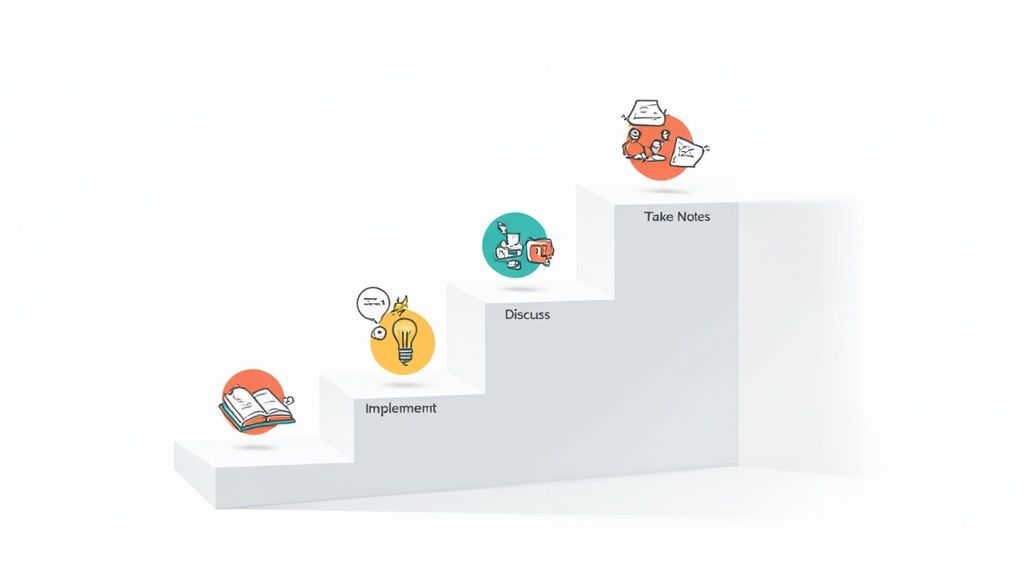
By linking these four distinct actions, you create a comprehensive learning cycle. Reading introduces ideas, note-taking solidifies them, discussion challenges and refines your understanding, and implementation makes the knowledge a permanent part of your toolkit. This prevents valuable insights from being forgotten moments after you close the book or browser tab.
Strategic Breakdown
- The Trigger: Finishing a chapter, article, or podcast episode. This is a natural stopping point that serves as an ideal anchor.
- The Chain:
- After I finish reading a section, I will immediately summarize the key takeaways in my own words.
- After I take notes, I will share one key insight with a friend, colleague, or online community.
- After I discuss the idea, I will identify one small action I can take to implement the learning.
- The Reward: You gain genuine mastery over a new subject, enhance your critical thinking skills, and see tangible results from your learning efforts. This creates a powerful feeling of intellectual growth and competence.
Key Insight: This stack combats the "illusion of knowing." Simply reading something makes us feel like we've learned it, but this structured process forces deeper engagement, ensuring the information is truly processed and integrated.
Actionable Takeaways
To make this learning stack stick, focus on reducing friction and creating accountability.
- Prepare Your Tools: Keep a dedicated notebook or digital document open while you read. Use a system like Cornell Notes to structure your thoughts effectively.
- Find Your Community: Identify a "discussion partner" beforehand. This could be a colleague, a friend, or a dedicated online group on Reddit or Discord. Knowing who you'll talk to makes the step easier.
- Schedule It: Plan your discussion and implementation steps. For example, schedule a 15-minute chat with a coworker the next day or block time on your calendar to apply the new technique.
7. Relationship Building Stack: Greeting → Genuine Question → Active Listening → Follow-Up Plan
This interpersonal habit stack is one of the most transformative habit stacking examples for improving the quality of your personal and professional relationships. It turns a simple, everyday interaction, like greeting someone, into a powerful opportunity for intentional connection. The stack works by using the existing habit of greeting someone to trigger a chain of deeper, more meaningful behaviors.
This structured approach moves you from superficial small talk to genuine connection. By intentionally asking thoughtful questions, listening actively, and planning to follow up, you demonstrate that you value the other person, which is the cornerstone of any strong relationship. This stack is particularly effective for leaders, friends, and family members looking to deepen their bonds.
Strategic Breakdown
- The Trigger: Greeting a person (a colleague, friend, or family member). This is a frequent and natural social anchor.
- The Chain:
- After I greet someone, I will ask a genuine, open-ended question about them.
- After they respond, I will practice active listening without interrupting or planning my reply.
- After our conversation ends, I will make a note or set a reminder to follow up on a key detail they shared.
- The Reward: You build stronger, more authentic relationships, foster trust, and enhance your sense of social connection. This proactive approach to relationships can lead to greater personal fulfillment and professional opportunities.
Key Insight: This stack combats the tendency for conversations to be transactional or superficial. It forces you to be present and genuinely curious, turning a simple "hello" into a bridge for deeper understanding and mutual respect.
Actionable Takeaways
To implement this stack effectively, focus on sincerity and consistency.
- Ask Open-Ended Questions: Instead of "How are you?," try "What's been the most interesting part of your week?" This invites a more detailed and personal response.
- Prepare for Follow-Up: Use a simple note-taking app or your calendar to jot down important details (e.g., "Sarah's daughter has a soccer game Saturday"). This makes your follow-up specific and heartfelt.
- Use the StopSugar App: While not a direct food habit, building strong social connections is linked to better mental health, which can reduce emotional eating. Use the app’s notes feature to track key details from conversations and set reminders to follow up.
8. Self-Care Stack: Stress Assessment → Chosen Activity → Body Awareness → Gratitude Reflection
This mental wellness stack provides a structured approach to self-care, transforming it from a vague idea into a concrete, repeatable process. It begins with a moment of self-assessment to identify your emotional state, which then guides your choice of a restorative activity. This is one of the most adaptable habit stacking examples for managing stress and preventing emotional eating.
This proactive routine helps you respond to stress with intention rather than reacting with unhealthy coping mechanisms like reaching for sugary snacks. By creating a system for mental health, you build emotional resilience and learn to address your needs before they become overwhelming, making it a powerful tool for anyone from busy parents to healthcare workers.
Strategic Breakdown
- The Trigger: A scheduled time or feeling of overwhelm. This could be a calendar reminder mid-day or the internal cue of rising stress.
- The Chain:
- After I notice I'm feeling stressed, I will choose one activity from my pre-made self-care menu.
- After I begin the activity, I will do a body scan to notice how I feel physically.
- After I finish my self-care activity, I will write down one thing I am grateful for.
- The Reward: You end the sequence feeling calmer, more centered, and in control. This breaks the cycle of stress-induced cravings and reinforces a healthy relationship with your emotional well-being.
Key Insight: This stack turns self-care into a diagnostic tool. Instead of randomly choosing an activity, you first assess your need, which makes the chosen action far more effective and satisfying.
Actionable Takeaways
To make this stack stick, focus on preparation and accessibility.
- Create a "Self-Care Menu": List 5-10 pre-approved activities of varying lengths (e.g., 5-minute deep breathing, 15-minute walk, 30-minute bath). This removes decision-making when you're already stressed.
- Treat it as Non-Negotiable: Schedule these check-ins like important appointments. This is crucial for managing the triggers that often lead to poor food choices. Understanding this connection is the first step in learning how to stop stress eating.
- Use the StopSugar App: Set a recurring daily reminder for your "Stress Assessment." Use the notes feature to log your chosen activity and gratitude reflection, creating a powerful record of your emotional regulation journey.
8 Habit Stacks Comparison
| Stack | Implementation Complexity 🔄 | Resource Requirements ⚡ | Expected Outcomes ⭐📊 | Ideal Use Cases 💡 | Key Advantages ⭐ |
|---|---|---|---|---|---|
| Morning Routine Stacking: Wake-Up → Exercise → Shower → Healthy Breakfast | Medium 🔄 — requires consistent wake time and initial discipline | Low–Moderate ⚡ — 30–60 min, basic exercise space and breakfast prep | Higher daytime energy and productivity; reduced decision fatigue ⭐📊 | Early risers, professionals seeking structured mornings | Automates healthy choices; boosts mood & sustained energy ⭐ |
| Work Productivity Stack: Pomodoro → Deep Work → Walk → Hydration | Low–Medium 🔄 — timer discipline and interruption management | Low ⚡ — timer/app, short walk space, water | Increased focus, more completed work cycles, reduced burnout ⭐📊 | Knowledge workers, students, remote workers | Enforces focus/recovery rhythm; measurable progress (Pomodoros) ⭐ |
| Evening Wind-Down Stack: Screen Cutoff → Journaling → Reading → Sleep Prep | Medium 🔄 — strict evening schedule and habit transition | Low ⚡ — books/journal, dim lighting or amber bulbs | Improved sleep quality and reduced pre-sleep anxiety ⭐📊 | People with sleep issues or high evening arousal | Strong impact on sleep hygiene and circadian consistency ⭐ |
| Health Tracking Stack: Weigh-In → Meal Log → Water → Steps | Medium 🔄 — daily logging and consistent checks | Moderate ⚡ — scale, apps/wearables, time for entries | Greater self-awareness and measurable health trends ⭐📊 | Those with weight/fitness goals or medical monitoring needs | Objective metrics for progress; pattern identification ⭐ |
| Financial Responsibility Stack: Check → Review → Budget Update → Save | Low–Medium 🔄 — regular scheduled reviews (weekly/bi-weekly) | Low ⚡ — banking apps, budget tools | Better budget control, automated savings, reduced overspending ⭐📊 | People improving finances, savers, couples managing money | Automatable processes; increases financial visibility and discipline ⭐ |
| Learning Stack: Read → Take Notes → Discuss → Implement | Medium–High 🔄 — multi-step workflow and accountability | Low–Moderate ⚡ — reading material, note tools, discussion partners | Deep retention and practical skill acquisition; faster expertise ⭐📊 | Students, professionals, lifelong learners seeking mastery | Multi-modal reinforcement yields higher retention & application ⭐ |
| Relationship Building Stack: Greeting → Question → Listening → Follow-Up | Low–Medium 🔄 — requires presence, empathy, and planning | Low ⚡ — time, note-taking for follow-ups | Deeper trust, stronger social bonds and networking value ⭐📊 | Leaders, parents, managers, networkers | Systematic approach to meaningful connection; builds trust ⭐ |
| Self-Care Stack: Stress Assessment → Activity → Body Awareness → Gratitude | Low–Medium 🔄 — requires honest self-checks and chosen actions | Low–Moderate ⚡ — pre-planned activities, private space or tools | Reduced stress, better emotional regulation and resilience ⭐📊 | High-stress workers, caregivers, anyone needing mental health habits | Flexible, individualized; prevents burnout and increases wellbeing ⭐ |
Your Blueprint for Building Better Habits
We’ve explored a wide array of habit stacking examples, from kickstarting your morning with an energizing routine to winding down your evening for restorative sleep. The power of this strategy isn't just in the individual habits, but in the seamless, automated chains of behavior you create. This isn't about finding more willpower; it's about engineering a system where positive actions flow naturally from one to the next.
The core principle is simple yet profound: anchor a new, desired habit to an existing, solid one. This removes the decision-making fatigue that so often derails our best intentions. By leveraging the momentum of what you already do, you create a powerful current that pulls your new habits along with it.
Your Actionable Next Steps
The journey from inspiration to integration starts now. Don't feel pressured to implement all eight stacks at once. The goal is sustainable progress, not immediate perfection. Here’s how to begin:
- Identify Your Keystone: Look at your day and pinpoint one "keystone habit" that you perform without fail. This could be your morning coffee, brushing your teeth, or finishing your work lunch. This is your anchor point.
- Choose One Small Addition: Select one new habit from our examples, or create your own, that takes less than two minutes to complete. If your goal is reducing sugar, a perfect start is: After I finish my lunch, I will immediately drink a full glass of water.
- Track Your Progress: Consistency is the engine of habit formation. Use a tool like the StopSugar app to do your daily check-in immediately after completing your new habit. This provides immediate positive reinforcement and builds a visual record of your success, which is a powerful motivator.
Why This Framework Is a Game-Changer
Mastering the art of habit stacking is about more than just checking boxes. It’s a fundamental shift in how you approach personal growth. Instead of relying on fluctuating motivation, you build a reliable architecture for your life. Each successful stack reinforces your identity as someone who follows through on their commitments.
For those of you targeting sugar reduction, this method is transformative. It breaks down the overwhelming goal of "eating healthier" into tiny, manageable steps. Stacking a glass of water after a meal, a five-minute walk after work, or logging your food in the StopSugar app after breakfast are all small wins. These wins compound over time, leading to significant, lasting changes in your health, energy levels, and overall well-being.
The habit stacking examples in this article are your blueprint. Now it's time to become the architect of your own life. Pick your first stack, commit to it for just one week, and witness how a small, strategic change can create an unstoppable ripple effect of positive transformation. Your future self will thank you for it.