A Practical Guide on How to Lower Blood Sugar Fast
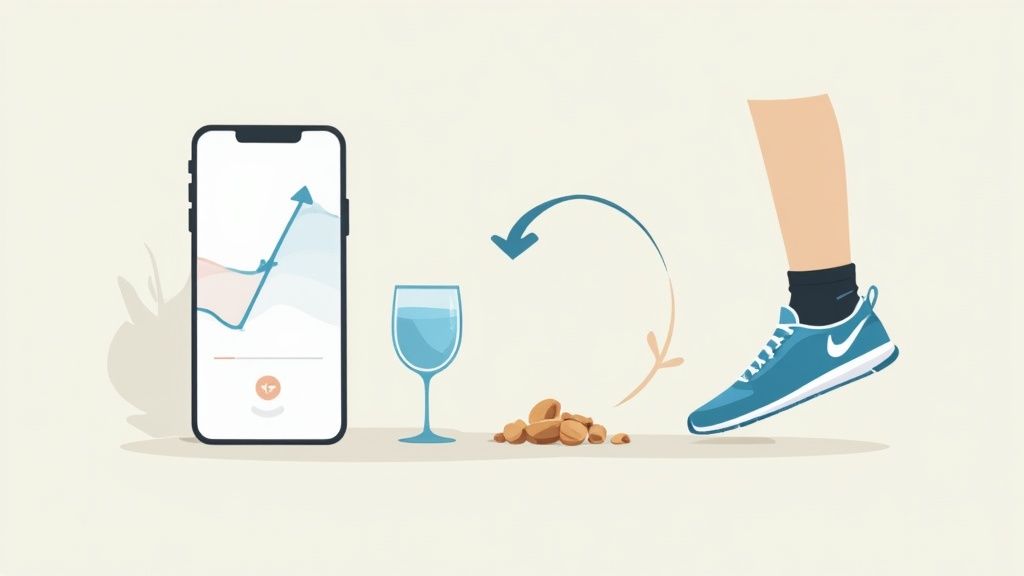
When you see a high number on your glucose meter, your first thought might be to panic. Don't. The goal is to bring your blood sugar down quickly but safely, without causing a sharp drop.
Your immediate response plan is actually pretty simple and focuses on two key things: grabbing a big glass of water and going for a short, easy walk. These aren't just old wives' tales; they are scientifically-backed, in-the-moment strategies that can help get your levels back on track.
What to Do Immediately for High Blood Sugar
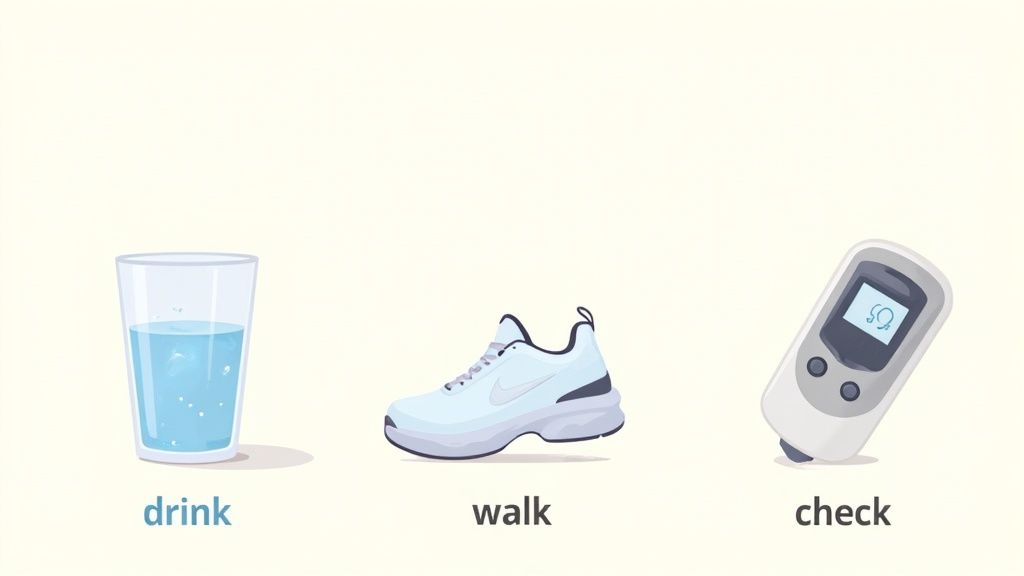
Seeing a high reading is stressful, I get it. But stress itself can make things worse by releasing hormones like cortisol that raise blood sugar even more. Instead, try to see that number as a signal—a nudge from your body asking for a little help.
The most effective things you can do right now don't require any special equipment or complicated plans. They are simple, accessible, and tap into your body's natural processes.
Start with Hydration
Before you do anything else, go drink a large glass of plain water. When your blood sugar is high, your body desperately tries to get rid of the excess glucose through your urine. But for this to work, you need to be well-hydrated. If you're dehydrated, the sugar in your bloodstream becomes more concentrated, which only worsens the problem.
Drinking water helps dilute the glucose in your blood and gives your kidneys the support they need to filter it all out. Aim for at least 16 ounces (that’s about two good-sized glasses) right away. Stick to plain water—avoid sugary drinks, fruit juices, and even diet sodas, as they can complicate things.
Get Moving Gently
After you've had some water, it's time for some light physical activity. A gentle 10-15 minute walk is one of the most powerful tools you have. This isn't the time for a high-intensity workout. In fact, really strenuous exercise can sometimes backfire by causing your body to release adrenaline, which can temporarily bump your sugar levels even higher.
When you walk, your muscles need fuel. They pull glucose straight from your bloodstream to get the energy they need, which directly lowers your overall blood sugar. This is a neat biological trick that works even without insulin, making it incredibly effective when your levels are high.
It's not just theory, either. Research consistently shows that a short walk has a surprisingly fast impact. One study found a 10-minute walk significantly lowered blood glucose after a meal. So, when I say go for a walk, it’s because the science backs it up as a fast-acting solution.
Key Takeaway: A 10-15 minute walk isn't just a suggestion; it’s a proven method to get your muscles to soak up excess sugar from your bloodstream, providing a fast and natural fix for a high reading.
This table gives you a quick-glance guide for what to do the moment you see a high number.
Immediate Actions for High Blood Sugar
| Action | Why It Works Fast | How to Do It Safely |
|---|---|---|
| Drink Water | Dilutes the glucose in your blood and helps your kidneys flush out excess sugar. | Drink 16 ounces of plain water. Avoid sugary or caffeinated beverages. |
| Take a Walk | Your muscles use glucose from the bloodstream for energy, directly lowering your levels. | A gentle 10-15 minute walk. Avoid intense exercise, which can raise blood sugar. |
| Re-check Levels | Confirms if your actions are working and helps you avoid overcorrecting and going too low. | Wait 15-30 minutes after walking, then test your blood sugar again. |
Following these steps gives your body the best chance to self-correct in a controlled way.
Monitor and Re-Check
After hydrating and taking that walk, it's time to see if it worked. Wait about 15-30 minutes, then check your blood sugar again. This step is critical. It tells you if you're on the right track and, just as importantly, prevents you from overcorrecting and sending your blood sugar crashing down.
If your levels are still high, you can repeat the process: another glass of water, another short walk. But if your numbers haven't budged or are still climbing—especially if you start to feel unwell—it’s time to follow your doctor’s specific instructions or give them a call.
Keeping a log of these incidents, maybe with a tool like the StopSugar app, can be incredibly helpful for spotting patterns and triggers down the road.
When High Blood Sugar Becomes an Emergency
You've done the right things—you drank some water, maybe went for a walk—but your blood sugar just isn't coming down. Knowing how to handle a moderate spike is one thing, but it’s just as important to recognize when the situation has escalated into something more serious.
Think of these signs as your body’s emergency flares. Ignoring them can lead to dangerous conditions like diabetic ketoacidosis (DKA), where your body, starved for glucose it can't use, starts burning fat for energy. This process creates byproducts called ketones, which can build up to toxic levels in your blood. It's a true medical emergency, and you need to act fast.
Time to Call Your Doctor
A single high reading isn't usually a cause for panic. But when your blood sugar stays high, or you start feeling sick, it’s time to pick up the phone. Don't second-guess yourself—it's always better to be safe.
Reach out to your doctor if you're dealing with any of these:
- Stubbornly High Numbers: Your meter consistently reads over 240 mg/dL, even after you've tried to bring it down.
- Ketones in Your Urine: You used a home test strip, and it's showing moderate or high levels of ketones.
- Can't Keep Anything Down: You're feeling nauseous or are actively vomiting, making it impossible to stay hydrated or eat.
- Persistent Diarrhea: If it's been going on for more than six hours, you're at a serious risk for dehydration.
A quick conversation with your healthcare team can help you figure out the next steps, whether that’s adjusting your medication or coming in for an evaluation.
When It's an ER Situation, No Questions Asked
Some symptoms are non-negotiable. They are clear signals that your body is in serious trouble, potentially heading toward DKA or another severe condition called Hyperosmolar Hyperglycemic State (HHS). Don't wait for a doctor to call you back.
This is a medical emergency. If you or someone else has very high blood sugar along with any of the following symptoms, call 911 or get to the nearest emergency room immediately.
These are the red flags that demand immediate medical help:
- Fruity-Smelling Breath: A distinct sweet smell on the breath, almost like nail polish remover, is a tell-tale sign of high ketones.
- Labored Breathing: If breathing becomes deep and rapid (sometimes called Kussmaul breathing), it's the body's desperate attempt to get rid of excess acid.
- Intense Stomach Pain: This can be a sign of DKA, especially if it comes with nausea or vomiting.
- Confusion or Extreme Drowsiness: Any change in mental state—feeling disoriented, unusually sleepy, or having trouble staying awake—is a major warning.
- Passing Out: If you or someone else loses consciousness, it's a life-threatening emergency.
Knowing how to lower blood sugar fast with at-home strategies is a fantastic skill. But the most critical skill of all is knowing when to stop and let the professionals take over. Never try to tough out severe symptoms. Getting help quickly is the key to staying safe.
Using Food to Quickly Stabilize Your Blood Sugar
When you see a high blood sugar reading, your first thought might be to just stop eating. I get it. But the right food choices are actually one of the fastest ways to get your levels back into a safer range.
The trick isn’t to avoid food entirely, but to pick foods that work for you, not against you. Think of simple carbs—like crackers or a granola bar—as a fire hose, flooding your bloodstream with sugar all at once. What you need is more like a garden hose: a slow, steady release of energy. That’s where protein, healthy fats, and fiber come in.
The Power Trio: Protein, Fat, and Fiber
When you need to bring your blood sugar down, your go-to snacks and meals should always feature this combination. Each one has a specific job to do.
- Protein takes a while to digest and doesn’t spike your blood sugar. It also keeps you feeling full, so you won’t be tempted to grab another carb-heavy snack that would just make the problem worse.
- Healthy Fats, like the kind you find in avocados or nuts, literally slow down how fast your stomach empties. This means any carbs you eat with them get released into your system much more slowly.
- Fiber is your best friend for managing sugar absorption. Soluble fiber, in particular, creates a kind of gel in your digestive system that traps sugars, preventing that sharp, sudden spike you’re trying to avoid.
Combining these three is the real secret. For example, don't just eat an apple on its own. Pair it with a spoonful of almond butter. The protein and fat from the nuts will buffer the fruit's sugar, resulting in a much gentler effect on your glucose levels.
Quick Blood Sugar-Friendly Food Swaps
Making the right choice in the heat of the moment can be tough. To make it easier, here are some practical swaps you can make right now to help bring your numbers down.
| Instead Of This (High Sugar/Carb) | Choose This Instead (Low Sugar/Carb) | Why It Helps |
|---|---|---|
| Flavored Yogurt | Plain Greek Yogurt with Berries | Flavored yogurts are packed with hidden sugar. Plain Greek yogurt has more protein, and berries add fiber. |
| Rice Cakes or Pretzels | Handful of Almonds or Walnuts | These are just fast-digesting carbs. Nuts give you healthy fats and protein, which seriously slow digestion. |
| Cereal with Milk | Scrambled Eggs with Spinach | Most cereals are loaded with sugar. Eggs provide quality protein and fat with almost no carbs to keep you stable. |
| Glass of Fruit Juice | A Small Whole Orange | Juice is basically liquid sugar with none of the fruit's fiber. The whole fruit gives you that crucial fiber. |
These aren't just long-term strategies; they are immediate fixes you can use to manage a high reading right now. Understanding these principles is a huge part of taking back control.
Expert Tip: Don't forget about "hidden" sugars in things like sauces, dressings, and condiments. Just one tablespoon of ketchup can have 4 grams of sugar. That adds up fast and can easily undo your efforts to get your levels down.
The more you practice making these smart choices, the easier it becomes. For a more detailed list of what to eat, check out our guide on foods that stabilize blood sugar.
Beyond the Swap: Recognizing Critical Symptoms
While food is your first line of defense, you absolutely have to listen to your body's signals when your blood sugar is dangerously high. Some symptoms are more than just a warning—they’re a sign you need help.
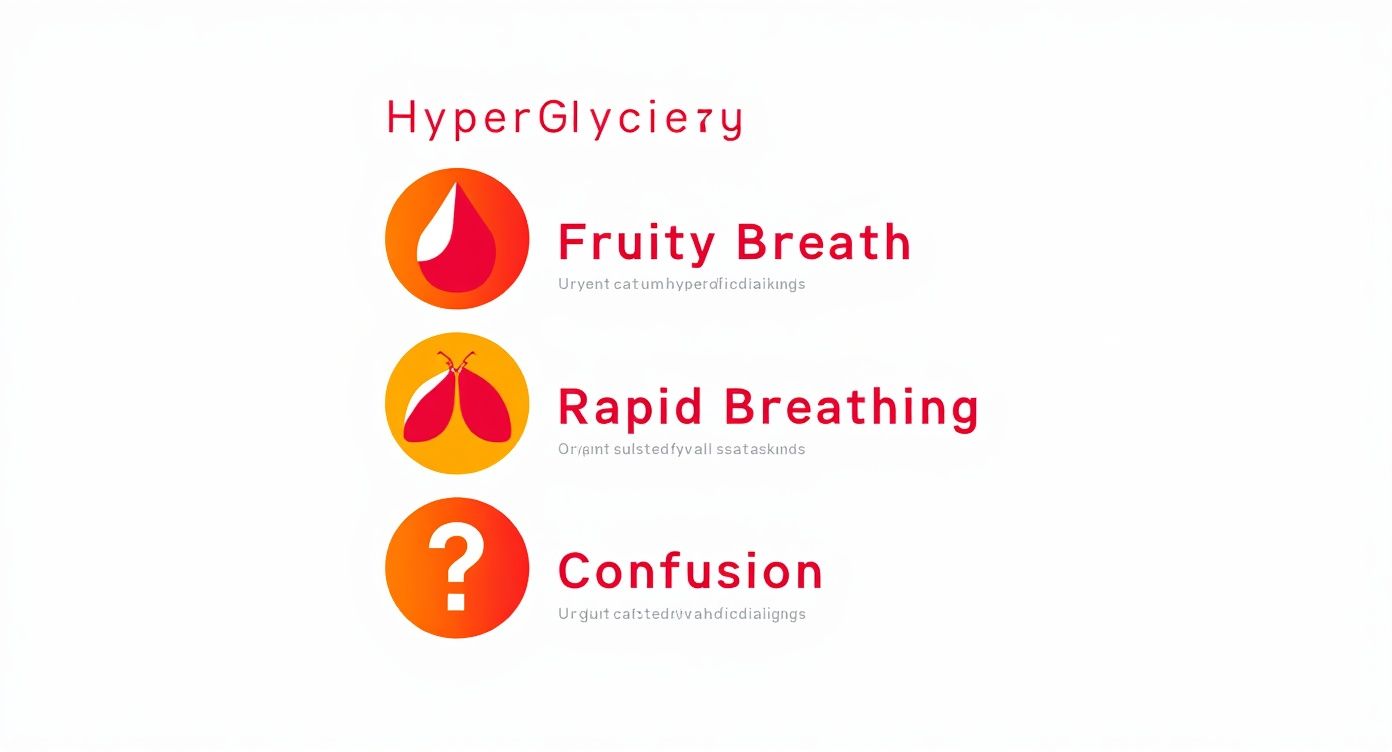
If you notice things like fruity-smelling breath, rapid breathing, or confusion, your body is in serious distress. A handful of nuts can help with a minor spike, but these symptoms are a clear signal that you need to seek professional medical help immediately.
Building Habits to Prevent Future Blood Sugar Spikes
https://www.youtube.com/embed/4ti5jyZ3nLk
Knowing how to handle a high reading is a vital skill, but let's be honest—the real victory is stopping that spike from happening in the first place. This is about shifting your mindset from reactive to proactive, which is the secret to long-term stability and genuine peace of mind.
It’s all about creating a foundation of simple, sustainable habits that keep your blood sugar steady day in and day out. This proactive approach turns the stressful cycle of spikes and crashes into a confident, well-managed routine. It's not about being perfect; it’s about being consistent.
Master Your Meal Timing
One of the most powerful, and often overlooked, strategies for preventing blood sugar spikes is simply eating on a consistent schedule. When you skip meals or wait too long between them, your blood sugar can plummet. That triggers intense hunger and cravings for the exact kind of fast-acting carbs that send your glucose on a rollercoaster.
Aim to eat balanced meals and snacks every 3-5 hours. This simple rhythm helps maintain a steady supply of energy for your body. Over time, this consistency trains your system to expect fuel at regular intervals, which can improve insulin sensitivity and stop those dramatic highs and lows that leave you feeling totally drained.
The Art of Balancing Your Plate
What you put on your plate is just as important as when you eat it. Every single meal and snack is a new opportunity to manage your blood sugar effectively. The goal here is simple: never let carbohydrates go into battle alone. Always send them in with their best friends: protein, healthy fats, and fiber.
Think about it this way. A plain bagel is almost pure carbohydrate and will likely cause a fast, sharp spike. Now, imagine that same bagel with a generous schmear of avocado and a scrambled egg on top. The healthy fat from the avocado and the protein from the egg completely change the game by slowing down how quickly your body digests the bagel's carbs.
This principle works for everything:
- An apple by itself? It's a great choice, but its natural sugar can still hit your bloodstream pretty quickly.
- An apple with a handful of walnuts? Now you've got a buffer. The protein, fat, and fiber in the nuts ensure a much slower, gentler rise in blood sugar.
This simple habit of "food pairing" is a game-changer for preventing future spikes.
A proactive approach isn't about eliminating carbs; it's about strategically pairing them. By adding protein and fat to every meal, you slow down sugar absorption and give your body the tools it needs to maintain balance.
Make Movement a Daily Ritual
Regular, enjoyable exercise is a cornerstone of stable blood sugar. You don't need to run marathons or spend hours at the gym. What matters is consistent, moderate activity, which makes your muscles more sensitive to insulin. That means they can pull glucose from your blood far more effectively.
Even a short, brisk 15-minute walk after your main meals can have a profound impact. This simple post-meal movement immediately starts using up the glucose from the food you just ate, preventing it from hanging around in your bloodstream and causing a spike.
The key is to find something you actually like doing, whether it’s walking, dancing, cycling, or gardening. When movement feels like a treat instead of a chore, it becomes a habit you can stick with for life.
Using Technology to Your Advantage
Trying to build all these new habits can feel like a lot to juggle, but modern tools can make the process much simpler. An app like StopSugar can act as your personal guide, helping you track patterns and finally understand your body's unique responses to different foods and activities.
Here is what the dashboard inside the StopSugar app looks like, helping you visualize your progress.
By logging your meals and sugar intake, you start connecting the dots between what you eat and how you feel. This data is invaluable for identifying your personal trigger foods and discovering healthy, satisfying alternatives that keep you feeling great.
In fact, research shows that digital management tools can make a real difference. Studies have found that digital diabetes technologies significantly improve fasting blood glucose levels. Greater self-monitoring, which apps make incredibly easy, is directly linked to better overall glucose control. You can learn about the impact of digital health tools and see the data for yourself.
Transforming your daily routines is a journey, not a race. For more guidance on making these changes stick, our article on how long it takes to break a habit offers practical tips for creating lasting change. By combining consistent meal timing, balanced eating, regular movement, and smart tracking, you can build a powerful defense against future blood sugar spikes.
How Monitoring and Stress Relief Impact Blood Sugar
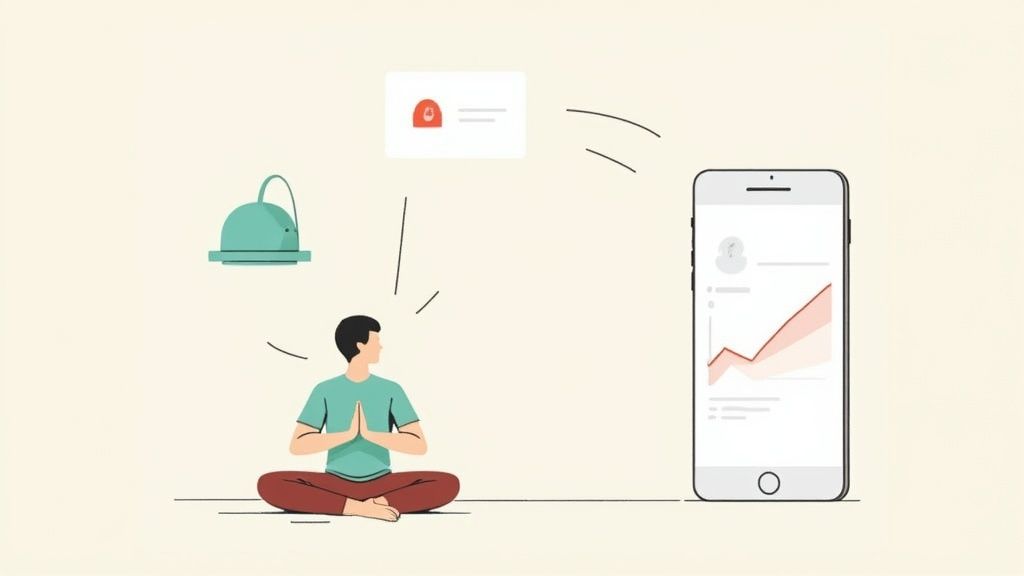
True blood sugar management is about more than just what you eat and how you move. It’s also about understanding your body’s unique patterns and getting a handle on your mental state. When you finally connect the dots between your daily habits, stress levels, and glucose readings, you unlock a whole new level of control.
This means looking at your glucose meter as a personal learning tool, not just a measurement device. It also means recognizing the surprisingly powerful link between your mind and your metabolism.
Turn Monitoring into a Learning Tool
Your glucose meter gives you so much more than a number—it provides instant feedback on how your choices are playing out inside your body. Instead of just checking randomly, get strategic with it. Test your blood sugar right before a meal and then again one to two hours after you finish eating.
This simple habit shows you exactly how specific foods affect you.
Maybe that "healthy" bowl of oatmeal sent your numbers soaring, or you discovered that adding a scoop of protein powder to your smoothie made a huge difference. This data is pure gold. It helps you pinpoint your personal trigger foods and find what truly works for your body, taking all the frustrating guesswork out of eating. Our guide on using a glucose monitor for weight loss goes much deeper into how this information can empower your health journey.
You can do the same thing with exercise. Check your levels before and after a workout, and you'll see firsthand how even a short walk helps your muscles soak up glucose. It's tangible proof that your efforts are paying off.
The Surprising Connection Between Stress and Sugar
Have you ever had a crazy-stressful day and noticed your blood sugar was high, even though you ate perfectly? You're not imagining things. When you're stressed, your body flips into "fight or flight" mode, unleashing a flood of hormones like cortisol and adrenaline.
These hormones are designed to give you a quick energy jolt to deal with a threat. They do this by telling your liver to dump its stored glucose straight into your bloodstream. In ancient times, that was a lifesaver. Today, chronic stress from work deadlines, traffic jams, or family drama can lead to stubbornly high blood sugar levels.
This biological reality means that managing your mental state is just as crucial as managing your diet. If you ignore stress, you're constantly fighting an uphill battle against your own body's chemistry.
Your stress response is a powerful, automatic system that directly raises blood sugar. Learning to manage your stress is a non-negotiable part of effective glucose control.
Simple Techniques to Calm Your Mind and Body
The good news? You don’t need to go on a week-long meditation retreat to get your stress under control. Simple, practical techniques can make a real difference in just a few minutes by interrupting that stress-hormone cycle. Since stress is such a big player, learning how to lower cortisol levels naturally can be a game-changer for your blood sugar.
Here are a few quick things you can do anywhere to help calm your system:
- Box Breathing: This one is incredibly simple but so effective. Inhale slowly for a count of four, hold your breath for four, exhale for four, and then hold again for four. Repeat this for just a minute or two to calm your nervous system right down.
- Five-Minute Mindfulness: Find a quiet spot (even a bathroom stall works in a pinch!) and close your eyes. Just focus on your breath—the feeling of the air moving in and out. Your mind will wander, and that’s okay. When it does, just gently guide it back to your breath.
- A Quick Walk in Nature: If you can, step outside for a few minutes. Focusing on the trees, the sky, or the sounds of birds is a fantastic way to reset your mental state and dial down those cortisol levels.
By weaving smart monitoring and simple stress relief into your daily routine, you’re tackling two of the biggest pieces of the blood sugar puzzle. It’s a more complete strategy that will get you much closer to stable, healthy glucose levels.
Common Questions About Lowering Blood Sugar Fast
Once you’ve got the basics down for handling high blood sugar, the real-world questions start to pop up. It's one thing to read the advice, but it’s another to know what to do when you’re staring at a high number on your meter. Let’s clear up some of that confusion.
This is where we get into the practical "what ifs" and "how to's" of managing a spike in the moment. Think of this as your go-to guide for those tricky situations.
How Long Does It Take for Water to Lower Blood Sugar?
This is one of the most common questions I hear, and for good reason—hydration is one of the fastest tools you have. When you drink a big glass of water, you’re not just quenching your thirst; you're actively helping to dilute the glucose in your bloodstream.
You’ll likely start to see a modest drop in your blood sugar within 30 to 60 minutes. The real magic happens as your kidneys get to work flushing the excess sugar out through urine. It’s not an instant fix, but it's a critical first step that primes your body for other actions, like a light walk.
Is It Safe to Exercise with Very High Blood Sugar?
This is a huge safety question, and the answer isn't always straightforward. While a gentle walk is one of the best things you can do for a moderate spike, you need to hit the pause button if your blood sugar is extremely high—generally over 250 mg/dL.
Exercising with blood sugar that high, especially if you have ketones in your urine (a sign your body is burning fat for fuel because it can't use glucose), can actually backfire. Strenuous activity can signal your liver to release even more sugar, pushing your levels into a more dangerous zone.
Safety First: If your blood sugar is above 250 mg/dL, check for ketones before you even think about exercising. If ketones are present, skip the workout and call your doctor. If there are no ketones, a very slow, gentle walk might be okay, but you have to monitor yourself carefully.
Can Certain Supplements Help Lower Blood Sugar Quickly?
It’s easy to get lost in the world of supplements, so let’s get straight to it. While some supplements have shown real promise for supporting blood sugar management over time, they are not a quick fix for a sudden spike.
Ingredients like berberine, cinnamon, and fenugreek are often studied for their potential to improve insulin sensitivity, but they work as part of a long-term strategy, not an emergency response. If you want to dig deeper, you can explore the top supplements for blood sugar support to see how they fit into a bigger picture. Just remember to talk to your doctor before adding anything new, since supplements can interfere with medications.
What if I Get a High Reading After a "Healthy" Meal?
This one is incredibly frustrating. You do everything right—you eat a healthy meal—and your meter still shows a spike. What gives? It almost always boils down to a couple of sneaky culprits: hidden carbs or portion sizes.
Even the healthiest foods, like fruit, quinoa, or sweet potatoes, are still carbohydrates that will raise your blood sugar.
- Portion Patrol: A "healthy" food can still pack too many carbs for one meal. A huge bowl of oatmeal is still a huge bowl of carbs.
- Hidden Sugars: Did you check the label on that salad dressing or pasta sauce? They can be loaded with sugar you never saw coming.
- "Naked" Carbs: Eating an apple by itself is a recipe for a quick spike. Try pairing it with a fat or protein source, like a handful of nuts or a slice of cheese, to slow down that sugar absorption. It makes a huge difference.