How to Lower Blood Sugar Naturally and Regain Your Energy
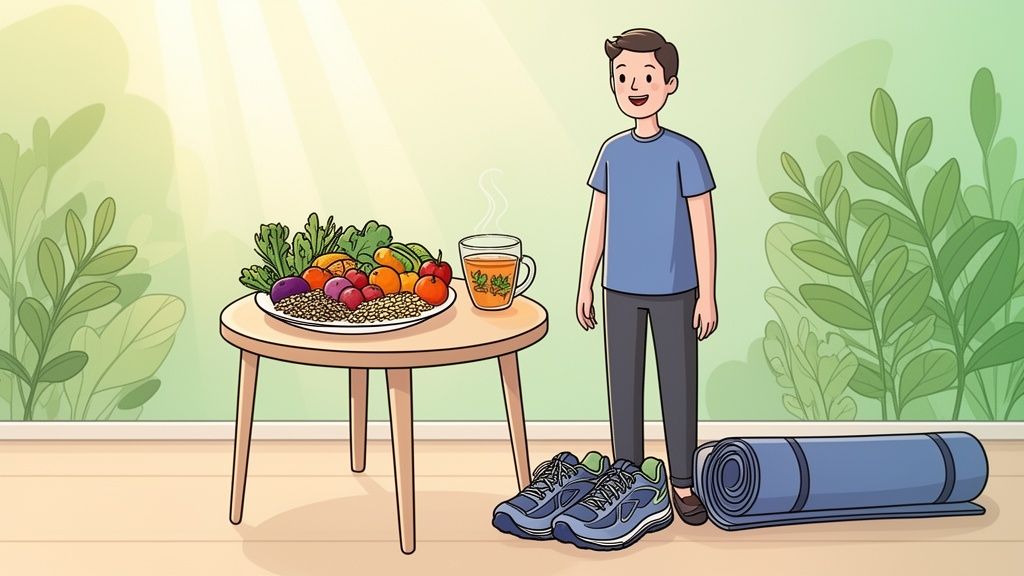
Tired of that midday energy crash? Fed up with those nagging sugar cravings? I get it. The secret to lowering your blood sugar naturally isn't some extreme, overnight fix. It’s about making a series of smart, sustainable choices that build on each other.
Lasting control comes from getting a handle on your diet, moving your body consistently, and making a few key lifestyle tweaks. It’s a powerful combination.
Your Path to Naturally Stable Blood Sugar Starts Here
If you’re looking for ways to feel better and manage your health without jumping straight to medication, you’re in the right place. High blood sugar can be a real drag, leaving you feeling sluggish, irritable, and unable to focus. It's often a direct result of our daily habits.
Here’s a quick rundown: when you eat, especially carbs, your body breaks them down into glucose (sugar) that enters your bloodstream. Your pancreas then releases insulin, which acts like a key to let that glucose into your cells to be used for energy.
The problem is, a diet heavy on processed carbs and sugar can put this whole system into overdrive. Your cells can start to ignore insulin’s signal—a condition called insulin resistance—which leaves too much sugar hanging out in your blood. This can lead to serious health problems down the road, but the great news is that you have a ton of power to turn things around.
By making proactive changes, you can seriously improve how your body handles sugar. Think more stable energy, a better mood, and a much lower risk of long-term health issues. This guide is your roadmap.
The Four Pillars of Natural Blood Sugar Management
Your journey to better blood sugar is built on four core principles. When you work on all of them together, they create a powerful effect that boosts your metabolic health from the inside out. Focusing on just one area is a common mistake; a balanced approach is what delivers real, lasting results.
Let's quickly introduce these four pillars, which we'll explore in detail.
| Strategy Pillar | Key Actions | Primary Benefit |
|---|---|---|
| Intelligent Nutrition | Prioritize fiber, protein, and healthy fats. Time your carb intake strategically. | Slows sugar absorption and prevents sharp blood sugar spikes after meals. |
| Consistent Movement | Mix cardio, strength training, and daily activity like post-meal walks. | Increases insulin sensitivity, helping muscles use glucose for energy. |
| Mindful Lifestyle | Aim for 7-9 hours of quality sleep and actively manage stress. | Reduces cortisol and other stress hormones that can elevate blood sugar. |
| Strategic Support | Use tracking tools to build habits and consider targeted, safe supplements. | Provides data and reinforcement to stay on track and fill nutritional gaps. |
These pillars are the foundation for everything we’re about to cover. To get a head start on some of these concepts, you can check out our guide to stabilize blood sugar levels.
By understanding how these areas work together, you’re not just following a rigid set of rules. You’re building a personalized system for long-term health and vitality.
Master Your Plate: What to Eat for Better Blood Sugar
When it comes to managing your blood sugar, the food on your plate is your single most powerful tool. This isn't about jumping on a restrictive, complicated diet. The real goal is to build meals that work for you, providing steady, reliable energy all day long.
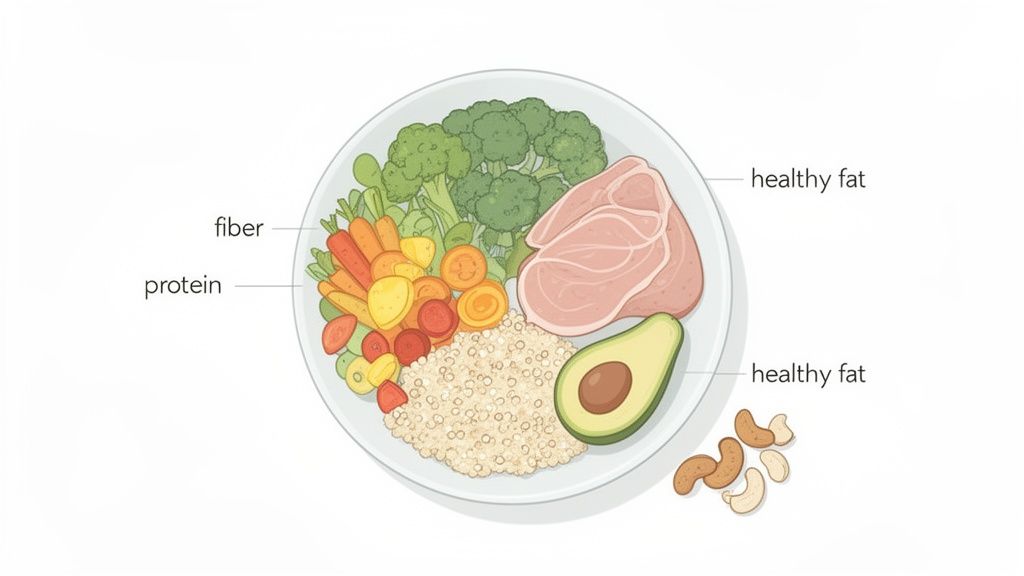
It all starts with understanding why certain food choices matter. This goes beyond simply avoiding sugar. It’s about strategically picking foods that slow down the speed at which glucose enters your bloodstream, which is what prevents those harsh spikes that leave you feeling drained and craving even more sugar.
The Power of Pairing: Protein, Fat, and Fiber
Here's one of the most effective strategies I share with clients: never let a carbohydrate eat alone. Think of protein, healthy fats, and fiber as a carb's best friends. When you pair them up, you create a natural buffer that slows everything down.
For instance, eating a plain piece of white toast is like a direct deposit of sugar into your system—it digests fast and spikes your glucose. But picture that same toast topped with avocado (a healthy fat) and a scrambled egg (protein). The fat and protein act like traffic cops, slowing down digestion and leading to a much gentler rise in blood sugar. It's a game-changer.
This simple principle works for every meal and snack.
- For a snack: Instead of grabbing just an apple, pair it with a handful of almonds or a spoonful of peanut butter.
- At mealtime: If you're having pasta, be sure to add a good portion of chicken for protein and load up on non-starchy veggies like broccoli for fiber.
This isn’t about cutting carbs completely. It's about dressing them up for metabolic success. A solid grasp of concepts like understanding net carbs can also help you make smarter choices without feeling deprived.
Why Fiber Is Your Secret Weapon
If I had to pick one nutrient to focus on for blood sugar control, it would be dietary fiber. Fiber is a unique kind of carbohydrate that your body can't actually digest. It passes through your system mostly intact, and in doing so, it slows down the absorption of other sugars from your meal.
Boosting your fiber is a proven way to slow carb absorption and even improve your insulin sensitivity. Research shows it helps produce beneficial short-chain fatty acids in the gut, which can improve glucose levels. With global diabetes cases projected to jump from 537 million (in 2021) to 783 million, simple dietary shifts are more critical than ever. Just aiming for 25-30 grams of fiber daily can make a huge difference.
Think of fiber as a sponge in your digestive system. It soaks up sugars and slows their release into your bloodstream, offering a simple yet incredibly powerful way to lower your blood sugar naturally.
So, where do you find it? It’s abundant in whole, unprocessed foods.
- Whole Grains: Choose quinoa, brown rice, and oats over white bread and pasta.
- Legumes: Lentils, chickpeas, and black beans are fiber powerhouses.
- Vegetables: Try to fill half your plate with non-starchy options like leafy greens, broccoli, and bell peppers.
- Fruits: Berries, apples, and pears (with the skin on!) are great choices.
- Nuts and Seeds: Chia seeds, flaxseeds, and almonds are easy to sprinkle into any meal.
Make Smarter Swaps, Not Sacrifices
Improving your diet shouldn't feel like a punishment. It's all about making smart, sustainable swaps you can actually stick with. These small changes really add up over time.
For more ideas on what to add to your grocery list, you can explore our detailed guide on what foods lower blood sugar.
Here are a few simple swaps to get you started. Think of it as upgrading your plate for better metabolic health.
Smart Food Swaps for Better Blood Sugar
| Instead of This (High GI) | Try This (Low GI) | Why It Works Better |
|---|---|---|
| White Rice | Quinoa or Brown Rice | Both are packed with fiber and protein, which slow down sugar absorption and keep you feeling full longer. |
| Sugary Cereal | Oatmeal with Berries | Oats provide soluble fiber, which forms a gel-like substance in your gut, slowing digestion and stabilizing blood sugar. |
| Potato Chips | A Handful of Nuts | Nuts offer a balanced mix of healthy fats, protein, and fiber, preventing the sharp blood sugar spike caused by processed snacks. |
| Fruit Juice | Whole Fruit | Whole fruit contains fiber that slows sugar release. Juice strips the fiber, delivering a concentrated shot of sugar to your system. |
| White Bread Sandwich | Whole-Grain Wrap with Hummus | Whole grains and legumes (hummus) are high in fiber, providing a steady release of energy instead of a quick spike and crash. |
Of course, cravings happen. Having a plan for those moments is key. This is where a tool like the StopSugar app can be a real lifesaver. When you’re tempted by something less than ideal, its 'Alternatives' feature can instantly suggest a healthier swap, helping you build better habits without feeling deprived. It's all about progress, not perfection.
Movement as Medicine: Your Activity Guide
I like to think of physical activity as a potent, natural medicine for your metabolism. When you move, you’re doing so much more than just burning calories—you're sending direct instructions to your cells on how to handle blood sugar more effectively. Honestly, it’s one of the most immediate and powerful tools you have.
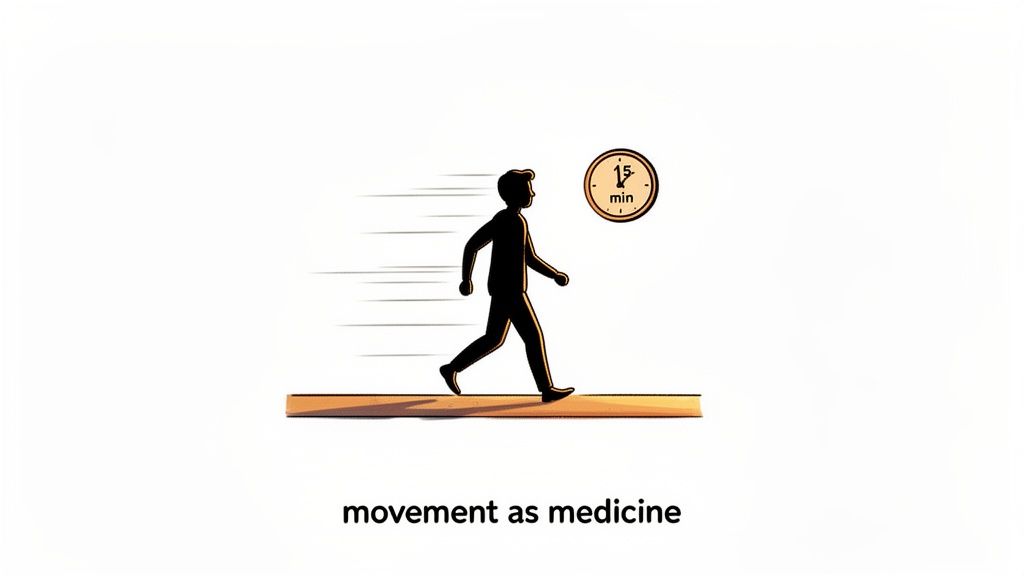
The science behind it is both simple and profound. During any kind of exercise, your muscles get hungry for energy. To fuel themselves, they pull glucose straight out of your bloodstream, clearing out the excess sugar without needing any extra insulin. While that immediate effect is fantastic, the long-term benefits are where the real magic happens. Consistent movement makes your cells more receptive to insulin, meaning your body can get the job done with less effort.
The Power of the Post-Meal Walk
If I could recommend just one habit to start with, it would be a short walk right after you eat, especially after your biggest meal of the day. You don't need a grueling workout to see a noticeable difference.
In fact, research shows that a simple 15-minute walk after a meal can significantly improve your blood sugar control over a 24-hour period. That brief, gentle activity puts the glucose from your food to work right away, preventing that dreaded spike in your bloodstream.
A post-meal walk is a proactive move. Instead of bracing for a sugar spike and the inevitable crash, you’re using gentle movement to smooth out the curve. The result? More stable energy and fewer cravings later.
This is such an easy win. It could be a walk around the block with the dog, a few laps of your office building after lunch, or even just marching in place while you watch TV. The key is simply making it a consistent ritual.
Building Your Weekly Activity Plan
For lasting change, a mix of different types of movement works best. A well-rounded routine gives you both the immediate glucose-clearing benefits and the long-term improvements in insulin sensitivity.
And please, forget the idea that you need to spend hours in a gym. A simple, effective plan can be done almost anywhere.
- Aerobic Exercise (Cardio): This is anything that gets your heart rate up. Try to get at least 150 minutes of moderate-intensity cardio each week. That could easily be five 30-minute sessions.
- Think: Brisk walking, cycling, swimming, dancing, or jogging.
- Resistance Training (Strength): Building muscle is a metabolic game-changer. More muscle mass means more storage space for glucose. Aim for 2-3 days a week, but not back-to-back.
- Think: Bodyweight exercises like squats, lunges, and push-ups; using resistance bands; or lifting weights.
This doesn't have to be complicated at all. A week might look something like this:
- Monday: 30-minute brisk walk.
- Tuesday: 20 minutes of bodyweight strength training (squats, planks).
- Wednesday: 30-minute bike ride or dance class.
- Thursday: 20 minutes of resistance band exercises.
- Friday: 30-minute walk or light jog.
- Weekend: Active recovery, like a longer, slower walk or some good stretching.
Track Your Progress to Stay Motivated
Seeing the direct link between your activity and how you feel is incredibly powerful. It’s what keeps you going. This is where a good tool can help you build that positive feedback loop.
For example, in the StopSugar app, the 'Daily Check-in' lets you log your mood and energy levels. Try making a quick note after each time you exercise. I'm willing to bet you’ll start seeing a clear pattern: on the days you move, your energy is higher and your mood is more stable. This kind of personal insight transforms exercise from a chore into a rewarding practice for your well-being.
Lifestyle Habits That Move the Needle
What you do outside the kitchen and the gym can have a massive impact on your metabolic health. Seriously. If you truly want to lower your blood sugar naturally, you have to look at your entire day—especially the big three: sleep, stress, and weight.
These aren't just fluffy wellness topics. They create the internal environment that either supports or completely undermines all your diet and exercise efforts.
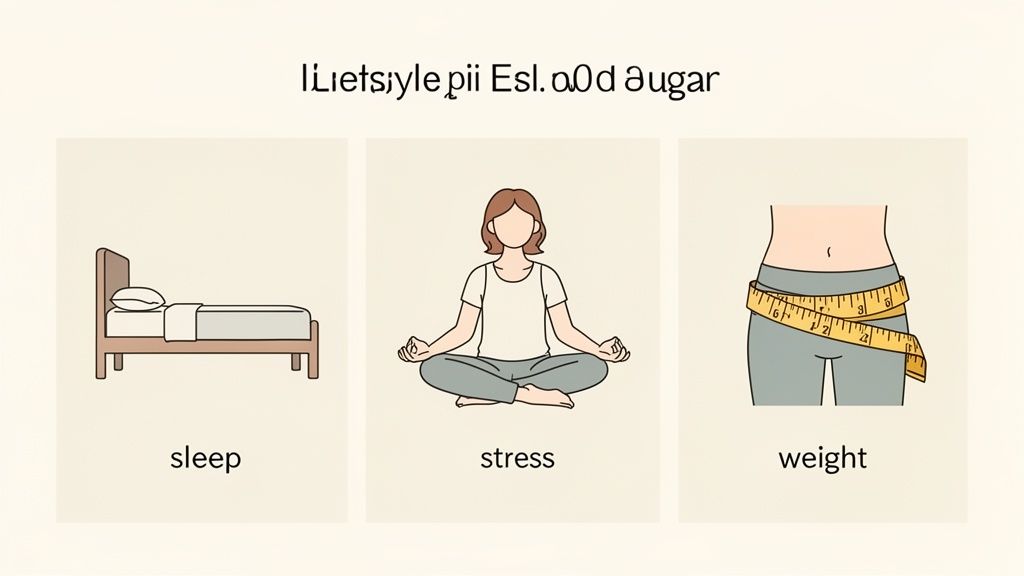
Here's an analogy I like: You can put the best fuel in your car and take it for a spin, but if the engine is constantly overheating and the gears are grinding, you're not going anywhere fast. Let's fine-tune that engine.
Sleep Is Not a Luxury
I can't stress this enough: sleep is a non-negotiable part of your metabolic toolkit. Just one night of tossing and turning can make your cells less responsive to insulin the very next day. It’s a state that temporarily mimics insulin resistance, often leading to higher blood sugar readings.
When you're running on fumes, your body also pumps out more of the stress hormone cortisol. This signals your liver to release more glucose into your bloodstream. It’s a double whammy that leaves you foggy, starving, and fighting an uphill battle against sugar cravings.
Aiming for 7-9 hours of quality sleep each night is one of the most powerful things you can do for your blood sugar. It's your body's built-in reset button, allowing it to repair tissues and regulate the hormones that govern your entire metabolism.
Fixing your "sleep hygiene" doesn't need to be some complex project. A few small tweaks can make a world of difference:
- Make Your Room a Cave: Think dark, cool, and quiet. Blackout curtains are a game-changer.
- Build a Wind-Down Routine: An hour before bed, ditch the screens. Read a real book, take a warm bath, or listen to some chill music.
- Stick to a Schedule: Try to go to bed and wake up around the same time, even on weekends. Your body’s internal clock loves consistency.
Taming the Stress Monster
Chronic stress is another huge saboteur of stable blood sugar. When you’re constantly stuck in "fight or flight" mode, your body is swimming in cortisol. While that’s great for outrunning a tiger, persistently high cortisol keeps your blood sugar elevated to fuel a threat that never actually arrives.
This constant internal alarm makes it incredibly hard to keep your blood sugar in check, no matter how perfectly you eat or how much you exercise. Ever notice that during a stressful work week, your sugar cravings are out of control? That’s cortisol talking.
Learning how to manage that response is crucial. There are some simple, practical ways to reduce cortisol levels naturally that really work. You don't need a silent retreat; just a few minutes a day can help.
- Box Breathing: When you feel that tension rising, take five deep breaths. Inhale for four counts, hold for four, and exhale slowly for six.
- Micro-Meditations: Pop in your headphones and do a 5-minute guided meditation on your lunch break. There are tons of free apps for this.
- Get Outside: Even a quick 10-minute walk around the block can significantly lower stress hormones.
The Weight-Insulin Connection
Managing your weight, especially the fat you carry around your middle, is another key piece of the puzzle. That deep abdominal fat, known as visceral fat, isn't just sitting there. It's an active organ that spews out inflammatory compounds, directly interfering with how well insulin works.
The good news? You don't have to make drastic changes to see a huge benefit. Research consistently shows that losing just 5-10% of your body weight can dramatically improve your insulin sensitivity and help lower your blood sugar.
This isn't about chasing a number on a scale. It’s about reducing the metabolic burden on your body so it can function the way it's supposed to.
Natural Supplements, Spices, and Herbs That Can Help
Once you have your diet, exercise, and lifestyle habits dialed in, you can start looking at natural compounds for some extra support. Think of these supplements and spices not as a quick fix, but as strategic allies that can help your body get even better at managing sugar.
But first, a crucial word of caution. Always talk to your doctor before adding any new supplement to your routine. This is non-negotiable, especially if you're already taking medication for diabetes or other health conditions. Some of these natural compounds are quite potent and can interact with prescriptions.
The Warm Spice That Works
Cinnamon is far more than just a tasty topping for your coffee. There's some impressive science showing it can help with blood sugar management. It works in a few clever ways, from making your cells more receptive to insulin to slowing down digestion, which helps prevent those sharp post-meal glucose spikes.
In fact, a major 2019 review that looked at 18 different studies found that people with type 2 diabetes who took cinnamon supplements lowered their fasting blood sugar by an average of 19.26 mg/dL.
For professionals dealing with those dreaded afternoon energy slumps, simply sprinkling 1-2 grams (about half a teaspoon) on your oatmeal or into your coffee could be a game-changer. You can dig into the research behind cinnamon's effects for a deeper look.
Beyond the Spice Rack: Nigella Sativa
Another natural aid that's getting a lot of attention is Nigella sativa, also known as black seed or black cumin. It's been used for centuries in traditional medicine, and modern research is finally catching up to why it's so helpful for metabolic health.
Studies show its active compounds can improve insulin sensitivity and support the pancreatic cells responsible for producing insulin in the first place. This makes it a really compelling option if you're looking to bolster your body's own glucose-regulating systems. You can usually find it as an oil or in capsules.
Interestingly, many of these natural aids also have properties that can curb cravings. If that's a struggle for you, check out our guide on herbs to stop sugar cravings for more ideas.
Remember, supplements are meant to supplement a healthy lifestyle, not replace it. The biggest and most lasting changes will always come from the foundational habits of good nutrition and regular movement.
Tracking Your Body’s Response
So, how do you know if a supplement is actually doing anything for you? Everyone's body is different. What works wonders for one person might have zero effect on another. This is where tracking becomes your best friend.
When you start a new supplement, use a tool like the StopSugar app to monitor your energy levels, mood, and cravings with the daily check-in feature. Pay close attention for a few weeks. Are your moods more stable? Is your energy more consistent?
This kind of personalized data gives you a clear window into what’s working, allowing you to make smart decisions based on your own body's feedback, not just someone else's recommendation.
Putting It All Together: Your Daily Action Plan
Knowing the "what" and "why" of blood sugar management is great, but the real magic happens when you put it into practice. We're not aiming for a perfect overhaul overnight. The goal is to build small, smart habits that stick, creating a daily rhythm that works for you, not against you.
Think of it as designing a blueprint for your ideal day, one that keeps your energy stable and your body happy from the moment you wake up.
What a Blood-Sugar-Friendly Day Looks Like
Let's walk through a sample day. Remember, this is just a starting point—a template you can tweak to fit your own life, schedule, and preferences.
- Morning (7 AM - 9 AM): Before you do anything else, grab a big glass of water. Your body is dehydrated after a long night's sleep. Then, for breakfast, build your plate around protein and fiber. Think two scrambled eggs with a handful of spinach or a bowl of plain Greek yogurt topped with a few berries and a sprinkle of chia seeds. This kind of start prevents that dreaded mid-morning energy crash.
- Mid-Day (12 PM - 2 PM): Lunch should follow a similar formula: protein, healthy fats, and heaps of non-starchy veggies. A big salad with grilled chicken, avocado, and a simple olive oil vinaigrette is a fantastic choice. The real game-changer? A brisk 15-minute walk right after you eat. This simple trick helps your muscles soak up the glucose from your meal.
- Evening (6 PM - 9 PM): Dinner can be another balanced plate, much like lunch. Afterwards, resist the urge to immediately plant yourself on the couch. Do some light chores, gentle stretching, or just walk around the house for a bit. An hour before bed, start a wind-down routine. This is crucial. Ditch the screens and opt for reading a book or listening to some quiet music to help lower your stress hormone, cortisol.
The single most important thing you can do is listen to your body. Your energy levels, your mood, your cravings—these are all valuable clues telling you what’s working and what needs adjusting.
When It's Time to Call a Doctor
While these natural strategies can be incredibly powerful, they are not a substitute for professional medical care. It's absolutely critical to know when you need to bring in an expert.
You should book an appointment with your doctor right away if you notice persistent symptoms like:
- Extreme thirst that you can't seem to quench
- Frequent urination, especially at night
- Unexplained or sudden weight loss
- Blurry vision
These can be red flags for a more serious issue that needs a proper diagnosis and medical treatment.
If you find yourself battling relentless sugar cravings, certain natural aids might offer some extra backup. One with solid research behind it is Nigella sativa, also known as black seed. Multiple studies show it can help improve glycemic control by boosting insulin sensitivity and slowing down how much glucose you absorb from food.
Staying informed is part of taking charge, so it’s always a good idea to keep up with the latest facts and figures about diabetes. Your journey to better health doesn't have to be a giant leap. Just pick one small thing from this guide and start there. Today. That first step is often the hardest, but it's also the most important one you'll take.
Your Top Questions Answered
When you start making changes to lower your blood sugar, a lot of practical questions pop up. Having clear answers is key to feeling confident and sticking with your new habits for the long haul.
"How Quickly Will My Blood Sugar Go Down?"
This is probably the number one question I hear, and the honest answer is: it’s a marathon, not a sprint.
You can actually see some immediate effects. For instance, a 10-minute walk right after a meal can lower your blood sugar pretty quickly. But the real goal—improving your body’s insulin sensitivity—takes consistent effort over time. Most people start to notice a real difference in their energy levels and a drop in cravings within a few weeks of sticking to the plan. Patience is your best friend here.
"Do I Have to Give Up All Fruit?"
Absolutely not! This is a common myth that causes a lot of unnecessary stress. The trick is to be smart about your choices and portion sizes.
Focus on fruits that are high in fiber and have a lower glycemic impact. Think berries, apples, and pears. A great tip is to never eat fruit by itself. Always pair a small portion with a source of healthy fat or protein, like a handful of almonds or a spoonful of Greek yogurt. This simple combo slows down how quickly the sugar hits your bloodstream.
"What If I Slip Up and Eat a Bunch of Sugar?"
First thing's first: don't panic. One cookie (or even three) doesn't undo all your hard work. We're all human, and it's going to happen.
The most important thing is what you do next. Instead of dwelling on it, just get right back on track. Drink a big glass of water, get up and move your body for a few minutes, and make sure your very next meal is a balanced one with protein, fiber, and healthy fats.
A single slip-up isn’t a failure; it’s just a data point. Look at it as a chance to learn what triggered you and move forward. This journey is about progress, not perfection.
"Is This Safe if I Have Prediabetes or Diabetes?"
While all the strategies we've discussed are the cornerstones of managing blood sugar, it's absolutely essential that you partner with your doctor.
Think of these lifestyle changes as powerful tools that support your medical plan, not replace it. Your healthcare provider can give you personalized advice, monitor your A1c and glucose levels, and make sure everything you’re doing is safe and effective for you. Always keep them in the loop.
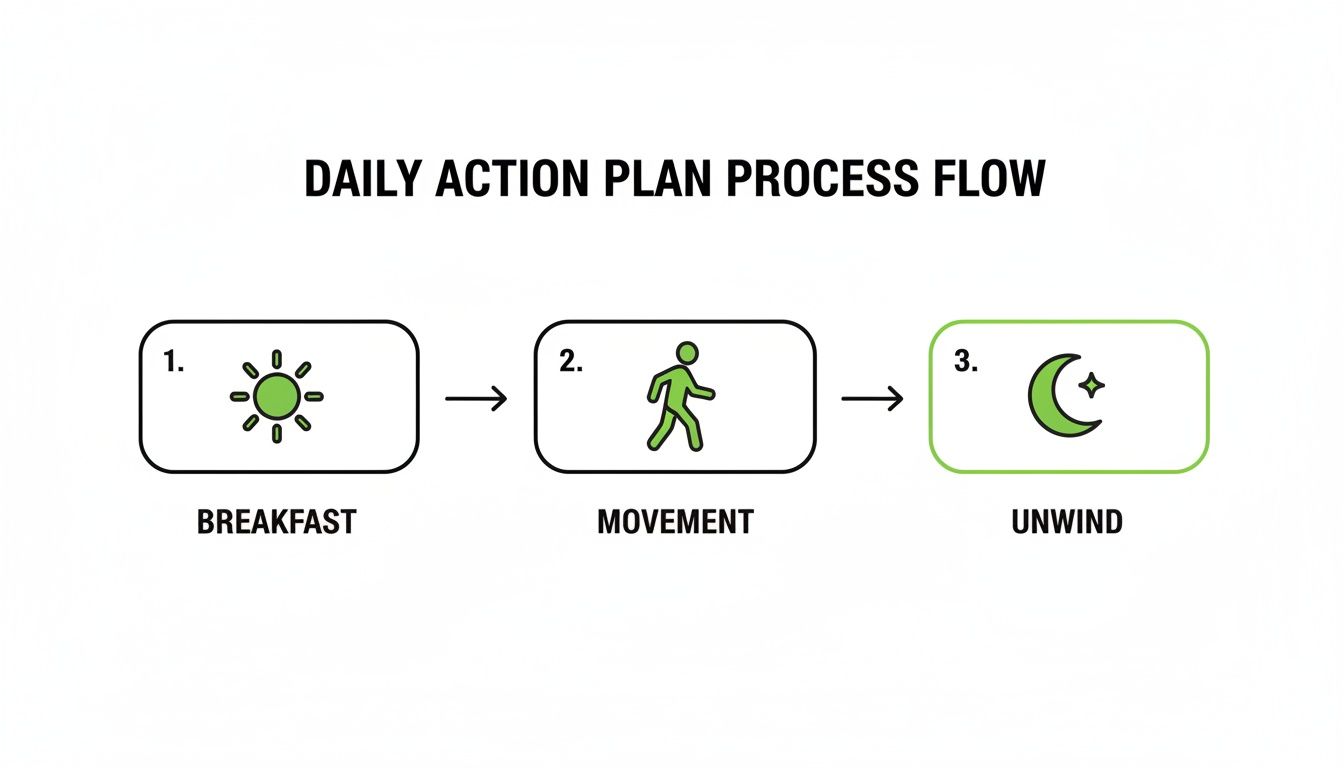
A simple daily routine—like the one shown above—is the foundation of success. It's about building small, consistent habits around your meals, movement, and rest.