How to Reduce Sugar in Your Diet Without Giving Up Flavor
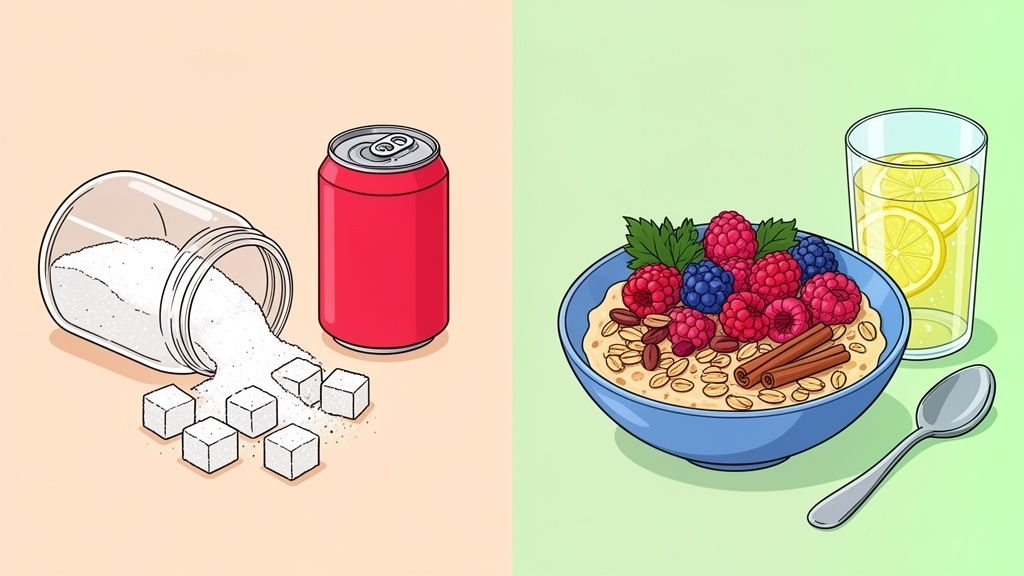
Kicking the sugar habit isn't about deprivation or extreme willpower. It’s about making a series of small, smart choices that add up over time. The real key is having a plan: audit your current habits, make simple swaps, learn how to handle cravings, and keep an eye on your progress. This approach turns a massive goal into small, manageable daily actions.
Why Cutting Back on Sugar Changes Everything
Let's be real. In a world full of sugary snacks and drinks, the thought of cutting back can feel impossible. You're not just fighting a sweet tooth; you're trying to undo years of ingrained habits. This guide is designed to give you a practical, sustainable way forward, and it all starts with understanding why this journey is so important.
That constant afternoon slump, the moodiness you can't explain, or the extra weight that just won't budge—so often, the culprit is the hidden sugar in our food. Most of us are eating way more than we think, which traps us in a cycle of energy spikes and crashes that leaves us feeling exhausted and reaching for another sugary fix.
In fact, the average American consumes around 126 grams of added sugar every single day. That's more than double the recommended limit.
The True Impact of Excess Sugar
Beyond the daily energy drain, a diet high in sugar has serious long-term effects. It can impact everything from your mental focus and skin to your risk for chronic diseases. One of the most immediate problems is oral health. When you understand what causes tooth decay, you see how sugar literally feeds the bad bacteria in your mouth, leading directly to cavities.
But here’s the good news: you don't need a crazy diet to get back in control. The journey starts with awareness and a solid plan.
The goal isn't perfection; it's progress. By focusing on small, consistent changes, you build a foundation for lasting well-being, turning a difficult challenge into a manageable and rewarding lifestyle shift.
Your 4-Pillar Plan to Reduce Sugar Intake
To make this simple, we've broken the entire process down into four core pillars. Think of this as your roadmap. Each step builds on the last, helping you gain momentum and feel a sense of accomplishment along the way.
| Pillar | What It Means | Key Action |
|---|---|---|
| Audit | Getting an honest look at where your sugar is coming from. | Track your food and drink intake for a few days to identify hidden sugars. |
| Swap | Replacing high-sugar items with healthier, satisfying alternatives. | Find easy, delicious swaps for your go-to snacks, drinks, and meals. |
| Manage | Developing strategies to handle cravings when they strike. | Create a "panic plan" with go-to activities and snacks to beat cravings. |
| Track | Monitoring your progress to stay motivated and make adjustments. | Use tools to log your intake, mood, and energy levels to see your wins. |
This table gives you a bird's-eye view of the journey ahead. Now, let's dive into exactly how to put these pillars into action.
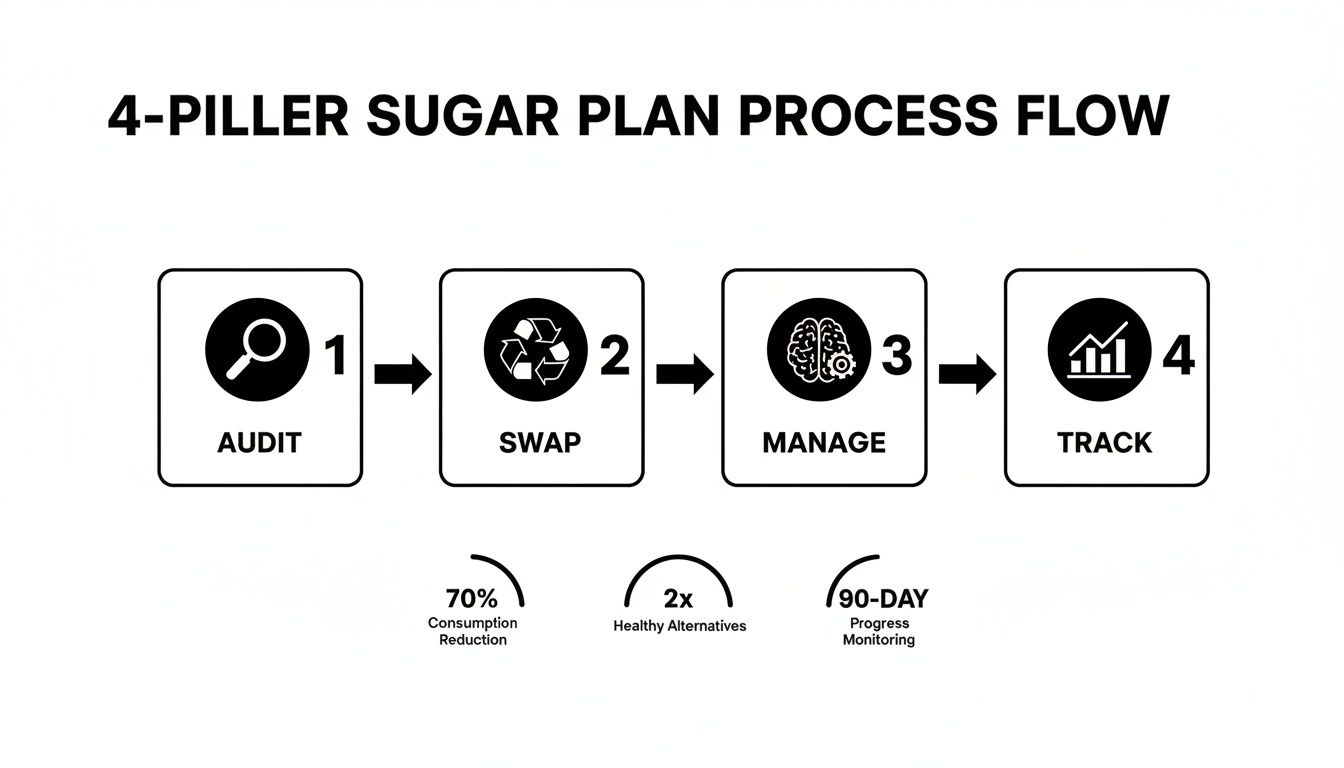
This four-step flow—Audit, Swap, Manage, and Track—is your framework for success. Instead of feeling overwhelmed, you can focus on one piece at a time. We’ll walk through each of these pillars in detail, giving you the practical tools you need to finally take control of your sugar intake.
Uncovering Your True Sugar Intake
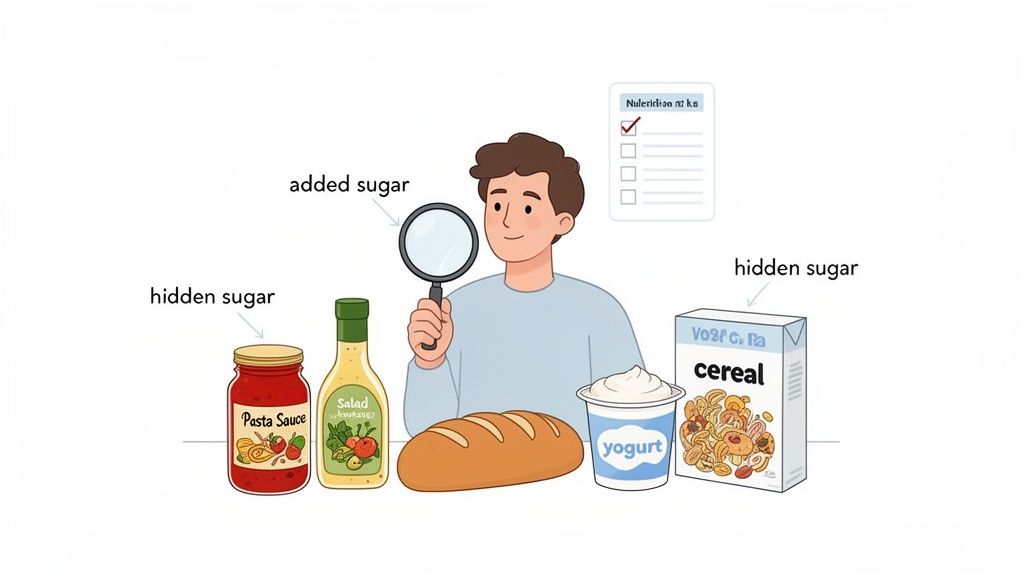
Before you can cut back on sugar, you have to know where it's all coming from. It sounds obvious, but most of us are completely in the dark about how much we’re really eating. Sugar is a master of disguise, hiding in countless foods you'd never suspect, from pasta sauce to salad dressing.
This first step isn't about judgment or making you feel guilty. It's about gathering intel. Think of yourself as a detective for the next three to five days. Your only job is to honestly track everything you eat and drink. Don't change a thing—the goal is to get a clear, unfiltered snapshot of your current habits.
Become a Label Detective
Your first stop is the nutrition label. Thanks to updated regulations, manufacturers now have to list "Added Sugars" separately. This is a game-changer because it isolates the exact type of sugar we want to reduce—the kind added during processing, not the natural sugars found in a piece of fruit.
You’ll be amazed at what you find. Sure, we all know cookies and soda are packed with sugar, but what about these?
- Pasta Sauce: It’s not uncommon for a single serving to have more sugar than a bowl of sugary cereal.
- Salad Dressings: That "healthy" vinaigrette? It's often loaded with sweeteners to cut the acidity.
- Yogurt: Flavored and low-fat yogurts are notorious offenders, using sugar to replace the flavor that's lost when fat is removed.
- Bread and Crackers: Even savory staples often contain sugar to improve taste and texture.
Focusing on added sugars gives you the real story. The natural sugar in an apple comes with fiber and nutrients, which is a completely different ballgame for your body.
This tracking phase is absolutely essential. If tallying up grams feels overwhelming, a simple tool can do the heavy lifting for you. This daily sugar intake calculator is a great resource for getting a clear baseline without all the manual math.
Decode Sugar's Many Disguises
Here’s where it gets tricky. Food companies use over 60 different names for sugar on ingredient lists. Learning to spot them is like learning a secret code.
Keep an eye out for these common aliases:
- High-fructose corn syrup
- Cane juice and cane syrup
- Dextrose, fructose, and sucrose
- Barley malt
- Brown rice syrup
- Fruit juice concentrate
A good rule of thumb: if any of these are in the first few ingredients, the product is probably high in added sugar. Ingredients are listed by weight, so the higher it is on the list, the more of it there is.
Go Beyond the Kitchen Pantry
Tracking what you eat gives you a fantastic real-time view, but it doesn't tell you how your body has been handling sugar over the long haul. That's where a little extra data can be incredibly insightful.
Diagnostic tests can offer a more objective look at your body's response. For example, understanding your long-term blood sugar levels through HbA1c gives you a three-month average of your blood glucose, cutting through the daily fluctuations to show you the bigger picture.
Once your 3-5 days of tracking are up, sit down with your notes. Add up the grams of added sugar for each day and calculate your daily average. This number is your starting line. You might be shocked, or you might be right where you expected. Either way, you now have the single most important tool for making a change: awareness.
You know your baseline. Now you're ready to start making smart swaps.
Making Smart Swaps That Actually Taste Good
This is where all that label-reading detective work pays off. Now that you know where the sugar is hiding, you can start making simple, powerful swaps that slash your intake without making you feel like you're missing out. The goal here is to upgrade your plate, not punish your palate. It's about finding delicious alternatives, not just eating bland food.
Lasting change is all about sustainable habits. Trying to go cold turkey is a recipe for disaster—it usually leads to intense cravings and, eventually, giving up entirely. A much better approach is to focus on making one or two smart swaps each week. This gives your taste buds time to adjust and keeps you from feeling deprived.
Breakfast Swaps to Start Your Day Right
Breakfast is a notorious minefield for hidden sugars. So many foods we think of as "healthy" are actually closer to dessert. The real key to a powerful breakfast is swapping out those simple carbs and sugars for protein and fiber. That’s what will actually keep you full and energized for hours.
Here are a few easy breakfast upgrades I recommend all the time:
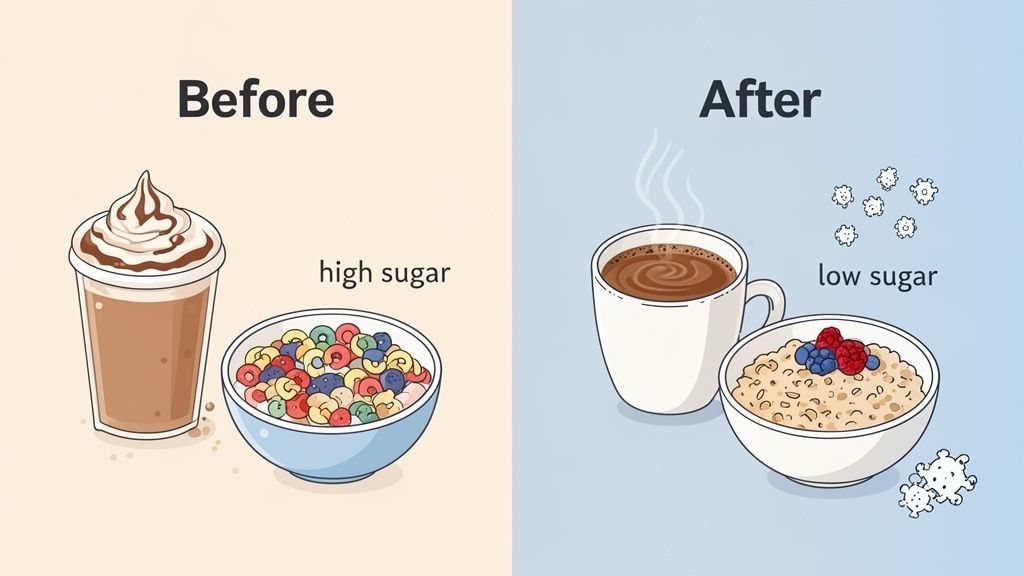
- Flavored Yogurt: A single serving of that fruit-on-the-bottom yogurt can have a whopping 20 grams of added sugar. Instead, grab some plain Greek yogurt and toss in your own fresh berries and a sprinkle of cinnamon. It's naturally sweet and way more satisfying.
- Sugary Cereal: Most breakfast cereals, even the ones marketed to adults, are loaded with sugar. Trade your colorful flakes for a simple bowl of oatmeal. You can add fantastic flavor and texture with nuts, seeds, and a handful of blueberries.
- Sweetened Lattes: Your daily vanilla latte from the coffee shop? That can easily pack 35 grams of sugar. Ask for a regular latte or coffee and add a dash of cinnamon or unsweetened cocoa powder yourself.
Just making these small changes can cut dozens of grams of sugar from your diet before your day has even really begun.
The most effective swaps are the ones you barely notice. Trading a sugary drink for a satisfying alternative is a victory that requires almost no willpower but delivers huge results over time.
The Power of Smart Snacking and Drink Choices
It’s a startling fact: nearly 70% of added sugars in the average diet come from just a handful of sources, and sweetened drinks and snacks are at the top of the list. This is actually good news because it gives you a huge opportunity for improvement. Swapping out just one sugary drink a day is one of the fastest ways to crush your sugar-reduction goals.
When a craving hits, ask yourself what you really want. Is it the sweetness? The bubbles? Or just the simple habit of having something to sip on?
- If you love soda, give sparkling water a try. A squeeze of fresh lime or a splash of unsweetened cranberry juice can make all the difference.
- If you're reaching for sweetened iced tea, just brew your own at home and chill it. This way, you control the sweetener—or you might find you love its natural flavor on its own.
- If you rely on an energy drink to survive the afternoon slump, try a cup of green tea instead. You’ll get a gentle caffeine boost without the inevitable sugar crash.
For snacks, the trick is to focus on whole foods that combine protein or healthy fats with fiber. Instead of a granola bar (which is often just a candy bar in disguise, full of syrups), grab a handful of almonds and an apple. This combo will actually satisfy your hunger and keep your blood sugar stable.
For more craving-crushing ideas, check out our guide on what to eat instead of sugar.
Common High-Sugar Foods and Their Smarter Swaps
Sometimes, seeing the numbers side-by-side is all the motivation you need. It really highlights how small, seemingly insignificant decisions can lead to a massive reduction in your sugar intake over time.
Here’s a quick comparison of some everyday choices.
| Instead Of This (High Sugar) | Approx. Sugar Content | Try This Instead (Low Sugar) | Approx. Sugar Content |
|---|---|---|---|
| 12 oz Can of Cola | 39g | 12 oz Sparkling Water with Lemon | 0g |
| 1 Cup Sweetened Applesauce | 25g | 1 Small Apple | 15g (natural) |
| 1 Tbsp Ketchup | 4g | 1 Tbsp Yellow Mustard | 0g |
| 1/2 Cup BBQ Sauce | 15g | A Dry Rub or Herb Marinade | <1g |
| Grande Vanilla Latte | 35g | Grande Caffè Misto | 11g (natural) |
See? You don't have to completely overhaul your diet overnight. Simple substitutions, especially with drinks and condiments, add up incredibly fast. By being mindful and making these smart swaps, you're not just cutting sugar—you're actively rewiring your habits and your taste preferences for good.
How to Handle Intense Sugar Cravings
Let's talk about the elephant in the room: the cravings. They’re real, they’re intense, and they can feel completely overwhelming, especially when you’re just starting out. Knowing why they happen is the first step to getting the upper hand.
When you eat sugar, your brain gets a hit of dopamine, the "feel-good" chemical. Your body loves this reward and gets used to it. Cut back, and your brain starts sending out urgent signals demanding its usual fix. This isn't a failure of willpower—it's a very real physiological response.
The good news? These cravings don't last forever. As your body adjusts, they get weaker and less frequent. The key is having a game plan for when they strike, so you can turn a moment of panic into a win.
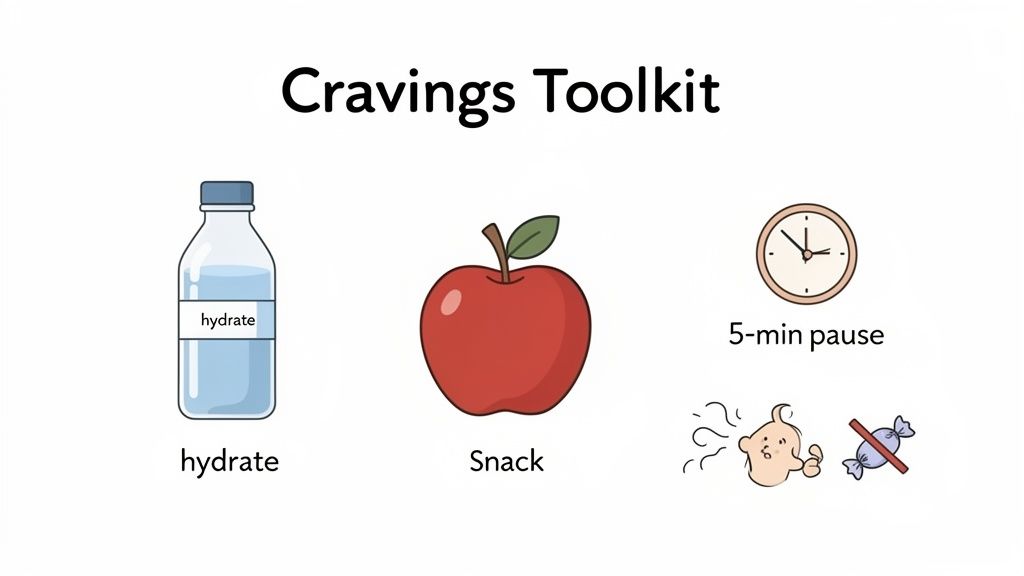
Your In-The-Moment Craving Toolkit
When a monster craving hits, you need an immediate, pre-planned response. Trying to figure out a strategy in the heat of the moment just doesn't work. Your brain is screaming for a quick fix, so you need an even quicker, healthier one ready to go.
Here are a few simple but powerful tactics to use the second a craving starts:
- The Five-Minute Pause: Before you do anything, just stop. Take five minutes. This tiny pause creates just enough space between the craving and your reaction for your logical brain to catch up. Walk around, do a few stretches, or just breathe.
- Hydrate First: It's amazing how often we mistake dehydration for a sugar craving. Drink a big glass of water right away and wait a few minutes. You might be surprised to find the urge has vanished.
- Change Your Scenery: Cravings are often triggered by boredom or habit. Get up and change your environment. Put on a great song, call a friend, or just step outside for a minute. Breaking the mental pattern is half the battle.
This proactive approach is the foundation for learning how to reduce sugar in your diet for good. You're essentially building a new set of automatic responses.
Cravings are like waves—they build, they peak, and then they crash. Your goal isn't to stop the wave, but to learn how to ride it out. That five-minute pause? It's your surfboard.
Smart Snacks That Actually Satisfy
Sometimes, a distraction just won’t cut it. You genuinely need to eat something. The trick is to pick a snack that satisfies you without kicking off that blood sugar roller coaster all over again.
You’re looking for options with healthy fats, protein, or fiber. These nutrients slow down digestion, keep your blood sugar stable, and help you feel full, which effectively silences the craving alarm.
My Go-To Snacks to Tame a Sweet Tooth:
- A handful of berries: Strawberries or blueberries give you that sweet taste you're after, but they're packed with fiber, so you won't get a sugar spike.
- Plain Greek yogurt: It's loaded with protein. I like to add a dash of cinnamon or a few raspberries to make it feel like a real treat.
- An apple with nut butter: The fiber from the apple and the healthy fats from the nut butter are a powerful craving-crushing duo. Plus, the crunch is so satisfying.
- A small handful of almonds: They are full of healthy fats and protein that make you feel full fast, stopping a potential binge in its tracks.
Having these snacks ready to go is everything. If you have to make a big effort when a craving hits, you're far more likely to grab the easy, sugary thing. For more ideas, our guide on how to reduce sugar cravings is a great resource.
Navigating Real-World Scenarios
Your plan has to work in the real world, not just in your kitchen. Here’s how to handle two classic situations where cravings can feel impossible.
Scenario 1: The 3 p.m. Office Donut Ambush
It’s that late afternoon slump, and a coworker walks in with a box of fresh donuts.
- Your Plan: This is where your emergency snack comes in. Immediately grab your pre-packed almonds or apple and a bottle of water. Having your own delicious, healthy option makes it a thousand times easier to say "no thanks." You still get to take a break and eat, just on your own terms.
Scenario 2: The Late-Night Sweet Tooth
You’re unwinding on the couch after a long day, and the urge for a bowl of ice cream is screaming your name.
- Your Plan: First, try brewing a cup of herbal tea. Peppermint and chamomile are naturally comforting and can satisfy that need for a relaxing ritual. If you still need something, go for a small bowl of frozen berries—they have a texture a lot like sorbet, but with zero added sugar.
When you prepare for these specific moments, you take away their power. You'll feel in control because you already know exactly what you’re going to do.
Using Progress to Fuel Your Motivation
Lasting change isn't just about white-knuckling it through cravings; it's about seeing—and celebrating—your wins. This is where tracking your journey becomes one of the most powerful tools you have. It’s how you connect the dots between the small daily habits you’re changing and how much better you’re starting to feel.
Sure, counting grams of sugar is useful, but we're going to move beyond that. The real magic happens when you start noticing the "non-scale victories." Think of these as the tangible rewards your body gives you for making healthier choices.
These are the improvements that actually matter day-to-day: waking up feeling truly rested, having steady energy all afternoon, or realizing your mood has been more stable all week. These are the benefits that will keep you going when a donut seems like a great idea.
Go Beyond the Numbers
Staring at sugar intake numbers all day can feel restrictive and, honestly, a little discouraging. Instead, let's shift your focus to tracking the positive shifts in your well-being. This creates a powerful feedback loop where good habits are reinforced by feeling great.
A simple daily journal is a fantastic way to do this. You don't need to write an essay. Just take two minutes at the end of the day to jot down a few notes.
Here are a few key things to track:
- Energy Levels: Did you hit that 3 p.m. slump? Or did you power through your day feeling sharp?
- Mood: How did you feel emotionally? Were you generally upbeat, or did you feel irritable and have significant swings?
- Sleep Quality: Did you toss and turn, or did you fall asleep easily and wake up feeling refreshed?
- Cravings: Did any intense cravings pop up? What did you do about them?
This kind of tracking helps you spot patterns you'd otherwise miss. You might notice that on days you skipped that sugary latte, you slept like a rock. Or that avoiding a sweet afternoon snack led to a more focused and productive evening. Seeing those connections for yourself is incredibly motivating.
Seeing the direct link between cutting back on sugar and actually feeling better is the ultimate motivation. It turns this journey from one of deprivation into one of genuine self-care.
Use Technology to Your Advantage
A physical journal is great, but let's be real—an app can make this process a whole lot easier. Tools like the StopSugar app have built-in features that simplify tracking. The daily check-in, for example, often includes a mood tracker.
This lets you log how you're feeling with just a few taps. Over time, the app can show you a clear visual chart correlating your sugar-free days with your best-feeling days. When you see that graph, the motivation to stick with it becomes undeniable. It's no longer just a hunch that you're doing better; you have hard proof.
Celebrate Your Milestones
When you're trying to reduce sugar in your diet, aiming for perfection is a fast track to burnout. A much better approach is to focus on small, achievable milestones. This is about celebrating consistent effort, not flawless execution.
Set realistic goals you can build on.
- Your first milestone could be as simple as getting through one full day without any added sugar. When you do it, pat yourself on the back!
- Your next goal might be to navigate a whole weekend without caving to your usual sweet treats.
- From there, you can aim for a full week, and then another.
Each small win builds your confidence and makes the next goal feel much more manageable. Don't just gloss over these accomplishments. Tell a friend, treat yourself to something non-food-related like a new book or a relaxing bath, or simply take a moment to feel proud of what you're doing.
This process turns what feels like a monumental challenge into a series of small, doable steps. That steady progress is what builds a powerful habit that will last a lifetime.
Common Questions About Reducing Sugar
Deciding to cut back on sugar is a great first step, but it almost always comes with a flood of questions. It's totally normal to wonder about everything from getting through a birthday party to what’s actually happening inside your body.
We've gathered some of the most common questions people ask when they start this journey. Think of this as your go-to guide for those tricky moments, so you can feel prepared and confident instead of overwhelmed.
How Long Does It Take for Sugar Cravings to Go Away?
This is the big one, isn't it? While everyone is a bit different, the most intense physical cravings usually hit their peak within the first week. This is when your body and brain chemistry are really starting to adjust, and it's the most important time to have your craving-busting strategies ready to go.
Most people notice a huge difference after about two to four weeks of sticking with it. The cravings don't just become less frequent; they get a lot quieter. Something really cool happens during this time, too—your taste buds actually reset. Suddenly, fruits taste incredibly sweet, and you might find that the desserts you used to love are just too much.
The goal isn't to never want a sweet thing again. It's to change your relationship with those cravings so they're no longer in the driver's seat. They become a quiet suggestion you can easily ignore, not a loud demand you can't escape.
What Is the Difference Between Natural and Added Sugars?
Getting this difference is key to making this whole process work without feeling like you're on a super-restrictive diet. All sugars aren't created equal, and knowing which is which helps you make smarter choices.
- Natural Sugars: These are the sugars that come as part of whole foods. We're talking about the fructose in an apple or the lactose in a glass of milk. These foods also have fiber, vitamins, and water, which help your body process the sugar slowly and give you actual nutrients.
- Added Sugars: This is the stuff you're really trying to avoid. These are the sugars and syrups—like high-fructose corn syrup or plain old table sugar—that are dumped into foods during processing. You’ll find them in the obvious places like soda and candy, but they also hide in tons of savory foods. These bring nothing to the table but "empty calories."
Your main focus should be on cutting out those added sugars.
I Ate a Lot of Sugar Yesterday—Have I Ruined My Progress?
Not at all. One off day doesn't undo all your hard work. The biggest mistake you can make right now is falling into the "all-or-nothing" trap, thinking you've failed and might as well give up.
Instead, see it as a learning opportunity. What happened? Were you stressed out? Unprepared for a craving? At a party with no other options? Use that insight to make a better plan for next time. Your very next meal is a fresh start.
Remember, it's what you do consistently over time that matters, not being perfect every single day. One slip-up is just a tiny blip on the radar.
How Do I Handle Social Events and Eating Out?
This is a huge source of anxiety for many people, but you can absolutely navigate parties and restaurants with a little planning. The trick is to walk in with a strategy.
A Simple Game Plan for Socializing
- Do Some Recon: If you’re heading to a restaurant, pull up the menu online beforehand. Find a couple of solid, low-sugar options so you aren't trying to make a good choice on the spot while everyone is starving.
- Fill Up on the Good Stuff: At a party or buffet, make a beeline for the protein and veggies. Things like shrimp cocktail, cheese, or a veggie platter will fill you up and make that dessert table look a lot less tempting.
- Drink Smarter: Cocktails and sodas are sugar bombs. Stick with water, sparkling water with lime, or unsweetened iced tea.
- Have a Polite "No" Ready: It is perfectly okay to turn down dessert. If you feel awkward, a simple "I'm so full, thank you!" works wonders. Or, you could suggest splitting one with a friend.
Ultimately, learning how to reduce sugar in your diet is about creating a sustainable lifestyle, and that has to include enjoying yourself with friends and family.