How to Stay Focused at Work and Reclaim Your Productivity

If you want to stay focused at work, you have to start thinking about managing your energy, not just your time. This means ditching the sugar-fueled roller coaster that kills your concentration and building routines that give you stable, all-day mental clarity.
The bottom line is this: lasting focus comes from your biology, not just your willpower.
The Real Reason You Lose Focus at Work
We’ve all been there. It’s 2 PM, and your brain feels like it’s turned to mush. It seems almost impossible to fight off. So, what do you do? You probably grab a sugary coffee or a snack from the vending machine, hoping for a quick jolt to get you through the afternoon.
It works for a little bit, but before you know it, you're right back where you started—groggy, distracted, and struggling to string a coherent thought together.
This isn't a character flaw; it's a completely predictable biological cycle. That muffin you had for breakfast or that afternoon can of soda sends your blood sugar soaring, giving you a quick, fleeting burst of energy. But what goes up, must come crashing down. Your body releases a flood of insulin to deal with the sugar, leading to an unavoidable crash that leaves you feeling sluggish and foggy. We cover the worst offenders in our guide to foods that cause brain fog.
The High Cost of the Sugar Rollercoaster
This up-and-down cycle is more than just a minor annoyance. It actively sabotages your performance at work. Studies have shown that the blood sugar spikes from processed foods can lead to a 35-40% drop in sustained attention just 90 minutes later. When you consider that around 50% of employees admit to being productive for less than five hours a day—with energy dips being a primary reason—the link becomes crystal clear.
You simply can't "muscle through" a blood sugar crash. Trying to force yourself to focus when your brain is starved for stable energy is like trying to drive a car with no gas in the tank. The only real solution is to fix the fuel you're using in the first place.
Here’s a quick look at how differently your day can go depending on your fuel source.
The Sugar Crash vs. Stable Energy: A Quick Comparison
| Time of Day | Your Day on Sugar | Your Day with Stable Energy |
|---|---|---|
| 8:00 AM | Grab a sugary latte and a pastry. Feel a quick rush. | Eat a protein-rich breakfast (eggs, Greek yogurt). Feel awake and steady. |
| 10:30 AM | The crash begins. You feel irritable and start looking for another snack. | You're still in the zone, tackling your most important tasks with ease. |
| 1:00 PM | A heavy, carb-loaded lunch makes you feel sleepy. | A balanced lunch with protein, healthy fats, and fiber keeps you energized. |
| 3:00 PM | Full-blown brain fog. You hit the vending machine for a soda and candy bar. | You feel a natural dip but can easily refocus after a short walk. No cravings. |
| 5:00 PM | You leave work feeling drained, unproductive, and mentally exhausted. | You wrap up your day feeling accomplished and still have energy for your evening. |
The difference is stark. One path leads to a frustrating cycle of distraction, while the other sets you up for consistent productivity and a much better sense of well-being.
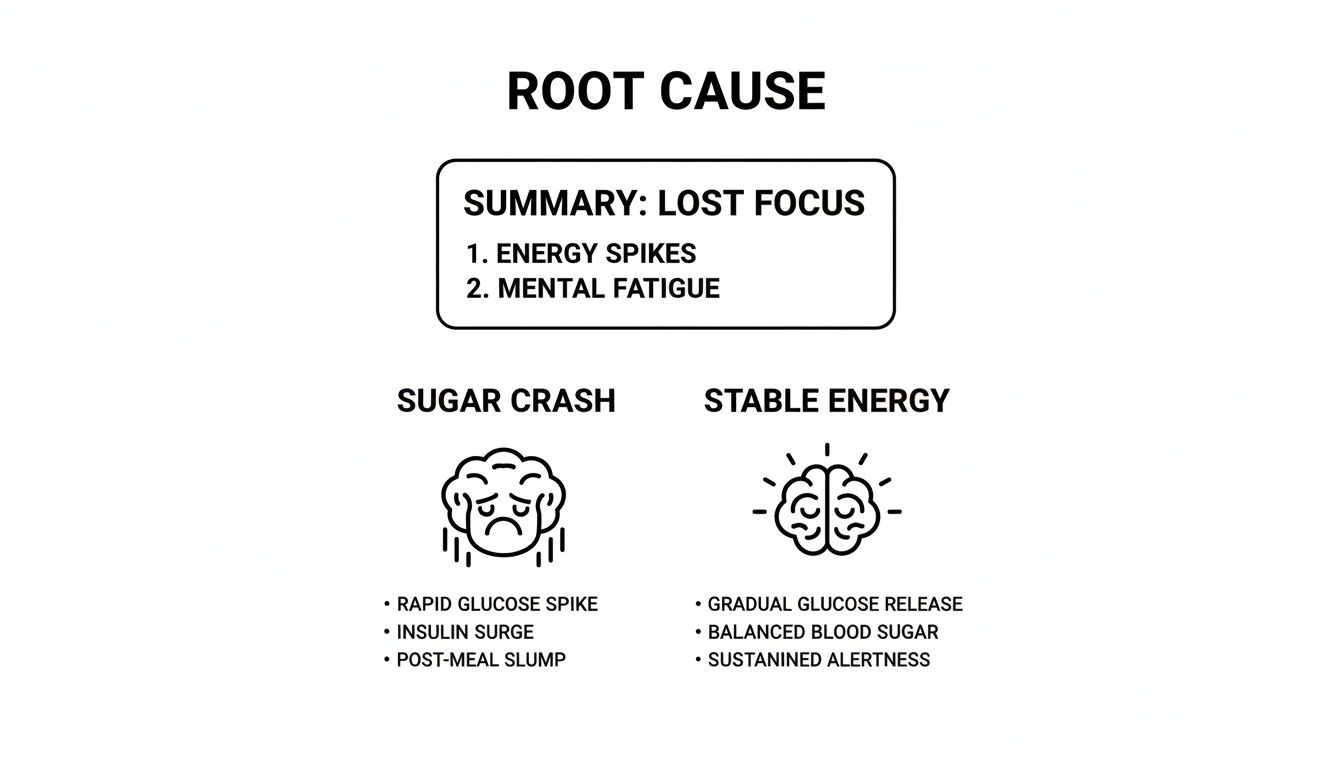
As the diagram shows, managing your energy isn’t just about having more willpower. It’s about making smarter choices with your food to support your brain all day long.
Build a Morning Routine for Lasting Concentration
How you spend the first hour of your day can make or break the next eight. If you roll out of bed and your first move is to grab your phone or a sugary cereal, you're basically programming your brain for distraction and a guaranteed energy crash later. The good news is that building an intentional morning routine is one of the most powerful things you can do to lay the groundwork for real, sustained concentration.
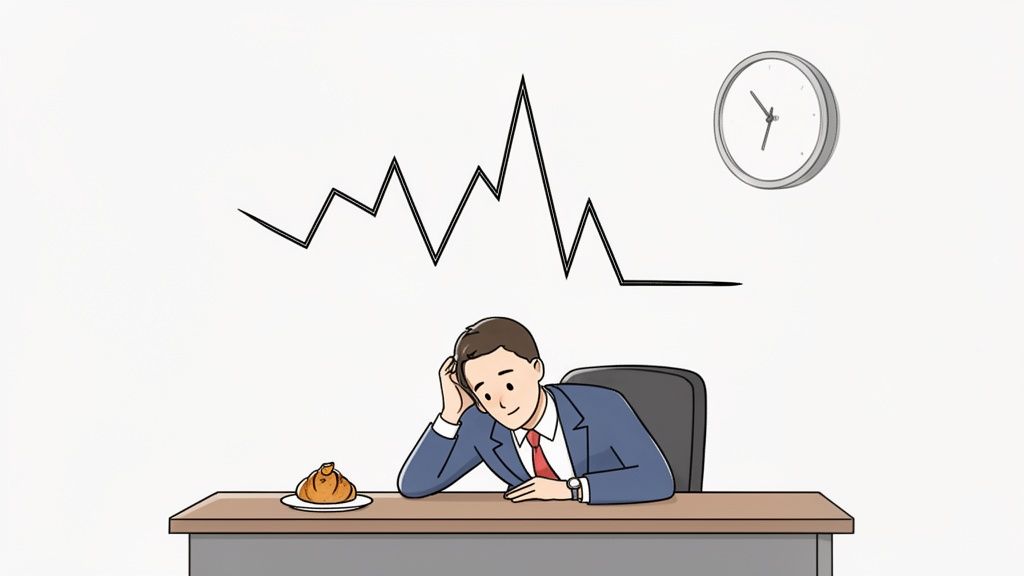
This isn't about cramming a dozen new chores into your already hectic morning. It’s about making small, smart swaps that energize your brain instead of depleting it. The aim is to create a calm, stable launchpad for your day before the emails and meetings start flying.
Start with Hydration and Movement
Before you even think about coffee, chug a big glass of water. You're naturally dehydrated after a night's sleep, and even mild dehydration can mess with your ability to concentrate and recall information. Kicking things off with water is a dead-simple way to wake up your mind and body.
After that, just spend five minutes doing some light stretches. We're not talking about a full-on yoga session. The idea is just to get your blood flowing to your brain, shake off the stiffness from sleep, and gently tell your body it's go-time. You'd be surprised what a huge difference this little bit of movement can make in how sharp you feel.
Fuel Your Brain with the Right Breakfast
Your first meal of the day is absolutely critical if you're serious about learning how to stay focused at work. A breakfast loaded with refined carbs and sugar—think pastries, sugary cereals, or a plain bagel—is a one-way ticket to a mid-morning slump. You’ll get that initial rush, but the crash that follows will leave you foggy and reaching for another quick fix.
Instead, build your breakfast around these three power players:
- Protein: Keeps you alert and provides steady, long-lasting energy. Think eggs, Greek yogurt, or a scoop of quality protein powder in a smoothie.
- Healthy Fats: Essential for brain health and key for keeping you full and satisfied. Avocado, nuts, and seeds are perfect.
- Complex Carbohydrates: These give you a slow, even release of energy. Oatmeal, whole-grain toast, or a handful of berries are great options.
Just swapping a bowl of sugary cereal for oatmeal with berries and walnuts can completely change the trajectory of your morning. You get fiber, protein, and healthy fats that stabilize your blood sugar, delivering consistent energy to keep you focused straight through to lunch.
Plan Before You React
The last step in a focus-friendly morning is to take just five minutes to map out your day—before you open your inbox. Pick your top one to three priorities. What are the tasks that will actually move the needle?
Doing this stops you from starting your day on the back foot, where every new email yanks your attention in a different direction. When you set a clear intention for the day, you're taking control of your focus from the get-go and making sure your best energy goes where it counts. It’s a game-changer for mastering your concentration.
Navigate Distractions and Afternoon Energy Slumps
Even with the best morning routine, the workday can feel like a minefield of focus traps. The constant ping of notifications, an ever-growing task list, and that dreaded 3 PM wall... it’s an uphill battle. This is where having a few go-to tactics can make all the difference in protecting your concentration.

Think of these strategies not as a complete overhaul of your day, but as quick interventions to pull you back on track the moment your focus starts to slip.
Tame Your Task List with Simple Frameworks
A wandering mind often comes from an overwhelming to-do list. When small tasks pile up, they create mental clutter that makes it impossible to focus. A couple of simple rules can help you regain control.
One of the most effective I've come across is the Pomodoro Technique. It's deceptively simple but incredibly powerful.
- Pick one single task to work on.
- Set a timer for 25 minutes and give it your undivided attention.
- When the timer rings, take a 5-minute break—and actually step away from your work.
- After four of these cycles, take a longer break of 15-30 minutes.
This method forces you into short, intense bursts of deep work, which makes huge projects feel way more manageable. Over time, you’ll find your brain starts to associate the timer with focus, helping you get into a state of flow much faster.
Another great one is the "two-minute rule." If a new task pops up (like responding to a quick email) and you know it will take less than two minutes, just do it immediately. This stops those small, nagging items from piling up and pulling at your attention all day.
Conquer the Afternoon Slump at Its Source
We’ve all been there—that feeling around 3 PM when your brain just checks out. It feels unavoidable, but it’s often a direct result of your lunch. A meal heavy in refined carbs and sugar—think a big plate of pasta, a sandwich on white bread, or a sugary soda—sends your blood sugar on a wild ride, leading straight to that familiar brain fog. You can read more about why this happens in our guide on what causes an energy crash after eating.
The secret to a productive afternoon is a metabolically stable lunch. You want to give your brain a steady stream of fuel, not a short-lived sugar high that ends in a crash.
To sidestep the slump, just build your midday meal around the same principles as your breakfast: protein, healthy fats, and fiber.
- Swap the Sandwich: Instead of a deli sandwich, try a big salad loaded with grilled chicken or chickpeas, lots of greens, and an olive oil-based dressing.
- Rethink Your Grains: If you're a fan of grain bowls, swap out white rice for quinoa and pack it with roasted veggies, avocado, and a lean protein.
- Ditch the Soda: This one's a biggie. Replace sugary drinks with water or unsweetened iced tea. Even a little bit of liquid sugar is enough to derail your afternoon.
Making these simple swaps helps keep your energy levels steady, allowing you to power through the rest of the day with clarity instead of reaching for a sugary snack when your focus starts to fade.
Design an Environment That Encourages Focus
Your surroundings, both the physical ones you can touch and the digital ones on your screen, are constantly talking to your brain. They're either signaling that it's time to work or waving a thousand tiny distractions in your face. Taking charge of your environment is one of the most powerful things you can do to learn how to stay focused at work.
Think of your willpower like a phone battery—it starts full in the morning and drains throughout the day. A cluttered desk or a screen buzzing with notifications forces you to use that precious battery life just to fight off distractions. When you craft a workspace that promotes concentration, you save that energy for the work that actually matters.
A chaotic space doesn't just pull your attention away; it can also quietly dial up your stress levels. That makes you way more likely to reach for a quick, sugary snack for a moment of relief. A clean, organized area, on the other hand, calms the mental noise and helps you stay in a state of relaxed focus.
Tidy Your Physical Workspace
Your desk should be your command center, not a storage closet for yesterday's problems. A desk buried under old coffee mugs, random papers, and general clutter is just visual noise competing for your brain's attention. The first step is simple: take ten minutes and clear everything off that you don't absolutely need for the task in front of you.
This one simple act often feels like you're decluttering your own mind. Once you’ve got a clear surface, a couple of small additions can make a huge difference:
- Noise-Canceling Headphones: In an open office or a busy home, these are a lifesaver. They create a personal bubble of quiet that tells your brain—and everyone around you—that you’re in deep work mode.
- Good Lighting: Bad lighting is a sneaky focus-killer. It causes eye strain and fatigue, making it much harder to concentrate for more than a few minutes. If you can, set up near a window for natural light. If not, a good desk lamp is a worthy investment.
Getting a handle on both sound and visual distractions can drastically improve your ability to concentrate. You can find some great office cubicle privacy tips for better focus to help create a more productive space.
Minimize Your Digital Chaos
Your digital world is just as critical as your physical one. A constant stream of notifications is the mortal enemy of deep, meaningful work. Every single ping or pop-up shatters your concentration, and it can take ages to get back into that state of flow.
It’s a huge problem. Globally, over half of all employees report having unproductive periods, even though engaged teams see a 14% boost in productivity. With engagement stuck at a low 21%, this costs companies billions. This is especially true in hybrid setups, now common for 52% of US workers, where remote employees often make 40% fewer errors. Part of that is simply by avoiding office temptations—like the vending machine sugar that demolishes focus.
Your attention is your most valuable asset. Protect it fiercely by turning off all non-essential notifications on your computer and phone. If a notification isn't critical for your immediate task, it can wait.
Consider using website and app blockers during your focused work sessions. These tools put a firm barrier between you and your biggest time-wasters, whether that’s social media or endless news feeds. This completely removes the temptation, freeing up your willpower for decisions that actually count. A clean digital space is every bit as important as a clean desk.
Use Smart Breaks to Strategically Refuel Your Brain
Let's kill a myth right now: chaining yourself to your desk to "power through" a tough project doesn't work. I've tried it, and it always ends the same way—burnout and sloppy mistakes. Your brain isn't a machine that can run nonstop; it works in cycles of high and low energy. Forcing focus when you're running on empty is a losing battle.
The real secret to staying sharp all day is treating your breaks as a non-negotiable part of your workflow.

This isn’t about zoning out on your phone for 15 minutes. Endless scrolling on social media often leaves you feeling more drained, not less. We're talking about being intentional. Short, strategic breaks give the decision-making part of your brain a much-needed chance to rest and reset.
A Menu of Smart Break Ideas
The whole point of a smart break is to step away from your work in a way that truly recharges you. It needs to be a complete change of scenery for your brain.
Here are a few ideas I rely on:
- Get a Dose of Nature: Even just five minutes of staring out the window at some trees can do wonders. If you can step outside for a quick walk, even better. It’s a powerful way to cut down on mental fatigue.
- Move Your Body: Do some simple stretches at your desk, walk up and down a flight of stairs, or just stand up and shake it out. Getting blood flowing back to your brain is an instant alertness booster.
- Practice Mindful Disengagement: Feeling overwhelmed? Try a one-minute breathing exercise. Close your eyes and just focus on your breath. It’s a surprisingly effective way to quiet a racing mind.
A smart break isn’t about escaping work; it’s about preparing your brain to return to it with renewed energy. It’s a tool for high performance, not a sign of slacking off.
And if you’re trying to nail this down in a home office, there are some great practical strategies for staying focused while working from home that can help, especially with setting up your space.
Pair Your Break with Smart Fuel
Okay, here’s where the strategy gets really powerful. A smart break is the perfect time to get ahead of those energy crashes that kill productivity in its tracks. Instead of grabbing a sugary snack from the vending machine, you can give your brain the fuel it actually needs.
Think of your snack as a partner to your break. While that short walk resets your mind, a handful of almonds or an apple provides the slow-release energy your brain needs to hold onto that focus.
This combination is what makes the difference. A break on its own might give you a temporary mental boost, but you're still at risk of an energy dip later. When you pair that cognitive reset with smart nutrition, you’re managing both your attention and your body's energy levels. That's how you build a truly focused and productive day.
Turn Daily Tactics Into a Long-Term Focus Habit
Learning to stay focused isn't about one massive, heroic effort. It’s really about stringing together small, smart choices day after day until they become your new normal. The real goal is to get to a point where you're not constantly fighting for focus—you're just... focused.
This whole process starts with paying attention. Begin by just noticing how your energy and focus shift throughout the day. When are you at your sharpest? What sends you into that mid-afternoon slump? Spotting these patterns is the first real step to creating a focus strategy that actually works for you.
From Tactics to Automatic Habits
Lasting change is all about reinforcement. When you celebrate the small wins, like getting through an afternoon without caving to that sugary snack, you give your brain the positive feedback it craves to keep going. Remember, this isn't about being perfect; it's just about making progress.
- Track Your Progress: Grab a simple notebook or use an app like StopSugar to jot down your energy levels and mood. This data is gold because it clearly shows you the link between your daily choices and your ability to concentrate.
- Celebrate Small Wins: Give yourself a pat on the back for your successes, no matter how small they seem. It builds momentum and makes the whole thing feel less like a chore.
- Be Patient with Yourself: Building new habits takes time. For a closer look at the process, our guide on how long it takes to break a habit has some great insights.
This kind of self-awareness is your most powerful tool. It helps you figure out your personal focus triggers and build a system that holds up even on the tough days.
The ultimate aim is to create a lifestyle where focus is your default state, not a constant battle. It’s about building a foundation of stable energy that makes getting things done feel almost effortless.
Everyone’s chasing productivity gains. A recent PwC survey found that 54% of employees who use AI are seeing big jumps in their output. But all those tech advantages can be completely wiped out by the mental fog from a single sugar crash.
By using StopSugar's daily check-ins and mood logs, you can build the kind of stable energy that helps you reclaim the 3.6 hours per week that AI is saving people. You're turning simple daily choices into a massive long-term advantage. You can check out the full workforce hopes and fears research from PwC if you want to dig deeper.
Got Questions? We’ve Got Answers
Making changes to your work routine to boost focus always brings up a few questions. Let's tackle some of the most common ones that pop up when people start this journey.
How Long Does This Actually Take to Work?
Everyone is a bit different, but you'd be surprised how quickly you can feel a change. Many people notice their energy levels evening out and their head feeling clearer within the first week of cutting back on sugar.
The first few days can be tough, I won't lie. You might get some serious cravings. But stick with it. Once your body adapts, you'll start to realize those brutal afternoon slumps are a thing of the past. Consistency is everything here.
What If My Office Is a Minefield of Sugary Snacks?
This is a classic problem. The breakroom table is overflowing with donuts, someone brought in cookies... it's tough. Your best strategy is to be prepared before you even walk in the door.
I always recommend stashing some focus-friendly snacks right at your desk. Think things like almonds, a small tub of Greek yogurt, or an apple with a single-serving packet of peanut butter.
Having a healthy, satisfying snack within arm's reach makes it so much easier to walk past the junk food. It's also totally fine to just politely say, "No, thank you!" when offered a treat.
I’m Way Too Busy for a Total Diet Overhaul
I get it. The idea of changing everything all at once is exhausting. The good news is, you don't have to. The best way to make changes that actually stick is to start small.
- Pick one meal to start with. For one week, just focus on breakfast. Swap your usual sugary cereal or pastry for something like oatmeal with berries.
- Then, move on to snacks. Once you've got your new breakfast down, turn your attention to what you're eating in the afternoon.
This step-by-step approach keeps you from feeling overwhelmed and helps you build habits that last. A few small, consistent changes will do way more for you in the long run than a huge, dramatic diet that you quit after three days.