A Simple Guide to No Sugar Alcohol Living
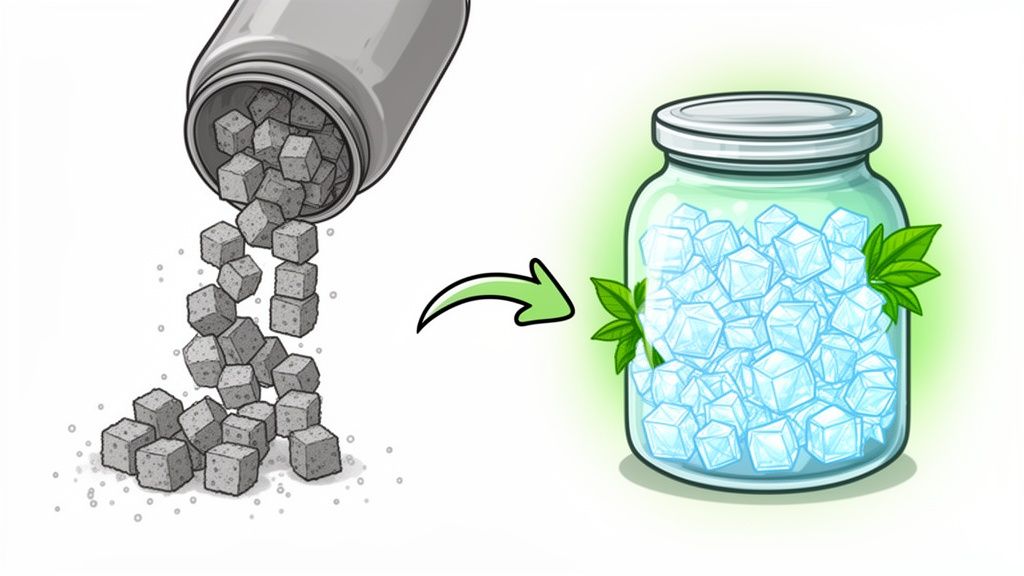
Ever grabbed a "sugar-free" snack, flipped it over, and felt like you needed a chemistry degree to read the ingredients? If you've seen words like sorbitol or erythritol, you've encountered sugar alcohols. They're a super common way for food companies to add sweetness without all the calories of actual sugar.
Why 'Sugar-Free' Can Feel So Confusing
Walking down the grocery aisle is tricky. You'll see packages shouting "Sugar-Free," "No Sugar Added," and "Zero Sugar." But a quick look at the nutrition label reveals a long list of ingredients ending in "-ol" that sound an awful lot like sugar. This is where the whole no sugar alcohol thing gets muddled.
Here’s the deal: ingredients like erythritol and xylitol aren't sugar like the kind you scoop into your coffee, nor are they alcohol like what's in a cocktail. They occupy a weird, in-between space.
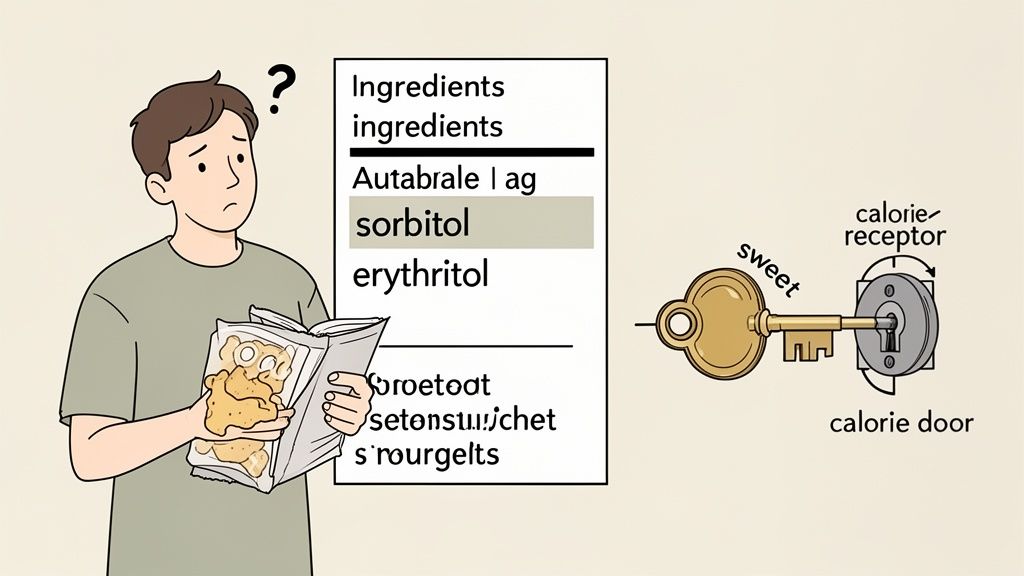
Think of them like this: they are a key that fits perfectly into the sweet-taste locks on your tongue, but they don't quite turn the handle to open your body's "calorie door." It's a neat trick that makes them a go-to for keto, diabetic-friendly, and low-calorie foods.
A Quick Sweetener Showdown
To clear things up, it helps to see how the main players stack up against each other. Getting a handle on these differences is the first real step toward making food choices that actually match your health goals. It explains why a "sugar-free" brownie might still mess with your stomach or why one sweetener is a better choice than another for keeping blood sugar stable.
Let's break it down.
Sugar vs Sugar Alcohols vs Artificial Sweeteners at a Glance
This table gives you a quick snapshot of the three main types of sweeteners. It helps clarify the fundamental differences in where they come from, their calorie content, and how your body actually handles them.
| Sweetener Type | Source | Calories per Gram | Effect on Blood Sugar |
|---|---|---|---|
| Regular Sugar | Sugarcane, beets | 4 | High |
| Sugar Alcohols | Fruits, vegetables | 0.2 - 2.6 | Low to moderate |
| Artificial Sweeteners | Lab-created | 0 | None |
As you can see, sugar alcohols aren't completely calorie-free like artificial sweeteners (think aspartame or sucralose), but they're a huge step down from regular sugar. This makes them a pretty handy tool for cutting your overall sugar intake.
But there's a catch. That "low to moderate" impact on blood sugar and calories is because our bodies don't fully absorb them, which is also what can cause digestive issues for some people. To really get a clear picture of how these choices affect you long-term, it's worth getting familiar with metrics like understanding your HbA1c levels.
The fundamental difference lies in their chemical structure. Sugar alcohols are a type of carbohydrate called a "polyol," which your body metabolizes differently, leading to a much gentler blood sugar response.
Once you start recognizing the names and know what they're there for, navigating those labels gets a whole lot easier. If you want to become a pro at this, our guide on https://stopsugar.app/blog/finding-hidden-sugar-in-food is a great next step. Arming yourself with this knowledge puts you back in control, turning confusing labels into clear, confident choices.
So, What Exactly Are Sugar Alcohols?
Let's clear up the confusion around sugar alcohols right away. The name is a bit of a head-scratcher because they aren't the sugar you put in your coffee, and they definitely aren't the kind of alcohol found in a cocktail.
They're actually a special type of carbohydrate called a polyol. Think of them as a hybrid molecule—part sugar, part alcohol. This unique chemical structure is the secret to their magic. It lets them activate the sweet taste receptors on your tongue, but your body has a hard time breaking them down for energy.
The Science of Sweetness Without the Spike
When you eat regular sugar, your body digests it quickly, sending a flood of glucose into your bloodstream. This is what causes that all-too-familiar spike and crash.
Sugar alcohols are different. Because your body can't fully digest them, they pass through your system mostly untouched. Only a small fraction of their carbohydrates and calories are ever absorbed.
This incomplete absorption is their superpower. It means a much lower calorie count and a far gentler impact on blood sugar, which is why they've become a go-to for anyone managing their weight or glucose levels.
It’s this metabolic loophole that makes them so popular in keto, low-carb, and diabetic-friendly foods.
The Benefit and the Catch
The very thing that makes sugar alcohols work so well—that incomplete absorption—is also the source of their biggest drawback.
Since they aren't fully broken down in the small intestine, they travel to the large intestine where they can ferment and draw in water. For some people, this can lead to digestive issues like gas, bloating, or even a laxative effect, especially if you eat too much at once.
This doesn't mean you should write them off completely. It just means everyone's tolerance is different. The key is to start small and see how your body reacts. You can learn more about different options in our guide to the best sugar substitutes available.
Finding smart alternatives is more important than ever. In 2023/24, global sugar consumption reached a mind-boggling 177.33 million metric tons. Here in the US, the average person eats around 17 teaspoons of added sugar every single day—way more than recommended. With numbers like these, it's no wonder so many of us are looking for a way to cut back without sacrificing the sweetness we enjoy.
A Guide To The Most Common Sugar Alcohols
Walking down the "sugar-free" aisle can feel a little overwhelming. You'll see a lot of different names ending in "-ol," and while they're all sugar alcohols, they are definitely not all the same. Each one has its own unique profile, affecting sweetness, calories, and, most importantly, how your stomach reacts.
Think of them as siblings—related, but with very different personalities. Understanding these differences is the key to finding a sugar substitute that actually works for you and your body.
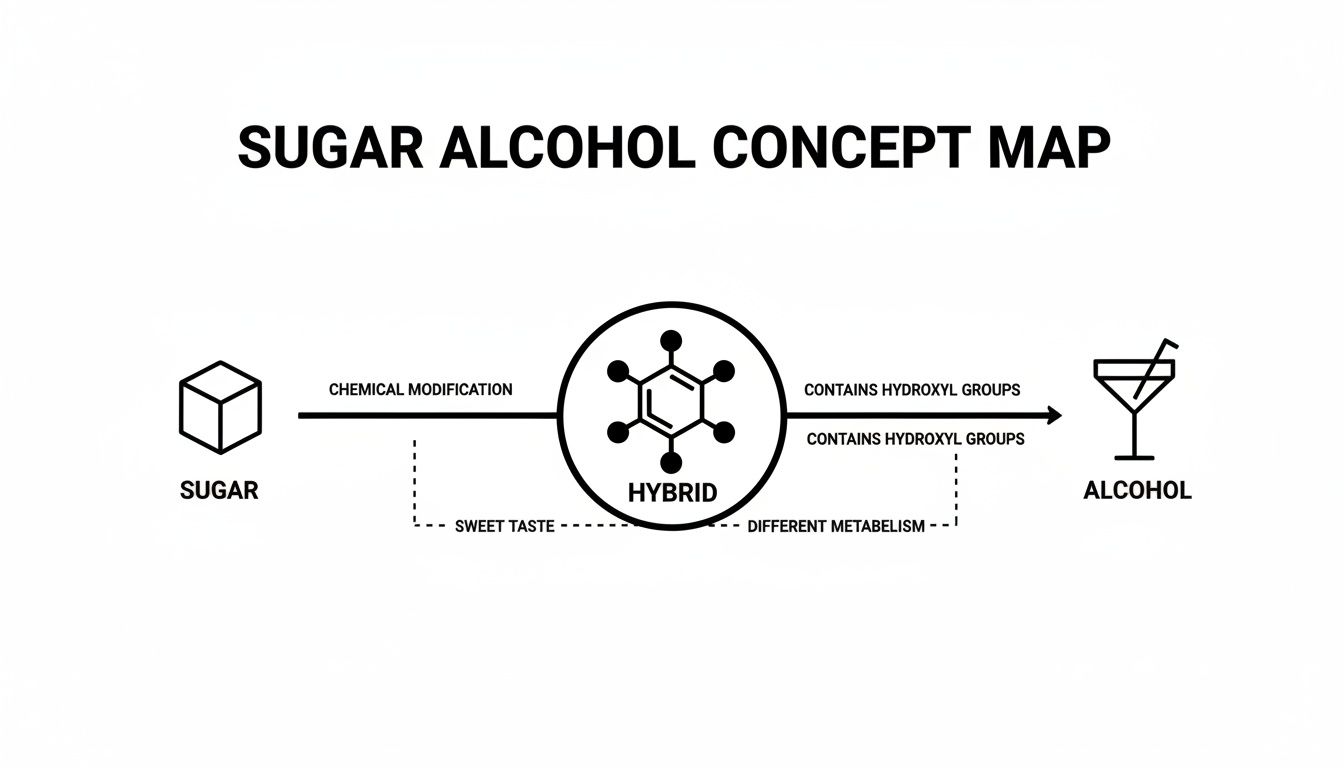
The image above gives you a peek into their hybrid nature, which is why they taste sweet but don't get processed by the body in the same way as regular sugar. Let's get to know the four you're most likely to meet on an ingredient list.
Erythritol: The Gentle Giant
If you're just dipping your toes into the world of sugar alcohols, erythritol is the perfect place to start. It’s a bit of an outlier in the family because it’s almost completely absorbed into your bloodstream and then simply excreted through urine.
This unique path through the body means it barely makes it to your large intestine, which is where other sugar alcohols can stir up digestive trouble. As a result, it has virtually zero calories and is by far the least likely to cause gas or bloating. It’s about 70% as sweet as sugar, making it a go-to for keto-friendly baking and drinks.
Xylitol: The Dental Defender
You've probably seen xylitol highlighted as the star ingredient in sugar-free gum and mints, and there's a good reason for that. It does more than just sweeten—studies have shown it can actually help fight the bacteria that cause cavities.
Taste-wise, it's a dead ringer for sugar, making it an easy 1-to-1 swap in recipes. It does have about 2.4 calories per gram, and if you have too much, it can cause some digestive rumbling.
Crucial Safety Note: Xylitol is extremely toxic to dogs. Even a tiny amount can be life-threatening, so be sure to keep any products containing it stored safely away from your pets.
Sorbitol: The Natural Humectant
Sorbitol occurs naturally in many fruits, including apples, pears, and prunes. It’s about 60% as sweet as sugar and brings roughly 2.6 calories per gram to the table.
One of its special talents is holding onto moisture, which is why food manufacturers use it to keep candies, baked goods, and other products from drying out and getting stale. Just be mindful that it has a more noticeable laxative effect than erythritol, so moderation is key.
Maltitol: The Sugar Mimic
Of all the sugar alcohols, maltitol is the one that acts most like real sugar, especially in how it melts and creates a creamy texture. This makes it a favorite for "sugar-free" chocolates, ice creams, and hard candies.
It’s about 90% as sweet as sugar, but it also has a higher glycemic index than its relatives and packs about 2.1 calories per gram. This means it can raise blood sugar more than you’d expect, and it’s one of the biggest culprits behind digestive side effects. It’s a perfect example of why "sugar-free" doesn't always mean "symptom-free."
To make things even clearer, let's break down how these popular sugar alcohols stack up against each other. This table gives you a quick snapshot to help you decide which one might be the best fit for your health goals and digestive tolerance.
Comparing Popular Sugar Alcohols
| Sugar Alcohol | Sweetness (vs Sugar) | Calories (per gram) | Glycemic Index (GI) | Common Side Effects |
|---|---|---|---|---|
| Erythritol | 70% | 0.2 | 1 | Very rare; least likely to cause digestive issues. |
| Xylitol | 100% | 2.4 | 12 | Gas, bloating, and diarrhea in larger quantities. |
| Sorbitol | 60% | 2.6 | 9 | Strong laxative effect; can cause cramping. |
| Maltitol | 90% | 2.1 | 35 | Significant bloating, gas, and laxative effects. |
As you can see, there's a pretty wide range. Erythritol is often the safest bet if you're sensitive, while maltitol is one to be more cautious with, especially if you're watching your blood sugar or are prone to an upset stomach.
Balancing the Good with the Not-So-Good
While sugar alcohols let you enjoy a sweet taste without the sugar crash, it's wise to look at the whole picture. They come with some fantastic health perks, but also a few potential downsides you'll want to be aware of. Knowing both sides helps you make smarter choices.
One of their biggest advantages is for blood sugar control. Since your body doesn't fully absorb them, they barely move the needle on your glucose levels. This makes them a game-changer for people with diabetes or anyone on a low-carb or keto diet who wants a treat without derailing their efforts.
More Than Just a Metabolic Win
The benefits don't stop there. Some sugar alcohols are actually great for your teeth. Xylitol, for instance, is a true dental hero. Unlike sugar, which fuels the bad bacteria in your mouth, xylitol starves them. That's why you see it in so many sugar-free gums and mints—it actively helps prevent cavities.
Choosing a product with a sugar alcohol like xylitol is a smart move for both your waistline and your oral health. It’s a simple switch that pays off in two different ways.
This really shows how these sweeteners can fit into a broader, health-focused lifestyle. But it's not all sunshine and roses.
The Digestive Downside
The very thing that makes sugar alcohols work—the fact that we don't digest them completely—is also what can cause problems. When they reach your large intestine, they can ferment and pull water in, which often leads to uncomfortable symptoms like gas, bloating, and sometimes even a laxative effect.
This is a very personal thing. Some people handle them just fine, while others are much more sensitive. The type and the amount you eat make a huge difference:
- Erythritol: This one is usually the easiest on the stomach.
- Maltitol and Sorbitol: These are known to be more likely to cause digestive issues.
Figuring out what works for you is all about finding your personal tolerance level. If you're feeling discomfort, it can be helpful to learn more about managing these reactions by understanding sugar detox side effects.
This balancing act is a key part of the larger fight against excessive sugar. In the U.S., the average person eats a staggering 126.4 grams of sugar daily, a huge contributor to the nation's 42% adult obesity rate. These numbers, highlighted in dietary sugar statistics from media.market.us, make finding well-tolerated sugar alternatives more critical than ever. Finding a sugar alcohol that agrees with you is a personal journey, but it’s one that can help you cut your overall sugar intake without feeling deprived.
How to Read Labels and Make Smart Choices
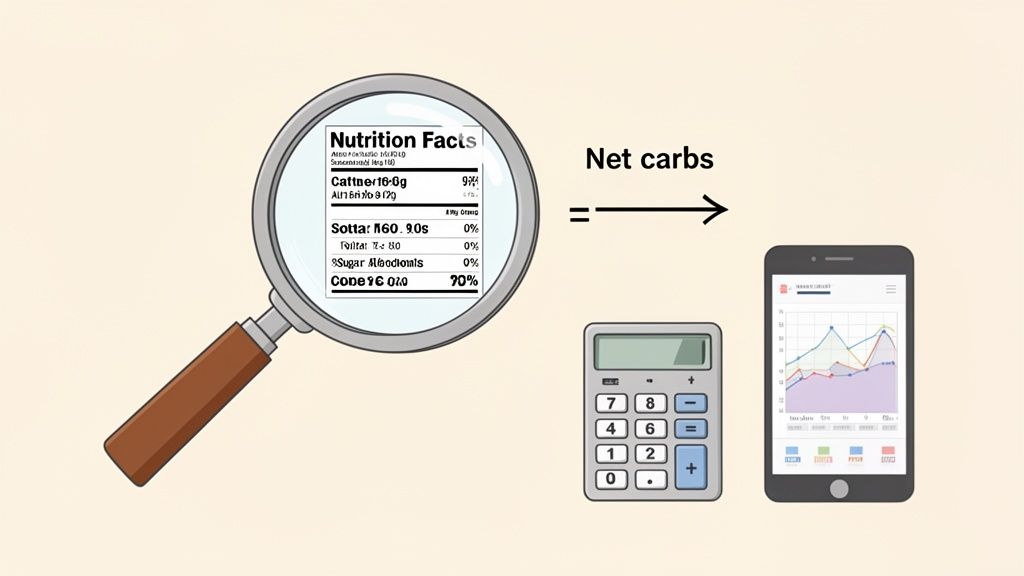
Alright, let's turn theory into practice. Knowing how to decipher a nutrition label is your secret weapon in the grocery store, allowing you to see right past the flashy marketing claims on the front of the box and make choices that are right for you.
When you grab a product, flip it over to the Nutrition Facts panel. Don't be surprised if you don't see sugar alcohols listed with the main nutrients like fat and protein. Look just below the "Total Carbohydrate" line—that's where they'll be listed as a separate line item.
Here's a helpful tip: if a product is making a "sugar-free" or "no sugar added" claim, the FDA actually requires the manufacturer to list the amount of sugar alcohol on the label. This makes them much easier to spot in the very products you're likely examining.
This little bit of transparency is a game-changer, giving you the power to decide based on both the type and amount of sugar alcohol used.
The Secret to Calculating Net Carbs
If you’re following a low-carb or keto diet, the term "net carbs" is probably a big part of your vocabulary. It's a simple concept: net carbs are the carbs your body actually digests and uses for energy, which is what can impact your blood sugar. Since sugar alcohols aren't fully absorbed, you get to subtract most (or all) of them from the total carb count.
Here’s the straightforward formula:
Total Carbohydrates - Fiber - Sugar Alcohols = Net Carbs
Let's walk through a real-world example. Imagine a protein bar has 20g of Total Carbohydrates, 8g of Fiber, and 6g of Erythritol (a sugar alcohol). The math looks like this:
- 20g (Total) - 8g (Fiber) - 6g (Sugar Alcohol) = 6g of Net Carbs
Suddenly, that 20g number looks a lot less intimidating. This simple calculation gives you a much clearer picture of the food's real impact on your body, helping you enjoy treats that fit your goals without any guesswork.
Connecting the Dots with Smart Tracking
While the net carb formula is a fantastic tool, it’s important to remember that we’re all different. One person might eat something with maltitol and feel great, while it sends another person running for the bathroom. This is where a little personal tracking becomes so valuable.
You don't need a complicated spreadsheet. An app like StopSugar can make it incredibly simple to connect what you eat with how you feel.
- Daily Check-ins: Quickly log your food, mood, and energy levels.
- Symptom Monitoring: Felt bloated after trying that new keto ice cream? Make a note of it.
- Identify Patterns: Before you know it, you'll start seeing clear patterns between specific sugar alcohols and your body's unique response.
This hands-on approach takes the abstract math and makes it personal. By understanding what works for you, you can navigate the grocery aisles with confidence and make sure your sugar-free journey is both successful and comfortable.
Your Top Questions About Sugar Alcohols, Answered
Alright, even after breaking it all down, you probably still have a few lingering questions. Let's tackle the most common ones head-on so you can feel confident about the choices you're making.
So, Are Sugar Alcohols Actually Healthy?
Think of them less as a "health food" and more as a smarter alternative to regular sugar, especially if you're watching your calories or blood glucose. They can be a great tool, but they aren't a free pass.
The real win comes from using them strategically to satisfy a sweet tooth without the full impact of sugar. Your primary focus should always be on whole, unprocessed foods.
How Do I Figure Out My Personal Limit?
This is where a little self-experimentation comes in. Everyone's digestive system is different, so the golden rule is to "start low and go slow."
Try a small amount of a product with sugar alcohols and just listen to your body for a few hours. While many people find their sweet spot is around 10-15 grams per day, yours might be different. Tracking what you eat and how you feel is the best way to find your personal threshold.
Finding your own comfort zone is the goal. It lets you enjoy the benefits of sugar alcohols without any of the digestive drama that can come from having too much.
If you need more personalized guidance on figuring out how ingredients like these fit into your diet, looking into nutrition therapy can be a fantastic resource.
Can I Use These for Baking?
You absolutely can! But just know they don't always act exactly like sugar, so there's a small learning curve. Here’s a quick rundown of what to expect from the most common ones:
- Erythritol: This is a go-to for many bakers. It's great, but sometimes it leaves a subtle "cooling" sensation in your mouth and can occasionally recrystallize when your baked goods cool down.
- Xylitol: Super easy to use because it measures just like sugar. The big, non-negotiable warning here is that xylitol is extremely toxic to dogs. If you have a furry friend at home, you need to be incredibly careful.
- Blends: My personal favorite trick is using a blend. Products that mix erythritol with a little monk fruit or stevia often give you the best of both worlds—great taste and texture that's much closer to real sugar.
A little kitchen experimentation will help you master these differences and whip up amazing treats that fit your health goals.