Coping with Sugar Addiction Withdrawal Symptoms

That exhausted, irritable feeling you get when you decide to cut out sugar? It's not just in your head. It's a very real, physical process called withdrawal, and the most common sugar addiction withdrawal symptoms are things like intense cravings, nagging headaches, and sudden mood swings. Getting a handle on what’s happening in your body is the absolute first step to getting through it.
Why Quitting Sugar Feels Impossible

If you've ever tried to cut back on sugar, you know just how tough it can be. One minute you're feeling motivated and ready to go, and the next you're fighting off a splitting headache and cravings that feel all-consuming. This isn't a fluke; it's an incredibly common experience rooted in your brain's chemistry.
Every time you eat something sugary, your brain gets a little hit of dopamine—the "feel-good" neurotransmitter that's all about pleasure and reward. It’s the same chemical that gets released when you do something you really enjoy. Over time, your brain gets used to this regular dopamine boost and starts to expect it, creating a powerful cycle that's hard to break.
The Brain on Sugar Withdrawal
So, what happens when you suddenly take that sugar away? The expected reward doesn't show up, and your brain's chemistry gets thrown completely off-kilter. This imbalance is what triggers all those physical and mental withdrawal symptoms.
Think of it like a car that's always run on premium fuel. If you suddenly switch to regular, it’s going to sputter and struggle a bit before it adjusts. That’s exactly what your body is doing.
This adjustment period is what we call withdrawal. It's not a sign that you're weak; it’s a clear physiological signal that your body is working hard to get back to its natural, balanced state. The symptoms you’re feeling are tangible proof that your system is starting to heal.
Your body is not punishing you for quitting sugar; it's adjusting to a new, healthier normal. The discomfort is temporary, but the benefits are long-lasting.
This guide is your roadmap for getting through this challenging—but totally doable—phase. We’re going to walk through:
- The specific sugar addiction withdrawal symptoms to look out for.
- A realistic timeline for how long they usually stick around.
- Practical, real-world strategies to make the whole process a lot smoother.
Knowing what to expect and having a solid plan can make all the difference. Let's get you set up for lasting success.
The Science Behind Your Sugar Cravings
Have you ever wondered why ditching sugar feels less like a simple diet tweak and more like an uphill battle? The reason is hardwired into your brain’s reward system.
When you eat something sweet, your brain releases a feel-good chemical called dopamine. Think of it as your brain’s way of saying, “Hey, that was great! Remember that and do it again.” This system is a survival mechanism, designed to reward us for essential things like eating.
The problem is, the highly processed sugars in modern foods hijack this natural process. They trigger a much bigger, more intense dopamine rush than you’d ever get from, say, an apple.
Over time, your brain gets used to this massive dopamine hit. It starts to require that same intense level just to feel normal, which is how tolerance builds. Suddenly, that one little cookie that used to do the trick isn't enough anymore. Now you need two or three to get that same rush.
Your Brain in Recalibration Mode
So, what happens when you abruptly cut sugar out? That expected dopamine flood never comes. This throws your brain chemistry into chaos, kicking off all those classic sugar addiction withdrawal symptoms. The headaches, the mood swings, the crushing fatigue—these aren't just in your head. They are very real, physical responses to a brain that's out of balance.
This process is eerily similar to what happens when someone quits other addictive substances. In fact, research shows that sugar activates the same reward pathways in the brain as many addictive drugs, releasing both dopamine and natural opioids. When the sugar is gone, the brain can react with anxiety and physical distress much like opiate withdrawal. You can read more about the science of sugar's impact on brain chemistry from this detailed study.
Feeling foggy and irritable isn't a sign of failure—it's a clear signal that your brain is actively rewiring itself. This discomfort is the feeling of your body beginning to heal and recalibrate back to its natural state.
From Cravings to Clarity
The most powerful thing you can do is shift your mindset. Instead of seeing these withdrawal symptoms as a setback, recognize them as proof that you're making real progress. Every headache you push through or craving you beat is a win, loosening the grip that sugar has on your brain.
Understanding why you crave sugar is the first step to getting a handle on those urges. Remember, all this discomfort is temporary. As your brain chemistry finds its new, healthier normal, you'll notice your energy levels evening out, your mood stabilizing, and your thoughts becoming sharper. This recalibration period is the bridge that takes you from being dependent on sugar to feeling truly free.
What to Expect: Common Sugar Withdrawal Symptoms
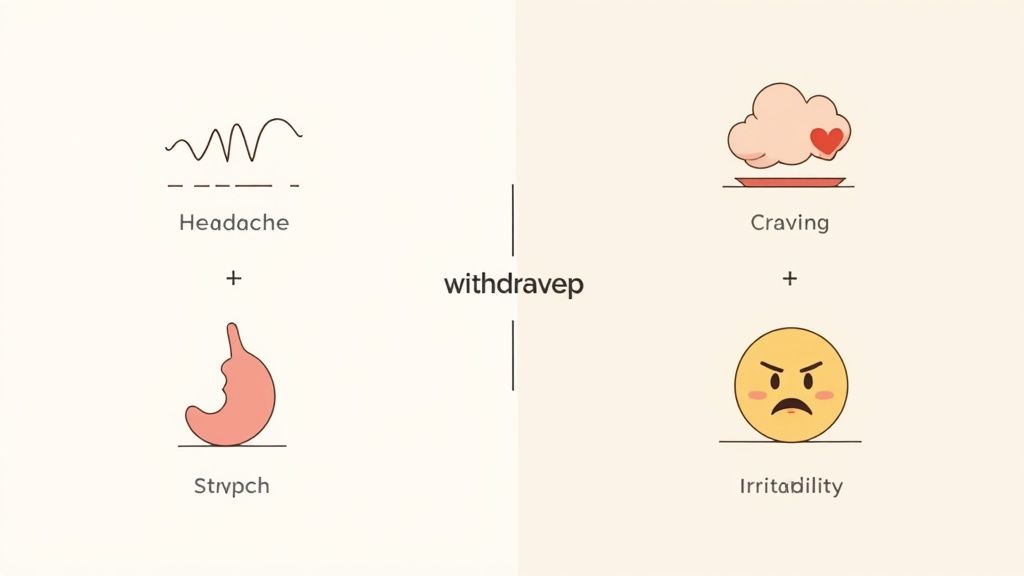
Knowing what’s coming can make all the difference when you decide to break up with sugar. When your body has gotten used to a constant stream of the sweet stuff, cutting it off can feel… well, pretty rough. These sugar addiction withdrawal symptoms aren't just in your head; they're real, and they can be both physical and psychological.
Think of it this way: what you're feeling is your body recalibrating. It’s not a sign of failure—it’s proof that you’re making a positive change. And you’re definitely not alone. Research shows that a surprising number of adults, somewhere between 18.5% and 29.7%, feel legitimate withdrawal when they ditch highly processed foods. You can read the full research behind these withdrawal statistics if you want to dive deeper into the science.
The symptoms you might experience are your body and brain adjusting to a new normal. Let's break them down into the two camps you'll likely encounter.
Physical Withdrawal Symptoms
On the physical side, your body is essentially protesting the loss of its quick-and-easy energy source. This can lead to some uncomfortable, but thankfully temporary, side effects.
- Headaches: A throbbing headache is often the first sign of sugar withdrawal. It’s your brain reacting to changing dopamine levels and your body searching for its usual fuel.
- Fatigue and Lethargy: Feeling like you’re moving through molasses? Without those sugar spikes, your body feels sluggish as it learns to tap into more stable energy from protein and fats.
- Dizziness or Nausea: Sudden shifts in blood sugar can leave you feeling lightheaded, woozy, or even a bit sick to your stomach. It's just a signal that big changes are happening internally.
Think of these physical symptoms as a short-term investment. You’re trading a few uncomfortable days for a future of steady, reliable energy that doesn't rely on your next cookie or soda.
Psychological Withdrawal Symptoms
The mental game can often feel like the tougher battle. This is where your brain chemistry, which has been hijacked by sugar for so long, starts to put up a fight.
- Intense Cravings: Your brain’s reward center will be screaming for that familiar dopamine hit from sugar. These cravings can feel incredibly powerful at first, but rest assured, they do get weaker.
- Irritability and Mood Swings: With your dopamine levels all over the place, it’s no wonder you might feel snappy, anxious, or just plain down. Your emotional thermostat is temporarily on the fritz.
- Brain Fog: Many people describe a feeling of mental fuzziness or an inability to focus. This is a classic sign that your brain is adjusting to a new fuel source and isn't getting its usual glucose spikes.
Facing these symptoms head-on is a victory in itself. Each craving you beat and every moody moment you push through is a step toward taking back control of your health.
Physical vs Psychological Sugar Withdrawal Symptoms
To help you pinpoint what you're feeling, here's a quick breakdown of the most common symptoms and what’s happening behind the scenes.
| Symptom Category | Common Symptoms | Underlying Cause (Simplified) |
|---|---|---|
| Physical | Headaches, Fatigue, Dizziness, Nausea, Muscle Aches | Body is adjusting to a new energy source; blood sugar and hormone levels are stabilizing. |
| Psychological | Intense Cravings, Irritability, Mood Swings, Anxiety, Brain Fog | Brain's reward system (dopamine) is recalibrating after losing its frequent sugar stimulus. |
Recognizing whether a symptom is physical or psychological can help you choose the right strategy to manage it, whether that's drinking more water for a headache or using a mindfulness technique to fight a craving.
Your Week-By-Week Sugar Detox Timeline
Knowing what to expect during a sugar detox can make all the difference. It takes the guesswork out of the process and helps you see that there’s a light at the end of the tunnel, even on the hardest days. This timeline breaks down what’s really going on in your body and brain as you transition away from sugar.
Think of it like climbing a steep hill. The first part of the climb is tough, no doubt about it. But once you get to the top, the path gets so much easier, and the view is totally worth it.
Days 1-3: The Initial Peak
Let's be honest: the first 72 hours are usually the toughest. This is when the most intense sugar addiction withdrawal symptoms tend to show up. Your body has gotten used to a constant stream of sugar for quick energy, and now it's basically throwing a tantrum.
You can expect some real physical discomforts, like throbbing headaches and a bone-deep fatigue. Mentally, the cravings can feel overwhelming as your brain’s reward system screams for the dopamine hit it's missing. The best thing you can do for yourself here is drink plenty of water and get as much rest as you can.
This initial struggle is a powerful sign that your body is starting to heal. Every hour you get through is a win, weakening sugar's grip and paving the way for lasting freedom.
Days 4-7: The Shift from Physical to Mental
Once you push past that 72-hour mark, you’ll probably start to feel a real shift. The worst of the physical stuff—the headaches, the nausea—should begin to fade. That’s a huge relief, but now the mental and emotional side of withdrawal might take center stage.
During this phase, you might feel more irritable, anxious, or just find your mood swinging all over the place. The intense cravings might still pop up, but they'll likely be less frequent. This is all just part of your brain chemistry getting back into balance. A little gentle exercise, even just a walk, can do wonders for your mood right now.
Week 2: Reclaiming Your Energy
By the time you hit week two, you’re turning a major corner. Those constant, nagging cravings will have likely dialed down to more of a fleeting thought. The best part? You'll start to feel your energy come back, but it's a completely different kind of energy.
Instead of the shaky highs and dramatic crashes that come with sugar, you'll begin to experience a steady, reliable energy that lasts all day. The brain fog starts to lift, and you'll find it easier to focus. For a deeper dive into this stage, take a look at our complete guide to the sugar detox timeline.
Week 3 and Beyond: Building New Habits
You've made it to the other side! From week three on, your focus can shift from just getting through withdrawal to actively building healthy, sustainable habits. The worst is definitely behind you. Now you can really start to soak in the benefits of living with less sugar.
Your energy is more stable, your mood is brighter, and your thinking is much clearer. You've climbed that hill.
Practical Ways to Manage Withdrawal Symptoms
Getting through sugar withdrawal is about more than just gritting your teeth and pushing through. You need a solid game plan. Instead of just suffering through the headaches and cravings, you can take real, practical steps to make the whole process smoother and help your body adjust. The idea is to make this journey not just bearable, but successful for the long haul.
This really comes down to a mix of smart food choices, small lifestyle tweaks, and some simple mental strategies. Each one of these is designed to help stabilize your body and mind, directly tackling the most common withdrawal symptoms head-on.
This visual timeline gives you a good idea of what to expect, from those first few intense days all the way to feeling more energetic and stable.
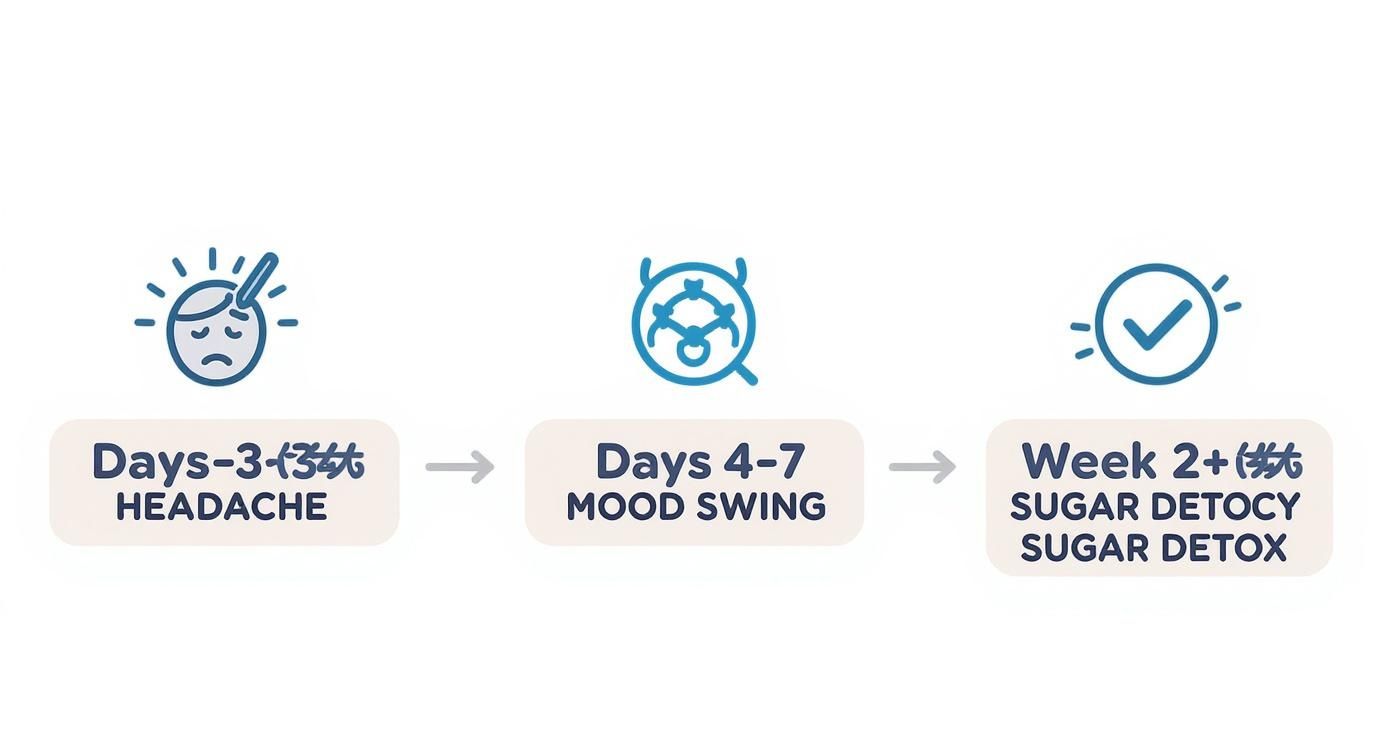
As you can see, the toughest part is usually that first week. After that, things tend to get a lot better as you head into week two and beyond.
Fuel Your Body for Stability
What you eat during this time makes a huge difference. Think of your body as a car that’s learning to run on a new, cleaner type of fuel. Giving it the right nutrients is the key to a smooth ride.
- Prioritize Protein and Fiber: These two are your new best friends. Protein and fiber slow down how quickly your body digests food, which is great for keeping your blood sugar steady. This helps you avoid those nasty energy crashes that make you crave something sweet. Think lean meats, fish, beans, and lots of leafy green vegetables.
- Hydrate Relentlessly: Being even a little dehydrated can make withdrawal headaches and fatigue so much worse. Keep a water bottle handy and sip on it all day. You'd be surprised how often what feels like a sugar craving is actually your body just asking for water.
- Embrace Healthy Fats: Don't shy away from fat! Healthy fats from sources like avocados, nuts, seeds, and olive oil help you feel full and satisfied. When you're not feeling hungry all the time, it's a lot easier to say no to that sugary snack.
Adjust Your Lifestyle to Support Recovery
Small changes in your daily routine can have a surprisingly big impact on how you feel. These little adjustments help your body handle the stress of withdrawal while you build new, healthier habits.
The most effective way to beat withdrawal is to replace old habits with new, positive ones. You're not just removing sugar; you're actively building a healthier lifestyle in its place.
Taking care of yourself isn't a luxury right now; it's a necessity. Simple actions can completely change your mood and energy levels. For more ideas on how to beat those urges, check out our complete guide on how to reduce sugar cravings effectively.
Master Your Mindset and Cravings
Let's be honest—the mental game is often tougher than the physical one. This is where learning to manage stress and be more mindful really comes into play.
Learning some healthy coping mechanisms for stress is critical, not just for getting through withdrawal but for keeping sugar out of your life for good. Instead of reaching for a cookie when you're stressed or tired, you can turn to something that actually helps.
- Practice Mindful Breathing: The next time a craving hits, just stop. Take five deep, slow breaths. It sounds simple, but that little pause can create just enough space between the urge and your reaction to help you make a better choice.
- Get Moving Gently: You don't need an intense workout. Something as simple as a brisk walk or some light stretching releases endorphins, which are your body's natural mood-lifters. This can help fight off the irritability and fatigue without being too taxing.
- Prioritize Sleep: When you're sleep-deprived, your hormones go haywire, and cravings can feel a lot more intense. Aim for 7-9 hours of quality sleep each night. This gives your body the time it needs to rest, heal, and reset.
Got Questions About Your Sugar Detox? We've Got Answers.
When you decide to kick sugar to the curb, you're going to have questions. That's totally normal. Getting solid, no-nonsense answers is key to feeling in control and staying on track. Let's tackle some of the most common things people wonder about when they're staring down sugar addiction withdrawal symptoms.
Think of this as your personal FAQ for the journey ahead. The goal here is to demystify the process and give you the confidence to see it through.
How Long Does This Actually Last?
Alright, let's get straight to it: the most intense part is usually over pretty quickly. The physical stuff—like those nagging headaches and feeling completely drained—tends to peak within the first 3 to 7 days. After that, it gets much better.
The mental side of things, like feeling cranky or dealing with powerful cravings, can stick around for a couple of weeks. But the good news is, they get weaker and weaker as your brain and body find their new rhythm. Most people feel like they've turned a major corner by week three or four.
Think of that first week as a short-term investment. The discomfort is just your body recalibrating for a future of steady energy and a much better mood. It's temporary!
Should I Quit Cold Turkey or Wean Off Slowly?
This is a big one, and honestly, there's no single right answer. It comes down to knowing yourself and what you can realistically stick with.
- Going Cold Turkey: This is the "rip the band-aid off" approach. The first few days might feel rougher, but you get through the most difficult phase faster. If you're an all-or-nothing person, this might be your style.
- Tapering Off Gradually: This method is gentler on your system. You might cut out soda one week, desserts the next, and then focus on hidden sugars. It gives your body time to adjust, which can make the whole process feel less overwhelming.
The best method is the one you won't quit. Be honest with yourself and choose the path that sets you up for success.
What Should I Be Eating Right Now?
Focus on real, whole foods that won’t send your blood sugar on a rollercoaster. Think high-quality protein (chicken, fish, beans), healthy fats (avocado, nuts, seeds), and fiber-rich carbs (all the leafy greens and veggies you can eat).
These foods break down slowly, which helps you sidestep those awful energy crashes and keeps cravings from taking over. And a pro tip: drink tons of water. It really helps with the headaches.