What Is Food Addiction A Clear Guide to Taking Control
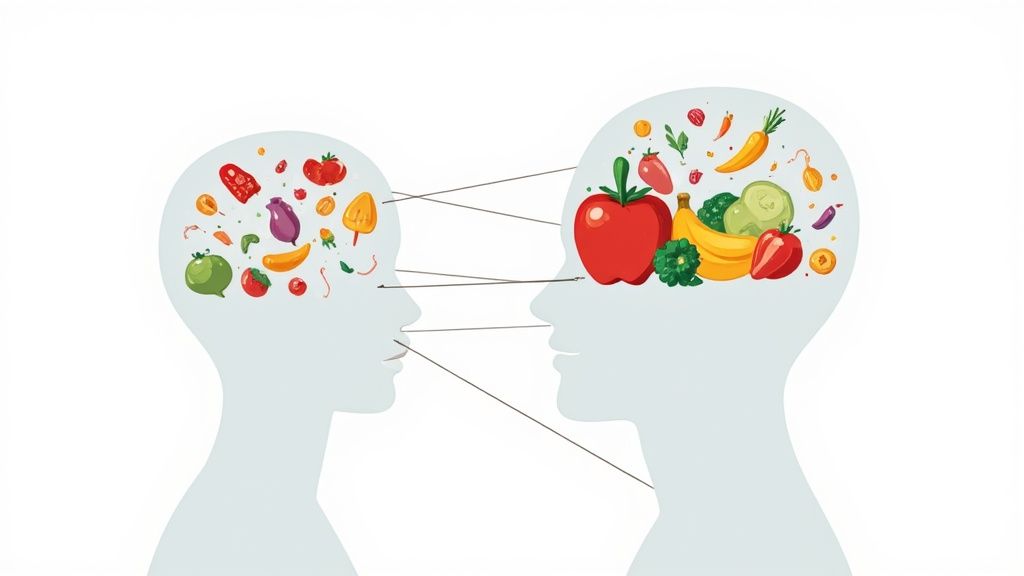
Food addiction is a real, brain-based condition. Let’s get that out of the way first. It isn't a personal failing or a simple lack of willpower. It's a compulsive drive to eat certain foods—usually those packed with sugar, fat, and salt—even when you know it's harming your health and well-being. This pattern goes far beyond a normal craving or turning to ice cream after a bad day.
Is Food Addiction Real
If you've ever felt completely powerless over a box of cookies or a bag of chips, you’re not alone, and it’s not your fault. The very idea of food addiction pushes back against the outdated notion that overeating is just a matter of weak self-control. Instead, it correctly frames the problem as a biological clash between our brain chemistry and the modern food environment.
Think of your brain's reward system like a finely-tuned instrument. It's designed to give you a little burst of pleasure for things that help you survive, like eating a nutritious meal or connecting with friends. But today's highly processed foods are engineered to be so intensely rewarding that they basically hijack that system. They flood your brain with dopamine, a "feel-good" chemical, creating a powerful high that your brain desperately wants to repeat.
This kicks off a cycle that looks eerily similar to what happens with substance addiction. That initial rush of pleasure leads to intense cravings. Before long, your brain starts to adapt, and you find you need more and more of that food to get the same satisfying feeling. That’s called building a tolerance.
Distinguishing Eating Patterns
It's really important to know the difference between having a healthy relationship with food, eating for emotional reasons, and having a full-blown food addiction. They can look similar on the surface, but what drives them is completely different.
- Normal Eating: You eat when you're hungry and stop when you're full. You choose foods for both nourishment and enjoyment, without feeling guilty about it.
- Emotional Eating: You use food to soothe or distract yourself from feelings like stress, boredom, or sadness. It's usually a temporary fix tied to a specific situation.
- Food Addiction: This is a whole different beast. It’s marked by a relentless, compulsive need for certain foods, a feeling that you can't stop, and continuing to eat them despite negative consequences.
And this isn't a rare problem. The numbers are staggering. Research suggests around 14% of adults and 12% of kids show signs of food addiction. Some studies even place that number closer to 20% of the population, which shows just how many people feel trapped in this cycle. You can find more details in this breakdown of food addiction statistics.
At its heart, food addiction isn't about hunger. It's about the brain's reward-seeking drive getting hijacked by the intense, artificial pleasure of modern processed foods.
Recognizing these differences is the first real step toward getting back in the driver's seat.
Understanding Different Eating Patterns
To help you see where your own habits might fall, this table breaks down the key distinctions between normal eating, emotional eating, and food addiction. It’s a simple way to compare the motivations and feelings behind each pattern.
| Characteristic | Normal Eating | Emotional Eating | Food Addiction |
|---|---|---|---|
| Primary Driver | Physical hunger and nourishment | Emotional triggers (stress, sadness) | Intense, uncontrollable cravings |
| Sense of Control | Generally high; can stop when full | Can be impulsive but usually temporary | Significant loss of control; eats more than intended |
| Feelings After | Satisfaction and contentment | Often guilt or regret, but temporary | Intense shame, guilt, and distress |
| Behavioral Pattern | Flexible and varied diet | Situational and linked to moods | Chronic, compulsive, and persistent |
Take a moment to reflect on this. Identifying which column resonates most with you can be an incredibly powerful starting point for making a change.
How Your Brain Gets Hooked on Certain Foods
Ever wonder why you can easily eat just one baby carrot but find it almost impossible to stop at one potato chip? The answer isn't a lack of willpower. It’s rooted deep inside your brain's ancient survival wiring.
Certain foods, especially those packed with sugar, fat, and salt, are what scientists call hyper-palatable. They are literally engineered to be intensely rewarding, sending a signal to your brain that’s incredibly hard to ignore.
Think of it this way: your brain's reward system is like a radio. A healthy, whole food sends a clear, pleasant signal. But hyper-palatable foods blast that radio with a signal so powerful it drowns out everything else, creating an intense "feel-good" rush that your brain craves again and again.
This powerful rush comes from dopamine, the brain chemical tied to pleasure, motivation, and reward. Normally, dopamine reinforces behaviors essential for survival. But the massive flood of dopamine from modern processed foods hijacks this system, teaching your brain to prioritize these foods above all else.
The Dopamine Hijack Explained
Your brain's reward circuit is designed to light up when you do something beneficial. For our ancestors, eating a sweet piece of fruit would have triggered a small, healthy dopamine release, encouraging them to find that food source again.
A modern donut, however, loaded with processed sugar and fat, triggers a dopamine surge that is far more potent and faster than anything found in nature. This isn’t a gentle nudge—it’s a neurological explosion. Your brain registers this experience as critically important for survival, even when it’s not.
This intense activation starts to rewire your brain's priorities. Over time, your brain adapts to this constant overstimulation by becoming less sensitive to dopamine. This means you need more and more of that high-reward food to get the same feeling of pleasure. This is a classic sign of tolerance, a key component of addiction.
The infographic below shows the difference between normal eating, emotional eating, and the compulsive drive of addiction.
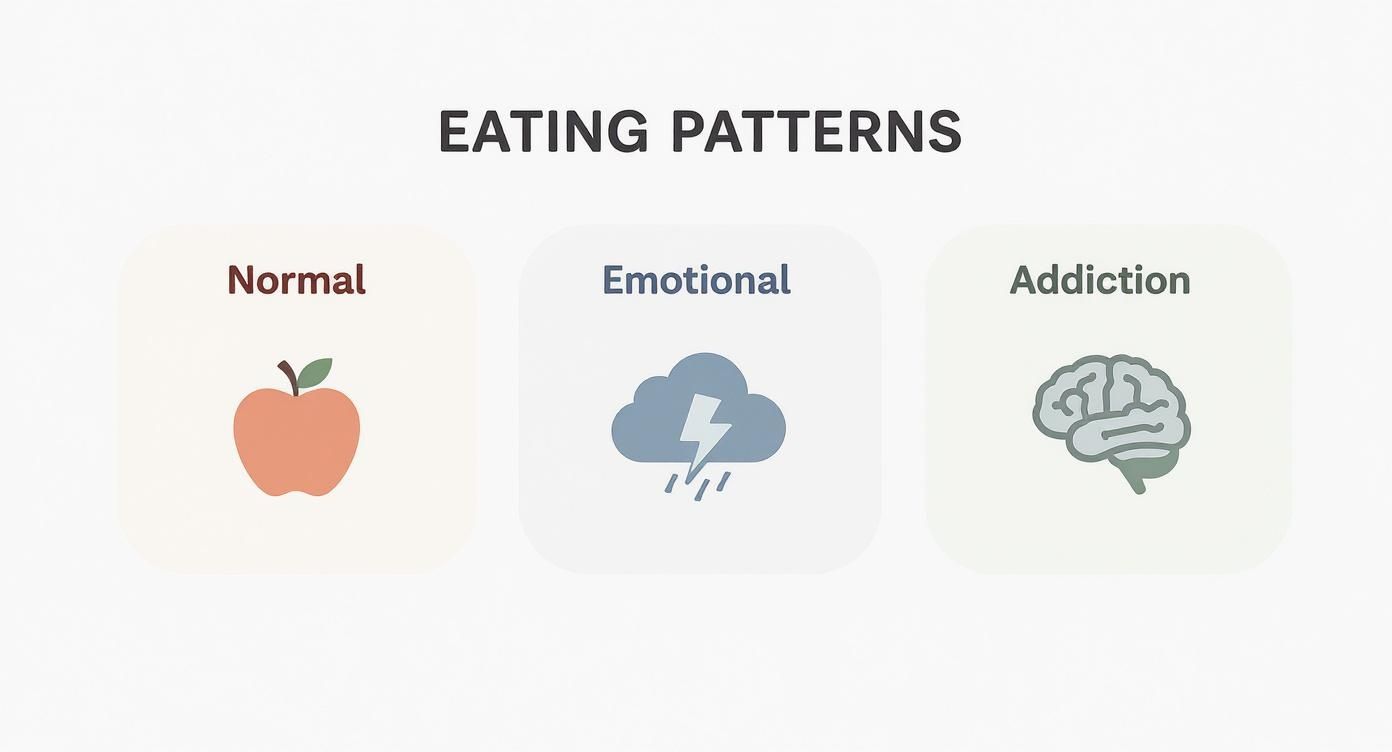
As you can see, normal eating is about physical needs, but addiction is driven by a compulsive urge rooted in altered brain chemistry.
When Decision-Making Weakens
This cycle doesn't just supercharge your cravings; it also weakens the part of your brain responsible for impulse control and rational thinking. The prefrontal cortex is your brain's CEO, in charge of making sound decisions and planning for the future.
Faced with constant dopamine surges, the prefrontal cortex simply can't keep up. Its ability to say, "No, I shouldn't have another cookie," and weigh the long-term consequences gets diminished. It’s like trying to have a quiet conversation right next to a blasting rock concert—the signal for self-control gets completely drowned out.
This creates a frustrating internal battle. A part of you knows you should stop, but the powerful, reward-seeking part of your brain takes over. Understanding these psychological hooks of addiction is helpful, as the same brain mechanics are at play in many compulsive behaviors.
The struggle with food addiction is a biological reality. It's a battle between the brain's primitive reward system and its modern executive functions, with hyper-palatable foods tipping the scales.
This process explains why "just trying harder" or "using more willpower" so often fails. You’re fighting against your own brain chemistry. To dig deeper into how this powerful neurotransmitter shapes our habits, check out our guide on what is dopamine addiction.
Understanding the biology is the first step to removing the shame and building effective strategies to reclaim control over your eating and your life.
Recognizing the Common Signs of Food Addiction
The first step toward making a change is understanding what food addiction actually feels like day-to-day. It’s so much more than just occasionally overeating. Instead, it’s a difficult pattern of compulsive behaviors and emotional responses that can feel impossible to break.
Think of the following signs as a gut check, not a formal diagnosis. They’re based on the criteria from the Yale Food Addiction Scale (YFAS), a tool researchers use to identify addictive-style eating, but I’ll break them down into real-world terms.
Behavioral Symptoms You Might Notice
The actions tied to food addiction usually circle back to one thing: a loss of control. It’s a feeling that your rational mind knows what to do, but another part of you takes over. These behaviors can become isolating as you try to hide them from the people you care about.
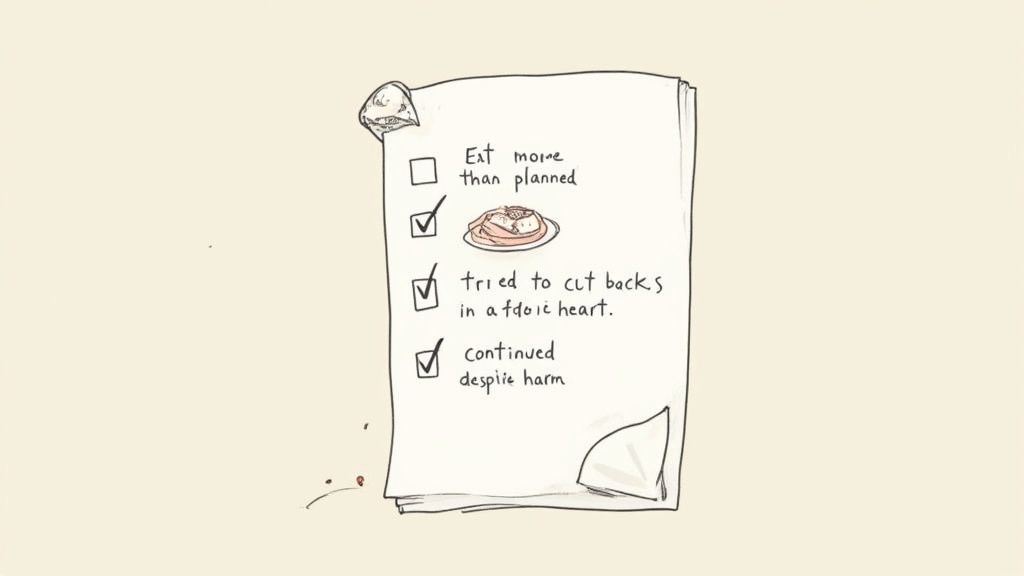
- Eating More Than Intended: Ever sit down to have just a couple of cookies and, before you know it, the whole box is gone? It feels like a switch flips after that first bite, and stopping is no longer an option.
- Unsuccessful Attempts to Cut Back: You've probably tried to quit or cut back on certain foods dozens of times. You make rules like "no sugar during the week," but sticking to them feels impossible, which just leads to more frustration and guilt.
- Spending Excessive Time on Food: A huge chunk of your mental energy is spent thinking about food, getting it, eating it, or recovering from the after-effects. This could look like driving across town to satisfy a specific craving or feeling too sick and sluggish after a binge to do anything else.
A core sign of food addiction is persistent desire. This means you’re battling constant, powerful cravings and have an ongoing, unsuccessful wish to get your eating under control.
This intense focus often shoves other important parts of life—hobbies, work, friendships—into the background.
Emotional and Physical Red Flags
Food addiction carries a heavy internal weight. The emotional toll can be just as draining as the physical one, creating a vicious cycle of shame, guilt, and turning back to food for comfort.
You might find yourself continuing to eat in a way that you know is causing you harm, whether it's physical or emotional. Maybe you eat until you feel sick, only to repeat the pattern the next day. Or the intense shame you feel after a binge actually triggers the urge to eat again.
Another major red flag is experiencing withdrawal-like symptoms when you try to stop. We’re not just talking about mental cravings here. This can show up as real physical symptoms like irritability, headaches, anxiety, or pure exhaustion when you don’t have your usual trigger foods.
The Overlap with Other Conditions
It's so important to know that food addiction rarely exists in a vacuum. It often goes hand-in-hand with eating disorders and other mental health conditions, which can make things feel much more complicated.
Research shows that food addiction was present in 57.6% of cases of diagnosed eating disorders. The numbers are especially high for bulimia nervosa at 84%, followed by binge eating disorder (63%) and anorexia nervosa (53%). You can dive deeper into the science behind the link between food addiction and eating disorders in this study.
This overlap is exactly why a holistic approach to healing is essential. Just recognizing these signs in yourself is the first, most powerful step you can take. It’s how you start moving away from self-blame and toward a real understanding of what’s going on.
The Hidden Health Costs of Uncontrolled Eating
It's one thing to understand the brain science behind food addiction, but it's another to see how those patterns play out in real life. Compulsive overeating isn't just about the number on the scale; its impact quietly ripples through every part of your well-being, creating a tangled web of physical and mental health challenges.
The most obvious outcome, of course, is weight gain. The connection between food addiction and obesity is undeniable, and it’s a growing problem worldwide. Global obesity rates have skyrocketed, climbing from 8.8% in women and 4.8% in men back in 1990 to 18.5% in women and 14% in men by 2022. The numbers are even more telling when you look closer: the rate of food addiction nearly doubles in people with obesity, hitting 25% compared to just 11% in those at a healthy weight. You can read more about the research linking obesity and compulsive eating patterns.
The Physical Toll on Your Body
When your body is constantly overloaded with highly processed foods packed with sugar, unhealthy fats, and refined carbs, it's forced into a state of emergency. It simply can't keep up. This constant strain often leads to a dangerous combination of conditions known as metabolic syndrome.
Think of metabolic syndrome not as a single disease, but as a collection of red flags that dramatically increase your risk for much bigger health problems down the road. These warning signs include:
- High Blood Pressure: Your heart has to work overtime to pump blood.
- High Blood Sugar: This is a slippery slope toward insulin resistance and, eventually, type 2 diabetes.
- Excess Body Fat Around the Waist: This isn't just any fat; it's visceral fat, which crowds and harms your internal organs.
- Abnormal Cholesterol Levels: Specifically, high triglycerides and low levels of the "good" HDL cholesterol.
Left unchecked, these issues set the stage for chronic illnesses like type 2 diabetes and heart disease, raising your risk of a heart attack or stroke.
The Impact on Your Mental Well-Being
The damage isn't just physical. The cycle of craving, binging, and guilt wreaks havoc on your mental health, creating a vicious feedback loop that’s hard to escape. You might eat to soothe anxiety or sadness, but the shame and physical discomfort that follow only make those feelings worse.
This relentless pattern is strongly tied to a higher risk for:
- Depression: The constant sense of failure and low self-worth can easily spiral into depressive episodes.
- Anxiety Disorders: Obsessing over food, weight, and your health can fuel a state of persistent worry.
- Social Isolation: It’s common to start avoiding social events to hide eating habits, which only leads to more loneliness.
This damaging cycle—eating to feel better, only to feel worse—is a hallmark of food addiction. It isolates you emotionally while simultaneously harming you physically, making it incredibly difficult to break free without a clear understanding of what’s at stake.
The point of all this isn't to scare you. It's to empower you. Seeing the full picture of the consequences can provide the powerful motivation you need to take that first step, reclaim your health, and find a real, sustainable path forward.
Your Action Plan for Reclaiming Control
Knowing the "why" behind food addiction is a great first step, but real change happens when you start taking action. This is where the rubber meets the road—a practical plan to help you build better habits, reshape your environment, and get back in the driver's seat. The goal isn't to be perfect overnight. It's about making small, consistent steps forward.
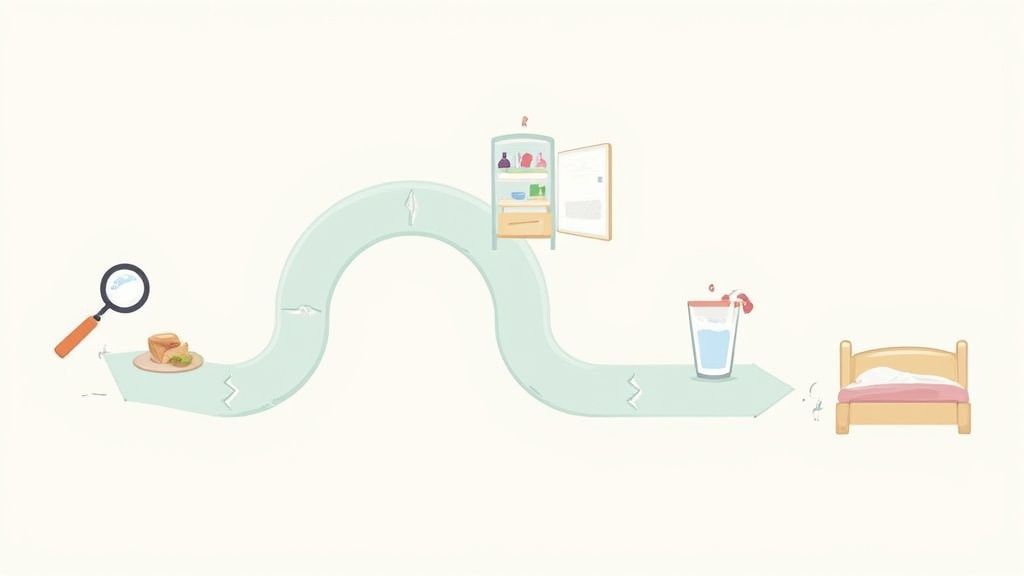
Think of this less as a battle of deprivation and more as learning a new set of skills. It all starts with figuring out your personal triggers and then strategically setting up your life to support your goals, not sabotage them.
Identify Your Triggers
First things first: you have to become a detective in your own life. Triggers are the specific foods, situations, times of day, or even emotions that switch on your cravings and send you down the path of compulsive eating. Once you know what they are, you can start to dismantle their power.
Your triggers might look something like this:
- Specific Foods: It’s rarely just "sugar." It's the specific pint of ice cream in the freezer or that bag of salty chips.
- Certain Times: Do you find yourself wandering to the pantry at 3 p.m. like clockwork? Or right after the kids go to bed?
- Emotional States: Stress from work, boredom on a Sunday afternoon, or a pang of loneliness can all be powerful cues to eat.
- Social Situations: Parties, family dinners, or even just sitting down to watch a movie can be deeply ingrained habits tied to overeating.
Try keeping a simple journal for a few days. Just jot down what you ate, when you ate it, and what was going on with you emotionally at the time. You’ll be surprised how quickly patterns start to emerge.
Create a Supportive Environment
Here’s a hard truth: you can't rely on willpower alone to get you through this, especially in the beginning. You have to rig the game in your favor by setting up your surroundings for success. This means making the healthy choice the easy choice.
A well-designed environment is your best line of defense.
- Clean Out Your Kitchen: Get rid of the hyper-palatable, processed foods you can’t say no to. If it’s not in the house, you can’t eat it in a moment of weakness. It's that simple.
- Stock Up on Healthy Options: Fill your fridge with whole foods—fruits, vegetables, lean proteins, nuts, and seeds. Keep them visible and easy to grab.
- Plan Your Meals: Having even a loose idea of what you’ll eat for your main meals takes the guesswork out of it. When you know a satisfying, nourishing meal is coming, you're far less likely to grab a quick, sugary fix.
Recovery isn't about having superhuman self-control. It's about creating a system where you need less self-control to succeed because your environment is already working for you.
Develop Non-Food Coping Mechanisms
A huge piece of the puzzle is recognizing when you're using food to medicate your feelings. When a powerful craving hits, it’s often your brain’s go-to solution for an uncomfortable emotion. The key is to build a new toolkit of healthier ways to respond. As you build your plan, it's crucial to learn practical ways to control your mind and thoughts, especially when cravings feel overwhelming.
Instead of turning to the pantry, try one of these:
- Pause and Breathe: Just stop. Take five deep, slow breaths to calm your nervous system and create a little space between the feeling and the action.
- Go for a Walk: A quick 10-15 minute walk can completely change your brain chemistry and dial down the intensity of a craving.
- Connect with Someone: Call a friend. Text a family member. Talk about what’s really bothering you.
- Drink a Glass of Water: Sometimes our brains mix up the signals for thirst and hunger. Hydrating is a simple but surprisingly effective first step.
Learning to tell the difference between true physical hunger and an emotional urge is a skill you can build over time. For more on this, our guide on how to https://stopsugar.app/blog/stop-emotional-eating offers deeper strategies for this very challenge. Having these non-food options ready means you're prepared when cravings inevitably show up.
5. Using Modern Tools to Build Healthier Habits
Having a solid plan is one thing. Actually sticking to it day in and day out? That’s where the real challenge lies. This is where the right tools can make all the difference, giving you the structure and accountability to turn intentions into habits that last.
An app like StopSugar can feel like a supportive partner in your pocket. It's designed to help you translate your big goals—like overcoming food addiction—into small, concrete actions you take every single day. It’s not about finding a magic bullet, but about consistently reinforcing the positive changes you’re working so hard to make.
Putting Your Plan into Action
A thoughtfully designed app moves beyond simple tracking and gives you practical features to tackle the core challenges of breaking an addiction. It helps you see your progress, figure out what triggers your cravings, and get support right when you need it most.
Take the StopSugar app, for instance. It’s built with features that directly support your recovery plan:
- Daily Check-ins and Mood Tracking: This feature helps you connect the dots between your emotions and your eating habits. You start to see patterns you never noticed before, like reaching for sugar when you're feeling stressed or lonely.
- A "Panic Button" for Cravings: When a powerful craving hits and you feel like you're about to give in, this feature offers an immediate lifeline. It can provide a quick distraction or a supportive message to help you ride out the urge.
- Community Support: You’re not alone in this. The app connects you with other people who get what you’re going through. Sharing experiences and encouragement can be a huge help, especially on tough days.
The screenshot below shows just how powerful it can be to see your moods and food choices tracked together.
When you see these patterns laid out visually, you can start to anticipate your triggers and make a plan for handling them. These tools are part of a whole ecosystem of support, and you can see more options in our guide to the best habit tracking apps.
Technology can’t do the work for you, but it can provide the guardrails and insights that make your own efforts far more effective and sustainable.
By using features like these consistently, you’re no longer just guessing what works. You're building a clear, data-driven picture of your own recovery journey, which gives you the insight and confidence to keep moving forward.
Got Questions About Food Addiction? We’ve Got Answers
As you start to unpack all this, it’s only natural for questions to pop up. Let's tackle some of the most common ones that people have when they're figuring out how to move forward.
Can I Really Do This on My Own?
It's a mixed bag, and the answer really depends on you. Lots of people see incredible progress using self-help strategies and tools like the StopSugar app. But this journey isn't one-size-fits-all.
If your symptoms feel severe, or if you’re also dealing with depression, anxiety, or another eating disorder, getting professional help is key. A good therapist, a registered dietitian who gets it, or even a support group can provide a level of guidance that’s hard to replicate on your own.
Being honest with yourself here is crucial. If you’ve tried going it alone and you’re just not getting anywhere, reaching out is a sign of strength, not a step backward.
Should I Cut Out My Trigger Foods Completely or Just Try to Eat Less of Them?
This is the million-dollar question, and there’s no single right answer. But for most people who truly struggle with food addiction, trying to "moderate" is a losing battle. It’s a lot like telling an alcoholic to have "just one beer"—it rarely works. The brain's reward system is so fired up that even a tiny taste can set off a massive binge.
In these situations, complete abstinence from your specific trigger foods is usually the most effective path. We're talking about things like processed sugar, white flour, or whatever that one snack is you can't stop eating. It’s not about punishing yourself; it’s about giving your brain a fighting chance to heal and reset.
Think of it this way: an initial break from trigger foods isn't about deprivation. It's about creating enough quiet space for your brain's reward system to finally calm down, which makes the cravings less intense and less frequent.
Down the road, once your brain has rewired and new habits are solid, some people might be able to bring certain foods back in a very mindful, controlled way. But to start? A clean break is almost always the best bet for long-term success.
How Long Is This Going to Take?
It’s probably best to think of recovery as an ongoing practice rather than a race with a finish line. But the good news is you can start feeling significantly better in just a few weeks or months.
The first phase is often the toughest. You might deal with withdrawal symptoms—headaches, moodiness, and cravings that feel out of control—but that intense period usually only lasts for a few days to a couple of weeks.
After you get through that initial hump, here’s what most people notice within the first few months:
- Fewer Cravings: The obsessive urges start to fade into the background.
- A More Stable Mood: You'll find yourself on less of an emotional rollercoaster.
- More Energy: Say goodbye to those constant sugar-fueled highs and crashes.
- Feeling in Control Again: You’ll start to feel like you're the one calling the shots, not the food.
The biggest hurdles are usually at the beginning. Once you clear those, you're setting yourself up for a lifetime of feeling better and having a much healthier relationship with food.