The Link Between Cortisol and Belly Fat Explained

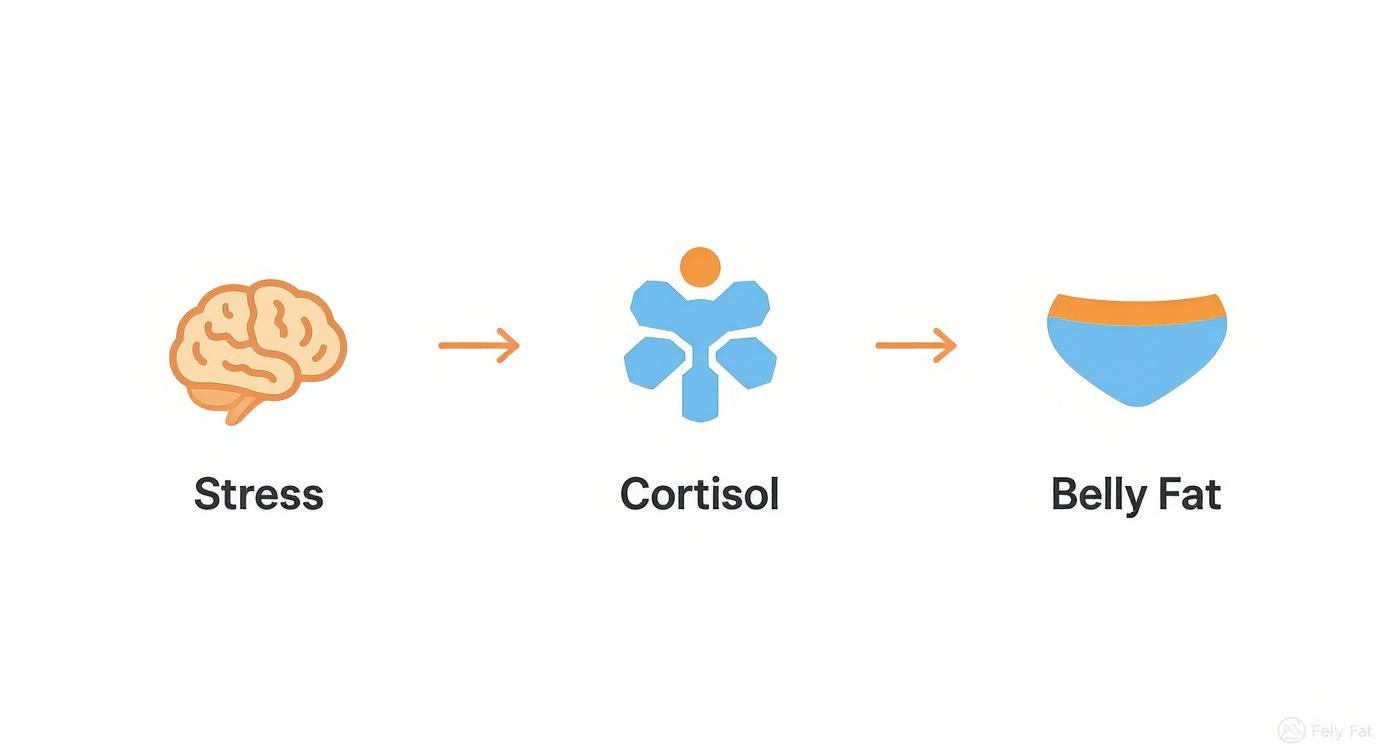
Let’s cut to the chase: chronic stress is a direct pipeline to storing belly fat. When you're constantly under pressure, your body pumps out a hormone called cortisol. Its job is to tell your system to hang onto energy as fat, and it prefers the most convenient spot for quick access—your midsection.
This isn't just about how your clothes fit. This deep abdominal fat is a serious health risk.
How Stress Creates Stubborn Belly Fat
Think of cortisol as your body's built-in emergency manager. Its whole purpose is to gear you up for a crisis. Back in the day, that meant facing a predator. Today, it’s a looming deadline or a sudden scare. In those moments, cortisol floods your system with energy, getting you ready to fight or run for your life. It's an incredible survival tool.
The problem is, our modern "emergencies" don't stop. They're the endless traffic jams, the constant pings from our phones, and the nagging financial worries. Your internal emergency manager can't tell the difference between a real threat and a stressful email.
It stays on high alert, continuously releasing cortisol. This keeps your body in a perpetual state of crisis mode, which has one major consequence when it comes to the link between cortisol and belly fat: non-stop energy storage.
The Cycle of Stress and Storage
Cortisol sends a signal to your body: "Find the fastest fuel source you can, now!" And the quickest fuel around is usually sugar. This is precisely why stress sends you running for sugary, high-fat comfort foods. They give you a quick mood boost, but they also feed the cycle, locking you into a pattern of stress eating.
If this sounds familiar, our guide on how to stop stress eating can help you break out of that frustrating loop.
This whole process gets worse because cortisol specifically directs fat to be stored deep in your abdomen, right around your vital organs. This isn't just regular fat; it's called visceral fat, and it's metabolically active and dangerous.
The science backs this up. A study involving over 2,500 adults found a clear link. Researchers measured long-term cortisol levels in hair samples and discovered that people with higher cortisol had significantly larger waists and a higher body mass index. You can read the full research on cortisol and obesity indicators on Wiley Online Library.
What was once an ancient survival instinct has become a modern-day health problem.
Why Cortisol Seems to Target Your Midsection
Ever feel like stress goes straight to your stomach? It’s a common complaint, and it’s not just in your head. There’s a very real biological reason why stress and belly fat are so connected, and it all comes down to the fat cells in your abdominal area.
Think of your fat cells as having little landing pads, or receptors, for cortisol. The fat cells deep in your belly—the visceral fat that surrounds your organs—just happen to have way more of these cortisol receptors than fat cells anywhere else in your body. This makes them extra sensitive to the messages cortisol sends out when you're stressed.
So, when cortisol floods your system, it’s basically looking for a place to dock. Since your belly has the highest concentration of these docking stations, it becomes the prime location for cortisol to signal "store more energy right here!"
The Great Fat Migration
It gets worse. Cortisol doesn't just encourage new fat storage in the belly; it can actually move fat from other parts of your body, like your hips or thighs, and relocate it to your abdomen. From a primitive survival standpoint, this makes sense—it’s your body keeping fuel easily accessible for a fight-or-flight situation.
This whole process is supercharged by the way cortisol messes with other hormones, particularly insulin, which is in charge of your blood sugar. High cortisol can make your body less responsive to insulin, leaving more sugar in your bloodstream and signaling your body to store even more fat. It’s also what triggers those intense, almost uncontrollable cravings for the very foods that fuel the fire.
Stress hits, cortisol spikes, and suddenly all you want is something sugary, fatty, and high in calories. This kicks off a vicious cycle: the stress makes you crave junk, you eat inflammatory foods, and your body eagerly stores it all as more belly fat.
Understanding what foods cause inflammation is a game-changer for breaking this pattern. You can't tackle one without the other; managing stress and diet have to go hand-in-hand.
The Science Backs It Up
This link isn't just a theory; we can see it in action. One fascinating study looked at the "cortisol awakening response" (CAR)—that natural jump in cortisol we all get when we wake up—in girls as young as 8 to 11.
Researchers found that the girls with a higher cortisol spike in the morning and who reported more stress at school had significantly more abdominal fat—both the deep visceral fat and the subcutaneous fat just under the skin.
This shows just how early a heightened stress response can start physically changing the body, pulling fat stores toward the center. It’s clear proof that the fat around your midsection is uniquely tuned in to your stress levels, making stress management a non-negotiable part of getting a handle on belly fat.
Finding Your Hidden Cortisol Triggers
It’s easy to blame major life events for stress, but when it comes to the stubborn link between cortisol and belly fat, the real culprits are often the small, everyday habits you don’t even notice. These little routines can keep your body in a constant, low-grade state of "fight or flight," quietly fueling that fat storage around your middle.
Think of it this way: your body doesn’t always know the difference between being chased by a predator and just being sleep-deprived. The hormonal response can be surprisingly similar. Let's dig into some of the most common, and often surprising, triggers that might be part of your daily life.
The Daily Habits That Secretly Spike Cortisol
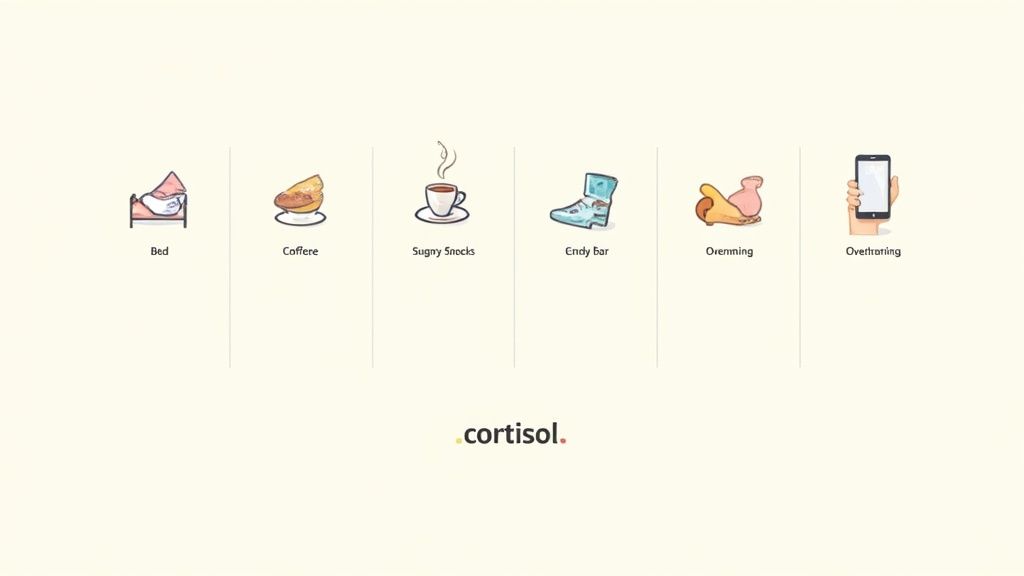
Chronic stress isn’t just a feeling—it’s a physical state driven by your choices. Certain routines, while seeming harmless, can continuously poke your adrenal glands and prompt them to release more cortisol than your body needs.
Here are a few of the biggest offenders:
- Skimping on Sleep: Getting less than 7-9 hours of quality sleep is a massive stressor. Your body sees it as a threat, disrupting the natural rhythm of cortisol that’s supposed to be lowest at night.
- Too Much Caffeine: That second or third cup of coffee, especially on an empty stomach, can directly spike cortisol. You might feel a jolt of energy, but you're also pushing your stress response into overdrive.
- The Sugar Rollercoaster: When you grab a sugary snack for a quick boost, the inevitable blood sugar crash signals a mini-crisis. Your body then releases cortisol to help get your blood sugar back to normal.
- Overtraining: More isn't always better. Pushing through grueling workouts without enough rest puts immense physical stress on your body, ironically leading to higher cortisol and more fat storage.
Think of these triggers like a leaky faucet. One drop is no big deal. But the constant drip-drip-drip of cortisol from these small daily habits creates a big problem over time. It’s this accumulation that leads to chronically high levels and stubborn belly fat.
The Problem with Food and Mindset
Beyond physical habits, what you eat and how you think play a huge role. Restrictive or "yo-yo" dieting creates a stressful cycle of deprivation and release. A diet high in ultra-processed foods can also cause internal inflammation, which is another major trigger for cortisol.
Then there’s your mind. Chronic worrying or overthinking keeps your brain locked in threat-detection mode. Your body can't tell the difference between a real danger and an imagined one, so it responds the same way every time: by releasing cortisol.
Let's break down some of these common triggers and what you can do about them.
Common Cortisol Triggers and Their Impact
The table below outlines how some of these seemingly normal habits nudge your cortisol levels up and offers simple swaps to start bringing them back down.
| Habit/Trigger | How It Spikes Cortisol | Simple Swap or Solution |
|---|---|---|
| Morning Coffee on an Empty Stomach | Caffeine directly stimulates the adrenal glands. Without food to slow absorption, it causes a sharp, immediate cortisol spike. | Eat a protein-rich breakfast first, then enjoy your coffee. This blunts the cortisol response. |
| Skipping Meals or Erratic Eating | Long gaps between meals can cause blood sugar to drop, which your body perceives as a threat, triggering a cortisol release to stabilize it. | Aim for 3 balanced meals per day. If needed, have a protein-and-fiber snack on hand, like an apple with nut butter. |
| High-Intensity Workout After a Stressful Day | Adding intense physical stress on top of mental stress can skyrocket cortisol levels, hindering recovery and promoting fat storage. | On stressful days, opt for restorative exercise like a long walk, yoga, or light stretching. |
| Late-Night Screen Time | The blue light from phones and laptops suppresses melatonin (the sleep hormone) and can disrupt your circadian rhythm, keeping cortisol elevated when it should be dropping. | Set a "digital sunset." Put screens away at least 60-90 minutes before bed and read a book instead. |
Recognizing these hidden stressors is the first real step. It's not about being perfect, but about making small, consistent changes that tell your body it's safe to relax.
The Science Behind Stress and Belly Fat
The idea that stress makes you gain weight, especially around your middle, isn't just an old wives' tale. It's a biological fact, and a growing mountain of research shows a direct line between our stress levels and how our clothes fit.
This isn't about blaming yourself for feeling stressed out—life is demanding. Instead, knowing the science behind the cortisol and belly fat connection can be incredibly empowering. Once you see how your mental state physically impacts your body, you can start making changes that actually move the needle.
Your Body Remembers Stress
For a long time, measuring stress was tricky. A single blood test only shows a snapshot of your cortisol levels at one specific moment. But now, scientists can get a much better picture by analyzing something as simple as a strand of hair, which gives them a record of your stress exposure over weeks or even months.
What they’ve found is a clear pattern. People with chronically high cortisol levels consistently have a higher body mass index (BMI), a larger waist, and are far more likely to be overweight or obese. This stubborn fat around the abdomen is a big deal because it’s a major risk factor for other health problems. To understand why, check out our guide explaining what is metabolic syndrome and how it affects your health.
This is a game-changer. It confirms that the fat around your waist isn't just a matter of willpower. It's a direct physiological response to the chronic stress of modern life—your body is just doing what it’s wired to do.
A major study really drove this point home. Researchers discovered that individuals with high long-term cortisol were 43% more likely to be overweight and an incredible 72% more likely to be obese than those with low cortisol. You can read more about these cortisol findings from the ELSA-Brasil study to see the data for yourself.
The evidence all points to the same conclusion: managing your stress isn't just a "nice-to-have" for your mental well-being. It's one of the most powerful and direct things you can do to manage your weight and safeguard your health for the long run.
Your Action Plan to Lower Cortisol and Lose Belly Fat
Knowing the science behind cortisol and belly fat is one thing, but actually doing something about it is where the magic happens. Think of this section as your practical playbook for breaking the stress-fat cycle for good. We're not talking about quick fixes here—we're focusing on simple, sustainable lifestyle shifts built on four core pillars.
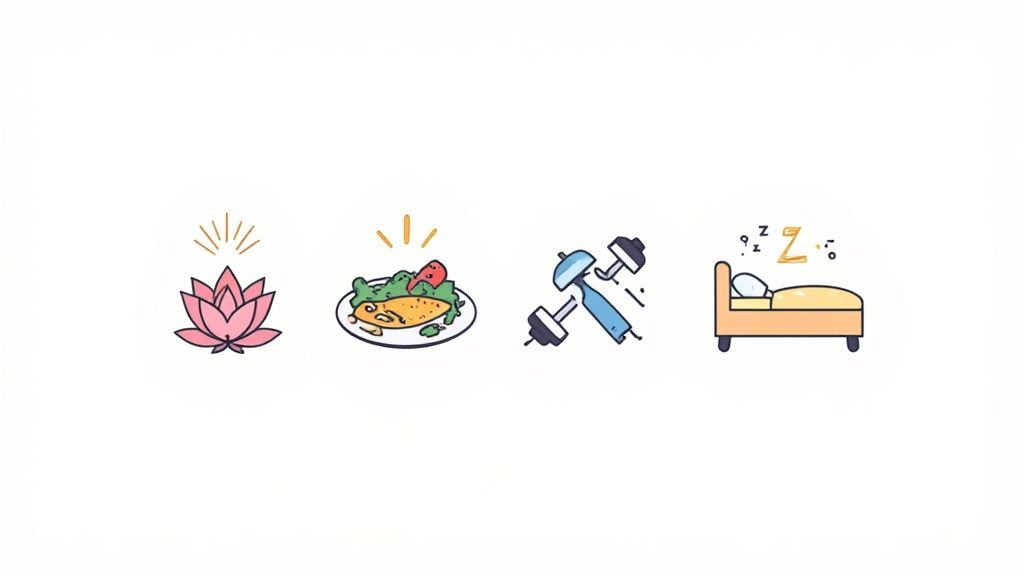
The goal isn't to add more stress to your life with a complex, rigid plan. It’s about making small, deliberate choices that tell your body it's safe to chill out, let go of stored fat, and find its balance again. Let's get into the strategies you can start using today.
Master Your Stress Response
You can't just get rid of stress—it's part of life. What you can do is change how your body responds to it. The idea is to activate your body's "rest and digest" system, which is the natural antidote to cortisol's "fight or flight" mode. A few simple, consistent practices can make a world of difference.
- Practice Mindful Breathing: The next time you feel that wave of overwhelm, stop and take five minutes for some box breathing. It’s simple: inhale for four seconds, hold for four, exhale for four, and hold for four. This one tiny action can hit the reset button on your entire nervous system.
- Get Outside: You'd be surprised what just 10-15 minutes in nature can do. A walk in the park or even down a quiet, tree-lined street has been proven to lower cortisol. Think of it as a mini-vacation for your brain.
Of course, chronic stress can feel like a runaway train, and sometimes self-help techniques just aren't enough to stop it. To truly get a handle on cortisol and belly fat, exploring professional burnout and stress treatment options can be a game-changing step in your plan.
Adopt a Cortisol-Balancing Diet
What you eat can either keep you stuck in the stress cycle or help you break free. One of the most powerful tools you have is a diet that keeps your blood sugar stable, because a blood sugar roller coaster is a massive physical stressor that keeps cortisol pumping.
Your mission, should you choose to accept it, is to focus on whole, nutrient-dense foods.
- Prioritize Protein and Fiber: Make sure every meal includes a source of protein (like eggs, chicken, or lentils) and fiber (from veggies and whole grains). This powerful duo slows digestion, preventing the sharp blood sugar spikes and crashes that make cortisol go wild.
- Embrace Healthy Fats: Foods loaded with omega-3 fatty acids—think salmon, walnuts, and chia seeds—are amazing for reducing inflammation and helping to regulate your cortisol levels.
- Increase Magnesium Intake: Magnesium is known as the "calming mineral," but it gets zapped from your body when you're stressed. You can find it in leafy greens like spinach, as well as in almonds and avocados.
A great rule of thumb? Try to avoid anything that comes in a crinkly package. Most processed snacks and sugary drinks are specifically engineered to create the blood sugar chaos that keeps your cortisol levels high.
Move Smarter, Not Harder
Exercise is a fantastic way to blow off steam, but the type and intensity really matter. Going too hard, especially when you're already frazzled, can actually backfire by causing your cortisol to spike even higher. The name of the game is balance.
- Focus on Consistency Over Intensity: Daily movement is key. A brisk 30-minute walk every day does more for long-term cortisol management than a few brutal, exhausting workouts a week.
- Incorporate Strength Training: Building muscle is one of the best things you can do for your metabolism and insulin sensitivity. Try to get in 2-3 strength sessions per week, focusing on compound movements that work your whole body.
- Prioritize Rest and Recovery: Your body gets stronger and healthier on rest days, not during the workout itself. Make sure you schedule them in. Restorative activities like yoga or simple stretching are also great, as they've been shown to actively lower cortisol.
Optimize Your Sleep Sanctuary
Sleep is absolutely non-negotiable for keeping your hormones in check. It’s when your body does its most critical repair work, including resetting your natural cortisol rhythm. A bad night's sleep is a huge physical stressor that all but guarantees your cortisol will be out of sync the next day.
The goal is 7-9 hours of high-quality, uninterrupted sleep each night.
- Establish a "Digital Sunset": The blue light from your phone, tablet, and TV messes with melatonin, the hormone that signals your brain it's time for sleep. Put all your devices away at least 60-90 minutes before you plan to turn in.
- Create a Cool, Dark Environment: Your body temperature naturally needs to drop to initiate sleep. Keep your bedroom cool and make it as dark as possible to help this natural process along.
- Stick to a Schedule: Going to bed and waking up around the same time every single day—yep, even on weekends—helps anchor your body's internal clock, which in turn helps regulate your entire cortisol cycle.
Got Questions About Cortisol and Belly Fat? Let's Clear Things Up.
After digging into the science behind cortisol and that stubborn fat around your middle, you probably have a few more questions rattling around. That’s a good thing! It means you're ready to take action. Let's tackle some of the most common ones I hear, so you can move forward with confidence.
How Long Does It Really Take to Lose a "Cortisol Belly"?
Everyone wants to know the magic number, but the honest answer is: it depends. We're all wired differently, and factors like your genetics, your starting point, and—most importantly—your consistency will shape your timeline.
Here’s what you can generally expect. You’ll likely feel a difference long before you see one. Within a few weeks of making changes, many people report sleeping better, feeling less on edge, and having more stable energy throughout the day. That’s a huge win and a sign you're on the right track.
Visible changes to your waistline? That takes more patience. Think months, not weeks. The goal isn't a quick fix; it's about creating habits that stick. Your body needs time to down-regulate that chronic stress response and find its balance again.
Can I Just Do a Bunch of Crunches to Target Belly Fat?
Ah, the age-old question. It’s one of the biggest myths in fitness: the idea that you can "spot reduce" fat from a specific area. Doing endless sit-ups will definitely strengthen your ab muscles, but it won’t do a thing to melt the layer of fat sitting on top of them.
Think of it this way: cortisol-driven belly fat isn't a muscle problem, it's a hormonal signal problem. Your body is storing fat there because of stress signals, not because your abs are weak. To fix it, you have to change the signal.
A smarter approach involves a whole-body strategy:
- Full-body strength training: Building muscle everywhere boosts your overall metabolism, turning your body into a more efficient calorie-burning machine 24/7.
- Moderate cardio: Forget punishing, high-stress workouts. Things like brisk walking, cycling, or swimming are fantastic for burning fat without jacking up your cortisol.
- Restorative movement: This is non-negotiable. Yoga, gentle stretching, and even just a slow walk in nature actively tell your nervous system to calm down, directly lowering cortisol.
Focusing only on ab exercises completely misses the root cause of cortisol and belly fat.
Are There Any Supplements That Actually Help Lower Cortisol?
Some supplements do show real promise for helping your body handle stress better. Research points to a few key players like ashwagandha, magnesium, and omega-3 fatty acids, which can help take the edge off your body's cortisol response.
But—and this is a big but—supplements are supporters, not saviors. They can't outwork a terrible diet, chronic sleep deprivation, or a life filled with unmanaged stress.
Think of them as a booster for an already solid foundation. They work best when they’re part of a bigger picture that includes healthy food, good sleep, and stress management. And always, always chat with your doctor before adding anything new to your routine to make sure it's the right move for you.
Is "Adrenal Fatigue" Why I Have So Much Belly Fat?
You’ve probably seen the term "adrenal fatigue" online, used to describe a mix of symptoms like constant tiredness, cravings, and feeling wired but tired. While the term is popular, it's not actually a recognized medical diagnosis.
The idea is that chronic stress burns out your adrenal glands. What's really happening is a bit more complex. It's not that your glands are tired; it's that the communication system—the HPA axis, which is your body's central stress command center—has gone haywire. The signals are getting crossed, leading to cortisol being too high all the time or its natural rhythm being completely thrown off.
The good news? The solution is exactly the same. Fixing that communication breakdown comes down to the very things we've been talking about: managing stress, eating well, moving your body smartly, and making sleep a priority.