Does Sugar Cause Diabetes? A Clear Guide

Let's cut right to the chase: does eating sugar cause diabetes?
The short answer is no, not directly. But that’s a bit too simple. A diet packed with sugar is a huge player in developing type 2 diabetes. Think of sugar not as the solo villain but as the key accomplice that sets the whole stage for the crime.
A Straight Answer on Sugar and Diabetes
To really get it, imagine your metabolism is a sophisticated, high-performance engine. A sweet treat now and then is like hitting the gas for a quick burst of speed—the engine handles it just fine. But constantly pouring in sugary drinks and processed foods? That’s like redlining the engine for hours straight. Sooner or later, that constant strain leads to a breakdown.
That breakdown is essentially what happens in type 2 diabetes. Sugar plays its part in two major ways:
- It fuels weight gain. Extra sugar, especially from things like sodas and packaged snacks, delivers a ton of calories without any real nutrition. Your body easily converts these "empty calories" into fat, leading to weight gain. And carrying excess weight is the number one risk factor for type 2 diabetes.
- It exhausts your body's systems. A high-sugar diet makes your pancreas work overtime, pumping out insulin to manage your blood sugar. Over time, your cells can start ignoring insulin’s knock at the door. This is called insulin resistance, and it's a huge step toward full-blown diabetes.
The real problem isn't a sprinkle of sugar here and there. It's the constant, excessive amount we consume. It simply overwhelms our body's ability to keep things in balance, paving the road to metabolic trouble.
The Global Impact of Diabetes
Understanding this connection has never been more critical. The number of people with diabetes has exploded worldwide, jumping from 200 million in 1990 to a staggering 830 million in 2022. That's a four-fold increase in just over 30 years.
Today, roughly 1 in 9 adults is living with diabetes. Without major changes, that number is only expected to grow. This global health crisis really drives home why our daily food choices matter so much. You can dig into the full diabetes trends and data from the World Health Organization.
So, while you can't point to a single cookie and blame it for causing diabetes, a long-term habit of high sugar intake is a powerful trigger. It drives the very weight gain and metabolic stress that open the door to type 2 diabetes. This shifts the conversation from a simple yes-or-no question to a much more practical focus on how our daily habits shape our future health.
To break it down even further, here's a quick summary of how sugar is linked to different risk factors.
Sugar's Role in Diabetes Risk Quick Facts
| Factor | How Sugar Contributes | Primary Diabetes Type Affected |
|---|---|---|
| Obesity | High-calorie, low-nutrient sugary foods lead to fat storage and weight gain. | Type 2 |
| Insulin Resistance | Constant high blood sugar forces the pancreas to overproduce insulin, leading cells to become less responsive. | Type 2 |
| Inflammation | Excess sugar can promote chronic low-grade inflammation, a known contributor to insulin resistance. | Type 2 |
| Non-Alcoholic Fatty Liver Disease | The liver converts excess fructose into fat, which can accumulate and impair its function and insulin sensitivity. | Type 2 |
This table makes it clear that while sugar isn't the only factor, it's deeply involved in creating the conditions that allow type 2 diabetes to develop.
How Your Body Manages Sugar
To really get to the bottom of the sugar-diabetes connection, we first need a quick look at how your body is built to handle sugar. Picture your body as a high-performance engine. The fuel for that engine is glucose, which is the simplest form of sugar that powers everything from your brain cells to your leg muscles.
When you eat carbs—whether it's an apple or a donut—your digestive system breaks them down into glucose. That glucose then enters your bloodstream, and this is where a small but mighty organ behind your stomach, the pancreas, gets its cue to act. It releases a hormone called insulin.
Think of insulin as the gatekeeper for your cells. It travels through your blood, knocks on the door of a cell that needs energy, and unlocks it. This lets the glucose move from your bloodstream into the cell, where it's either burned for immediate fuel or saved for later. It’s a beautifully efficient system designed to keep your blood sugar levels in a tight, healthy range.
The Insulin and Glucose Partnership
The relationship between insulin and glucose is like a carefully choreographed dance. When you eat a balanced meal with protein, fiber, and healthy fats, glucose enters your bloodstream slowly and steadily. Your pancreas responds by sending out just the right amount of insulin to manage it. No drama, no emergency signals.
Here's how that smooth process works:
- You Eat a Meal: Your body starts turning carbohydrates into glucose.
- Pancreas Responds: It senses the rising blood sugar and releases a measured amount of insulin.
- Cells Unlock: Insulin attaches to your cells, opening the gates for glucose to get inside.
- Blood Sugar Normalizes: As glucose leaves the blood, your levels return to normal.
This cycle keeps your energy steady and your body happy. But things can go wrong when this system is constantly hammered with huge amounts of sugar, especially the kind found in processed foods and sugary drinks.
When the System Gets Overwhelmed
So, what happens when you down a sugary soda or a candy bar? Instead of a gentle rise in blood sugar, you get a tidal wave. This massive, rapid surge is often called an insulin spike. If you want a deeper dive, our guide on what causes insulin spikes explains it all.
Your pancreas panics. It treats this sugar flood as a five-alarm fire and pumps out a huge amount of insulin to get the sugar out of your blood as fast as possible. Once in a while, your body can handle this. But when it becomes a daily event, your cells start to get tired of the constant alarm bells.
Over time, your cells become less responsive to insulin's message. It’s like they've started ignoring the constant knocking at the door. This dangerous condition is known as insulin resistance. Your pancreas has to shout louder and louder—by producing even more insulin—just to get the cells to listen.
This visual helps connect the dots from eating too much sugar to gaining weight, which is a major stepping stone toward developing diabetes.
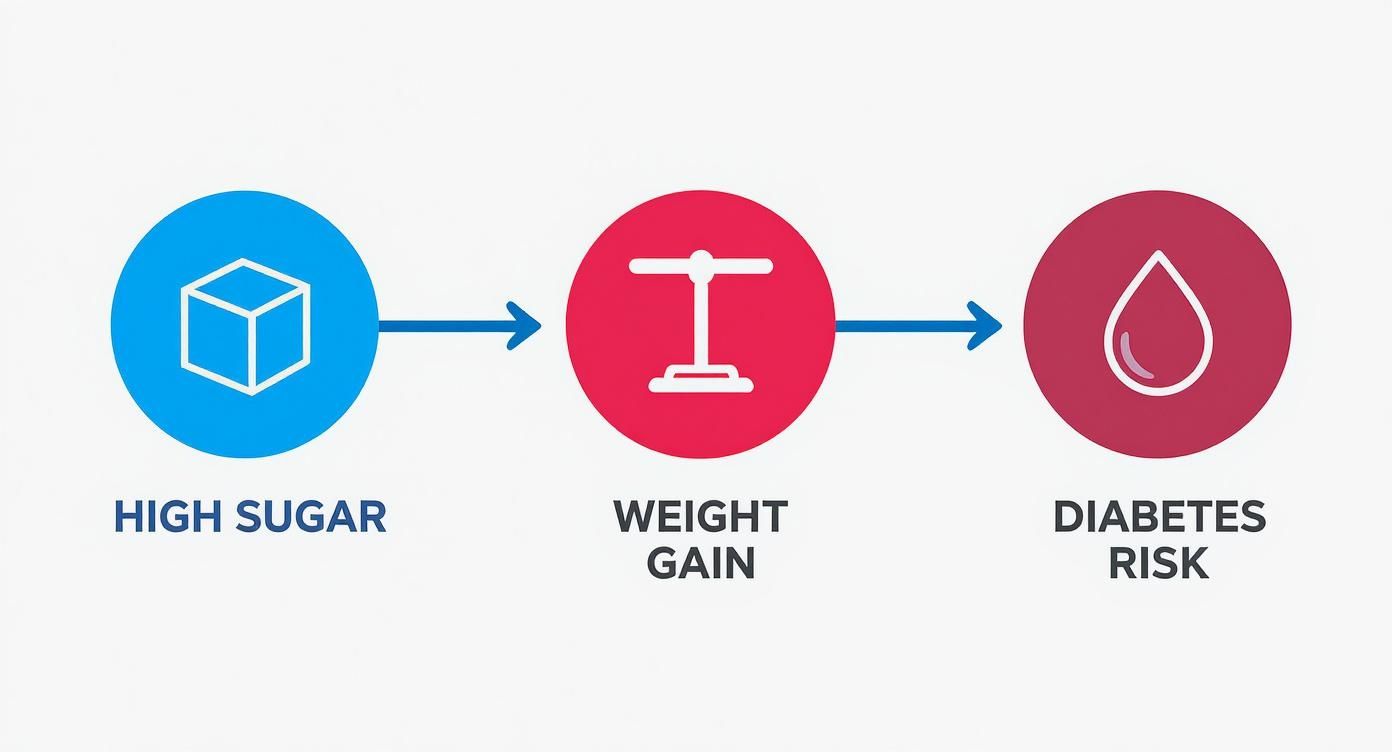
The takeaway here is pretty clear: a high-sugar diet often leads to extra body fat, and that excess weight is a primary cause of the insulin resistance that paves the way for type 2 diabetes. It’s a domino effect, with each step putting more and more strain on your body’s ability to manage its fuel.
Why Sugary Drinks Are a Unique Threat
Not all sugar is created equal, and how it enters your body matters immensely. When it comes to diabetes risk, liquid sugar is in a league of its own.
Think about it this way: the sugar in an apple comes bundled with fiber and water, which slows down its absorption. But the sugar in sodas, fruit juices, and sweetened teas? It hits your system like a freight train. This makes it one of the single biggest dietary threats to your metabolic health.
Imagine your bloodstream is a calm river. Eating a piece of fruit is like a gentle stream trickling in, giving your body plenty of time to manage the flow. Drinking a sugary beverage is like a dam breaking—a sudden, massive flood of glucose rushes into your system all at once.
This deluge sends your pancreas into overdrive. It has to pump out a huge surge of insulin to desperately clear all that sugar from your blood. When this happens day after day, your system gets overwhelmed, which is a direct pathway to the insulin resistance that paves the way for type 2 diabetes.

The Numbers Don't Lie
The scientific evidence linking sugar-sweetened beverages to type 2 diabetes is overwhelming. Study after study shows that people who regularly drink them have a significantly higher risk of developing the condition.
What’s truly alarming is that this risk exists even if you aren’t overweight. That’s right—a daily soda habit could be dramatically increasing your odds of developing diabetes, regardless of what the scale says. The constant sugar spikes directly strain your pancreas and liver, causing metabolic damage that isn't always visible from the outside.
Research has shown that drinking just one to two servings of sugary beverages per day can increase the risk of developing type 2 diabetes by as much as 26%. That's a powerful statistic that highlights just how uniquely dangerous these drinks are.
Hidden Sugar in Popular Beverages
It's easy to lose track of how much sugar you're drinking. Let's break down some common beverages to see where the sugar is hiding.
| Beverage (12 oz / 355 ml serving) | Grams of Sugar | Teaspoons of Sugar |
|---|---|---|
| Coca-Cola | 39g | ~10 tsp |
| Orange Juice (from concentrate) | 33g | ~8 tsp |
| Sweetened Iced Tea | 32g | ~8 tsp |
| Vitaminwater | 31g | ~7.5 tsp |
| Gatorade (Thirst Quencher) | 21g | ~5 tsp |
Seeing the numbers laid out like this makes it clear how quickly a single drink can push you over a healthy daily limit.
It's Not Just About the Calories
The way your body processes liquid sugar is fundamentally different and more damaging than sugar from whole foods. This is a critical piece of the puzzle.
A landmark study analyzing data from 175 countries found that for every extra 150 calories of sugar available per person each day (about what's in a single can of soda), diabetes prevalence rose by 1%. This was true even after researchers accounted for obesity and other factors.
The widespread availability of options like a corporate Coke machine service shows just how deeply these drinks are woven into our daily lives, making it incredibly easy to consume them without a second thought. This distinction is crucial: while weight gain from sugary drinks is a major problem, the sugar itself delivers a separate, direct blow to your metabolic system.
Making a High-Impact Change
The good news is that this knowledge points to a clear and powerful place to start. Cutting out sugary drinks is arguably the single most impactful change you can make to lower your diabetes risk.
Doing so immediately reduces your daily sugar load, eases the burden on your pancreas, and helps your cells become more sensitive to insulin again.
Making the switch can feel tough at first, but there are countless healthy and delicious alternatives out there. For some great ideas, check out our guide on the 9 best drinks without sugar to try in 2025. By simply replacing that one daily soda or sweetened juice with water, unsweetened tea, or sparkling water, you take a massive step toward protecting your long-term health.
Untangling Sugar from Weight Gain
When people ask if sugar causes diabetes, it feels like a classic chicken-or-egg scenario. Is the real culprit the sugar itself, or the weight gain that so often follows a sugary diet? It’s a subtle but critical distinction, and the truth is, it’s both. Sugar plays a double-agent role, fueling the conditions for type 2 diabetes while also directly harming your metabolism.
First, let's look at the obvious connection: weight gain. Foods and drinks loaded with added sugar are fantastic at packing on the pounds. They give you a huge dose of calories with almost no real nutrition, which makes it incredibly easy to eat more energy than you burn. Your body dutifully stores that surplus as fat, and obesity is far and away the single biggest risk factor for type 2 diabetes.
But the story doesn't stop at the number on the scale. The link between sugar and diabetes goes much deeper than just carrying extra weight.
Sugar’s Direct Hit on Your Liver
One of the most insidious effects of a high-sugar diet happens quietly inside an organ you might not think about: your liver. When you consume too much sugar—especially fructose from table sugar and high-fructose corn syrup—your liver gets slammed with an overwhelming amount of work.
While most cells in your body can use glucose for energy, only your liver can really process fructose in large quantities. When it’s flooded, the liver’s only option is to convert the excess fructose into fat. This process is known as de novo lipogenesis, which literally translates to "making new fat."
This newly made fat starts to build up in and around your liver, leading to a dangerous condition called non-alcoholic fatty liver disease (NAFLD).
Think of your liver like a busy factory. A small, manageable amount of fructose is fine. But a constant deluge from sodas, desserts, and processed snacks forces the factory to just start piling up the excess as waste—and in this case, that waste is fat. That fatty buildup gums up the entire system, making it sluggish and inefficient.
A fatty liver isn't just a liver problem; it quickly becomes a whole-body problem. This fat accumulation is a major driver of insulin resistance. A liver clogged with fat can’t hear insulin’s signals clearly, which throws off its ability to manage blood sugar for your entire body.
The Two-Pronged Attack on Your Health
So, we can see how sugar wages a two-front war on your metabolic health. It contributes to diabetes through two separate but connected pathways:
- Indirectly via Overall Weight Gain: Excess sugar drives a calorie surplus, which leads to fat accumulation all over the body. This general obesity is the most well-known risk factor for insulin resistance and, eventually, type 2 diabetes.
- Directly via Liver Fat: A high fructose intake specifically targets the liver, causing fat to build up there and triggering insulin resistance, even in people who aren't severely overweight.
This is why someone who appears thin can still be "metabolically unhealthy" on the inside and at high risk for diabetes. Their fat isn't stored where you can see it under the skin, but invisibly around their vital organs.
Ultimately, sugar does more than just add empty calories. It launches a direct assault on your liver, disrupting your health from the inside out. While managing your weight is crucial—and our guide on how to maintain weight loss has great strategies for that—understanding sugar’s specific impact on your organs makes cutting back even more urgent. Once you see both sides of the problem, you can take much smarter steps to protect yourself.
Practical Steps to Lower Your Diabetes Risk
Knowing the connection between sugar and diabetes is one thing, but taking action is what really counts. This section is all about real-world strategies you can start using today. Forget about restrictive diets—we're focusing on building smart, sustainable habits that protect your long-term health.
The goal here isn't perfection. It's about making progress. Small, consistent changes add up and are far more powerful than making a drastic change you can't stick with. Let's dig into a few ways you can start making smarter choices to lower your risk.
Become a Food Label Detective
One of the biggest hurdles is that sugar is a master of disguise, hiding in foods we often think are healthy. Learning to read a nutrition label is like having a secret weapon at the grocery store.
Next time you pick up a container of yogurt, salad dressing, or pasta sauce, flip it over. Look for the “Added Sugars” line right under the carbohydrates section. You’ll probably be shocked at how quickly those grams pile up, turning what seems like a healthy choice into a sugar bomb.
Key Takeaway: Don't just glance at the total sugar. Zero in on the added sugars. That number tells you how much sugar was put in during processing, and it's the type most closely linked to health problems.
Here are a few common places where hidden sugars love to lurk:
- Breakfast Cereals and Granola: Many are marketed as "healthy" but can pack as much sugar as a donut.
- Yogurts: Flavored yogurts, especially the low-fat kinds, often make up for the lack of fat by adding a ton of sugar for taste.
- Condiments and Sauces: Ketchup, barbecue sauce, and even some salad dressings can be surprisingly high in sweeteners.
Make Smart Swaps That Stick
Cutting back on sugar doesn’t have to feel like a punishment. The trick is to find simple, satisfying swaps you can easily work into your life. It’s less about deprivation and more about crowding out the bad stuff by adding more of the good.
For instance, instead of a sugary cereal for breakfast, try a bowl of plain oatmeal topped with fresh berries and a dash of cinnamon. This simple switch cuts out added sugar and gives you a healthy dose of fiber, which helps keep your blood sugar stable all morning.
Even small changes have a big impact. A computer simulation study found that just a 10% reduction in sugary drink consumption could significantly lower diabetes rates over a decade.
Embrace the Power of Whole Foods
Honestly, the easiest way to avoid added sugar is to eat foods that don't come in a box or a bag. Whole foods—things like fruits, vegetables, lean proteins, and whole grains—are in their natural state, free from the processed ingredients that can mess with your metabolic health.
Building your meals around these ingredients is a simple but incredibly effective strategy. A diet centered on whole foods naturally delivers the fiber, protein, and healthy fats that slow down digestion and prevent the sharp blood sugar spikes that put so much stress on your system.
Get Moving to Re-Sensitize Your Cells
Diet is a huge piece of the puzzle, but physical activity is the other non-negotiable part. When you exercise, your muscles use up glucose for fuel, which helps pull sugar out of your bloodstream without needing as much insulin to do the job.
Think of it as giving your pancreas a much-needed break. Regular activity makes your cells more sensitive to insulin again, helping to reverse the insulin resistance that drives type 2 diabetes.
You don't have to become a marathon runner overnight. A brisk 15-minute walk after dinner can make a real difference in your post-meal blood sugar levels. You can find a wide range of different exercises to see what fits your lifestyle.
The most important thing is finding something you actually enjoy, because that's what you'll stick with. Whether it's walking, dancing, cycling, or lifting weights, just make movement a regular part of your life.
Got Questions About Sugar and Diabetes? Let's Clear Things Up.
Once you start digging into the link between sugar and diabetes, a lot of specific questions tend to pop up. It's one thing to understand the big picture, but it’s the day-to-day details that really matter. What about the sugar in an apple? What if you're not overweight? Can you actually turn things around if you're prediabetic?
This is where we get practical. Let's tackle some of the most common questions I hear, moving from the general science to real-world scenarios that can help you feel confident in your health choices.
"What About Natural Sugar in Fruit? Is That Bad, Too?"
This is a fantastic question because it gets right to the heart of how our bodies actually process sugar. The short answer is no—for most people, the sugar found in whole fruit isn't a problem and doesn't increase the risk of type 2 diabetes. The key isn't the sugar itself, but the package it comes in.
Imagine the difference between a whole apple and a glass of apple juice. The apple is packed with fiber, water, and nutrients. That fiber acts like a traffic controller, slowing down how quickly the sugar (fructose) hits your bloodstream. There’s no sudden, dramatic spike in blood sugar.
This slow, steady release gives your pancreas all the time it needs to release insulin and manage the process without getting overwhelmed. It’s a gentle, manageable event that your body is perfectly designed to handle.
The big takeaway here? Always choose the whole fruit over the processed version. An orange gives you slow-burn energy and vitamins. Orange juice, on the other hand, is basically sugar water that slams your system all at once, creating a lot of metabolic stress.
Fruit juices, smoothies where the fiber has been obliterated, and even dried fruits (which are highly concentrated in sugar) act a lot more like a can of soda in your body. They cause the same rapid blood sugar surges that, over time, can wear your system down. The form of the fruit matters—a lot.
"Can I Still Get Diabetes Even if I'm Not Overweight?"
Absolutely. While carrying extra body weight is the single biggest risk factor for type 2 diabetes, it's far from the only one. It’s entirely possible to develop the condition at what many would consider a "healthy" weight, a situation sometimes called "lean diabetes."
Genetics play a huge role here. If type 2 diabetes runs in your family, you’ve simply been dealt a different set of cards, and your risk is higher no matter what the scale says. Some people are just genetically more prone to insulin resistance or have a pancreas that’s less efficient at producing insulin.
It's also not just about how much fat you have, but where you store it. Some of us, due to genetics or lifestyle, tend to store fat deep inside the abdomen, wrapped around organs like the liver and pancreas. This is known as visceral fat, and it's the really dangerous stuff.
Even in a slim person, high levels of this hidden visceral fat can quietly fuel inflammation and drive insulin resistance. And one of the biggest contributors to visceral fat is a diet high in sugar and processed foods. This is exactly why a healthy diet is so important for everyone, not just those trying to lose weight.
"If I Cut Out Sugar, Can I Actually Reverse Prediabetes?"
For many people, the answer is a huge, resounding yes. Think of a prediabetes diagnosis not as a life sentence, but as a critical warning sign. It’s your body’s way of saying, "Hey, we're heading down the wrong road, but there's still time to turn around!"
Making significant lifestyle changes is the single most powerful tool you have to stop prediabetes from progressing into full-blown type 2 diabetes. When you drastically cut back on added sugars and refined carbs, you immediately reduce the daily burden on your pancreas and help your cells become more sensitive to insulin again.
This isn’t just about skipping dessert. It's about shifting your entire eating pattern to support stable blood sugar.
- Build your plate around whole foods: Think vegetables, lean proteins, healthy fats, and high-fiber carbs like beans and lentils.
- Get moving: Regular exercise acts like a sponge, helping your muscles soak up glucose from your bloodstream for energy. This makes your whole system more insulin-sensitive.
- Make it a habit: Reversing prediabetes isn't about a crash diet; it's about building new, sustainable habits that will last a lifetime.
The proof is in the research. Major studies have shown that intensive lifestyle changes can slash the risk of developing type 2 diabetes by over 50%. It’s a powerful reminder of just how much control you have. By taking action, you can often guide your blood sugar right back into a healthy, normal range.