Your Guide to the Ultimate Fruit Sugars Chart
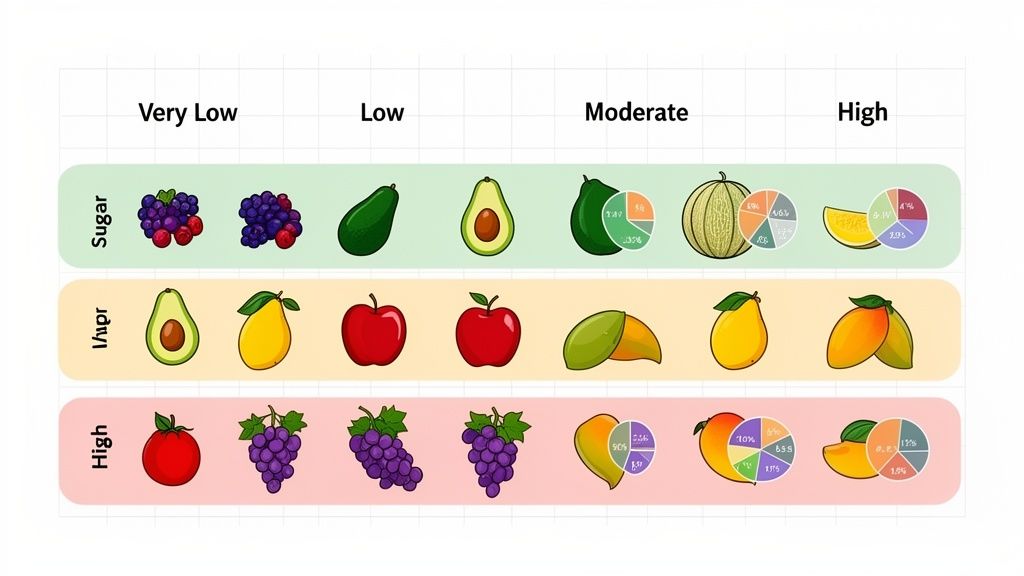
Ever wonder how much sugar is really in that banana versus a handful of raspberries? A fruit sugar chart lays it all out for you, listing the sugar content for different fruits, usually by a standard 100-gram portion and typical serving sizes. It's the simplest way to see, at a glance, that a banana has about 12g of sugar per 100g, while raspberries have just 4.4g. Having that information on hand is a game-changer for managing your sugar intake.
Why a Fruit Sugar Chart Is Essential
When it comes to sugar, not all fruits are the same. It's true that the sugar in fruit—mostly fructose—comes with a lot of good stuff like fiber, vitamins, and water. But the total amount still matters, and it can definitely affect your energy levels and health goals. A good fruit sugars chart helps you stop guessing and start making smarter choices.
Think of this chart as your practical, everyday reference. It helps you see the differences you might not otherwise notice. For example, you'll quickly understand why a cup of grapes (with around 16g of sugar) hits your system differently than a cup of strawberries (with only about 7g of sugar).
Once you get a feel for these numbers, you can:
- Manage Cravings: When you need something sweet, you can confidently reach for a lower-sugar option that still satisfies.
- Control Portions: You can still enjoy your favorite high-sugar fruits, like mangoes or cherries, just in sensible amounts.
- Support Health Goals: Whether you're focused on weight management or keeping your blood sugar stable, you can pick fruits that align with your needs.
Ultimately, knowing the difference between glucose and fructose and how your body handles them gives you even more control. This chart takes the guesswork out of the equation, making it an indispensable tool if you're serious about fine-tuning your diet and cutting back on sugar without giving up the natural goodness of fruit.
The Comprehensive Fruit Sugar Content Chart
Here we get to the heart of the matter: a detailed, easy-to-use chart that’s all about making smart fruit choices simple. We've broken down fruits into clear categories so you can quickly find what works for your goals, whether you're logging a meal in the StopSugar app or just trying to satisfy a sweet craving the right way.
In the chart, you'll find each fruit listed with its sugar content per 100 grams and the sugar in a typical serving size, like one cup or a single medium fruit. The per 100g value is your best bet for a true, apples-to-apples (pun intended!) comparison, while the per serving amount gives you a practical number for your daily tracking. This visual setup is designed to make this fruit sugars chart something you can actually use, not just glance at.
This image really drives home the difference between the natural sugars you get from whole fruit and the added sugars hiding in so many processed foods.
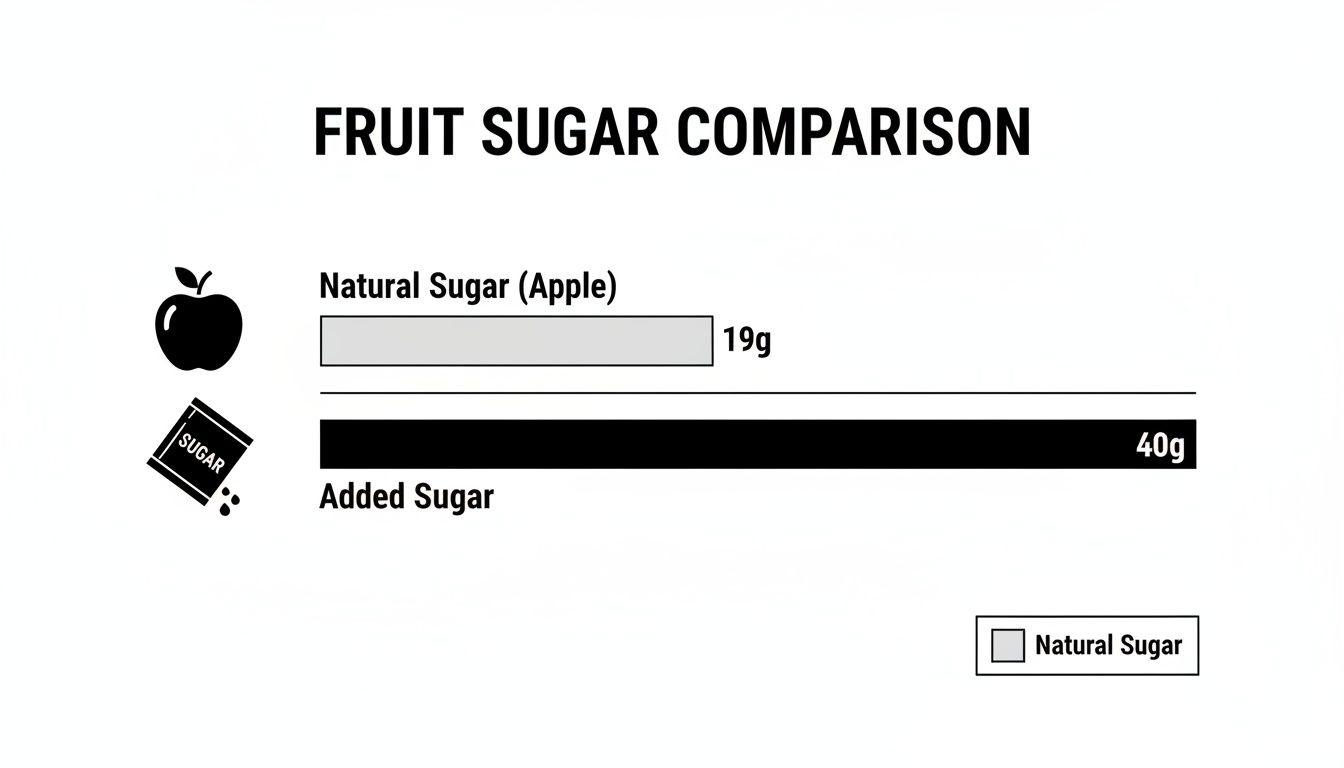
The big takeaway? Sure, an apple has sugar, but it's bundled with fiber, vitamins, and minerals. That's a world away from the empty calories you get from added sugar.
How To Use This Chart
To really get the most out of this resource, keep your eyes on two key columns: 'Sugar per 100g' and 'Sugar per Serving'. The first one helps you make a fair comparison between any two fruits, while the second gives you a real-world number for your daily meals and snacks.
For instance, you might notice that watermelon looks great on paper with only 6.2g of sugar per 100g. But we all know how easy it is to eat a huge slice, and this chart helps you see how quickly those servings can add up. It’s all about visualizing that relationship and adjusting your portions to fit your needs.
Very Low Sugar Fruits
Think of these as your go-to options for satisfying a sweet tooth with almost no sugar hit. They’re fantastic choices if you're on a low-carb diet or just trying to keep your daily sugar intake to an absolute minimum.
- Avocado: Believe it or not, it's a fruit! It contains less than 1g of sugar per 100g.
- Rhubarb: Tart and tangy, with only about 1.1g of sugar per 100g.
- Lemons & Limes: Great for flavoring, coming in at around 2.5g of sugar per 100g.
Low Sugar Fruits
This group strikes a perfect balance between gentle sweetness, fiber, and nutrients, all without a big sugar load. Berries are the clear winners here, packed with antioxidants and amazing flavor. They're perfect for snacking, tossing into yogurt, or blending into a morning smoothie.
- Raspberries: A top-tier choice with only 4.4g of sugar per 100g.
- Strawberries: Just a touch sweeter at 4.9g of sugar per 100g.
- Cantaloupe: A hydrating and refreshing option with about 8g of sugar per 100g.
Moderate Sugar Fruits
The fruits in this category are wonderfully healthy, but they do require a little more mindfulness when it comes to portion control. They pack more sugar than berries but also bring plenty of valuable nutrients to the table. A good tip is to enjoy them as part of a balanced meal to help slow down sugar absorption.
- Apples: A medium apple has about 10g of sugar per 100g.
- Pears: Very similar to apples, containing roughly 10g of sugar per 100g.
- Oranges: A classic source of Vitamin C, with about 9g of sugar per 100g.
High Sugar Fruits
I like to call these "nature's candy." They're incredibly sweet and delicious, but it’s best to enjoy them in smaller amounts, especially if you’re actively watching your sugar intake. To soften their impact on your blood sugar, try pairing them with a source of protein or healthy fat, like a handful of nuts or a piece of cheese.
- Grapes: A small bowl can add up quickly, with around 16g of sugar per 100g.
- Mangoes: This tropical favorite has about 14g of sugar per 100g.
- Cherries: Sweet and satisfying, they come in at roughly 13g of sugar per 100g.
- Bananas: A go-to for energy, but they contain 12g of sugar per 100g.
Enjoying High-Sugar Fruits The Smart Way
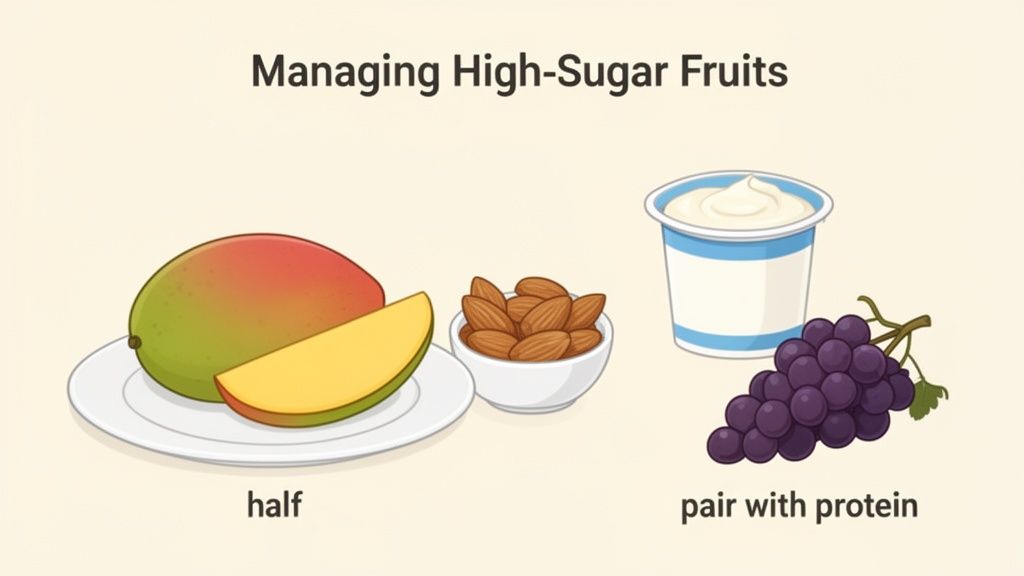
Let's talk about the sweeter side of nature—fruits like mangoes, grapes, and lychees. They're packed with flavor and nutrients, but that deliciousness comes with a hefty dose of natural sugar. The trick isn't to cut them out completely, but to get smart about how you eat them.
A quick glance at the data shows why. According to USDA figures, fruits like mangoes and lychees can pack around 14–15 g of sugar per 100 g. A single, tempting mango might contain a whopping 46 g of sugar, and a cup of grapes has about 23 g. Compare that to low-sugar berries like raspberries, which only have about 4–5 g per 100 g, and you see the difference.
Pair Them Up to Slow Down Sugar
One of the best tricks I've learned is to never eat a high-sugar fruit by itself. When you pair it with protein, healthy fats, or fiber, you change how your body processes the sugar. It's a simple move that makes a huge difference.
This combination slows down how quickly the sugar hits your bloodstream, which helps you dodge those nasty blood sugar spikes and the energy crashes that follow. The result is a more balanced snack that actually keeps you feeling full and satisfied.
Key Takeaway: Think of protein or fat as a speed bump for sugar. Pairing them with sweet fruit smooths out the energy release and helps you avoid that blood sugar roller coaster.
It’s All About Portion Control
Portion size is your secret weapon for enjoying nature's candy without going overboard. You don't have to eat the whole mango in one go! Here are some practical ways to do it:
- Mango: Instead of the whole thing, enjoy half a mango with a spoonful of plain Greek yogurt. The creaminess and protein are a perfect match.
- Grapes: Grab a small handful, not the whole bunch. They're fantastic with a few almonds or a piece of cheese.
- Lychees: Stick to a serving of about 8-10 lychees, which is plenty to satisfy a sweet craving, especially if you have them with some walnuts.
Being mindful of how much you eat is the key. This approach fits right into managing your total sugar intake for the day. For more on that, take a look at our guide on how much sugar per day is right for you. A little strategy goes a long way in enjoying sweetness without derailing your health goals.
The Best Low-Sugar Fruits for Your Diet
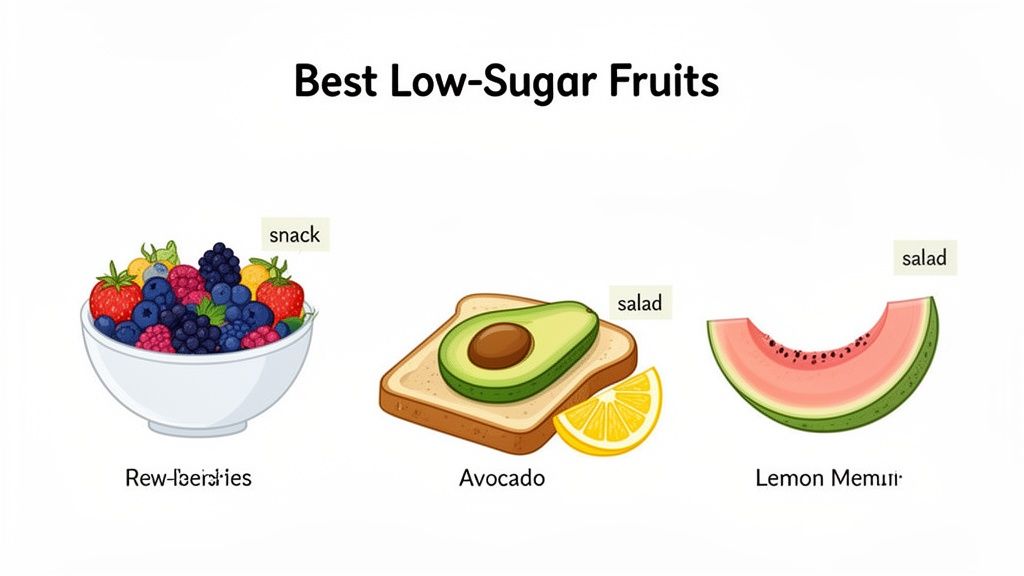
When you're looking for a quick, healthy snack, your best bet is to stick with the "Very Low" and "Low Sugar" fruits from our chart. These give you that satisfying sweetness and a good dose of nutrients, all without sending your sugar levels soaring.
Berries, in particular, are a fantastic choice. They're naturally low in sugar and high in fiber, which makes them perfect for knocking out a sweet craving the healthy way. To give you an idea, raspberries have only about 5.4 grams of sugar per cup, and blackberries are right there with them at around 7 grams per cup.
Top Low-Sugar Fruit Profiles
Let’s take a closer look at some of the best options and how you can easily work them into your meals.
- Avocados: Yes, they're technically a fruit! Avocados are a true powerhouse, containing less than 1 gram of sugar for the entire fruit. They're fantastic for adding a creamy texture to smoothies or spreading on whole-grain toast.
- Lemons and Limes: With barely any sugar, these citrus fruits are your secret weapon for flavoring water, salad dressings, and marinades without adding a single extra calorie.
- Berries: Raspberries, blackberries, and strawberries are loaded with antioxidants. Just toss a handful into your morning yogurt, blend them into a smoothie, or eat them fresh as a simple, satisfying snack.
Creative Ways to Use Low-Sugar Fruits
Don't just think of these fruits as snacks. A squeeze of fresh lime over grilled chicken or fish, for instance, can completely transform a simple dish with a bright, sugar-free pop of flavor.
Cantaloupe is another great choice, with about 8 grams of sugar per 100 grams. Because it's packed with water, it's incredibly hydrating and refreshing, especially on a hot day. Enjoy it cubed in a fruit salad, or for a classic sweet-and-savory appetizer, try pairing it with a slice of prosciutto.
By keeping this list handy, you can easily add delicious variety to your diet while staying on top of your sugar intake.
Fitting Fruit into Your Daily Sugar Goals
So, you’ve got the numbers from the fruit sugars chart. That’s the first step. But how do you actually use that information in your day-to-day life? It’s really about understanding the general guidelines and then using the chart to make smarter choices that work for you.
Official health recommendations, like those from the USDA, generally suggest about 1.5–2.5 cups of fruit per day for most adults. But here’s the crucial detail that often gets missed: not all fruit is created equal when it comes to your metabolism. A cup of grapes, packing 23 g of sugar, or a big slice of watermelon with 17 g, is going to hit your bloodstream a lot differently than a cup of low-sugar berries. This is a critical distinction, especially if you're keeping an eye on your metabolic health.
Quantity Versus Quality
This brings us to a fundamental concept: both quantity and quality matter. Hitting your daily cup count is great, but choosing the right type of fruit within that limit can make a massive difference in your total sugar intake and, more importantly, how you feel.
Let's put it into perspective. Two cups of fruit a day can look wildly different:
- High-Sugar Example: One cup of mango (~23 g sugar) plus one cup of cherries (~16 g sugar) adds up to 39 grams of sugar.
- Low-Sugar Example: One cup of raspberries (~5 g sugar) plus one cup of cantaloupe (~8 g sugar) is just 13 grams of sugar.
That’s a difference of 26 grams of sugar—the equivalent of more than six teaspoons—for the exact same amount of fruit! This is a perfect example of how the chart empowers you. By leaning towards lower-sugar options, you can still eat satisfying portions without sending your sugar intake through the roof. If you're looking for tools to help with this, exploring the best food tracking app options can be a game-changer.
Making Smart Swaps
This doesn't mean you have to say goodbye to your favorite sweet fruits. Not at all. The key is to use the chart to make strategic swaps and practice smart portion control. Love bananas in your smoothie? Try using just half a banana and tossing in a handful of raspberries. You'll keep that creamy texture and sweetness but slash the overall sugar content.
Pro Tip: Variety is your friend. Try to mix high- and low-sugar fruits throughout the day to keep things balanced. Maybe enjoy a small slice of a sweeter fruit like pineapple after a meal, and keep low-sugar berries on hand for snacking.
Using Fruit to Manage Sugar Cravings
When a powerful sugar craving hits, it's easy to grab the nearest cookie or candy bar. But what if you could satisfy that sweet tooth in a smarter, healthier way? This is where fruit comes in—it can be an incredibly effective tool, as long as you know which one to choose when the urge strikes.
Choosing fruit over a processed snack gives you a huge advantage. The natural sugars in fruit come packaged with fiber and water, which means your body absorbs them much more slowly. This helps you avoid the dramatic blood sugar spikes and crashes that often leave you feeling tired and craving even more sugar just a short while later.
Making a Strategic Choice
This is exactly where our fruit sugars chart proves its worth. When you feel a craving coming on, a quick glance at the chart can help you pick a fruit that satisfies your desire for sweetness without derailing your goals.
For instance, you might be tempted by a big handful of grapes, but the chart will show you they're quite high in sugar. Instead, you could reach for a cup of raspberries, which are much lower in sugar but still deliciously sweet. The idea isn't to deprive yourself, but to make a more intelligent swap.
By trading a processed snack for a piece of fruit, you're getting more than just a sweet fix. You're also loading up on essential vitamins, minerals, and antioxidants. It's a simple choice that satisfies you now while nourishing your body for the long haul.
Actionable Tips for Craving Control
Here are a few practical ways to put this strategy into action:
- For a moderate craving: A crisp apple or a juicy orange is a fantastic choice. They have a moderate amount of sugar and enough fiber to leave you feeling full.
- For an intense craving: If you need a serious sweetness hit, a small portion of a higher-sugar fruit like mango or a few cherries can work wonders. Pro tip: pair it with a handful of almonds or walnuts to help balance the sugar intake.
- For long-term success: Every time you make one of these smart swaps, you're slowly retraining your taste buds. Over time, you'll find that your cravings become less intense and less frequent. To build out your arsenal, check out these other foods that curb sugar cravings.
Your Fruit Sugar Questions, Answered
It's totally normal to have questions when you're trying to figure out how fruit fits into a healthy diet. Let's tackle some of the most common ones so you can feel good about your choices.
Is the Sugar in Fruit Bad for You?
The short answer is no. For most of us, the natural sugar in whole fruit isn't something to worry about. It's a completely different beast from the added sugars you'll find in processed junk food.
Fruit sugar comes packaged with a whole team of good stuff: fiber, water, vitamins, and antioxidants. That fiber is the real MVP—it slows down how quickly your body absorbs the sugar, which helps you avoid the nasty blood sugar spikes you get from a can of soda or a candy bar.
Of course, this doesn't mean you can eat endless amounts. Portion control is still key, especially if you're managing your blood sugar or on a specific low-sugar plan.
Which Fruits Have the Lowest Sugar Content?
If you're looking for fruit options that are super low in sugar, you've got some great choices. These are fantastic if you're on a keto diet or just trying to keep your sugar intake to a minimum.
- Lemons and Limes: Perfect for adding a burst of flavor to water or meals with barely any sugar.
- Rhubarb: Technically a vegetable, but we use it like a fruit, and it's incredibly tart and low-sugar.
- Berries: Raspberries and blackberries are your best friends here; they're packed with fiber and surprisingly low in sugar.
- Avocados: Yep, it's a fruit! And it has less than a single gram of sugar per serving.
You can spot these easily on any decent fruit sugars chart, making it simple to get that fruit fix without the sugar rush.
It all comes down to the food matrix. The fiber in a whole apple puts the brakes on sugar absorption. That's why 100 calories from an apple and 100 calories from soda affect your body in completely different ways.
Can You Eat Too Much Fruit?
You bet. As with anything, it's possible to have too much of a good thing. While fruit is incredibly nutritious, eating huge quantities can mean you're taking in a lot of sugar and calories, even if they're natural.
A good rule of thumb for most adults is to aim for about 1.5 to 2.5 cups per day. By using the fruit sugars chart to mix things up and keeping an eye on your portions of the higher-sugar fruits, you can enjoy all the benefits without going overboard.