Difference between glucose and fructose: A Health Guide
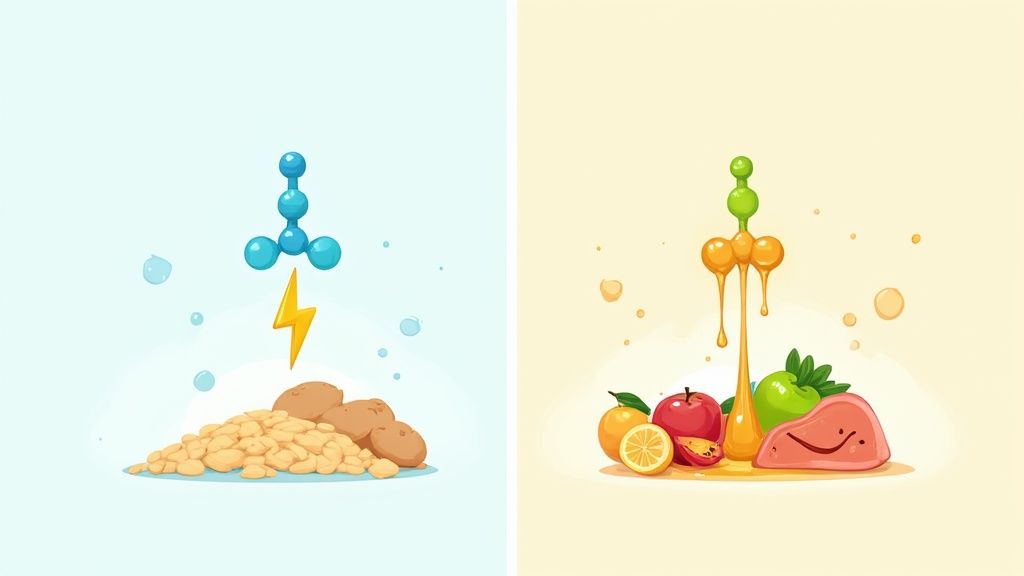
The biggest difference between glucose and fructose really boils down to how your body handles them. They’re both simple sugars, sure, but that’s where the similarities end. Think of glucose as your body's go-to fuel source, used by pretty much every cell for energy. Fructose, on the other hand, is handled almost entirely by your liver. This one distinction changes everything, from how they affect your blood sugar to their long-term impact on your health.
Glucose vs. Fructose: A Quick Comparison
Even though glucose and fructose share the exact same chemical formula—C₆H₁₂O₆—their atoms are arranged differently. It’s a tiny structural tweak, but it’s why your body treats them in two completely different ways. Glucose is like a universal key, able to unlock energy in cells all over your body. When you consume it, your body releases insulin to help shuttle that glucose into your cells and keep your blood sugar stable.
Fructose is more like a specialty key that only fits one lock: the liver. Because of this, it doesn't immediately spike your blood sugar or trigger a big insulin response. Sounds good, right? The catch is that when you eat too much of it, especially from processed sources, you completely overwhelm the liver. It can’t keep up, so it starts converting the excess fructose into triglycerides (a type of fat), which can lead to fat storage and a host of other problems down the line.
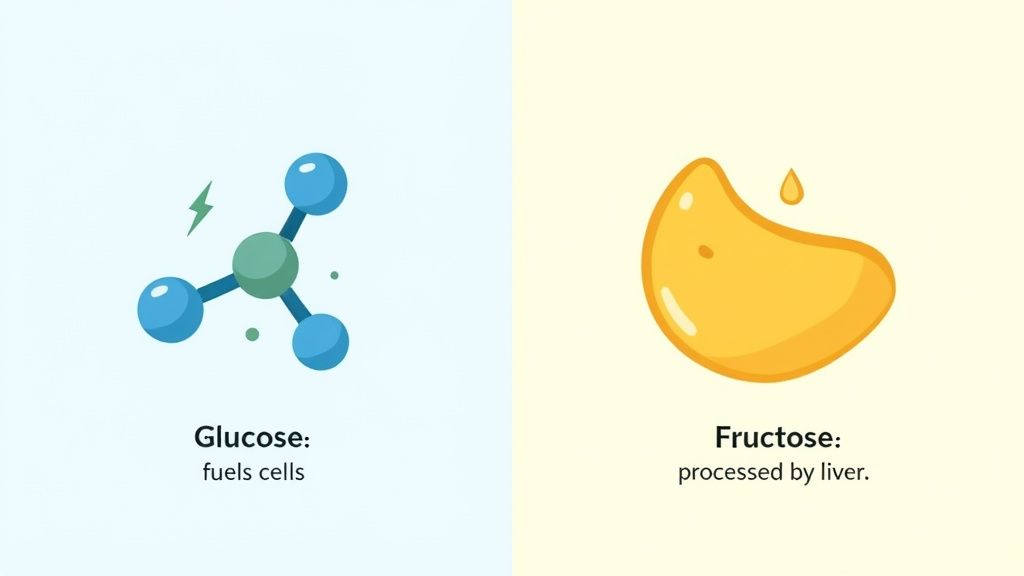
The most critical difference is the metabolic pathway. Every cell in your body can use glucose for energy, but only your liver has the primary job of metabolizing fructose.
Getting a handle on this core difference is the first step toward making smarter choices about what you eat. Both sugars give you energy, but the paths they take inside you lead to vastly different outcomes, particularly when you’re getting them in large quantities from sugary drinks and processed foods.
Key Differences Between Glucose and Fructose at a Glance
To make it even clearer, here's a simple side-by-side look at the main distinctions. This table lays out how their unique properties affect everything from sweetness to the way your body processes them.
| Characteristic | Glucose | Fructose |
|---|---|---|
| Metabolic Site | Metabolized by cells throughout the body | Primarily metabolized in the liver |
| Sweetness Level | Less sweet than fructose | Approximately 1.7 times sweeter than glucose |
| Glycemic Index | High (around 100) | Low (around 25) |
| Insulin Response | Stimulates a significant insulin release | Stimulates a minimal insulin release |
| Common Sources | Starches, grains, some fruits/vegetables | Fruits, honey, high-fructose corn syrup |
This quick comparison highlights why you can't just lump all sugars together. The way your body responds to them is fundamentally different, which has major implications for your metabolic health.
Comparing the Structure and Sources of Sugars
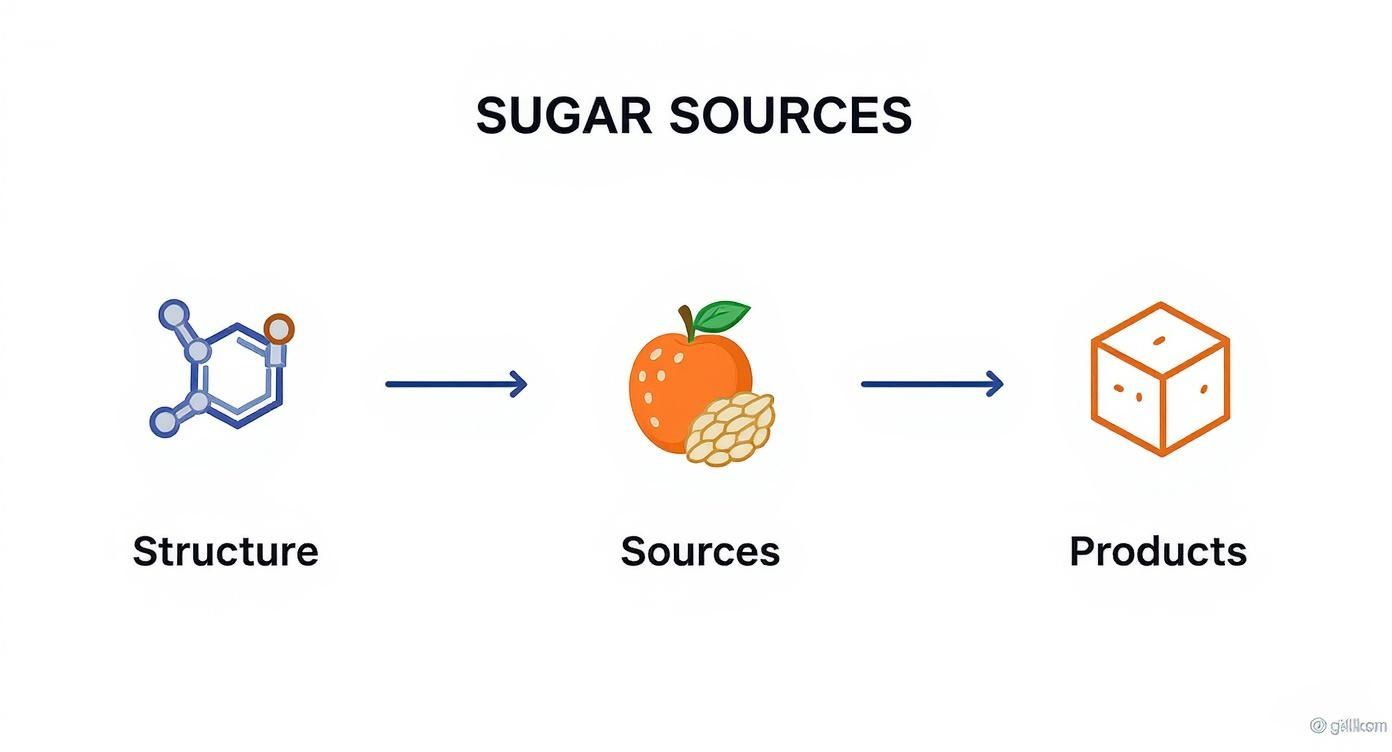
To really get to the heart of the glucose vs. fructose debate, we have to look at them from two angles: their basic structure and where they show up in our food. On a chemical level, they're both simple sugars, known as monosaccharides, and even share the exact same chemical formula: C₆H₁₂O₆.
So if they're made of the same stuff, what's the big deal? It all comes down to how those atoms are arranged. Imagine having a handful of LEGO bricks—you can build two totally different things with the same pieces. Glucose is what’s called an aldose sugar, while fructose is a ketose. This tiny difference in their architecture is the key reason your body treats them in such drastically different ways.
Where These Sugars Come From
The foods we get these sugars from are just as different as their structures. Your body's main source of glucose comes from the breakdown of more complex carbohydrates.
- Glucose-rich foods: Think starchy staples like rice, potatoes, bread, and pasta. Your digestive system has to work to break these down into simple glucose molecules it can use for fuel.
- Fructose-rich foods: Fructose is famously known as "fruit sugar," and for good reason. It’s found naturally in high amounts in fruits, honey, and some root vegetables.
But that clear line gets pretty blurry in the modern diet, where most sweeteners are a mix of both.
While glucose is our body's go-to sugar for instant energy, circulating in our bloodstream, fructose has to take a different path. Interestingly, research on nature.com shows that a good chunk of the fructose we eat eventually gets converted into glucose anyway.
Common Sweeteners and Their Composition
This is where things get tricky. To manage your sugar intake, you have to understand the sweeteners that deliver both at once. The most common one is sucrose, plain old table sugar. It’s a disaccharide, which is just a fancy way of saying it’s made of one glucose molecule and one fructose molecule stuck together—a perfect 50/50 split.
Then there’s high-fructose corn syrup (HFCS). Don't let the name fool you; its makeup is often strikingly similar to table sugar. The most widely used version, HFCS 55, is 55% fructose and 45% glucose. Because it’s cheap and stable, manufacturers put it in everything from sodas and cereals to ketchup and salad dressings.
Even "natural" sweeteners like agave nectar can be loaded with fructose. If you want to see how they compare, check out our in-depth look at agave nectar vs. sugar. The reality is that these combined sweeteners are everywhere, meaning most of us are consuming a lot of both glucose and fructose, often without even knowing it.
How Your Body Handles Glucose vs. Fructose
To really grasp the difference between glucose and fructose, you have to look at how your body processes them after you eat. They might both be simple sugars, but their paths diverge the moment they enter your system, leading to very different impacts on your energy, hormones, and health.
Think of glucose as your body's preferred, all-purpose fuel. When you eat carbs, they break down into glucose, which then enters your bloodstream. This spike in blood sugar tells your pancreas to release insulin. Insulin acts like a key, letting the glucose into your cells to be used for immediate energy.
Almost every cell in your body, from your brain to your biceps, can run on glucose. If there's extra glucose that isn't needed right away, insulin helps pack it away in your muscles and liver as glycogen—think of it as a reserve fuel tank. It's a well-oiled system designed to power your entire body.
Fructose Takes a Detour to the Liver
Fructose, on the other hand, follows a completely different route. It doesn't really trigger an insulin response, and most of your cells can't use it directly for fuel. Instead, it heads straight for your liver, which is forced to handle nearly 100% of the fructose you consume.
This is where the two sugars really part ways.
When fructose arrives at the liver, it can be converted into a few things:
- Glucose, which can then be used for energy by the body.
- Glycogen, to top off the liver's own energy stores.
- Lactate, another potential energy source.
The trouble starts when the liver gets hit with more fructose than it can handle, which is common with sugary drinks and processed foods. The liver has a very small capacity for storing fructose as glycogen. Once that's full, the excess is rapidly turned into fat through a process called de novo lipogenesis (literally "making new fat").
The fact that the liver has to process virtually all fructose is the single most important difference. Every cell in your body can use glucose, but only the liver is burdened with fructose, making it uniquely susceptible to overload from a high-fructose diet.
This newly created fat can start accumulating in the liver itself, contributing to conditions like non-alcoholic fatty liver disease (NAFLD). It can also be shipped out into the bloodstream, which raises your triglyceride levels. This unique metabolic pathway is why the fructose-glucose distinction matters so much for your long-term health. For some people, this specialized processing can also cause significant digestive distress, a topic we cover in our guide on what is fructose intolerance.
Impact on Appetite, Weight, and Insulin Resistance
When it comes to your appetite, body weight, and insulin sensitivity, glucose and fructose couldn't be more different. Their unique metabolic pathways set off a chain of events that directly influences your health, and knowing how they work is the first step toward making smarter food choices.
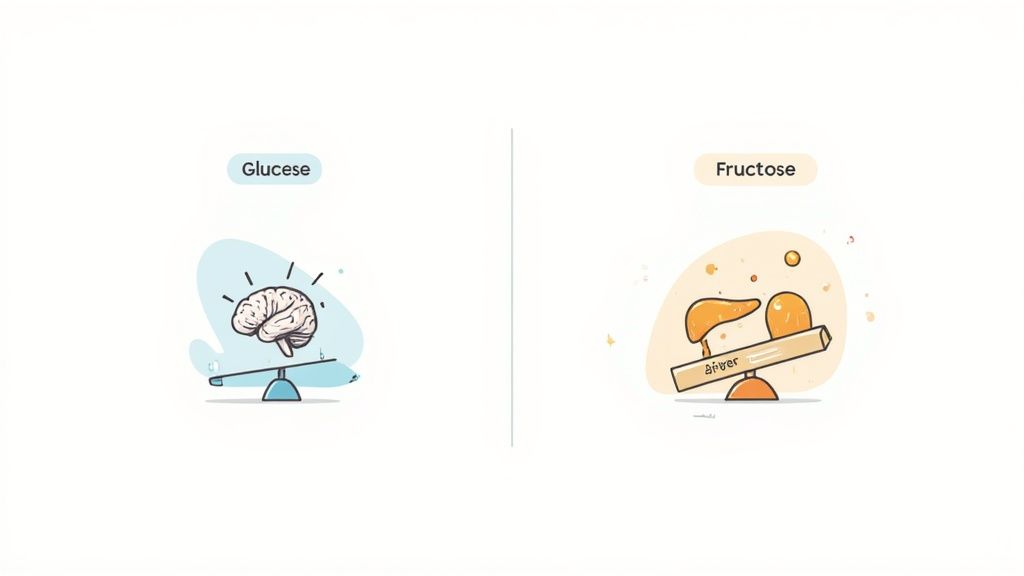
When you eat something with glucose, your body sends out clear hormonal signals that tell your brain you’re full. This all starts with insulin. Its release helps your cells soak up glucose, but it also kicks off a conversation with other hormones, most notably leptin—the "satiety hormone." Higher insulin means more leptin, which essentially tells your brain to put the brakes on your appetite. You feel satisfied.
Why Fructose Leaves You Feeling Hungry
Fructose, on the other hand, completely bypasses this entire appetite-control system. Because it doesn't trigger much of an insulin response, it also fails to signal for leptin. Your brain never gets the memo that you've just taken in calories, leaving you feeling just as hungry as before and making it easy to overeat.
Think about it in a real-world scenario:
- A high-fructose soda: You drink it, and the fructose goes straight to your liver. It does almost nothing to make you feel less hungry.
- A starchy food like a potato: This breaks down into glucose, which stimulates both insulin and leptin. You feel much fuller from a similar calorie count.
Because fructose doesn't signal satiety to the brain in the same way glucose does, it's far easier to consume excess calories from fructose-sweetened foods and drinks without feeling full.
This hormonal loophole is a huge reason why diets high in fructose are so closely tied to weight gain. If you’re always feeling hungry, you’re naturally going to reach for more food, trapping you in a cycle of overconsumption.
The Connection to Fat Storage and Insulin Resistance
The problems don't stop with appetite. The way your liver handles fructose has serious consequences for weight gain, especially when it comes to the dangerous visceral fat that collects around your organs. When your liver gets swamped with fructose, it starts converting the excess into fat through a process called de novo lipogenesis—literally "new fat creation."
This process doesn't just add to fat stores; it's a direct path to insulin resistance. As fat accumulates in the liver, the organ stops listening to insulin's signals. In response, your pancreas has to pump out even more insulin to keep blood sugar in check, a vicious cycle that can eventually lead to serious metabolic problems.
Being mindful of these effects can help you make better choices. Looking into something like a low carb vegetarian diet meal plan can be a great way to manage your carbohydrate intake and sidestep these issues. The scale of the problem is massive; in the U.S., adolescents between 12 and 18 consume an average of 72.8 grams of fructose per day, which accounts for over 12% of their total calories.
Finding Hidden Fructose on Nutrition Labels
https://www.youtube.com/embed/s5zroZfMn0I
Knowing the difference between glucose and fructose is a good start, but the real skill is spotting hidden fructose on a nutrition label. This is what makes a direct impact on your health.
You already know to check soda and candy, but added fructose hides in countless savory and so-called “healthy” processed foods—places you’d never expect.
Manufacturers have a lot of different names for fructose-based sweeteners, which makes it tricky to find them on an ingredients list. Just scanning for the word "sugar" isn't enough to protect your liver from the metabolic strain of excess fructose. You have to learn to spot its aliases.
Decoding the Ingredients List
To really cut down on harmful sugars, you need to recognize fructose in all its disguises. Many sweeteners are a mix of fructose and glucose, but some are incredibly high in fructose. For a complete walkthrough, check out our guide on how to read nutrition labels.
Here are some common red flags that signal added fructose:
- High-fructose corn syrup (HFCS): This is one of the most common sweeteners out there, found in everything from ketchup to bread.
- Agave nectar/syrup: Don't be fooled by the "natural" marketing—agave can be up to 85% fructose.
- Crystalline fructose: This is a super-processed form that’s almost pure fructose.
- Fruit juice concentrate: It sounds healthy, but it's really just a concentrated blast of fructose without the fiber that makes whole fruit good for you.
The key takeaway is that your body doesn't care if fructose comes from HFCS or a "natural" sweetener like agave. Once it gets to your liver, it's all processed the same way.
The problem is, these sweeteners are everywhere. While regular table sugar (sucrose) is a 50/50 mix of glucose and fructose, the widely used HFCS-55 contains 55% fructose. That slight difference, multiplied across thousands of products, has caused a massive spike in how much fructose we consume.
In fact, per capita fructose availability in the U.S. shot up by 26% between 1970 and 1997 alone.
Spotting hidden fructose is just one piece of the puzzle. Getting comfortable with reading food labels in general will empower you to make smarter choices. A good place to start is this guide on interpreting Nutrient Reference Values (NRVs). When you understand the full picture, managing your sugar intake becomes much easier.
Common Hidden Sources of Added Fructose
To help you become a pro at spotting hidden fructose, I've put together a quick-reference table. It shows common food categories where fructose loves to hide and the ingredient names you should be looking for.
| Food Category | Ingredient Names to Watch For |
|---|---|
| Condiments & Sauces | High-fructose corn syrup, agave nectar, fruit juice concentrate |
| Breakfast Cereals & Bars | Honey, brown rice syrup, fruit juice, invert sugar |
| Yogurts & Dairy | Fruit puree, crystalline fructose, corn syrup solids |
| Breads & Baked Goods | Molasses, high-fructose corn syrup, sucrose |
| Beverages & Juices | Fruit juice concentrate, agave syrup, corn sweetener |
| Processed & Canned Foods | Dextrose, fructose, sucrose, corn syrup |
Keep this list handy when you're shopping. It's surprising how often these ingredients pop up in foods that seem perfectly healthy on the surface.
Common Questions About Sugar, Answered
Let's be honest, navigating the world of sugar can feel like a minefield. Once you start digging into the differences between glucose and fructose, a lot of practical questions pop up. Here, we'll tackle some of the most common ones to clear up the confusion and help you make smarter choices every day.
Is the Fructose in Fruit Bad for Me?
This is easily the question I hear most often, and the answer is a relief: for most of us, the fructose you get from eating a whole piece of fruit is nothing to worry about. The magic is in the packaging.
When you eat an apple or a handful of berries, that fructose comes bundled with fiber, water, vitamins, and minerals. This natural "delivery system" changes everything. The fiber dramatically slows down how quickly your body absorbs the fructose, which prevents your liver from getting hit with a sudden, overwhelming sugar bomb. It’s a gentle trickle, not a flood.
Plus, all that fiber and water makes you feel full. It’s pretty hard to overeat apples, but it's incredibly easy to down a soda packed with free-floating fructose. The real health risks come from the concentrated, added fructose in processed foods and sweeteners, not the small amounts found in their natural, whole-food state.
Which Sugar Is Worse if You Have Diabetes?
This one is a bit more complicated than a simple "this or that" answer. On the surface, fructose might seem like the winner for someone with diabetes because it has a very low glycemic index (GI). That means it won't cause a big, immediate spike in blood sugar the way glucose does.
But that’s only half the story. The long-term effects tell a different tale. While fructose avoids the initial blood sugar roller coaster, its journey through the liver can actually make the root problems of diabetes worse. Consistently high fructose consumption is a primary cause of non-alcoholic fatty liver disease (NAFLD) and drives up triglycerides in the blood.
The low glycemic index of fructose is a red herring for people managing diabetes. In the long run, its knack for building up liver fat and fueling insulin resistance makes high doses of added fructose a serious threat.
Over time, this fat buildup in the liver makes your entire body more resistant to insulin, making it even harder to manage your blood sugar levels. That’s why avoiding added fructose from things like sugary drinks and processed snacks is absolutely essential for long-term metabolic health.
Are Natural Sweeteners Like Honey Actually Healthier?
It’s a common belief that "natural" sweeteners—think honey, maple syrup, or agave nectar—are a healthier choice than plain old table sugar or high-fructose corn syrup (HFCS). And while they might have tiny amounts of minerals or antioxidants, your body breaks down their sugar content in the exact same way.
The real eye-opener is their fructose concentration. Agave nectar, which is often marketed as a healthy, low-glycemic option, can be up to 85% fructose. That's substantially higher than even HFCS. Honey and maple syrup are also just potent mixtures of free fructose and glucose.
Once these sweeteners hit your liver, they’re treated just like any other fructose. A big spoonful of agave puts the same metabolic strain on your liver as a dose of HFCS. So, while they might be less processed, they are definitely not "health foods." The fundamental difference in how your body handles glucose versus fructose doesn't change just because the sugar came from a beehive or a tree. Use them sparingly.