Finding Hidden Sugar In Food Your Guide To A Healthier Life
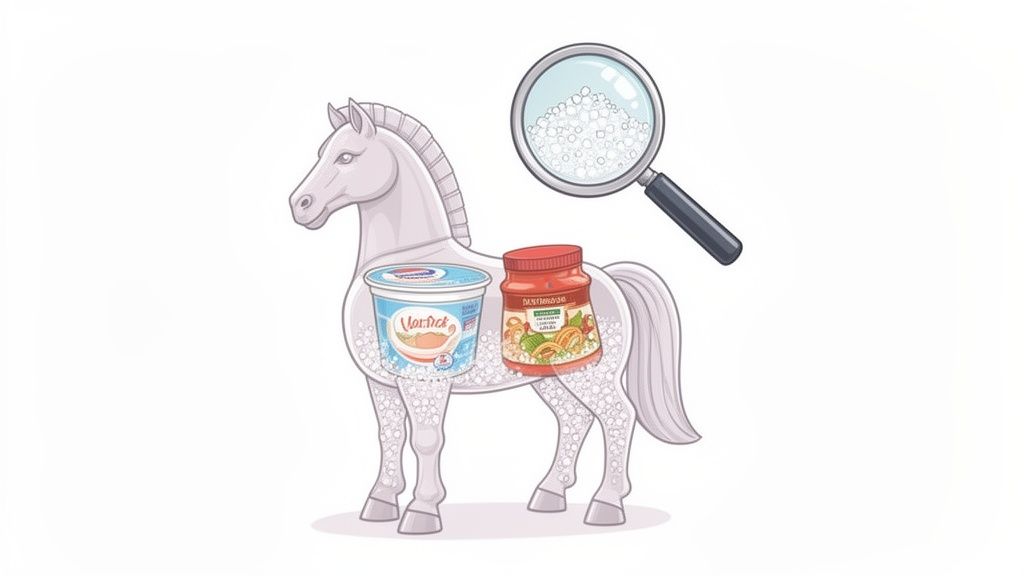
You already know that a donut is a sugar bomb. No surprises there. But what about the sugar hiding in your supposedly 'healthy' yogurt, that savory pasta sauce, or even your morning cereal? These are the sugars that fly under the radar, quietly adding up and affecting your health without you even realizing it.
The Sneaky Truth About Hidden Sugars
I like to think of hidden sugar as a Trojan horse for your diet. It slips past your defenses, often disguised as something harmless or even good for you, only to cause trouble once it’s inside.
You might be great at skipping dessert, but the sugar lurking in everyday foods like salad dressing, bread, and ketchup can easily push you way over your daily limit. This isn't an accident; it's a common practice in modern food production to make things taste better and last longer on the shelf.
The constant drip of these sugars can really take a toll on how you feel day-to-day, leading to frustrating problems you might not connect to your diet.
- Energy Crashes: That 3 p.m. slump you're blaming on a long day? It’s often just your body coming down from a blood sugar spike you didn't even know you had.
- Mood Swings: The rollercoaster of sugar highs and lows can mess with more than just your energy. It can leave you feeling irritable, foggy, and just not yourself.
- Long-Term Health Risks: Over time, a diet packed with hidden sugars is a recipe for chronic inflammation, weight gain, and a higher risk for serious health issues.
The real challenge isn't about willpower. It’s about awareness. Most of us eat far more sugar than we think, simply because it’s so well-hidden in foods we trust.
This guide is all about pulling back the curtain. We'll show you exactly where these sugars lurk, teach you how to read labels like a pro, and give you a straightforward plan to take back control.
We’ll also look at how a tool like the StopSugar app can be a game-changer. It helps you track what you're really eating, gives you a 'panic button' for cravings, and suggests smart alternatives right when you need them. It's time to uncover the truth about hidden sugar and start feeling your best.
Why Hidden Sugar Is a Serious Health Concern
It’s easy to think of hidden sugar as just a few extra calories, but the truth is, it affects your body on a much deeper level. Imagine your body is a high-performance engine. If you constantly fill it with the wrong kind of fuel—in this case, too much sugar—you’re going to run into problems. It's not just about a little sputtering; it's about setting yourself up for long-term engine damage.
This constant stream of sugar puts your body on a wild rollercoaster ride. You get that initial burst of energy, which feels great for a moment, but it’s always followed by a miserable crash. That’s when you feel sluggish, irritable, and find yourself hunting for another sugary fix to get going again. This up-and-down cycle is a major source of chronic inflammation, a kind of low-grade stress that's a key player in a long list of serious health problems.
The Systemic Impact of Excess Sugar
When your body is always trying to manage a flood of sugar, it struggles to keep things in balance. The problem doesn't just stay in one place; it ripples out, affecting your energy, mood, and overall sense of vitality.
- Disrupted Energy Levels: Sugar offers a quick, but very unstable, source of fuel. This causes sharp spikes in your blood sugar, followed by even sharper drops. That’s what’s behind the classic "afternoon slump" and that nagging feeling of being tired all the time.
- Mood Fluctuations: The blood sugar rollercoaster doesn't just mess with your physical energy; it can take your mood along for the ride. The highs can make you feel jittery and anxious, while the crashes often bring on irritability, brain fog, and a generally low mood.
- Increased Health Risks: A diet overloaded with added sugar is one of the main drivers of insulin resistance. This is a big deal because it can pave the way for serious conditions like Type 2 diabetes, heart disease, and non-alcoholic fatty liver disease.
This infographic really puts into perspective just how much hidden sugar can throw your system out of whack.
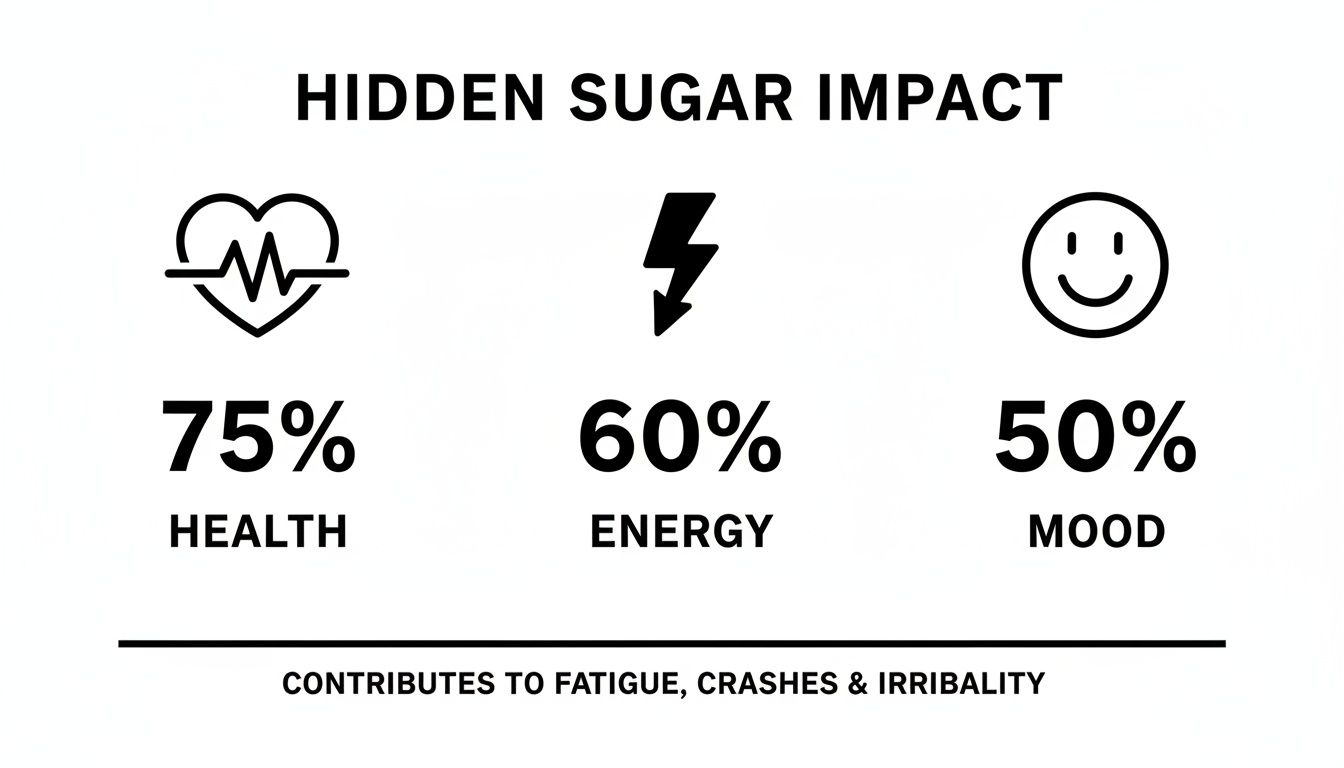
As you can see, the consequences aren’t minor. They impact our long-term health, daily energy, and even how we feel from one moment to the next.
A Problem Hidden in Plain Sight
The sheer scale of this problem is mind-boggling, making it tough for even the most health-conscious person to navigate. Research shows that roughly two-thirds of all packaged foods in the supermarket contain added sugars. That turns a simple grocery trip into a full-on detective mission.
What makes it even harder is that food manufacturers use literally hundreds of different names for sugar on their labels, making it almost impossible to know what you’re really eating. You can learn more about the prevalence of added sugars from the full research.
When you truly understand the 'why' behind cutting out hidden sugar, your motivation changes. It stops being about a diet and starts being about investing in your long-term energy, mental clarity, and overall well-being.
Learning To Decode Sugar's Many Disguises
Alright, time to put on your detective hat. The first real step in cutting down on hidden sugar in food is learning to see through its clever disguises. Food companies have more than 60 different names for sugar, and they plaster them all over ingredient lists, hoping you won't notice.
It sounds like a lot to remember, but don't worry. You don't need a PhD in chemistry to figure this out.
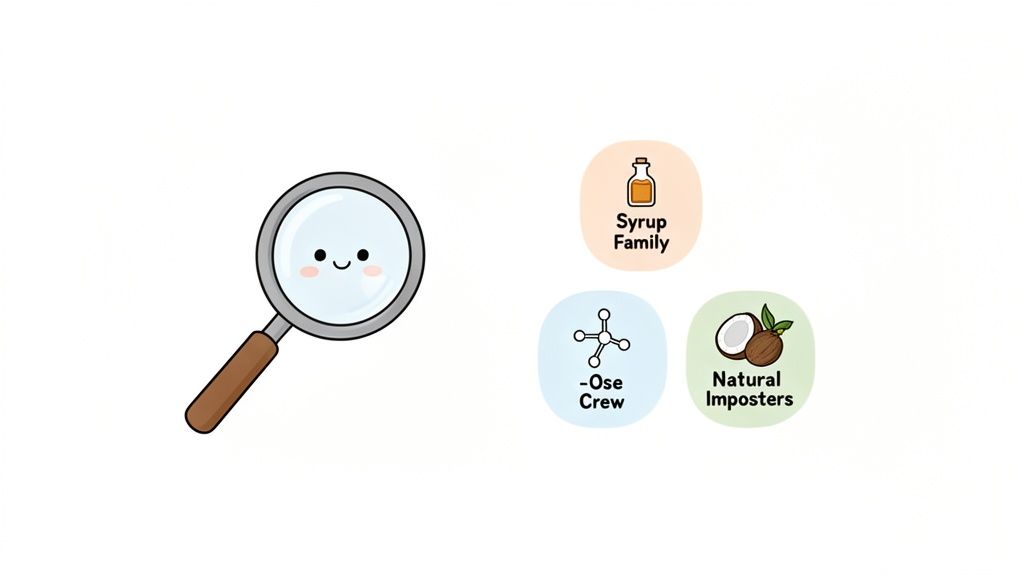
We can make this much simpler by grouping sugar's aliases into a few memorable "families." Once you know what to look for, these names will jump right off the label.
To help you become a pro at spotting these sneaky ingredients, here’s a quick-glance table. Think of it as your cheat sheet for identifying sugar's many alter egos when you're at the grocery store.
Common Hidden Sugar Names On Food Labels
| Category | Examples Of Hidden Sugar Names |
|---|---|
| The Syrup Family | High-fructose corn syrup, brown rice syrup, agave syrup, malt syrup, maple syrup, golden syrup, carob syrup |
| The "-Ose" Crew | Dextrose, fructose, glucose, lactose, maltose, sucrose, galactose |
| Natural Imposters | Honey, molasses, date sugar, maple syrup, coconut sugar, fruit juice concentrate, cane juice/crystals |
By keeping these categories in mind, you'll be able to quickly scan a label and know exactly what you're looking at. Now, let's break down exactly what these mean.
The Syrup Family
Syrups are everywhere in processed foods because they add sweetness, moisture, and texture. If an ingredient has "syrup" in its name, it's a dead giveaway for added sugar.
- High-Fructose Corn Syrup: This is one of the most common and controversial sweeteners. You’ll find it in an unbelievable range of products, from soda and salad dressing to bread and crackers.
- Brown Rice Syrup: Often marketed as a "healthier" option in organic snack bars, but make no mistake—your body processes it just like any other sugar.
- Agave Nectar/Syrup: It sounds natural, but agave is a highly processed sweetener that's incredibly high in fructose.
- Maple Syrup: We all love it on pancakes, but when it’s added to things like granola or yogurt, it’s just another hidden sugar contributing to your daily total.
The "-Ose" Crew
This is the easiest trick in the book. If you spot a word on the ingredient list ending in "-ose", you can be almost certain it's a type of sugar. It’s a simple scientific naming rule that works in your favor.
Spotting words ending in "-ose" is the fastest way to ID added sugars. It's a clear signal that a form of sugar is in the mix, no matter how complicated the name sounds.
Here are the most common members of the "-ose" crew:
- Sucrose: This is just the scientific name for regular old table sugar.
- Dextrose: A simple sugar usually made from corn, and it’s a favorite for adding a touch of sweetness to packaged foods.
- Fructose: This is the type of sugar found in fruit. While fine in an apple (thanks to fiber), it’s often added in concentrated doses to processed foods and drinks.
- Maltose: Also known as malt sugar, it’s commonly used in cereals and hard candies.
Natural-Sounding Imposters
This is where manufacturers get really sneaky. They use ingredients that sound wholesome and natural, leading you to believe you’re making a healthy choice. While some may be slightly less refined, your body treats them all the same way: as sugar.
- Fruit Juice Concentrate: This is basically fruit juice that has had all its water and fiber removed, leaving behind a super-concentrated sugar syrup.
- Coconut Sugar: It's become a popular "healthy" alternative, but it has nearly the same chemical makeup as regular cane sugar.
- Honey: We think of it as a pure, natural food, but it's still a source of free sugars that your body has to process.
- Cane Juice or Cane Crystals: Don't be fooled by the name. This is simply a less-processed version of table sugar.
Getting a handle on these names is the most powerful first step you can take. To go even deeper, be sure to check out our complete guide on how to read nutrition labels. Once you can see through sugar's disguises, you’re on your way to taking back control.
Surprising Foods Packed With Hidden Sugar
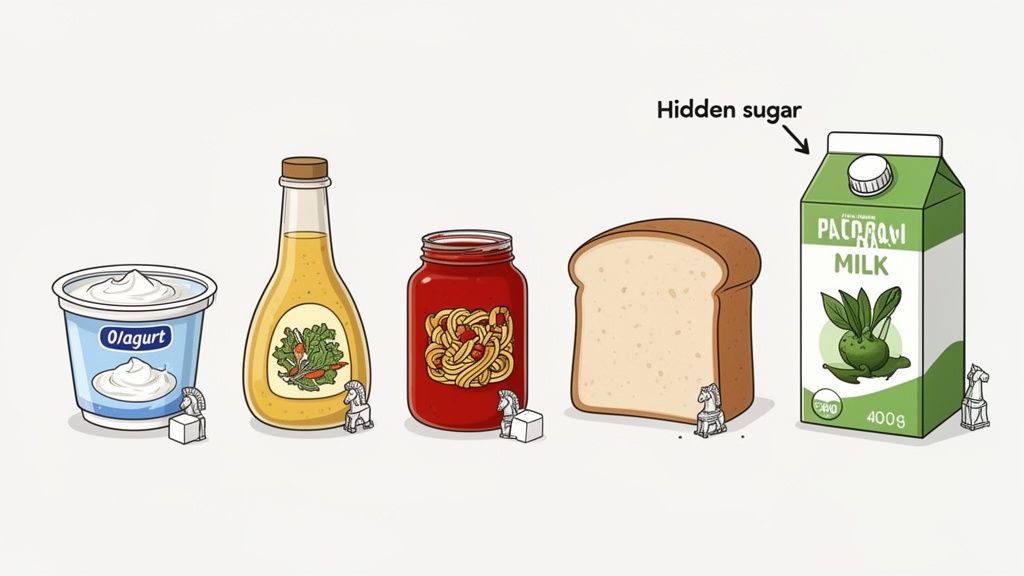
Now that you know what to look for on a label, let's play detective in your own kitchen. You might be shocked to find where hidden sugar in food is lurking, especially in things you’d normally consider savory or even healthy.
Food companies have a lot of reasons to add sugar, and it's not always about making things taste sweet. Sugar is a powerhouse ingredient for them—it improves texture, acts as a preservative to extend shelf life, and balances the acidity in things like tomato sauce. This is just part of the food industry's playbook, and once you understand it, making smarter choices becomes much easier.
It’s these little bits of sugar, scattered across multiple "healthy" foods, that really add up. You could easily blow past your daily limit without ever touching a cookie or a slice of cake.
Common Culprits Hiding In Your Pantry
Many of the everyday staples we grab for quick meals are loaded with more sugar than we realize. Don't just keep an eye on the sweet stuff; the savory items are often the sneakiest offenders.
- Pasta Sauce: It's hard to believe, but a single half-cup serving of some popular brands has more sugar than a chocolate chip cookie. It's tossed in to cut the sharp, acidic taste of the tomatoes.
- Salad Dressing: That "light" vinaigrette or creamy ranch? It might be drowning in sugar. Sweeteners are used to create a richer flavor and texture, quickly turning a healthy salad into a sugar bomb.
- Bread and Wraps: Even the whole-wheat options you buy to be healthy often have added sugar. It helps the yeast do its job, creates a nice golden-brown crust, and adds a subtle sweetness people have come to expect.
- Yogurt and Plant-Based Milks: Flavored yogurts are famous for being packed with sugar. But even "plain" almond or oat milks can have added sweeteners to make them taste better and feel creamier.
And this problem starts shockingly early. Research found that between 2011 and 2016, over 60% of infants and an incredible 98% of toddlers were eating added sugars, mostly from foods marketed as healthy options for kids.
Don't Forget About Your Drinks
It's not just the food you chew. So many popular drinks are essentially "liquid candy," and they're a massive source of the hidden sugars in our diets.
Think about your daily routine. That morning yogurt, the dressing on your lunch salad, and the sauce with your dinner pasta could easily add up to 20-30 grams of sugar before you even consider a snack.
Your favorite coffee shop drink is a perfect example. Even the options that sound healthy can be completely deceptive. Take the overly sweet, syrupy chai lattes you find at many cafes—they are often huge sugar sources.
The same goes for fruit juices, sports drinks, and sweetened iced teas. They're all packed with sugar and offer very little nutritional benefit in return. Getting into the habit of checking drink labels is just as crucial as reading the ones on your food.
Your Action Plan to Cut Down on Hidden Sugar
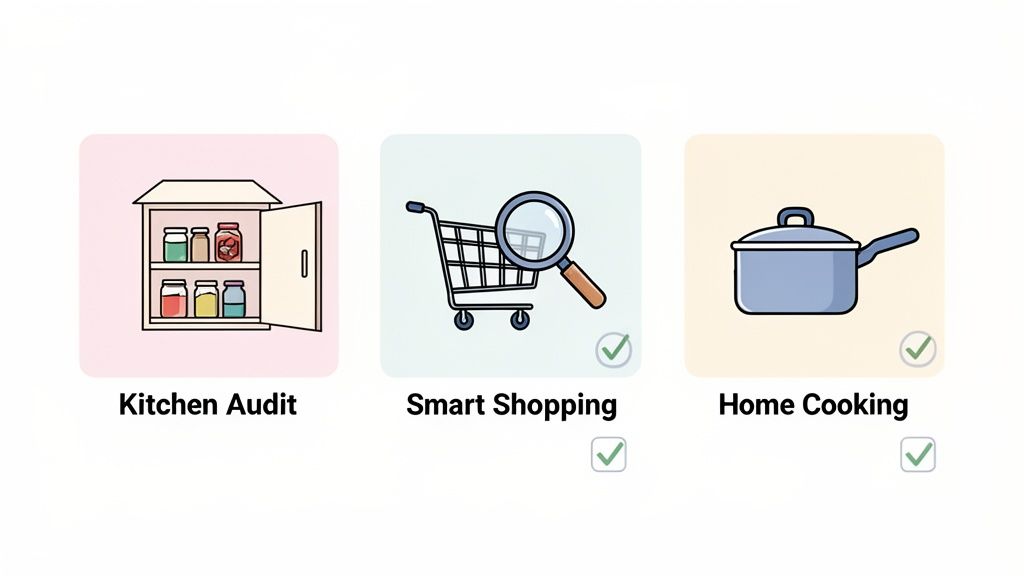
Okay, now you know where all that sneaky sugar is hiding. The next step is turning that knowledge into action—without making yourself miserable or feeling deprived. This isn't about being perfect overnight. It's about making small, smart choices that add up over time.
Think of it as a three-part game plan. Each strategy builds on the one before it, giving you complete control over what you're eating. This approach makes finding and cutting out hidden sugar feel less like a chore and more like a win.
Start With a Kitchen Audit
Before you even step foot in a grocery store, take a look at what you already have. A quick kitchen audit is the best way to see which foods are secretly loading you up with sugar.
Just set aside 20 minutes and start pulling things from your pantry and fridge. Read the labels on your go-to cereals, sauces, dressings, and snacks. I guarantee you'll find a few surprises.
- Spot the Culprits: Look for those tricky sugar names we talked about—anything ending in "-ose," like fructose or dextrose, as well as corn syrup or cane juice.
- Make a "Swap List": Jot down the items that are surprisingly high in sugar. You don’t have to toss them all at once, but now you know what to replace on your next shopping trip.
- Set Yourself Up for Success: Move your healthier, low-sugar options to the front of the cupboard. Making the good stuff easy to grab is a simple but incredibly effective mind trick.
Master Your Smart Shopping Strategy
The grocery store is where the real battle against hidden sugar is won or lost. If you walk in without a plan, you're an easy target for clever marketing and old habits.
A shopping list based on your kitchen audit is your secret weapon. Instead of grabbing the same old brands, you'll be on a mission to find better alternatives.
The single most powerful habit you can develop is this: never put anything in your cart without reading the ingredient list first. This one small change puts you in the driver's seat.
When you’re comparing two products, go straight to the "Added Sugars" line on the nutrition label. Your goal is to find options with zero or very few grams of added sugar. It doesn't take long to figure out which brands are on your side.
Embrace the Home Cooking Advantage
Honestly, the most foolproof way to get rid of hidden sugars is to cook more of your own meals. When you're the one in the kitchen, you have 100% control over every last ingredient.
And you don't have to be a professional chef! The simplest meals are often the healthiest.
- Easy Swaps: Ditch the bottled dressing and make your own with olive oil, vinegar, and a pinch of herbs. Season sauces with garlic, onions, and spices instead of sugar-laden jars.
- Cook in Batches: Roast a big pan of vegetables or grill some chicken on a Sunday. Having healthy building blocks ready to go makes pulling together a quick, sugar-free meal on a busy weeknight a total breeze.
This is all about building awareness and making gradual changes that stick. For a deeper dive, check out our guide on how to reduce sugar in your diet for more long-term strategies.
How The StopSugar App Can Be Your Guide
Trying to navigate the world of hidden sugar in food can feel like a full-time job. It’s confusing and, honestly, a little overwhelming. But you don't have to go it alone.
Think of the StopSugar app as a personal coach right in your pocket. It’s designed to help you build healthier habits one small decision at a time, giving you real-world support for the challenges you’ll actually face. Instead of just giving you a long list of "don't eat this," the app provides tools to help you understand your own patterns and beat cravings when they hit hard.
Build Awareness With Daily Check-Ins
One of the simplest yet most powerful tools in the app is the Daily Sugar-Free Check-In. This isn't about guilt or judgment; it's a quick, daily habit that helps you connect the dots between what you eat and how you feel.
When you take just a moment to reflect each day, you start noticing things you never saw before. You might finally realize that "healthy" granola is what's really behind your 3 p.m. energy crash, or that a certain afternoon snack makes you feel irritable an hour later. This kind of awareness is the absolute foundation for making changes that actually stick.
The goal isn’t perfection; it’s progress. By consistently tracking your sugar-free days, you build momentum and motivation, celebrating small wins that lead to big results in your overall well-being.
Overcome Cravings With Instant Support
Let's be real: moments of weakness happen to everyone. That’s exactly what the Panic Button is for. When a fierce sugar craving strikes out of nowhere, you can tap the button for immediate, non-judgmental support.
It gives you quick distractions, simple mindfulness exercises, and reminders of why you started this journey—just enough to help you ride out the craving without giving in. It’s like having a supportive friend on call 24/7 to get you through the tough spots.
Another great feature is the Alternatives Suggestions tool. Whether you're standing in a grocery aisle or planning your meals for the week, the app can offer simple, low-sugar swaps for your go-to foods. This practical guidance makes finding delicious alternatives way less of a chore, turning your weekly shop into a successful mission.
Got Questions About Hidden Sugar? We've Got Answers.
It's totally normal to have questions when you start digging into the world of hidden sugar. It can feel confusing at first, but let's clear up a couple of the most common ones so you can move forward with confidence.
Are "Natural" Sugars Like Honey Actually Better for You?
This is a big one. It feels like honey, maple syrup, or agave should be healthier than plain white sugar, right? While they do contain some trace nutrients, your body breaks them down in almost the exact same way.
At the end of the day, they all count as free sugars. That means they contribute to your daily sugar total and should be used in moderation. The real health advantage comes from eating sugar in its natural, whole-food form—like in a piece of fruit—where the fiber slows down how your body absorbs it.
So, How Much Sugar Is Really Too Much?
The World Health Organization (WHO) gives a clear guideline: keep your intake of free sugars to less than 10% of your total daily calories. For most adults, that works out to about 12 teaspoons a day.
Sounds manageable, but here's the catch. Many of us are eating way more than that without even knowing it—some European populations average 16-17% of their daily calories from sugar. You can dig into the official global sugar guidelines from the WHO to learn more.
It's surprisingly easy to fly past that recommended limit when sugar is hiding in foods you don't even think of as sweet, like pasta sauce or salad dressing. The single best strategy is to build your diet around whole, unprocessed foods.
Curious about what your personal limit looks like? You can calculate your daily sugar allowance using our simple tool to get a number tailored just for you.