How to Deal with Food Cravings and Finally Regain Control
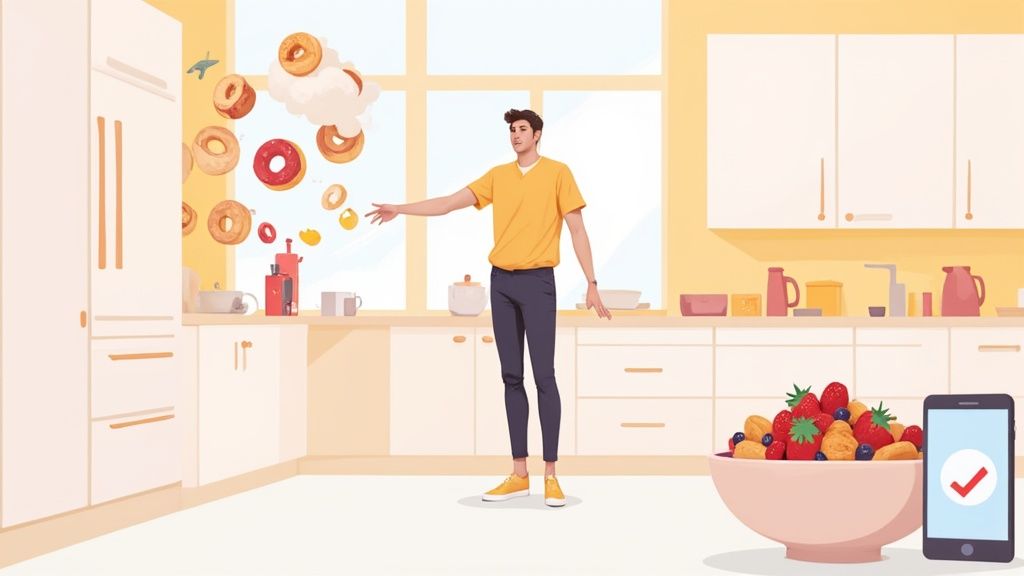
To get a handle on food cravings, you first have to figure out why you’re having them. It's rarely just about hunger. More often, it's a tangled web of your body's signals, your emotional state, and the habits you've built over years. Once you can pinpoint the real reason—whether it’s stress, boredom, or an old routine—you can start responding thoughtfully instead of just reacting.
Understanding What Drives Your Food Cravings
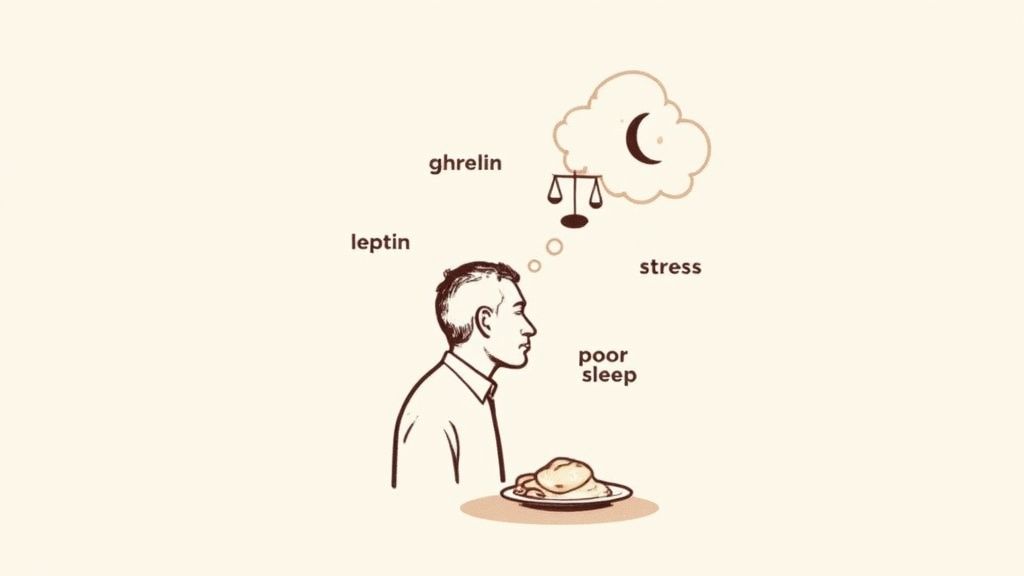
Before you can tackle food cravings head-on, you need to know what you’re up against. These intense urges aren't a sign of weak willpower; they’re complex events happening inside your brain and body. Learning to tell the difference between true physical hunger and other kinds of cravings is the first real step toward taking back control.
Physical hunger tends to creep up on you slowly. It’s not picky—almost any food will do—and you feel satisfied after eating. A craving, on the other hand, usually hits you like a ton of bricks. It demands a specific food (hello, pint of ice cream) and is often tied to how you’re feeling or where you are.
The Science Behind the Urge
A lot of what you feel is driven by your body's internal chemistry. Two hormones are the main players here: ghrelin, which tells you you're hungry, and leptin, which signals that you're full. When things like stress or a lack of sleep throw this system out of whack, cravings can go into overdrive.
Think about it: just one rough night of sleep can spike your ghrelin levels, making you feel ravenous and much more likely to crave sugary, high-calorie foods the next day. Chronic stress does something similar by pumping up cortisol, another hormone that sends you searching for those classic "comfort foods."
Food cravings aren't just a simple matter of self-control. They're deeply connected to the parts of your brain that manage memory, pleasure, and emotion. This is why a craving can feel so intense and almost impossible to ignore. Knowing this allows you to be a bit kinder to yourself as you work through it.
Common Roots of Food Cravings
Beyond the hormonal rollercoaster, a few other common culprits are probably behind your urges. Once you learn to spot them, you can build a solid plan to get ahead of them.
- Nutritional Gaps: Ever had a relentless craving for something salty? It could be your body's way of saying you're dehydrated or low on electrolytes. That intense desire for chocolate might even point to a magnesium deficiency.
- Habit Loops: If you always grab a cookie with your 3 p.m. coffee, that's a habit loop in action. The coffee is the cue, and your brain automatically triggers the craving as part of a deeply ingrained routine.
- Emotional Triggers: Boredom, stress, loneliness, or anxiety are huge drivers for emotional eating. The food becomes a quick fix—a distraction or a temporary comfort—instead of actual fuel for your body.
When these cravings feel constant and overwhelming, they might be pointing to a more significant issue. If this sounds familiar, you might want to read our guide on what is food addiction. Getting to the bottom of these drivers is what gives you the power to finally dismantle them.
Pinpoint Your Personal Craving Triggers
Cravings almost never just pop up out of the blue. They’re usually a reaction to something specific—a trigger. If you want to get a handle on them, you have to become a bit of a detective in your own life. Figuring out what sets off those intense urges is the single most powerful step you can take to disarm them.
Think back to the last time a really strong craving hit you. What was going on right before it happened? Were you zoning out in front of the TV, scrolling through Instagram, or grinding through a stressful work deadline? For most of us, cravings are less about real, physical hunger and more about our surroundings or our feelings. In fact, research shows that just seeing food ads can ramp up cravings for high-calorie snacks by as much as 26%. That really shows you how much our environment pulls the strings. You can read more about these findings in the journal Appetite if you're curious.
Start a Craving Journal
One of the best ways I’ve found to uncover these patterns is to keep a simple craving journal. This isn't about counting every calorie—it’s about gathering clues. Just for one week, every time a craving hits, pause and jot down a few details.
It can be a small notebook you carry around or even just a note on your phone. What you're looking for are the repeating themes.
- What time did it happen? That 3 PM energy crash often feels like a desperate need for a cookie, but it's usually just your body asking for a break or some real fuel.
- Where were you? The kitchen counter, your car, the office break room—these places can become powerful trigger zones without us even realizing it.
- What were you doing? Mindlessly reaching for chips while watching a movie is a classic example of a habit-driven craving.
- How were you feeling? Be honest here. Were you bored? Stressed? Anxious? Even happy celebrations can trigger the urge for a sweet "reward."
This isn’t about judging yourself. It’s all about building awareness. After a few days, you'll start to see a clear picture emerging from your notes.
Recognizing your triggers is like getting a map of your cravings. Instead of wandering into ambushes, you can see them coming and choose a different path. It shifts you from being reactive to proactive.
Common Triggers and How to Respond
Once you have some data, you can start to see what your main triggers are. Most cravings are rooted in our emotions, our habits, or our environment. Identifying which ones get you the most is key.
This table highlights some of the most frequent triggers and offers practical ways to respond instead of reaching for sugar.
Common Craving Triggers and Healthy Swaps
| Common Trigger | Unhealthy Response | Healthy Swap or Action |
|---|---|---|
| Boredom | Grabbing a bag of chips or cookies for something to do. | Go for a 5-minute walk, listen to a podcast, or text a friend. |
| Stress | Eating a pint of ice cream after a long, hard day. | Brew a cup of herbal tea, do a few stretches, or try a 2-minute meditation. |
| Afternoon Slump | Reaching for a candy bar or soda for a quick energy jolt. | Drink a large glass of cold water and eat a handful of almonds or an apple. |
| Watching TV | Mindlessly eating whatever snack is in the pantry. | Keep your hands busy with knitting, a puzzle, or simply pre-portion a healthy snack. |
| Seeing Food Ads | Suddenly wanting the exact junk food shown on screen. | Mute the commercial, change the channel, or remind yourself of your health goals. |
Remember, a trigger is just a cue. It doesn't have to lead to the same old response. By planning ahead, you can create new, healthier pathways that serve you better. Emotional triggers, in particular, often need a different approach than habitual ones. If you notice that your mood and your eating are tightly linked, it’s worth learning how to stop emotional eating with more targeted strategies.
Once you know your unique patterns, you can finally build a real plan to either avoid the trigger entirely or have a better response ready to go.
Actionable Strategies to Stop Cravings Now
When a powerful craving hits, it can feel like an emergency. Your brain screams for something sweet or salty, and trying to resist feels almost impossible. This is where having a few go-to techniques in your back pocket can make all the difference.
The goal isn't to fight the craving with sheer willpower—that’s exhausting. Instead, you can outsmart it with some practical, in-the-moment actions that put you back in the driver's seat.
Delay and Distract Your Brain
One of the most effective things you can do is simply create a little space between the craving and your response. Cravings feel intense, but they’re often surprisingly short-lived. By hitting the pause button, you give that urge time to fade on its own.
Try setting a timer for just 15 minutes. During that time, get busy with something that fully grabs your attention—bonus points if it uses your hands.
- Get moving. A quick walk around the block can change your scenery and release some feel-good endorphins.
- Tackle a small task. Tidy a messy drawer, answer a few emails, or straighten up your desk.
- Engage your mind. Call a friend for a quick chat, put on an interesting podcast, or play a game on your phone.
More often than not, by the time that timer dings, the craving will have lost a lot of its power, if not vanished completely.
Hydrate Before You Indulge
Did you know our brains sometimes mix up the signals for thirst and hunger? That urgent desire for a bag of chips might actually be your body’s way of saying it needs water. Before you reach for a snack, try drinking a large glass of water and waiting a few minutes.
This isn't just an old wives' tale; research backs it up. One study found that drinking about two cups of water could reduce hunger and lower calorie intake by around 13%. Sometimes, managing cravings also means looking at the bigger picture, like adjusting the timing of your meals, such as eating dinner earlier, to sync up better with your body’s natural rhythm.
This flowchart can help you figure out what might really be driving your craving.
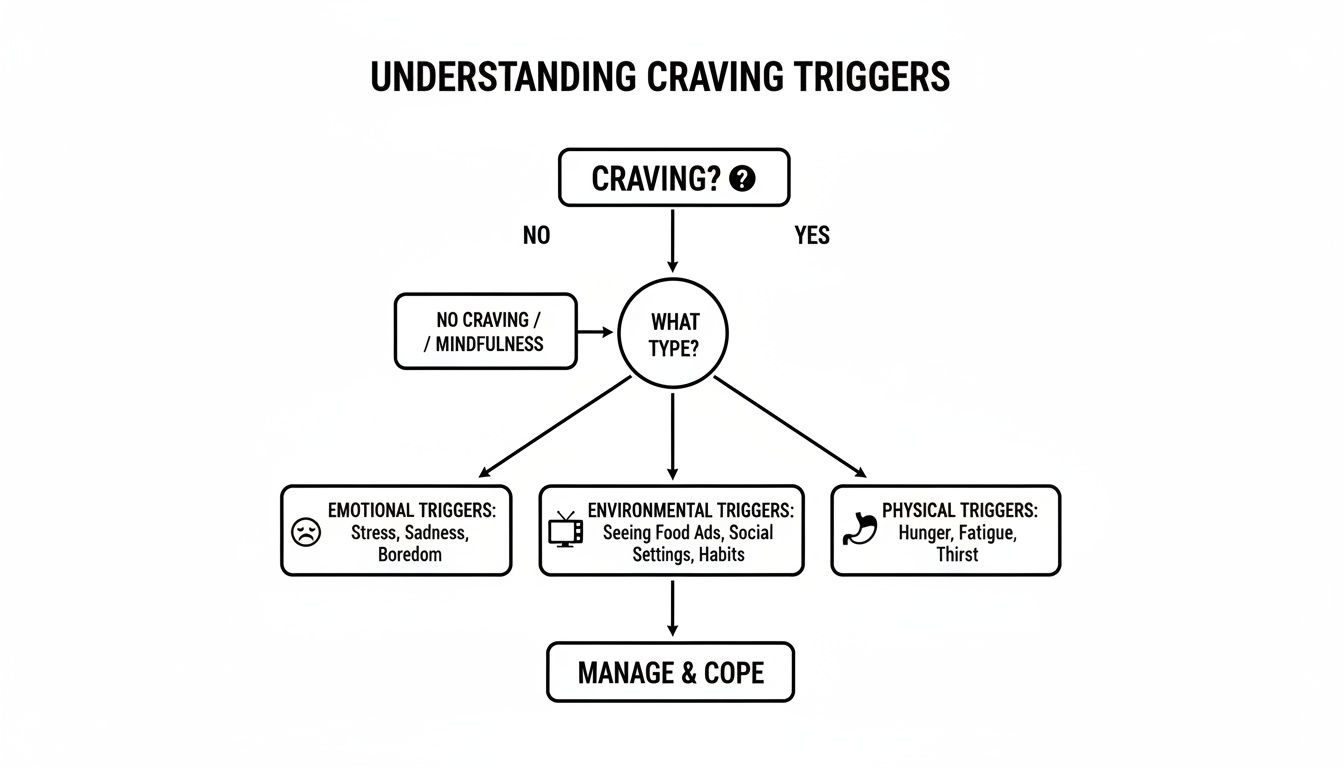
As you can see, cravings are often tied to emotional, environmental, or physical cues—not just pure, physical hunger.
Practice Mindful Urge Surfing
Instead of trying to squash a craving the second it appears, you can try a different approach: simply watch it without judgment. It’s a technique called "urge surfing." Think of the craving as a wave. It builds, hits a peak, and then naturally recedes. Your job is just to ride it out.
When the craving hits, just sit with it for a moment. Acknowledge it by saying to yourself, "Okay, I'm having a really strong craving for chocolate right now." Notice the physical sensations in your body without giving in to them.
This simple act of non-judgmental awareness helps you see that you are not your cravings. They're just temporary mental events you can observe without having to obey. If you want to get better at this, our guide on mindful eating exercises can help you build an even stronger foundation.
Build a Craving-Proof Lifestyle for the Long Haul
Beating a sugar craving in the heat of the moment is a win, no doubt. But the real game-changer is building a life where those intense urges barely even show up. This isn't about having superhuman willpower. It's about strategically creating a foundation of habits that keep your body and mind in balance, making you naturally resistant to those sudden sugar demands.
It all starts with your plate. One of the best defenses you have is building your meals around a solid core of protein, fiber, and healthy fats. These three work as a team to slow down digestion and keep your blood sugar from going on a rollercoaster ride. Those dramatic spikes and crashes are what usually send you scrambling for the nearest sweet thing.
Think about it: a breakfast of eggs and avocado gives you steady, reliable energy for hours. A bowl of sugary cereal, on the other hand, sets you up for a mid-morning energy dive and the inevitable craving that follows.
Get Serious About Sleep and Stress
Poor sleep and chronic stress are two of the biggest culprits working behind the scenes to sabotage your efforts. When you’re running on empty, your hormones go haywire. The Centers for Disease Control and Prevention (CDC) has found that adults who get less than seven hours of sleep are more likely to struggle with their weight. It's because sleep deprivation messes with the hormones that control your appetite. It cranks up ghrelin (the "feed me now" hormone) and dials down leptin (the "I'm full" hormone). That’s a perfect storm for intense cravings for high-fat, high-sugar foods. You can read more about these important sleep findings from the CDC.
Stress does something similar by flooding your system with cortisol. This puts your body in a constant state of high alert, and it often triggers a powerful desire for "comfort foods" to get a quick hit of energy and pleasure.
Building a craving-proof lifestyle means treating sleep and stress management as non-negotiables, right up there with nutrition. They are the pillars holding everything else up.
Getting a handle on the physical side of stress is crucial. Learning how to reduce cortisol levels naturally can make a huge difference in how your body—and your brain—responds when life gets chaotic.
Set Up Your Environment for an Easy Win
Your surroundings have a massive influence on your daily choices. Why not rig the game in your favor? You can engineer your environment to make the healthy choice the easy choice.
- Plan Your Meals and Snacks. It sounds simple, but spending a little time each week mapping out what you'll eat is a superpower. When a healthy, delicious meal is already waiting for you, the temptation of last-minute junk food fades fast.
- Rethink Your Kitchen Layout. Make healthy foods the first thing you see. Put a bowl of fresh fruit on the counter. Keep pre-cut veggies and hummus at eye level in the fridge. The stuff you're trying to avoid? Move it to a high shelf, put it in an opaque container, or better yet, just don't bring it into the house.
- Move Your Body Regularly. You don't have to become a marathon runner. Just 20-30 minutes of brisk walking can boost your mood, release feel-good chemicals, and take the edge off a craving. Think of movement as a proactive tool for regulating your appetite and melting away stress before it even starts.
Smart Swaps to Satisfy Your Sweet Tooth
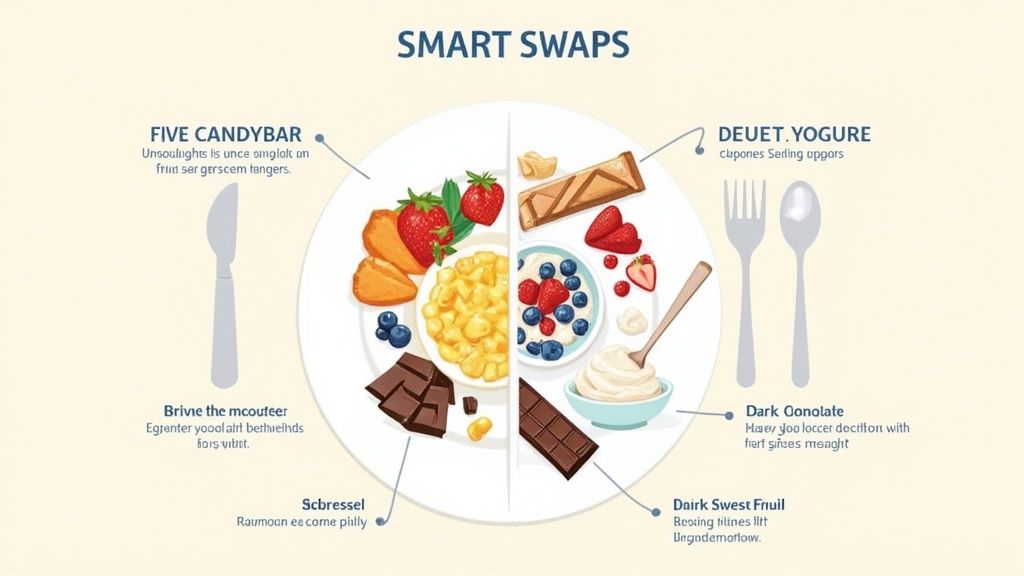
Here’s a common mistake I see all the time: trying to completely eliminate every single treat from your diet. It’s a recipe for disaster. You end up feeling deprived, miserable, and eventually, you just give in.
A much smarter—and more sustainable—approach is learning the art of the "smart swap." It's not about restriction; it's about finding healthier, genuinely delicious ways to satisfy that sweet tooth without throwing your progress out the window.
The idea is to answer your craving, not ignore it. By making these intelligent substitutions, you still get the flavors and textures you love, but you're giving your body much better fuel. It's an empowering way to handle cravings, not a punishing one.
Rethinking Your Sweeteners
When you first decide to cut back on sugar, the world of alternative sweeteners can feel a bit overwhelming. We know regular white sugar is just empty calories that send your blood sugar on a wild ride, triggering even more cravings. So, what are the better options?
Let's look at a couple of popular natural choices:
- Stevia: This is a zero-calorie sweetener that comes from the leaves of the stevia plant. It's incredibly sweet, so a tiny bit is all you need. The best part? It doesn’t impact your blood sugar levels at all.
- Monk Fruit: Another great natural, zero-calorie option. Monk fruit gets its sweetness from antioxidants called mogrosides. Just like stevia, it won’t cause a spike in your blood glucose.
A word of caution: moderation is still key. While these are certainly better choices than refined sugar, the long-term goal is to gently reduce your overall need for intense sweetness.
Satisfying Swaps for Common Cravings
Having a go-to list of healthier replacements ready is a game-changer for when a craving hits. Instead of white-knuckling your way through the urge, you can just meet it with a choice that actually supports your goals.
Whole-Food Alternatives to Tame Your Cravings
| When You Crave... | Instead of This... | Try This Smart Swap... |
|---|---|---|
| Creamy and Sweet | A pint of ice cream | A bowl of plain Greek yogurt with fresh berries and a sprinkle of cinnamon. |
| Rich and Decadent | A milk chocolate candy bar | A square or two of 70% or higher dark chocolate. |
| Crunchy and Salty | A bag of potato chips | A handful of almonds, roasted chickpeas, or crispy seaweed snacks. |
| Fizzy and Sugary | A can of soda | Sparkling water with a splash of fruit juice or a few frozen raspberries. |
The American Heart Association (AHA) recommends women have no more than 6 teaspoons (25 grams) of added sugar per day, and men no more than 9 teaspoons (36 grams). Making these simple swaps is a practical, everyday way to stay within those guidelines. You can read more about the sugar recommendations from the AHA on their site.
Choosing these alternatives does more than just manage a craving. It also gives your body valuable nutrients like fiber, protein, and antioxidants.
Over time, these small, consistent changes literally retrain your taste buds. Your sugar cravings will become less intense, making your health journey feel less like a constant battle and more like a series of smart, satisfying choices.
Got Questions About Food Cravings? We've Got Answers
When you start changing your relationship with food, a lot of questions pop up. It's totally normal to wonder what's ahead. Let's tackle some of the most common ones you might be thinking about so you can move forward with confidence.
How Long Does It Really Take to Stop Craving Sugar?
This is the big one, isn't it? The honest answer is that it's a process. You won't just wake up one day and be "cured."
The good news? You should feel a real shift in how intense and frequent your cravings are after the very first week. Those initial 3-5 days are usually the toughest—that's your body and brain recalibrating from the constant sugar hits.
If you can commit to a solid 21-30 days, you're setting yourself up for a major win. That's usually enough time to reset your taste buds (suddenly, super-sweet stuff will taste too sweet) and lock in your new, healthier routines. Cravings might still pop up occasionally after that, but they'll be more like a quiet whisper than a demanding shout, and you'll know exactly how to handle them.
Should I Go Cold Turkey or Is a Little Bit Okay?
There's no single right answer here; it really comes down to knowing yourself. You have to be honest about your personality and how you react to certain foods.
- Going cold turkey is often the easiest path if you're dealing with a major trigger food. If you know that one spoonful of ice cream inevitably leads to finishing the whole pint, then just not having it in the house removes the temptation and the internal battle. This "all or nothing" approach is perfect for people who find moderation more stressful than just saying "no."
- Practicing moderation works better for others. For some, making a food completely off-limits just makes it more desirable, setting up a cycle of deprivation followed by a binge. If that sounds like you, then planning for a small, intentional portion of something you love can be far more sustainable. The trick is to make it a conscious choice, not a desperate grab when a craving hits.
Ask yourself this: Can you have one perfect square of dark chocolate and feel completely satisfied, or does that one taste just open the floodgates for more? Your answer tells you which strategy will work best for you.
Can a Craving Be My Body Telling Me I'm Missing Something?
Absolutely. While a late-night urge for cookies is probably just a habit, some cravings are your body's clever way of sending an S.O.S. for nutrients it needs.
Here are a few classic examples you might recognize:
- Desperate for chocolate? This is a well-known sign that you could be low in magnesium. Instead of reaching for a candy bar, try some almonds, pumpkin seeds, or even spinach.
- Can't stop thinking about salty chips? An intense desire for salt could mean your electrolytes are out of whack, or it could be as simple as dehydration. Try drinking a big glass of water first.
- Really want a steak? A powerful craving for red meat can sometimes be your body's way of signaling that it's low on iron.
If you're dealing with persistent, specific cravings, it's a smart move to look at your diet and see where you can add more nutrient-packed whole foods. And if they just won't go away, it might be worth a chat with your doctor.