how to lower a1c naturally: Clinician-Approved, Practical Steps to Better Health

Getting a high A1C result can be a wake-up call, but your next move is simpler than you think. The key to lowering your A1C naturally comes down to three things: smart food choices, consistent movement, and a few lifestyle tweaks. We're not talking about drastic restrictions here, just intentional, evidence-based habits that you can start with your very next meal.
Your Starting Point for Natural A1C Reduction
Seeing a high A1C number can feel overwhelming. I get it. But try to see it less as a scary diagnosis and more as a clear signal—an opportunity to take back control of your health. Your A1C test reveals the average of your blood sugar levels over the past three months, giving you a real-world snapshot of how your body has been handling glucose.
For context, a result below 5.7% is in the normal range, while anything higher can signal prediabetes or diabetes. Knowing exactly where you stand is the crucial first step. If you're new to this, we break down this critical phase in our guide on what is prediabetes.
This guide is designed to give you a clear, sustainable path forward—one that doesn't immediately jump to medication. We’ll walk through the simple, consistent actions that can make a real difference in your blood sugar and how you feel every day.
The Three Pillars of A1C Management
Getting your A1C down isn't about finding one magic bullet. It’s about building a solid foundation from a few synergistic habits. I like to think of it as a three-legged stool—if you take one leg away, the whole thing wobbles. The same goes for blood sugar management.
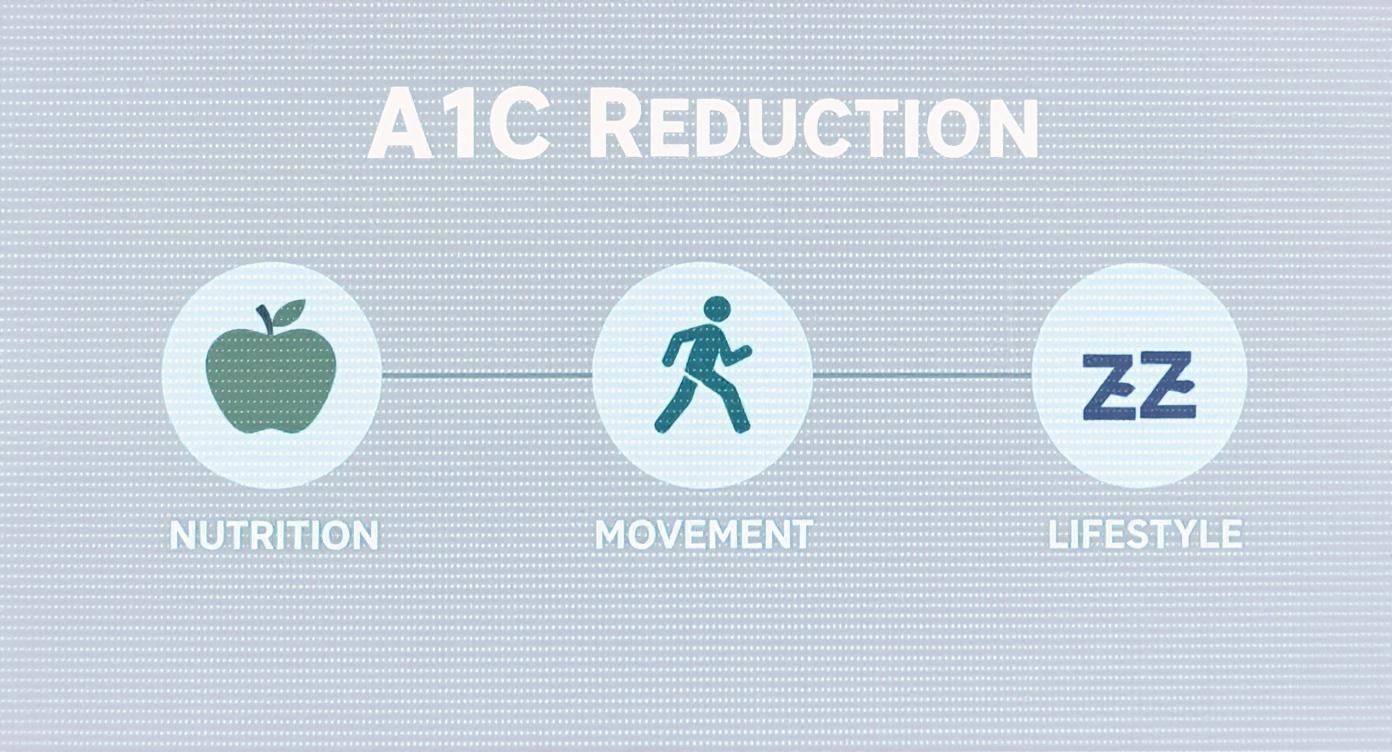
To really succeed in lowering your A1C naturally, you need to pay attention to each of these areas:
- Strategic Nutrition: This is so much more than just "cutting sugar." It’s about understanding the quality of your carbs, making fiber a priority, and pairing your meals with lean protein and healthy fats to keep blood sugar stable.
- Consistent Movement: Exercise makes your body more sensitive to insulin, which means your cells can use glucose for energy much more efficiently. The sweet spot is a combination of cardio (like walking) and some resistance training.
- Mindful Lifestyle: You can't overlook this one. Chronic stress and poor sleep send your cortisol levels soaring, and cortisol drives up blood sugar. Getting a handle on stress and sleep is a non-negotiable part of the plan.
The secret isn’t perfection; it’s consistency. Small choices you make every day with your food, activity, and stress really do add up over time to create powerful, lasting change.
To give you a clearer picture, here are the most effective strategies to get started.
Core Strategies for Natural A1C Reduction
This table summarizes the most impactful, evidence-based lifestyle changes you can begin making today to lower your A1C levels naturally.
| Strategy Area | Primary Goal | Actionable First Step |
|---|---|---|
| Nutrition | Stabilize blood sugar and reduce glucose spikes after meals. | Swap one sugary drink (soda, sweet tea) for water or herbal tea each day. |
| Movement | Improve the body's insulin sensitivity. | Take a brisk 15-minute walk right after your largest meal of the day. |
| Lifestyle | Lower cortisol levels, which can elevate blood sugar. | Aim for 30 more minutes of sleep tonight by setting an earlier bedtime. |
These small steps are the foundation of a healthier A1C. By viewing these elements as an interconnected system, you build a strong framework for success.
For a broader look at managing your glucose levels, this guide on how to lower blood sugar naturally offers excellent background. Now, let’s break down each of these pillars into practical, easy-to-follow steps.
Mastering Your Diet to Lower A1C
What you put on your plate is hands-down the most powerful tool you have for managing blood sugar and seeing a real drop in your A1C. It's easy to get overwhelmed by a long list of "don'ts," so let's cut through the noise. This is about making smart, sustainable choices that work with your body, not against it.
We're going to move beyond just "eating less sugar." We'll dig into how specific foods—and even when you eat them—can bring stability to your glucose levels. The goal is to build a way of eating you can actually enjoy for the long haul.
Rethinking Carbohydrates: Quality Over Quantity
When it comes to blood sugar, not all carbs are created equal. The real secret is focusing on the quality of the carbs you eat, not just the quantity.
Think of simple, refined carbs—like white bread, sugary cereals, and pastries—as kindling for a fire. They burn fast and hot, hitting your bloodstream in a rush and causing a sharp spike in blood sugar. Your body then has to scramble to get things under control.
On the other hand, complex carbohydrates are like slow-burning logs. They're packed with fiber, which puts the brakes on digestion and leads to a much gentler, more gradual rise in blood sugar. This gives your body time to respond without the frantic rush, preventing those dramatic spikes and crashes.
So, what does this look like in the real world?
- Swap the white stuff for whole grains: Choose whole-grain bread over white, brown rice instead of white, and whole-wheat pasta.
- Don't fear starchy vegetables: Sweet potatoes, corn, and peas bring valuable nutrients and fiber to the table.
- Load up on legumes: Lentils, chickpeas, and black beans are powerhouses of fiber and protein, making them a fantastic choice for blood sugar control.
This one shift—from refined to complex carbs—is a cornerstone of any effective plan to lower your A1C naturally.
The Power of a Balanced Plate
Building a balanced meal doesn't have to be complicated. One of the easiest and most effective strategies I've seen work for people is the Diabetes Plate Method. It takes all the guesswork out of portioning.
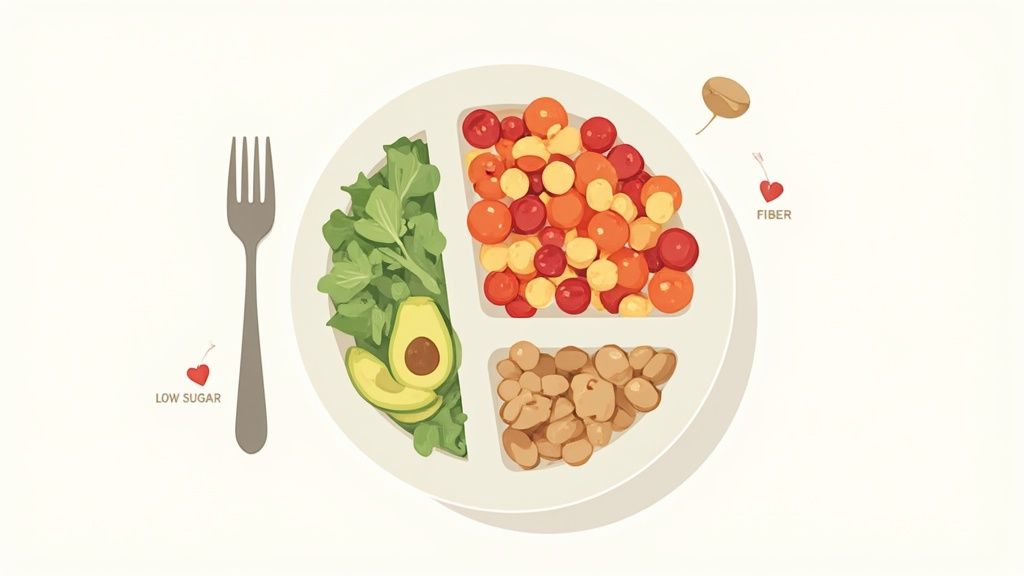
Just grab a standard 9-inch dinner plate and picture it divided into three sections:
- Half Your Plate: Non-Starchy Veggies. This is your foundation. We're talking leafy greens, broccoli, bell peppers, asparagus, and cauliflower. They're low in carbs but high in fiber and nutrients, so they fill you up without sending your glucose soaring.
- One-Quarter: Lean Protein. Protein is a game-changer for feeling full and satisfied, and it barely moves the needle on your blood sugar. Think grilled chicken or fish, tofu, eggs, or a scoop of beans.
- The Final Quarter: Complex Carbs. This is where those smart carbs we talked about go. A serving of quinoa, a small sweet potato, or some brown rice fits perfectly here.
By building your meals this way, you automatically prioritize the good stuff—fiber and protein—while naturally managing your carb intake. It's a simple visual cue that pays off big time for your A1C.
Unlocking the Benefits of Fiber
Dietary fiber is your best friend in this journey. Its role is so critical that it's a key factor in improving long-term blood glucose control. In fact, research consistently shows that getting 25–30 grams of fiber per day can lead to real, meaningful reductions in A1C.
Soluble fiber, in particular, forms a gel in your stomach that slows down carbohydrate digestion. This blunts the speed at which sugar enters your bloodstream, preventing those sharp spikes.
For a deeper dive into specific ingredients that can help you on your journey, check out our guide on what foods lower blood sugar.
Hidden Sugars and Smart Snacking
Even when you're diligently avoiding cookies and cake, added sugars can sneak into your diet from unexpected places. That pasta sauce, salad dressing, "healthy" yogurt, or granola bar? They can be packed with sugar.
This is where you have to become a bit of a label detective. Get in the habit of scanning the nutrition facts panel and looking specifically for the "Added Sugars" line. It tells you exactly how much sugar was put in during processing.
When a craving hits between meals, smart snacking is your secret weapon. Instead of grabbing processed crackers or chips, which can cause a quick spike, try pairing a carbohydrate with a protein or a healthy fat. This combo slows down glucose absorption and keeps you feeling full longer.
A little planning goes a long way. You might want to stock up on low sugar snacks specifically for diabetics to have good options on hand. A few of my go-to's are:
- An apple with a spoonful of peanut butter
- A small handful of almonds
- Greek yogurt with a few fresh berries
- Baby carrots with hummus
Making these small, strategic changes to your diet is a powerful and sustainable way to take back control of your A1C.
A Practical Exercise Plan for Blood Sugar Control
While dialing in your diet is the cornerstone of managing A1C, consistent movement is its essential partner. Think of exercise as a key that unlocks your muscle cells, allowing them to pull glucose from your bloodstream for energy. This process, called improving insulin sensitivity, is absolutely fundamental to lowering your A1C naturally.
The good news? You don't have to become a marathon runner or live at the gym. The real goal is to build a practical, enjoyable routine that actually fits into your life. Let's break down how different types of movement can work together to get your blood sugar into a healthier range.
The Power of Aerobic Exercise
Aerobic exercise, or "cardio," is really just any activity that gets your heart rate up and keeps it there for a bit. We're talking about things like brisk walking, cycling, swimming, or even just dancing around your living room. When you do these activities, your muscles start demanding more glucose for fuel, actively pulling it right out of your blood.
This isn't just a theory; the proof is in the pudding. One major study showed that people who consistently got in 150 minutes of moderate aerobic exercise weekly saw their A1C levels drop by an average of 0.5% to 0.7%. To give that some context, lowering your A1C by just 1% is linked to a 15–20% lower risk of diabetes-related complications. That makes a few walks a week a pretty powerful, medication-free tool.
The biggest hurdle for most people isn't the exercise itself—it's the idea that it has to be a grueling, hour-long session. It doesn't. Breaking up your 150 minutes into smaller, manageable chunks is just as effective.
So, how can you realistically hit that 150-minute target?
- Five 30-minute walks per week. A brisk walk on your lunch break or after dinner gets you there easily.
- Three 50-minute bike rides. A longer ride on the weekend plus two shorter ones during the week is a great combo.
- Ten 15-minute bursts of activity. Squeeze in short, energetic sessions whenever you can.
The key is consistency. Find something you actually enjoy, because you're far more likely to stick with it long-term.
Why Resistance Training Is a Game-Changer
While cardio helps burn glucose in the moment, resistance training builds the machinery for better long-term blood sugar control. When you do strength exercises—using weights, bands, or even your own bodyweight—you build more muscle.
I like to think of muscles as glucose storage tanks. The more muscle mass you have, the bigger your "tanks" are. This gives your body more places to stash excess sugar instead of letting it circulate in your bloodstream. That's why adding strength training is so critical.
In fact, research shows that strength training just twice a week can seriously improve insulin sensitivity and lead to an average A1C reduction of about 0.5%. It's an incredibly efficient way to support your overall A1C-lowering plan.
Simple At-Home Resistance Routine
No gym membership required. Try this simple circuit two or three times a week, on non-consecutive days:
- Bodyweight Squats: Aim for 10-15 reps.
- Push-ups: Do them on your knees if a standard one is too tough. Aim for 8-12 reps.
- Plank: Hold for 30 seconds, keeping your core tight.
- Glute Bridges: Lie on your back with knees bent and lift your hips. Do 15-20 reps.
- Lunges: Perform 10-12 lunges on each leg.
Run through that entire circuit two or three times. It's a simple routine that hits all your major muscle groups in less than 20 minutes.
The Magic of the Post-Meal Walk
One of the most effective—and most underrated—strategies for managing blood sugar is a short walk right after you eat. When you have a meal, especially one with carbs, your blood sugar naturally starts to rise. A gentle walk helps counteract this spike.
Taking a brisk 10 to 15-minute walk after eating encourages your muscles to immediately start using some of that incoming glucose. It’s a simple habit that can make a massive difference in your average blood sugar levels over time by blunting those post-meal spikes.
For a deeper dive into how timing your activities and meals can help, our article on how to stabilize blood sugar levels has some great, practical insights.
Integrating Movement into a Busy Life
Let's be real: finding time for a formal workout can be a huge challenge. The trick is to reframe what "activity" even means. It doesn't always have to be a scheduled session in gym clothes.
Instead, look for small opportunities to weave more movement into your day:
- Park farther away: Intentionally pick a spot at the back of the parking lot.
- Take the stairs: Always. Make it a non-negotiable rule.
- Set a movement timer: If you work at a desk, set an alarm to get up and stretch or walk around for two minutes every single hour.
- Pace during phone calls: Turn any phone conversation into a walking meeting.
These little "exercise snacks" add up. They keep your muscles active and your metabolism humming all day long, contributing to better overall blood sugar control. When you combine structured cardio and resistance training with these daily habits, you create a powerful, multi-faceted approach to lowering your A1C for good.
Don't Overlook Sleep and Stress in Your A1C Plan

While we rightly focus on food and fitness, two other huge players often get ignored: sleep and stress. You can eat perfectly and never miss a workout, but if you're constantly frazzled and exhausted, you’re fighting an uphill battle to lower your A1C.
When you're stressed, your body pumps out a hormone called cortisol. Think of it as your "fight or flight" fuel. It tells your liver to dump glucose into your bloodstream for a quick energy boost. That's great for escaping a real threat, but modern stress—from work deadlines to traffic—keeps that system switched on, leading to chronically high blood sugar.
Poor sleep does something similar. Just one bad night can make your body less responsive to insulin the next day, a state we call insulin resistance. When that happens night after night, it becomes incredibly difficult to keep your glucose levels in a healthy range.
The Cortisol Connection to Blood Sugar
Cortisol isn't the enemy, but having it on a constant drip-feed creates chaos. When cortisol is always high, it's like it's telling your cells to ignore insulin's knock at the door. Your pancreas has to shout louder by producing more and more insulin just to be heard.
This vicious cycle is a direct route to a higher A1C. So, managing your stress isn't just a nice idea—it’s a non-negotiable part of managing your blood sugar.
Simple Ways to Lower Your Stress (and Blood Sugar)
- Try Mindful Breathing: Feeling overwhelmed? Stop and take five minutes. Breathe in slowly for four seconds, hold for four, and then exhale slowly for six. This simple exercise can hit the brakes on your stress response almost instantly.
- Get a Dose of Nature: A quick 20-minute walk in a park or any green space can cause a measurable drop in stress hormones. Try to build this into your day.
- Do a "Brain Dump": Before bed, grab a notebook and write down everything swirling around in your head. Getting it out on paper can stop those anxious thoughts from sabotaging your sleep.
When stress triggers a powerful sugar craving, the StopSugar app is an amazing tool to have in your corner. Its "panic button" provides instant distractions and mindfulness exercises to help you navigate the urge without derailing your progress.
Why Quality Sleep is a Game-Changer for A1C
Sleep is when your body does its most critical repair and reset work. It rebalances the very hormones that control your appetite and blood sugar. When you consistently get 7-9 hours of quality sleep, your body becomes far more sensitive to insulin, which makes all your diet and exercise efforts pay off.
If I could give one piece of advice, it would be this: treat your bedtime like an important appointment. A consistent sleep schedule is one of the most powerful levers you can pull for your metabolic health. Your body craves routine.
Improving your "sleep hygiene" means creating a routine and environment that sends a clear signal to your brain that it's time to power down.
Turn Your Bedroom into a Sleep Sanctuary
Your bedroom should be for rest, not for finishing work or scrolling through social media. A few small tweaks can make a world of difference.
Actionable Tips for Better Sleep
- Stick to a Schedule: Try to go to bed and wake up around the same time every day—yes, even on weekends. This is the bedrock of regulating your body’s internal clock.
- Make It Cool, Dark, and Quiet: Use blackout curtains, wear an eye mask, or use a white noise machine. A cool room temperature is also proven to help you fall and stay asleep.
- Build a Wind-Down Routine: An hour before bed, put your screens away. The blue light from phones and TVs messes with your sleep hormones. Read a book, take a warm bath, or listen to calm music instead.
- Watch What You Eat and Drink at Night: Avoid big meals, caffeine, and alcohol too close to bedtime. Each one can disrupt your sleep architecture and send your overnight blood sugar on a roller-coaster.
Let's Talk About Natural Supplements

After you've dialed in your diet, exercise, and sleep, you might start wondering if a supplement could give you an extra edge. It’s a valid question, but this is an area where you have to tread carefully. The supplement world is a mix of solid science and slick marketing.
Let’s be clear: supplements are not a replacement for the real work. Think of them as potential helpers, not magic pills. Their impact can differ wildly from one person to the next, which is why it's absolutely non-negotiable to talk to your doctor before adding anything new to your regimen.
The Research-Backed Contenders
Some supplements have genuinely caught the attention of researchers for their potential to help with blood sugar. The science often points to them helping with things like insulin sensitivity or how your body processes glucose.
For instance, some pretty interesting studies have been done on how certain supplements can help lower A1C without prescription medication. A large 2015 review found that probiotics helped people with type 2 diabetes lower their A1C by an average of 0.81%. Another review in 2019 showed alpha-lipoic acid (ALA) brought A1C down by 0.35%. Other studies pointed to folate (a 0.46% decrease) and even aloe vera, which one analysis showed lowered A1C by a surprising 1.05 percentage points.
What About the Others? (The Jury's Still Out)
You’ve probably seen other supplements all over the internet. It’s just as important to know which ones have more mixed or inconclusive results.
- Cinnamon: A few small studies have suggested it can help with insulin sensitivity. But when you look at bigger, better-designed trials, the results are all over the place. It's safe for most people, but don't count on it to be a game-changer for your A1C.
- Berberine: This is an interesting one. Some studies have shown it can affect blood sugar almost as much as certain diabetes medications. The catch? We need more research on its long-term safety and whether those effects really last.
- Magnesium: This mineral is critical for how your body uses glucose, and a lot of people don't get enough. If you’re deficient, bringing your levels up to normal can definitely help. But if your levels are already fine, taking extra magnesium probably won't do much for your A1C.
The Bottom Line: Supplements are never a shortcut. Any benefit you might get from them is only going to show up if you've already built a strong foundation with good food, consistent movement, and smart stress management.
The world of supplements is best navigated with your doctor as your co-pilot. They can weigh the pros and cons for your specific situation, check for any weird interactions with your medications, and help you make choices that are both safe and smart.
Keeping an Eye on Your Numbers and Knowing When to Call Your Doctor
You can’t manage what you don’t measure. Making real, lasting changes means keeping a close eye on what’s actually working for your body. Guessing won't get you far, but consistent monitoring will show you exactly how your hard work is paying off and help you fine-tune your approach for the long haul.
Think of your regular A1C test, usually done every three to six months, as your official report card. It gives you that crucial big-picture view of your average blood sugar over time. But for day-to-day insights, nothing beats checking your glucose at home.
Testing your blood sugar before and after meals is like getting instant feedback. Did that bowl of oatmeal send your numbers soaring? How did your body handle that post-dinner walk? Seeing a spike after a slice of white bread versus a gentle curve after a slice of whole-grain sourdough gives you incredibly powerful data. It's how you connect the dots between what you do and how your body responds.
Teaming Up with Your Doctor
Making changes on your own is empowering, but it’s not something you have to do in a vacuum. The most successful plans involve working closely with your healthcare team. It's smart to know when to bring in the experts.
It’s probably time to schedule a visit with your doctor if:
- Your A1C just won’t budge. If you’ve been sticking to your new eating and exercise habits for three months and your numbers are stuck—or even climbing—it’s time to get a professional opinion.
- You’re noticing new or persistent symptoms. Things like constant thirst, having to run to the bathroom all the time, feeling wiped out for no reason, or blurry vision are all red flags that warrant a medical check-in.
- You're feeling lost or overwhelmed. Let's be honest, this can get complicated. If you're struggling to put it all together, your doctor or a registered dietitian can offer personalized advice and help simplify your plan.
Reaching out to your doctor isn't a sign of failure—it’s a sign that you’re taking your health seriously. They’re your partner in this, ready to help you adjust your strategy, check for other issues, and make sure you’re using every tool you have to get the best results possible.
Common Questions About Lowering Your A1C
As you start making these changes, questions are bound to come up. That’s completely normal. Getting clear on what to expect can help you stay motivated and see this through. Let’s walk through some of the biggest questions people have when they start this journey.
This isn't about finding a quick fix; it's about building new habits that stick. Having the right information makes all the difference.
How Quickly Can I Actually Lower My A1C?
This is usually the first thing people ask, and for good reason. The truth is, you can see changes in your daily blood sugar numbers almost right away, especially after cleaning up your diet or starting a simple post-meal walk. But the A1C test measures your average blood sugar over the past three months, so it takes a little while for those daily victories to reflect in your lab results.
Most people see a noticeable drop in their A1C within two to three months of sticking to their new plan. How much it drops, and how fast, really depends on your starting point, how consistent you are, and just how your own body responds.
The real game-changers are patience and consistency. Small, steady improvements are what add up to a big drop in your A1C over time. Try not to get discouraged if the numbers don't move a lot in the first few weeks.
Will I Have to Give Up Sugar Forever?
This is a huge source of anxiety for so many, but let me put your mind at ease: absolutely not. Thinking in all-or-nothing terms is a recipe for burnout. Learning how to lower A1C naturally is about finding a healthy balance and building a better relationship with food, not depriving yourself for the rest of your life.
Once your A1C is in a healthier range and you've built some solid habits, you can absolutely enjoy an occasional treat. The goal is to shift from mindless, everyday sugar intake to planned, intentional enjoyment. This means you can plan for a slice of birthday cake, savor every bite without an ounce of guilt, and then get right back to your healthy routine at your very next meal.
What's the Single Most Impactful Change I Can Make?
If you're feeling overwhelmed and just want to know where to put your energy for the biggest payoff, the answer is simple: master your plate. While exercise and managing stress are incredibly important, nothing impacts your blood sugar more directly or immediately than the food you eat.
Don't try to change everything at once. Just start with one meal—your very next one. Build it using the plate method we talked about: fill half with non-starchy veggies, a quarter with lean protein, and the last quarter with a high-fiber carb. That one action instantly lowers your carb load, boosts your fiber, and helps keep your blood sugar from spiking. It's a simple, powerful first step that builds a foundation for everything else.