How To Quit Eating Sugar A Practical Guide for Real Life

The best way to figure out how to quit eating sugar isn't some dramatic, overnight purge. From my experience, the people who succeed are the ones who treat it as a gradual phase-out. It’s about methodically replacing sugary junk with whole foods and learning how to handle cravings with smarter choices—a real lifestyle shift, not a crash diet.
Why Breaking Up With Sugar Is Worth It
Before we get into the "how," let's talk about the "why." You have to be truly sold on why this journey is worth the effort. Ditching sugar is so much more than a weight-loss hack; it's about taking back control of your health and how you feel every single day. Think of it as an upgrade, not a punishment.
Most of us don't even connect the dots between sugar and how we feel. That 3 PM energy crash? The brain fog that tanks your productivity? Those unpredictable mood swings? More often than not, they’re tied directly to unstable blood sugar. A diet high in sugar sends your body on a wild rollercoaster of spikes and crashes, leaving you exhausted and irritable.
Reclaiming Your Energy and Focus
Just imagine waking up feeling genuinely refreshed and cruising through your day with steady, reliable energy—no caffeine crutch required. This is the reality for so many people who get their sugar intake under control. When you stabilize your blood glucose, you're giving your brain and body the consistent, premium fuel it’s been craving.
It's not just about physical energy, either. The mental clarity is a game-changer. That constant "foggy" feeling finally lifts, and you'll find it's easier to concentrate and think straight. For a deeper dive into all the incredible upsides, check out our guide on the many benefits of quitting sugar at https://stopsugar.app/blog/benefits-of-quitting-sugar.
The Tangible Health Upgrades
Beyond the immediate boost in how you feel, cutting back on added sugar has some serious long-term health perks. Knowing these benefits, especially when it comes to weight management, can be a huge motivator. In fact, most structured weight loss plans have reducing sugar intake as a core principle for this very reason.
The link between less sugar and better health is crystal clear. It affects everything from your metabolism to your skin, making it one of the single most impactful changes you can make for your well-being.
Let's look at the hard numbers for a second. The average American adult packs away about 17 teaspoons of added sugar every day. That’s nearly 300 extra calories that do nothing for you. Just cutting that amount in half could help you lose over a pound a month and seriously reduce your risk for type 2 diabetes. This isn't just about the scale; it's about setting your body up to thrive for years to come.
Setting Up Your Kitchen for Success
Lasting change starts at home. Think of it this way: to quit sugar for good, you need to turn your kitchen into a safe haven, not a minefield of temptations. It's about making the right choice the easiest one, especially on those tough days.
Your first mission is a full-on pantry purge. It’s time to get a little ruthless. Grab a box and start going through your cupboards, fridge, and freezer. You'll need to become a label detective, because sugar is a master of disguise. It's not just hiding in the obvious places like cookies and candy.
You'll be surprised where it turns up:
- Condiments and Sauces: Ketchup, BBQ sauce, and even some salad dressings are often packed with sugar.
- "Healthy" Snacks: Watch out for granola bars, flavored yogurts, and dried fruit—they can be serious sugar bombs.
- Breakfast Cereals: Many cereals, even the ones that don't look sugary, have a surprising amount of the sweet stuff.
If it’s loaded with added sugar, it needs to go. Donating any unopened, non-perishable items is a great way to make this feel less wasteful. By clearing out the junk, you’re removing the need to rely on sheer willpower, which is a battle you don't need to fight every single day.
The Hidden Sugar Hotspots In Your Pantry
It's one thing to know you should look for sugar, but it's another to see just how much is hiding in everyday foods. This table highlights some of the most common culprits lurking in your pantry, making it easier to spot what needs to be replaced.
| Food Category | Common Examples | Typical Added Sugar Content (per serving) |
|---|---|---|
| Condiments & Sauces | Ketchup, BBQ Sauce, Teriyaki Sauce | 1-4 teaspoons |
| Breakfast Foods | Flavored Yogurt, Instant Oatmeal, Cereal | 3-6 teaspoons |
| "Healthy" Snacks | Granola Bars, Protein Bars, Dried Fruit | 2-5 teaspoons |
| Beverages | Soda, Sports Drinks, Sweetened Iced Tea | 6-10 teaspoons |
| Prepared Meals | Canned Soups, Frozen Dinners, Jarred Pasta Sauce | 2-4 teaspoons |
Seeing the numbers laid out like this can be a real eye-opener. The goal isn't to be perfect overnight, but to start making conscious swaps that drastically reduce your daily sugar load.
Stocking Up for a Sugar-Free Life
Now for the fun part: restocking! With the sugar out of the way, you can fill your kitchen with delicious, nourishing foods that will actually make you feel good. This isn’t about deprivation; it’s a major upgrade.
Focus on building your shopping list around these whole-food staples:
- Lean Proteins: Chicken, fish, eggs, and legumes are fantastic for keeping you full and your blood sugar stable.
- Healthy Fats: Think avocados, nuts, seeds, and good quality olive oil. They provide sustained energy.
- High-Fiber Carbs: Sweet potatoes, quinoa, and brown rice are your friends.
- Lots of Veggies: Load up on leafy greens, broccoli, bell peppers—the more colorful, the better.
- Whole Fruits: Berries, apples, and citrus are great for when you need a little natural sweetness, and they come with fiber.
Making this shift is more powerful than you might realize. The global sugar industry is enormous—valued at over $66.4 billion—and it thrives on us buying processed foods. You can find more data on these trends from the USDA's global sugar analysis. By choosing whole foods, you're not just taking care of your health; you're casting a vote for a better food system.
Out of sight, out of mind. The single most effective strategy for changing your eating habits is to control what's in your immediate environment. If junk food isn't in your kitchen, you can't eat it.
The Power of Preparation
Alright, your kitchen is now a sugar-free zone stocked with amazing ingredients. Your next secret weapon is meal prep.
Trust me, when you get home after a long day, tired and starving, having a healthy meal ready to go is a total game-changer. It's your best defense against the siren call of takeout or a sugary snack.
Set aside just a couple of hours on the weekend. You could wash and chop your veggies, cook up a big batch of quinoa, and grill some chicken. Having these building blocks on hand means you can throw together a healthy meal faster than a delivery driver can get to your door. Of course, having the right gear helps, too. It’s worth looking into the best cookware for health and safe cooking to make sure you’re set up for success.
By redesigning your kitchen and planning ahead, you take the guesswork and decision fatigue out of eating well. You're essentially making healthy choices your default setting, and that's how you turn this into a lifestyle, not just a diet.
Your First Two Weeks: A Realistic Phase-Out Plan
Thinking about quitting sugar cold turkey? I’ve seen many people try it, and honestly, it’s a recipe for a quick relapse. The shock to your system can trigger some seriously intense cravings. A much smarter—and more sustainable—approach is to ease into it.
Think of the next 14 days not as a punishment, but as a chance to gently recalibrate your taste buds and habits. We'll break it down into three simple phases designed to help you build momentum without feeling totally overwhelmed.
Phase One: Days 1-4 — The Awareness Audit
For the first four days, you’re not going to cut out a single thing. I know, that probably sounds weird, but trust me on this. Your only job right now is to become a detective of your own habits. You can't fix a problem you don't fully understand.
Just track everything you eat and drink. A simple notebook works, or you can use an app. Pay close attention to the added sugars on nutrition labels. You might be shocked to find how much is hiding in your "healthy" granola bar or go-to pasta sauce.
The whole point is to get a clear baseline. You'll see exactly where your sugar comes from, pinpoint your trigger times (that 3 p.m. slump is a classic), and start noticing the emotional cues that have you reaching for something sweet. This isn't about guilt; it's about gathering intelligence.
Phase Two: Days 5-9 — Eliminating The Obvious
Alright, now that you know where the sugar is coming from, it’s time to take your first real step. In this phase, we’re going after the low-hanging fruit: the most obvious, least nutritious sugar sources. These are the items that give you that quick hit of sweetness but offer zero real value.
For the next five days, your mission is to cut out:
- Sugary Drinks: This means soda, sweetened iced teas, sports drinks, and those syrup-heavy fancy coffees.
- Candy and Desserts: Cookies, cakes, ice cream, and chocolate bars are off the table, just for now.
- Sweetened Breakfast Foods: It’s time to say goodbye to sugary cereals, pastries, and those fruit-on-the-bottom yogurts.
This is often when you might start to feel it. Headaches and a bit of irritability are common—it’s just your body adjusting. The best thing you can do is drink plenty of water, eat balanced meals with protein and healthy fats to stay full, and just be kind to yourself. This part doesn't last long.
Key Takeaway: By knocking out the most concentrated sources of sugar first, you slash your overall intake and start to break the craving cycle. This builds a ton of confidence and makes the next steps feel way more manageable.
Phase Three: Days 10-14 — Tackling Hidden Sugars
You've made it through the hardest part! Now, let's focus on the sneaky sugars—the ones hiding in everyday processed foods. This is where those label-reading skills you practiced in Phase One really come in handy.
During this final stretch, your goal is to swap out processed foods that have hidden added sugars. Get ready to scrutinize the labels on things like:
- Condiments: Ketchup, BBQ sauce, and a surprising number of salad dressings are loaded with sugar. Look for "no sugar added" options or try making your own.
- Savory Snacks: You'd be amazed how much sugar can be found in crackers, pretzels, and even some breads.
- Prepared Meals: Jarred pasta sauces, canned soups, and many frozen dinners use sugar to boost flavor.
This naturally starts to simplify your kitchen and makes it easier to make good choices. This little guide shows a great flow for setting up your kitchen for success.
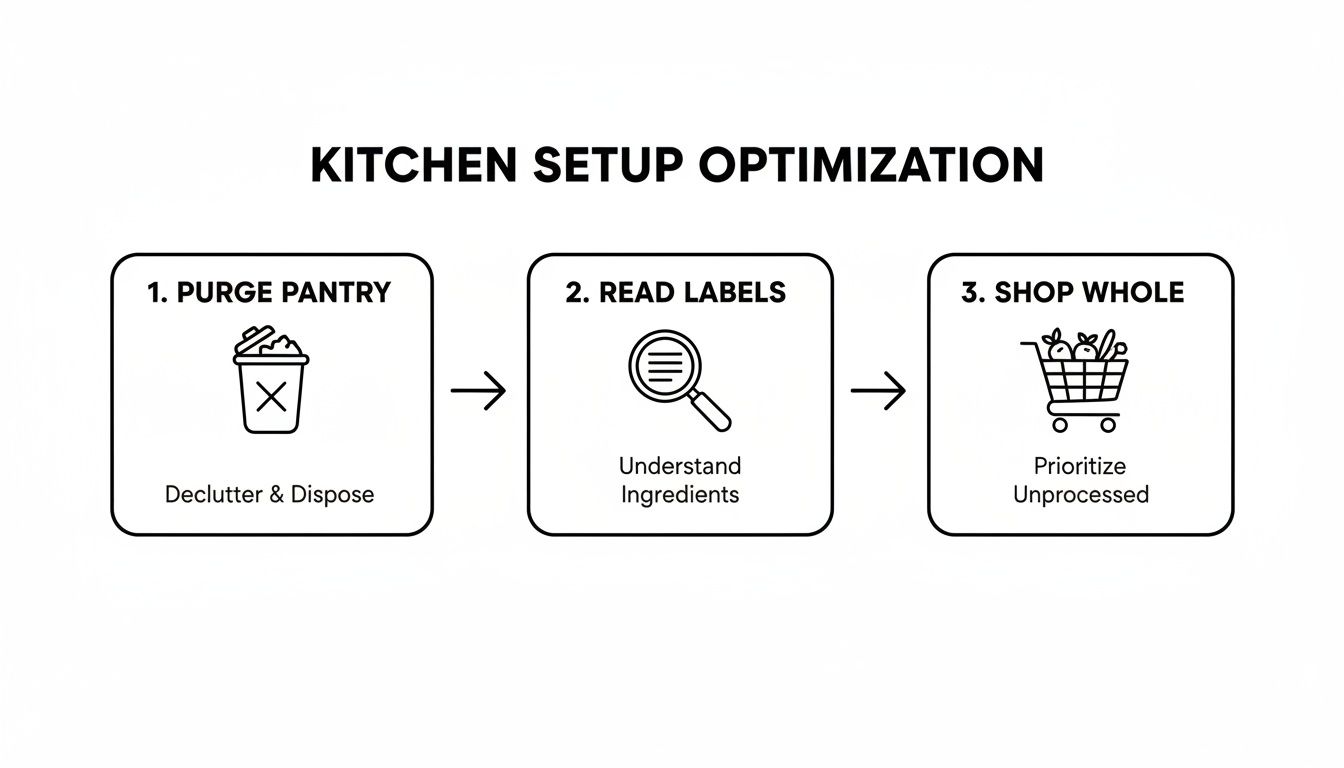
When you clear out the sugary stuff, get diligent about reading labels, and focus on whole foods, you create an environment that truly supports your goals.
Staying Motivated Through The Process
Let’s be real for a second: some moments are going to be tough. Cravings will pop up out of nowhere, and you’ll be tempted. That’s completely normal. The secret isn't having superhuman willpower; it's having a plan.
Create a "Panic Button" Menu Have a list of go-to, non-sugary snacks ready for when a craving hits hard. When you have a better option within reach, you're more likely to choose it.
- For a sweet craving: A handful of berries, a square of dark chocolate (85% cacao or higher), or a cup of herbal tea with cinnamon can do the trick.
- For a crunchy craving: Grab a handful of almonds, some celery sticks with nut butter, or crispy roasted chickpeas.
- For an emotional craving: Before you reach for food, try a quick walk, listen to a great song, or call a friend.
Track Your Mood and Energy Use a journal or an app like StopSugar to log more than just food. Make a note of your energy levels, your mood, and how well you’re sleeping. It usually only takes a few days of cutting back on sugar to notice some amazing changes—more stable energy, less brain fog, and better sleep.
When you connect these positive feelings to your new habits, something incredible happens. Your mindset shifts from "I can't have sugar" to "I feel so much better without sugar that I don't even want it." That's the kind of internal motivation that lasts. For a deeper dive into what to expect, check out our guide on surviving 2 weeks without sugar for more tips to help you nail it.
Remember, this two-week plan is a blueprint, not a strict rulebook. If you have a slip-up, don't let it derail you. Just acknowledge it, learn from it, and get right back on track with your very next meal. You're unlearning years of habits, and that takes time, patience, and a whole lot of self-compassion.
Delicious Swaps And Craving-Crushing Recipes
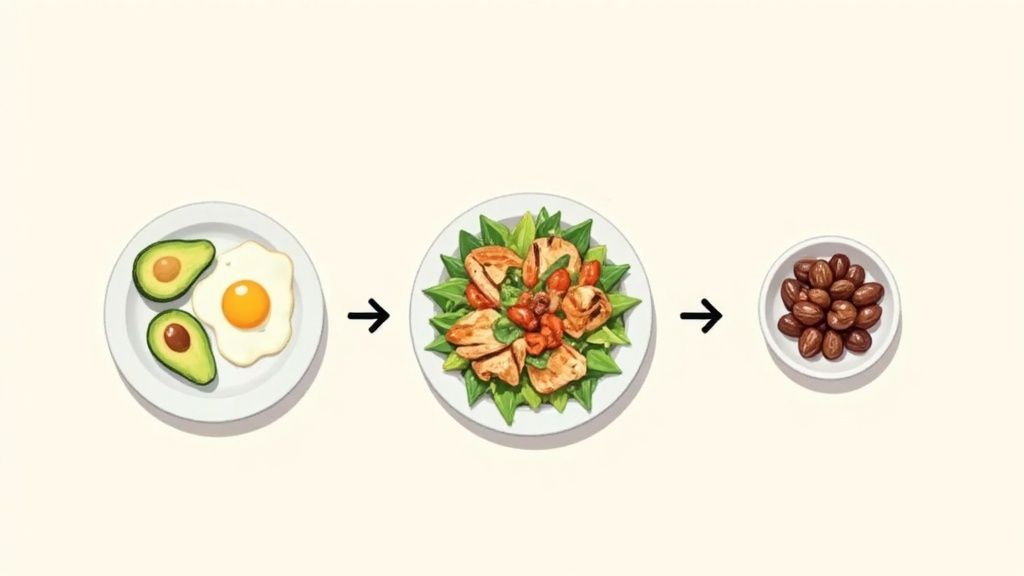
Learning how to quit eating sugar isn't about bland, boring meals. It's actually the exact opposite. This is your chance to rediscover the vibrant, real flavors that sugar has been masking all this time. Think of it not as deprivation, but as a serious upgrade for your plate.
The secret is to have smart, satisfying alternatives ready to go. When a craving pops up or you're figuring out what to eat, having a better option on hand makes the healthy choice the easy choice. Over time, these simple swaps will actually retrain your taste buds, making your new habits feel completely natural.
Easy Sugar Swaps For Everyday Foods
Big changes are really just a series of small, consistent choices. Swapping out a few key items in your daily routine can slash your sugar intake without making you feel like you're missing out on anything. It's a powerful way to tackle your habits head-on.
This idea works on a bigger scale, too. Studies show that when food companies simply reduce sugar in their products by 5–20%, it dramatically lowers the amount of added sugar available to everyone. You can use that same principle in your own kitchen with a few smart substitutions.
Making these little changes adds up fast. Here’s a quick guide to some of the easiest one-for-one replacements you can start making today.
Easy Sugar Swaps For Everyday Foods
| Instead Of This (High Sugar) | Try This (Low/No Sugar) |
|---|---|
| Flavored Yogurt | Plain Greek yogurt with a handful of fresh berries |
| Sugary Soda or Juice | Sparkling water with a squeeze of lime or lemon |
| Ketchup or BBQ Sauce | Mustard, salsa, or a sugar-free tomato sauce |
| Sugary Breakfast Cereal | Rolled oats topped with cinnamon and nuts |
| Store-Bought Granola Bars | A small handful of almonds and a piece of fruit |
| Sweetened Iced Tea | Unsweetened iced tea with fresh mint leaves |
See? These aren't drastic sacrifices. They're simple upgrades that keep the satisfaction while kicking the sugar to the curb.
Simple Recipes To Keep You On Track
Having a few go-to recipes that are both quick and delicious is a non-negotiable part of this process. When you're hungry and short on time, these meals will be your saving grace, keeping you from grabbing something convenient and full of sugar. The goal is to build a small arsenal of foolproof meals you can count on.
A successful sugar-free meal is one that’s packed with protein, healthy fats, and fiber. This powerhouse combination keeps you full for hours, stabilizes your blood sugar, and helps crush cravings before they can even start.
Let’s get you started with three minimal-effort recipes for breakfast, lunch, and a satisfying treat.
Protein-Packed Avocado Toast
This isn't just toast; it's a balanced meal that delivers lasting energy to power you through your morning.
- Start with one or two slices of high-fiber, whole-grain bread (always check the label for no added sugar).
- While it's toasting, mash up half a ripe avocado with a pinch of salt, pepper, and a few red pepper flakes.
- Spread the creamy avocado over the warm toast.
- Top it all off with a fried or poached egg for a serious protein boost that will keep you full until lunch.
Quick And Flavorful Chicken Salad Lettuce Wraps
Forget carb-heavy sandwiches and sugary dressings. This lunch is light, crunchy, and can be ready in minutes, especially if you have some pre-cooked chicken on hand.
- In a bowl, mix shredded rotisserie chicken with plain Greek yogurt or an avocado-based mayo.
- Add some crunch with chopped celery and a little bite with finely diced red onion. Season with salt and pepper.
- Serve generous scoops of the chicken salad in large, crisp lettuce leaves—romaine or butter lettuce work beautifully.
Naturally Sweet Two-Ingredient "Nice" Cream
When a craving for something sweet and creamy hits, this is your answer. It's incredibly decadent, and its sweetness comes entirely from fruit.
- Slice two ripe bananas and pop them in the freezer for at least four hours.
- Place the frozen banana chunks in a high-speed blender or food processor.
- Add a splash (about a tablespoon) of unsweetened almond milk or water just to help it blend.
- Blend until it's perfectly smooth and creamy, scraping down the sides as you go. For a soft-serve texture, enjoy it right away!
These recipes are just a jumping-off point. As you get more comfortable, you'll find tons of ways to create delicious, sugar-free meals. For more ideas to keep things interesting, check out our collection of easy sugar-free recipes. Making healthy food taste amazing is the real secret to a sustainable lifestyle.
Navigating Real Life Without Sugar
Alright, you've purged your pantry and started building some solid new routines at home. Now comes the real challenge: taking your sugar-free life out into the world.
Let's be honest, life is full of birthday cakes, office lunches, and holiday feasts where sugar isn't just an ingredient—it's the star of the show. But these situations don't have to be a roadblock. With a little planning, you can handle them like a pro.
The secret weapon here is preparation. Walking into a potentially tricky food situation with a game plan is the difference between feeling confident and feeling defeated. It’s all about creating a new normal that works for your health and your social life.
Handling Social Pressure With Grace
Sometimes the hardest part isn't the temptation of the food itself, but the well-meaning people offering it. We’ve all heard it: "Oh, just have one bite, it won't kill you!"
Having a few polite, go-to phrases in your back pocket can make these moments so much easier. You don't need a lecture or a long-winded explanation. Keep it simple and friendly.
- "Everything looks amazing, but I'm going to pass for now, thanks!"
- "I really appreciate the offer, but I'm working on cutting back on sugar for my health."
- "I'm actually full, but I'd love a cup of coffee or some tea if there is any!"
When you state your choice calmly and without apology, most people will drop it. Your health is your business, and you never owe anyone a deep dive into your dietary choices.
Restaurant Menus And Hidden Sugars
Eating out can feel like navigating a minefield. Sugar loves to hide in plain sight, lurking in everything from salad dressings and barbecue sauces to marinades and glazes. With a bit of practice, you’ll become a pro at spotting the safe bets on any menu.
The best approach is to keep things simple. Look for meals centered around grilled, baked, or roasted proteins with a side of steamed veggies or a fresh salad. This naturally steers you away from complicated dishes where sugar can easily hide.
Don't ever hesitate to talk to your server. Asking for dressing on the side is a classic move for a reason. You can also ask to swap out a sugary side (like glazed carrots) for something simple (like steamed broccoli). Most restaurants are more than willing to help you out.
Surviving Parties And Gatherings
You don’t have to become a hermit just because you've quit sugar. A fantastic strategy for any potluck or party is to bring a delicious, sugar-free dish that you know you can eat.
This is a total win-win. You're contributing something tasty for everyone to enjoy, and you’ve guaranteed there’s at least one safe, satisfying option just for you. A beautiful, hearty salad, a tray of seasoned roasted vegetables, or some savory appetizers are always crowd-pleasers. Nobody will even guess it's part of your "plan."
And what happens if you slip up? It’s not the end of the world. One cookie doesn't undo weeks of progress. Think of it as a data point, not a disaster. The most important thing is what you do next. Acknowledge it, move on, and make your very next meal a healthy one. Remember, we're aiming for progress, not perfection.
Got Questions About Quitting Sugar? We've Got Answers
Stepping away from sugar can feel like heading into uncharted territory, and it's totally normal to have a few questions before you start. Let's clear up some of the most common uncertainties so you can feel ready for what's ahead.
Will I Actually Get Withdrawal Symptoms?
In a word, yes. It's very likely you'll feel some temporary growing pains as your body learns to live without its usual sugar fix. This is actually a good sign—it means your body is recalibrating.
The first week is often the toughest. You might find yourself dealing with headaches, feeling sluggish and foggy, or being surprisingly cranky. Your body is adjusting to a new energy source, and that takes time.
The best way through it? Drink tons of water, make sure your meals are packed with protein and healthy fats to keep your blood sugar stable, and get as much sleep as you can. These symptoms usually start to fade within 7-10 days.
Is The Sugar In Fruit Bad, Too?
This is a fantastic question and a point of a lot of confusion. The short answer is no, for most people, the sugar in whole fruit is perfectly fine. The real difference lies in how your body handles it.
Unlike the refined sugars that are dumped into processed foods, the sugar in fruit comes with a built-in support system:
- Fiber: This is the game-changer. Fiber slows down sugar absorption, which prevents the dramatic blood sugar spikes you get from a cookie or soda.
- Water: Fruit's high water content helps you feel full and stay hydrated.
- Vitamins and Antioxidants: You’re getting a host of other nutrients your body needs.
The main goal here is to cut out added sugars, not the naturally occurring ones that come from whole foods. An orange is not a can of orange soda.
How Long Until I Stop Craving Sugar?
Everyone's timeline is a little different, but you can expect the most intense physical cravings to dial down significantly after about two to three weeks. Those first 10 days are the real hurdle as your body breaks its chemical dependence.
Once you're over that initial hump, the battle becomes more mental than physical. You'll be amazed at how your taste buds reset. Foods you used to love might suddenly taste sickeningly sweet. Sure, you might still get a psychological craving when you’re stressed or see a commercial, but that deep, physical need for sugar will be gone.
What About Using Artificial Sweeteners Instead?
This is really a personal call, but I'd suggest being cautious. While sweeteners like sucralose and aspartame are calorie-free, they can be a bit of a trap. They keep your taste buds and brain accustomed to extreme sweetness, which can make it harder to kick the cravings for good.
A better long-term strategy is to retrain your palate to enjoy things that aren't so sweet. If you absolutely need a substitute, especially at the beginning, try natural, zero-calorie options like stevia or monk fruit. Just remember, the goal isn't just to replace sugar—it's to break free from the need for that intense sweet taste altogether.