How to Stay Consistent with Diet: Practical Tips for Lasting Habits
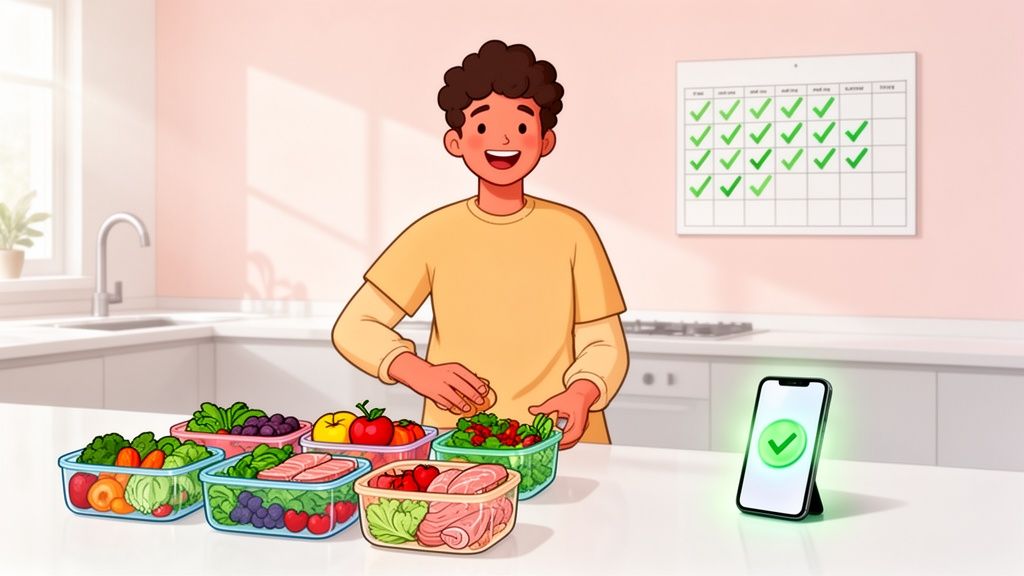
Let's get one thing straight: staying consistent with your diet has very little to do with willpower. If you're relying on sheer determination to get you through, you're fighting a losing battle. The secret is to replace willpower with a smart system. You need a realistic plan, an environment that supports you, and a few go-to strategies for when cravings hit. This is how you make healthy choices the easy choices, not the hard ones.
Why Most Diets Fail and How to Succeed
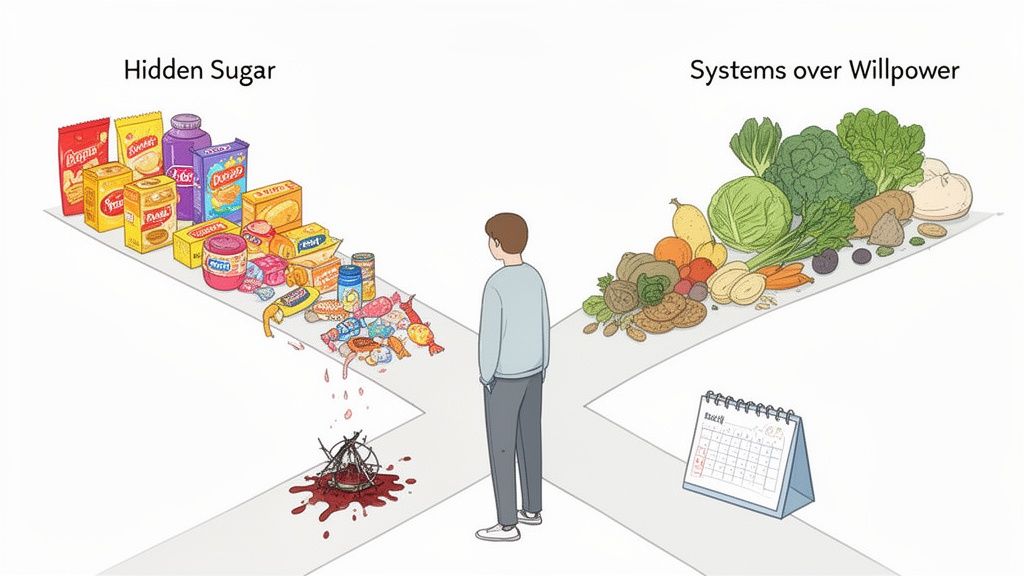
Starting a diet is the easy part. It’s the sticking with it past Tuesday that gets tricky. If you’ve tried and failed before, I want you to know it’s not because you lack willpower. It’s because your strategy was flawed from the start.
So many popular diets set us up for failure. They demand absolute perfection, which just isn't realistic. You have one slice of birthday cake at the office, and suddenly the "all-or-nothing" thinking kicks in. You figure the whole day is a write-off, and before you know it, you've abandoned the diet completely. This cycle of intense restriction followed by giving up is why so many people quit.
The Hidden Sabotage in Our Food
It often feels like the world is working against your health goals, and in a way, it is. Our supermarkets are packed with hyper-palatable, heavily processed foods that are scientifically engineered to make you want more.
The biggest culprit is hidden sugar. It’s not just in the obvious places like candy or soda. It’s hiding in plain sight in foods we’re told are "healthy":
- Flavored yogurts and granola bars
- Store-bought pasta sauces and salad dressings
- Many types of bread and condiments
This constant exposure makes learning how to stay consistent with a diet feel like an uphill battle. Your body gets used to all that sugar, leading to nasty energy crashes and cravings that willpower alone can't conquer.
The scale of this is massive. Global sugar consumption hit a mind-boggling 200.1 million metric tons in 2023. To put it in perspective, the average American eats around 126 grams of sugar every single day—way more than experts recommend.
This sugar overload is a huge reason why an estimated 95% of dieters regain any weight they lose within five years. But here’s the good news: building a system of awareness makes a huge difference. One study found that people who simply logged what they ate each day were 3.2 times more likely to stick with their habits. You can dig into more of these dietary sugar statistics on market.us.
Shifting from Willpower to Smart Systems
True success isn't about having superhuman discipline. It’s about building a system that makes discipline almost unnecessary. It’s about creating a foundation that supports your goals on autopilot.
Instead of waking up every day ready for a battle against temptation, you can design an environment where the healthy choice is the most convenient one. This looks like planning your meals, setting up your kitchen for success, and getting to know your personal triggers. When you focus on building sustainable habits, you create a path forward that works whether you feel motivated or not.
Building Your Personal Diet Blueprint
Consistency isn’t something you stumble into by accident. It’s built, piece by piece, with a smart plan. Think of it as a blueprint for your diet—not a set of rigid, unforgiving rules, but a flexible framework that makes healthy choices feel easy and natural, even on your worst days.
And it all starts with getting crystal clear on your motivation.
Vague goals like "I want to lose weight" just don't have the emotional horsepower to get you through the tough moments. You’ve got to dig deeper. Why do you really want this? Is it to chase your kids around the park without feeling gassed? Is it to feel confident and alive in your own skin again?
Whatever it is, write that reason down. Stick it on your bathroom mirror. Make it your phone's lock screen. This powerful "why" becomes your anchor. It’s the reason you'll reach for a healthy meal instead of a sugary snack when you're tired, stressed, and just want a quick fix. It’s the emotional fuel that powers real, long-term change.
Architect Your Environment for Success
Your surroundings have a huge say in your daily choices. Let's be honest, if your pantry is a treasure trove of cookies and chips, you’re basically setting yourself up for a constant, draining battle of willpower.
The easiest way to win that fight? Don't start it in the first place.
You need to architect your environment so that the healthy choice is the easy choice. That means it’s time for a kitchen clean-out. Get ruthless. Toss out the hyper-palatable, low-nutrient foods that you know trigger your cravings. It might feel a little painful at first, but you're removing temptation at its source.
Once you’ve cleared the clutter, restock with delicious, nourishing foods that set you up for success:
- Smart Swaps: Ditch the sugary cereal for plain oats you can top with berries. Trade soda for sparkling water with a squeeze of fresh lime.
- Visible Goodness: Keep a big bowl of fresh fruit right on the counter. Put pre-chopped veggies in clear containers at eye level in the fridge.
- Convenient Proteins: Have hard-boiled eggs, grilled chicken strips, and single-serving Greek yogurts ready to grab. No cooking required.
Curating your kitchen like this isn’t just about tidying up; it’s a strategy. It eliminates decision fatigue and makes sticking to your plan almost effortless. The best choice becomes the most obvious one.
The Power of Simple Meal Planning
Meal planning sounds intimidating, but it doesn't have to be some six-hour Sunday marathon. It can be as simple as deciding on three or four go-to breakfasts, lunches, and dinners you can rotate through the week. This simple move completely removes that daily "what's for dinner?" panic that so often leads to grabbing takeout.
A key piece of this puzzle is understanding your body's energy needs. For many people aiming for weight loss, this means taking a moment to calculate your calorie deficit for sustainable weight loss so your meal plan actually aligns with your goals.
Batch cooking is your secret weapon here. Spend just an hour or two on the weekend prepping a few core ingredients. Cook up a big batch of quinoa, roast a sheet pan of your favorite vegetables, and grill some chicken breasts. Suddenly, you have the building blocks for salads, grain bowls, and quick stir-fries that are ready in minutes.
Diet consistency often crumbles under the immense pressure of the modern food system. With global sugar production projected to surge to 189.3 million tons by 2025/26, cheap sugar will continue flooding our food supply. This makes consistency a real challenge, as sugar is found in an estimated 74% of packaged foods, derailing efforts through insulin spikes and rebound hunger. You can explore the full USDA report on sugar production and trade.
This is where a little psychology can flip the script. Research on "Tiny Habits" shows that starting with super small actions leads to much better long-term results. Instead of trying to overhaul your entire diet overnight, you could start with a simple daily sugar-free check-in on an app like StopSugar. That small, consistent action builds powerful momentum. And when a major craving strikes, a tool like the Panic Button can give you immediate alternatives, helping to break the binge cycle before it starts.
Your First Week Diet Consistency Checklist
Getting started is often the hardest part. The goal of this first week isn't perfection; it's about building momentum by taking small, positive actions every single day. Use this checklist to guide you.
| Day | Key Action | Tip for Success | StopSugar Feature to Use |
|---|---|---|---|
| Sunday | Kitchen Prep | Dedicate one hour to clearing out temptations and batch-cooking a protein and a grain. | Explore the Alternatives for healthy snack ideas to stock your pantry. |
| Monday | Define Your Why | Write down your core motivation and place it where you will see it daily. | Use the Mood Tracker to see how your first day impacts your energy. |
| Tuesday | Plan Your Meals | Decide on your lunches and dinners for the next three days. Keep it simple. | Log your Daily Check-in to build a streak and stay motivated. |
| Wednesday | Hydration Focus | Aim to drink a glass of water before each meal to help manage hunger. | If a craving hits, press the Panic Button for an immediate, healthy alternative. |
| Thursday | Non-Scale Victory | Acknowledge a positive change, like having more energy or sleeping better. | Note your positive feeling in the Mood Tracker to connect it to your diet. |
| Friday | Plan for the Weekend | Decide how you'll handle social situations or meals out. | Review your weekly progress and celebrate your consistency streak. |
| Saturday | Active Recovery | Go for a walk or do a relaxing activity instead of using food as a reward. | Use the Daily Check-in to reinforce your commitment, even on the weekend. |
By the end of the week, you'll have laid a solid foundation.
And if you feel you need more direct guidance, our article on the benefits of personalized nutrition coaching is a great read. It explores how one-on-one support can help you build a blueprint that's truly tailored to your specific needs and lifestyle.
Mastering Habits to Conquer Cravings
Let's be honest: real, lasting consistency with your diet isn't about white-knuckling it through cravings. It's about understanding why those cravings happen in the first place and then strategically rewriting the habits that fuel them. The secret is working with your brain's natural tendencies, not fighting a constant uphill battle.
At the core of this is the habit loop, a simple four-part cycle your brain runs on autopilot: a cue, a craving, a response, and a reward. Think about that afternoon energy dip (the cue). It triggers a powerful desire for a cookie (the craving). You eat the cookie (the response), and that sweet sugar rush is your brain's reward.
The trick isn't to eliminate the cue—you can't just stop feeling tired at 3 p.m.—but to consciously change your response.
Identify Your Personal Triggers
Before you can change your habits, you have to know what's triggering them. These cues are often so subtle we don't even notice them. It’s time to become a detective.
For the next few days, pay close attention. When a craving hits, ask yourself: what just happened? Are you reaching for a snack because you’re...
- Feeling a certain way? Stress, boredom, and even happiness are huge drivers for comfort eating.
- At a specific time? That 3 p.m. slump is a classic. Your brain has learned that sugar provides a quick (but temporary) fix.
- In a particular place? Maybe it's walking past the office kitchen or plopping down on the couch to watch TV.
- With certain people? Social pressure at gatherings can easily derail your best intentions.
Simply noticing the pattern is the first—and most important—step. It pulls the action out of the realm of the automatic and gives you a split second to choose a different path.
Staying consistent demands we battle habits ingrained by massive sugar consumption. Americans consume 126.4 grams per capita daily, a staggering amount compared to the recommended 11 grams. Neuroscience shows sugar activates the brain's reward centers in a way similar to addictive drugs, which is why up to 75% of dieters experience withdrawal-like symptoms in their first week. You can discover more insights about global sugar consumption on WorldPopulationReview.com.
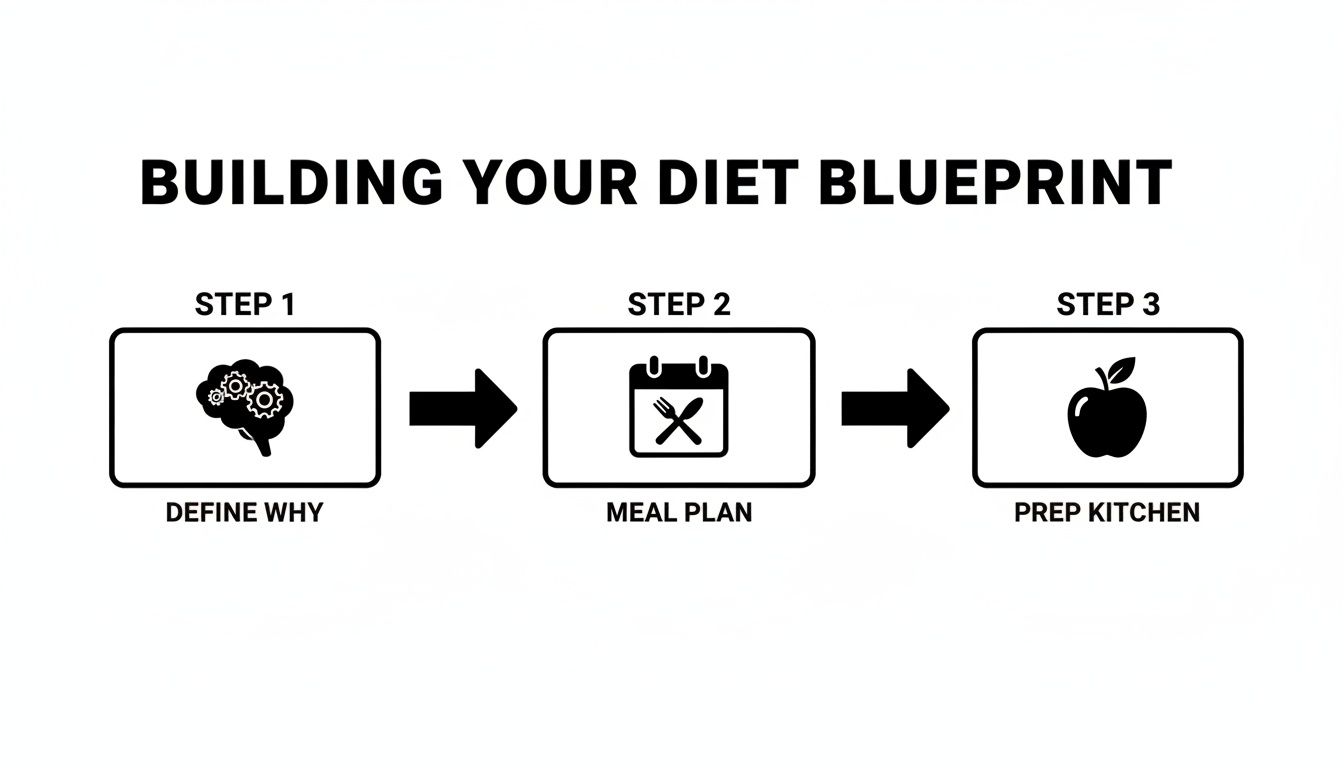
This simple blueprint shows that success really boils down to three things: knowing your "why," having a plan, and setting up your environment to win.
The Power of Habit Stacking
One of the smartest ways to build new, healthier routines is a technique called habit stacking. Instead of trying to pull a new habit out of thin air, you anchor it to something you already do without thinking.
The formula is beautifully simple: "After I [CURRENT HABIT], I will [NEW HABIT]."
This works because your existing habit acts as a natural reminder for the new one. No willpower or alarms needed. Over time, the two actions become linked in your brain.
Here’s What Habit Stacking Looks Like in Real Life:
- "After I pour my morning coffee, I will drink a full glass of water."
- "After I finish my lunch, I will log my meal in the StopSugar app."
- "When I start feeling stressed at my desk, I will stand up and do five deep breaths instead of reaching for a snack."
This strategy makes starting a new behavior feel almost effortless. You’re just tacking it onto momentum you’ve already built. We explore this more in our guide to building healthy habits that actually stick.
In-the-Moment Tactics for Intense Cravings
Even with a perfect plan, intense cravings are going to pop up. These moments are where the rubber meets the road. Instead of relying on sheer willpower (which is notoriously unreliable), you need a pre-planned toolkit of responses.
When a craving hits hard, the goal is to disrupt the habit loop immediately. This is where a tool like StopSugar’s Panic Button can be a lifesaver, offering instant, healthy alternatives that break the cycle before you give in.
Here are a few other battle-tested tactics to have ready:
- The Hydration Hack: Chug a large glass of cold water. Our brains often mix up thirst and hunger signals. Plus, the simple act of drinking gives you a moment to pause and reset.
- Go for a Walk: Change your scenery. A quick five-minute walk around the block can be enough to break the mental fixation on food and shift your focus.
- The Smart Snack Swap: Don't leave it to chance. Have a satisfying, pre-approved snack on hand. A small apple with peanut butter, a handful of almonds, or a cup of herbal tea can hit the spot without the sugar spike.
The idea isn't to ignore the craving, but to acknowledge it and pivot to a healthier, pre-planned action. Every time you successfully navigate a craving, you're strengthening a new pathway in your brain. It’s not about perfection; it’s about making the better choice, one moment at a time.
Using Data to Stay Motivated and Consistent
That old saying, "What gets measured gets managed," is the absolute truth when it comes to sticking with a diet. Without some way of tracking your efforts, you're just flying blind. It's easy to get discouraged, especially when the scale refuses to budge, but data often tells a much more encouraging story.
Think of tracking not as a tool for judgment, but as a source of awareness and motivation. It turns the fuzzy goal of "eating better" into a series of real, daily actions you can actually see and celebrate. This visual proof of your hard work creates a powerful feedback loop that keeps you going, which is the real secret to figuring out how to stay consistent with your diet.
Making Your Progress Tangible
Honestly, the best way to keep your motivation high is to see clear, undeniable proof that your effort is paying off. This is where simple, daily tracking becomes your best friend. It’s not about obsessively logging every last calorie, but about acknowledging your commitment each day.
Something as simple as a 'Daily Sugar-Free Check-In' can have a huge impact. Each time you tick that box, you build a streak—a visual chain of your consistent effort. This little win gives you a hit of dopamine, reinforcing the good habit. Suddenly, it’s not just about turning down a cookie; it’s about keeping your streak alive.
"Tracking transforms the invisible effort of dietary consistency into visible proof of your dedication. Each check-in, each mood logged, is a small victory that builds unstoppable momentum over time."
This simple act shifts your focus. You're no longer fixated on a huge, distant goal like losing 20 pounds. Instead, you're zeroed in on a small, daily action that's completely within your control. When you get that sense of accomplishment every single day, you're much less likely to throw in the towel.
Connecting the Dots Between Food and Mood
Ever notice how a day of clean eating leaves you feeling focused and energetic, but a sugar binge leads to a sluggish, foggy afternoon? Tracking helps you connect these dots in a real, tangible way. This is about more than just food; it’s about how that food makes you feel.
Using a 'Mood Tracker' alongside your daily check-ins can be a game-changer. After just a few weeks of logging, you'll likely start to see clear patterns emerge:
- More Energy: You might notice that on the days you skipped added sugar, you didn't have that classic 3 PM energy crash.
- Better Sleep: You could discover that passing on a late-night dessert leads to a much more restful night's sleep.
- Sharper Focus: The data might show a clear link between a low-sugar breakfast and a super-productive morning.
Seeing this relationship laid out in black and white is incredibly powerful. It proves that your food choices have an immediate and direct impact on your quality of life. That’s a far more compelling reason to stay on track than any number on the scale.
Using Data to Make Smart Adjustments
Your tracking data isn't just for a pat on the back—it's a practical tool for troubleshooting. It gives you the insight you need to make smart, informed tweaks to your plan instead of just guessing what might work. Maybe you notice your cravings go through the roof on days you skip breakfast. Boom. That's a valuable piece of intel you can act on.
This is where dedicated apps really shine. They offer a simple way to gather this information and see the patterns without much effort. While a paper journal can work, exploring some of the best habit tracking apps can give you helpful features like reminders and progress charts.
By looking back at your data, you can stop being reactive and start being proactive. You learn your personal triggers and can build strategies to navigate them. This data-driven approach takes the emotion and guesswork out of the equation, turning your diet into a skill you're constantly getting better at.
How to Handle Setbacks and Stay on Track
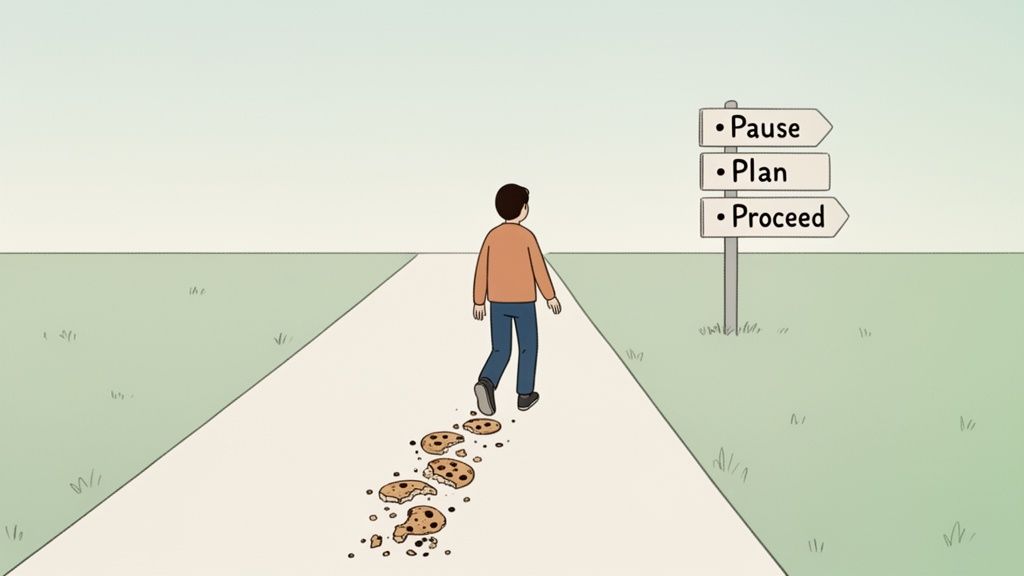
Let's get one thing straight: perfection is a myth. No matter how committed you are, life is going to throw a wrench in your plans. A holiday dinner, a brutal workday, or just a Friday night out can easily knock you off course. A single slip-up doesn’t make you a failure; it makes you human.
The real test isn’t about never messing up. It’s about how quickly and compassionately you recover. One off-plan meal only becomes a real problem when you let it snowball into an off-plan week. The secret is having a simple strategy ready to go for when—not if—it happens.
Ditch the All-or-Nothing Mindset
The biggest enemy of consistency is that "all-or-nothing" trap. It's the voice that whispers, "Well, you already ate that donut, so the whole day is shot. Might as well order a pizza for dinner and start over fresh on Monday."
This kind of thinking is so destructive because it turns a minor deviation into a total catastrophe, completely invalidating all the good choices you made before it. Learning how to stay consistent with your diet means seeing this as a long-term practice, not a performance you either pass or fail.
Think of it this way: if you get a flat tire, you don't slash the other three. You fix the one and get back on the road. Apply that same logic to your diet. Acknowledge what happened, see if there's anything to learn from it, and then get right back to your healthy habits with your very next meal.
Your Simple 3-Step Reset Plan
So, you had an off-plan meal. Don't panic. Don't punish yourself. Just pull out this simple reset plan and get back in the driver's seat. This isn’t about restricting food or "making up for it"—it's about calmly getting back on track.
Here’s my go-to process:
- Pause and Rehydrate: First, just stop the spiral. Grab a big glass of water and drink it. This helps you rehydrate, can quiet down any lingering cravings, and most importantly, it gives you a moment to mentally reset without beating yourself up.
- Plan Your Next Meal: Right away, decide what your next on-plan meal will be. Keep it simple and nourishing. Something with lean protein and veggies is perfect for stabilizing your blood sugar and getting you back into a positive headspace.
- Proceed Without Guilt: Move on. Seriously. Don't waste energy dwelling on what you ate. Remember your "why"—your deep-down motivation—and focus on the good choices you're about to make. The past is done. Your next action is what counts.
This little routine is a game-changer. It stops a small lapse from derailing your entire week and builds the mental resilience you need for the long haul.
"A setback is just a setup for a comeback. How you respond to challenges defines your long-term success far more than your ability to avoid them entirely."
Navigating Common Diet Pitfalls
Some situations are practically designed to wreck your good intentions. If you walk into them without a game plan, you're setting yourself up for a struggle. Let's tackle the big ones.
Strategies for Social Situations:
- Eating Out: Peek at the menu online before you go. Having a healthy choice picked out ahead of time saves you from making a last-minute decision when you're starving and surrounded by temptations.
- Parties & Get-Togethers: Be the person who brings the awesome healthy dish! That way, you know there's at least one thing you can fill up on. Also, a good tip is to load your plate with protein and veggies first, then hold a drink (like sparkling water) to keep your hands busy.
- Holidays: Remember to focus on the people and the experience, not just the buffet table. Allow yourself a small portion of a favorite treat you only get during the holidays, but don't feel obligated to try everything. The goal is enjoyment, not a food coma.
When you prepare for these moments, you stay in control. You can fully enjoy your social life without feeling like you've sacrificed all your hard work. That’s what building a truly sustainable and consistent lifestyle is all about.
Got Questions About Staying Consistent? We've Got Answers
Even when you're armed with a solid plan, questions are bound to pop up. Sticking with a new way of eating is a learning process, and knowing how to handle those common little hurdles is what separates short-term efforts from long-term success.
Let's dive into some of the most frequent questions people ask. Think of this as your go-to FAQ for navigating the real world of healthy eating.
"How Long Until I Stop Craving Sugar?"
This is the big one, isn't it? While everyone is a little different, the good news is that most people feel a major shift in their sugar cravings within about two to four weeks of cutting out added sugars.
Those first few days? They can be rough. Your body is recalibrating, and you might feel a bit cranky or even get a headache. The key is to power through it. A fantastic trick is to have high-fiber and high-protein snacks ready to go, like an apple with a spoonful of almond butter. This combo helps keep your blood sugar steady and makes you feel full, which is a natural craving-crusher.
"I Slipped Up and Ate Something Off-Plan. What Now?"
First things first: take a breath. It's okay. One meal doesn't define your journey or erase your progress. The biggest mistake you can make right now is falling into the "all-or-nothing" trap, where one slip-up makes you feel like you might as well give up for the rest of the day.
Don't skip your next meal to try and compensate—that almost always backfires and leads to being overly hungry later. Just get right back on track with your next planned meal. Acknowledge what happened without judgment, and move on. Drinking a big glass of water and making sure your next meal is packed with protein and veggies is the perfect way to reset.
"How Do I Handle Social Events and Parties?"
Social gatherings can feel like a minefield, but they don't have to be. A little bit of planning is all it takes to stay in control and still have a great time.
Here's a simple game plan that works wonders:
- Do a Little Recon: Heading to a restaurant? Check out the menu online before you go. Having a healthy choice picked out ahead of time makes it so much easier to order well when you're there.
- Prioritize Protein and Veggies: At a party or buffet, make a beeline for the lean proteins (like grilled chicken or shrimp) and the salad or veggie platters. Fill most of your plate with these first, and you'll find you have less room for the other stuff.
- Keep Your Hands Busy: Sometimes we snack just because it's there. Grab a glass of sparkling water with lime. It gives you something to hold and sip on, which can curb mindless munching.
Remember, the point of these events is to connect with people. You can absolutely enjoy yourself without eating things that don't align with your goals.
"Should I Quit Sugar Cold Turkey or Cut Back Slowly?"
Honestly, there's no single right answer here. The best method is the one you can actually stick with, and that really comes down to your personality.
Going "cold turkey" is intense, no doubt. But for some, ripping off the band-aid is the most effective way to break the addiction cycle fast. Seeing quick results in your energy levels and mood can be a powerful motivator to keep going.
For others, a gradual approach feels much more sustainable. You might start by cutting out sugary drinks for a week. Then, tackle after-dinner desserts the next week. From there, you can start looking for hidden sugars in things like sauces and dressings.
No matter which path you choose, the non-negotiable part is consistency. Whether you're making big changes or small ones, tracking your progress is what keeps you honest and helps you see how far you've come.