Your Guide to Personalized Nutrition Coaching

Let's be honest, we've all tried those one-size-fits-all diets. They work for a week, maybe two, and then life gets in the way. Personalized nutrition coaching is the complete opposite of that. It’s less of a rigid plan and more of a dynamic partnership between you and a coach, focused on creating an eating style that actually fits your life.
What Personalized Nutrition Coaching Really Means

Think about it like this: a generic diet plan is like being handed a single, generic wrench and told to build a complex piece of furniture. You might eventually get it done, but it’s going to be wobbly and incredibly frustrating.
Personalized nutrition coaching, on the other hand, is like being given a full toolbox where every single tool is chosen for the specific task at hand. It's a collaborative process where you and your coach build something solid together—a sustainable way of eating that fits you perfectly.
This whole approach throws out the outdated idea that one meal plan could possibly work for everyone. Instead, your coach acts as your partner, helping you navigate tricky food choices, build better habits, and make smart adjustments to your lifestyle. The goal is to truly elevate your personalized dining experience, turning food from a source of stress into a tool for well-being.
It's Far More Than Just a Diet Plan
Unlike a static PDF you download from the internet, this kind of coaching is a living, breathing strategy. It's meant to adapt as your life changes, you grow, and new challenges pop up. The entire plan is built on a deep understanding of what makes you, you.
That means looking at several key areas:
- Your Biology: This covers everything from your unique metabolism and genetics to any health conditions that affect how your body uses food.
- Your Lifestyle: Your work schedule, family life, stress levels, and even how well you sleep all have a massive impact on your eating habits.
- Your Goals: Are you looking to lose weight, kick a sugar habit, build muscle, or just feel more energetic? Your plan is reverse-engineered from what you want to achieve.
And people are catching on. The demand for this kind of tailored support is exploding. The global personalized nutrition market was valued at USD 15.54 billion in 2024 and is expected to jump to an incredible USD 53.07 billion by 2032. This isn't just a trend; it's a major shift away from generic advice toward solutions that respect our individuality.
Who Is This Approach For?
Just about anyone can get something out of personalized nutrition coaching, but it's an absolute game-changer for anyone who has felt defeated by traditional diets. If you’ve ever found yourself thinking, "There's no way I can stick to this," then this is for you.
Personalized nutrition isn't just about what's on your plate. It's about understanding the 'why' behind your food choices and building a system that empowers you to consistently make better ones.
For example, athletes use it to dial in their nutrition for peak performance, while busy professionals learn how to maintain energy and focus through hectic workdays. It’s also perfect for managing specific health concerns or food sensitivities, since the entire plan is built around those needs.
It all comes down to figuring out how different foods affect you—from your energy to your mood. A big part of that is getting back to the basics of what your body actually requires. You can dive deeper into that by checking out our guide on macronutrients and micronutrients.
The Real-World Benefits of a Tailored Nutrition Plan
So, what does personalized nutrition coaching actually do for you? Let's get past the theory and talk about the real-world impact.
A generic diet plan might tell you to eat less sugar, which is obvious advice. But it won't tell you why you're reaching for a cookie every single day at 3 p.m. A truly personal plan helps you connect the dots. You start to see how your habits, your body’s specific needs, and your health goals are all intertwined.
The whole point is to get to the root of your unhealthy cycles. Instead of just gritting your teeth and fighting cravings with willpower, you begin to understand your triggers. Maybe you’ll discover that your mid-afternoon sugar craving isn’t a personal failing—it's just a predictable crash because your breakfast was short on the protein and fiber needed to keep you full.
Once you have that kind of insight, your entire relationship with food changes. It stops being about restriction and becomes more about making smart, strategic choices that actually make you feel better. These small, informed tweaks add up, creating a powerful ripple effect that leads to big, lasting improvements in your day-to-day life.
More Than Just Weight Loss
While weight management is a popular reason people seek out coaching, the benefits go so much deeper than the number on the scale. The real focus is on optimizing your entire system, which kicks off a whole cascade of positive changes you can feel.
You can typically expect to see improvements in a few key areas:
- Sustained Energy Levels: A personalized plan helps you balance your blood sugar and give your body the right fuel at the right time. Say goodbye to those dramatic energy spikes and crashes that leave you feeling drained.
- Improved Digestion and Gut Health: Your coach can help you pinpoint foods that cause bloating or discomfort. They'll also guide you toward foods that support a healthy gut, leading to smoother digestion and better nutrient absorption.
- Enhanced Mental Clarity: The gut-brain connection is no joke. A nutrient-dense diet designed just for you can help clear away brain fog and sharpen your focus.
- Better Mood Regulation: Keeping your blood sugar stable and your body properly fueled has a direct impact on your mood. You’ll likely feel less irritable and have a greater sense of overall well-being.
A tailored nutrition plan doesn’t just change what you eat; it changes how you feel, think, and show up in the world. It’s the difference between powering through your day and truly thriving in it.
This personalized approach isn't just a trend; it's gaining serious momentum in the scientific community. A recent analysis uncovered over 2,148 scientific papers on personalized nutrition, highlighting a major academic investment in proving its effectiveness. This growing body of research confirms what so many of us have experienced firsthand: a plan built for one person works far better than a one-size-fits-all plan. Learn more about the latest scientific findings.
Overcoming Habit Hurdles
Let’s be honest—habits are incredibly hard to break. One of the biggest advantages of personalized coaching is the support you get for navigating the psychological and physical roadblocks that come with making a change.
A coach helps you build a game plan for change that feels manageable, not completely overwhelming. For instance, instead of telling you to cut out all sugar overnight (which rarely works), the focus might be on a simple swap. Think replacing your daily soda with sparkling water and a splash of fruit juice. These small wins build momentum and make you feel confident.
This is also where a tailored plan really shines for people with specific concerns, like figuring out how to boost metabolism after 40. Personalization allows for solutions that address the unique biological shifts that come with different stages of life.
Ultimately, a tailored nutrition plan is about empowerment. It gives you the knowledge and the tools to finally understand your own body, make choices that line up with your goals, and build a healthy lifestyle that feels natural and sustainable—not like a constant battle. This is how real, lasting change happens.
What to Expect on Your Coaching Journey
Starting with a personalized nutrition coach can feel a little mysterious, but it's much simpler and more collaborative than you might imagine. Forget rigid rules and one-size-fits-all diets. This is a partnership.
Think of it this way: you’re the captain of your own ship, deciding where you want to go. Your coach is the expert navigator who helps you read the map, chart the best course, and adjust the sails when the weather changes.
Kicking Things Off: The Deep Dive
Your journey will almost always start with an in-depth consultation. This isn't just a quick chat about "eating better." A good coach will dig deep to understand your entire world—your daily schedule, what stresses you out, how you sleep, and where you struggle the most.
This first conversation is so important because it lays the groundwork for everything that follows. It's a completely judgment-free zone designed to get a full, 360-degree picture of your life, which is then used to build the first version of your plan.
The Power of Continuous Feedback and Adjustment
Unlike a static diet plan you download and forget, personalized coaching is all about a continuous feedback loop. The goal isn't to get a perfect plan on day one. It's to start with a strong, educated guess and then refine it based on how your body actually responds.
Your body is always talking to you through signals like energy slumps, sudden cravings, and mood swings. A coach’s job is to help you learn to listen to those signals and turn them into smart, actionable adjustments to your plan.
This back-and-forth is what makes the process work. You provide the real-world feedback from your daily life, and your coach helps translate that into small, meaningful changes that keep you moving forward.
Key Data Points Your Coach Will Use
To build and fine-tune your plan, your coach will look at several types of information. Each piece of the puzzle helps create a clearer picture of what you truly need.
The table below breaks down the most common types of information a coach uses to create and adjust a personalized nutrition plan.
| Data Type | What It Is | Why It's Tracked |
|---|---|---|
| Dietary Logs | More than just calories—it's what you ate, when, and the context (e.g., were you stressed, rushed, or celebrating?). | To spot eating patterns, identify trigger foods, and understand the "why" behind your food choices. |
| Biometric Data | Hard numbers like weight, body measurements, or even data from wearables that track heart rate or sleep. | To objectively measure progress and see how dietary changes are impacting your body physically. |
| Subjective Feedback | How you feel. This includes your energy levels, mood, digestion, focus, and overall sense of well-being. | This is often the most important metric. It tells you if the plan is working for your quality of life, not just the scale. |
| Lifestyle Factors | Details about your workout routine, work demands, travel, and social life. | To make sure the plan is realistic and fits into your actual life, not a fantasy version of it. |
Putting all this information together is how a coach creates a plan that doesn't just look good on paper but actually works for you.
This is what leads to real results—not just weight loss, but the things people really want, like sustained energy and better mental clarity.
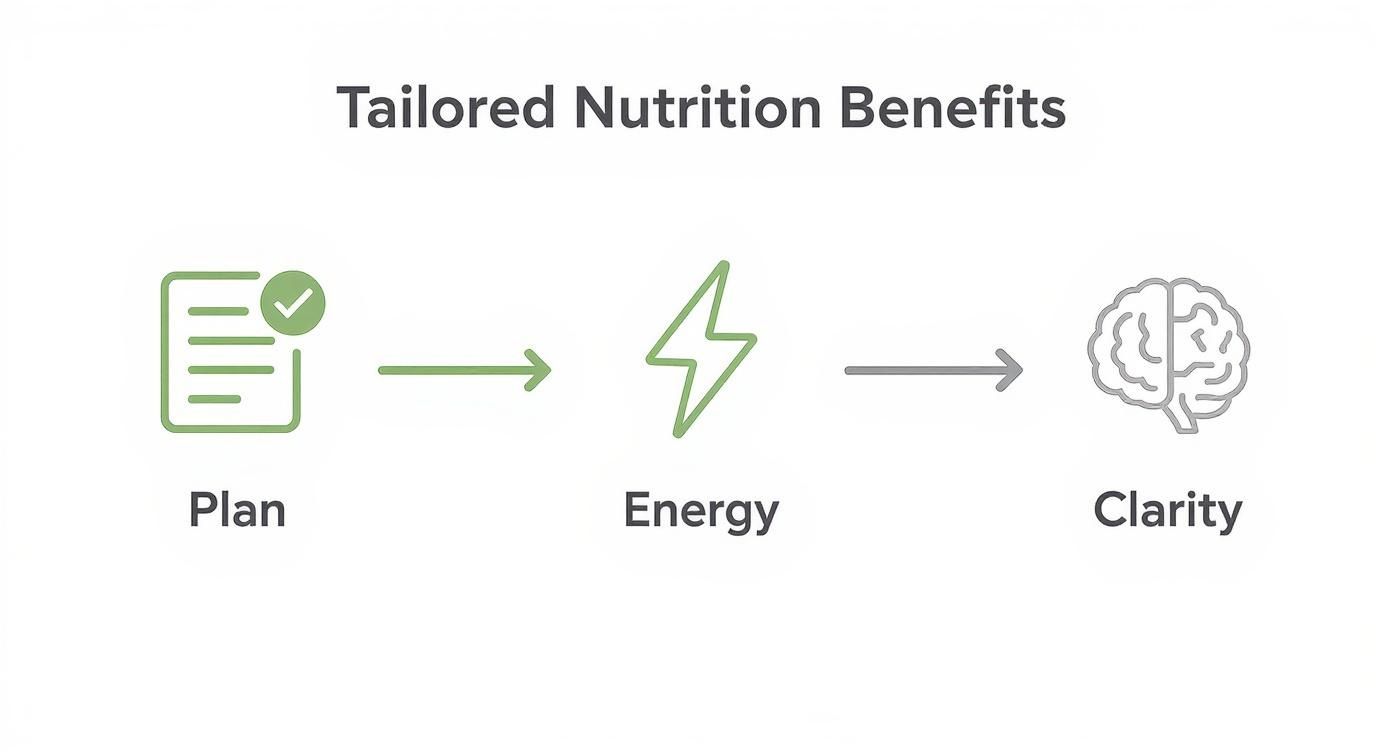
As you can see, a truly personalized plan is the bridge between your current habits and the outcomes you’re looking for.
Evolving Your Plan for Long-Term Success
Here’s a simple truth: your plan will change because you will change. As you make progress, your body's needs will shift. What worked wonders in the first month might need a few tweaks by month three.
Life happens, too. A vacation, a high-stress project at work, or a new fitness routine all call for adjustments. This is where having a coach in your corner really pays off. They help you navigate these changes so your plan stays effective and you don't get thrown off course.
The end goal isn't to have you rely on a coach forever. It’s to empower you with the knowledge and skills to make these smart decisions on your own. It's about building healthy habits that stick for a lifetime, not just for a few months.
Ultimately, this journey is one of discovery. You'll learn what foods make you feel amazing, how to handle cravings, and how to create a way of eating that supports your goals without feeling like a punishment. It’s an empowering process that puts you back in the driver's seat of your own health.
How to Find the Right Coach or App for You
So, you’re ready to get some real support on your nutrition journey. Awesome. The big question now is: do you go with a human coach or a nutrition app?
Honestly, there’s no single right answer here. It really boils down to your personality, your budget, and how much you need someone (or something) to hold you accountable. Neither path is better—it’s all about what works for you.
A human coach brings a level of personal connection and emotional insight that technology just can't match yet. If you're someone who thrives on real conversation and needs a guide to help you work through the emotional side of eating, a person is probably your best bet.
On the other hand, a nutrition app offers convenience, instant feedback, and is usually much easier on the wallet. If you're a self-starter who loves data and technology, an app can be an incredible tool for building awareness and keeping you on track.
Evaluating a Human Nutrition Coach
When you're searching for a coach, remember you're not just hiring an expert—you're looking for a partner. It’s so important to find someone with the right qualifications who also has a coaching style that clicks with you.
First, check out their credentials. Look for titles like Registered Dietitian (RD) or Certified Nutrition Coach (CNC). These signal that they have a solid foundation in nutritional science. Don’t be shy about asking about their experience, especially if they’ve worked with people who have goals just like yours.
But qualifications are only half the story. The personality fit is everything. A great coach will make you feel supported and understood, never judged.
Before you sign up, always schedule a quick consultation call. It's your chance to get a feel for their vibe. A good coach will listen more than they talk and ask smart questions that go beyond just what’s on your plate.
Here are a few questions you might want to ask a potential coach:
- What's your coaching philosophy? How do you handle things like setbacks or when I hit a plateau?
- How do you personalize plans for your clients? Can you walk me through an example?
- What kind of support can I expect between our sessions?
This kind of one-on-one guidance is becoming a huge part of the wellness world. In fact, Wellness & Fitness Centres are projected to grow at a CAGR of 14.2% from 2025 to 2030. A big reason for this boom is that they're adding personalized nutrition coaching to their training packages to get clients better results. You can read more about the growth of integrated wellness services.
Choosing the Right Nutrition App
If the idea of a flexible, data-driven app sounds more like your style, the next step is finding one that truly personalizes the experience. A lot of apps out there are little more than glorified calorie counters, but the best ones dig much, much deeper.
You want an app that does more than just log your meals. Look for these key features:
- Holistic Data Tracking: It should let you track not just food, but also your mood, energy, sleep quality, and stress levels. This is how you start connecting the dots between what you eat and how you feel.
- Actionable Feedback: The app shouldn't just spit data back at you; it should offer real insights. For example, it might suggest a protein-rich snack on days you report feeling sluggish.
- Habit-Building Tools: Look for features that help you create lasting change, like daily check-ins, progress charts, and gentle reminders. For a deeper dive, check out our guide on the best habit tracking apps.
- A Library of Alternatives: When a sugar craving hits hard, a great app will be right there with healthy swaps and ideas to help you make a better choice in that moment.
Ultimately, the right app should feel like a partner in your pocket—a tool that empowers you and makes you more self-aware. It should make tracking feel insightful instead of like a chore, giving you the little nudges you need to stay on the path to better health.
Your First 30 Days: A Sample Action Plan

Theory is great, but seeing a plan in action makes everything click. Let's walk through what a typical 30-day journey might look like. We’ll focus on a common goal: cutting back on sugar to get more stable energy throughout the day.
Just remember, a real personalized plan would be built around your specific data, lifestyle, and goals. This example is here to show you the process—how each week intelligently builds on the last to create habits that stick, instead of just chasing quick fixes.
Week 1: The Awareness Phase
The first week isn’t about making massive changes. Not at all. It’s about becoming a detective in your own life. You can't fix what you don't see, so the main goal is simply to observe your current habits without any judgment.
Your coach would likely ask you to start logging your food and your mood. This is the first step in connecting the dots between what you eat and how you feel. It's amazing what you'll notice. For instance, you might see a clear pattern where a sugary breakfast leads to a major energy crash right around 10 a.m., every single day.
Weekly Goals and Actions:
- Action 1: Track Everything: Use an app or a simple notebook to log every meal, snack, and drink. Honesty is key—the data is only useful if it's real. Make a note of your mood and energy levels alongside your food entries.
- Action 2: Identify Hidden Sugars: Start turning over packages and reading labels. You will be shocked at where sugar hides—from salad dressings and pasta sauces to bread and yogurt. The goal isn't to eliminate them yet, just to become aware.
- Action 3: Make One Simple Swap: Pick one high-sugar item you have every day and find a healthier alternative. Maybe you swap that sweetened morning latte for a regular coffee with a splash of whole milk. That's a huge win.
The first week is about observation, not perfection. The goal is to build self-awareness, which is the foundation for creating any meaningful, long-term change in your habits.
This phase is so important because it gives you and your coach the raw data needed to build a plan that actually works for you. It’s all about creating a clear, honest starting point.
Week 2: Building a Foundation
Okay, with a week of data in your pocket, it's time to take the first real steps. Week 2 is all about adding positive habits rather than just taking away the "bad" ones. This little psychological trick makes the whole process feel empowering instead of restrictive.
A great place to start is often breakfast. Kicking off your day with a meal balanced with protein, healthy fats, and fiber does wonders for stabilizing your blood sugar. It sets you up to win, preventing the mid-morning cravings that so often lead to grabbing a sugary snack.
Sample Meal Ideas for Week 2:
- Breakfast: Greek yogurt with fresh berries and a sprinkle of nuts, or a couple of scrambled eggs with spinach and a slice of whole-grain toast.
- Lunch: A big salad loaded with grilled chicken, tons of colorful veggies, and a simple olive oil-based vinaigrette.
- Snack: An apple with a spoonful of almond butter, or a small handful of raw almonds.
These meals are designed to keep you feeling full and energized, making it much less likely you'll reach for that cookie out of pure habit or a sudden hunger pang.
Week 3: Navigating Real-World Challenges
By week three, your new routines are starting to feel more natural. But this is also when life happens. Social events, stressful workdays, and unexpected schedule changes are the ultimate test for any new habit.
This is where the focus of your coaching shifts to real-world strategy. Your coach would help you create a game plan for these exact scenarios. You might brainstorm healthy options to look for on a restaurant menu before you go, or figure out how to navigate a potluck at the office without derailing your progress.
Mindset and Strategy Focus:
- Plan for Social Events: Before you go out, hop online and check out the menu. Deciding what you'll order ahead of time helps you avoid making an impulsive, hunger-driven choice in the moment.
- Prepare for Stress: What are your non-food stress relievers? Instead of instinctively reaching for something sweet when you feel overwhelmed, maybe you could go for a quick five-minute walk or put on your favorite song.
- Create an Emergency Snack Kit: Keep healthy, non-perishable snacks in your car, your desk drawer, or your bag. Things like nuts, seeds, or a protein bar mean you're never caught off guard and forced to grab something from a vending machine.
This is where the "coaching" part of the process really shines. You get practical, personalized guidance for handling the curveballs life will inevitably throw your way.
Week 4: Creating a Sustainable Future
The final week of the first month is all about locking in your progress and looking ahead. You’ve built awareness, established some solid new habits, and learned how to navigate challenges. Now, it's time to make sure these changes stick around for good.
The focus shifts from your day-to-day choices to the bigger picture. You and your coach will look back at your progress, celebrate your wins (this part is important!), and pinpoint any lingering trouble spots. The goal is to create a flexible framework that you can adapt and follow for months and even years to come. This is how a 30-day plan transforms into a lifelong, healthy lifestyle.
How StopSugar Can Support Your Journey
Knowing how personalized coaching works is a great first step, but putting it into practice is what really counts. That’s where the right tool can make all the difference, acting as a partner to help you gather the insights you need for a plan that’s truly yours.
The StopSugar app was built to be that partner. It gives you the tools to start collecting the same kind of data a professional coach would use, helping you build self-awareness right from day one.
Current Features for Your Personalized Plan
Think of the StopSugar app as your starting block for personalized nutrition. The tools already inside are designed to help you connect the dots between what you do and how you feel.
Here’s what you can start using right away:
- Track Your Mood: Logging how you feel each day helps reveal the powerful connection between sugar and your emotional state. You’ll quickly start seeing patterns you never noticed before.
- Visualize Your Progress: Our tracking features give you a clear, visual record of your journey. It’s a great way to celebrate your consistency and stay motivated.
- Access Healthy Alternatives: When a craving hits hard, you need a plan. The app gives you immediate, smart swaps for your favorite sugary foods, helping you make a better choice in the moment.
The real power here is in your personal data. When you understand your own habits and triggers, you can finally make intentional choices that get you closer to your goals.
The Future of Coaching Is Here
We’re taking this a big step further. We are currently developing a new AI-powered nutrition coach right inside the app, designed to give you the responsive, one-on-one guidance that makes personalized nutrition coaching so effective.
Imagine having a coach that uses your own data—your moods, your check-ins, your challenges—to give you feedback in real-time. It will offer advice tailored to your patterns, suggest meals that fit your lifestyle, and help you navigate those tough moments. It’s about creating a truly dynamic and supportive experience, right in your pocket.
Got Questions? We’ve Got Answers.
Jumping into something new like personalized nutrition always brings up a few questions. Let's tackle some of the most common ones so you can feel clear and confident about what's next.
What’s This Going to Cost Me?
This is usually the first thing people ask, and for good reason! The truth is, it varies. You can find everything from affordable monthly app subscriptions to premium one-on-one packages with a registered dietitian.
The key isn't just the price tag; it's about finding the right balance between your budget and the level of support you need to actually stick with it. An app might be a perfect, low-cost starting point, while a human coach offers that extra accountability for when you're serious about making a big change.
The best investment isn't always the most expensive one. It's the one you'll actually use day in and day out to build habits that last.
Isn't This Just Another Fad Diet?
Absolutely not. Think of a generic online diet as a one-size-fits-all t-shirt—it rarely fits anyone perfectly. Personalized nutrition coaching is more like a custom-tailored suit. It’s built just for you.
- Generic Plans are Rigid: They hand you a strict set of rules and expect you to follow them, no matter what life throws at you.
- Personalized Coaching is Flexible: It moves with you. It adapts to your energy levels, your crazy work schedule, and the inevitable challenges that pop up.
This isn't about short-term restriction. It's a living, breathing process designed to create lasting change that feels natural.
What Happens if I Have a Bad Week?
First off, it's going to happen. Life is messy! A bad day—or even a bad week—is a totally normal part of the journey. A great coach or a well-designed app will never shame you for it.
Instead, they help you get curious. What happened? Why did it happen? This isn't about guilt; it's about gathering data.
By looking at those moments without judgment, you turn a "slip-up" into a lesson. You learn your triggers, figure out what you need to do differently next time, and jump right back in. The goal here is progress, not perfection.