How to Stop Craving Carbs and Regain Control of Your Diet
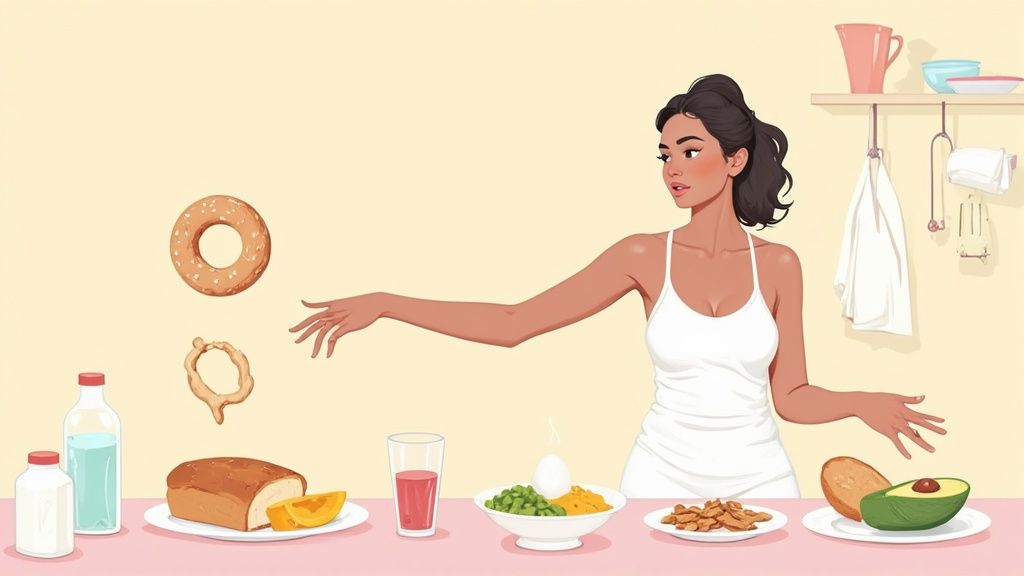
If you're trying to figure out how to stop craving carbs, the secret isn't just about willpower. It's about biology. The most powerful moves you can make involve prioritizing protein and fiber with every meal, staying properly hydrated, and tackling major lifestyle factors like sleep and stress.
Why You Crave Carbs and How to Fight Back
That intense, almost desperate urge for a bagel, a cookie, or a bowl of pasta isn't some personal failing. Think of it as a powerful biological signal your body is sending—often driven by a few key factors that lock you into a cycle that feels impossible to escape. The first step to regaining control is understanding what's actually happening under the surface.
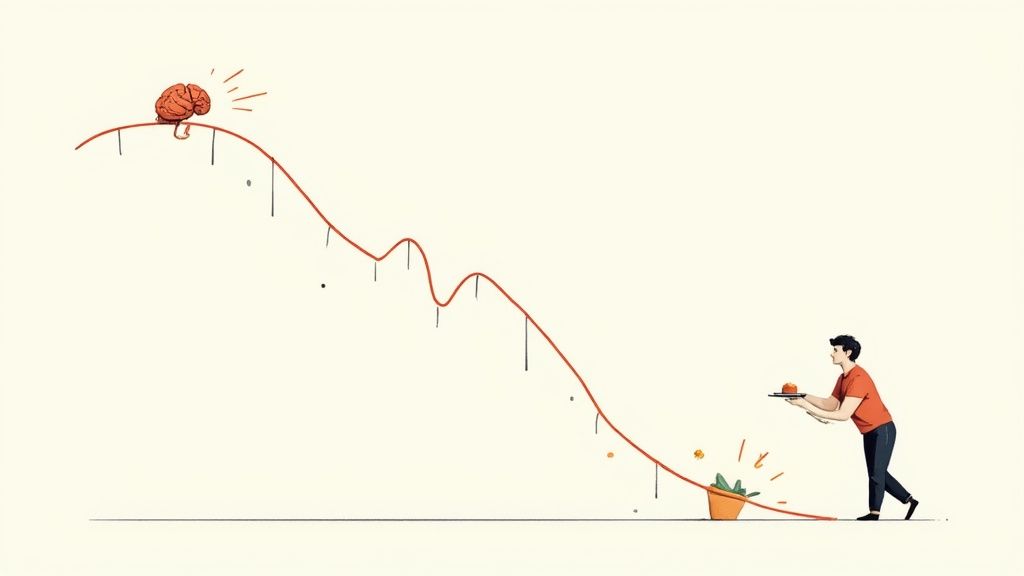
At the center of most carb cravings is a physiological rollercoaster. When you eat simple or refined carbs—think white bread, sugary snacks, or soda—they hit your system fast, converting into glucose and causing a sharp spike in your blood sugar.
Your body responds by releasing a flood of insulin to get that sugar out of your bloodstream and into your cells for energy. The problem is, this response is often too aggressive. It overcorrects, leading to a rapid blood sugar crash. This crash is what sets off the alarm bells in your brain, screaming for another quick hit of energy. And what's the fastest source? You guessed it—more simple carbs.
The Science Behind the Craving Cycle
This isn't just about feeling a little peckish; it's your body's survival instincts going into overdrive. When your blood sugar plummets, your cells are effectively starving for energy, even if you just ate an hour ago. That state sends an urgent message to your brain that you need to eat right now.
The situation gets even trickier with hormones and brain chemistry. If your cells become less responsive to insulin's signals—a condition known as insulin resistance—your body has to pump out even more insulin to do the same job. This chronically high level of insulin just makes the cycle of sugar spikes and crashes worse, making your cravings feel more intense and pop up more often.
It’s a classic vicious cycle: you eat refined carbs, your blood sugar crashes, you crave more carbs to "fix" it, and the pattern repeats. Each time, it strengthens the biological and habitual pathways that keep you stuck.
It Goes Beyond Simple Hunger
There’s more going on here than just blood sugar. The food you eat has a direct impact on the trillions of microorganisms living in your gut, also known as your gut microbiome. As it turns out, certain types of bacteria and yeast absolutely thrive on sugar. When these sugar-loving microbes start to dominate, they can actually send signals to your brain that ramp up your desire for the very foods they love to eat.
On top of that, some foods contain proteins that can have an almost addictive effect. Gluten (from wheat) and casein (from dairy) can break down into compounds that interact with the brain’s opioid receptors. This creates a feeling of reward and pleasure that keeps you coming back for more. It’s why sometimes you don't just crave "carbs," but a very specific food like cheesy pizza or a buttery croissant.
What to Do the Moment a Craving Hits
When a massive carb craving slams into you, it feels like an emergency. It hijacks your brain and demands to be fed right now. In that moment, you don't need a long-term diet plan; you need a 15-minute emergency protocol.
The whole point is to put a little bit of breathing room between the urge and your actions. If you can just interrupt that signal screaming from your brain, you give yourself a chance to make a choice instead of caving on autopilot.
First: Stop and Drink Water
Before you do anything else, grab a big glass of water. I know, it sounds ridiculously simple, but it works for a couple of key physiological reasons. Our brains are notoriously bad at telling the difference between hunger and thirst, and mild dehydration can absolutely feel like a craving for a quick-fix snack.
Knock back 12-16 ounces of water. This does two things for you instantly. First, you might just solve the problem if you were dehydrated. Second, the water takes up space in your stomach, sending a "hey, I'm getting full" signal to your brain that can take the edge off the craving's intensity. Give it 10 minutes and see how you feel.
Takeaway: Always start with a tall glass of water. It's the simplest way to check if your body is asking for fuel or just for fluid.
Next: Reach for Protein, Not Sugar
Still feeling that pull after the water? Okay, your body is genuinely asking for energy. But feeding it the simple carbs it thinks it wants is the worst thing you can do. That just throws you right back on the blood sugar rollercoaster. What you need is a stabilizer.
Protein is your secret weapon here. It digests slowly, giving you a steady, even stream of energy without jacking up your insulin. It’s the perfect antidote to that frantic "I need energy NOW!" signal that fuels the most intense cravings.
The trick is to have these snacks ready to go so you're not scrambling when you're most vulnerable.
Craving-Crushing Protein Snacks
- A hard-boiled egg: Perfectly portioned and easy to grab, it offers about 6 grams of high-quality protein.
- A small handful of almonds: A triple threat of protein, healthy fat, and fiber that puts the brakes on blood sugar swings.
- A cup of plain Greek yogurt: A great choice when you want something creamy and substantial, plus it packs a serious protein punch.
- A stick of beef or turkey jerky: Just check the label for a brand without a ton of added sugar. It's a quick, savory fix.
These aren't just empty calories to fill a void. They're actively working to rebalance your body's chemistry and fix the root cause of the craving.
Finally: Change Your Scenery
Sometimes the craving isn't just about hunger; it's about habit and location. We get triggered by context—the 3 p.m. slump at your desk, chilling on the couch after dinner, or feeling the pressure of a deadline. The fastest way to kill the craving is to break that association.
Get up and go for a brisk walk. Seriously, even five or ten minutes can be a game-changer. The movement gets your blood flowing, releases endorphins that lift your mood, and completely shifts your focus. You're physically removing yourself from the trigger zone and changing your body's state from stressed to active.
Can't get outside? No problem. Stand up and do a few simple stretches. Reach for the ceiling, do a few torso twists, roll your neck. You just need to interrupt the static state that let the craving take hold. That small physical reset is often all it takes to realize how to stop craving carbs and get back in the driver's seat.
Building Meals That Prevent Carb Cravings
So far, we've talked about what to do when a craving hits you right in the moment. But the real goal? To stop them from happening in the first place. This is where your daily meals become your biggest ally.
Think of every meal as a chance to get ahead of your blood sugar and hunger hormones. When you build your plate strategically, you create a stable internal environment that doesn't send out an SOS for a quick hit of sugar or carbs. This isn't about deprivation—it's about smart construction.
The aim is to eat meals that digest slowly, giving you a steady, reliable stream of energy for hours. When you nail this, you avoid the wild blood sugar roller coaster that fuels the most powerful cravings. The secret weapon is a simple combination of three key players: protein, fiber, and healthy fats.
For instance, a classic bagel with cream cheese for breakfast is practically a guarantee for a mid-morning energy crash. It's almost all fast-acting carbs. Swap that for scrambled eggs (protein) with avocado (healthy fat) and a handful of spinach (fiber), and you've got a meal that breaks down slowly, keeping you full and focused all the way to lunch.
This little action plan is a great reminder of what to do when a craving does manage to sneak through, reinforcing the core ideas of interrupting the pattern and giving your body what it really needs.
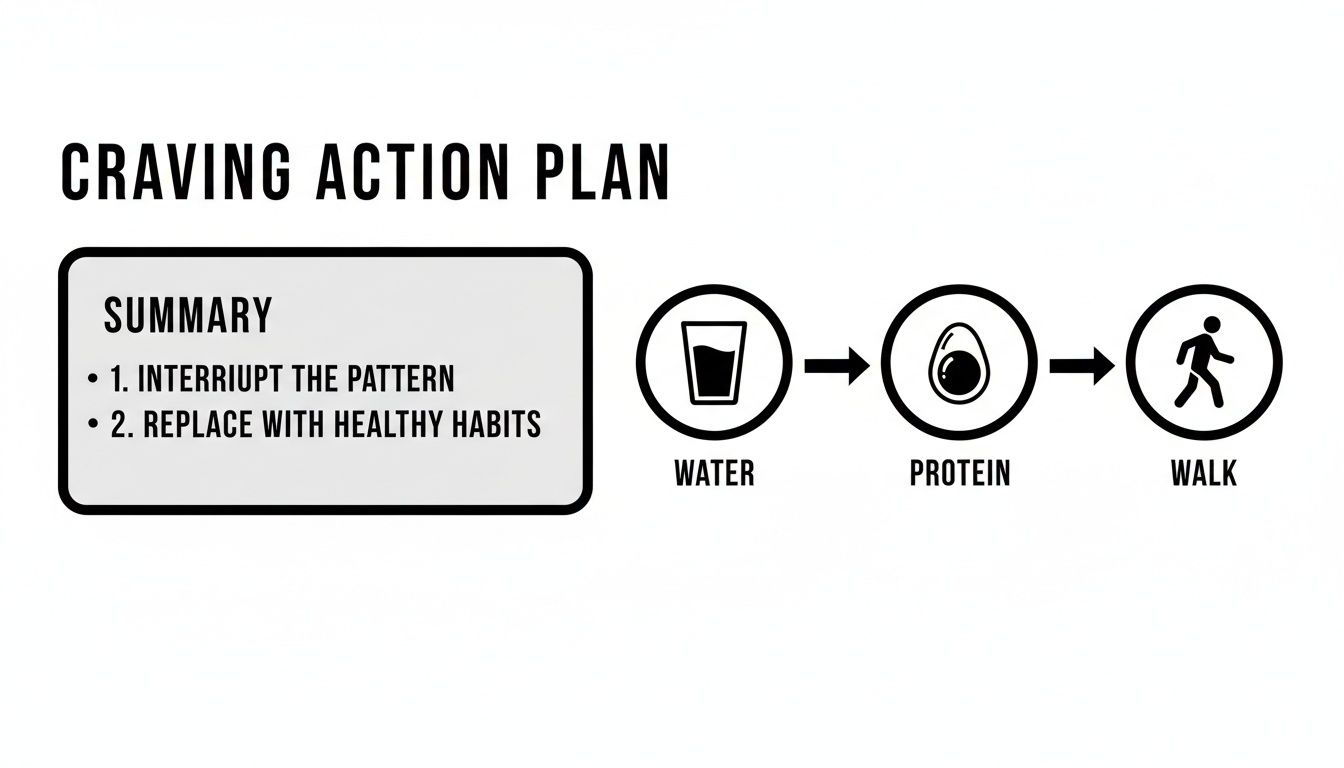
Hydration, a hit of protein, and a quick walk can often be enough to completely derail a craving and reset your brain.
The Power Trio: Protein, Fiber, and Fat
Let's dig into why this combination works so well. Each part of this trio has a specific job in keeping you full and your blood sugar in check. When you put them together, their effects multiply, creating a rock-solid defense against cravings.
- Protein is your anchor. It’s the most satiating macronutrient out there, which is just a fancy way of saying it makes you feel fuller, longer. It also dramatically slows down how quickly your body absorbs any carbs you eat with it, preventing those sharp glucose spikes.
- Fiber acts as the brake. Think of soluble fiber (from oats, beans, apples) as a sponge. It forms a gel in your gut, physically slowing down digestion and the release of sugar into your bloodstream.
- Healthy fats provide lasting energy. Fats take the longest to digest, so they contribute to that long-term feeling of fullness. They're also essential for hormone production, which helps keep your energy stable between meals.
Key Takeaway: Building every meal around these three pillars is the single most effective long-term strategy to conquer cravings. It flips the switch in your body from reactive crisis management to proactive, stable energy.
Crafting Your Craving-Proof Plate
Putting this into practice is way easier than it sounds. It's all about making smart swaps and additions, not a complete, miserable diet overhaul. Small, consistent changes really are what move the needle.
Take lunch. A turkey sandwich on white bread might seem harmless, but it’s a recipe for that dreaded 3 p.m. slump. A much better option? A big salad topped with grilled chicken, chickpeas, mixed greens, and an olive oil vinaigrette. You've got protein (chicken), tons of fiber (greens, chickpeas), and healthy fats (olive oil). No crash in sight.
This simple formula works for every single meal. And there's good science to back it up. Studies show that when people increase their protein intake to 25–30% of their daily calories, they feel less hungry and naturally eat 10–20% fewer carbs. Even adding just 10–15 grams of fiber to your day can make a huge difference in taming hunger.
Craving-Crushing Meal Swaps
To make this even more practical, let's look at some common meal choices that set you up for cravings and what to eat instead. The goal is to swap out simple carbs for meals rich in the "power trio."
| Meal | Common Craving-Inducing Choice | Why It Triggers Cravings | Craving-Crushing Alternative |
|---|---|---|---|
| Breakfast | Cereal with skim milk | High in sugar and refined carbs; low in fat and protein, leading to a quick spike and crash. | Plain Greek yogurt with berries and a spoonful of chia seeds. |
| Lunch | Pasta with marinara sauce | A large load of simple carbs with minimal protein or fiber, causing a post-meal slump. | A large salad with grilled salmon, quinoa, and a lemon-tahini dressing. |
| Dinner | Takeout pizza | Dominated by refined flour and processed cheese; low in quality fiber and nutrients. | Baked chicken breast with a side of roasted broccoli and sweet potato. |
| Snack | Crackers or pretzels | Pure, fast-digesting carbs that offer a quick energy hit but leave you hungry again soon after. | A handful of almonds and an apple. |
Making these kinds of swaps consistently re-trains your body and palate, making you less susceptible to the highs and lows that drive you toward sugary, starchy foods.
A Few More Meal Ideas
Here are a few more simple ideas to get you started. And if you're looking for an even bigger list, check out our guide to https://stopsugar.app/blog/foods-that-stabilize-blood-sugar.
Breakfast:
- Instead of a muffin, try two scrambled eggs with spinach and a side of avocado.
- Instead of sweetened yogurt, go for plain Greek yogurt with a tablespoon of nuts.
Lunch:
- Instead of a deli sandwich on a white roll, make a lentil soup with a side of whole-grain crackers and cheese.
- Instead of leftover pasta, have a large salad with grilled shrimp, beans, and colorful veggies.
Dinner:
- Instead of a white rice stir-fry, try a stir-fry with lean beef or tofu, loads of vegetables, and cauliflower rice.
- Instead of a burger on a bun, have a bunless burger patty over a bed of greens with a side of roasted asparagus.
Each of these meals is designed to be delicious and satisfying while keeping your internal chemistry balanced. If you find you need more personalized help, exploring professional nutrition therapy can be a fantastic step. An expert can work with you to build a plan that fits your life perfectly.
The Lifestyle Habits Secretly Fueling Your Cravings
It’s easy to focus only on what you eat, but sometimes the real battle against carb cravings is won or lost long before you even think about food. Your daily habits, especially how you sleep and handle stress, can quietly sabotage even the most disciplined eating plan by messing with your body’s chemistry.
These triggers often work behind the scenes, creating a powerful, physiological demand for the exact foods you're trying to avoid.
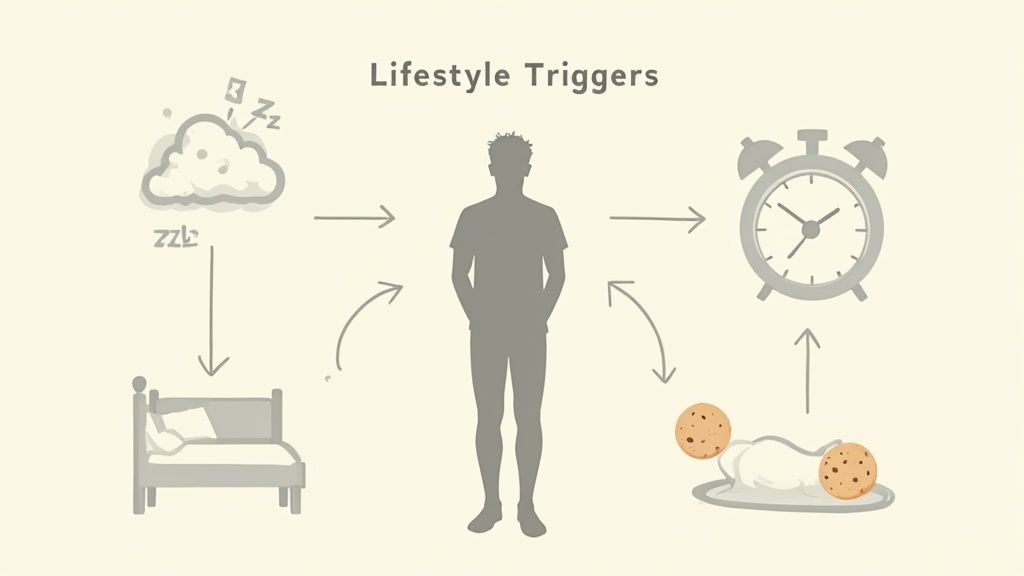
How a Single Bad Night of Sleep Hijacks Your Hunger
Think of poor sleep as one of the biggest drivers of intense sugar and starch cravings. The hormonal connection here is incredibly direct and powerful.
When you don't get enough quality sleep, two key hormones that regulate your appetite go completely haywire. The first is ghrelin, often called the "hunger hormone." Its job is to tell your brain it's time to eat. After a rough night, ghrelin levels can spike, making you feel way hungrier than you normally would.
At the same time, levels of leptin—the "fullness hormone"—take a nosedive. Leptin is what signals to your brain that you're satisfied and can stop eating. When leptin is low, that "I'm full" message becomes a faint whisper, making it incredibly easy to overeat.
This hormonal one-two punch creates a perfect storm. Your brain is getting blaring "EAT NOW!" signals from ghrelin, while the "STOP EATING" signals from leptin are barely audible. To make matters worse, your sleep-deprived brain is desperate for quick energy, pushing you straight toward high-calorie, simple carbs.
Just one night of bad sleep can throw your appetite hormones out of whack, biologically wiring you to crave high-energy, sugary foods the next day. Getting enough sleep isn't just about feeling rested; it's a core strategy for keeping cravings under control.
To fight back, start with a simple, relaxing wind-down routine.
- Stick to a schedule: Going to bed and waking up around the same time helps regulate your body's internal clock.
- Dim the lights: Lowering the lights an hour before bed signals to your brain that it's time to produce melatonin, the sleep hormone.
- Put away the screens: The blue light from phones and TVs messes with melatonin. Try reading a real book instead.
These small tweaks can make a huge difference in your sleep quality and help keep your hunger hormones balanced.
The Unbreakable Link Between Stress and Cravings
Chronic stress is the other major culprit that can send you running for the cookie jar. When you're stressed, your body pumps out a hormone called cortisol. In a "fight or flight" situation, cortisol’s job is to flood your body with glucose to give your muscles a shot of immediate energy.
But in our modern world, stress is more about looming deadlines and traffic jams than running from a lion. You still get that glucose dump, but without any physical release. This spikes your blood sugar, and your body then releases insulin to clean it all up, leading to that all-too-familiar energy crash and a powerful craving for more quick-fix carbs.
This hormonal cascade is precisely why you instinctively reach for "comfort foods" when you feel overwhelmed—your body is literally programmed to seek out those dense calories. You can learn more about the deep connection between cortisol and belly fat in our detailed guide.
Managing stress isn't optional if you want to get a handle on carb cravings. You don't need to meditate for an hour, either. Just five minutes of intentional calm can work wonders.
Try These Quick Stress-Busters:
- Box Breathing: Inhale for four seconds, hold for four, exhale for four, and hold for four. Repeat for a couple of minutes to instantly calm your nervous system.
- Take a Quick Walk: As we mentioned before, just changing your environment and moving your body is a fantastic way to burn off stress hormones.
- Listen to One Song: Putting on a favorite, calming piece of music can quickly shift your mental state away from whatever is causing the stress.
By actively managing your sleep and stress, you’re tackling the root hormonal causes of your cravings head-on. This makes it so much easier to make conscious food choices instead of feeling like you're constantly fighting your own biology.
How to Build New Habits and Navigate Setbacks
Knowing what to do is one thing. Actually doing it consistently is another challenge entirely. Understanding the tactics for crushing cravings is a great start, but the real magic happens when those actions become second nature.
This is where we move beyond just food and into the psychology of behavior change. It’s not about being perfect. It's about building a solid framework that can handle the inevitable slip-up and keep you on track.
Make New Habits Stick with Habit Stacking
One of the best tricks I've learned for making a new routine stick is to bolt it onto something you already do automatically. It’s called habit stacking, and it works because it takes willpower and memory out of the equation.
The formula is dead simple: "After I [current habit], I will [new habit]."
Instead of trying to force a new behavior out of thin air, you link it to a well-worn path in your brain.
- "After I finish lunch, I will immediately go for a 10-minute walk."
- "While my morning coffee is brewing, I will drink a full glass of water."
- "When I get home from work, I'll take my shoes off and immediately change into workout clothes."
You're just extending a routine that's already there. The new habit feels less like a chore and more like the next logical step. We dive deeper into this and other strategies in our guide on building healthy habits.
Habit stacking isn't about finding more willpower; it's about designing a system where you need less of it. By linking new actions to old ones, you create a chain reaction that makes positive choices the path of least resistance.
Track Your Progress for Insight, Not Perfection
Keeping track of your journey is incredibly useful, but not for the reason you might think. The goal isn't a perfect food log; it's to gain awareness of your personal patterns and triggers. A simple journal or an app like StopSugar can help you see the hidden connections between your cravings, your mood, and your surroundings.
Maybe you notice that every Wednesday afternoon, your carb cravings go through the roof. After a few weeks of tracking, you realize it’s always a couple of hours after your stressful weekly team meeting. That’s not a failure—that’s pure gold.
That insight gives you power. Now you can get ahead of it by planning a high-protein snack for Wednesday afternoons or scheduling a five-minute walk right after the meeting. You go from being a victim of your cravings to a detective solving your own case.
If you want to dig even deeper, try using a cognitive therapy thought record to catch and challenge the automatic thoughts that send you reaching for the cookie jar.
How to Handle Setbacks Without the Guilt Trip
Sooner or later, you're going to eat the donut. It happens to everyone. The most critical moment isn't eating the donut—it's what you do in the minutes and hours that follow.
A setback is not a failure. It’s just a data point.
The all-or-nothing mindset is what truly derails progress. Instead of spiraling into guilt ("I've ruined everything, so I might as well eat the whole box!"), get curious. Ask yourself a few simple, non-judgmental questions:
- What was going on right before the craving hit? (Was I stressed, tired, bored, or just scrolling Instagram?)
- Where was I? (At my desk, on the couch, in the car?)
- How can I support myself better the next time this happens? (Maybe I need a better snack on hand, or a non-food way to decompress.)
Treating slip-ups as learning opportunities is a skill, and it gets stronger with practice. Each one teaches you where your plan has a weak spot and shows you exactly where you need to build a stronger defense. You trade shame for actionable intelligence, ensuring one off-plan moment doesn't tank your entire journey.
Got Questions About Carb Cravings?
Even with a great game plan, you're bound to have some questions pop up along the way. Let's dig into some of the most common ones I hear from people who are just starting to get a handle on their cravings. Getting clear on these can make all the difference.
Do I Really Have to Give Up All Carbs Forever?
Heck no. This isn't about waging a war on carbohydrates. The real mission is to get a handle on the refined, simple carbs that throw your blood sugar out of whack and leave you wanting more.
Complex carbohydrates, on the other hand, are your best friends. They're found in whole foods and are absolutely vital for steady, long-lasting energy.
- Veggies: Load up on things like broccoli, leafy greens, and bell peppers.
- Legumes: Think lentils, chickpeas, and black beans. They’re powerhouses of fiber and protein.
- Whole Grains: Quinoa, oats, and brown rice give you that slow, even burn of energy your body loves.
The goal isn't to cut out an entire food group. It's about swapping the processed stuff for these nutrient-packed options that keep you feeling stable and energized.
So, How Long Does It Take for the Cravings to Stop?
This is the million-dollar question, and the honest answer is: it's different for everyone. But I've seen a pretty consistent pattern over the years. Most people notice a huge drop in the intensity and frequency of their cravings within the first one to two weeks.
That initial period is mostly your body chemistry rebalancing. Once your blood sugar stops spiking and crashing, that desperate, physical urge for a quick fix starts to quiet down. Your body isn't screaming for emergency fuel anymore because you're giving it a steady supply.
The psychological part—that automatic habit of grabbing a cookie at 3 p.m.—can take a little longer to break. That's where building new routines, like taking a short walk after lunch or having a high-protein snack on standby, is key for making this stick for good.
Here's the takeaway: The fierce, physical cravings usually calm down in a couple of weeks. The real long-term work is about consciously building healthier habits to replace the old ones.
What If My Cravings Are Tied to My Emotions?
This is a big one, and it's completely normal. Simple carbs can give you a quick hit of feel-good brain chemicals like serotonin, which is why we naturally reach for them when we’re feeling stressed, sad, or even just bored. It's a temporary comfort blanket.
The first step is just noticing it. When a craving strikes, just pause for a second. Ask yourself: "Am I actually hungry, or am I feeling something else?"
Once you start spotting the emotional trigger, you can create a new toolkit of things to do that don't involve food. You have to consciously choose a different response. For example, if you realize you're feeling overwhelmed, try taking deep breaths for two minutes instead of reaching for the chips. It feels weird at first, but over time, you build new, healthier ways to handle your feelings.