How to Stop Drinking Soda and Reclaim Your Health
Kicking the soda habit is a two-front war. You're not just fighting the physical pull of sugar and caffeine; you're also up against the psychological habits that have woven soda into the fabric of your day. Getting a clear picture of what you're dealing with is the absolute first step to creating a plan that actually works.
Why It Feels So Hard to Quit Soda
If you’ve tried to quit soda before and found yourself reaching for a can just days later, you’re not alone. And it’s not a lack of willpower. The reality is, you're wrestling with some powerful brain chemistry and deeply ingrained routines that make this habit stick like glue.
It all starts with the one-two punch of sugar and caffeine. That quick hit of sugar from a can of soda sends your blood glucose soaring, triggering a rush of dopamine—the "feel-good" chemical—in your brain. Before you know it, your brain starts to depend on that artificial high, and a craving cycle is born. You can dig deeper into this process by understanding the basics of what is dopamine addiction.
Caffeine just adds fuel to the fire. It gives you that jolt of energy and focus, making the soda feel like a solution for afternoon slumps. When you take that away, your body fights back, and that's when you feel the classic withdrawal symptoms.
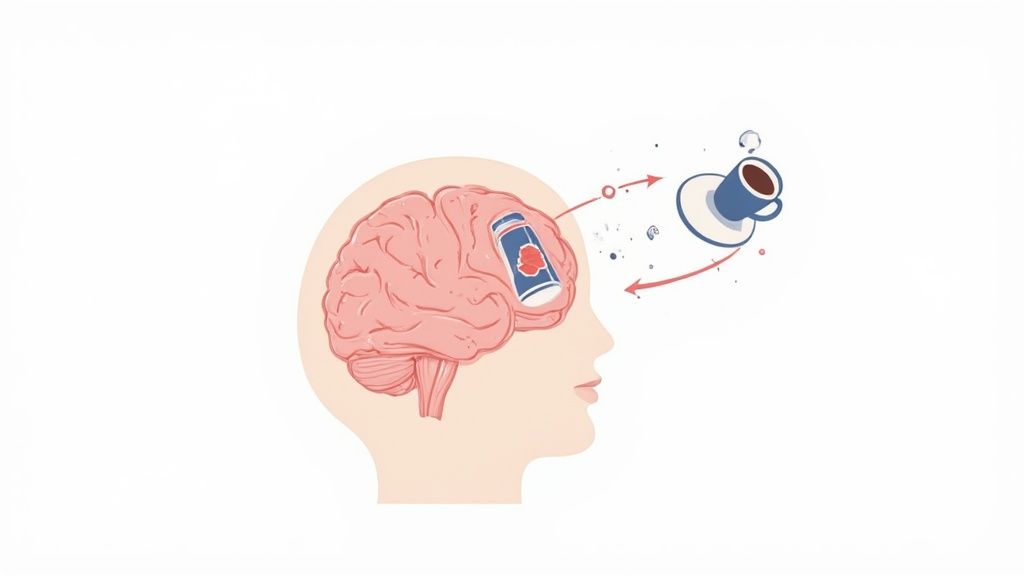
This powerful feedback loop trains your brain to see soda as the go-to fix for feeling tired, bored, or stressed. It becomes more than just a drink; it becomes a tool.
The Power of Psychological Triggers
Beyond the physical side, the psychological triggers are what really keep the habit alive. These are the cues in your environment and daily life that your brain connects with drinking soda.
Think about it. These probably sound familiar:
- Routine-Based Triggers: Is a soda just part of your lunch? The automatic partner to your pizza or popcorn? Breaking a routine like that can feel genuinely strange.
- Emotional Triggers: Feeling stressed out after a tough meeting? Bored on a slow afternoon? A soda can feel like a quick and easy reward or a comforting escape.
- Environmental Triggers: Sometimes, just seeing it is enough. Walking past the vending machine at work, browsing the colorful soda aisle, or being at a party where everyone else has a can in hand.
A big piece of the puzzle is our natural human resistance to change. It’s uncomfortable to disrupt our established patterns, which is why shaking a habit as simple as drinking a soda can feel like such an uphill battle.
This isn't just a personal struggle; it's a global one. Nearly one in five Americans drinks at least one soda every single day. In some parts of the world, that number is even higher, which just goes to show how deeply embedded this habit has become in our cultures.
Getting Your Environment Ready for a Win
Thinking about quitting soda is the easy part. Actually doing it? That's a different story. The real work—and your first big win—happens before you even have your last can. It’s all about setting up your world so that grabbing a healthy drink is the easy, obvious choice, not a constant uphill battle.
First things first: do a full-on purge. Go through your kitchen, your office desk, your car’s glove box—anywhere you’ve got a secret soda stash. If you can’t see it, you’re way less likely to think about it. Getting rid of the temptation is a surprisingly powerful move.
But this isn't just about taking away the bad stuff. It's about bringing in the good and making it impossible to ignore.
Pick Your Day and Rally the Troops
Alright, with the soda gone, it's time to get real. Vague promises like "I'll quit eventually" are a recipe for failure. You need to pick a concrete start date. Circle it on your calendar, set a reminder on your phone—make it official.
Giving yourself a firm deadline turns a fuzzy idea into a real plan. It gives you a clear target and a sense of purpose.
Next up, tell your people. Let your family, friends, and even your closest coworkers know what you’re doing and why it matters to you. This is a bigger deal than you might think. Here’s why:
- It keeps you honest: It's a lot harder to cave when you know people are watching.
- It stops accidental slip-ups: Your friend won't unknowingly offer you a soda if they know you've quit.
- You get your own cheerleaders: A little encouragement during a tough craving can make all the difference.
Tell your friends and family you need them on your team. A simple, "Hey, I'm quitting soda, so please don't offer me any and maybe cheer me on a bit?" can seriously boost your chances of success.
Stock Your Fridge for Victory
Now for the fun part. With your spaces cleared and your support system on notice, it's time to stock up on genuinely good alternatives. The worst thing you can do is leave yourself with nothing to drink when a craving hits. You need delicious, satisfying options ready to grab.
Think about what you actually like about soda. Is it the bubbles? The sweet flavor? The icy-cold refreshment on a hot day? The trick is to find replacements that scratch that same itch.
Here are a few ideas to get you started:
- Sparkling Water: If you love the fizz, this is your new best friend. There are a million flavor options out there now, from simple lime to fancy hibiscus.
- Herbal Iced Tea: Brew a big pitcher of your favorite herbal tea (peppermint and berry are great) and keep it chilled. It's full of flavor with zero sugar.
- Fancy Water: Don't underestimate how much better water tastes with a few slices of lemon, cucumber, or even a sprig of fresh mint.
When you open your fridge and see these great choices staring back at you, you've created a safety net. It makes choosing the right thing feel effortless, which is exactly what you want when you're building a new habit.
Finding Soda Alternatives You Actually Enjoy
Let’s be honest: the secret to ditching soda for good isn’t about white-knuckling it through cravings. It’s about replacement. If you just take something away without filling that gap, you’re setting yourself up to feel deprived. The real key is to find satisfying new drinks that give you the fizz, the flavor, or the simple ritual you’re actually missing.
This is about more than just the old advice to "drink more water." Sure, water is great, but when you’re craving a treat, it can feel like a chore. The goal here is to discover new go-to beverages that you genuinely look forward to, making your new habit a pleasure instead of a punishment.
Getting started is all about setting the stage for success.
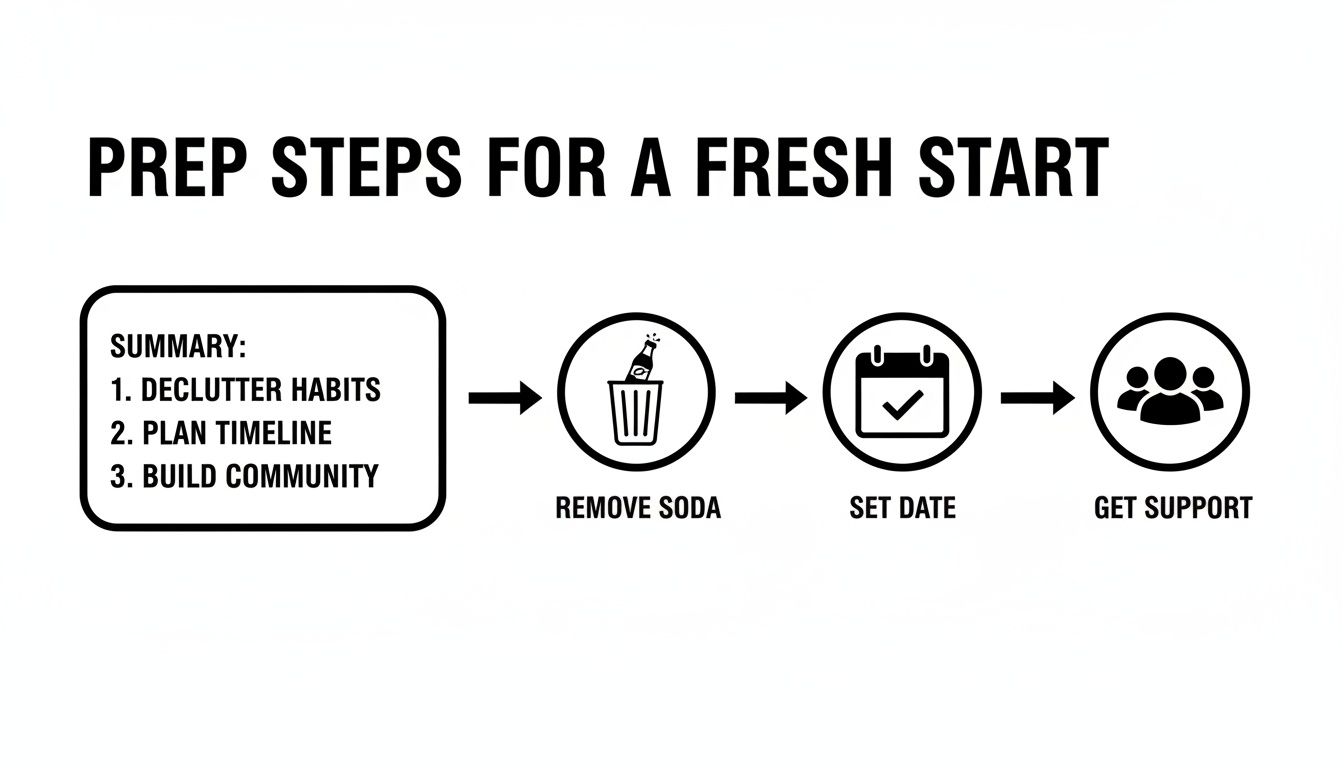
When you clear out the old stuff, make a plan, and get your support system in place, trying out new, healthier options becomes so much easier.
Embrace the Bubbles Without the Sugar
If it's the carbonation you're after, sparkling water is about to become your best friend. The market for these has absolutely exploded, so you're not just stuck with boring old club soda anymore.
You can find a wild variety of naturally flavored seltzers, from simple lemon or lime to more interesting blends like blackberry-cucumber or cherry-vanilla. They deliver that crisp, satisfying fizz without a single gram of sugar or artificial junk. For a little extra flavor, try adding a splash of 100% real fruit juice—like pomegranate or tart cherry—to a glass of plain seltzer.
Brew Your Own Flavorful Iced Teas
Homemade iced tea is another game-changer. When you brew it yourself, you have total control over the ingredients and sweetness, so you know exactly what you’re getting. No hidden sugars here.
Have some fun experimenting with different kinds of tea to find a favorite:
- Herbal Teas: Options like hibiscus, peppermint, and chamomile are naturally caffeine-free and pack a serious flavor punch. A cold pitcher of hibiscus berry tea on a hot day is incredibly refreshing.
- Green Tea: Full of antioxidants, green tea has a lighter, more delicate flavor. I love adding a squeeze of fresh lemon and a few mint sprigs to brighten it up.
- Black Tea: For that classic iced tea taste, brew a strong batch of black tea and chill it completely. Just keep an eye on the caffeine if you’re sensitive to it.
The trick is to find a replacement that mimics the specific thing you love about soda. If it's the cold, bubbly sensation, go for sparkling water. If it's that burst of sweet flavor, focus on fruit infusions.
Upgrade Your Water Game
Let's face it, plain water can feel a little dull when you're used to super-sweet, hyper-flavored drinks. The easy fix? Infusing it with natural flavor. It's surprisingly simple and makes staying hydrated feel a bit more special.
Just add some of these combinations to a big pitcher of cold water and let them hang out for a few hours:
- Cucumber slices and fresh mint
- Strawberries and a few basil leaves
- Slices of orange and a bit of fresh ginger
- Lemon wedges and a sprig of rosemary
You’re not alone in making this switch. Consumer trends show a huge move toward these healthier options, with sales of sparkling water and other functional drinks seeing double-digit growth. People are actively looking to cut back on sugar, and the market is responding. This makes it easier than ever to explore the vibrant, tasty world of drinks without sugar or artificial sweeteners and find a few new favorites you’ll truly enjoy.
Healthy Soda Alternatives Comparison
To help you find your new go-to, here’s a quick comparison of some of the best soda replacements, highlighting what makes them great and when they work best.
| Alternative Drink | Why It Works | Best For |
|---|---|---|
| Flavored Seltzer | Delivers the same carbonated fizz and flavor profile as soda but with zero sugar or calories. | Satisfying a craving for bubbles and a specific flavor, like cola or root beer. |
| Infused Water | Provides subtle, refreshing flavor with natural ingredients. It feels like a treat without any additives. | All-day hydration when plain water feels boring. Great for sipping at your desk. |
| Herbal Iced Tea | Offers complex, robust flavors and can be brewed sweet or unsweet. Naturally caffeine-free. | An afternoon pick-me-up or a relaxing evening drink that won't disrupt sleep. |
| Kombucha | A fermented tea that is bubbly, slightly tangy, and contains probiotics for gut health. | When you want something with a unique, complex flavor and a health boost. |
| Water with a Splash of Juice | Adds natural sweetness and flavor to plain or sparkling water, giving you that "juice" feeling with less sugar. | Moments when you're craving a truly sweet, fruity drink but want to control the sugar. |
Finding the right alternative is a personal journey. Don't be afraid to try a few different options until you land on something that clicks. The goal is to build a new habit you can stick with because you actually like it.
How to Handle Cravings and Withdrawal
Alright, this is where the rubber meets the road. You’ve prepped your kitchen and stocked up on good stuff, but now you have to face the day-to-day, moment-to-moment reality of kicking the soda habit. Let’s be honest: the first few days and weeks can be rough as your body adjusts. But having a solid game plan for cravings and withdrawal makes all the difference.
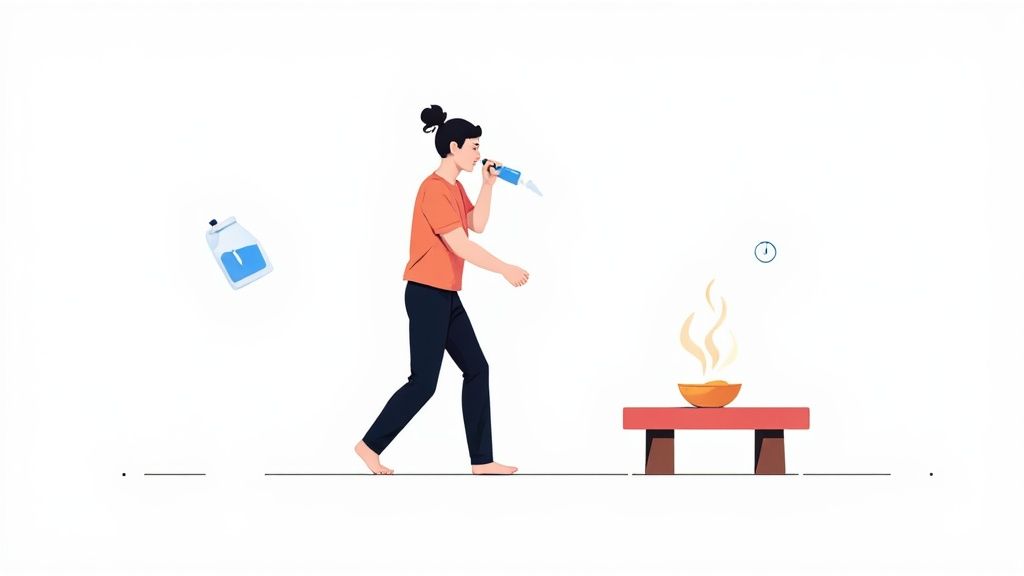
When you quit soda, you're often dealing with a one-two punch of sugar and caffeine withdrawal. This can bring on some pretty uncomfortable side effects. You might get hit with headaches, feel surprisingly cranky, or battle a frustrating case of brain fog. This is all completely normal—it’s just your body hitting the reset button.
Winning the Battle Against Withdrawal Symptoms
Instead of just white-knuckling it through these symptoms, you can take control. The trick is to give your body what it's actually missing, but in a much healthier way.
- For Headaches: Dehydration is a huge headache trigger. When you stop drinking soda, you’re also cutting out a major source of fluids (even if it was an unhealthy one). Your absolute best defense is to drink plenty of water all day long. For an extra boost, try adding a tiny pinch of sea salt and a squeeze of lemon to help with electrolyte balance.
- For Brain Fog and Fatigue: That sluggish, can’t-focus feeling is your body screaming for the quick-energy sugar hit it’s used to. Fight back with smart snacking. A handful of almonds, an apple with peanut butter, or a hard-boiled egg provides a steady stream of energy from protein and healthy fiber. This helps you avoid the blood sugar rollercoaster that causes brain fog.
- For Irritability: When your mood sours for no reason, it’s often your brain chemistry going a little haywire. The fastest fix? A brisk five-minute walk. Seriously. Getting your body moving releases endorphins—natural mood-boosters—that can reset your mindset and take the edge off.
Knowing what to expect can be incredibly empowering. If you want to dive deeper into the timeline, check out our guide on sugar withdrawal symptoms and how long they last.
Defusing Cravings in the Moment
Withdrawal is mostly a physical game, but cravings are a mental one. An urge can feel all-consuming, but the truth is, it’s temporary. You just need a few go-to strategies to ride out the wave without caving.
Remember this: a craving is just a thought. You don't have to act on it. Acknowledging the urge and then deliberately shifting your focus is a skill that gets stronger every time you use it.
When a powerful soda craving hits, try one of these tactics immediately:
- Change Your Scenery: Sitting at your desk? Get up. Standing in the kitchen? Walk into another room. Just physically removing yourself from the trigger spot can dramatically weaken a craving's grip.
- Engage Your Senses: Give your brain something else to focus on. Smell some peppermint oil, chew a piece of intensely minty sugar-free gum, or splash some cold water on your face. This sensory jolt interrupts the craving pattern.
- Delay and Distract: Make a deal with yourself. You can have that soda... but only after you do something else first. Maybe it's loading the dishwasher or answering five emails. You'll often find that by the time you finish the task, the craving has completely vanished.
Every single time you successfully navigate a craving, you’re doing more than just avoiding a soda. You're actively rewiring your brain and building a stronger, healthier habit. These small victories are what true, lasting change is built on.
Staying Motivated for the Long Haul
That first wave of "I can do this!" enthusiasm is great. It'll probably get you through the first week, maybe even two. But what happens when the novelty fades and a tough craving hits on a stressful Tuesday afternoon?
Lasting change isn’t about riding a temporary high of motivation. It’s about building a system that keeps you going when that initial excitement is long gone. It's a marathon, not a sprint, and the key is to find smart ways to celebrate your progress and see the real-world benefits.
Track Your Progress and Build Pride
One of the most effective things you can do is start a streak. Seriously. There's something incredibly powerful about tracking your soda-free days and watching that number grow. It turns this big, fuzzy goal into a tangible, day-by-day achievement.
Every day you mark off is a win. That growing streak becomes something you own, something you've worked for. You can use a physical calendar on your fridge or an app like StopSugar with its daily check-in feature. The simple act of checking "yes" reinforces your commitment and makes you really hesitate to break a chain you’ve built for 23 straight days.
The app's mood tracker is also a game-changer here. You might not notice the subtle shifts day-to-day, but looking back at a month's worth of data and seeing your energy levels stabilize is undeniable proof that this is working.
Another fantastic motivator? Track the cash. If you were grabbing a $2.50** soda every day, that’s over **$75 a month. Put that money in a clear jar on your counter or sweep it into a separate savings account. Watching that pile of money grow is a powerful, visual reminder of what you’re gaining.
The goal isn't just to stop a negative behavior but to actively build a positive one. Each day you choose a healthier alternative is a vote for the person you want to become.
Create a System of Rewards
Let’s be clear: this isn't about bribing yourself. It's about acknowledging the hard work and celebrating your wins. Rewarding yourself for hitting milestones reinforces the new habit and makes the journey more enjoyable. The rewards should be things you genuinely look forward to, not just empty gestures.
Try setting up a little reward schedule for yourself. It could look something like this:
- One Week Soda-Free: Treat yourself to a new book you’ve been wanting to read, a fancy coffee from your favorite shop, or a long, relaxing bath with all the extras.
- One Month Soda-Free: Use some of that money you saved to buy something you've had your eye on—a great pair of headphones, a new shirt, or a video game.
- 100 Days Soda-Free: Time for a bigger celebration. Maybe it's a weekend getaway you've been putting off or a special dinner at that restaurant you love.
This creates a positive feedback loop. Your brain starts connecting this new, soda-free lifestyle with things that bring you genuine joy.
Connect Your Habit to Real Health Wins
Motivation truly takes off when you start to see and feel the difference in your health. And these changes often happen faster than you’d expect.
For instance, just swapping one 355 ml can of soda for water every day slashes about 140–160 calories. Do that for a month, and you could be looking at a weight change of around 1 to 1.3 pounds, without changing anything else. Your teeth will also thank you immediately by being less exposed to a constant bath of sugar and acid, which lowers your risk for new cavities. You can discover more insights about these health outcomes if you're a data person.
Start paying close attention to the small stuff. Are you sleeping more soundly? Is your skin looking clearer? Do you still have that 3 PM energy slump? Noting these improvements is rocket fuel for your motivation because it proves your hard work is having a real, tangible impact on your quality of life.
Got Questions About Kicking the Soda Habit?
When you decide to stop drinking soda, a bunch of questions usually pop up right away. Getting some straight answers beforehand can really smooth out the process and keep you from getting derailed when things get tough.
Let's tackle some of the most common ones.
Should I Quit Cold Turkey or Taper Off Slowly?
Honestly, there’s no single right answer here—it all comes down to what works for you. Think about your personality and how deep-rooted your soda habit is. The best method is simply the one you can stick with.
Going cold turkey is great if you’re an "all-or-nothing" kind of person who loves a clean break. Just be ready for some potentially intense withdrawal symptoms for the first few days. We're talking headaches, maybe some grumpiness.
On the other hand, a gradual approach can be much more sustainable and less of a shock to your system. You could try cutting back by one soda a day each week, or maybe switching from a full can to a mini-can. This gives your body and brain time to adjust, which makes the whole thing feel a lot less dramatic.
Are Diet Sodas an Okay Substitute?
Ah, the great diet soda debate. This one is tricky. While you're ditching the sugar (which is a big win!), you're keeping the psychological habit alive. You're still reaching for that can for the fizz, the flavor, or just the comfort of a ritual.
Plus, the artificial sweeteners can be a problem of their own. For many people, they actually ramp up cravings for other sweet stuff, which can sabotage your efforts to break the sugar cycle completely.
Think of diet soda as a temporary bridge, not the final destination. It's a step in the right direction away from sugary drinks, but the long-term goal is to move toward truly healthy options like water, seltzer, or unsweetened herbal tea.
What Happens If I Mess Up and Have a Soda?
First off, breathe. A single soda doesn't wipe out all your hard work or mean you've failed. The absolute worst thing you can do is fall into the "all-or-nothing" trap, where one slip makes you feel like you might as well give up entirely.
Instead, use it as a data point. Acknowledge it happened, and then ask yourself why. Were you super stressed? Exhausted? In a social setting where everyone else was drinking one? Figure out the trigger, learn from it, and then get right back on track with your very next choice. One slip-up is just a blip, not a catastrophe.
If you want more personalized guidance on this or other health goals, or just want to chat with a professional about the health impacts, you might want to look into online primary care services. They can offer support that’s tailored to your bigger wellness picture.