Is There Sugar In Alcohol A Surprising Guide For Your Health
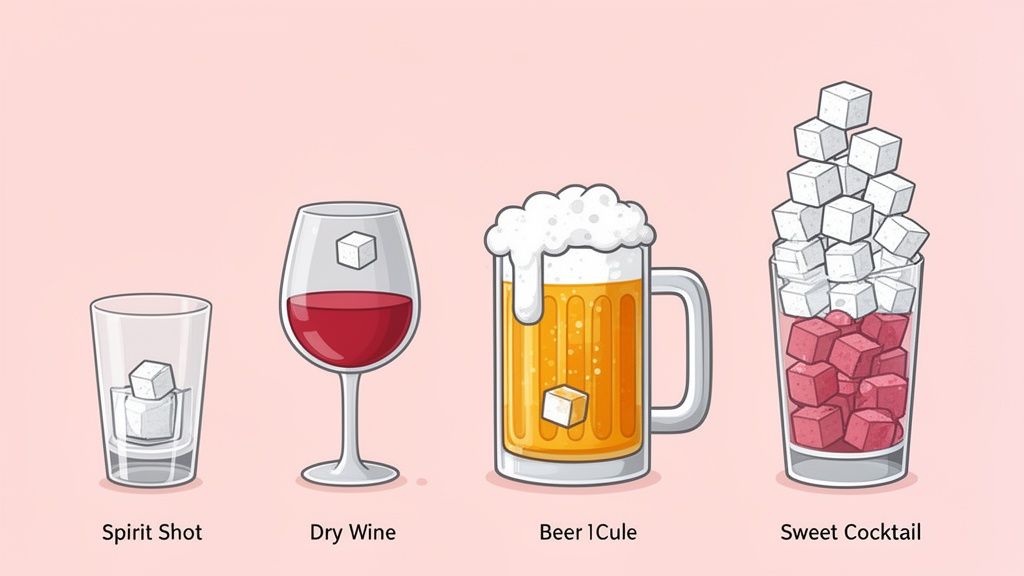
When people ask, "Is there sugar in alcohol?" the honest answer is a bit of a curveball: it’s both yes and no. It really depends on what’s in your glass.
While pure spirits like vodka, gin, and whiskey technically have zero sugar after they’re distilled, you can't make any kind of alcohol without sugar to begin with.
The Surprisingly Complex Answer to Sugar In Alcohol
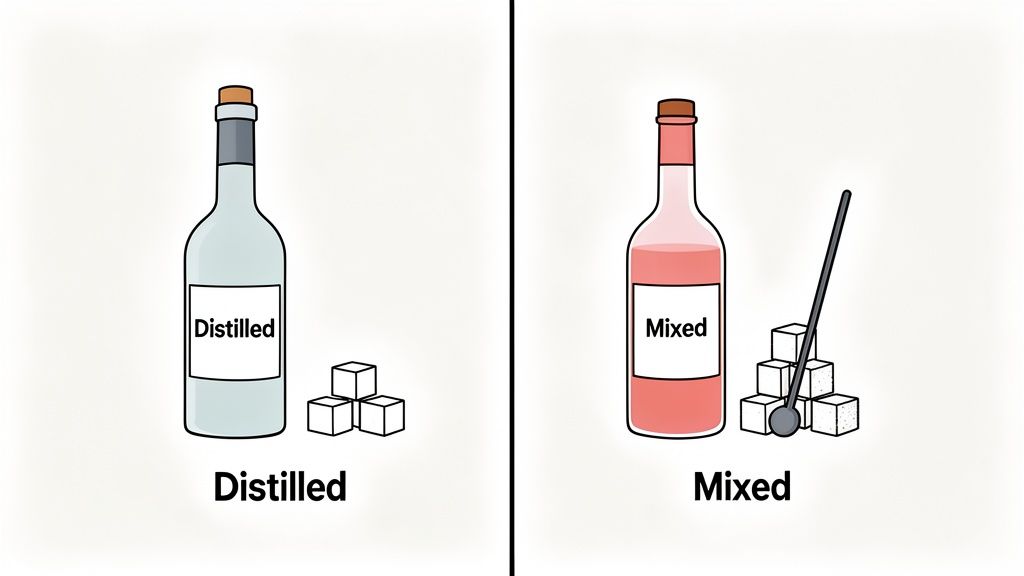
Think of it this way: the amount of sugar in your final drink is decided by two things—the type of alcohol and, more often than not, what gets mixed into it. Your shot of gin might be sugar-free, but add tonic water and a sweet syrup, and you’ve just created a sugar-heavy cocktail.
This is a really important distinction for anyone trying to cut back on sugar. Learning to spot the difference between a dry wine and a sweet dessert wine, or understanding why a vodka soda is a better choice than a vodka cranberry, is your secret weapon for enjoying a drink without derailing your health goals.
A Quick Glance at Sugar Levels
To give you a clearer picture from the get-go, we’ve put together a handy table that breaks down the usual suspects by their sugar content. It’s organized from the lowest to the highest, giving you an at-a-glance guide before we get into the nitty-gritty.
The point here isn't to swear off alcohol forever. It's about making smarter, more conscious choices. Knowing which drinks are low in sugar and which are basically dessert in a glass is what puts you back in the driver's seat.
Here’s a simple guide that can help you make a better choice next time you’re ordering.
Quick Guide to Sugar in Alcoholic Drinks
| Drink Category | Typical Sugar Content (per serving) | Example |
|---|---|---|
| Distilled Spirits | 0 grams | Vodka, Gin, Whiskey |
| Dry Wines | 0-4 grams | Sauvignon Blanc, Brut |
| Light Beers | <1 gram | Michelob Ultra, Miller Lite |
| Sweet Wines | 6-20+ grams | Riesling, Port, Moscato |
| Liqueurs & Cordials | 10-30+ grams | Kahlúa, Baileys, Amaretto |
| Mixed Drinks/Cocktails | 15-40+ grams | Margarita, Piña Colada |
Consider this table your starting point. As we dig deeper, you’ll start to understand why these numbers can be so different and how you can walk into any bar or liquor store and choose with confidence.
How Fermentation Creates Alcohol From Sugar
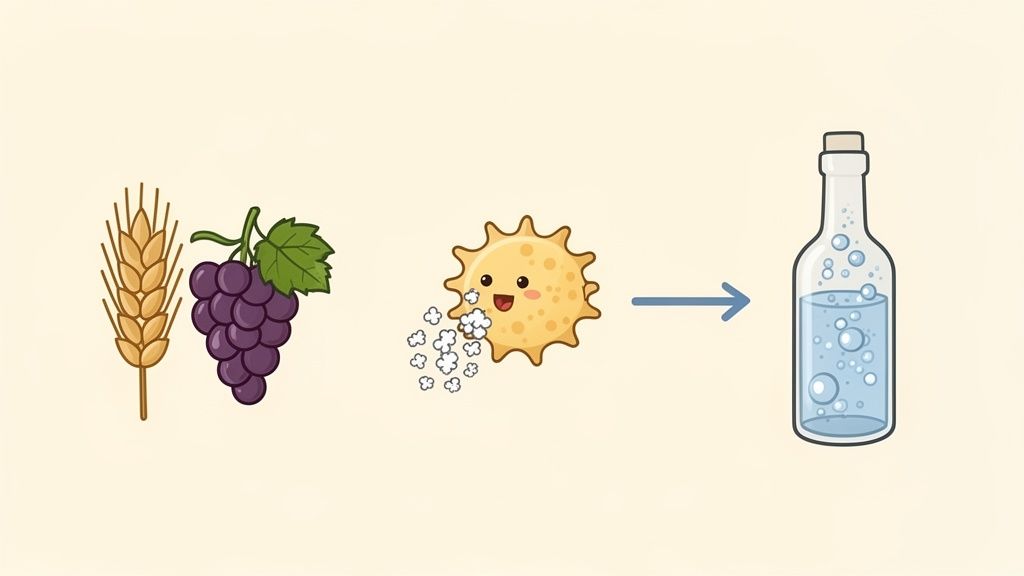
To really get why some drinks are loaded with sugar and others aren't, you have to go back to the beginning. It all comes down to a natural, almost magical process called fermentation. This is the fundamental step that turns sugar into alcohol.
Think of it like making bread. Yeast eats the sugar in the dough and burps out carbon dioxide, making the bread rise. Making alcohol works on the exact same principle.
Yeast, a tiny living microorganism, is the real MVP here. It’s added to a sugary base—like crushed grapes for wine or malted barley for beer—and it gets to work. The yeast feasts on these natural sugars, and as it breaks them down, it produces two things: ethanol (alcohol) and carbon dioxide.
The Concept Of Residual Sugar
The final sugar count in any alcoholic drink really just depends on one thing: how much sugar the yeast didn't eat. This leftover sweetness is called residual sugar.
If the yeast is left to do its job until every last bit of sugar is gone, you get a very "dry" drink with basically zero grams of sugar. This is what happens with most spirits and many dry wines. But if the process is stopped before the yeast is finished, some sugar is left behind, resulting in a sweeter drink.
This single concept explains the huge difference in sugar content across the board. A sweet dessert wine has far more residual sugar than a dry red, even though both started with sugary grapes. The winemaker simply steps in and stops the yeast before it cleans its plate.
Controlling this process is a true art. If you're curious about the different ways producers manage it, you can explore various wine fermentation techniques to see how they fine-tune this sugar-to-alcohol conversion.
Fermentation vs Distillation
Knowing about fermentation also clears up why spirits like vodka, gin, and whiskey are in a different category. Their production involves an extra step called distillation.
After the fermentation is complete, the alcoholic liquid is heated up. Alcohol boils at a lower temperature than water, so it turns to vapor first. This vapor is then captured and cooled, condensing it back into a much stronger, purer liquid alcohol.
Here’s the key difference to remember:
- Fermentation is the process that creates alcohol from sugar.
- Distillation is the process that separates the pure alcohol from everything else—including any leftover water and all the residual sugar.
This is precisely why a standard 1.5-ounce shot of plain vodka, gin, tequila, or whiskey contains 0 grams of sugar and 0 grams of carbs. The sugar was absolutely necessary to make the alcohol in the first place, but it gets completely left behind during the distillation process.
Unmasking The Hidden Sugar In Your Favorite Drinks
It’s rarely the alcohol itself that gets you on the sugar front—it’s everything we mix with it. Think about it: a straight pour of vodka, gin, or tequila has zero sugar after the distillation process. But how often do we drink them neat?
The real culprits are the mixers, syrups, and sweet liqueurs that turn a simple spirit into a full-blown cocktail. That’s where the sugar hides in plain sight. A gin and tonic sounds innocent enough, right? But most tonic water is loaded with sugar. The same goes for the orange juice in a Screwdriver or the sweet-and-sour mix in a margarita. This is how a single drink can torpedo your daily sugar goals without you even realizing it.
From Zero Sugar to Sugar Bomb: The Mixer Effect
Once you start paying attention to what's in your mixer, you'll see your drinks in a whole new light. A shot of plain spirits is one thing, but the second you add a mixer, the entire nutritional profile changes.
It’s easy to assume only the obvious stuff, like soda and juice, has sugar. But the truth is, it’s lurking in places you'd never expect.
A 1.5-ounce shot of vodka has zero grams of sugar. But mix it into a Vodka Red Bull, and you're suddenly drinking 27 grams of sugar. Even a classic gin and tonic with 12 ounces of tonic water can pack 32 grams of sugar. For perspective, a 12-ounce can of Coke has 39 grams. The numbers add up incredibly fast, as you can see if you dig into the sugar content of common mixers.
This is why looking beyond the base spirit is so important. You have to read the whole label, not just the front of the bottle.
Common Cocktails and Their Real Sugar Count
Let's take a look at the actual sugar content hiding in some bar-menu staples. The numbers might surprise you, and they're key to making smarter choices.
- Margarita: Between the sweet and sour mix and the triple sec, a standard margarita can easily land in the 20-30 gram range.
- Piña Colada: That delicious tropical blend of cream of coconut and pineapple juice? It can serve up over 30 grams of sugar.
- Whiskey Sour: The simple syrup in a traditional recipe adds up fast, usually contributing 15-25 grams of sugar.
- Long Island Iced Tea: This one’s a doozy. The combination of sour mix and a splash of cola sends the sugar content soaring, often to 30+ grams.
Just knowing this stuff is the first step. It helps you dodge those unexplained energy crashes and stick to your health goals. And if you're looking for great-tasting drinks that ditch the sugar altogether, you should check out our guide to making delicious no-sugar mocktails. When you’re armed with the right information, you can still enjoy a night out without accidentally drinking a dessert's worth of sugar.
A Drink-by-Drink Guide to Sugar Content
So, we've covered the basics of how alcohol is made and why mixers matter. Now it's time to get practical. The single best thing you can do is know exactly what’s in your glass, and this is where we break it down.
Think of this as your field guide to making smarter choices at the bar or in the liquor aisle.
Wines: The Difference Between Dry and Sweet
Wine is probably the clearest example of fermentation in action. A winemaker has a choice: stop the process early to leave more natural grape sugar behind for a sweeter taste, or let the yeast work its magic until the wine is crisp and dry.
- Dry Wines: A standard 5-ounce glass of a dry red (like Cabernet Sauvignon or Pinot Noir) or a dry white (like Sauvignon Blanc) is a great low-sugar option. These typically contain just 1-3 grams of sugar. Brut champagne also falls into this category.
- Sweet and Dessert Wines: This is where the sugar piles up. Sweet wines like Riesling, Moscato, and Port can easily pack 8 to 20+ grams of sugar into a single small glass.
Beer: It's All About the Carbs
When we talk about beer, the conversation shifts from pure sugar to total carbohydrates. Why? Because the yeast used in brewing is incredibly efficient and eats up almost all the sugar.
The real story with beer is the grain. Since beer is made from grains like barley, it’s naturally high in carbs. Your body treats these carbs just like sugar, breaking them down and causing a similar spike in blood sugar.
- Light Beers: These are specifically brewed to cut down on calories and carbs. A 12-ounce serving usually has only 2-5 grams of carbs and less than 1 gram of sugar.
- Regular Beers: Your average lager or ale will land somewhere in the 10-15 grams of carbs range.
- Craft and Dark Beers: This is where the numbers climb. Heavier beers like IPAs and stouts can easily top 20 grams of carbs per serving.
So, while beer itself doesn't contain much sugar, its carbs end up in the same place. It’s just a different road to the same destination.
Liqueurs and Ciders: The Hidden Sugar Bombs
Welcome to the sweetest aisle of the liquor store. Liqueurs and many hard ciders are notorious for their sky-high sugar content, mostly because they are loaded with added sweeteners after the fact. They are some of the sneakiest sources of sugar you'll find.
A single shot of Fireball, for instance, has 11 grams of sugar. A serving of Kahlua? A staggering 33 grams. Even a shot of Jagermeister contains 16.4 grams. Hard ciders aren't much better, with most popular brands containing 15-25 grams of sugar in a 12-ounce can. You can find more insights on alcohol and sugar to see just how quickly it all adds up.
And what about cocktails? A simple spirit like gin or vodka has zero sugar on its own. The problem starts the second you add a mixer.
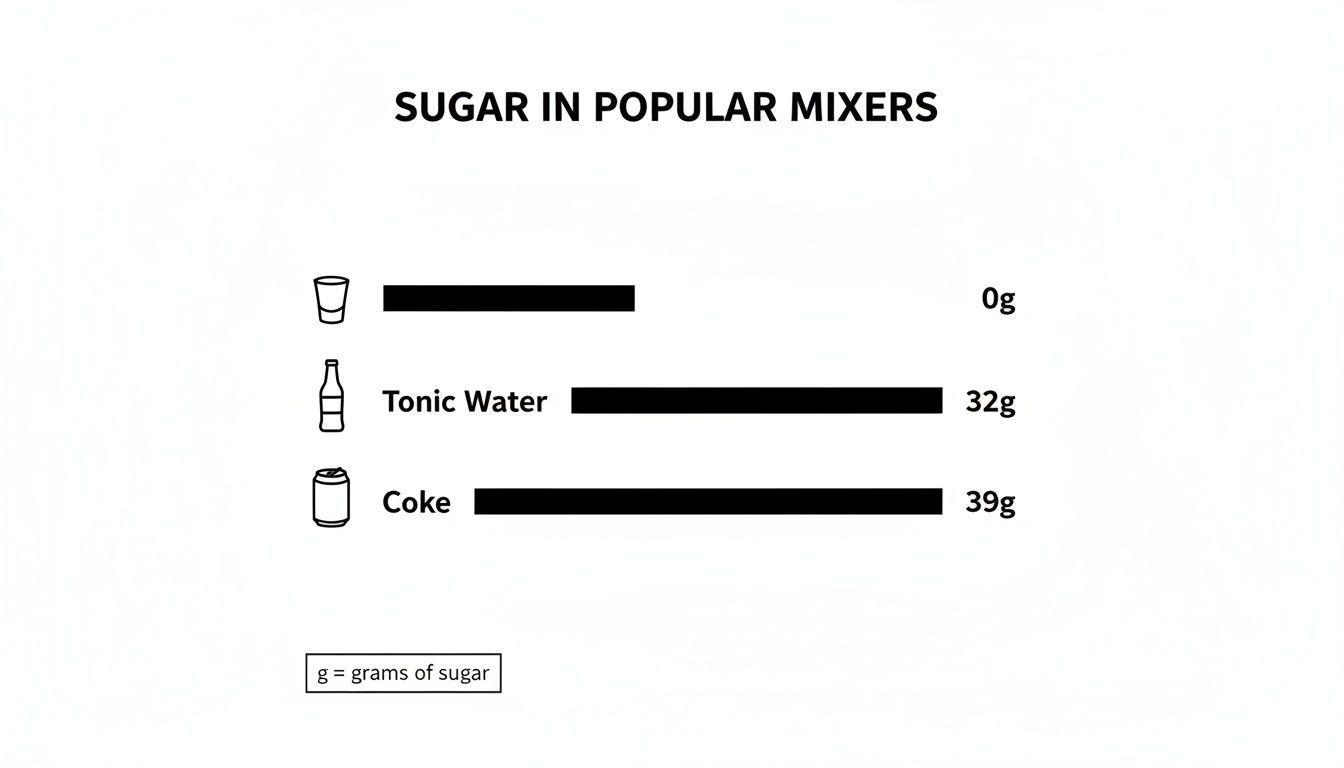
This chart makes it crystal clear: that "harmless" gin and tonic isn't so harmless after all. The spirit is sugar-free, but the tonic water alone can dump over 30 grams of sugar into your glass.
To make this easier to visualize, here’s a quick-glance table comparing some common drinks.
Sugar and Carb Content in Popular Alcoholic Drinks
| Drink (Serving Size) | Approximate Sugar (grams) | Approximate Carbs (grams) | Notes |
|---|---|---|---|
| Vodka, Gin, Tequila, Whiskey (1.5 oz) | 0g | 0g | Pure spirits have no sugar or carbs. |
| Dry Red/White Wine (5 oz) | 1-3g | 2-4g | Brut Champagne is also in this range. |
| Sweet/Dessert Wine (3.5 oz) | 8-20g+ | 8-20g+ | Includes Port, Sherry, and Moscato. |
| Light Beer (12 oz) | <1g | 2-5g | Check the label, as brands vary. |
| Regular Beer (12 oz) | <1g | 10-15g | Lagers and ales fall into this category. |
| Hard Cider (12 oz) | 15-25g | 15-28g | Can be as sugary as a regular soda. |
| Sweet Liqueur (1.5 oz) | 11-33g | 11-33g | Examples: Fireball (11g), Kahlua (33g). |
| Tonic Water (12 oz) | 32g | 32g | A major hidden source of sugar in cocktails. |
As you can see, the range is huge. A glass of dry wine is worlds away from a hard cider or a cocktail mixed with a sugary soda. Knowing these numbers is the first step toward drinking smarter without feeling like you're missing out.
How Your Body Processes Alcohol and Sugar
When you sip a sugary cocktail, your body faces a critical decision. It views alcohol as a toxin, something that needs to be handled immediately. This means your liver, the body's main processing plant, drops everything else—including processing sugar and fat—to focus entirely on getting rid of the alcohol.
Imagine a busy highway with only one lane open. The alcohol is like an emergency vehicle with sirens blaring, and all other traffic, including the sugar from your drink, has to pull over and wait.
This metabolic traffic jam has real consequences. With your liver preoccupied, the sugar from your drink is stuck in limbo. Instead of being used for energy, it's far more likely to get rerouted into storage as fat, contributing directly to weight gain over time.
The Blood Sugar Rollercoaster
Mixing alcohol and sugar also sends your blood sugar on a wild ride. First, the sugar causes a rapid spike, giving you that initial buzz or burst of energy. In response, your body releases a flood of insulin to bring things back under control, which then causes your blood sugar to plummet.
This steep drop is what we know as the "crash." Suddenly you feel tired, irritable, and hit with intense cravings for more sugar to bring your levels back up. It’s a vicious cycle. If you're curious about why different sugars have such different effects, you can explore the difference between glucose and fructose in our guide.
This spike-and-crash isn't just about wrecking your energy for a few hours. It messes with your body's natural rhythm, fuels mood swings, and can seriously sabotage your efforts to live a healthier life.
Those powerful cravings are a huge roadblock when you're trying to cut back on sugar. Understanding what's happening inside your body is the first step to getting a handle on them. For anyone looking for practical tips, learning about managing sugar cravings can be a real game-changer.
Ultimately, your body's reaction to sugary drinks is about more than just empty calories. It's a complex process where detoxification takes precedence over everything else. This is why these drinks are so efficient at promoting fat storage, causing energy slumps, and triggering a cycle of cravings that works against your goals. Knowing this empowers you to make smarter choices about what and how you drink.
Smart Swaps For A Low Sugar Lifestyle
Knowing the why behind sugar in your drinks is a great first step, but real change happens when you put that knowledge into practice. The good news is that making healthier choices doesn't mean you have to be restrictive or overthink every order.
It’s all about making a few simple, smart swaps that you can easily remember the next time you're out. The idea isn't to strip the fun out of socializing—it's to help you enjoy yourself without derailing your health goals.
Easy Upgrades At The Bar
One of the biggest culprits for hidden sugar? The mixer. It’s a classic trap—you carefully pick a spirit, only to have it drowned in a sugary addition that sends your intake through the roof.
A perfect example is the old vodka tonic versus vodka soda debate. They look the same, they sound similar, but they couldn't be more different when it comes to sugar.
A standard Vodka Tonic can pack over 30 grams of sugar, and nearly all of it comes from the tonic water. Just by swapping that out for a Vodka Soda with a lime wedge, you bring the sugar content down to practically zero. That one little change makes a huge impact.
Here are a few other smart mixer swaps to keep in your back pocket:
- Club Soda or Seltzer: These are your best friends at the bar. They’re calorie-free, sugar-free, and add that satisfying fizz without any of the baggage.
- Diet Soda: If you're craving that classic cola flavor, opting for the diet version is a no-brainer. You get the sweetness you want without any of the sugar.
- Fresh Citrus: A simple squeeze of lime, lemon, or even orange can add a burst of flavor for minimal sugar, unlike those concentrated, syrupy juices.
Choosing Your Drink Wisely
Beyond the mixers, the base of your drink matters just as much. If wine is your go-to, learn to love the word "dry." A dry Sauvignon Blanc or a Brut Champagne has far less residual sugar than a sweet Riesling or Moscato. For a deeper dive, check out our complete guide on how to drink without sugar.
For beer lovers, lighter is usually better. Light beers are specifically brewed to have fewer carbs and, by extension, less sugar.
And a quick word on cocktails: be wary. Unless you know exactly what’s going into that glass, a fancy mixed drink is probably a cocktail of sugary syrups, juices, and liqueurs. Sticking to simple classics, like a spirit paired with a zero-sugar mixer, puts you in control and keeps you on track.
Your Top Questions Answered
Let's round things out by tackling some of the most common questions that pop up when people start looking into the sugar content of their drinks.
Does Alcohol Turn Into Sugar In Your Body?
It’s a common misconception, but no, alcohol itself doesn't turn into sugar once you drink it. Your liver actually treats alcohol like a toxin and works overtime to get rid of it first, putting other metabolic processes on the back burner.
That said, alcohol’s calories can still lead to weight gain. Plus, many drinks are loaded with actual sugar from mixers or the fermentation process, and your body processes that sugar just like it would from a candy bar.
Which Alcohol Is Best On A Low-Sugar Diet?
For the lowest sugar options, stick with straight spirits. Think vodka, gin, tequila, rum, and whiskey. When they're distilled, they are left with zero sugar and zero carbs.
The trick is what you do with them. Keep your drinks clean by having them neat, on the rocks, or with a mixer that doesn't add sugar. Club soda, seltzer, and sparkling water are all fantastic choices—just add a squeeze of fresh lime or lemon for flavor.
Can I Drink Alcohol If I Have Diabetes?
This is a really important question, and the answer requires a lot of caution. Alcohol can have unpredictable and sometimes dangerous effects on blood sugar, causing it to swing too high or drop too low.
There's no one-size-fits-all answer here. It's absolutely essential to speak with your doctor for personalized medical advice before consuming alcohol. If you get the okay, the rules are simple but non-negotiable: stick to low-sugar drinks and never, ever drink on an empty stomach.