Probiotics Sugar Cravings Tame Sweet Urges With Gut Health
Here’s the quick takeaway: certain probiotics dial down sugar cravings by waking up the FFAR4 receptor and tuning your gut metabolites. Strains like Lactobacillus johnsonii, Bacteroides vulgatus, and Bifidobacterium longum top the list for cutting sugar intake.
Quick Probiotics Sugar Cravings Guide
Before you dive deeper, here’s a snapshot of how specific microbes pull this off:
- FFAR4 Receptor Activation – Probiotic byproducts bind this receptor, muting those sweet-signal pathways.
- Short-Chain Fatty Acids (SCFAs) – Produced by microbes, these acids prompt satiety hormones to kick in.
- Gut Community Balance – Friendly bacteria outcompete sugar-loving strains, naturally dialing down cravings.
Key InsightFFAR4 connects fatty acid signals with reduced sweet cravings by modulating hunger circuits in the gut.
In practical terms, FFAR4 sensors on your gut lining notice metabolites from certain Lactobacillus strains and quietly tell your brain, “Less sugar needed.”
Below is a screenshot showing the FFAR4 receptor page from Wikipedia.
This view highlights the binding pockets where fatty acids interact, offering a window into how probiotics trigger those FFAR4 pathways.
A January 2025 study linked the gut bacterium Bacteroides vulgatus to a 30% drop in sugar intake among mice with disrupted metabolic pathways. Learn more about the Bacteroides vulgatus findings on News-Medical.
Summary Of Key Findings On Probiotics And Sugar Cravings
Here’s a quick overview of the top studies, their models, strains tested, and the sugar-cutting results you can expect:
| Study | Model | Probiotic Strain | Sugar Reduction |
|---|---|---|---|
| January 2025 | Mice | Bacteroides vulgatus | 30% |
| 2024 | Rats | Lactobacillus johnsonii | 25% |
| 2023 Human Trial | Humans | Bifidobacterium longum | 20% |
This table makes it easy to match a strain to your goals and see real numbers in action.
Key Takeaways
- Activating FFAR4 links fatty acid signals with lower sugar appeal.
- Top strains deliver a 20–30% cut in intake across animal and human studies.
- Pairing these probiotics with StopSugar’s tracking features magnifies your results.
Pair With StopSugar App
- Log each probiotic dose in StopSugar’s daily check-in to spot trends between your gut health and sugar logs.
- Hit the panic button when a craving strikes for instant, healthier snack alternatives.
- Join weekly habit challenges that blend probiotic timing with mood tracking for better consistency.
- Soon, an AI coach will suggest strains and dosing schedules tailored to your own sugar-craving patterns.
Action StepAdd one targeted probiotic strain today and watch your sugar hits drop within weeks.
With these insights and your StopSugar toolkit, you’re ready to tame that sweet tooth—one microbe at a time.
Understanding Gut Microbes And Sugar Cravings
Our gut is home to trillions of microbes that act like traffic controllers for the sugar signals heading to your brain. They tweak appetite by sending messages through specific receptors that sense microbial byproducts.
Take FFAR4, for instance. This receptor sits on gut cells like an antenna, picking up short-chain fatty acid (SCFA) signals. Depending on what it “hears,” it can turn hunger cues up or dial them down.
Here’s an infographic illustrating how FFAR4, microbial metabolites, and probiotic strains interact:
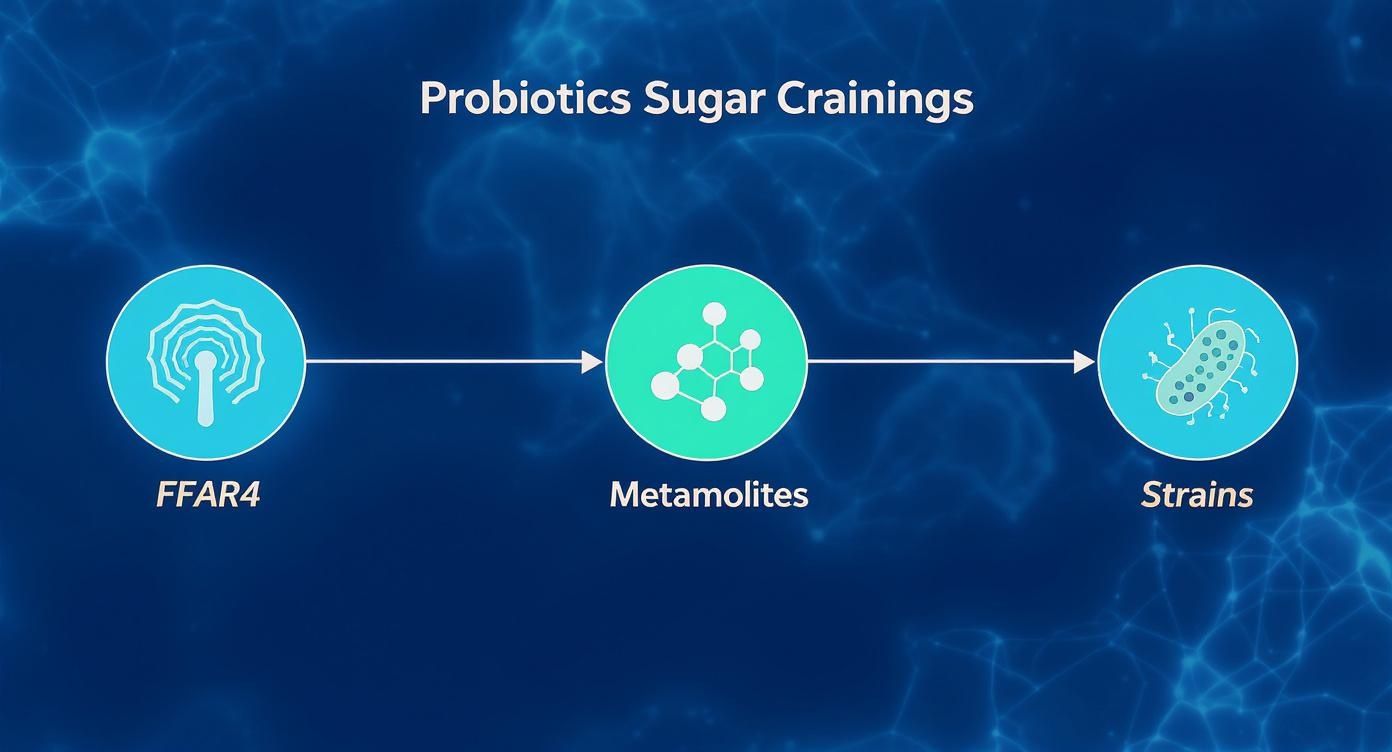
The concept map highlights:
- FFAR4 (antenna icon) listening for SCFAs
- Metabolites (molecule icon) produced by bacteria
- Probiotic strains (bacteria icon) guiding sugar pathways
When SCFAs bind to FFAR4, they influence gut hormones and send fullness signals to your brain, laying the groundwork for our traffic-controller analogy below.
Analogy Of Gut Microbes As Traffic Controllers
Picture your intestines like an airport runway busy with sugar flights. Beneficial bacteria act as air traffic controllers, giving priority to fiber-fed “passengers” and holding back sugar-loving strains.
Over time, this organized system means fewer unplanned sugar signals storming your brain. You notice a drop in sudden sweet cravings and feel more in control.
- Friendly strains set up checkpoints to intercept sugar requests
- SCFAs serve as runway lights, guiding metabolic responses
- FFAR4 sensors read those lights to clear or delay sugar arrivals
How Antibiotics Affect Cravings
When antibiotics sweep through your gut, they clear out those all-important controllers. A 2023 study found that mice treated with broad-spectrum antibiotics consumed 50% more sugar than their untreated peers. Two key players? Lactobacillus johnsonii and the S24-7 family, which normally help keep sugar intake in check. Learn more in this Current Biology study.
Clearing out gut bacteria removes vital controllers and leads to uncontrolled sugar signals.
Pathways From Metabolites To Mind
SCFAs don’t just hang around—they cross into gut cells and switch on receptors like FFAR4. In response, your body releases satiety hormones that quietly tell your brain, “You’re full.”
You can even track how timing your probiotics affects these pathways with StopSugar’s daily check-in. For a deeper dive into what triggers those sweet urges, see Why Do I Crave Sugar.
- Log probiotic doses alongside sugar-level entries to spot patterns
- Hit the panic button when cravings peak to unlock healthier swaps
- Review weekly trends in the app to fine-tune your timing and dosage
With this microbial traffic-control system mapped out, you’re ready to restore balance and finally tame those sugar cravings. In the next sections, we’ll explore the top probiotic strains and how to pair them with StopSugar tools for maximum impact.
Identifying Top Probiotic Strains And Foods
Not all gut microbes are created equal when it comes to curbing sugar cravings. By choosing specific strains, you’re sending signals that help you feel fuller, faster. Below, you’ll discover the standout microbes, how they work and simple methods to weave them into your routine.
Top Strains And Their Roles
Think of each probiotic as a specialist on your internal team:
- Lactobacillus johnsonii improves the gut barrier and helps balance hunger hormones.
- Bacteroides vulgatus taps into FFAR4 receptors to quiet sugar signals.
- Bifidobacterium longum boosts short-chain fatty acid production for lasting fullness.
- Akkermansia muciniphila strengthens the mucus layer and supports healthy glucose levels.
Each culture brings its own strategy to cool down that sweet tooth.
Key Insight Matching the right strain to its mechanism is the first step toward real relief from sugar urges.

Carrier Options And Survival Rates
Getting probiotics past stomach acid is half the battle. The right carrier acts like armor, boosting bacterial survival as they travel to your gut.
In one U.S. trial, mixing clover honey into yogurt bumped survival by 40% compared with sugar or water, yet sugar cravings held steady. Learn more about honey and probiotic survival on the Illinois study.
- Yogurt swirled with clover honey delivers live cultures plus prebiotic fiber.
- Fermented staples like kimchi, sauerkraut and kombucha bring acids that protect pH.
- Capsules can work well—look for enteric coatings that shield 10–20 billion CFUs per serving.
Comparison Of Probiotic Strains And Food Sources
Before you build your rotation plan, here is a side-by-side of key strains, their food homes and the strength of the evidence behind them.
| Strain | Food Source | Mechanism | Evidence Level |
|---|---|---|---|
| Lactobacillus johnsonii | Greek yogurt | Strengthens gut wall, hormone balance | High |
| Bacteroides vulgatus | Fermented pickles | FFAR4 activation, reduces sugar urges | Moderate |
| Bifidobacterium longum | Kefir | SCFA boost, controls appetite | High |
| Akkermansia muciniphila | Supplement blend | Mucin layer support, glucose control | Emerging |
Rotating among these carriers helps your microbiome adapt and stay flexible.
Practical Tips And Pairing With StopSugar
Kick off your day with a yogurt bowl drizzled in clover honey. Top it with berries and a sprinkle of oats for extra fiber.
Track your cravings and mood during StopSugar’s check-in. When a sweet urge hits, tap the panic button for smart swaps at a glance.
Compare your sugar logs to see which carriers shift your appetite over time. Pair specific strains with supplements laid out in our guide on targeted support. For more on dosing and timing, see our article on supplements to stop sugar cravings.
Mix things up each week—rotate between yogurt, kefir, kimchi and pickled veggies. Keep sauerkraut chilled to protect live cultures, or store capsules in a cool, dry place if you prefer pills.
Try having your probiotic pick before a high-carb meal. Small kitchen habits, practiced daily, can cut sugar cravings over several weeks.
Practical Probiotic Dosing and Tracking
Knowing the science is one thing, but turning that knowledge into a daily habit is where the real work begins. If you want to use probiotics for sugar cravings, your success will come down to consistent dosing, smart timing, and keeping an eye on your progress. Without a plan, even the best supplements won't do much good.
This is where you move from theory to action. By combining a structured probiotic routine with the tools inside the StopSugar app, you create a powerful feedback loop that can speed up your results and keep you going.
Finding Your Ideal Dosage
Probiotic strength is measured in colony-forming units (CFUs), which is just a technical way of saying how many live, active bacteria are in each serving. There isn't a single magic number for everyone, but a great starting point for tackling sugar cravings is a supplement with 10 to 20 billion CFUs per dose.
When you're reading labels, look for products that specifically name strains like Lactobacillus and Bifidobacterium. These are the families of bacteria that have the most research behind them for helping with metabolism and appetite. It's always wise to start at the lower end of the dose range to see how your body feels before you consider taking more.
A consistent daily dose is far more effective than a massive, sporadic one. Think of it as steadily nurturing your gut garden, not flooding it once in a while.
Timing Your Doses for Maximum Impact
When you take your probiotics can make a huge difference in how many of them survive the journey to your intestines. The stomach is a harsh, acidic place, so the goal is to get as many of these good guys through it as safely as possible.
Here’s a simple schedule to get started:
- Morning Supplement: Try taking your probiotic supplement about 20-30 minutes before you eat breakfast. On an empty stomach, acid levels are lower, giving the bacteria a much better shot at survival.
- Probiotic Foods with Meals: When you're eating things like yogurt, kimchi, or kefir, have them with your meal. The food provides a protective buffer against stomach acid, helping the microbes reach their destination.
Consistency is everything. Set a daily reminder on your phone or simply leave the bottle next to your coffee maker. Tying a new habit to an old one is a classic trick for making it stick.
Integrating Probiotics With The StopSugar App
The only way to know if this is working for you is to track what’s happening. The StopSugar app is built to make this easy and actually useful.
Here’s how to build your own feedback system:
- Log Your Doses: Use the daily check-in feature to note when you took your probiotic and which one it was. Over a few weeks, you'll be able to see if there's a connection between your probiotic intake and the intensity of your cravings.
- Lean on the Panic Button: When a powerful craving hits out of nowhere, hit the Panic Button. The app will immediately suggest healthier alternatives, giving you a strategy to get through the moment without caving.
- Review Your Data: Take five minutes at the end of the week to look at your logs. Did your cravings seem weaker on the days you took a probiotic with Bifidobacterium longum? Did taking it before breakfast feel different? These are the personal insights that will help you refine your approach.
By logging your doses and cravings, you stop guessing and start collecting your own data. This information becomes your personal roadmap for figuring out which probiotics, foods, and timings work best to quiet your sugar cravings. And soon, the app's AI coach will use this history to give you even more personalized tips to keep you on track.
Cautions And Misconceptions About Probiotics
Probiotics offer real potential for taming sugar cravings, but they’re not a one-and-done solution. Like any powerful ally, you need to know when—and how—to use them safely to avoid surprises.
People with healthy immune systems usually handle probiotics just fine. But if you’re recovering from major surgery, have a central venous catheter, or your immune system is severely compromised, high-dose supplements can carry an infection risk. Always check in with your healthcare provider before diving in.
More Isn't Always Better
It’s tempting to think “the bigger the dose, the faster the fix.” In reality, flooding your gut with a single high-potency strain can backfire. You might feel bloated, gassy, or notice a sudden shift in your bathroom routine as your existing microbes scramble to adapt.
The real goal is balance, not brute force. Think of it like introducing new neighbors into a tight-knit community. Start with a moderate dose—around 10–20 billion CFUs—and let things settle before considering more. Slow and steady wins this race.
Remember: the aim of using probiotics for sugar cravings is to restore a balanced gut ecosystem, not just to add more bacteria. Consistency is more important than sheer quantity.
Debunking Common Myths
Marketing messages can be misleading, so let’s clear up a few persistent myths:
- Myth 1 “All Yogurts Will Cure Sugar Cravings.” Many store-bought yogurts hide added sugars that actually feed sugar-loving microbes. Look for “live and active cultures” and minimal sweeteners.
- Myth 2 “Probiotics Work Instantly.” New bacterial strains need time—often several weeks—to settle in and influence your metabolism. Don’t expect overnight miracles.
- Myth 3 “Supplements Are Always Superior To Food.” Fermented foods deliver a diverse mix of bacteria and nutrients that pills can’t fully replicate. Blending both approaches usually gives the best results.
If you have ongoing health issues or take prescription medications, partnering with a healthcare professional is the safest move. They’ll help tailor your probiotic plan and watch for any red flags.
Real World Success Stories With Probiotics
The science connecting our gut to our cravings is fascinating, but what really brings it to life are the stories from people who've put it into practice. Seeing the real-world results is what truly sparks the motivation to change.
These aren't tales about magic pills. They're about people who built a supportive ecosystem—both inside their gut and in their daily routines—that finally made saying "no" to sugar feel less like an uphill battle. It’s a journey from feeling powerless over food to being firmly in the driver's seat.
The Busy Executive’s Journey
Let's talk about Sarah. She's a project manager who, like clockwork, was hit by a powerful sugar craving every day around 3 p.m. It completely derailed her focus and left her feeling sluggish and irritable.
Fed up, she started a new routine. Every morning before breakfast, she took a probiotic with Bifidobacterium longum. At the same time, she started using the StopSugar app to log her dose and track her afternoon energy. When a craving did hit, she’d hit the app’s Panic Button for a quick, healthier alternative.
The result? Within three weeks, Sarah reported a 60% decrease in the intensity of her afternoon cravings. Her energy was steadier, and the nasty mood swings that used to follow her sugar fixes were gone.
The Family Habit Transformation
Then there's Mark, a dad who wanted to break his family's reliance on sugary, processed snacks. He started small, introducing probiotic-rich foods like kefir and low-sugar yogurt into their daily life. These became the new go-to options for breakfast and after-school snacks.
He turned it into a fun family challenge, using the StopSugar app to track their "sugar-free days" and celebrate milestones together. That shared goal and visual progress in the app kept everyone motivated, transforming what could have been a chore into a team effort. They didn't just tame their cravings; they built healthier habits that stuck.
Building on gut health with smart food choices is a powerful combination. Finding a few good healthy snack ideas to curb cravings can make all the difference. The transformations from small, consistent changes like these can be incredible, much like the ones we explore when people quit sugar before and after.
Got a few questions still buzzing around about using probiotics for sugar cravings? That’s completely normal. Let's tackle some of the most common ones we hear from people just starting out.
How Long Until I Notice a Difference in My Cravings?
This isn’t an overnight fix, so a little patience goes a long way. Think of it like planting a garden—it takes time for the good seeds to sprout and grow.
Most people start to feel subtle changes, like a little less urgency for sweets, within the first two to four weeks of taking probiotics every day. For a more profound shift where you really feel in control, give it at least six to eight weeks. That's the sweet spot for your gut microbiome to really find its new, healthier rhythm.
Can’t I Just Eat More Yogurt or High-Fiber Foods?
Boosting your fiber intake is always a great idea for your gut! But it doesn't quite do the same thing as a targeted probiotic. Think of fiber as the fertilizer for your gut garden—it helps everything grow. Probiotics, on the other hand, are like planting specific seeds known to produce certain results. They introduce beneficial bacterial strains that directly interact with the hormones and brain signals that drive cravings.
The best approach? Do both. A high-fiber diet feeds the good bacteria you're introducing with probiotics, helping them flourish and work their magic even more effectively. They're a powerful team.
What’s the Right Way to Store My Probiotics?
Always check the label, as this can make or break their effectiveness. Some probiotics are tough and perfectly fine stored in a cool, dry cabinet, away from direct sunlight.
Many others, however, need to be kept in the refrigerator to keep the live cultures active and potent. Remember, heat and moisture are the enemies of live bacteria, so storing them correctly ensures you're getting the full benefit you paid for.