Slow Release Carbohydrates for All-Day Energy
Slow-release carbs are the secret to getting that steady, all-day energy without the dreaded sugar crash. You know the feeling—that quick burst from a sugary snack, followed by a hard fall. Slow-release carbs are the complete opposite.
Think of them as a slow-burning log on a fire. Instead of a quick flash of flame that dies out, you get a steady, consistent source of heat—or in this case, energy—that keeps you feeling full and focused for hours.
Why Slow-Release Carbs Are Your Secret Weapon for Stable Energy
Are you tired of that 3 PM slump? That sudden wave of exhaustion that has you reaching for a cookie or a can of soda? That whole up-and-down cycle is usually driven by the kind of carbs we eat.
Simple carbs—the kind in candy, white bread, and sugary drinks—hit your system all at once. It’s like a tidal wave of sugar that gives you a quick high, but what comes next is the inevitable crash.
Slow-release carbs, on the other hand, deliver a gentle, rolling wave of energy. It’s the difference between a flash fire and a steady campfire that keeps you warm all night. This stability is the key to:
- Consistent All-Day Energy: Forget those unpredictable slumps. This is about reliable fuel that gets you through your workday, your workout, and everything in between.
- Better Appetite Control: These carbs take longer for your body to break down, so you feel full and satisfied for much longer. This is huge for kicking sugar cravings to the curb.
- Sharper Mental Focus: When your blood sugar isn't all over the place, your mind is clearer. You can say goodbye to the "brain fog" that usually comes after a sugar rush.
When you make the switch to slow-release options, you're doing more than just changing what you eat. You're fundamentally changing how your body manages its fuel supply, which can have a massive impact on your mood, productivity, and health.
This smarter way of eating is catching on. The market for specialty carbohydrates, including these slow-release powerhouses, is projected to become an $11.6 billion industry by 2035. This isn't just a fad; it's a major shift toward more sustainable energy sources. You can check out the full market trends for specialty carbs on Future Market Insights.
This guide will give you everything you need to join in and start using the power of slow carbs for yourself.
How Slow Release Carbohydrates Actually Work
To really get how slow-release carbs give you that nice, steady energy, we need to look at how your body handles them. It all comes down to the speed of digestion.
Think of it this way: getting water from a fire hose versus a garden hose. A fire hose just blasts you with a massive, uncontrollable amount all at once. But a garden hose? That gives you a steady, manageable stream you can actually use.
Simple, fast-acting carbs are that fire hose. They flood your bloodstream with glucose, sending your blood sugar through the roof. Your body then has to scramble to deal with the sudden surge, which almost always leads to an energy crash not long after. On the other hand, slow-release carbohydrates are like the garden hose, providing a measured, gentle flow of glucose that lasts for hours.
This infographic breaks down the core benefits that come from this slower, more controlled process.
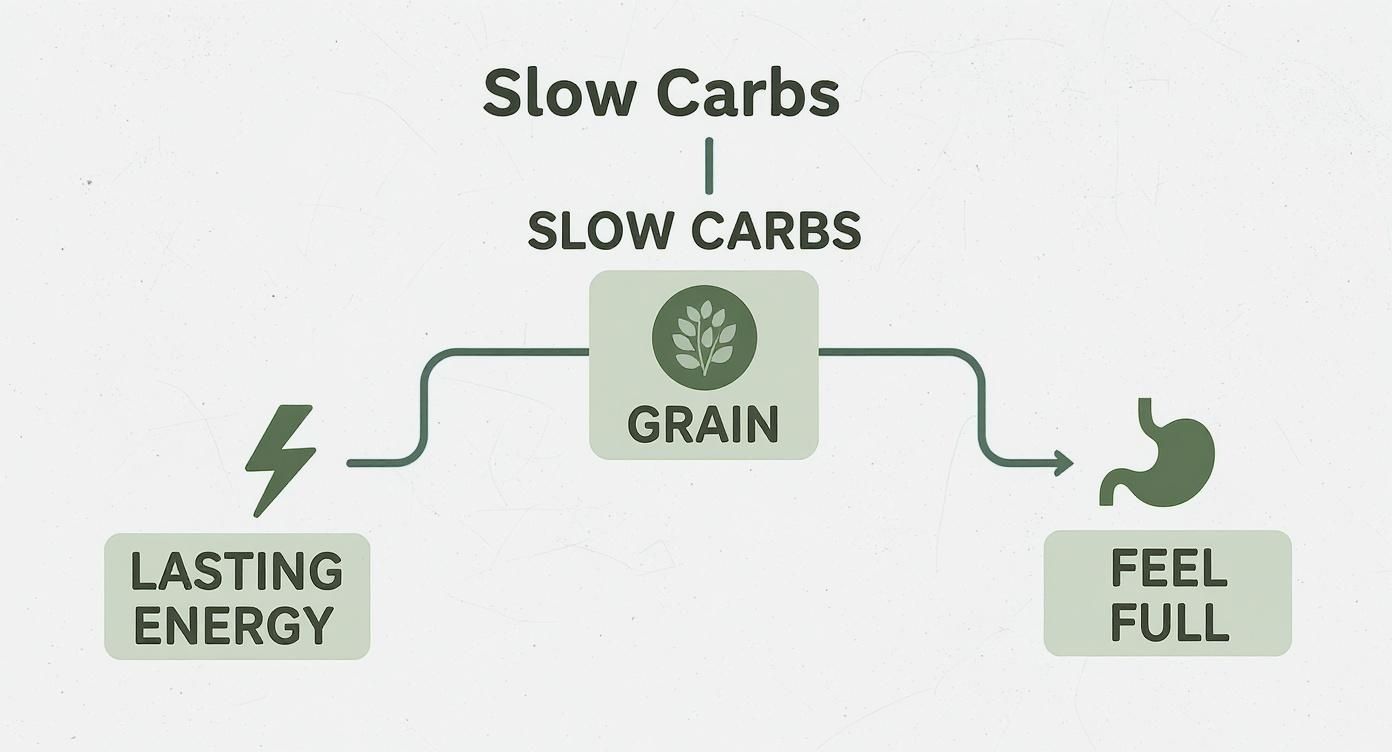
As you can see, that steady energy supply helps you dodge the crashes and feel fuller for longer, which is a game-changer for managing your appetite.
The Glycemic Index Explained
So, how do you tell the fire-hose foods from the garden-hose foods? That’s where the Glycemic Index (GI) comes in. It's basically a rating system that scores carb-containing foods on a scale from 0 to 100. The score tells you how quickly a food will raise your blood sugar after you eat it.
- High-GI Foods (70-100): These are the fast-release carbs. Think white bread, pretzels (GI of 83), and most sugary breakfast cereals that your body burns through in no time.
- Low-GI Foods (55 or less): These are the slow-release champions we're talking about. Foods like oats, beans, and sweet potatoes all fall into this much friendlier category.
Think of the Glycemic Index as a speed gauge for your food. A high number means a fast, jarring ride for your blood sugar, while a low number signals a smooth, gentle journey with no surprise drops.
Choosing foods with a lower GI score is a simple, practical way to make sure you're fueling your body for sustained energy. To really dive deep into this super-helpful tool, check out our complete guide on what is the glycemic index.
Why Slower Digestion Matters
The real secret to slow-release carbs lies in their complex structure and high fiber content. Fiber is a type of carbohydrate your body can't easily break down, and its presence puts the brakes on the whole digestive process. This delay is exactly what prevents sugar from being absorbed too quickly into your bloodstream.
This gradual release of glucose is so much easier for your body to handle. It helps keep your blood sugar and insulin levels stable, which is the foundation for consistent energy, a better mood, and solid appetite control. It's fascinating when you compare how different foods affect your body. For instance, understanding the glycemic index of fats like olive oil—which is zero—really drives home why choosing low-GI carbs makes such a powerful difference.
Here’s the rewritten section, crafted to sound completely human-written and natural.
The Real-World Benefits of Choosing Slow Carbs
https://www.youtube.com/embed/09ScTa4CTW0
Understanding the science behind slow carbs is great, but the real magic happens when you start feeling the difference in your everyday life. This isn't just about dodging the occasional sugar crash. It's about giving your body a major upgrade—one that boosts your performance, sharpens your focus, and just makes you feel better all around.
The benefits are real and you'll notice them pretty quickly. Whether you're trying to power through a workout or just stay awake during that long afternoon meeting, the steady fuel from slow carbs makes all the difference. Let’s get into the three biggest advantages you can expect.
Enhanced Physical and Mental Stamina
Think of your body’s energy like a phone battery. Fast carbs are like those cheap, sketchy chargers that give you a quick burst of power but die in an hour. Slow-release carbohydrates, on the other hand, are like a trickle charger, feeding you a steady, reliable stream of energy that keeps you going all day.
For athletes, this means more endurance on the track or in the gym. For professionals, it means sustained focus when you’re staring down a complex project. That dreaded 3 p.m. slump? It becomes a thing of the past. You’ll have the stamina to finish your day just as strong as you started it.
This isn’t just a niche health trend, either. The global market for slow-release carbohydrate drinks was valued at a staggering $2.13 billion in 2024, a clear sign that people are looking for better, more sustainable energy. You can see more about this growing market on Dataintelo.
Better Appetite Control and Fewer Cravings
One of the best things about switching to slow carbs is finally getting a handle on your appetite. Most of these foods are packed with fiber, which means your body takes a lot longer to break them down.
That slow digestion process is key. It helps you feel properly full and satisfied for hours after you eat. And the result? Those annoying, distracting cravings for sugary snacks and junk food just start to fade away. It’s a lot easier to make good choices when you’re not constantly fighting off hunger pangs.
By keeping you feeling full for longer, slow-release carbs help you break the cycle of craving and crashing. They're a powerful tool for anyone trying to manage their weight or simply build a healthier relationship with food.
This sustained fullness is what stops mindless snacking in its tracks and helps you stick to your goals. You're back in control of your eating habits, not the other way around.
Stable Blood Sugar and Metabolic Health
Finally, let's talk about the most important benefit of all: what slow carbs do for your blood sugar. Every time you eat fast-acting carbs, you’re basically sending your blood glucose on a wild rollercoaster. Over time, those constant spikes and crashes really take a toll on your metabolic health.
Slow-release carbs put a stop to that. They break down gradually, causing only a gentle, controlled rise in blood sugar that your body can handle with ease. This stability is crucial for a few reasons:
- Improving Insulin Sensitivity: Your body gets much better at using the glucose that's in your blood.
- Reducing Metabolic Stress: You avoid the hormonal chaos that comes from sharp blood sugar swings.
- Supporting Long-Term Health: Keeping your blood sugar stable is directly linked to a lower risk of chronic conditions down the road.
When you choose slow carbs, you're doing more than just managing your energy for the day. You're making a long-term investment in a healthier, more balanced metabolic future.
Stocking Your Kitchen with Slow Carb Foods
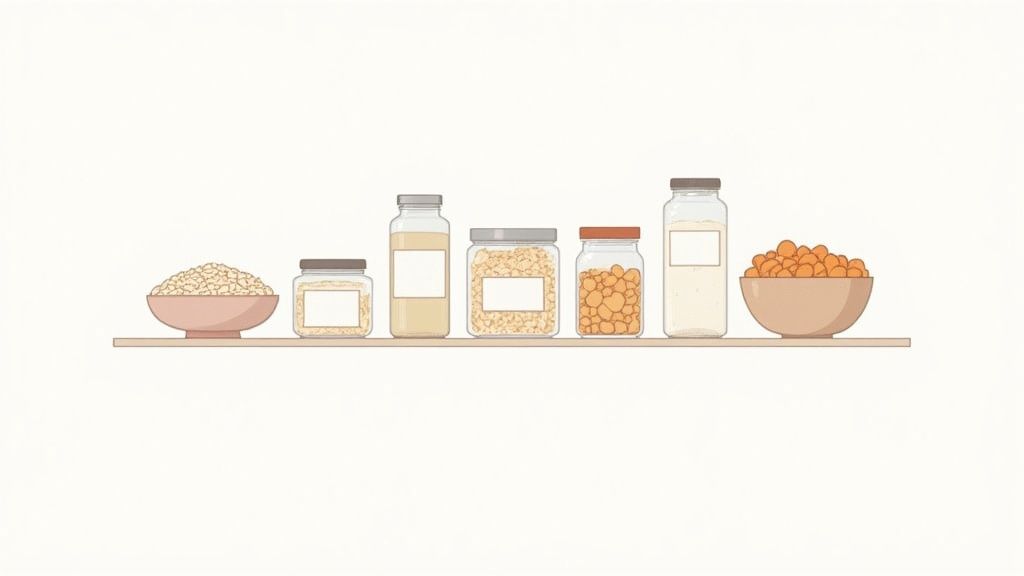
Switching to slow-release carbs is a lot simpler when your kitchen is already on your side. When you have these foods on hand, putting together a meal that keeps you full, focused, and energized becomes second nature.
This isn’t about restriction. It's about smart swaps. Think of this as your new go-to shopping list, broken down into easy categories for your next trip to the store.
Whole Grains for Lasting Fullness
It’s time to move past the refined white stuff and embrace the hearty, satisfying world of whole grains. These are the bedrock of a slow-carb pantry because their complex structure means your body takes its time breaking them down, giving you that steady, reliable energy.
- Rolled Oats: The perfect breakfast. A warm bowl of oats will keep you going all morning. A good serving is about half a cup (dry), which is roughly the size of your cupped hand.
- Quinoa: This isn't just a grain; it's a protein-packed powerhouse. It’s fantastic in salads, bowls, or as a simple side. Start with one cup (cooked) for a meal.
- Brown Rice: A timeless classic that goes with just about anything. Its lower glycemic index compared to white rice helps you avoid those nasty blood sugar spikes.
- Barley: Don’t sleep on barley! This chewy grain is brilliant in soups and stews, adding real substance and a hefty dose of fiber that keeps you feeling full for hours.
Power-Packed Legumes
Legumes are the unsung heroes of the food world. They deliver a knockout combination of slow-release carbs, plant-based protein, and fiber that your gut will love. Plus, they’re cheap and incredibly versatile.
Legumes are a cornerstone of any diet focused on stable blood sugar. Their unique blend of fiber and protein slows down digestion significantly, making them one of the best choices for preventing energy crashes.
Here are a few you should always have in your cupboard:
- Lentils (Brown, Green, or Red): They cook up fast and are perfect for hearty soups, stews, and salads.
- Chickpeas (Garbanzo Beans): Great for homemade hummus, roasted for a crunchy snack, or tossed into curries and salads.
- Black Beans: A must-have for tacos, chili, and rice bowls. They’re also loaded with fiber and antioxidants.
The demand for these kinds of sustained energy sources is exploding. Slow-release carbohydrate supplements are becoming a huge part of the sports nutrition industry, with the market estimated to hit $2.5 billion in 2025. It's projected to grow at a rate of 7% each year through 2033. You can dig into more data about the carbohydrate supplements market on Archive Market Research.
Nutrient-Dense Starchy Vegetables
Not all starchy veggies are the same. A plain white potato can send your blood sugar soaring, but many others are loaded with vitamins, minerals, and the slow-digesting fiber we're after. These are some of the best foods that stabilize blood sugar you can eat.
- Sweet Potatoes: A fantastic source of Vitamin A and fiber. You can bake them whole, chop them into fries, or mash them for a delicious side.
- Butternut Squash: Its natural sweetness is so satisfying. It’s perfect in roasted vegetable medleys, blended into soups, or even used in risotto.
- Peas and Corn: These offer a great balance of starch and fiber. A small portion of about half a cup adds great texture and nutrients to a meal without overdoing it.
How to Build Balanced Meals for All-Day Fuel
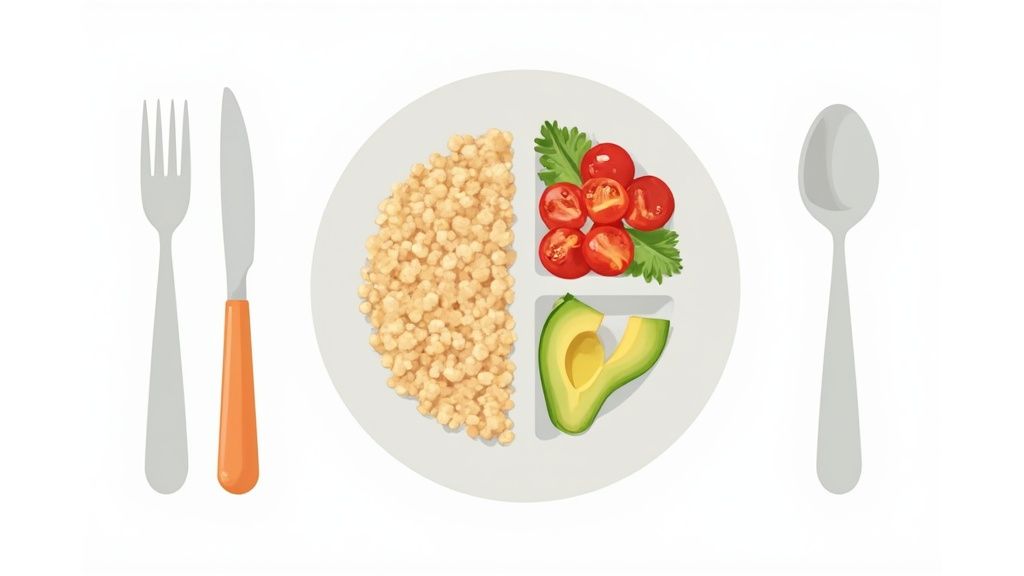
Stocking your pantry with slow-release carbs is a great start, but the real magic happens when you learn how to build balanced meals around them. It's the secret to unlocking that steady, all-day energy we're all after.
The best part? You don't need a degree in nutrition or a book of complicated recipes. All you need is a simple framework for building your plate.
The Winning Meal Formula
Think of your plate as having three essential building blocks. Getting these three on your plate every time you eat is the key to slowing down digestion and keeping your energy on an even keel.
The formula is simple: Slow-Release Carb + Lean Protein + Healthy Fat.
When you eat carbs by themselves, even the slow-release kind, your body still turns them into sugar relatively quickly. But when you add protein and fat to the mix, everything changes. They act like the brakes on a car, slowing down how fast that sugar hits your bloodstream.
Combining a slow-release carbohydrate with protein and fat is a game-changer for blood sugar control. The protein and fat act as a buffer, slowing down the absorption of glucose and ensuring a much gentler, more sustained energy curve.
Meal Ideas for Breakfast, Lunch, and Dinner
Putting this into practice is easier than you might think. It’s less about a complete diet overhaul and more about making smart additions or simple swaps to the foods you already enjoy.
Here are a few real-world examples to get you started:
- Breakfast: Instead of a sugary cereal, try a bowl of rolled oats (slow carb). Make them with milk or add a scoop of protein powder (lean protein), and top with a sprinkle of almonds and chia seeds (healthy fat). You'll be full and focused all morning.
- Lunch: A big salad is a great option. Start with a bed of greens and a scoop of quinoa (slow carb). Add some grilled chicken breast or chickpeas (lean protein), then finish it with half an avocado and a simple olive oil vinaigrette (healthy fat).
- Dinner: A classic balanced plate could be a fillet of baked salmon (packed with lean protein and healthy fat), a side of roasted sweet potato wedges (slow carb), and a generous serving of steamed broccoli. It’s satisfying without being heavy.
For a clearer picture, here’s what a full day of eating could look like.
Sample Slow-Release Carbohydrate Meal Plan
This one-day sample plan shows how you can easily structure your meals to include a slow-release carb, lean protein, and healthy fats every single time you eat.
| Meal | Slow-Release Carb | Lean Protein | Healthy Fat & Fiber |
|---|---|---|---|
| Breakfast | Rolled Oats | Greek Yogurt | Berries & Walnuts |
| Lunch | Quinoa | Grilled Chicken | Avocado & Mixed Greens |
| Dinner | Sweet Potato | Salmon | Roasted Asparagus & Olive Oil |
| Snack | Apple Slices | Almond Butter | - |
This approach isn't about restriction; it's about combination. By pairing your carbs correctly, you create meals that work for you, not against you.
Understanding how these food groups work together is the foundation of smart eating. If you'd like to dive deeper, check out our guide on what are macronutrients and micronutrients. Once you master this simple formula, you'll be amazed at how much better you feel—and those afternoon energy slumps will become a thing of the past.
Still Have Questions About Slow-Release Carbs?
It’s one thing to understand the concept, but it's another to put it into practice. As you start making these changes, questions are bound to pop up. Let's tackle a few of the most common ones I hear.
Can I Actually Lose Weight Eating Carbs?
Absolutely. In fact, this is one of the biggest misconceptions out there. The right kind of carbs can be one of your best allies for weight loss.
Slow-release carbs are packed with fiber, which is incredibly filling. When you eat a meal with beans, lentils, or whole grains, you stay satisfied for hours, which naturally helps you eat less overall. You’re not fighting off those nagging cravings or reaching for a sugary snack an hour after lunch. This steady energy and fullness make sticking to your goals a whole lot easier.
Wait, Aren't All "Complex Carbs" Slow-Release?
This is a great question, and the answer is a surprising "no." It's a subtle but really important distinction.
While most slow-release carbs are indeed complex, not all complex carbs are slow-release. Think about some "whole wheat" breads or crackers. They might sound healthy, but they’re often highly processed, which strips out a lot of the fiber and makes them act more like simple sugars in your body.
Your best bet is to look past the marketing claims on the front of the box. Check the nutrition label for high fiber content and a short ingredient list. The less processed a food is, the more likely it is to be a true slow-release carb.
What's the Easiest Way to Cook Beans and Grains from Scratch?
Cooking dried beans and whole grains is much simpler than you might think, but a little prep goes a long way. The secret for great texture and easier digestion is soaking them first.
- Soak them overnight: Just put your dried beans or grains (like barley or farro) in a big bowl, cover them with a few inches of water, and let them sit on the counter. This one step makes a huge difference in cooking time.
- Cook them low and slow: The next day, just drain the soaking water, give them a good rinse, and put them in a pot with fresh water or broth. Bring it to a boil, then turn the heat down and let them simmer until they're tender.
It’s a tiny bit of planning that pays off big, giving you a versatile and incredibly healthy base for meals all week long.