Stress management for weight loss: Simple routines for cravings control
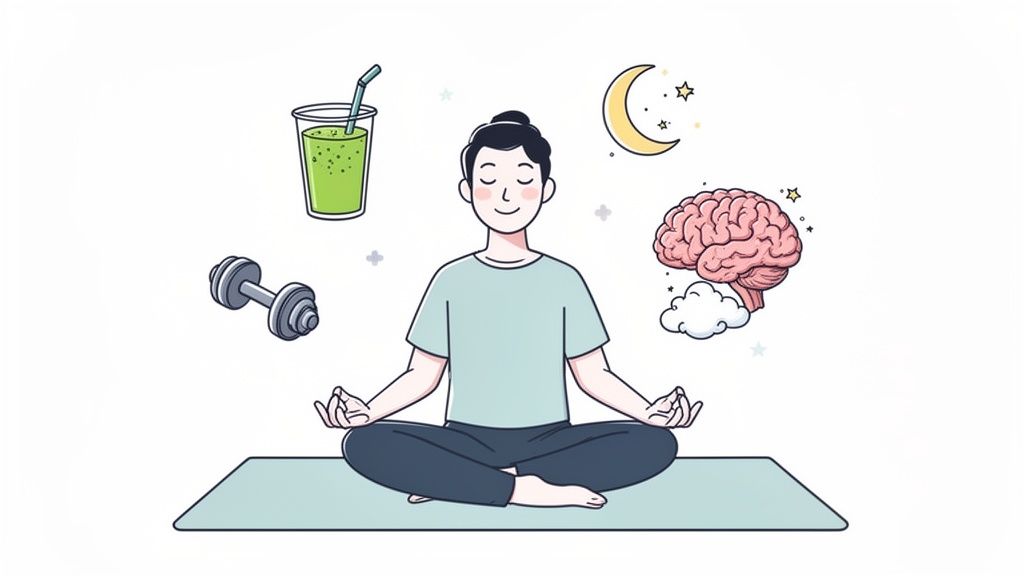
Let's get one thing straight: if you're trying to lose weight, managing your stress isn't just a nice-to-have. It’s a core part of the process. Getting a handle on your stress helps regulate cortisol, the hormone that messes with your appetite, cranks up your cravings, and tells your body where to store fat. When you manage stress, you're not just calming your mind—you're taking back control of your food choices and letting your body do its job.
The Hidden Link Between Your Stress and Weight
Losing weight is tough. It feels even tougher when it seems like your own body is fighting you every step of the way. If you’ve ever demolished a sleeve of cookies after a brutal day at work, you know exactly what I’m talking about. That connection isn't in your head; it’s biology.
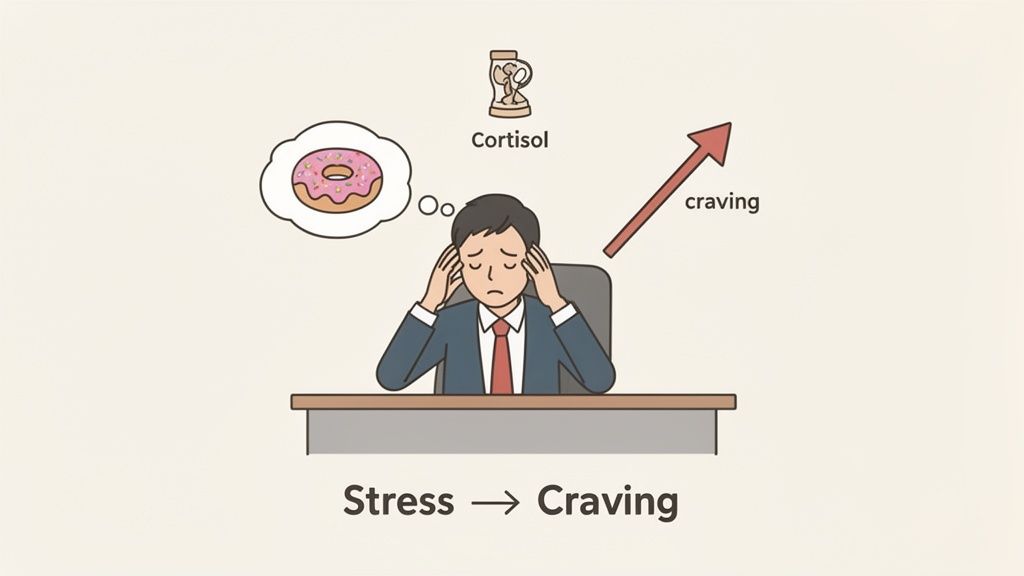
When life throws you a curveball, your body floods your system with a hormone called cortisol. It’s your "fight or flight" hormone, and it’s great for escaping a tiger. But when the "tiger" is a never-ending inbox or a tight deadline, that cortisol drip becomes chronic. This constant state of alert tells your brain to find quick, easy energy. The result? Intense cravings for sugary, high-fat foods.
To make this easier to digest, here's a quick breakdown of how stress can throw a wrench in your weight loss plans.
How Stress Derails Your Weight Loss Journey
| Stress Effect | Impact on Your Body | Resulting Behavior |
|---|---|---|
| Spikes Cortisol | Increases appetite and signals the body to store fat, especially around your midsection. | You find yourself craving junk food and making impulsive choices you later regret. |
| Drains Mental Energy | Overwhelms your brain's decision-making center (the prefrontal cortex). | It becomes nearly impossible to resist immediate gratification, even when you know it's not the right choice. |
| Triggers Reward-Seeking | Your brain looks for a quick dopamine hit to feel better. Sugar and fat are very effective at this. | You fall into a cycle of "emotional eating" to soothe yourself, not because you're actually hungry. |
This table just scratches the surface, but it clearly shows the powerful connection between your mental state and your physical results.
How Cortisol Hijacks Your Progress
Think of cortisol as the ultimate saboteur for your diet. It doesn't just make you hungrier; it actively encourages your body to hoard fat, particularly around your belly. If you want to dive deeper into this, you can learn more about how to manage cortisol and belly fat.
This isn’t just a feeling of being "weak-willed." It’s a powerful physiological response that completely fogs your judgment. You have a long-term goal to lose weight, but your stressed-out brain is screaming for immediate relief, right now.
I see this all the time. A project meeting goes south, and you walk out feeling defeated. Before you even realize what you're doing, you're standing in front of the vending machine, unwrapping a candy bar. That sugar gives you a two-minute high, but it only reinforces the cycle of stress, craving, and guilt.
It's not just anecdotal, either. Research shows that chronic stress can completely stall weight loss efforts by elevating cortisol. In one study, women with the highest cortisol levels lost the least amount of weight, even on a calorie-controlled diet. Why? The hormone literally impaired their ability to make decisions with long-term benefits in mind.
Breaking the Stress-Eating Cycle
Simply understanding this connection is a huge first step. It proves your struggle isn't a moral failing or a lack of willpower—it’s a biological response that you can learn to manage. That's why managing your stress is every bit as important as managing your calories.
When you get your stress levels down, you lower cortisol. The benefits are almost immediate:
- Those intense sugar cravings start to fade.
- Your ability to make thoughtful, clear-headed decisions comes back.
- Your body can finally switch out of "emergency fat-storage" mode.
By making stress management for weight loss a priority, you stop fighting the symptoms and start treating the root cause. You're no longer just battling cravings; you're rewiring the entire system.
Building Your Daily Anti-Stress Routine
A solid stress management for weight loss plan isn’t about cramming more obligations into your day. Far from it. The real secret is to weave small, intentional moments of calm into the life you’re already living.
Think of it less like a rigid set of rules and more like building a flexible toolkit. This way, you’re always equipped to handle stress when it pops up, keeping it from derailing your health goals. You don’t have to do everything at once. Just pick one or two ideas that feel right for you and go from there. For a deeper dive into making changes that stick, our guide on building healthy habits is a great resource.
Start with a Mindful Morning
How you begin your day really does set the stage for what follows. Before you even think about grabbing your phone to scroll through a flood of stressful emails, take just five minutes for yourself. This tiny act can lower your cortisol levels before they have a chance to climb.
A simple breathing exercise is a fantastic place to start. Just sit comfortably, close your eyes, and focus on your breath for five minutes. Try this: inhale slowly for a count of four, hold for four, and then exhale for a count of six. This little trick activates your body's "rest and digest" system, which is the complete opposite of the "fight or flight" mode stress puts you in.
Make Smart Nutrition Swaps
When you’re feeling stressed, your brain screams for a quick energy fix—which is why that sugary donut or soda suddenly seems like a brilliant idea. A smart nutrition swap isn't about depriving yourself; it's about giving your body the steady, reliable energy it needs to navigate stress without the inevitable crash.
Here are a couple of simple exchanges to try:
- Instead of that sugary morning latte, blend up a protein shake with unsweetened almond milk. The protein helps keep your blood sugar stable, which is key to keeping those intense cravings away.
- Instead of grabbing chips for an afternoon snack, reach for a handful of almonds and an apple. You get fiber and healthy fats, which provide sustained energy and help you avoid the slump that makes you want to snack again.
These small tweaks aren't just wishful thinking; they get results. One study showed that obese adults who joined an 8-week stress management program—using techniques like deep breathing and visualization alongside healthy eating advice—achieved greater weight reduction and felt less stressed and depressed than those who only got standard lifestyle tips.
Incorporate Mindful Movement
You don't need a grueling hour at the gym to get the stress-busting benefits of exercise. Mindful movement is all about gently connecting with your body and letting go of physical tension. Even a quick burst of activity can release endorphins and clear your head.
A 10-minute walk during your lunch break is a perfect example. Try leaving your phone at your desk and just focus on what's around you—the sun on your skin, the sounds you hear, the simple rhythm of your steps. This small break can completely reset your nervous system and slash the impulse to stress-eat when you get back to work.
If you're looking for other ways to build out your routine, exploring creative outlets like art therapy for stress management can also be incredibly effective.
Create a Sleep-Friendly Wind-Down
Nothing amplifies stress like a bad night's sleep. It throws the hormones that control hunger completely out of whack, making you much more likely to crave junk food the next day. A simple wind-down routine is a powerful signal to your brain that it's time to switch off.
About an hour before you plan to sleep, put away your screens. The blue light from phones and laptops messes with melatonin, the hormone that tells your body it’s time to rest. Instead, pick up a book, listen to some calming music, or take a warm bath. This one habit can dramatically improve your sleep quality, which in turn lowers stress and gives you the mental clarity to make healthier choices tomorrow.
What to Do When Stress Hits You Out of Nowhere
Daily routines are fantastic for building a solid foundation, but life has a funny way of throwing curveballs. You know exactly what I'm talking about: that gut-punch of a frustrating email, a project deadline that suddenly jumps a week closer, or an unexpected bill that shows up out of the blue.
In those moments, the magnetic pull toward a sugary snack can feel almost impossible to resist. This is precisely why having a "panic button" plan is so crucial for anyone trying to manage their stress to lose weight.
Instead of letting that trigger send you straight to the kitchen, you can learn to intercept it. The idea isn't to ignore the stress—that's impossible—but to consciously choose a healthier reaction than your old emotional eating habit. Think of it as hitting the pause button on your autopilot response.
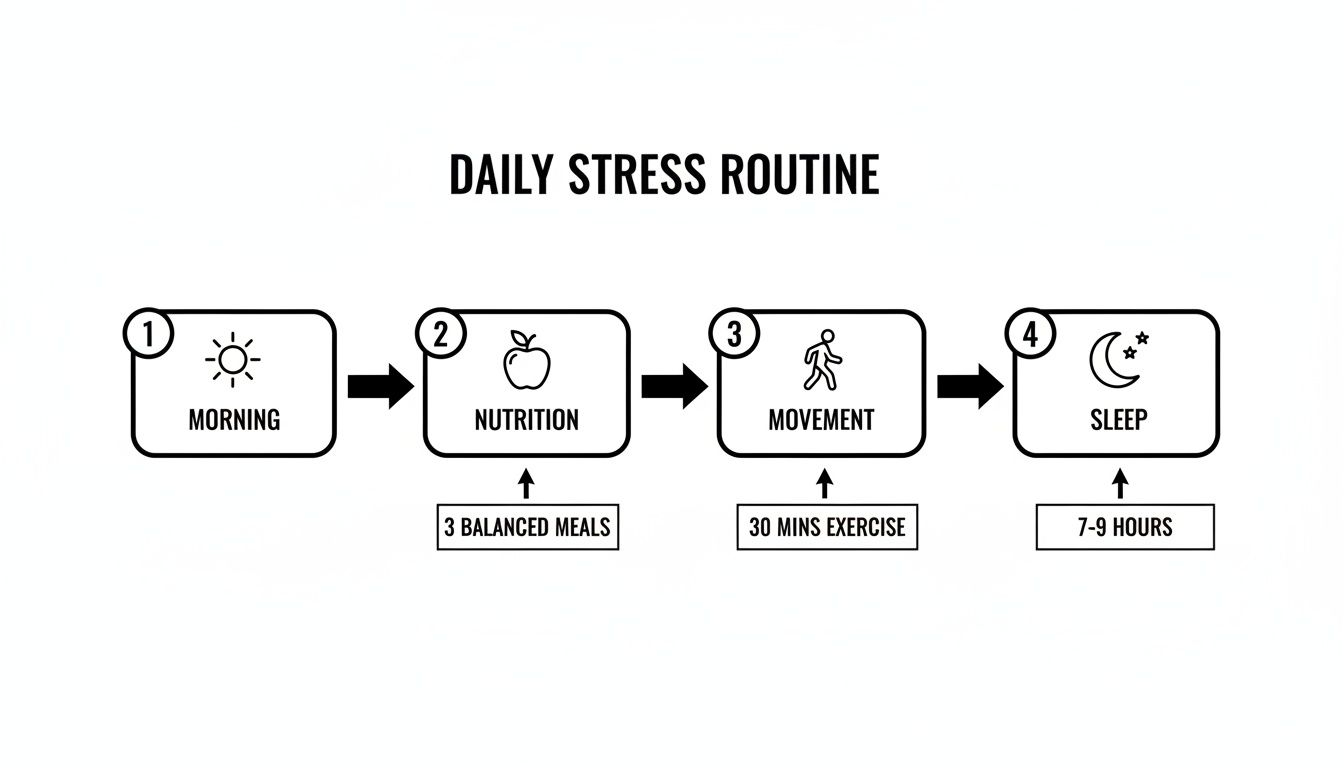
As you can see, the daily work you put into your morning, nutrition, movement, and sleep habits builds your resilience. The stronger that foundation is, the less likely you are to get knocked over by a sudden stress trigger.
Your In-the-Moment Rescue Plan
When you feel that familiar spike of anxiety and the craving that follows, I want you to run through this simple process. It’s designed to be quick, easy to remember, and surprisingly effective at breaking that old habit loop.
Step 1: Pause and Pinpoint the Trigger
The instant you feel the urge to stress-eat, just stop. Freeze. Ask yourself one simple question: "What just happened?"
Was it a thought? A difficult conversation? A notification on your phone? Simply naming the trigger, even silently to yourself, creates a powerful gap between the event and your reaction. For example, just thinking, "Okay, that critical comment from my boss is what's making me want a cookie" immediately puts you back in the driver's seat.
Step 2: Grab a Different Coping Tool
This is where a little bit of prep work pays off big time. Instead of automatically reaching for food, pivot to a pre-planned, non-food-related action. The trick is to have a few go-to options that you can do almost anywhere in under five minutes.
- Step outside for two minutes of fresh air. Focus only on your breath.
- Pop in your earbuds and listen to one specific, uplifting song you love.
- Get up and do a quick lap around your office or your house.
- Shoot a quick text to a friend who always knows how to cheer you up.
Step 3: Reflect and Track (Quickly!)
After the moment has passed and you've used your alternative tool, take just 30 seconds to make a quick note of what happened. You can use an app like StopSugar or even a simple notes app on your phone.
Jot down the trigger, the feeling, and what you did instead of eating. This isn't about being perfect or judging yourself; it's about gathering intel. You're a detective looking for patterns.
Why This Simple Plan Actually Works
This whole approach isn't about raw willpower; it's about rewiring your brain. Every single time you successfully navigate a stress trigger without turning to sugar, you weaken that old, worn-out neural pathway and strengthen a new, healthier one.
The connection between stress and weight is a real problem. High stress can lead to a vicious cycle of sugar dependency, with research showing it's linked to lower eating awareness and more frequent fast-food choices. Learning to manage these real-time triggers is one of the most important skills you can develop.
Before you know it, pausing and choosing a healthier coping mechanism will become your new automatic response. If you want to dive deeper into this, check out our guide on how to stop stress eating. This proactive plan for handling triggers is truly the key to making your progress stick.
Tracking Your Progress to Stay Motivated
Let's be honest: when you’re trying to lose weight, it’s tempting to live and die by the number on the scale. But obsessing over every little fluctuation can actually crank up your stress levels, which is the last thing you need.
Instead, we're going to shift your focus. Forget the scale for a bit and concentrate on building good habits and feeling better. When you track the right things, you get undeniable proof that your efforts are paying off. That’s the kind of motivation that really lasts.
Connecting the Dots Between Stress and Habits
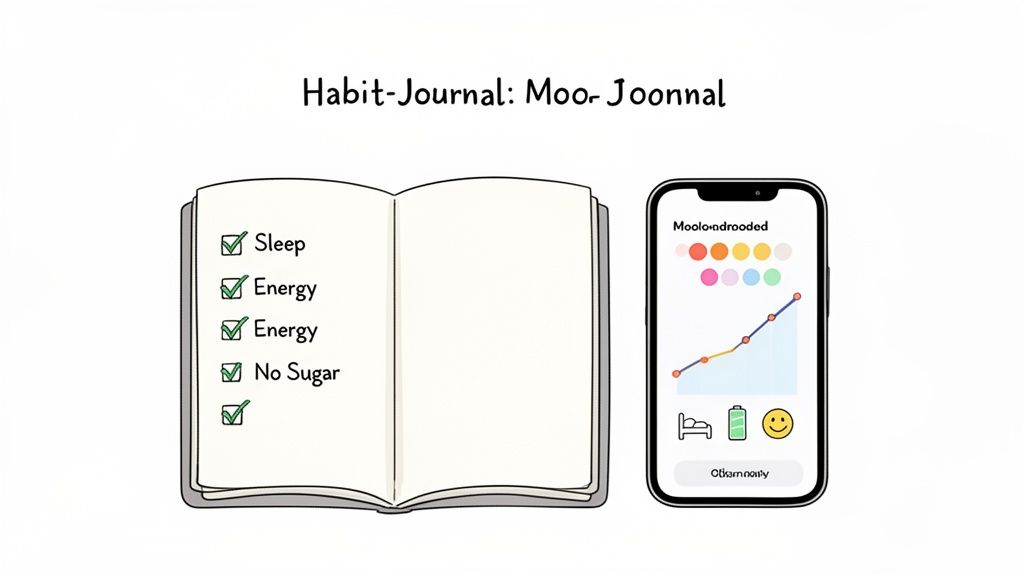
It's time to become a detective in your own life. You don’t need anything fancy—a simple notebook or the mood tracker in the StopSugar app works perfectly. Just take a minute each day to jot down your stress level, your general mood, and how you handled your food choices.
Give it a week or two. Pretty soon, you’ll see some fascinating patterns emerge. You might realize that on days you sleep well, you feel calmer and don't even think about sugar. Or maybe you'll connect a quick walk at lunch with having more energy all afternoon. These aren't just coincidences; they're proof that your new stress-busting habits are working.
Celebrate Your Non-Scale Victories
Non-scale victories (NSVs) are the real wins. They're the tangible, everyday improvements that show you're making genuine progress, even when the scale is being stubborn.
Keep an eye out for moments like these:
- Sleeping soundly through the night without waking up.
- Having enough energy to get through your afternoon without grabbing that extra coffee or snack.
- Getting through a tense meeting by using your breathing exercises instead of reaching for a donut.
- Noticing your favorite jeans feel just a little bit looser.
Focusing on these wins completely changes the game. Success isn't just about a number anymore. It's about showing up for yourself, building resilience, and feeling better day by day.
This mindset shift is what makes change stick. You’re no longer fighting a battle against the scale; you're on a positive journey of self-care. Learning how to start and stay motivated is crucial, whether you're tackling new eating habits or starting a running routine.
Every time you acknowledge one of these small victories, you’re reinforcing the habit. It’s this positive feedback loop that strengthens your resolve and proves you’re fully in control of your stress and your health. That’s the true foundation of sustainable weight loss.
Simple Metrics to Measure Real Success
So, how do you know if all this stress-management stuff is actually working? Waiting for the number on the scale to go down can be a slow, frustrating game. The truth is, real success shows up in small, daily wins long before the scale catches up.
Focusing on these other signs of progress gives you immediate proof that your hard work is paying off. It's the kind of positive feedback that keeps you going, especially on those days when the scale refuses to budge.
Your Personal Progress Scorecard
Think of this as your own personal scoreboard. It’s not about getting a perfect 10/10—it’s about noticing the trends and celebrating how far you’ve come. Just take a few minutes at the end of each week to check in with yourself.
When you track these things, you get a much richer picture of your health journey. You shift your focus from a single number you can’t fully control (your weight) to the daily actions that are 100% in your hands.
When you can actually see that your energy is up, you’re sleeping better, and you’re not reaching for junk food every time you feel stressed, it builds incredible confidence. You start to believe in the process because you have real-world proof that it’s working.
This simple tracking keeps you motivated by shining a light on all the wins you might otherwise miss.
Key Indicators to Start Tracking
You don't need a complicated system. To get started, just focus on a few simple but powerful metrics. Grab a notebook or use an app like StopSugar to jot these down.
- Sugar-Free Days Per Week: How many days did you successfully skip added sugars? This is a fantastic, straightforward way to see your cravings lose their power.
- Daily Energy Levels (Scale of 1-5): At the end of the day, just ask yourself, "How was my energy today?" Give it a score from 1 (totally drained) to 5 (feeling great). As your stress and blood sugar even out, you'll see this number climb.
- Coping Strategies Used: Make a quick note every time you felt stressed and chose to go for a walk, do some deep breathing, or call a friend instead of hitting the pantry. This is you, building resilience in real-time.
- Sleep Quality (Scale of 1-5): When you wake up, how rested do you actually feel? Better sleep is one of the very first things to improve when cortisol levels drop, so this is a huge one to watch.
Turning Data Into Motivation
Let's play this out. Maybe in your first week, you had two sugar-free days and used a new coping skill just once. That’s a great start! But by week four, you might look back and see you’ve had five sugar-free days and you’re now automatically taking a walk after a tense meeting without even thinking about it.
That’s what progress looks like. It’s visible, it’s powerful, and it's all you.
The scorecard below is a simple way to organize your weekly check-in.
Your Stress Management for Weight Loss Scorecard
Track these simple metrics weekly to see how your new habits are making a real difference in your well-being and progress.
| Metric to Track | How to Measure It | Why It Matters |
|---|---|---|
| Sugar-Free Days | Count the total number of days you avoided added sugar each week. | Directly shows improved craving control and mindful eating habits. |
| Energy Level | Rate your daily energy on a 1-5 scale and find the weekly average. | Higher energy is a key sign that your body is less stressed and better fueled. |
| Coping Wins | Tally the number of times you chose a healthy coping tool over food. | Measures your growing ability to handle stress without emotional eating. |
| Sleep Quality | Rate your morning restfulness on a 1-5 scale and average it for the week. | Good sleep is foundational for hormone balance, appetite control, and stress reduction. |
Looking at this data reinforces the connection between your actions and how you feel. It proves that managing stress isn't just a "nice-to-have"—it's the foundation for achieving your weight loss goals.
Your Questions on Stress and Weight Loss Answered
Jumping into a new way of thinking, like using stress management for weight loss, naturally brings up a lot of questions. It's totally normal to wonder what's ahead and how to deal with the inevitable bumps in the road. Let's tackle some of the most common concerns to give you some clarity and confidence.
How Long Until I See Results?
This is always the big question, isn't it? The answer really has two parts.
You'll likely feel the benefits of managing your stress almost right away. Within the first week or two of being consistent, most people tell me they're sleeping better, have more even energy levels, and notice their sugar cravings aren't nearly as intense. Honestly, those are huge wins in themselves.
The physical changes on the scale tend to follow as your cortisol levels even out and you find yourself making more thoughtful food choices without a struggle. The real secret is to focus on the small, daily habits—that five-minute breathing exercise, the quick walk at lunch. Trust the process. When you take care of the stress, the weight loss follows.
What if I Have a Bad Day and Stress-Eat?
First off, take a deep breath. A single slip-up doesn't wipe out all your hard work. We're aiming for consistency, not perfection.
If you have a rough day and find yourself turning to sugar, the most important thing you can do is simply get back on track with your very next meal. Don't let one less-than-ideal choice derail your entire day or week.
Use it as a chance to learn, not a reason to beat yourself up.
Ask yourself: What triggered that? What could I try differently next time? This isn't a failure; it's valuable feedback. Forgive yourself and remember that this is a journey. The goal is to apply your stress-management tools the next time you feel that overwhelm creeping in.
Can I Do This Without a Tracking App?
Absolutely. The core ideas here—managing stress, eating mindfully—don't depend on any piece of technology. A simple notebook and a pen can be incredibly effective for jotting down your mood, figuring out your triggers, and celebrating all those wins that have nothing to do with the scale.
An app like StopSugar is just a tool designed to make the process easier. It gives you structure, daily check-ins, and a simple way to visualize your progress. But at the end of the day, the best system is the one you’ll actually stick with. If a journal feels right to you, that’s perfect.
Are There Specific Foods That Help?
Yes, definitely. Certain foods can be powerful allies on your stress management for weight loss journey. When you focus on nutrient-rich options, you help regulate both your mood and your appetite, which makes it so much easier to stay the course.
Try to work more of these into your meals:
- Magnesium-Rich Foods: Think leafy greens like spinach, plus nuts and seeds. Magnesium has a natural calming effect on the nervous system.
- Omega-3 Fatty Acids: You'll find these in fatty fish like salmon and in walnuts. These healthy fats are fantastic for brain health and keeping your mood stable.
- B Vitamins: Eggs and legumes are packed with B vitamins, which are essential for producing energy and building your resilience to stress.
Making sure you get enough protein and fiber at every meal is also a game-changer. These two are key for stabilizing your blood sugar, which helps you avoid the energy crashes and intense cravings that so often lead to stress eating.