Understanding sugar cravings after meals: Simple steps to curb spikes
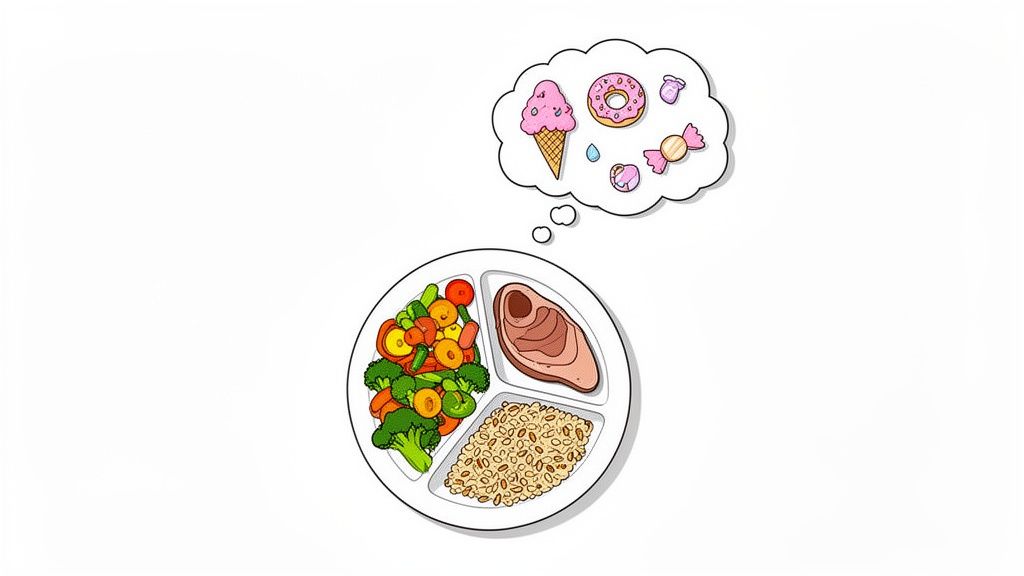
That intense pull for something sweet right after a perfectly satisfying dinner isn't just a lack of willpower. It's a complex biological reaction, often called the "dessert stomach," where your brain demands a sugary reward even when your body is completely full. Getting to the bottom of this science is the first real step to getting those urges under control.
The Science Behind Post-Meal Sugar Cravings
Ever been so stuffed you couldn't eat another bite, only to find yourself hunting for chocolate 10 minutes later? That experience is incredibly common and it’s driven by a fascinating tug-of-war between your brain's reward system and your body's "I'm full" signals.
Imagine your brain has two different fuel tanks. A savory meal fills up the main "energy" tank, but the "reward" tank is still running on empty. Sugar is the fastest, most effective key to unlocking that reward system, giving you a rush of pleasure that your brain quickly learns to crave at the end of every meal.
The Brain's Sweet Reward System
When you eat sugar, your brain releases a flood of feel-good chemicals, including dopamine and natural opioids like β-endorphin. This creates a mini-high, leaving you feeling happy and relaxed. Because our brains are wired for survival, they remember what feels good and start anticipating that sweet treat after a meal, creating a powerful, hard-to-break habit.
Fascinating new research helps explain this at a cellular level. Scientists have found that the very same nerve cells that tell you you're full can also trigger an intense craving for sweets.
A study from the Max Planck Institute for Metabolism Research discovered something remarkable: even when we're completely full, our brains activate a specific opioid pathway that releases β-endorphin only in response to sugar—not fats or proteins. This floods the brain with reward signals, essentially creating a separate, dedicated appetite just for dessert.
This biological wiring helps explain why sugar cravings after meals feel so automatic and intense. It’s not just in your head; it’s a deeply ingrained neurochemical response.
Hormones and the Blood Sugar Rollercoaster
Hormones, especially insulin, are another major player in this story. When you eat a meal heavy in refined carbs, your blood sugar can shoot up quickly. Your body releases insulin to shuttle that sugar out of your bloodstream, but sometimes it does its job a little too well.
This overcorrection leads to a blood sugar crash, leaving you feeling tired, foggy, and irritable. Your brain panics and sends out an SOS for a quick energy fix—and nothing provides energy faster than sugar.
This up-and-down cycle is a classic trigger for post-meal cravings. You can learn more about this process in our guide on what causes insulin spikes. For a deeper dive into the physiology behind cravings, you can also explore expert insights on improving your metabolic health and managing diabetes.
How Your Meals Can Set You Up for a Sweet Tooth
Ever notice how some meals leave you feeling satisfied for hours, while others have you rummaging through the cupboards for a cookie almost immediately? It’s not just in your head. What you put on your plate for dinner has a direct and powerful effect on whether you’ll be wrestling with sugar cravings after meals.
Think of your body's energy as a steady, flowing river. But when you eat a meal heavy in refined carbs—like white pasta, bread, or sugary drinks—it’s more like a flash flood. These foods break down incredibly fast, dumping a ton of sugar into your bloodstream all at once.
Sure, you get a quick energy rush, which feels great for a minute. But your body responds to the flood by releasing a tidal wave of insulin to clear the sugar away. This often works a little too well, causing your blood sugar to plummet. Suddenly, your brain is panicking, sensing an energy crisis, and it screams for the fastest fuel it knows: more sugar. And so the cycle begins.
The Problem Plate: When Meals Are Out of Balance
A meal that’s out of whack is practically an invitation for a sugar craving. If your plate is piled high with simple carbs but lacks enough protein, healthy fats, and fiber, you’re basically building that blood sugar rollercoaster yourself.
Protein, fat, and fiber are the brakes. They slow everything down, ensuring a gradual release of energy that keeps you on an even keel. Without them, that spike-and-crash is almost guaranteed, leaving you feeling sluggish, irritable, and desperate for another sweet hit to feel normal again.
If you want to dig deeper into this, we have a whole guide on what foods spike blood sugar that breaks it all down.
Ever Heard of the "Dessert Stomach"?
It's that strange phenomenon where you feel completely stuffed after dinner, but somehow, you still have room for a slice of cake. This isn't just a funny quirk; it's a real neurological response where your brain continues to seek a reward even when your stomach is sending "full" signals.
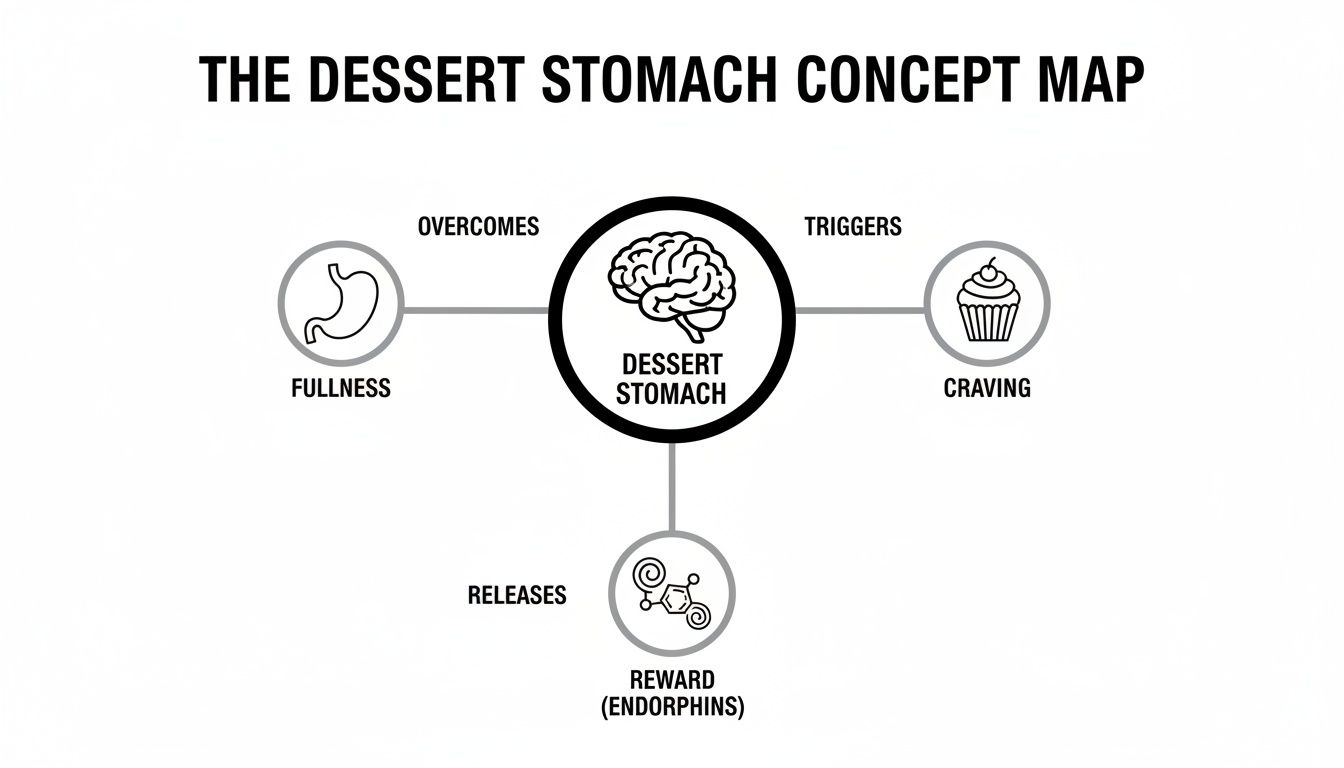
As you can see, a full stomach simply can't compete with the brain's desire for the pleasure-inducing endorphins that sugar provides. Your brain is wired to want that feel-good hit, regardless of physical hunger.
Common Meal Triggers for Sugar Cravings
Pinpointing what in your meals is causing the problem is the first real step toward taking back control. The table below outlines some of the most common culprits and what you can do about them.
| Meal Component | How It Triggers Cravings | Simple Swap Suggestion |
|---|---|---|
| Refined Carbohydrates | Foods like white bread, pasta, and white rice cause a rapid blood sugar spike, followed by a crash that demands more sugar. | Swap for whole grains like brown rice, quinoa, or whole-wheat pasta. |
| Lack of Protein | Protein keeps you feeling full and satisfied. Without enough, you'll feel hungry again quickly and reach for a quick fix. | Add a source of lean protein like chicken, fish, beans, or lentils. |
| Low Fiber Intake | Fiber slows down digestion and sugar absorption. Low-fiber meals lead to faster spikes and crashes. | Incorporate more vegetables, fruits, nuts, and seeds into your meal. |
| Hidden Sugars | Sneaky sugars in sauces, dressings, and condiments add to your overall sugar load, fueling the craving cycle. | Read labels and opt for low-sugar versions or make your own at home. |
By spotting these triggers on your own plate, you can start making smarter, simple swaps that create a more balanced meal—one that leaves you feeling satisfied, not searching for sugar.
2. Your Brain on Autopilot: Habits and Psychological Triggers
It’s not always about what’s happening in your stomach. Sometimes, the most powerful driver behind your post-meal sugar craving is happening between your ears. These urges are often less about true physical hunger and more about deeply ingrained habits and emotional patterns your brain has wired over many years.
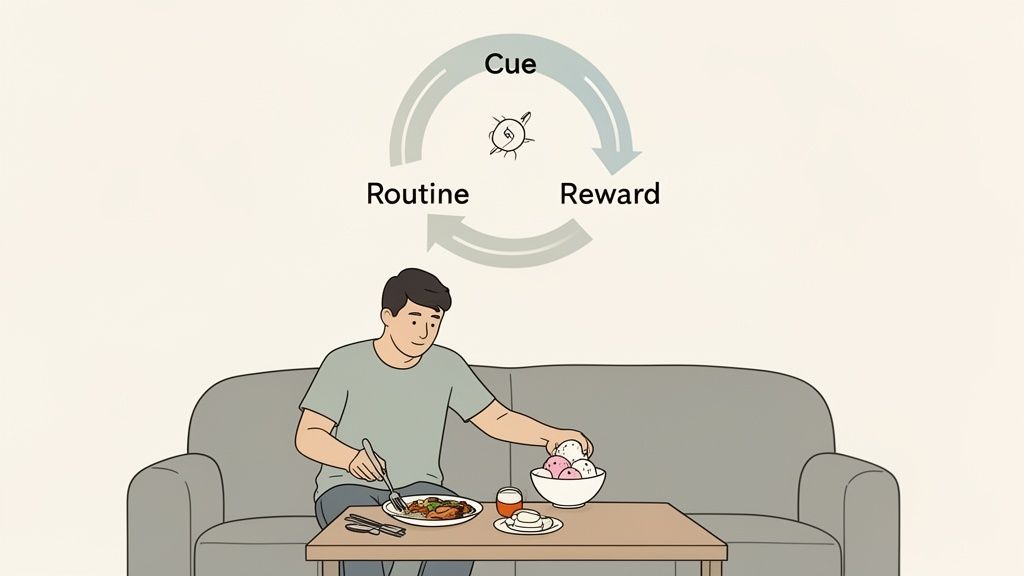
Think of it like a path you've walked in a forest every single day. The end of your meal is the trailhead (the cue). Without even thinking, your brain starts down that well-worn path (the routine) of reaching for something sweet. Why? Because it knows at the end of that path lies a feeling of comfort and satisfaction (the reward). This loop becomes so automatic, it runs on its own.
The Habit Loop in Action
This “cue-routine-reward” cycle is the blueprint for every habit you have. For so many of us, finishing dinner is the cue that automatically kicks off the routine of eating dessert. The brain simply doesn’t feel like the meal is complete until it gets that expected sweet reward.
This isn't a sign of weak willpower; it’s a powerful neurobiological connection. In fact, a huge meta-analysis covering 272 studies found that food addiction behaviors affect a staggering 20% of adults worldwide. After you eat, certain foods can light up your brain's reward centers, making the pull for sweets feel almost impossible to resist. You can dive deeper into the science behind cravings from Harvard researchers.
Figuring out your specific cues is the first real step to breaking the cycle. Ask yourself:
- Is it the time? Do you always get a hankering for sugar around 8 PM?
- Is it the place? Does sitting on the couch to watch TV make you want to grab the ice cream?
- Is it an emotion? Are you reaching for cookies after a particularly stressful day?
How Your Emotions Fuel Your Sweet Tooth
Feelings are another huge piece of the puzzle. Stress, boredom, loneliness, or even happiness can send you on a mission for sugary comfort. Sugar gives you a quick-and-easy hit of dopamine, the "feel-good" brain chemical, which can temporarily numb or distract you from what you’re really feeling.
The moment you start using sugar to soothe your emotions, you begin training your brain to see it as the solution. Over time, this creates a powerful mental shortcut: any emotional dip sends out a powerful signal for a sweet treat.
This is where paying attention to your inner world becomes your superpower. When you can identify the emotion that’s actually driving the urge, you can start to address the root cause instead of just slapping a sugary band-aid on it. Understanding these mental patterns is at the core of many effective behavioral change strategies.
Practical Strategies to Prevent Sugar Cravings
Knowing why you get sugar cravings after eating is a massive first step. Now, let’s get into the how—the practical, everyday things you can do to stop those urges before they even show up. With a few intentional shifts, you can build a more stable, craving-resistant routine.
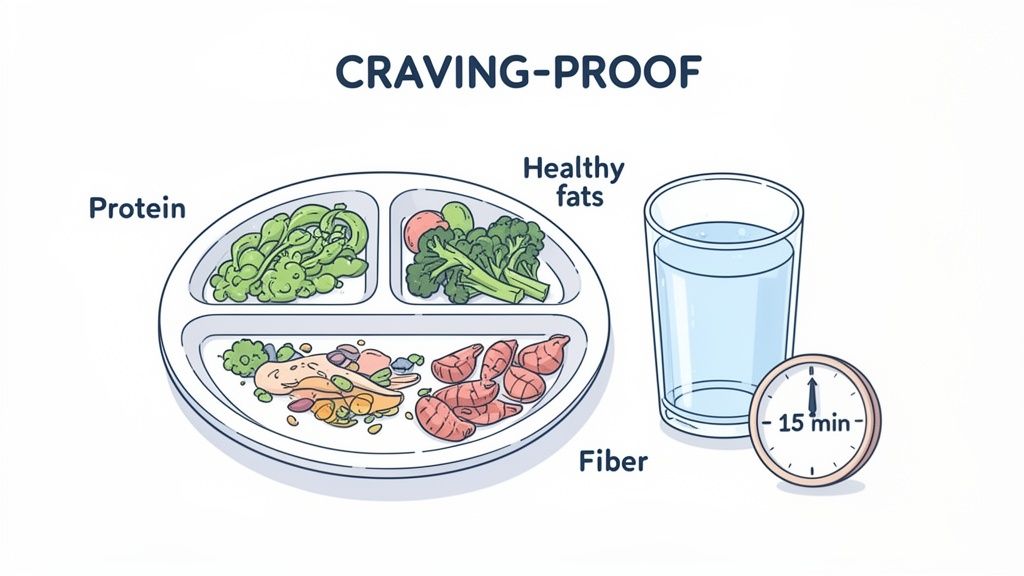
Honestly, the best way to fight post-meal cravings is to build meals that keep your blood sugar steady in the first place. Think of your plate as a team of players, all working together to keep you full and satisfied for hours. The goal here is to sidestep the big energy spikes and crashes that leave your brain screaming for a quick sugar fix.
Build a Craving-Proof Plate
A well-balanced meal is your first line of defense. Instead of obsessing over what to cut out, shift your focus to what you can add in. Every meal should be built around a powerful trio of macronutrients that team up to slow digestion and keep your energy on an even keel.
- Prioritize Protein: Protein is your powerhouse for satiety; it’s what makes you feel full and keeps you that way. Simply including a source of lean protein—think chicken, fish, beans, or tofu—at every meal dramatically lowers the odds of a post-dinner sugar hunt.
- Embrace Healthy Fats: Don't be afraid of fats! The healthy kinds, from foods like avocado, nuts, seeds, and olive oil, are fantastic for slowing down how quickly your body absorbs carbohydrates. This helps prevent that fast blood sugar spike that almost always leads to a crash and a craving.
- Fill Up on Fiber: Fiber is your digestive system's best friend. It’s found in vegetables, fruits, and whole grains, and it adds bulk to your meals, ensuring a slow, steady release of energy. A great rule of thumb is to fill half your plate with non-starchy veggies to get a hefty dose of fiber.
When your meals consistently feature this trifecta, you’re giving your body sustained energy. This is how you shut down the biological triggers for those nagging sugar cravings after meals.
Adopt Simple Lifestyle Tweaks
Beyond what’s on your plate, a few small habits can make a huge difference in taming your sweet tooth. These little adjustments support your body’s natural fullness cues and help break the psychological habit loop that keeps you reaching for sugar.
One of the most effective yet simple strategies is the '15-minute pause.' After you finish your meal, just set a timer for 15 minutes. This gives your brain and gut enough time to talk to each other and register that you're truly full. You'd be surprised how often that initial intense craving just fizzles out on its own.
Also, make sure you’re drinking enough water. Our bodies can sometimes mix up the signals for thirst and hunger, making you think you need a treat when you really just need a drink. Before you grab something sweet, try having a big glass of water and waiting a few minutes. That craving might just disappear.
Another powerful move is to switch up your post-meal routine. If your habit is to head straight to the couch for TV after dinner—a classic cue for mindless snacking—try something different. Go for a short walk, put on a podcast, or call a friend. Breaking that environmental cue can disrupt the entire habit, making it much easier to skip the automatic reach for dessert. It's these small, consistent changes that put you back in control, one meal at a time.
Using StopSugar to Build Healthier Habits
Knowing why you get cravings is one thing, but actually doing something about them day after day is where the real work begins. This is exactly where a tool like StopSugar can be a game-changer. Think of it as a coach in your pocket, ready to help you break that post-meal sugar cycle right when you feel most vulnerable.
Changing a deep-seated habit is all about awareness. You have to spot your triggers, break the automatic routine, and find a healthier, more satisfying reward. The StopSugar app is designed to walk you through each of these steps, turning theory into real, practical action.
Track Your Triggers and See Your Progress
You can't change a habit you don't understand. The app’s daily check-in and mood tracker are like a personal logbook, helping you finally connect the dots between how you feel, what you ate, and when that intense craving hits.
Think of it this way: a craving doesn’t just appear out of nowhere. It's often a response to something else—stress, boredom, or maybe just the clock hitting 3 PM. By logging your mood when you feel a craving, you'll start to see clear patterns jump out.
This isn't just data; it's power. Once you see the pattern, you can get ahead of it. For example, you might realize your sugar cravings only pop up after a stressful workday. Armed with that knowledge, you can create a new go-to plan, like putting on your sneakers for a walk the second you get home instead of heading to the pantry.
The app's dashboard gives you a visual snapshot of your journey, which makes your progress feel real and motivating.
Seeing how many days you've succeeded is a powerful reminder of how far you've come. It keeps you going, even when you have a tough day.
Get In-the-Moment Support When Cravings Strike
Let's be real—even with a great plan, sudden and intense sugar cravings after meals can feel impossible to ignore. In those tough moments, you need something that works right now, not just a long-term goal. That's what StopSugar’s “Panic Button” is for.
Instead of trying to fight the urge with pure willpower (which rarely works), one tap offers you simple, concrete actions you can take immediately. It might suggest things like:
- Drink a full glass of water.
- Do a 5-minute guided meditation.
- Walk around the block, just for a few minutes.
These aren't random suggestions. They are designed to create a "pattern interrupt"—a brief pause that gives your thinking brain a chance to catch up with your automatic habit brain. That small window is often all you need to make a better choice.
The app also has a whole library of smart, satisfying swaps for sugary snacks. So instead of just telling you what not to eat, it gives you constructive ideas, like pairing a date with two almonds or brewing a warm cup of herbal tea. You're not just avoiding sugar; you're actively retraining your brain and your taste buds to find new rewards that feel just as good.
When Your Cravings Signal Something More
Most of the time, wanting something sweet after a meal is perfectly normal and something you can manage with a few smart tweaks to your diet and habits. But what if the craving is more of a roar than a whisper?
If your urge for sugar feels relentless and starts getting in the way of your life, it might be your body trying to tell you something important.
Think of it like the check engine light in your car. It might just be a loose gas cap, or it could be something that needs a mechanic's attention. Persistent, intense cravings are that check engine light—it’s worth getting it checked out by a professional.
When to See a Doctor
Pay close attention if your sugar cravings show up with other physical symptoms. When they appear together, it can sometimes point to an underlying health issue that a doctor or registered dietitian should look into.
Here are a few key signs to watch for:
- Intense thirst and frequent urination: These are classic early signs that your body might be struggling to manage its blood sugar.
- Unexplained fatigue or energy crashes: If you feel wiped out after eating, it could mean your body isn't using glucose for energy the way it should be.
- Cravings that feel out of control: When the urge for sugar starts causing anxiety or interfering with your work and relationships, it's time to get support.
If you've tried everything and the cravings just won't quit, there could be deeper physiological factors at play. A professional can help you investigate what's going on and teach you how to balance hormones naturally, since imbalances can have a huge impact on your appetite.
Taking that step isn't admitting defeat—it's empowering yourself to stop guessing and finally get to the root of the problem.
Answering Your Questions About Post-Meal Sugar Cravings
It’s completely normal to have questions when you’re trying to figure out the "why" behind your cravings. Let's tackle some of the most common ones so you can feel more in control of your journey.
How Long Until These Sugar Cravings Go Away?
Everyone’s timeline is a little different, but you’re not in for a lifelong battle. Most people notice their sugar cravings after meals become far less intense within the first 1 to 2 weeks of eating more balanced meals and reducing added sugar.
Those first few days can feel like the toughest part of the climb—that’s your body and brain recalibrating. Stick with it, because after about a month, those new, healthier choices start to feel less like work and more like second nature.
What About Artificial Sweeteners? Are They a Safe Bet?
This is a tricky one, and the science isn't totally settled. While it's true they don't have calories, they might not be the magic bullet you're looking for. The problem is that many artificial sweeteners are intensely sweet, sometimes hundreds of times sweeter than sugar.
This can keep your brain's reward system primed for that super-sweet hit, making it harder to find satisfaction in the natural sweetness of something like a strawberry or a peach.
The real win isn't just swapping one sweetener for another; it's retraining your taste buds to appreciate less intense sweetness altogether. That's what builds a lasting habit.
Will Eating Fruit Just Make My Cravings Worse?
For most people, this is a definite no. Whole fruit is actually one of your best allies when a sweet craving strikes. The secret weapon here is fiber.
Unlike the sugar in a candy bar, the sugar in an apple or a handful of berries comes packaged with fiber. This fiber dramatically slows down how quickly your body absorbs the sugar, preventing the crazy blood sugar roller coaster that processed sweets trigger. A piece of fruit is a fantastic way to satisfy that desire for sweetness without feeding the craving cycle.