Your Guide to a Satisfying Sugar Free Meal Plan
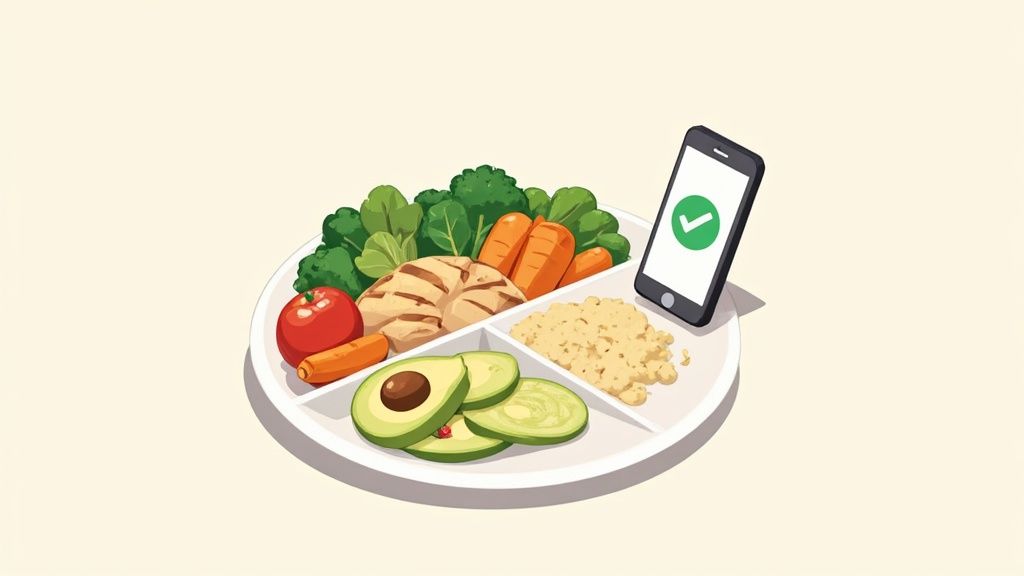
Thinking about going sugar-free? You're in the right place. This isn't about some restrictive, joyless diet. It's about figuring out how to cut down on sugar to feel more energetic, think clearer, and just improve your overall health with practical, real-world strategies.
Why a Sugar-Free Meal Plan Can Be a Game Changer
Making the switch to a sugar-free lifestyle can feel like a huge leap, I know. But it's less about deprivation and more about taking back control. You're simply choosing to fuel your body with real, whole foods.
The idea isn't to get rid of every last gram of natural sugar, like the kind you find in an apple. The real target is the added sugars that sneak into so many of our everyday foods and drinks. Making this one change can have a massive impact on how you feel, often leading to steady, reliable energy all day long. Say goodbye to that dreaded afternoon crash.
Beyond just consistent energy, many people who cut back on sugar notice some pretty amazing changes:
- Sharper mental focus once that constant brain fog starts to clear.
- More stable moods because you're avoiding the rollercoaster of blood sugar spikes and crashes.
- Better long-term health, as you're cutting down on a major source of chronic inflammation.
The World is Waking Up to Less Sugar
This isn't just a fleeting health trend; it's a real shift in how we think about food. More and more people are realizing how much sugar was holding them back, and food companies are finally paying attention.
The global market for sugar-free products is booming. One analysis even projects it will hit around USD 84.3 billion by 2032. This is great news for us, because it means finding tasty and convenient sugar-free options at the grocery store is easier than it has ever been.
A huge part of making this stick is learning how to reduce sugar intake without giving up flavour. When food tastes good, the change feels effortless and sustainable.
Ultimately, starting a sugar-free meal plan is about putting yourself in the driver's seat. It's about becoming a detective in the grocery aisle, stocking your pantry with smart swaps, and learning to cook meals that are both delicious and deeply nourishing. This guide will walk you through it, step-by-step, to make this whole process feel not just doable, but genuinely exciting.
Become a Pro at Spotting Hidden Sugars
The first real step to building a sugar-free meal plan starts right in the grocery aisle. To succeed, you have to become a bit of a sugar detective. Food companies are masters at hiding sugar under dozens of different names, which means seemingly innocent foods like pasta sauce, yogurt, and even salad dressing can be loaded with it.
Your best friend in this mission is the nutrition label, specifically the "Added Sugars" line. This little number is gold. It tells you exactly how much sugar was dumped in during processing, separate from the sugars that are naturally there in things like fruit or milk.
Know Sugar by Its Many Names
Here’s the thing: sugar rarely introduces itself as just "sugar." It has a whole roster of aliases that manufacturers use to fly under the radar on an ingredient list. The more of these names you can recognize, the quicker you'll be able to spot a sugar trap and move on to a better option.
Once you start looking, you’ll be stunned. Sugar is lurking in bread, ketchup, marinades, and those "healthy" granola bars you’ve been buying. It's so well-hidden in plain sight that most of us blow past the recommended daily limit without a clue.
Let's take Greek yogurt, for example. You might see one brand with 6 grams of sugar, all naturally occurring from the milk. But right next to it, a flavored version could have 18 grams, with 12 of those coming from sneaky added sugars like "fruit juice concentrate" or "cane sugar." That’s a huge difference, and it’s why reading the label is non-negotiable.
"The biggest shift comes when you start checking labels and realize how much sugar is in everyday foods. You’re not weak for craving it; you’ve been conditioned. But awareness changes everything."
To help you get started, I’ve put together a quick guide to some of sugar's most common disguises.
Common Hidden Sugars on Ingredient Labels
This table breaks down the common names for sugar you'll find on ingredient lists. Getting familiar with these will make your grocery trips much faster and more successful.
| Syrup-Based Sugars | '-ose' Ending Sugars | Other Common Names |
|---|---|---|
| High-fructose corn syrup | Dextrose | Cane juice |
| Brown rice syrup | Fructose | Dehydrated cane juice |
| Barley malt syrup | Sucrose | Molasses |
| Agave nectar | Maltose | Fruit juice concentrate |
| Maple syrup | Glucose | Honey |
Keep this list handy, maybe even screenshot it on your phone. After a few shopping trips, you'll start spotting these names from a mile away without even thinking about it.
This decision tree can help you figure out if a sugar-free approach aligns with what you're trying to achieve, whether that's more energy, better focus, or just feeling healthier overall.
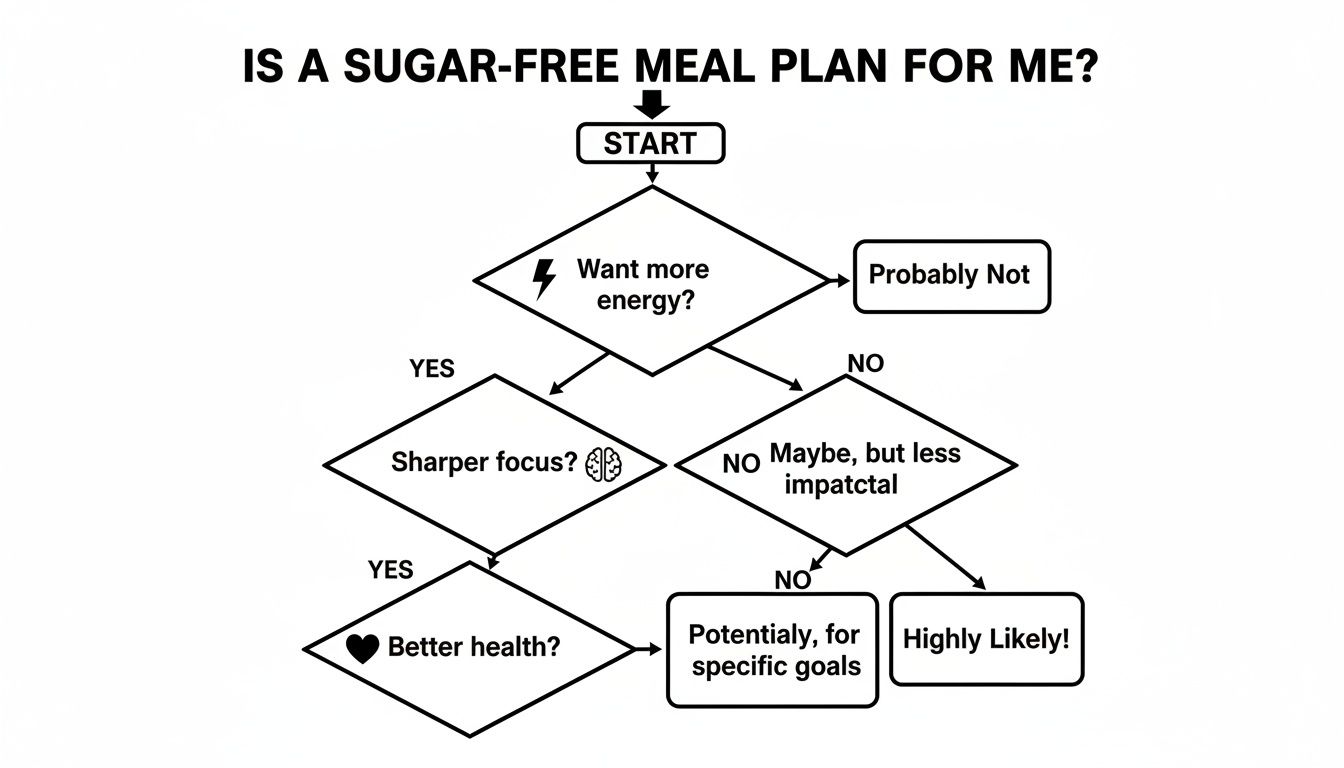
As the flowchart shows, if you’re looking to boost your energy, sharpen your focus, and improve your health, cutting out sugar is a powerful path to take. Turning label-reading into a quick, confident habit is the foundational skill that puts you back in control of what goes into your body.
How to Restock Your Kitchen for Success
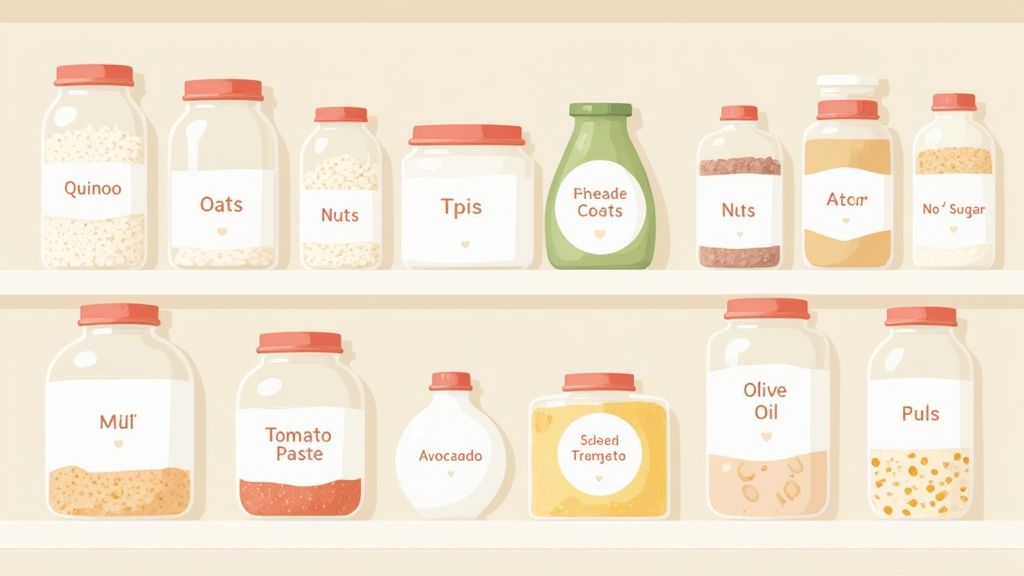
Let's be honest: willpower alone won't get you through a sugar-free journey. The real secret is setting up your kitchen to be your greatest ally, not a source of constant temptation. This isn't about restriction; it's about making smart, delicious upgrades so that the healthy choice is also the easy choice.
Think of it as a kitchen reset. Instead of dwelling on what you're getting rid of, get excited about all the vibrant, flavorful foods you're about to bring in.
The Great Pantry Swap
First things first, it’s time for a gentle audit of your pantry and fridge. You might be surprised to find sugar hiding in plain sight—in things like ketchup, breakfast cereals, and jarred sauces. The good news is, for every one of those, there's a fantastic, sugar-free alternative waiting.
- Sweetened Condiments: Did you know that many popular ketchup brands pack 4 grams of sugar into a single tablespoon? Swap it out for a no-sugar-added version. Better yet, try mixing tomato paste with a splash of vinegar and your favorite spices. Sugar-free mustard and hot sauce are also your new best friends.
- Sugary Breakfast Cereals: Most cereals are just dessert in a box. It's time to trade them for whole rolled oats, plain Greek yogurt, chia seeds, or a simple mix of nuts and seeds. You’ll get a satisfying, protein-packed start to your day without the sugar crash.
- Jarred Sauces: Pasta and stir-fry sauces are notorious sugar traps. A simple switch to canned crushed tomatoes lets you build your own sauce with fresh herbs. For Asian-inspired dishes, a mix of low-sodium soy sauce (or tamari), fresh ginger, and garlic is all you need.
A quick tip: you don't have to do this all at once. When I first did this, my family and I simply replaced items as they ran out. This made the transition feel gradual and much less dramatic for everyone.
The most powerful shift happens when you control your environment. When your kitchen is filled with nourishing options, making a healthy choice becomes the path of least resistance.
Building Your Sugar-Free Foundation
Once the main sugar culprits are gone, you can focus on the fun part: stocking up on the versatile, whole-food ingredients that will become the backbone of your meals. Your shopping list should center on a healthy balance of proteins, fats, and complex carbs.
Your New Grocery Go-Tos:
- Lean Proteins: Think chicken breast, fish (salmon is a great choice), eggs, lentils, chickpeas, and tofu.
- Healthy Fats: Stock up on avocados, good olive oil, nuts like almonds and walnuts, and seeds like chia, flax, and pumpkin.
- Complex Carbs: Quinoa, brown rice, sweet potatoes, and butternut squash are excellent. If you buy whole-grain bread, just be sure to check the label for sneaky added sugar.
- Flavor Boosters: This is where you can get creative! Build an arsenal of herbs and spices, garlic, onions, lemon juice, and different vinegars.
These staples are the building blocks for countless meals, ensuring you're always ready to whip up something delicious. For even more ideas, check out our complete sugar-free foods list to make your next grocery run a breeze.
The great thing is, finding these healthier options is getting easier. Supermarkets and hypermarkets are the main places people buy sugar-free products, accounting for over 55% of distribution. This shift shows that more and more people are looking for healthier, convenient foods. You can read more about the growing sugar-free food market and its distribution channels on marketreportanalytics.com. Going into the store with a plan helps you navigate the aisles with confidence and sets you up for success.
Building a Delicious and Balanced Plate
Alright, your kitchen is stocked and you're ready to go. Now for the fun part—actually putting together meals that taste great and make you feel even better.
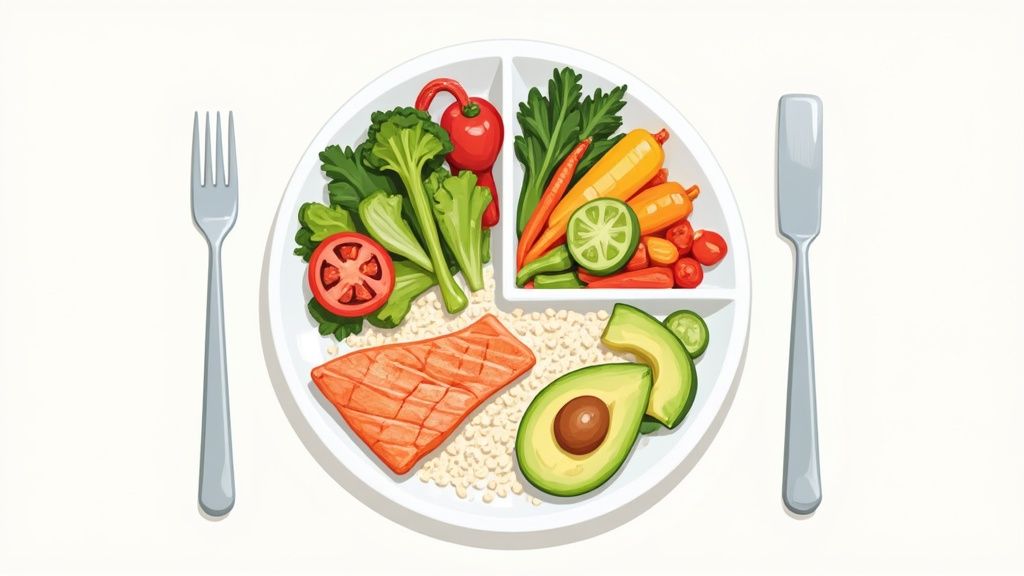
Forget about complex rules or obsessive calorie counting. The simplest, most effective way I've found to build a balanced, sugar-free meal is a visual trick called the "Plate Method." It takes all the guesswork out of the equation and ensures you're getting the right mix of nutrients every single time. Think of your plate as a canvas you get to fill with color, texture, and flavor.
The Plate Method Explained
This isn't a diet; it's a guide. You just visually divide your plate into a few sections. It’s that easy.
- Fill Half Your Plate with Non-Starchy Veggies: This is your base. Pile on the leafy greens like spinach and kale, or go for colorful options like bell peppers, broccoli, cauliflower, zucchini, and cucumbers. They’re high in fiber and nutrients, so they fill you up without adding a bunch of empty calories.
- Fill One Quarter with Lean Protein: Protein is your secret weapon against cravings. It keeps you feeling full and satisfied long after you've finished eating. Think grilled chicken, baked salmon, lean ground turkey, eggs, tofu, or a good scoop of lentils or beans.
- Fill One Quarter with Healthy Fats & Complex Carbs: This last section is for long-lasting energy. A few slices of avocado, a sprinkle of nuts, a small serving of quinoa or brown rice, or a little baked sweet potato fit perfectly here.
This simple 50-25-25 split is a game-changer. It’s a flexible blueprint, not a rigid rule, that helps you effortlessly create a nutritionally complete meal.
A perfect real-world example? A big spinach salad (half the plate) topped with a piece of grilled salmon (a quarter) and a few slices of avocado with an olive oil dressing (the final quarter). It’s simple, quick, and ticks all the boxes. This entire approach is about balancing the key building blocks your body needs to thrive. If you want to get into the nitty-gritty, you can learn more about what macronutrients and micronutrients are in our detailed guide.
Simple Sugar-Free Meal Ideas
Putting this all into practice is way easier than it sounds. Here are a few of my go-to recipes to show you just how delicious and simple sugar-free eating can be.
Breakfast Scramble: Sauté some diced bell peppers and onions in a pan. Crack in two eggs, whisk them up, and scramble until they're just right. Serve it with a side of fresh avocado slices and a dash of black pepper. You get a fantastic hit of protein and healthy fats to kickstart your morning.
Lunchtime Chicken Salad Lettuce Wraps: Take some pre-cooked shredded chicken and mix it with plain Greek yogurt (a great sub for mayo), chopped celery, and a pinch of salt and pepper. Spoon that mix into big, crisp lettuce leaves. It's a refreshing, crunchy lunch that won't leave you feeling sluggish.
Dinner Lemon Herb Salmon: This one’s a weeknight lifesaver. Take a salmon fillet and season it with salt, pepper, dried dill, and a generous squeeze of lemon juice. Bake it at 400°F (200°C) for about 12-15 minutes. Serve it up with some steamed asparagus and a small scoop of quinoa.
These meals prove that you don't need sugar for incredible flavor. Herbs, spices, a bit of citrus, and healthy fats are your new best friends in the kitchen. They’re what turn basic ingredients into something you’ll actually look forward to eating.
Practical Ways to Manage Sugar Cravings
Let's be real for a moment. Deciding to go sugar-free doesn't mean your cravings will magically vanish overnight. They'll show up, especially in those first few weeks. The secret isn't white-knuckling it or pretending they don't exist; it's about having a smart plan ready for when they do.
The first couple of days can feel like a genuine battle. You might get headaches, feel a bit cranky, or notice your energy levels tank. This is totally normal. Your body is adjusting, and your brain is essentially protesting the lack of its usual sugar hit.
Just knowing this is part of the process can be incredibly empowering. Instead of feeling defeated, you can see it for what it is: a sign that your body is starting to heal and recalibrate.
Is It Hunger or Just a Habit?
When that intense urge for something sweet hits, take a second and ask yourself one simple question: Am I actually hungry, or is this just a craving?
It’s a crucial distinction. True, physical hunger tends to build slowly, and pretty much any real food will satisfy it. A craving, on the other hand, usually pounces out of nowhere, feels urgent, and is laser-focused on one specific thing—like that pint of ice cream in the freezer.
If you’re genuinely hungry, the answer is a balanced, sugar-free snack. A handful of almonds, a hard-boiled egg, or a small bowl of Greek yogurt with berries will do the trick.
But if it’s a psychological craving—often triggered by boredom, stress, or just plain old habit—then distraction is your best move.
- Hydrate First. We often mix up thirst and hunger signals. Before you do anything else, drink a big glass of water and just wait 15 minutes. You’d be surprised how often the craving simply fades away.
- Get Moving. A quick walk, even just around the block, can work wonders. A change of scenery and some light movement helps reset your brain and shifts your focus.
- Engage Your Mind. Pick up the phone and call a friend. Turn on an interesting podcast. Tackle that one small, nagging task on your to-do list. A five-minute distraction is often all it takes to break the spell of a craving.
These little tricks are a great starting point. For a much deeper look into the science and strategy, you can explore more ways to reduce sugar cravings in our detailed article.
The food industry has spent decades making sugary foods highly addictive. You’re not weak for wanting them; your brain has been trained to. The good news is that once you recognize your triggers, you gain the power to change how you respond.
Your Pocket-Sized Support System
Trying to manage cravings all on your own can feel lonely and overwhelming. This is where having the right tool can make all the difference. Think of the StopSugar app as your personal support system, ready to help the moment you need it.
Instead of just relying on sheer willpower, you can use its features to actively build new, healthier responses.
Daily Check-ins: This is a simple but powerful habit. By taking a moment to log how you feel each day, you'll start connecting the dots. You might notice you crave sugar most on days you’re stressed from work or didn't sleep well. That awareness is everything.
The Panic Button: We all have those moments when a craving feels like an emergency. The panic button is designed for exactly that. It can guide you through a quick breathing exercise or flash a motivational message to get you through that intense, immediate urge without caving.
Alternatives Suggestions: When your brain is screaming for a cookie and you just can't think of a better option, this feature is a lifesaver. It gives you instant, healthy swaps for common sugary snacks, making it so much easier to make a good choice in the heat of the moment.
With these tools in your pocket, a tough moment doesn't have to derail your progress. It just becomes another opportunity to build a stronger, healthier habit.
Got Questions About Going Sugar-Free? We've Got Answers
Stepping into a sugar-free lifestyle is exciting, but it almost always comes with a few questions. Getting a handle on these common concerns from the get-go can make all the difference, turning confusion into confidence. Let's tackle some of the most frequent questions people ask when they start building a sugar-free meal plan.
"Does 'Sugar-Free' Mean I Can't Eat Fruit?"
Not at all! You can absolutely enjoy fruit. A well-designed sugar-free plan is all about cutting out added sugars, not the natural ones that come in whole foods.
Fruits like berries, apples, and oranges are packed with fiber and water. This amazing natural combination slows down how your body absorbs the sugar, preventing the kind of sharp blood sugar spikes you get from a candy bar. The key is to stick with whole fruits and avoid fruit juices or canned fruits swimming in sugary syrup, which are just concentrated sugar bombs without the helpful fiber.
"What Should I Use Instead of Sugar?"
When you really need that little hit of sweetness, reaching for natural, zero-calorie substitutes is the way to go.
- Stevia and monk fruit are my top recommendations. They’re both plant-based and have no effect on your blood sugar.
- Erythritol, a sugar alcohol, is another great choice. Most people find it easy on the digestive system, which can be an issue with some other sugar alcohols.
If you're a baker, look for blends made specifically for that purpose, as they often do a better job of mimicking the texture of real sugar. A word of caution: these substitutes are often way sweeter than sugar, so start with a tiny amount and see how it tastes before you go all in.
The real goal here isn't just to swap one sweetener for another. It's about retraining your taste buds to appreciate natural sweetness, so you eventually need less of it overall.
"Seriously, How Long Will It Take for My Cravings to Go Away?"
This is the million-dollar question, and honestly, it's different for everyone. But here's what I've seen time and time again: the most intense, can't-stop-thinking-about-it cravings usually start to chill out within the first one to two weeks. Think of it as an adjustment period while your body gets used to its new, cleaner fuel source.
Stick with it, and something incredible happens—your palate actually resets. You’ll eventually take a bite of something you used to love and be shocked by how sickeningly sweet it tastes. To get through that initial hump, focus on eating balanced meals, drink tons of water, and lean on tools like the StopSugar app to help you stay strong.
It also helps to understand how different foods affect your body. For instance, you can dive into understanding the olive oil glycemic index and its impact on blood sugar to see how healthy fats play a positive role in keeping you stable and satisfied.