what are sugar withdrawal symptoms? Quick guide to relief

So, what exactly is sugar withdrawal? Put simply, it’s the collection of physical and mental symptoms that pop up when you suddenly stop eating the amount of added sugar your body has gotten used to.
If you’ve ever felt run-down, headachy, or just plain cranky after cutting out sweets, you know exactly what this feels like. Your brain and body are scrambling to adjust to life without their go-to, quick-and-easy energy source.
Your Guide to Sugar Withdrawal Symptoms
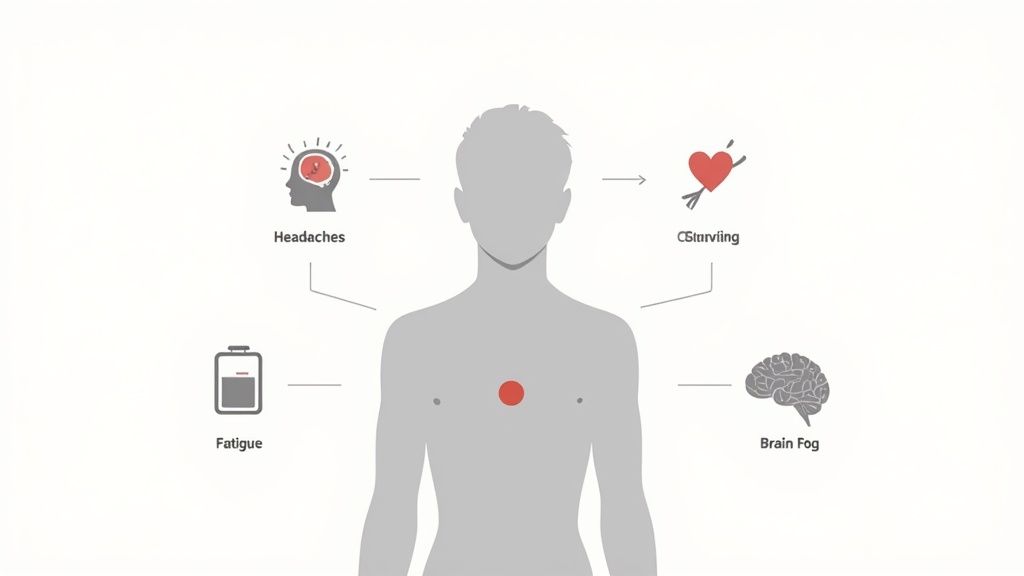
Making the choice to reduce sugar is one of the best things you can do for your health, but let's be honest—those first few days can be a real struggle. That foggy feeling, the irritability, the sheer exhaustion? It's not in your head. It’s a very real process called sugar withdrawal, and it happens as your body works to recalibrate itself.
Think of it this way: your body has been running on a fast, cheap fuel source. It got used to the instant energy spike and the feel-good chemicals that came with it. When you take that fuel away, your system has to learn how to run on a more stable, efficient source. That transition period is where the symptoms kick in.
Common Physical and Psychological Symptoms
Everyone’s experience is a little different, but most symptoms are either physical or psychological. It’s a true full-body experience that can affect your energy, your emotions, and everything in between.
Some of the most common physical hurdles include:
- Nagging Headaches: This is a big one. It often feels like a dull, throbbing pain that just won't quit.
- Deep Fatigue: You might feel completely wiped out, like you haven’t slept in days, even if you got a solid eight hours.
- Intense Cravings: Your brain will scream for sugar or other simple carbs to get that familiar, quick hit of energy.
- Nausea or Dizziness: Some people feel a bit lightheaded or queasy as their system gets back in balance.
The mental and emotional side can be just as tough, if not more so:
- Irritability and Mood Swings: You might find yourself snapping over little things or feeling your mood swing from one extreme to another.
- Anxiety: A low-grade, constant feeling of unease or nervousness is pretty common as your brain chemistry adjusts.
- Brain Fog: This is that classic feeling of being unable to focus or think clearly. It can be incredibly frustrating.
Understanding that these symptoms are just temporary side effects of a positive change is half the battle. When you can label the headache or irritability as withdrawal, it’s much easier to push through without giving in.
To help you get a better handle on what to expect, let's break down the most common symptoms and their typical timelines.
Common Sugar Withdrawal Symptoms at a Glance
This table gives you a quick snapshot of what you might feel, when it's likely to start, and when it will probably be at its worst. Knowing this can make the whole process feel much more predictable and less overwhelming.
| Symptom Type | Common Examples | Typical Onset | Peak Intensity |
|---|---|---|---|
| Physical | Headaches, Fatigue, Nausea | 24-48 hours | Days 2-4 |
| Psychological | Irritability, Anxiety, Brain Fog | 24-72 hours | Days 3-5 |
| Cravings | Intense desire for sweets or carbs | Within 24 hours | Days 2-3 |
Remember, this is a general guide. For most people, the worst is over within a week, and then you can start enjoying the incredible benefits of a low-sugar lifestyle.
Why Quitting Sugar Feels So Hard
If you've ever tried to cut back on sugar and felt like you were in an all-out battle with your own brain, you're not imagining things. The reason it feels so tough has almost nothing to do with willpower and everything to do with brain chemistry. Knowing what’s happening under the hood is the first step to taking back control.
Our brains are hardwired with a reward system to keep us alive. When we do something that promotes survival, like eating, our brain releases a feel-good chemical called dopamine. Sugar hijacks this system, triggering a huge dopamine flood.
This chemical rush feels great, so your brain logs it as a behavior worth repeating. Over time, your brain adapts and starts to expect that sugar-induced high just to feel normal. And just like that, you're stuck in a cycle that can feel impossible to break.
The Dopamine Rollercoaster
Think of your brain on sugar as a rollercoaster. That first bite of a donut sends you rocketing up to the peak, giving you a quick hit of pleasure and a jolt of energy. But as you know, every climb has a drop, and with sugar, it’s a steep one.
The crash leaves you feeling sluggish, irritable, and mentally foggy—these are the classic first signs of withdrawal. Your brain, now running on a dopamine deficit, starts screaming for another hit of sugar to get back to that peak. This is where those intense, almost primal, cravings come from.
That overwhelming urge for something sweet isn't a moral failing. It's a biological alarm from a brain that's been trained to rely on a dopamine spike. Seeing it as a temporary chemical imbalance, rather than a personal weakness, can change everything.
When you finally cut off the sugar supply, your dopamine receptors—which have become less sensitive from the constant stimulation—have to recalibrate. This adjustment period is when the withdrawal symptoms really kick into high gear.
Your Body on a Blood Sugar See-Saw
It's not just your brain going haywire; your body's entire energy regulation system gets thrown into chaos, too. Refined sugar is a simple carb that your body digests almost instantly, causing a massive spike in your blood glucose.
To deal with this flood, your pancreas pumps out a ton of insulin to get that sugar out of your blood and into your cells. Sometimes, it does its job a little too well. The result is the dreaded "sugar crash," where your blood glucose levels plummet just as quickly as they rose.
This sudden dip is what causes very real physical symptoms:
- Deep Fatigue: Your cells are suddenly starved of the energy they were just swimming in.
- Brain Fog: Your brain is a massive energy hog and relies on a steady stream of glucose. When that stream dries up, it struggles to function.
- Irritability: Low blood sugar has a direct line to your mood, making you feel anxious, snappy, or just plain cranky.
This vicious cycle creates a powerful physical dependency. Your body begins craving sugar not just for the pleasure, but to escape the miserable lows of the crash.
A Modern Problem with Deep Roots
This struggle is a surprisingly modern problem. The explosion of refined sugar in our diets since the 1980s has had massive health impacts that make quitting even tougher. For instance, Nonalcoholic Fatty Liver Disease (NAFLD) has doubled globally, a trend largely fueled by our intake of sugars like fructose.
The statistics are sobering. Research now suggests about 13% of children worldwide have NAFLD, and over a third of them show signs of severe, sugar-linked inflammation. You can dig deeper into the effects of rising sugar consumption from Addiction Help to see the bigger picture.
Understanding this context helps frame your own journey. The awful what are sugar withdrawal symptoms you're feeling are a completely normal response to removing a substance that our modern food environment has pushed on us for decades. By seeing the science behind the dopamine rollercoaster and the blood sugar see-saw, you can face this challenge with self-compassion, not self-blame.
Managing the Physical Toll of Sugar Detox

Getting through the first few days of a sugar detox can honestly feel like you're weathering a storm. Your body is fighting to find a new normal, and those physical symptoms are the tell-tale signs of this major internal reset. Knowing what’s coming and having a solid plan can make all the difference.
The physical stuff is usually the first thing you'll notice. We're talking about a pounding headache that seems to appear out of nowhere or a bone-deep exhaustion that sleep just can't seem to touch. These are direct messages from your body as it adjusts to life without its usual quick-energy fix. Let's walk through the most common physical hurdles and how to clear them.
Taming the Throbbing Headaches
Headaches are, without a doubt, one of the most common complaints, often kicking in within the first 24 hours. It’s not just one thing causing them, either. Your body is suddenly grappling with wild blood sugar swings, changes in blood flow to the brain, and potential dehydration as it works to flush your system.
Your absolute best friend here is hydration. Seriously. Aim to drink more water than you normally would, as this can directly ease the tension. A little pro-tip: add a tiny pinch of mineral-rich sea salt to your water. It helps your body hang onto that hydration and gives you a much-needed electrolyte boost.
Conquering Overwhelming Fatigue
Feeling completely wiped out is another classic. For a long time, your body has relied on a steady drip of simple sugars for those quick, easy energy bursts. Cut that off, and your system has to recalibrate and learn to burn more stable fuel sources, like protein and healthy fats.
It's so important to just listen to your body during this phase.
- Prioritize Rest: If you can, allow yourself extra time to sleep. Even a quick 20-minute power nap can feel like a total game-changer.
- Gentle Movement: A hardcore gym session is probably a bad idea, but a short walk or some light stretching can get your blood flowing and, surprisingly, give you a little energy lift.
- Nutrient-Dense Foods: Fuel up with high-quality protein and healthy fats. These provide the steady, slow-burning energy your body is craving and help keep your blood sugar from crashing.
This intense tiredness won't last forever. It’s just a sign that your metabolism is re-learning how to run efficiently without the constant sugar highs and lows. For a deeper dive into what to expect, check out our guide on sugar detox side effects.
The goal isn't to power through the fatigue with brute force. It's to support your body with rest, proper hydration, and stable nutrition as it makes a difficult but necessary adjustment.
Soothing Aches and Nausea
Muscle aches and even a little nausea can catch you off guard. These flu-like feelings are often tied to your body’s inflammatory response and the stress of your hormones trying to rebalance. Your whole central nervous system is recalibrating, and that can show up as real physical discomfort.
A warm bath with Epsom salts can work wonders on sore muscles, since the magnesium helps them relax. For nausea, try sipping on some ginger or peppermint tea—they're both fantastic for settling an upset stomach. It also helps to eat small, frequent meals packed with protein and fiber instead of three large ones.
Outsmarting Intense Cravings
And finally, the big one: cravings. These aren't just a passing thought; they're powerful, biological demands. Your brain is missing its usual dopamine hit from sugar and is sending out urgent signals for a "fix." This is where having a strategy is far more effective than relying on willpower alone.
When a craving strikes, try to see it for what it is—a sign that your body is healing and your brain is rewiring itself. Instead of caving, have a game plan:
- Eat Something Savory: A handful of nuts, a piece of cheese, or some avocado can satisfy you and get your blood sugar back on an even keel.
- Distract Yourself: Go for a walk, call a friend, or jump into a hobby for 15 minutes. Cravings are like waves; if you can just ride out the initial peak, they often pass.
- Plan for Sweet Alternatives: Have a healthy, low-sugar option ready to go. A small bowl of berries or a single square of very dark chocolate can satisfy that sweet tooth without derailing your progress.
For some people, the urges are especially tough to handle. If you find yourself really struggling, it might be worth looking into the best supplement to curb sugar cravings for some extra support. By anticipating these physical hurdles and having your toolkit ready, you can confidently navigate your path to a healthier, sugar-free life.
Navigating the Emotional Rollercoaster of Quitting Sugar
When you decide to quit sugar, you probably brace yourself for headaches and fatigue. Those are the physical symptoms everyone talks about. What often catches people off guard, though, is the intense emotional and mental storm that can hit.
If you suddenly find yourself snapping at loved ones, feeling anxious for no reason, or struggling to focus on simple tasks, you’re not failing. This is a completely normal—and expected—part of the process. Your brain is literally rewiring itself, and that can feel messy.
The truth is, kicking a sugar habit is as much a mental challenge as it is a physical one. Recognizing these intense feelings for what they are—temporary chemical fluctuations—is the first step to getting through this phase with your sanity intact.
Why Your Mood Takes a Nosedive
Your mood is largely managed by a few key brain chemicals, especially dopamine (the reward chemical) and serotonin (the feel-good chemical). Sugar gives you a shortcut, flooding your brain with these chemicals and creating a quick, artificial high. It feels great, but it’s a borrowed happiness.
When you cut off that supply, your brain's natural production line is thrown into chaos. This is the root cause of the emotional turbulence you might be feeling.
- Sudden Irritability: With your dopamine levels low, tiny annoyances can feel like massive problems. It’s the same reason you might get "hangry"—your brain chemistry is directly tied to your emotional state.
- Heightened Anxiety: Your nervous system gets used to the calming effect of a sugar hit. Without it, you can feel jittery, on edge, and filled with a general sense of unease.
- Depressive Feelings: A dip in serotonin can feel like a gray cloud has settled over everything. You might feel sad, unmotivated, and lose interest in things you normally enjoy.
Understanding this link is crucial. If you want to dive deeper, our article on how blood sugar affects mood swings breaks down this exact cycle.
Think of your brain like a smartphone that’s been running on a cheap, fast-charging power bank. When you unplug it, the battery drains fast. The phone gets slow, glitchy, and can’t handle much until it learns to rely on its own internal power source again.
Clearing the Frustrating Brain Fog
Beyond the mood swings, one of the most maddening symptoms is brain fog. This isn't just feeling a little tired; it's a frustrating cognitive slowdown that can make your day feel impossible.
You might find yourself re-reading the same email five times, walking into a room and completely forgetting why, or feeling like your thoughts are wading through thick mud. This happens because your brain, which hogs about 20% of your body's energy, has gotten lazy. It’s used to the easy, constant fuel from sugar. As it shifts to more stable energy sources, its performance can lag for a bit.
This isn't just you. Clinical observations show that psychological symptoms like mood swings and brain fog are just as common as physical ones. Experts agree that for most people, the toughest mental and physical symptoms last anywhere from a few days to two weeks as the body finds its new normal.
Practical Tools for Emotional Balance
You don't have to just "tough it out" and wait for the storm to pass. You can actively support your brain through this transition with some simple, practical tools.
Here are a few strategies that can make a huge difference:
- Practice Mindfulness for Irritability: When you feel that surge of frustration, just pause. Take five slow, deep breaths. This simple act can calm your nervous system right down, giving you the space to respond instead of just reacting.
- Fuel Your Brain with the Right Nutrients: Help your brain rebuild its natural chemical supply. Foods rich in tryptophan (like turkey, nuts, and seeds) and tyrosine (found in avocados, almonds, and bananas) provide the building blocks for serotonin and dopamine.
- Get Gentle Movement: A short walk outside can work wonders for brain fog. The combination of light exercise and fresh air boosts blood flow to the brain, providing a natural lift in both mood and focus.
Recognizing that what you’re feeling is a real, biological process—and not a personal failing—is half the battle. With the right tools, you can navigate this mental adjustment and come out stronger on the other side.
Your Sugar Withdrawal Timeline, Day by Day
Knowing what’s coming when you decide to quit sugar can make all the difference. When you understand the typical ups and downs, you can see that even the toughest moments are just temporary phases. It helps you prepare mentally instead of feeling blindsided, letting you recognize each stage as a sign of progress.
Think of this timeline as a map for your journey, showing you the path from the first jolt to finally turning the corner.
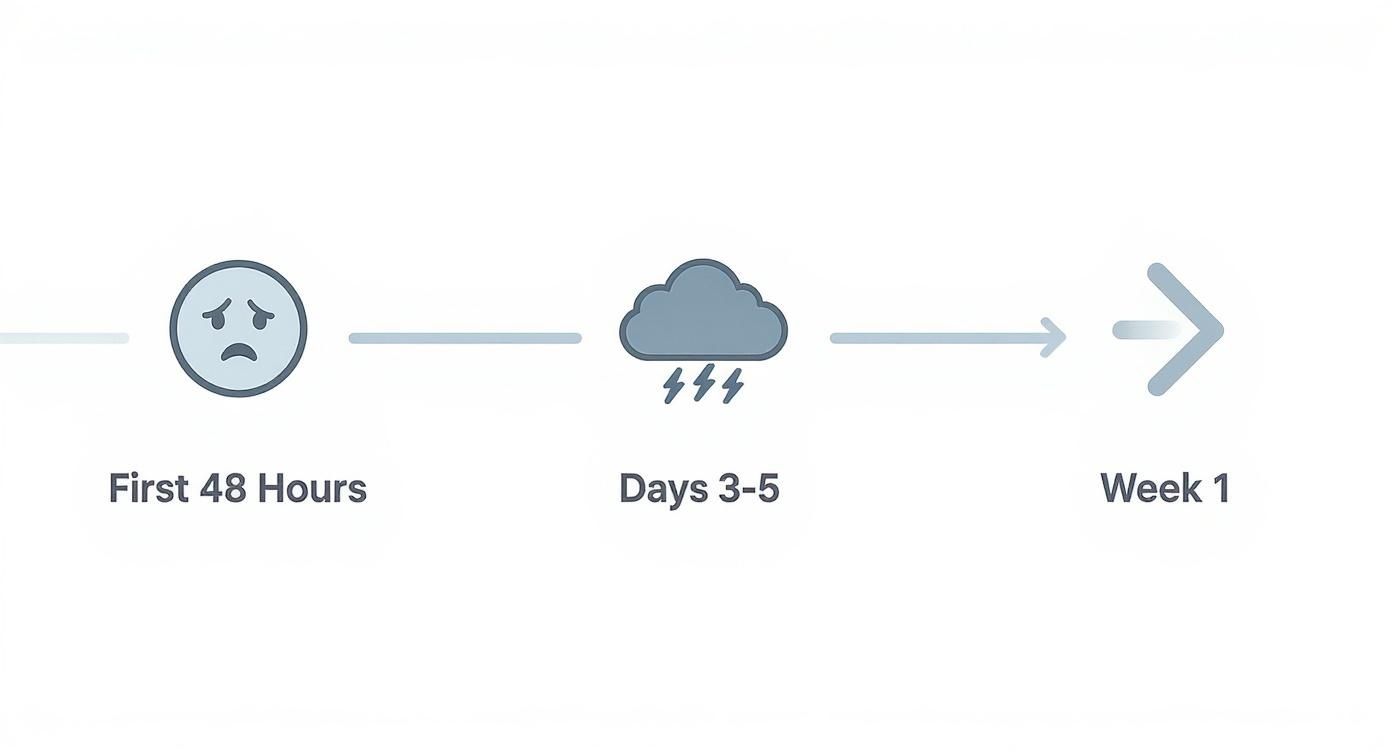
The most important thing to remember? The worst of it is usually packed into the first few days. Once you get past day five, things typically start looking up—a lot.
The First 48 Hours: The Initial Shock
This is when your body first realizes its favorite, easy-access fuel source is gone. The first couple of days are usually when the physical symptoms, like headaches and a deep sense of fatigue, start to creep in. Your brain, which is used to a steady stream of sugar-induced dopamine, will start screaming for a fix. This is why the cravings can feel so intense right out of the gate.
You might also feel a bit dizzy, lightheaded, or like you’re walking around in a fog. Your only job right now is simple: drink plenty of water and give your body steady energy with protein and healthy fats. Just focus on getting through this initial shock to the system.
Days 3-5: The Peak Challenge
Alright, this is it. For most people, this is the toughest part of the entire process. Days three through five are often when the physical and emotional symptoms hit their peak. Headaches can get stronger, and you might feel incredibly irritable, anxious, or just plain emotionally fragile. It’s a clear sign that your body and brain are doing the hard work of resetting their chemistry.
This is the period where most people report the most severe cluster of symptoms: intense cravings, moodiness, fatigue, and brain fog. It’s all tied to your body learning to manage its blood sugar without the constant highs and lows while your dopamine receptors recalibrate.
It sounds rough, but this peak is actually a good sign—it means your body is actively rewiring itself for the better. Getting through these few days is often the biggest hurdle you'll face. The Panic Button in the StopSugar app was designed for these exact moments, giving you instant strategies to ride out a craving without giving in.
The First Full Week: Turning a Corner
Sometime after day five, most people feel a real shift. The worst of the physical stuff—the pounding headaches and bone-deep fatigue—finally starts to fade. You'll still have cravings and might get hit with mood swings, but they usually become less intense and don't pop up as often.
This is when you’ll start getting glimpses of the good stuff: moments of mental clarity and a surprising return of your energy. It’s a huge motivator. Now is the time to double down on your new healthy habits, because your body is finally starting to adapt to its new, cleaner fuel source. To get an even clearer picture of what to expect, check out our detailed sugar detox timeline for more guidance.
Beyond Week Two: Finding Your New Normal
Once you’re past the two-week mark, you can breathe a sigh of relief. The worst is definitely over. Cravings might still show up now and then, usually triggered by stress or an old habit, but that intense, desperate physical need for sugar will have faded. By now, you'll likely feel more energetic, think more clearly, and feel more emotionally stable than you did before you started.
This is where you start to truly feel the benefits. Your body has adapted, you’re back in control, and you’re building the foundation for a much healthier life for the long haul.
When to Talk to a Doctor About Your Symptoms
For the most part, sugar withdrawal is something you can manage at home. It's an uncomfortable, but temporary, part of your body recalibrating. That said, it's really important to know when to push through and when to pick up the phone and call your doctor.
A dull headache is pretty standard. But a severe, throbbing headache that just won't quit? That’s different. Feeling a bit tired is normal, but being so exhausted you can't get through your day—whether that's work or taking care of your family—is a sign you need to check in with a professional.
Think of it like this: a passing storm is something you can wait out, but a hurricane warning means you need expert guidance to stay safe.
Key Warning Signs to Watch For
When in doubt, always play it safe. It’s time to reach out to your healthcare provider if you’re experiencing any of these issues:
- Persistent Dizziness or Lightheadedness: A little wooziness is one thing. But if you're constantly lightheaded or feel like you might pass out, that’s a red flag.
- Heart Palpitations: Any feeling that your heart is racing, fluttering, or skipping beats needs to be checked out by a professional. Don't ignore this one.
- Extreme Mood Changes: We all get irritable when we kick a habit. But overwhelming anxiety, deep feelings of hopelessness, or depression that feels too big to handle require support.
- Symptoms Lasting More Than Two Weeks: The worst of it should be over within a week or two. If your symptoms are dragging on or even getting worse, something else might be going on.
When Pre-Existing Conditions Are a Factor
This advice is especially crucial if you're already managing a health condition.
If you have diabetes, hypoglycemia, a heart condition, or any other chronic illness, please talk to your doctor before you make a major dietary change like cutting out sugar. They can give you personalized advice to make sure you do it safely.
Your doctor can help you build a plan that takes your specific health needs into account. They can also monitor your progress and make sure your symptoms aren't being caused by something else. Getting there safely is just as important as starting the journey in the first place. Your health always comes first.
Frequently Asked Questions About Sugar Withdrawal
Quitting sugar brings up a lot of questions. It's totally normal to wonder what you're getting into. Knowing what's coming and how to handle it can be the key to sticking with it for good. We've gathered some of the most common questions people ask, with practical answers to help you feel ready for the journey ahead.
How Long Do Sugar Withdrawal Symptoms Actually Last?
Let's get straight to it: for most people, the worst is over within the first week or two. The first 3-5 days are usually the toughest. This is when the headaches, fatigue, and intense cravings are at their peak.
But here's the good news—after that initial hurdle, things start getting better, and you’ll notice small improvements every day. While you might still get a random craving out of the blue (say, when you walk past your favorite bakery), the heavy-duty physical and emotional symptoms usually calm down as your body adjusts. Hitting that two-week mark is a huge milestone; it's when you really start to feel like yourself again, only better.
Is It Better to Quit Sugar Cold Turkey or Gradually?
This is a big one, and honestly, there's no single right answer. It really comes down to your personality and what feels manageable for you.
A gradual approach is often a gentler way to ease into it. By slowly cutting back on sugar over a few weeks, you give your body and brain time to adapt. This can make the whole process feel less jarring and often dials down the intensity of symptoms like mood swings or headaches.
On the other hand, some people just prefer to rip the band-aid off. Going cold turkey can mean you face more intense symptoms, but you get through the most difficult phase faster. Think about how you usually tackle big challenges in your life. If you try cold turkey and find it’s just too much, there’s no shame in switching gears and trying a more gradual path.
Your journey to a sugar-free life is personal. Whether you go cold turkey or taper off, the StopSugar app can help you track your progress and mood daily, providing insights no matter which path you choose.
What Are the Best Foods to Eat During a Sugar Detox?
Your number one goal during a sugar detox is to keep your blood sugar stable. When you do that, you sidestep the dramatic energy crashes that send you running for the nearest sweet thing. The key is to focus on real, whole foods that give you steady, sustained energy.
Here’s what you should be loading up on:
- High-Quality Protein: Chicken, fish, eggs, beans, and lentils are your best friends. Protein keeps you feeling full and satisfied, which puts a stop to mindless snacking.
- Healthy Fats: Think avocado, nuts, seeds, and olive oil. These provide slow-burning fuel for your body and brain, keeping you on an even keel.
- High-Fiber Foods: Pile your plate with non-starchy veggies, legumes, and berries. Fiber slows everything down, preventing those nasty blood sugar spikes and crashes.
And don't forget to drink plenty of water! Staying hydrated is crucial for keeping headaches and fatigue at bay. If a sweet craving hits hard, try a small handful of berries or a crisp apple. They offer natural sweetness along with fiber and nutrients—a much smarter way to satisfy that urge.