What are the symptoms of sugar withdrawal: Quick Guide & Timeline
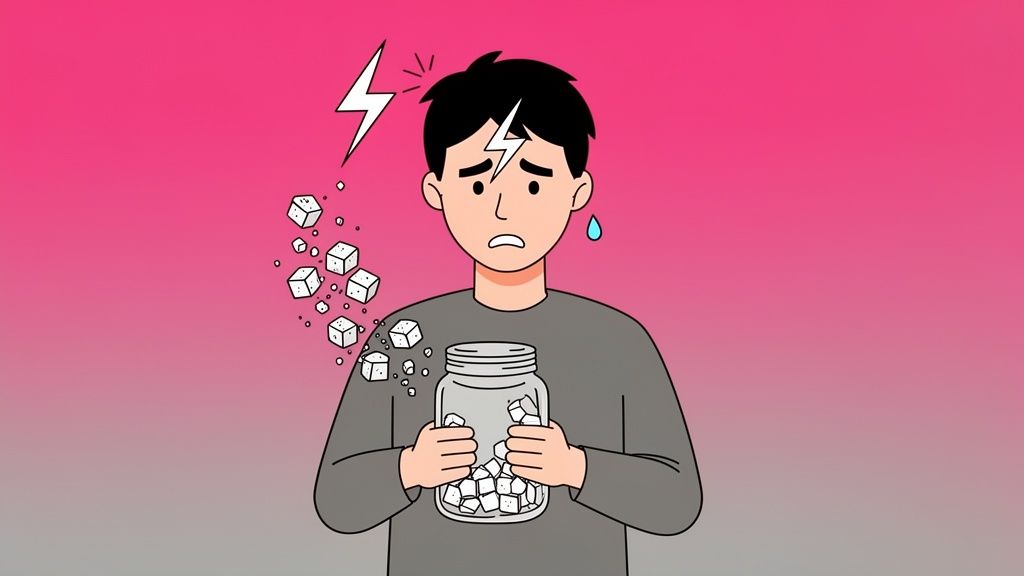
So, you’ve decided to break up with sugar. What happens next? The first day or two can be rough. Expect a mix of physical and mental symptoms to show up, like intense cravings, headaches, fatigue, and a short temper. These usually kick in within 24 to 48 hours as your body starts to figure out what’s going on.
To give you a quick snapshot, here are the most common signs that your body is beginning the detox process.
Sugar Withdrawal Symptoms At a Glance
| Symptom Category | Common Examples |
|---|---|
| Psychological | Irritability, mood swings, anxiety, difficulty concentrating, intense cravings for sweets |
| Physical | Headaches, fatigue, dizziness, nausea, muscle aches, changes in sleep patterns (insomnia or excessive sleepiness) |
This list isn't meant to scare you—it's just a heads-up. Knowing what to expect is the first step in managing the process and coming out stronger on the other side.
Why Your Body Rebels When You Quit Sugar
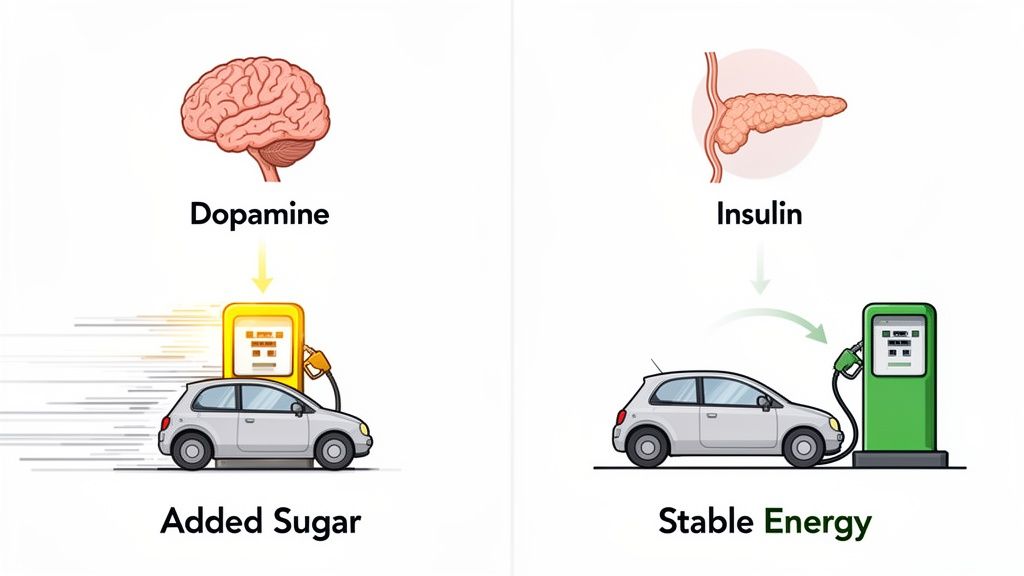
If you've ever tried to ditch sugar, you know the feeling. One minute you're all in, and the next you’re fighting a throbbing headache and an almost primal urge to eat something sweet. This isn’t a failure of willpower. It's a very real, physical response called sugar withdrawal.
Think of it this way: your body has gotten used to running on a cheap, fast-burning fuel (sugar). When you suddenly swap it out for premium, slow-release energy from whole foods, the engine is bound to sputter for a bit. It has to relearn how to work efficiently, and that bumpy transition period is what we call withdrawal.
The Dopamine Dip and Cravings
At the heart of this rebellion is a powerful brain chemical called dopamine. Every time you eat sugar, your brain gets a hit of this "feel-good" molecule, creating a mini-high of pleasure and reward. It feels great, so your brain learns to want more.
When you cut off the sugar supply, the dopamine party ends abruptly. This sudden drop leaves your brain’s reward center feeling short-changed, which is what triggers those fierce cravings. It’s essentially your brain shouting, "Hey, where's my treat?" It's a temporary glitch while your chemistry finds a new, healthier normal.
Given how much hidden sugar is in our modern diet, this reaction is incredibly common. The average American consumes about 66 pounds of added sugar yearly—that's roughly 82 grams a day (or 19.5 teaspoons), way over the WHO's recommended 25-gram limit. You can read more about these sugar consumption trends from Choosing Therapy.
Blood Sugar and Hormonal Havoc
It’s not just about brain chemistry. Your hormones are thrown for a loop, too. A diet high in sugar sends your insulin levels on a wild rollercoaster, spiking to handle the glucose rush and then crashing hard. This cycle is what causes those familiar energy slumps and mood swings even before you decide to quit.
When you stop eating sugar, your body has to relearn how to manage blood sugar without those constant hits. This adjustment is what causes many of the physical symptoms:
- Physical Aches: Headaches and muscle soreness are classic signs that your body is recalibrating its energy regulation.
- Mental Fog: Feeling spaced out or struggling to concentrate? That’s your brain adapting to a more stable, less frantic fuel source.
- Irritability: Those blood sugar swings directly mess with your mood, making it easy to feel cranky and short-tempered.
It's worth remembering that the discomfort of sugar withdrawal is a powerful sign that your body is healing. It's a temporary but necessary phase as you rewire your metabolism and brain for better, more stable health in the long run.
Why You Feel So Awful When You Quit Sugar
Ever tried to cut back on sugar and felt like you were hit by a truck? You're not just imagining it, and it's definitely not a lack of willpower. The reason you feel so terrible during sugar withdrawal is deeply rooted in your brain chemistry and how your body manages energy. It’s a very real, physical process.
Think of it this way: for a long time, sugar has been the easiest, most rewarding path your brain could take. Every time you had a cookie or a soda, your brain got a little hit of dopamine—the neurotransmitter that makes you feel good. Over time, your brain got used to these frequent dopamine parties.
When you suddenly take away the sugar, that well-worn path is abruptly closed. Your dopamine levels drop, leaving your brain’s reward center feeling… well, unrewarded. This is why you feel irritable, sad, and just plain blah. Your brain is essentially sending out an S.O.S., demanding the one thing it knows will bring back that feeling of pleasure.
The Dopamine Rollercoaster Comes to a Screeching Halt
This isn't just a vague feeling; it's a measurable neurological event. Sugary foods can hijack your brain's reward system in a way that’s surprisingly similar to some addictive drugs. They deliver a fast, intense dopamine spike that your brain quickly learns to crave.
When you cut off the sugar supply, your brain suddenly finds itself in a dopamine deficit. It’s like being at the very top of a rollercoaster and then plunging straight down. That crash is what triggers the powerful cravings and emotional mess you feel. Your brain is just trying to get back to the “high” it remembers, pushing you to find the quickest fix it knows—more sugar.
The physical aches and pains are also tied to this. Animal studies have shown that getting off sucrose can cause dopamine levels in the brain's reward center to drop by a staggering 20-30%. That’s a huge dip, and it’s directly connected to why you feel so crummy. If you’re curious, you can read more about the research on sugar withdrawal and brain chemistry on ChoosingTherapy.com.
This biological reality is why tools like the StopSugar app can be a game-changer. By using the mood tracker, for example, you can see these emotional dips for what they are—not a personal failing, but a predictable symptom of your brain getting back in balance.
Blood Sugar Swings and Total Energy Chaos
It's not just happening in your head. Your body's entire energy system is also in an uproar. A diet high in sugar forces your pancreas to work overtime, pumping out insulin to get all that glucose out of your blood and into your cells.
This creates a pretty gnarly cycle:
- The Rush: You eat something sweet, and your blood sugar shoots through the roof.
- The Spike: Your pancreas releases a flood of insulin to deal with the sugar overload.
- The Crash: The insulin does its job a little too well, and your blood sugar plummets.
- The Craving: This crash leaves you feeling exhausted, foggy, and desperate for another sugar hit to get your energy back.
When you quit sugar, your body has to unlearn this chaotic cycle and figure out how to keep your blood sugar stable on its own. For a much deeper dive into this, check out our guide on what causes insulin spikes.
The deep fatigue and brain fog you feel during withdrawal are signs that your body is adapting. It's like an engine learning to run on a slower, more sustainable fuel after being hooked on cheap, high-octane gas.
This recalibration is absolutely crucial for your long-term health, but it feels pretty miserable in the short term. Your cells, which got used to a constant, rapid-fire delivery of glucose, are temporarily struggling as your metabolism adjusts. That’s why you feel so drained and can't focus.
It’s uncomfortable, for sure, but that discomfort is a powerful sign that your body is healing and rewiring itself for a much healthier future.
So, you’ve decided to cut back on sugar. That’s a huge step. But as your body starts to adjust, you might be in for a few surprises. It's common to experience a wave of physical symptoms that can feel pretty intense, but don't let them throw you off track.
Think of these symptoms not as a sign of failure, but as proof that your body is healing. It's learning to run on better fuel, and that transition takes a little time. The most common hurdles you'll face are headaches, serious fatigue, and cravings that feel like they've taken over your brain. Let's break down why these happen and what to expect.
Here’s a look at the dopamine rollercoaster your brain rides when you eat sugar.
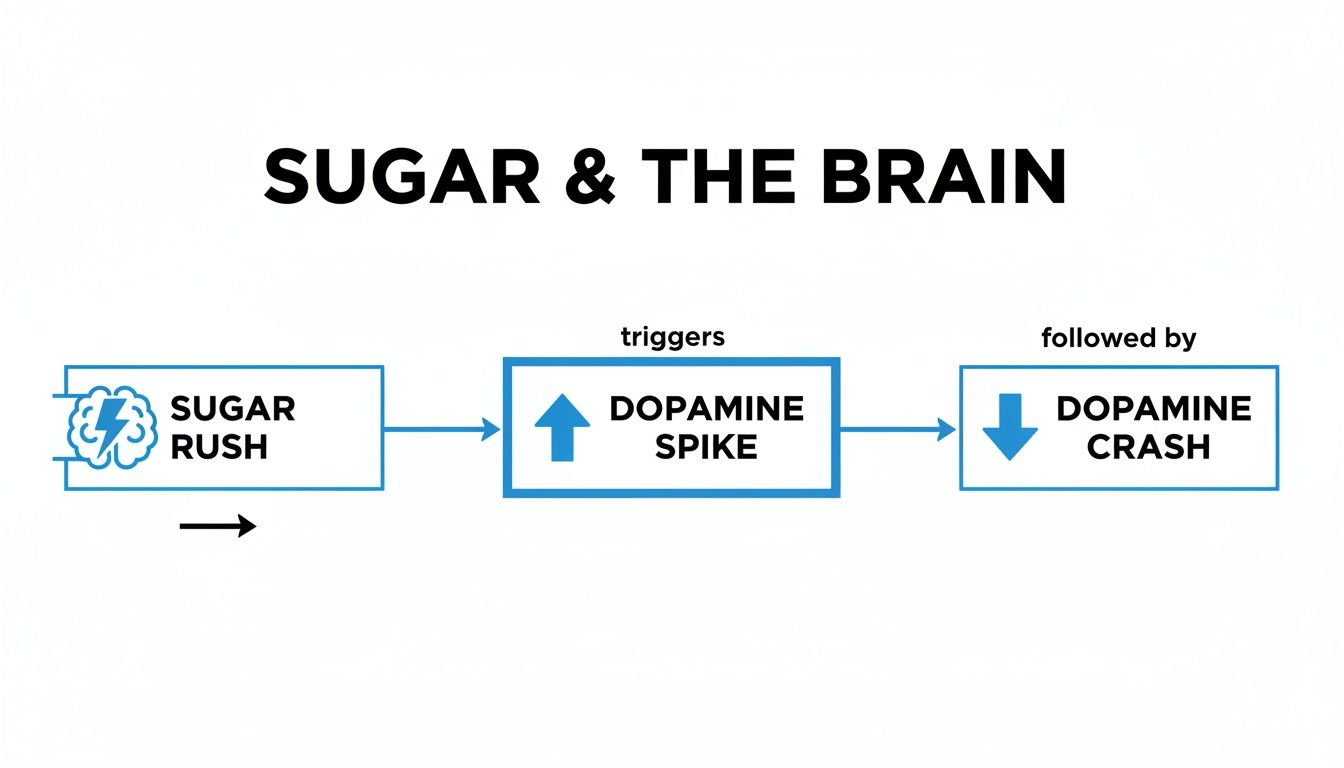
When you cut off the sugar supply, you’re essentially getting off this ride. Your brain and body have to adjust to the new, calmer reality, and that's what triggers the physical withdrawal.
The Pounding Headache Phenomenon
One of the first things people notice when they quit sugar is a throbbing headache that just won't quit. It might start as a dull ache and build into a full-blown tension headache that makes it tough to concentrate. This isn't just in your head (well, it is, but there's a physical reason for it).
Your body got used to the effects of sugar on your blood vessels and brain chemistry. When you take sugar away, blood flow to your brain changes, and your neurotransmitter levels (like dopamine) take a dip. This sudden shift is what triggers the pain.
It's an incredibly common experience. Imagine starting your detox feeling motivated, only to get slammed with a skull-crushing headache within the first day or two. Research on sugar withdrawal side effects at Choosing Therapy shows this is one of the top complaints, with some studies indicating it affects up to 70% of people cutting out added sugars.
Overwhelming Fatigue and Energy Crashes
Feeling completely wiped out is another classic sign of sugar withdrawal. This isn't your typical afternoon slump; it’s a deep, bone-weary exhaustion that can make climbing a flight of stairs feel like running a marathon.
The reason is simple: your body has been running on cheap, fast-burning fuel (sugar). Now, it has to learn how to use more efficient, slow-burning sources like protein and healthy fats. During this switch, your cells are essentially waiting for a quick energy hit that never arrives, leading to a major crash.
You might notice:
- A heavy feeling in your arms and legs, like you’re trying to move underwater.
- Profound physical weakness, making your usual workout feel impossible.
- An overpowering urge to nap, even if you got a full night's sleep.
The good news? This phase doesn't last. Once your body becomes better at using other fuel sources, you’ll unlock a more stable, consistent energy that lasts all day.
Intense and Unrelenting Sugar Cravings
This might be the toughest battle of all: the cravings. We're not talking about a passing thought for a cookie. These are powerful, almost primal urges for something sweet that can feel impossible to ignore. This is your brain's biology at work.
The reward centers in your brain got used to the dopamine flood that came with every sugary treat. Now that the flood has stopped, your brain is sending out a five-alarm fire, demanding you "fix" the problem by eating sugar.
These cravings are your brain's attempt to fix a perceived "problem"—the absence of its usual reward. It's a biological urge, not a character flaw. Recognizing this can help you detach from the intensity of the feeling.
When a massive craving hits, it helps to have a plan. The StopSugar app has a feature built for these exact moments. The Panic Button gives you immediate, practical suggestions for healthy alternatives and activities to distract you. It’s a tool that helps you interrupt that old craving-reward cycle and start building a new, healthier one.
The Psychological Side of Quitting Sugar
While most of us brace for the physical side effects, the mental and emotional hurdles of quitting sugar can be the toughest part of the whole process. This isn't just about your body detoxing; your brain is undergoing a massive recalibration. It has to relearn how to function without the constant rush of chemical rewards it’s grown used to, which can stir up some pretty intense cognitive and emotional symptoms.
Imagine your brain’s reward system is like a shortcut through a dense forest. For years, sugar has been that easy, well-trodden path to feeling good. When you suddenly block that path, your brain is forced to find new, less-traveled routes to stability and pleasure. That rewiring process can feel messy and uncomfortable for a little while.
Irritability and Wild Mood Swings
One of the first things people notice is a short fuse. You might find yourself snapping over minor issues or feeling a wave of anger over something small, like a slow driver. This isn't a sudden personality change; it's a direct result of your blood sugar levels going haywire and your brain experiencing a temporary dopamine shortage.
Our moods are deeply connected to how our bodies manage energy. When your blood sugar is unstable during withdrawal, it triggers stress signals that put your nervous system on high alert. Being in this constant state of alarm makes you feel edgy, tense, and prone to emotional outbursts. Your brain is basically sounding an alarm, frantically searching for the one thing it knows will quiet things down: sugar.
A Spike in Anxiety and Restlessness
Feeling jittery, anxious, or just unable to settle down is another classic sign. This anxiety often comes from the same drop in dopamine that tanks your mood. Dopamine isn't just about pleasure; it also helps you feel calm and focused. When your levels are low, your brain can feel overstimulated and unsettled.
This can show up in a few different ways:
- A constant, nagging feeling of unease.
- Physical restlessness, like tapping your feet or being unable to sit still.
- Racing thoughts that make it hard to relax or fall asleep.
For many, it feels like their normal anxiety levels have been cranked up to ten. The key is to remember that this is a temporary state while your brain chemistry finds a new, healthier balance. Understanding how sugar, dopamine, and mood are linked is a game-changer. You can learn more in our detailed guide on what dopamine addiction is.
Brain Fog and Trouble Focusing
Feel like you're trying to think through a thick fog? That's a very real cognitive symptom of sugar withdrawal. You might zone out in the middle of a conversation, struggle to remember why you walked into a room, or read the same sentence over and over. This happens because your brain, which is an energy-hungry organ, has to adapt to a new primary fuel source.
Your brain uses about 20% of your body's total energy. When you take away its favorite fast-burning fuel (glucose from sugar), it has to get better at using more stable energy from fats and proteins. During that transition, cognitive function can take a temporary hit.
These psychological symptoms are usually at their worst within the first week. In fact, some studies show a pretty specific timeline. One 2023 study found that participants quitting sugar cold turkey said their headaches peaked between days two and five—a pattern that looks a lot like a milder version of other substance withdrawals.
Just knowing that these feelings are a normal and temporary part of the journey can make all the difference. Tools like the mood tracker in the StopSugar app can be a huge help here. By logging how you feel, you can start to see patterns and remind yourself that this is just a predictable—and short-lived—phase of your path to freedom.
How to Manage Sugar Withdrawal Symptoms
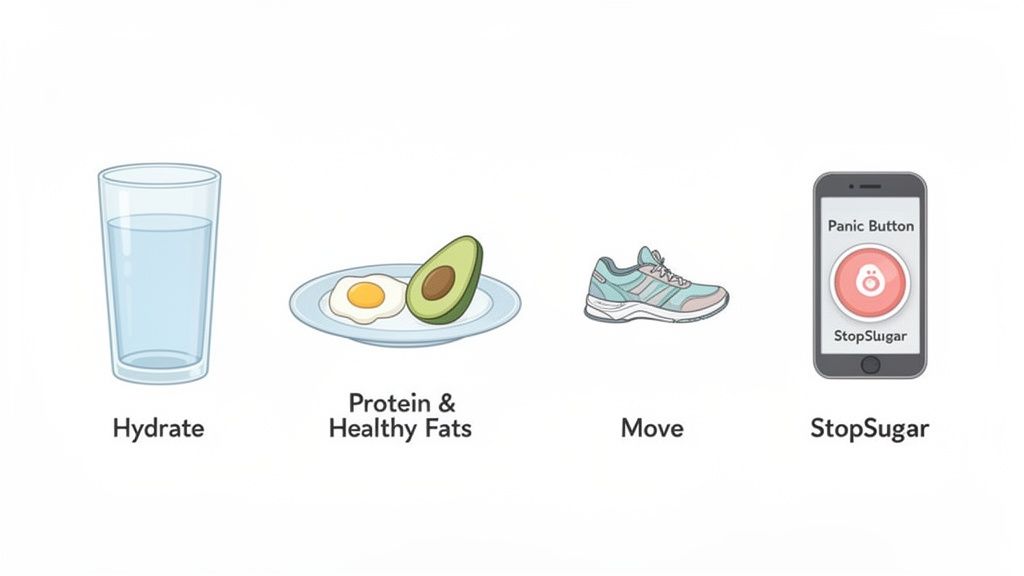
Getting through sugar withdrawal can feel like a battle, but you don’t have to just white-knuckle your way through it. With a few smart adjustments to your daily routine, you can take the edge off the physical and mental symptoms, making the whole process feel much more manageable.
Think of it less as fighting your body and more as working with it. By giving your system the right support—like proper hydration, steady energy sources, and a bit of movement—you help it recalibrate more smoothly. This approach puts you back in the driver's seat and turns a tough challenge into an empowering step forward.
Build a Foundation with Smart Nutrition
Your first and best defense against the worst withdrawal symptoms is what’s on your plate. Those intense cravings, headaches, and bouts of fatigue are almost always made worse by rollercoaster blood sugar levels. The single best thing you can do is stabilize them with nutrient-dense foods.
Try building every meal around three key things: protein, healthy fats, and fiber. This powerhouse combination slows down digestion, which helps prevent the sharp energy spikes and subsequent crashes that feed cravings and irritability.
Here are a few simple ways to make this happen:
- Protein Power: Make sure you have a source of lean protein like chicken, fish, eggs, or beans at every meal. Protein is incredibly satisfying, keeping you feeling full so cravings don't take over your thoughts.
- Healthy Fats for Stability: Don't be afraid of fats! Add things like avocado, nuts, seeds, and olive oil to your diet. They provide a steady, long-lasting source of energy to fight off the heavy fatigue that often comes with cutting sugar.
- Fiber for Fullness: Fill up on non-starchy veggies, whole grains, and low-sugar fruits like berries. Fiber slows down the absorption of any natural sugars, which is key to keeping your blood glucose on an even keel.
A great rule of thumb for meals: fill half your plate with colorful vegetables, a quarter with lean protein, and the last quarter with a healthy fat or complex carb. This balanced plate is your best shield against the worst of withdrawal.
This doesn't have to be complicated. Even simple snacks, like an apple with almond butter or some Greek yogurt with a few seeds, can be enough to stop a craving from spiraling out of control.
Stay Hydrated and Get Moving
It’s easy to forget, but dehydration can actually trigger headaches—one of the most common complaints during a sugar detox. Your body is going through a huge metabolic shift, and water is crucial for flushing everything out and helping your cells function properly. So, keep a water bottle handy and sip on it all day long.
At the same time, a little gentle movement can do wonders for your mood. When you're feeling irritable or anxious, something as simple as a short walk or a few stretches can offer instant relief. Exercise releases endorphins, your body's natural mood-boosters, which directly counters the dopamine dip you're feeling. You don't need a grueling workout; just 15-20 minutes of movement can make a huge difference. Exploring lifestyle and diet changes for anxiety management can also provide great strategies that complement your sugar-free journey.
Leverage Technology for Real-Time Support
When a really strong craving hits, it helps to have a plan. This is where a tool designed for building new habits can give you the structure you need in those tough moments. The StopSugar app has features built specifically to get you through the withdrawal phase.
- Daily Check-ins and Mood Tracking: By logging how you feel each day, you'll start to see patterns. Maybe you realize your cravings are always worst in the afternoon, or your mood tanks after a bad night's sleep. This knowledge is power—it helps you anticipate and prepare for your personal challenges. For a full rundown of what to expect, check out our guide on sugar detox side effects.
- The Panic Button: When a craving feels overwhelming, the app’s Panic Button is there to help. It gives you immediate, practical strategies and healthy distractions to ride out the urge without giving in. It’s like having a supportive coach right in your pocket.
By combining smarter food choices, plenty of water, gentle movement, and the right support tools, you can navigate sugar withdrawal successfully and turn a difficult process into a major win for your health.
Got Questions About Sugar Withdrawal? We've Got Answers
So, you're thinking about cutting back on sugar. It's a fantastic decision, but it's natural to have a few questions bubble up. The process can feel a little mysterious, and everyone's experience is unique. Let's walk through some of the most common questions to help you know what to expect.
Getting a clear picture of the road ahead helps you set realistic goals and build a solid plan, turning that sense of "what if?" into "I've got this."
How Long Am I Going to Feel Like This?
This is probably the number one question on everyone's mind. While there's no magic number, most people find the toughest symptoms last anywhere from 2 to 14 days. You'll likely hit the peak of your discomfort—think killer headaches and intense cravings—somewhere between day two and day five.
After that first week or so, the worst of the physical stuff usually starts to let up. You might still have some lingering psychological effects, like a random bad mood or a sudden craving that pops up out of nowhere, for up to a month. What your personal timeline looks like really depends on a few things:
- Your starting point: If you were having a lot of added sugar every day, your withdrawal will probably feel more intense than someone who only had it here and there.
- Your body: Your own unique metabolism, genetics, and overall health play a huge part in how fast you bounce back.
- Your game plan: Things as simple as drinking enough water and eating well-rounded meals can make a huge difference, shortening both how bad the symptoms are and how long they stick around.
Should I Quit Cold Turkey or Gradually Taper Off?
This is a big one, and honestly, there's no single right answer. It comes down to what works for you.
Going cold turkey is like ripping off a band-aid. It’s intense, and you get the worst of it over with quickly. For some people, this all-or-nothing approach works great. The downside? The withdrawal symptoms can hit you like a ton of bricks.
On the flip side, tapering off gently eases your body into the change. This approach usually means the symptoms are much milder and more manageable, which can feel less overwhelming. If you're worried about feeling terrible or you have a life that doesn't stop, slowly reducing your intake over a few weeks might be a much more sustainable path.
There's no "right" way to do this. The best method is the one you can actually stick with. Think about your personality. Do you love a good challenge? Cold turkey might be your style. Do you prefer slow and steady progress? Then tapering is probably your best bet.
When Is It Time to Call a Doctor?
For most people, the symptoms of sugar withdrawal are just temporary annoyances—signs that your body is recalibrating and healing. They aren't usually a cause for serious alarm. That said, it's always smart to listen to your body and get professional advice if things feel too intense or just plain wrong.
You should definitely check in with a healthcare professional if you experience:
- Serious dizziness or feeling constantly lightheaded
- Heart palpitations or a racing heart
- Severe mood swings that are getting in the way of your work or relationships
- Any symptoms that drag on for more than two weeks without getting better
And if you have an existing health condition like diabetes, hypoglycemia, or heart disease, it's absolutely essential to talk to your doctor before making big changes to your diet. They can help you do it safely without messing with your medications or overall health.
What's the Best Thing to Eat When a Craving Hits?
When a powerful sugar craving kicks in, having the right snacks ready to go can be a lifesaver. The goal is to grab something that will stabilize your blood sugar, not send it on another rollercoaster ride. You'll want snacks packed with protein, fiber, and healthy fats—these nutrients slow down how your body absorbs sugar and keep you feeling full and satisfied much longer.
Here are a few smart choices to keep on hand:
- Greek yogurt with a handful of berries: The protein from the yogurt and fiber from the berries are a perfect team for keeping you on an even keel.
- Apple slices with almond butter: A classic for a reason. You get fiber, healthy fats, and just enough natural sweetness to hit the spot.
- A small handful of nuts or seeds: They're full of protein and healthy fats that put the brakes on hunger signals.
- Carrot sticks or bell pepper slices with hummus: A great savory and crunchy option that's loaded with satisfying fiber.