What Are Ultra Processed Foods A Simple Guide
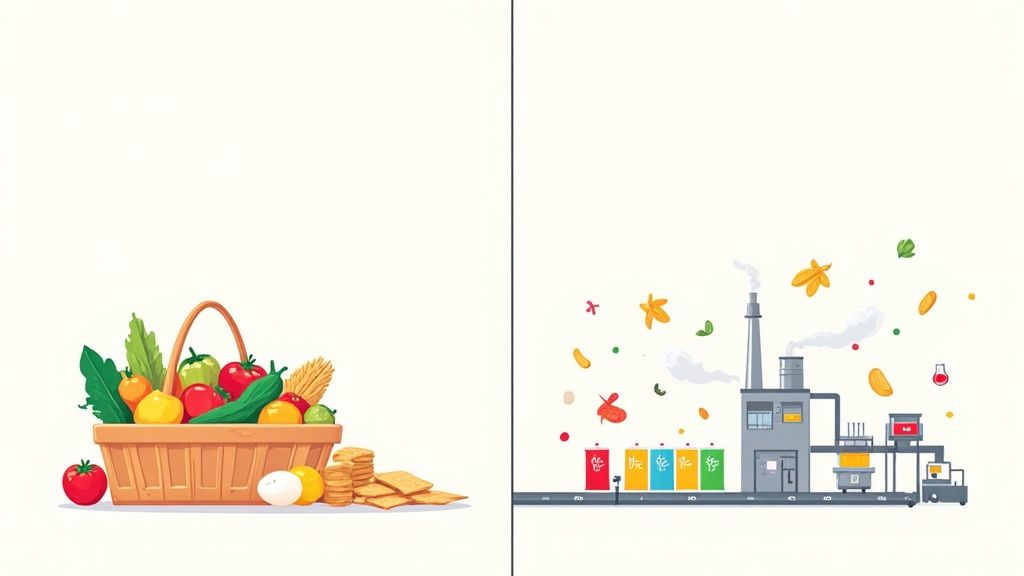
It's easy to get lost in the jargon, but the idea behind ultra-processed foods (UPFs) is actually pretty simple. Think of them as industrial creations, made with ingredients and additives you'd never find in your own kitchen.
If the ingredient list on a package looks more like a chemistry experiment than a recipe, chances are you're holding a UPF. Understanding this difference is one of the most important things you can do for your health today.
A New Way to Look at "Processed"
Let's be clear: almost everything we eat is processed in some way. Chopping vegetables, freezing berries, or canning tomatoes are all forms of processing. That’s not the problem.
The real issue is that not all processing is created equal. To help us tell the difference, nutrition scientists came up with a handy framework called the NOVA classification system. It cuts through the confusion by sorting foods into four simple groups based on how much they've been changed from their natural state.
This system is what helps us see the massive difference between a can of black beans (processed) and a bag of cheesy, puffy, fluorescent orange snacks (ultra-processed). Getting this distinction is the first step toward really knowing what you're eating.
The NOVA System: A Quick Guide
The NOVA system isn't about slapping "good" or "bad" labels on food. It’s more like a lens that helps you see how far a food has journeyed from the farm to your plate. It shows us which foods have been fundamentally changed for the sake of flavor, texture, and a long shelf life—often losing their nutritional value along the way.
To make it even clearer, here’s a simple breakdown of the four NOVA groups. This table will help you quickly spot the difference between something that's been lightly handled and something that's been engineered in a factory.
Quick Guide to Food Processing Levels
| NOVA Group | What It Means | Everyday Examples |
|---|---|---|
| Group 1: Unprocessed or Minimally Processed | Foods in their natural (or near-natural) state. They might be cleaned, cut, or frozen. | Fresh fruits and veggies, eggs, milk, fish, nuts, plain yogurt, dried beans. |
| Group 2: Processed Culinary Ingredients | Ingredients extracted from Group 1 foods, like oils, fats, sugar, and salt. You use these to cook. | Olive oil, butter, maple syrup, salt, cornstarch. |
| Group 3: Processed Foods | A mix of Group 1 and Group 2 ingredients. They're basically simple, recognizable foods. | Canned tuna, freshly baked bread, cheese, salted nuts, canned beans. |
| Group 4: Ultra-Processed Foods (UPFs) | Industrial formulas with many ingredients, including additives you don't use at home. | Packaged cookies, sugary cereals, frozen pizzas, soda, instant noodles, hot dogs. |
As you can see, it's not about avoiding processing altogether, but about understanding the degree of it.
Why This Matters More Than Ever
You might be surprised by just how much of our diet is made up of these industrial creations. A recent report from the CDC found that ultra-processed foods make up 55% of the total calories eaten by Americans aged one and older.
For kids and teens between 1 and 18, it's even worse—a shocking 61.9% of their calories come from UPFs. Things like sweet bakery goods, salty snacks, and sugary drinks are driving this trend and are a huge reason for our growing health problems.
When you boil it down, the difference is this: Processed foods are modified. Ultra-processed foods are almost entirely new creations, designed in a lab to be so delicious you can't stop eating them.
Once you grasp this concept, you can start to see past the flashy packaging and clever marketing. You'll be equipped to build a diet based on real nourishment, not just industrial convenience, and that’s a powerful step toward better health.
Decoding The Four NOVA Food Groups
To really get a handle on what ultra-processed foods are, it helps to step back and look at the whole picture. Researchers came up with a system called the NOVA classification that cuts through the confusion. It’s not about slapping "good" or "bad" labels on food; it's about understanding how far a food has traveled from its natural state.
Think of it as a spectrum, from a freshly picked apple to a packaged fruit snack. This system neatly sorts everything we eat into four main groups, making it much easier to spot the difference between simple, traditional processing and heavy industrial interference.
Group 1: Unprocessed or Minimally Processed Foods
This is food as nature intended. These are the whole foods that are either completely untouched or have only been slightly altered for convenience—things you could easily do in your own kitchen like chopping, freezing, or drying.
They’re the cornerstone of any healthy eating plan.
- Examples: Fresh fruits and veggies, eggs, nuts, seeds, fresh fish, poultry, and plain yogurt.
Group 2: Processed Culinary Ingredients
Next up are the ingredients we use to bring those Group 1 foods to life. These are things extracted from whole foods or nature through simple methods like pressing, grinding, or refining.
They’re not meant to be eaten alone, but they’re the pantry staples we rely on to cook from scratch.
- Examples: Olive oil, butter, salt, sugar, honey, and vinegar.
Group 3: Processed Foods
Here, we have a simple marriage between Group 1 foods and Group 2 ingredients. The key is that they're still made from recognizable whole foods and have only undergone basic processing like canning, bottling, or baking. You can still point to what the original food was.
These foods are perfectly fine and can be a convenient part of a balanced diet.
- Examples: A loaf of bread from a local bakery, cheese, canned beans, salted nuts, and canned fish.
The infographic below really helps visualize the difference as we move from whole foods toward the more heavily altered stuff.
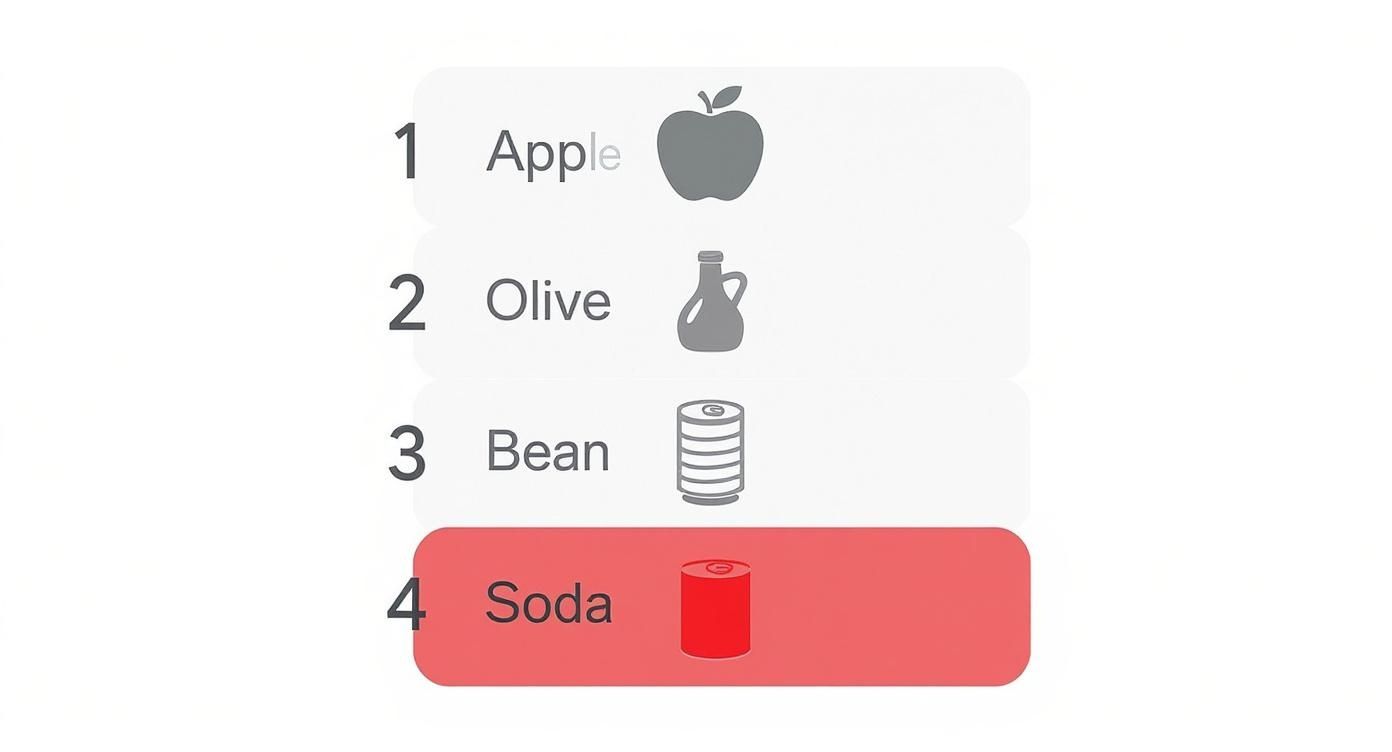
You can see how each group builds on the last, with Group 4 standing in a category all its own.
Group 4: Ultra-Processed Foods
And here we are. This is the category that’s raising red flags for our health. Ultra-processed foods aren't just modified foods; they're industrial creations. They're typically made from substances you’d never find in a home kitchen.
These products are formulations of ingredients, mostly of exclusive industrial use, that result from a series of industrial processes. They often contain additives like artificial flavors, colors, emulsifiers, and thickeners designed to make them taste good, look good, and last forever on a shelf. They’re engineered to be irresistible.
These items are everywhere, and they've quietly taken over a huge chunk of the modern diet.
- Examples: Sodas, packaged cookies and cakes, sugary breakfast cereals, instant noodles, frozen pizzas, and most fast-food items like chicken nuggets.
Once you understand these four groups, it becomes crystal clear that not all "processed" food is the enemy. This framework gives you the power to see past the flashy packaging and make smarter choices, steering you back toward foods that are much closer to their natural, wholesome state.
The Real Health Impact of a High UPF Diet
https://www.youtube.com/embed/5QOTBreQaIk
While grabbing a pre-packaged meal is undeniably convenient, a huge and growing body of evidence shows that a diet heavy in these products comes with serious health costs. We're not talking about vague warnings here. The risks are specific, measurable, and can affect nearly every system in your body.
Think of your body like a high-performance engine. Whole foods are the clean, premium fuel it’s designed to run on. Ultra-processed foods, on the other hand, are like a cheap, dirty fuel. Sure, the engine might run for a while, but all those industrial additives, excessive sugars, and unhealthy fats eventually clog up the system and lead to breakdowns.
This isn't just a metaphor. A diet loaded with UPFs is consistently tied to a higher risk of developing serious, long-term health conditions.
The Connection to Chronic Disease
The biggest worry with ultra-processed foods is their strong connection to the chronic diseases that affect millions of people. These conditions don't just appear out of nowhere; they're often the result of years of dietary habits that wear down your metabolic health.
Here are some of the key health risks:
- Obesity and Weight Gain: UPFs are literally engineered to be "hyper-palatable." This means they're so intensely flavorful that they can override your body's natural signals for fullness, making it incredibly easy to overeat and gain weight.
- Type 2 Diabetes: The massive amounts of added sugars and refined carbohydrates found in most UPFs can lead to insulin resistance, which is the stepping stone to full-blown type 2 diabetes.
- Systemic Inflammation: Industrial ingredients and a near-total lack of fiber can wreck your gut health and trigger chronic inflammation, a known root cause of many diseases. You can learn more about what foods cause inflammation in our detailed guide.
This pattern of poor nutrition has consequences that ripple out across your entire body, especially for your heart.
Extensive research now links ultra-processed food consumption to increased risks of serious diseases and mortality worldwide. A landmark study funded by the NIH, which analyzed data from over 1.2 million people, found that those with the highest UPF intake had a 17% increased risk of cardiovascular disease and a 23% greater risk of coronary heart disease.
The harm isn't just about what these foods contain—like all that salt and unhealthy fat—but also what they don't. They push nutrient-rich whole foods off your plate, depriving your body of the fiber, vitamins, and minerals it needs to stay healthy.
This is exactly why so many experts are championing Food Is Medicine initiatives—to shift the focus back to wholesome, nourishing foods. Once you understand the risks, it gives you a powerful reason to rethink what goes into your shopping cart and onto your plate.
How To Become a UPF Detective at The Store
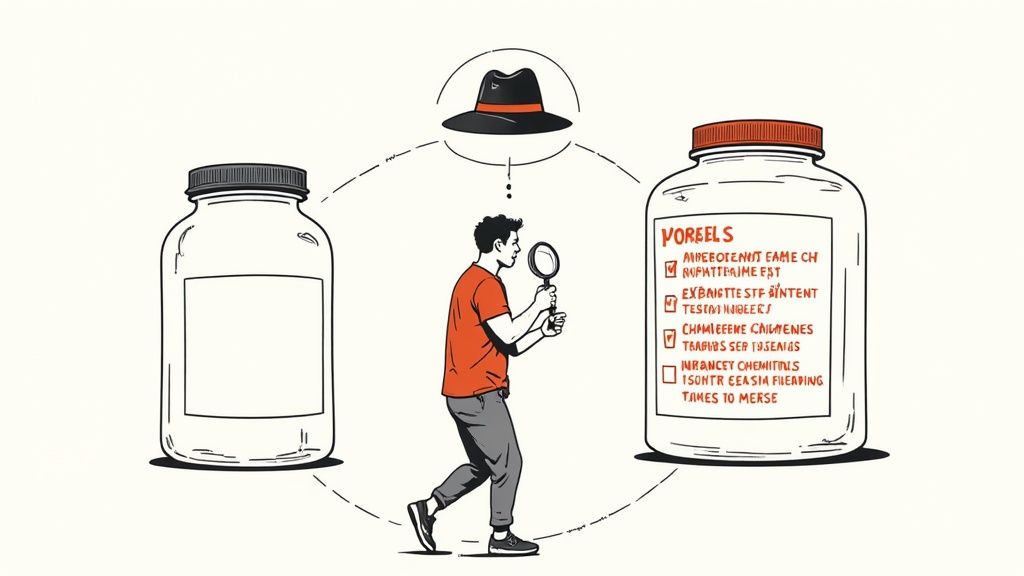
Knowing what ultra-processed foods are is one thing, but the real test comes at the grocery store. The aisles are packed with them, often disguised by flashy packaging and tempting health claims.
The good news? You don't need a science degree to see through the marketing. The secret is simple: ignore the front of the box and turn it over. The ingredient list never lies.
Look For These Red Flags
Think of an ingredient list like a recipe. Does it sound like something you could whip up in your own kitchen? Great. Or does it read more like a chemistry experiment? If so, you’re probably holding an ultra-processed food.
Here are the biggest warning signs to watch for:
- A Super Long List: Real food is simple. A bag of frozen peas contains just one ingredient: peas. Ultra-processed products, on the other hand, can have ingredient lists that run into the dozens.
- Words You Can’t Pronounce: If you stumble over names like maltodextrin, sodium erythorbate, or butylated hydroxyanisole, that's a huge clue. These aren't kitchen staples; they're industrial additives created in a lab.
- Additives That Fake It: Keep an eye out for ingredients designed to create hyper-palatable flavors, perfect textures, and an impossibly long shelf life. This includes things like hydrogenated oils, emulsifiers, artificial flavors, and color additives like Red No. 40.
Getting comfortable spotting these ingredients is a game-changer. For a deeper dive, our guide on how to read nutrition labels can help you put all the pieces together.
A simple rule of thumb: The further a food has strayed from its natural state, the more you should scrutinize its ingredient list. A long, complex list is almost always a sign of heavy industrial processing.
To see this in action, let's compare two common grocery items.
Processed vs Ultra-Processed Ingredient Comparison
The table below shows the stark difference between a basic processed food and a typical ultra-processed one. Notice how one list is short and recognizable, while the other is a laundry list of industrial compounds.
| Feature | Example Processed Food (Canned Tuna in Water) | Example Ultra-Processed Food (Frozen Pizza) |
|---|---|---|
| Primary Ingredients | Tuna, Water, Salt | Enriched Flour, Tomato Concentrate, Water, Cheese Substitute (Water, Palm Oil, Starch) |
| Number of Ingredients | 3 | 30+ |
| "Kitchen" Ingredients | All three are common household ingredients. | Some are (flour, tomato), but many are not. |
| Industrial Additives | None | Modified Food Starch, Corn Syrup Solids, Hydrogenated Soybean Oil, Sodium Phosphate, Carrageenan, Artificial Flavors, L-Cysteine hydrochloride. |
| Purpose of Additives | N/A | To create texture, enhance flavor, extend shelf life, and lower costs. |
This side-by-side view makes it clear. The canned tuna is simply a real food preserved in a can. The frozen pizza, however, is an engineered product built from fractionated ingredients and chemical additives.
The Scale of The Problem
It’s no wonder spotting these foods is getting harder—they’ve completely taken over the supermarket. An estimated 70% of packaged foods in the U.S. now fall into the ultra-processed category.
This is a huge deal, and it's why these products are on the radar of public health officials. The challenge is especially real with convenience foods, like many of the ready meals available in Australia, where processing levels can vary wildly.
By practicing these detective skills every time you shop, you can confidently choose real food over industrial imitations.
Simple Swaps to Reduce Ultra-Processed Foods
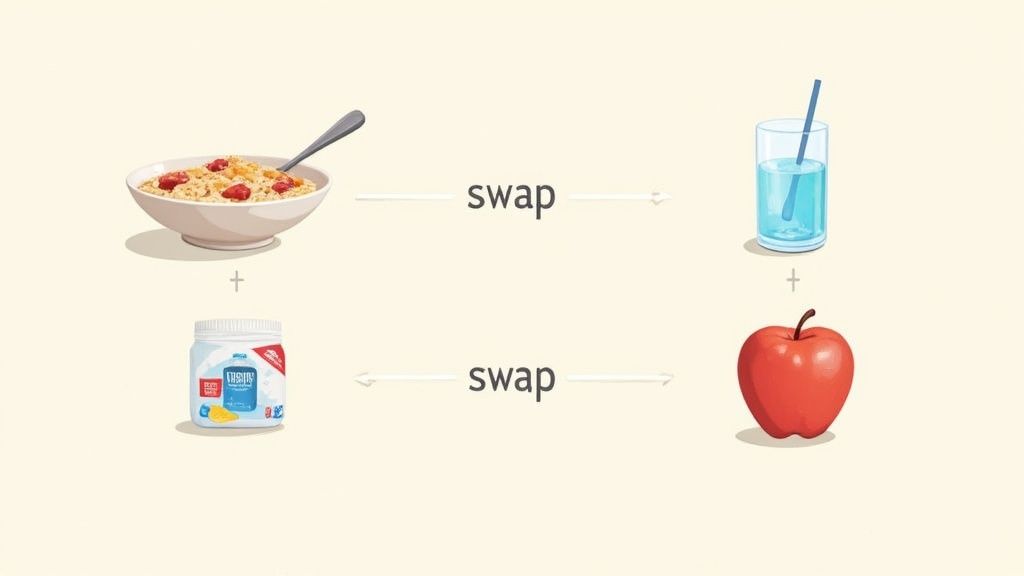
The idea of cutting back on ultra-processed foods can feel like a monumental task. But you don't need to completely overhaul your kitchen overnight. The secret is focusing on small, sustainable changes—simple swaps that you can actually stick with.
Think of it as progress, not perfection. Every time you make a slightly better choice, it's a win. These small victories really do add up, leading to big health improvements down the road. You could start with just one meal or even a single snack. That makes the whole process feel so much more manageable.
Start With Your Breakfast and Snacks
If you're wondering where to begin, look no further than your breakfast bowl and your go-to afternoon snack. These meals are often packed with ultra-processed ingredients, making them the perfect place to start making easy, high-impact changes.
A few tweaks here can significantly lower your intake of those weird industrial ingredients and sneaky added sugars.
- Swap sugary breakfast cereal for a warm bowl of oatmeal. Top it with fresh berries and a dash of cinnamon. Oats are a fantastic source of fiber that will keep you full for hours.
- Swap a packaged granola bar for a handful of almonds and an apple. This simple combo delivers fiber, protein, and healthy fats without all the synthetic binders and syrups.
- Swap fruit snacks or gummies for a real piece of fruit. A banana or a juicy pear gives you that natural sweetness you crave, plus vitamins and nutrients.
These aren't just about cutting out the bad stuff; they're about adding in the good stuff your body actually needs to thrive.
The goal isn’t to be perfect; it's to be better. Swapping just one ultra-processed item a day can reduce your intake by 365 UPFs a year. That’s a powerful change.
Reclaim Your Plate With Simple Cooking
Getting back into the kitchen is one of the most powerful things you can do to control what you eat. You don't have to become a gourmet chef—even preparing just a few meals a week puts you back in the driver's seat.
When you're in charge of the ingredients, you decide what goes on your plate. Start with a simple grocery list focused on whole foods: fresh vegetables, lean proteins, and whole grains. You’ll be shocked when you realize how much hidden sugar in foods you can dodge just by cooking for yourself.
Here are a few easy swaps for your main meals and drinks:
- Swap bottled salad dressing for homemade. All you need is a little olive oil, lemon juice, salt, and pepper. It’s healthier, and honestly, it tastes way better.
- Swap soda or sugary juice for sparkling water. Throw in a squeeze of lime or a few mint leaves for a refreshing, sugar-free drink.
- Swap a frozen pizza for a DIY version. Grab a whole-wheat pita or flatbread, spread on some tomato sauce, sprinkle real cheese, and load it up with your favorite veggies.
Each of these little changes helps you shift away from factory-made formulas and toward real, nourishing food. And with a tool like the StopSugar app, you can easily track your progress and discover new alternatives to keep you motivated on your journey.
Building a Better Relationship with Your Food
Trying to navigate the world of ultra-processed foods can feel overwhelming, but it doesn't have to be about strict rules or fear. Think of it as reclaiming your power. You now know what these foods are, how they affect your health, and how to spot them on the grocery store shelves.
This isn't about chasing some unrealistic, perfect diet. It’s about making small, informed choices that add up over time.
One of the best ways to start is by adding, not just subtracting. When you consciously add more whole and minimally processed foods to your plate—things like fresh fruits, vegetables, and lean proteins—you naturally start to push out the less nutritious options. Every simple swap is a huge step in the right direction.
Understanding the story behind your food is the first step toward rewriting your health story. It’s about building a sustainable, enjoyable way of eating that nourishes you for the long term.
Remember, this is a journey of progress, not perfection. By shifting your focus to real, whole foods, you're taking back control from industrial food manufacturers and building a healthier, more conscious relationship with what you eat. You have everything you need to make choices that truly support your well-being, one meal at a time.
Got Questions About Processed Foods? Let's Clear Things Up.
Diving into the world of processed foods can feel like a maze. Even when you understand the basics of the NOVA system, it's easy to get tangled up in the details. Let's tackle some of the most common questions people have.
Think of this as a quick-reference guide to help you put what you've learned into practice with more confidence.
Do I Really Have To Avoid All Processed Foods?
Absolutely not, and this is a huge point of confusion. The key is to distinguish between "processed" and "ultra-processed." Lots of processed foods are healthy, convenient, and great additions to your diet.
We're talking about things like canned beans, frozen vegetables, plain yogurt, or a fresh loaf of whole-grain bread from a local bakery. These fall into NOVA Group 3 because they're made from simple, real ingredients. The real red flag is with ultra-processed foods (Group 4)—those are the industrial concoctions you couldn't possibly recreate in your own kitchen. The goal isn’t to ditch all processing; it’s to cut way back on the ultra-processed stuff.
Don't stress about every food that comes in a package. Instead, focus on avoiding products with long, confusing ingredient lists. Minimally processed foods can be your best friend when building a healthy diet.
If a Snack Is "Organic," Can It Still Be Ultra-Processed?
Yes, and this is a classic marketing trap. The "organic" label simply tells you how the raw agricultural ingredients were grown—without synthetic pesticides or fertilizers. It says absolutely nothing about how heavily the food was processed afterward.
Take an organic cookie, for instance. It can be loaded with organic sugar, organic palm oil, and organic flavor extracts. While every ingredient is technically certified organic, the cookie itself is still an industrial formula, which makes it ultra-processed. Always flip the package over and check the ingredients, no matter what health claims are on the front.
What's the Single Worst Ingredient in Ultra-Processed Foods?
It's tough to pick just one, but if you had to, added sugars would be at the top of the list. They are lurking everywhere in the ultra-processed food supply, often disguised under dozens of different names like high-fructose corn syrup, dextrose, sucrose, or maltodextrin.
These sugars offer nothing but empty calories and are tied to a long list of health problems, from weight gain to a higher risk of type 2 diabetes. If you want to make one change that has a massive impact on your health, start by consciously cutting down on added sugar.
How Can I Eat Healthy on a Budget and Still Avoid UPFs?
It's a myth that eating healthy has to break the bank. In fact, basing your meals around whole and minimally processed foods is often the most budget-friendly way to eat.
Here’s how you can make it work:
- Build around staples: Dried beans, lentils, brown rice, and oats are dirt cheap and packed with nutrition.
- Embrace the freezer aisle: Frozen fruits and veggies are just as nutritious as fresh ones, but they cost less and won't go bad in a few days.
- Cook at home: A simple meal you make yourself is almost always healthier and more affordable than its ultra-processed equivalent.
A little bit of meal planning for the week can also do wonders. It helps you stick to your budget, cuts down on food waste, and keeps you from grabbing those tempting (but unhealthy) convenience foods at the last minute.