why am i tired after lunch: Causes and quick fixes
Ever get hit by that "food coma" wave right after lunch? You're not alone. That heavy, sleepy feeling isn't just you being lazy—it's a real biological response. It’s a one-two punch from your body's built-in energy clock and the food you just ate.
Some meals can turn a tiny, natural dip in your daily rhythm into a full-blown energy nosedive.
The Real Reason You Feel Drained After Lunch
That post-lunch slump is a well-documented physiological event. Two main things are happening every afternoon that conspire to make your eyelids feel heavy and your focus wander. Figuring them out is the key to taking back your afternoon.
Your Body's Internal Clock
First up is your circadian rhythm. Think of it as your body’s internal 24-hour master clock, telling you when to wake up and when to feel sleepy. But it’s not just about night and day; this clock has predictable peaks and valleys of alertness throughout the day.
One of those natural valleys hits in the early afternoon, creating what scientists call the "post-lunch dip." It’s a big reason why so many of us feel that afternoon drag.
Research shows this is a global thing. Studies have found a natural drop in alertness between 1 p.m. and 3 p.m. This dip happens even if you skip lunch, but the food you eat can make it a whole lot worse. If you want to dive into the science, you can explore the full study on circadian rhythms.
What You Eat Matters—A Lot
The second part of the equation is your lunch itself. What you put on your plate has a direct, and often immediate, impact on your energy levels.
Here’s a quick look at the main culprits behind that tired feeling.
Primary Causes of the Afternoon Slump
| Contributing Factor | How It Makes You Tired |
|---|---|
| Circadian Rhythm | Your body's natural 24-hour clock has a built-in energy dip in the early afternoon, making you feel less alert. |
| High-Carb/Sugary Meals | These foods cause a rapid blood sugar spike, followed by a sharp crash that leaves you feeling drained and lethargic. |
| Large Portions | Eating a huge meal forces your body to divert a ton of energy to digestion, pulling it away from your brain and muscles. |
This combination—your body’s natural afternoon dip plus a meal that’s hard to digest or messes with your blood sugar—is the perfect storm for fatigue.
The good news is, now that you know what's going on, you can make smarter choices to avoid the dreaded energy crash after eating.
How Your Lunch Triggers the Food Coma
Ever wondered why that big pasta lunch makes you feel like you need a nap? It’s not just in your head. There’s a fascinating biological chain reaction at play, often called the "food coma," and the main culprit is how your body handles certain foods—especially those packed with carbohydrates.
This whole process is a neat little cascade effect, connecting what's on your plate directly to how sleepy you feel an hour later.
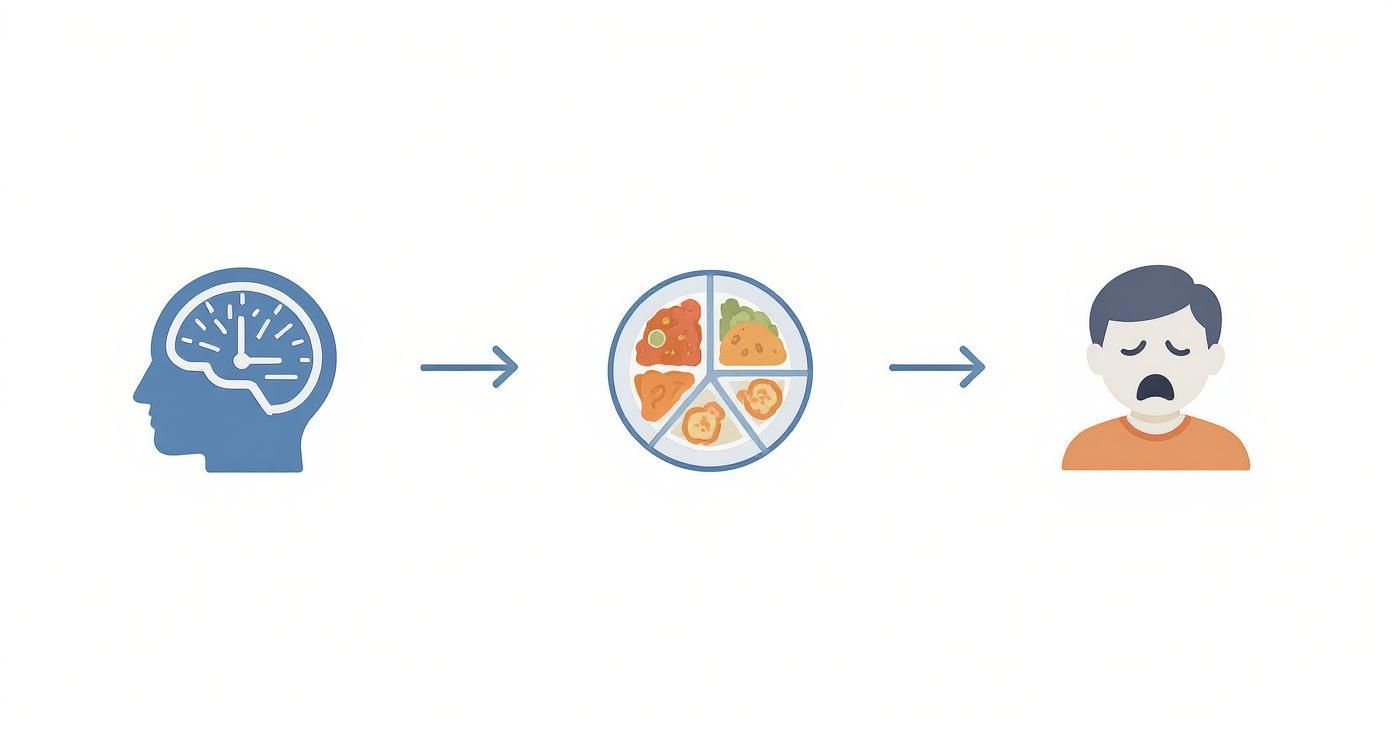
As you can see, a meal heavy on the carbs kicks off a sequence that almost guarantees that classic afternoon slump.
The Tryptophan Connection
So, here’s what happens under the hood. When you eat a meal full of carbohydrates—we're talking white bread, pasta, or sugary drinks—your body releases a flood of insulin. Insulin's primary job is to help your cells pull glucose (sugar) from your bloodstream to use as energy.
But insulin has a side gig. It also helps clear out most amino acids from your blood, except for one: tryptophan.
Imagine a crowded doorway. Normally, tryptophan has to compete with a bunch of other amino acids to get into your brain. But after that high-carb meal, insulin acts like a bouncer, waving everyone else out of the way. This gives tryptophan a VIP pass, letting it waltz right through the door.
Once it’s in your brain, tryptophan gets converted into serotonin, a neurotransmitter that makes you feel calm and relaxed. From there, serotonin can be converted into melatonin, the hormone that tells your body it's time to sleep. Essentially, your lunch just tricked your brain into thinking it's bedtime.
This whole process is a major reason why you feel tired after lunch. Research backs this up, showing that the size and type of meal you eat have a massive impact on post-meal fatigue. In some studies, people who ate high-carb lunches reported feeling up to 25-30% more sleepy within an hour compared to those who ate low-carb meals.
Beyond Just Carbs
While this tryptophan pathway is a big piece of the puzzle, it's not the only thing going on. The act of digestion itself demands a lot of energy. If you're also dealing with digestive issues like bloating, that can drain you even more. You can find some great solutions for post-lunch bloating which might just help your energy levels, too.
On top of that, the quick spike and subsequent crash in blood sugar you get from simple carbs can lead to a condition called reactive hypoglycemia—a huge contributor to fatigue. If you find yourself feeling weak or shaky after eating, it’s worth taking a closer look at the causes of reactive hypoglycemia.
Escaping the Blood Sugar Roller Coaster
We’ve all been there. You grab a sugary donut or a big bowl of pasta for lunch, feel a quick burst of energy, and then… bam. The afternoon slump hits you like a ton of bricks.
This up-and-down cycle is what many call the blood sugar roller coaster, and it's one of the biggest culprits behind that overwhelming post-meal fatigue.
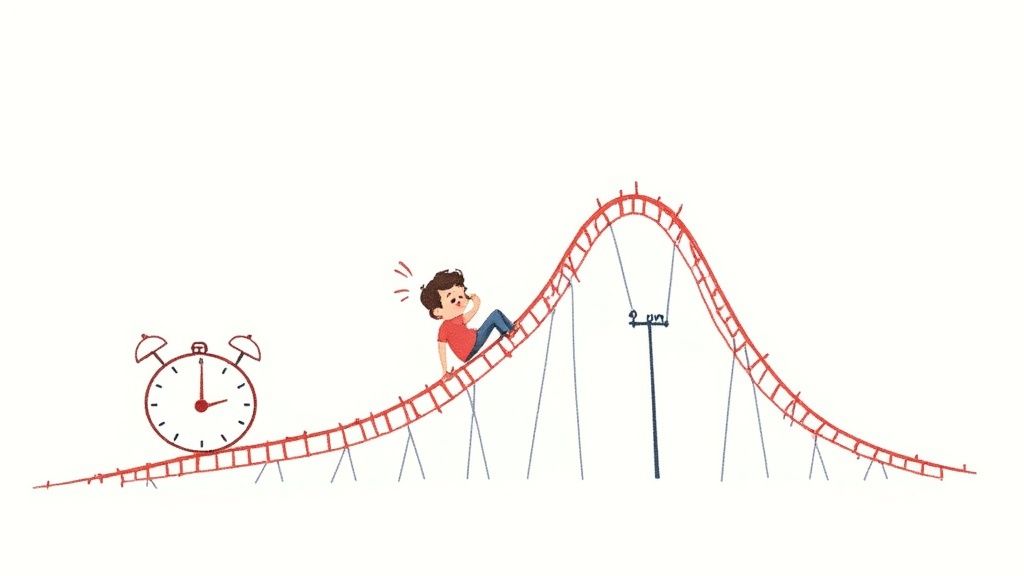
Think of your energy like a campfire. If you put a solid, dense log on it (like you get from whole grains, protein, and healthy fats), it provides a slow, steady burn that keeps you warm for hours.
But eating simple sugars and refined carbs is like tossing a crumpled-up newspaper onto the flames. You get a big, bright flare-up right away, but it vanishes in seconds. That’s your sugar high. What follows is the burnout—the crash—that leaves you feeling even more drained than before.
Why the Crash Happens
That sudden energy drop isn't just in your head; it's a very real physiological response. When you flood your system with sugar or refined carbs, your blood sugar spikes. Your pancreas then goes into overdrive, releasing a surge of insulin to shuttle all that sugar out of your bloodstream and into your cells.
The problem is, the body often overcompensates. This aggressive insulin rush can push your blood sugar levels below where they started, a state known as reactive hypoglycemia.
This is the "crash." Your brain, which is a huge glucose consumer, suddenly has its fuel supply cut off. The resulting fog and fatigue are your brain's way of telling you it's running on fumes.
This is when the all-too-familiar symptoms of the afternoon slump kick in:
- Intense Fatigue: An overwhelming need to nap, right at your desk.
- Brain Fog: You can't focus, and simple tasks feel impossible.
- Irritability: Suddenly everything and everyone is annoying.
- Renewed Cravings: Your body screams for another quick fix of sugar to bring its levels back up, starting the vicious cycle all over again.
The key to steady, all-day energy is learning how to build meals that keep you off this roller coaster entirely. For a closer look, check out our guide on foods that stabilize blood sugar to find practical ways to build meals for lasting energy.
How to Build an Energizing Lunch
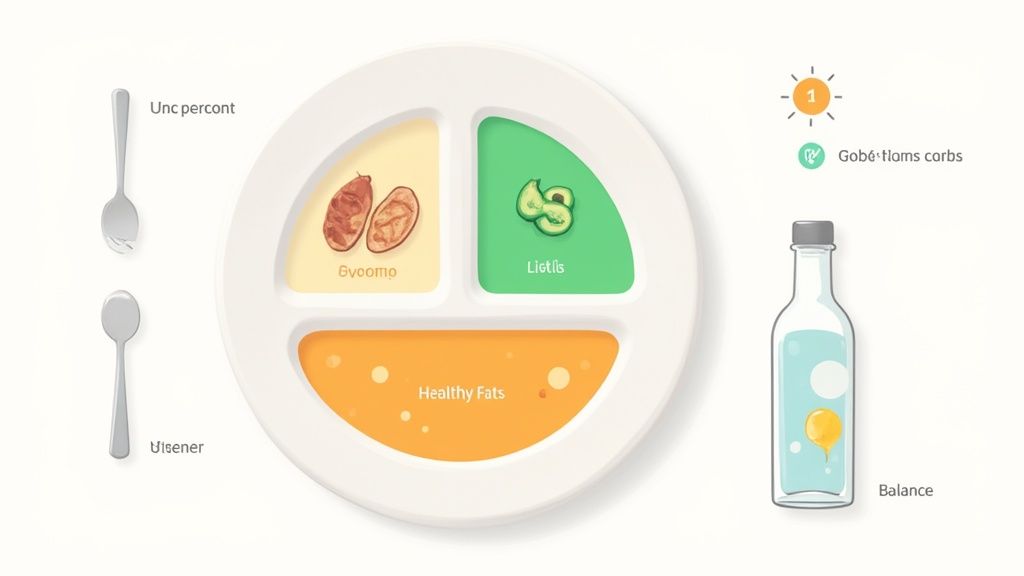
Knowing the science behind the afternoon slump is great, but putting that knowledge on your plate is where the real magic happens. Building a lunch that actually fuels your afternoon isn't about restriction or complicated diets; it’s just about being smart with your choices. It all comes down to a simple, balanced formula.
The secret is to build your plate around the "energy trifecta." Think of it as a blueprint for keeping your blood sugar stable and your focus sharp all afternoon. It’s a straightforward way to give your body exactly what it needs to perform.
The Energy Trifecta Explained
If you're tired of asking "why am I tired after lunch?" every day, start thinking about your meals in terms of three core components. Imagine a three-legged stool—if one leg is missing, the whole thing becomes wobbly and unstable. Your energy is no different.
- Lean Protein: This is what keeps you feeling full and satisfied. Protein slows down how quickly your body digests everything else, which is key to preventing the big blood sugar spikes from carbs. We're talking grilled chicken, fish, tofu, or a scoop of lentils.
- Healthy Fats: These are essential for giving you long-lasting energy and helping your body absorb all the good stuff from your food. Things like avocado, nuts, seeds, and a drizzle of olive oil will keep you from reaching for a snack an hour later.
- High-Fiber Carbs: Fiber is your ticket to a slow, steady release of energy. It puts the brakes on the quick-burn effect you get from refined carbs. Good choices include quinoa, sweet potatoes, chickpeas, and plenty of leafy greens.
When you combine these three, you create a meal your body can handle efficiently, without sending you on that hormonal rollercoaster that ends in a nap. It’s a simple, powerful framework for every single lunch.
Portion Size The Hidden Energy Thief
Here’s something most people overlook: even the healthiest meal on the planet will make you sleepy if you eat too much of it. When you overdo it with a massive portion, your body has to divert a huge amount of energy to your digestive system just to process it all.
This biological process is called postprandial somnolence, and it literally pulls blood flow away from your brain and muscles to focus on your stomach.
The result? You feel sluggish, bloated, and desperate for a nap. It’s your body’s way of saying, “Whoa, I’m overwhelmed here and need to focus all my power on breaking down this food.”
Learning to listen to your body's fullness signals is just as crucial as what you eat. Aim to eat until you feel satisfied, not stuffed. It's a simple habit that makes a world of difference for your afternoon alertness.
Simple Swaps for a High-Energy Lunch
You don’t need to completely overhaul your diet to feel a difference. Making a few small, strategic changes to your midday meal can have a massive impact on your energy levels.
Here’s a quick guide with some easy swaps you can make to start building a better, slump-proof lunch.
| Instead of This (Energy Drainer) | Try This (Energy Booster) | Why It Works Better |
|---|---|---|
| White Pasta with Cream Sauce | Zucchini Noodles with Pesto & Chicken | Swaps refined carbs for fiber-rich veggies and adds lean protein to stabilize blood sugar. |
| Turkey Sandwich on White Bread | Large Salad with Turkey, Avocado & Seeds | Eliminates processed bread and adds healthy fats and fiber for sustained energy release. |
| Sugary Soda or Juice | Sparkling Water with Lemon and Mint | Cuts out the empty calories and sugar that lead directly to a blood sugar crash. |
It's these small adjustments that help you get off the energy rollercoaster for good. By focusing on whole, balanced foods, you’re giving your body the premium fuel it needs to power through the rest of your day.
Lifestyle Habits That Beat the Afternoon Slump
What you put on your lunch plate is a huge piece of the puzzle, but your daily habits are what really create the foundation for stable, all-day energy. If you find yourself constantly wondering, "why am I so tired after lunch?" it’s time to look beyond just the food. Certain lifestyle factors can either protect you from the afternoon slump or make you far more vulnerable to it.
Think of it like building a house. Your lunch is one of the walls, but if the foundation is cracked, the whole structure is going to feel shaky. These habits are that foundation for resilient energy.
The Overlooked Power of Sleep
It might seem obvious, but one of the most crucial habits for sustained energy is getting enough restful sleep. When you have a night of poor-quality sleep, your body starts the day with a serious energy deficit. This makes you much more sensitive to both the natural afternoon dip in your body clock and the energy-draining effects of your lunch.
And it's not just about the number of hours you're in bed; it’s about the quality of that rest. Waking up frequently or tossing and turning all night means you never reach the deep, restorative stages of sleep your body needs to repair itself and balance its hormones. Improving your sleep hygiene can be a total game-changer, and a simple first step is creating a comfortable environment. Many people find they sleep better tonight with quality bamboo sheets that help keep them cool.
When your body is sleep-deprived, it becomes less efficient at managing blood sugar. This means that even a moderately high-carb lunch can cause a more dramatic spike and a much harder crash, making that tired feeling so much worse.
Prioritizing 7-9 hours of quality sleep isn't a luxury. It's a non-negotiable strategy for beating the afternoon slump before it even starts.
Move Your Body After Your Meal
I know it sounds like the last thing you want to do when you feel tired, but a short walk after lunch can work wonders. You don't need an intense gym session—a simple 10 to 15-minute walk is all it takes to make a real difference.
This gentle movement offers a few key benefits:
- Improves Blood Circulation: Walking gets your blood flowing, delivering fresh oxygen and nutrients to your brain and muscles, which is a perfect antidote to sluggishness.
- Helps Stabilize Blood Sugar: A bit of light activity helps your muscles use up some of the glucose from your meal, preventing those sharp spikes and the inevitable crashes that follow.
- Boosts Alertness: Just getting outside and changing your scenery can provide a mental reset, breaking you out of that post-meal fog.
Hydration and Stress Management
Finally, two incredibly simple yet powerful habits are staying hydrated and managing stress. Even mild dehydration can feel exactly like fatigue, so keep a water bottle handy and sip on it throughout the day.
Chronic stress also floods your body with cortisol, a hormone that messes with your sleep and drains your energy reserves. Building in small moments of mindfulness or a few deep breaths can help keep stress levels in check, saving your precious energy for the rest of the afternoon.
Alright, you've got the science down. You know why that afternoon slump hits like a ton of bricks. But knowing is only half the battle, right? The real magic happens when you start making a few simple changes.
Forget about a complete life makeover. We're talking about small, smart tweaks that make a massive difference in how you feel after you eat. It all comes down to working with your body, not against it.
Your Four-Part Plan to Beat the Slump
Think of this as your new lunchtime playbook. Run through these four simple steps, and you’ll set yourself up for an afternoon of focus and energy, not a battle to keep your eyes open.
- Build a Better Plate: Aim for what I call the "energy trifecta"—lean protein, healthy fats, and high-fiber carbs. This powerful combo slows down digestion and stops that wild blood sugar spike and crash. A classic example? A big salad topped with grilled chicken and a few slices of avocado. It works every time.
- Hydrate the Right Way: Dehydration is a sneaky energy vampire. It often feels just like fatigue. Ditch the sugary sodas and juices (they just add fuel to the sugar-crash fire) and stick with water. Keep a bottle on your desk; it's the easiest reminder to sip your way to better energy.
- Get Moving (Just a Little!): I know the urge to plant yourself in a chair after a meal is strong, but fight it! A quick 10-minute walk is one of the best things you can do. It helps your body use that blood sugar, pushes oxygen to your brain, and gives you an almost instant feeling of alertness.
- Lock In Your Sleep: A bad night’s sleep sets you up for failure the next day, making you extra vulnerable to a heavy afternoon crash. Make 7-9 hours of quality shut-eye non-negotiable. It’s the foundation for all-day energy.
When you start putting these small habits into practice, you’ll finally stop wondering, "Why am I so tired after lunch?" and start feeling consistently energized. It’s about taking back control and turning your lunch into what it’s supposed to be: fuel for a great afternoon.
Got Questions About That Afternoon Slump?
It's one thing to understand the science, but it's another to put it into practice. Most people still have a few lingering questions when they start trying to beat post-lunch fatigue.
Let's clear up a couple of the most common ones.
Is More Coffee the Answer?
When your eyelids start to feel heavy, reaching for another coffee is almost a reflex. It feels like the obvious solution, right? And sure, the caffeine will give you a temporary jolt by blocking the sleep-inducing chemicals in your brain. But it's a bandage, not a cure.
Constantly using coffee to power through the afternoon just hides the real problem—which is usually a blood sugar rollercoaster caused by your lunch. Plus, that 3 p.m. coffee can easily mess with your sleep later, which just sets you up for another tired day. It’s a classic cycle of exhaustion. Before you brew another cup, try a quick walk outside or a glass of ice-cold water.
Think of that afternoon coffee as taking out a high-interest energy loan. You get a little boost now, but you’ll pay for it later with poor sleep or an even bigger crash.
How Long Does This Slump Actually Last?
The dreaded food coma isn't an all-day affair, but it can feel like it. Typically, you can expect the slump to hang around for anywhere from one to three hours.
Exactly how long it lasts depends on a few things: what you ate, and your body's own internal clock. We all have a natural dip in our circadian rhythm between roughly 1 p.m. and 3 p.m. If you throw a lunch packed with sugar and refined carbs into that mix, you’re setting yourself up for a longer, more brutal crash. But a balanced meal and a little movement can shrink that window until the dip is barely even noticeable.