Why Do I Feel Hungry After Eating - why do i feel hungry after eating: tips
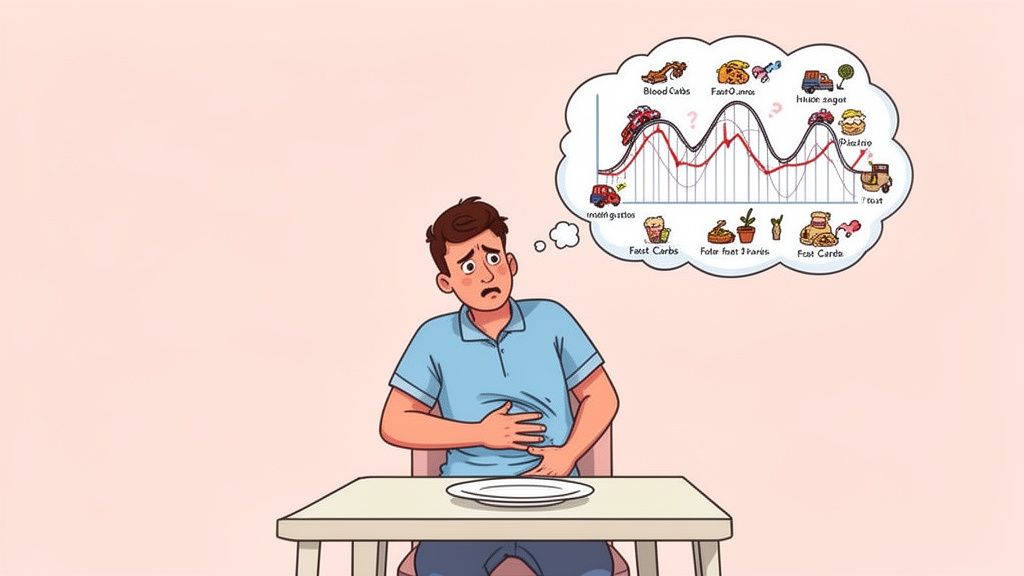
It’s a frustratingly common story: you finish a satisfying meal, only to find yourself rummaging through the cupboards an hour later. If you’re asking yourself, "why do I feel hungry after eating?", you're definitely not alone. This nagging feeling isn't a sign of weak willpower; it’s a biological response, often kicked off by a blood sugar rollercoaster, hormonal miscommunication, or just a simple imbalance on your plate.
The Full Stomach But Empty Feeling Paradox
It seems completely backward, doesn't it? You've eaten, your stomach is physically full, yet your brain is screaming for more food, now. This paradox is a very modern problem, driven largely by the kinds of foods we eat and the habits we’ve built around them.
The key to unlocking this puzzle is realizing that physical fullness and true satisfaction are two different things. Your body’s hunger and satiety signals are part of a complex orchestra involving hormones, blood sugar, and even your mood. When one instrument is out of tune, the whole symphony can fall apart.
Key Factors Driving Post-Meal Hunger
Several culprits often work together to create this confusing sensation. Think of them as crossed wires in your body’s communication network.
To give you a quick overview, here's a breakdown of the usual suspects behind that post-meal hunger.
Quick Guide to Post-Meal Hunger Triggers
| Trigger | How It Causes Hunger |
|---|---|
| Blood Sugar Swings | Refined carbs and sugars spike blood glucose, leading to a huge insulin release that causes a sharp crash, which your brain interprets as starvation. |
| Hormonal Imbalances | The "hunger hormone" (ghrelin) can stay elevated while the "fullness hormone" (leptin) gets ignored, creating a constant feeling of hunger. |
| Macronutrient Gaps | A meal lacking sufficient protein, healthy fats, or fiber won't trigger the long-lasting satiety signals needed to keep you full for hours. |
| Lifestyle Factors | Dehydration, chronic stress, and poor sleep can all send false hunger signals to your brain, making you think you need food when you don't. |
Each of these triggers can throw your body's delicate balance out of whack, leaving you unsatisfied and looking for your next bite.
Ever wondered why that sandwich on white bread leaves you raiding the fridge 30 minutes later? It's all about that blood sugar rollercoaster. High-glycemic foods can cause your blood sugar to skyrocket by up to 70% in under an hour. Your body responds with a flood of insulin to bring it back down.
This insulin surge often overcorrects, causing your glucose levels to plummet just as fast—sometimes dropping 30-50% below where you started. To your brain, this rapid drop feels like an emergency, triggering a cascade of hunger hormones that make you feel absolutely ravenous. It's the same reason you might experience that dreaded energy crash after eating.
In this guide, we'll dive into each of these factors, breaking down the science into simple terms and giving you practical, real-world strategies to regain control and finally feel truly satisfied after you eat.
Riding the Blood Sugar Rollercoaster
Ever found yourself rummaging through the pantry for a snack right after finishing a big meal? If that meal was heavy on things like white pasta or sugary treats, you've experienced the blood sugar rollercoaster firsthand. It's one of the biggest reasons we can feel hungry even when our stomachs are full.
Think of it like building a campfire.
If you toss on a bunch of dry leaves and paper (that’s your refined carbs and sugar), you get a big, flashy flame that dies out almost instantly. You're left cold and needing more fuel. But if you add a solid, dense log (think fiber, protein, and healthy fats), you get steady, consistent heat that lasts for hours.
The Spike and Crash Cycle
When you eat foods that are high in sugar or are heavily processed, your body digests them at lightning speed. This floods your bloodstream with glucose, causing your blood sugar to spike. In response, your pancreas jumps into action, releasing a flood of insulin—the hormone responsible for moving all that sugar out of your blood and into your cells for energy.
The problem is, the body isn't always perfect at this. Faced with a sudden sugar tsunami, the pancreas often overreacts and sends out way too much insulin.
This insulin surge does its job a little too well, causing your blood sugar to plummet just as fast as it shot up. This nosedive is what we call a "sugar crash" or, more technically, reactive hypoglycemia. It's a full-on panic signal to your brain.
Your brain interprets this sudden drop in available fuel as a five-alarm fire. It thinks you're starving, even if you just ate a 1,000-calorie meal. The result? Intense hunger and powerful cravings kick in, usually for the very same sugary, starchy foods that started the cycle. You're now trapped: eat, crash, crave, repeat.
Understanding the Glycemic Index
A fantastic tool for stepping off this rollercoaster is the Glycemic Index (GI). It's basically a 0-to-100 scale that tells you how quickly a food containing carbs will raise your blood sugar.
- High-GI Foods (70+): These are your "dry leaves"—white bread, sugary cereals, potatoes. They hit your system fast and cause a dramatic blood sugar spike.
- Low-GI Foods (55 or less): These are the "slow-burning logs"—beans, whole grains, nuts, and most vegetables. They release sugar slowly and steadily, giving you stable, lasting energy.
Simply choosing more foods with a lower GI can help you avoid those wild peaks and valleys, which means more stable energy and fewer surprise hunger pangs.
Over time, constant blood sugar spikes can wear out your system, making your cells less responsive to insulin. This is a condition known as insulin resistance, and it's a major player in persistent hunger and metabolic issues. Learning How to Reduce Insulin Resistance Naturally can be a game-changer for getting your body's signals back on track. By focusing on whole, unprocessed foods, you’re giving your body a gentle, steady stream of fuel that actually keeps you feeling full and satisfied.
How a Balanced Meal Keeps You Full
Ever wonder why you feel hungry after eating, even when you’ve had a full plate? Think of your meal like a team of players. If your team is made up of only one type of player—fast-burning carbohydrates—the game is over in a flash. You get a quick burst of energy, and then it’s gone, leaving you wanting a rematch just an hour later.
But when you bring in the all-stars—protein, healthy fats, and fiber—they play defense. They slow the game down and manage the pace, giving you steady, long-lasting energy. This teamwork on your plate is the real secret to feeling genuinely full for hours.
The graph below shows exactly what happens to your blood sugar after a meal loaded with refined carbs.
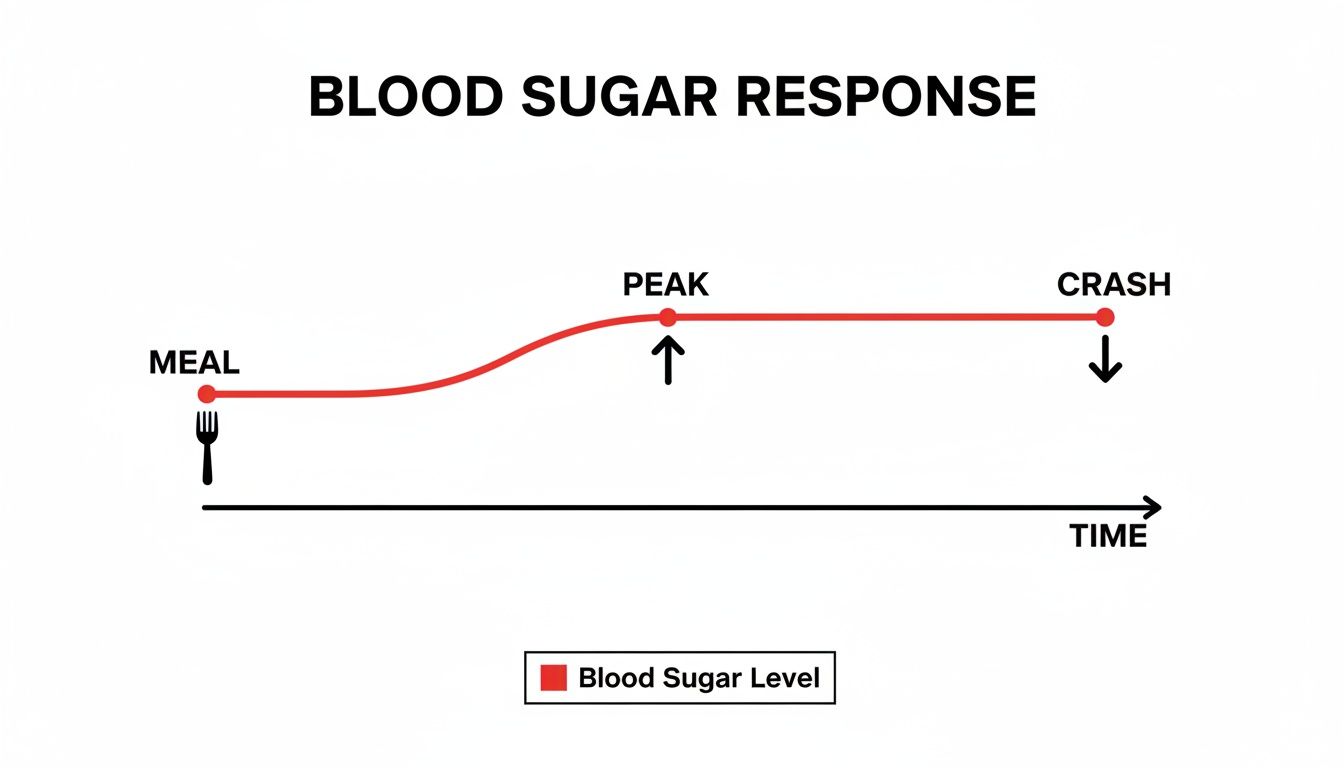
See that huge spike followed by an even bigger crash? That crash is precisely what triggers those powerful hunger signals, sending you right back to the pantry.
The Power Trio: Protein, Fat, and Fiber
Each of these three nutrients has a specific job when it comes to keeping you satisfied. When they work together, they’re incredibly effective at silencing those premature hunger cues.
Protein is the undisputed champion of satiety. It takes your body longer to digest and directly influences the hormones that tell your brain, "Hey, we're full down here!" Healthy fats, like the kind you find in avocados or olive oil, act like the brakes on your digestion. They slow everything down, preventing carbs from flooding your system all at once and keeping your blood sugar stable.
And fiber? It’s all about bulk. It physically fills your stomach, which is one of the clearest signals of fullness your body has.
A balanced plate isn't about restriction; it's about strategic addition. By ensuring your meals have a healthy mix of protein, fat, and fiber, you are building a natural defense against the blood sugar rollercoaster and post-meal hunger.
To really see this in action, let's compare two typical meals over a few hours.
Satiety Showdown: Balanced Meal vs. Refined Carb Meal
| Time After Meal | Balanced Meal (Chicken, Quinoa, Avocado) | Refined Carb Meal (White Pasta with Tomato Sauce) |
|---|---|---|
| 30 Minutes | Feeling satisfied and energized. | Initial energy boost, feeling full. |
| 90 Minutes | Still feeling full, stable energy. | Energy is starting to dip. Thinking about a snack. |
| 3 Hours | Comfortable, not hungry yet. | Definitely hungry. Looking for something sugary. |
The difference is clear. The balanced meal provides sustained energy and fullness, while the refined carb meal sets you up for a crash and more cravings.
Building a Plate That Lasts
Putting this into practice is much easier than it sounds. It's about making smart additions to the foods you already eat—no drastic diet overhaul needed. If you want a deeper dive into these concepts, our guide on what macronutrients and micronutrients are is a great place to start.
Here are a few simple ways to give your meals more staying power:
- Upgrade Your Pasta: Instead of just tomato sauce on white pasta, switch to whole-wheat pasta and toss in some grilled chicken or chickpeas for protein and a drizzle of olive oil for healthy fats.
- Boost Your Toast: That slice of white toast with jam is a recipe for a crash. Try swapping it for whole-grain toast topped with mashed avocado (fat and fiber) and a hard-boiled egg (protein).
- Enhance Your Salad: A salad of just greens will leave you starving. Turn it into a real meal by adding a protein like grilled salmon, a handful of walnuts for healthy fats, and some black beans for extra fiber.
These small changes can transform a meal from a fleeting fix into fuel that keeps you feeling satisfied and focused for hours, not just minutes.
Your Hunger Hormones: The Ghrelin and Leptin Story
Beyond the blood sugar rollercoaster, your body has a powerful communication network run by hormones. When it comes to hunger, two key messengers are constantly talking to your brain: ghrelin and leptin.
Think of them as the managers of your body’s “Eat Now” and “All Full” departments.
Ghrelin is the one that gets things going. It’s made in your stomach, and its main job is to shout, “Hey, it’s time to eat!” When your stomach is empty, ghrelin levels climb, and you start feeling those familiar hunger pangs. Once you eat, its levels are supposed to drop back down.
Leptin is the opposite. It’s the "stop" signal, produced by your fat cells. Leptin’s job is to tell your brain, “We’ve got enough energy in storage, you can stop eating now.” As you fill up, leptin levels rise, bringing on that comfortable feeling of fullness.
When the Signal Gets Lost
This system is incredibly effective… when it’s working correctly. But our modern lifestyles can easily disrupt this delicate balance. A diet packed with processed foods, sugar, and unhealthy fats can cause a major communication breakdown known as leptin resistance.
With leptin resistance, your brain becomes deaf to the “I’m full” signal. Your body is pumping out plenty of leptin, but the message just isn’t getting through. It's like your brain’s voicemail is full—the messages are being sent, but they never get heard.
This hormonal short-circuit is a huge reason why you feel hungry after eating. Your stomach might be stretched and physically full, but your brain is still convinced you’re starving, leaving your appetite stuck in the “on” position.
Several things can throw this sensitive system out of whack:
- Not Enough Sleep: Skimping on sleep is a recipe for hormonal chaos. It cranks up your hunger hormone (ghrelin) while suppressing your fullness hormone (leptin). This double whammy leaves you feeling ravenous and much less satisfied by the food you do eat.
- Chronic Stress: Constant stress pumps out cortisol, another hormone that messes with your appetite signals. It can trigger intense cravings for the exact sugary, fatty foods that make the problem worse.
- High-Sugar Diets: Eating a lot of sugar fuels inflammation and can directly damage your brain's ability to even detect leptin's "I'm full" message.
So, that nagging hunger you feel isn't a lack of willpower. It's often the result of a complex hormonal system that’s gone haywire. By focusing on better food choices and managing things like sleep and stress, you can help get these crucial lines of communication back online and finally feel in control of your hunger.
Lifestyle Habits That Trick You Into Feeling Hungry
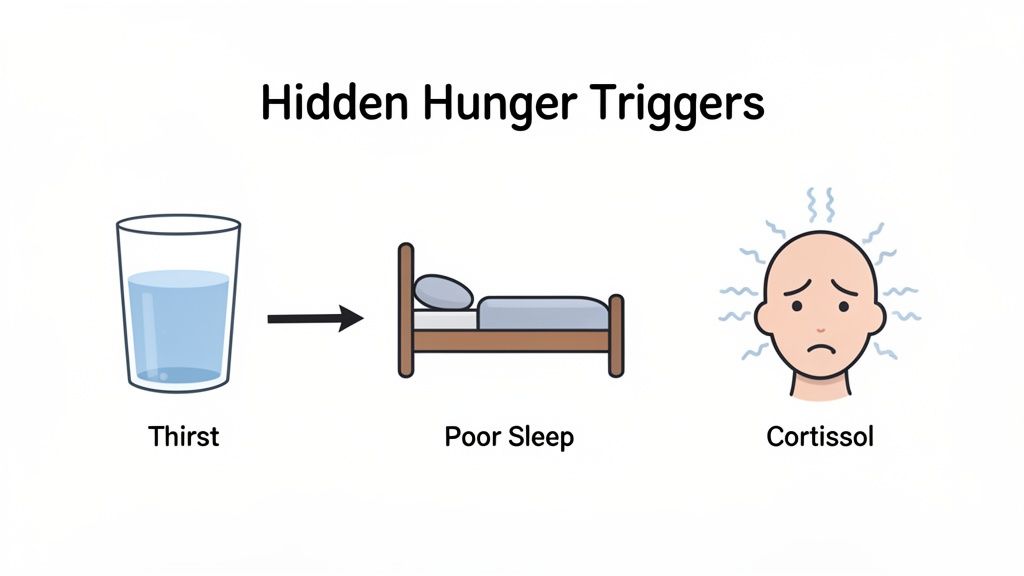
Sometimes, the reason you’re still hungry has nothing to do with what you just ate. Certain daily habits can send powerful, yet totally false, hunger alarms to your brain.
These triggers are tricky because they feel exactly like real hunger. Learning to spot them is a game-changer for understanding your body’s signals and finally breaking that cycle of constant cravings.
Are You Thirsty or Truly Hungry?
One of the biggest culprits behind this "phantom hunger" is simple dehydration. Your hypothalamus—the part of your brain that handles both hunger and thirst—can easily get its wires crossed.
Think about it: the symptoms of being just a little dehydrated, like low energy, headaches, or fogginess, feel almost identical to the signs of hunger.
Before you grab a snack right after a meal, try this: drink a full glass of water and just wait 15-20 minutes. You’d be surprised how often that “hunger” just vanishes. It's a simple trick that can save you from eating hundreds of calories your body never actually asked for.
The Impact of Stress and Sleep Deprivation
Chronic stress and not getting enough sleep? That’s a recipe for appetite chaos.
When you're constantly stressed out, your body pumps out a hormone called cortisol. This stuff cranks up your appetite and, more specifically, makes you crave high-sugar, high-fat comfort foods. If this sounds familiar, our guide on how to stop stress eating is a must-read.
Meanwhile, a lack of sleep messes with your hunger hormones in two major ways.
- Ghrelin Skyrockets: This is the "go" hormone that tells you to eat. When you're sleep-deprived, it goes through the roof.
- Leptin Plummets: This is the "stop" hormone that signals you're full. Its levels drop, so you never quite feel satisfied.
This hormonal cocktail makes you feel starving while also making it harder to feel full.
The result is a perfect storm for overeating. Even on a full stomach, your stressed-out, tired brain is screaming that it’s starving and needs more fuel to handle the crisis.
Making good sleep a priority and finding ways to manage stress aren't just good for your mental health—they are fundamental to getting your appetite under control. These habits directly shape your biology, giving you powerful tools to finally feel satisfied.
Building Smarter Habits to End the Hunger Cycle
Knowing the science behind post-meal hunger is a great start, but real change happens when you turn that knowledge into action. This is where building smarter habits comes in—it’s how you take back the controls and finally break that frustrating hunger cycle. The whole process starts with a simple but powerful idea: mindful eating.
Mindful eating isn't another diet; it's about paying attention. It’s about slowing down and actually listening to what your body needs, rather than just eating on autopilot. When you tune in, you start to notice the subtle differences between real, physical hunger and the cravings driven by habit or emotion.
Identify Your Personal Hunger Triggers
The first practical step is to play detective with your own patterns. Just for a week, pay close attention to what’s happening right before that familiar hunger pang hits after a meal. Your mission is to pinpoint what’s really triggering it.
- Situational Triggers: Does it always happen when you’re watching TV? Sitting at your desk bored? Mindlessly scrolling on your phone? Distraction is a huge culprit here.
- Emotional Triggers: Do you suddenly feel "hungry" after a stressful meeting or a tough conversation? It's incredibly common for stress and anxiety to disguise themselves as hunger.
- Food Triggers: Are there certain foods that are guaranteed to leave you wanting more? Think about that big bowl of white pasta or sugary breakfast cereal.
Once you know what your triggers are, you can start making a plan. For instance, if you realize TV time is your snack time, you could create a new house rule: all eating happens at the kitchen table. No exceptions.
Building new habits is like carving a new path in a forest. At first, it takes effort and concentration to walk the new trail. But with repetition, it becomes the clear, easy, and automatic choice.
Create a Supportive Environment
Your surroundings have a massive impact on your habits, for better or worse. You can rig the game in your favor by setting up your home and workspace to make the healthy choice the easy choice. The goal is to make good options obvious and the not-so-good ones a hassle to get to.
This could be as simple as:
- Keeping a bowl of fresh fruit on the counter instead of a cookie jar.
- Pre-portioning healthy snacks like nuts, seeds, or yogurt into single-serving containers you can just grab and go.
- Moving tempting trigger foods to the back of the pantry or, better yet, not bringing them into the house at all.
When you tweak your environment like this, you reduce the number of tiny decisions you have to make throughout the day. This saves your precious willpower for the moments that really count. Exploring simple, proven tips to curb your appetite can give you even more effective strategies, helping you turn what you know into a sustainable plan for lasting satisfaction.
Still Have Questions? Let's Clear Things Up
It's completely normal to feel a bit baffled by your body's hunger signals. Let's walk through some of the most common questions that pop up when people wonder, "Why on earth am I still hungry?"
Can I Feel Hungry Even After a “Healthy” Meal?
You bet. It happens all the time. Just because a meal is packed with nutrients doesn't mean it will automatically keep you full.
A couple of things could be going on. Your portion might have been a little too small for what your body needed that day. Or, maybe your healthy meal was light on protein and healthy fats—the two key players that really signal to your brain that you're satisfied.
It could also be something much simpler: thirst. The brain sometimes gets its wires crossed and sends out hunger pangs when what you really need is water. Next time you feel that post-meal hunger, try drinking a big glass of water and just wait 20 minutes. You might be surprised how often the "hunger" just disappears.
How Long Should I Wait Before Grabbing Another Bite?
This is a great question, and the answer is all about timing. A good rule of thumb is to give yourself a 20-30 minute pause after you finish eating.
Why? Because your body needs that time for the whole communication process to happen. Your stomach needs to tell your brain, via hormones like leptin, that it's full. That message isn't instant—it’s more like snail mail than a text.
If you’re still feeling genuinely, physically hungry after that waiting period, then by all means, have a small snack that’s rich in protein. But most of the time, you'll find that initial urge to eat more has vanished.
Think of it like this: your body's "I'm full" signal is on a 20-minute delay. Giving it that time lets the message arrive before you accidentally overeat.
Does Scarfing Down My Food Make Me Hungrier Later?
Absolutely. When you eat like you're in a race, you're basically outrunning your body's own fullness detection system. That crucial hormonal feedback loop we just talked about needs about 20 minutes to kick in.
By eating too fast, you don't give your brain a fair chance to register that you've had enough. This almost always leads to eating more than you needed and feeling weirdly unsatisfied, which can make you feel hungry again way too soon. Simply slowing down is one of the most powerful things you can do to get back in tune with your body's natural signals.