Why Does Sugar Make Me Sleepy? (why does sugar make me sleepy) The Sleep Crash
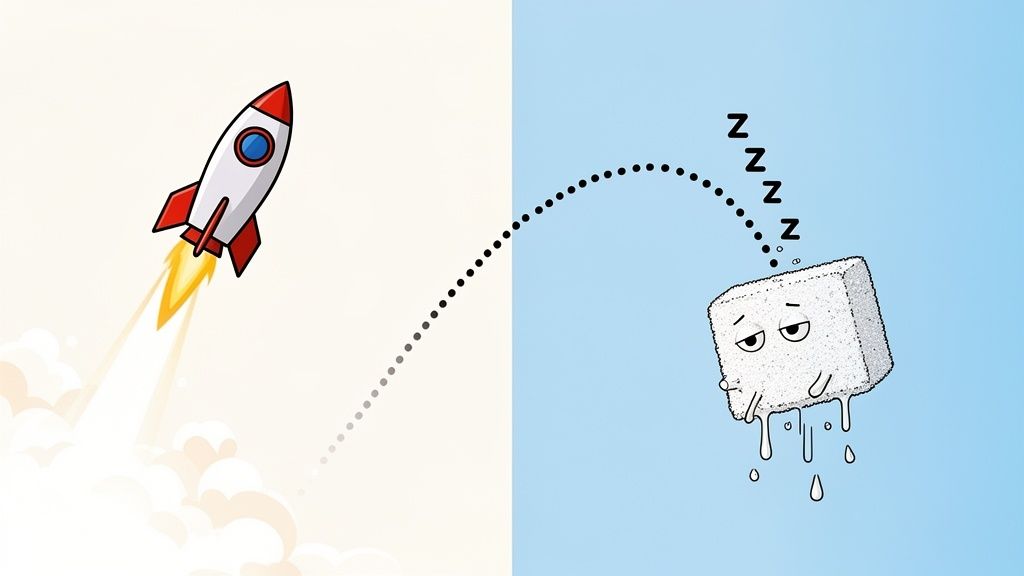
The short answer? It’s the infamous "sugar crash." When you eat something sugary, your blood glucose spikes, giving you a quick jolt of energy. But what goes up must come down, and it often plummets just as fast, leaving you feeling sluggish, foggy, and ready for a nap.
Unpacking the Infamous Sugar Crash
Ever reached for a donut or a sugary soda for a midday pick-me-up, only to find yourself slumped over your desk an hour later, fighting to keep your eyes open? That experience is incredibly common, and it’s not just in your head—it’s a real biological rollercoaster.
Think of it like this: eating a sugary snack is like pouring gasoline on a tiny flame. You get a big, bright, impressive whoosh of energy that burns hot and fast. But it burns out just as quickly, leaving you with nothing but smoke and feeling more drained than before you started.
That feeling is your body’s direct response to a sudden flood of simple carbohydrates. When all that sugar hits your system at once, your body has to scramble to manage the situation. This kicks off a complex hormonal chain reaction that, while trying to protect you, is the very thing that leads to that drained, lethargic feeling we all know too well.
The Science Behind the Slump
A sugar crash isn’t just a feeling; it’s a real physiological event with very distinct stages. It all starts the moment that simple sugar is digested, which happens incredibly fast. This sends your blood glucose levels soaring.
In response, your body releases hormones to get that sugar out of your bloodstream and into your cells. The problem is, it often does its job a little too well, causing your blood sugar to drop below your normal baseline. It's this sudden dip that triggers the classic symptoms of a crash: fatigue, irritability, and that frustrating brain fog. This rollercoaster doesn't just mess with your afternoon—it can even sabotage your sleep at night.
Research shows that diets high in refined carbohydrates and added sugars can significantly increase the risk of insomnia. These wild blood sugar swings interfere with the hormones that regulate your natural sleep-wake cycle, creating a vicious loop of poor sleep and craving more sugar the next day. Read the full research about sugar's impact on sleep
To help visualize this process, let's break it down step-by-step.
The Sugar Crash Cycle Explained Step-by-Step
| Stage | What Happens in Your Body | How You Feel |
|---|---|---|
| 1. The Sugar Rush | You eat a high-sugar food. Simple carbs are digested quickly, flooding your bloodstream with glucose. | Energized, focused, maybe a little hyper or jittery. This is the "high." |
| 2. The Insulin Spike | Your pancreas releases a large amount of the hormone insulin to move the excess glucose from your blood into your cells for energy. | You're still feeling good, but the peak is over. Your body is working hard behind the scenes. |
| 3. The "Overshoot" | The big insulin surge often works too efficiently, pulling too much glucose out of the blood. | You start to feel the first signs of a slump—maybe a little sluggish or distracted. |
| 4. The Crash | Your blood glucose level drops below your normal baseline, a state known as reactive hypoglycemia. | Tired, irritable, foggy, and weak. You might even feel shaky or anxious and start craving more sugar to fix it. |
Once you understand this cycle, you can start to see it happening in real-time. By learning to recognize the signs and understanding what's going on inside your body, you can finally start making choices that keep your energy stable and prevent that post-sugar slump from derailing your entire day.
How Your Body Handles a Sugar Overload
Ever wonder what’s actually happening inside your body when that sugar rush hits? It’s not a passive event. Your body kicks into high gear, launching a full-on hormonal response, almost like an emergency crew dealing with a sudden crisis. The main player here is a hormone called insulin.
Produced by your pancreas, insulin’s job is simple: it’s the key that unlocks your cells, allowing them to pull glucose (sugar) from your blood for energy. After a balanced meal, this whole process runs smoothly. But when you down a soda or a few donuts, you flood the system with sugar, and your pancreas panics.
It responds by pumping out a huge wave of insulin to manage the sugar tidal wave. This is where things go wrong. The insulin surge is often too powerful, and it overcorrects. It doesn't just clear the excess sugar; it goes too far, causing your blood sugar levels to plummet below normal.
The Crash That Follows the Spike
This nosedive in blood sugar is what experts call reactive hypoglycemia. This is the infamous "sugar crash," and it’s the main reason you feel so wiped out after that initial sugar buzz. Your brain, suddenly starved of its primary fuel, starts to sputter. Hello, brain fog and fatigue.
This cycle is a classic case of what goes up must come down.
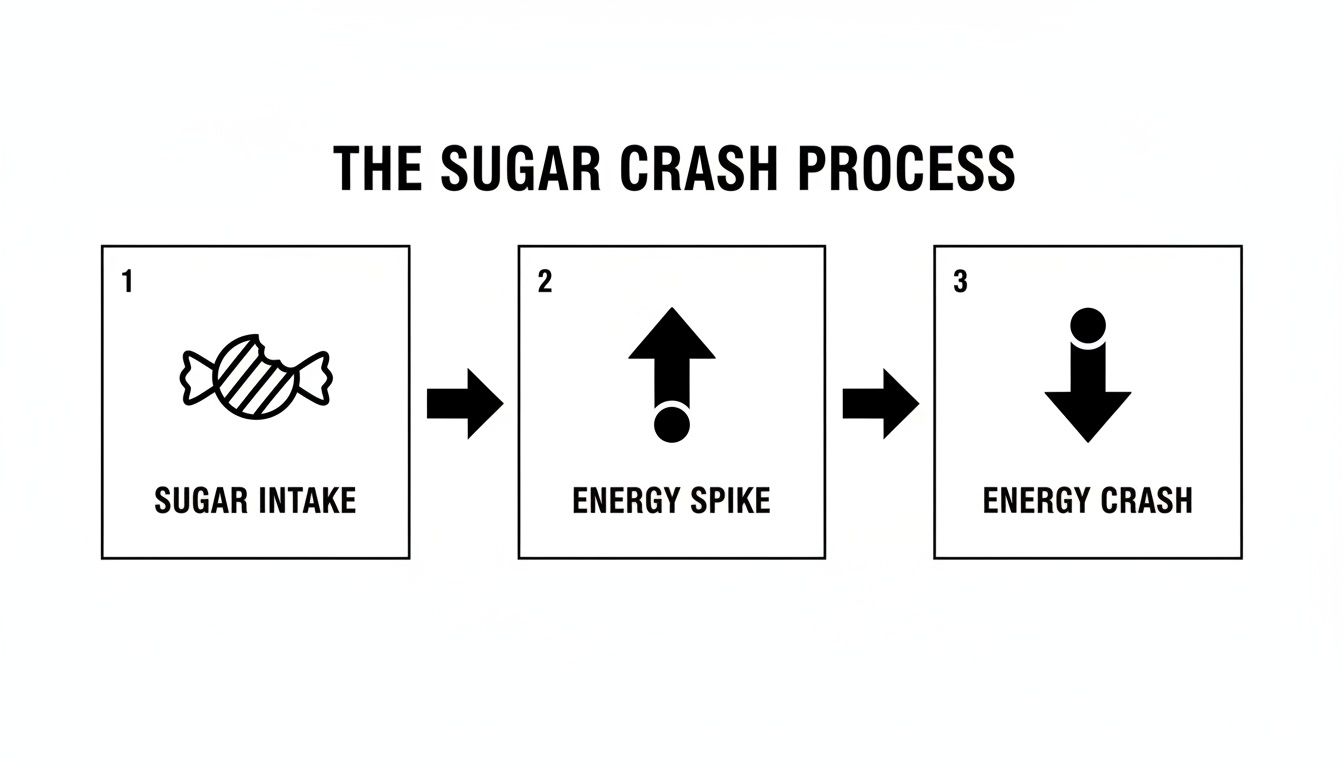
The crash isn't just a random feeling; it's a direct physiological result of the spike. If you're curious to learn more about this mechanism, you can dig deeper into what causes insulin spikes and how to get them under control.
Your Brain's Chemical Response to Sugar
But the story doesn't stop with blood sugar. This whole hormonal rollercoaster has a direct line to the chemicals in your brain that dictate whether you feel awake or sleepy.
- Serotonin and Melatonin: That big insulin surge makes it easier for an amino acid called tryptophan to cross into your brain. Your brain then converts tryptophan into serotonin, the neurotransmitter that helps you feel calm and relaxed. That might sound good, but serotonin is also the precursor to melatonin—your body’s main sleep hormone. Yep, that sugary snack is literally telling your brain to get ready for bed.
- Orexin Suppression: While all this is happening, the high glucose levels can also put the brakes on orexin, a critical neurotransmitter that keeps you feeling alert and awake. Research shows that glucose can directly shut down the brain cells that produce orexin.
In short, a sugar overload creates the perfect storm for sleepiness. It fires up the production of sleep-inducing chemicals while simultaneously silencing the signals that are supposed to keep you awake.
It's a one-two punch. Your body isn't just running on empty; its own chemistry is actively telling it to power down. No wonder it's so hard to fight off that post-sugar slump.
The Connection Between Sugar and Poor Sleep
That sleepy, sluggish feeling you get after a sugar hit isn't just a daytime problem. It often follows you right into the night, messing with your ability to get truly restorative rest. In fact, a diet high in sugar is one of the biggest culprits behind poor sleep, trapping you in a frustrating cycle that can feel impossible to escape.
When you have sugary foods or drinks, particularly in the evening, you’re setting your body up for a blood sugar rollercoaster. This spike-and-crash pattern can keep you from falling into the deep, rejuvenating stages of sleep your brain and body desperately need. The result? You might find yourself waking up throughout the night, even if you don’t remember doing it.
Naturally, you wake up feeling groggy and drained. This kills your willpower and sends you reaching for the nearest sugary pick-me-up to power through the day. But giving in just restarts the whole process, setting the stage for another night of tossing and turning.
The Evidence Behind Sugar and Restless Nights
This isn't just a feeling; the link between a high-sugar diet and bad sleep is backed by solid research. Study after study shows a direct line between what we eat and how well we rest.
One study, for instance, found a jaw-dropping connection. When people got more than 30% of their daily calories from added sugars, 100% of them reported having poor sleep. Another analysis showed that nearly 80% of people who drank 50 grams or more of sugar from sugary drinks each day also struggled with poor sleep.
The data makes it crystal clear: eating a lot of sugar makes it incredibly difficult to get the kind of sleep that actually leaves you feeling refreshed.
This creates a vicious cycle. Poor sleep tanks your judgment and ramps up your cravings for quick energy. Indulging those cravings with sugar then sabotages your next night's sleep.
Breaking this cycle is the key to getting your energy back. It’s not just about watching your sugar intake but also building smarter sleep habits.
Creating a Foundation for Better Rest
What you eat is a huge piece of the sleep puzzle, but it’s not the only one. Your daily routines and your bedroom environment are just as important for getting a good night's rest. Sometimes, a few simple tweaks can make all the difference.
For a deeper dive into improving your sleep hygiene, check out these actionable strategies to improve overall sleep quality.
By tackling both your diet and your sleep habits, you can fight the problem from two different angles. This approach helps stabilize your energy levels during the day and sets you up for deeper, more restorative sleep at night, finally breaking that exhausting cycle for good.
Hidden Factors That Make the Sugar Crash Worse
Ever wondered why a single cookie can send you into a full-blown energy nosedive, while your friend seems to handle it just fine? It turns out the severity of a sugar crash isn't just about the sugar itself. It's often magnified by a few hidden factors that can either soften the blow or make it a whole lot worse.
Your body’s reaction to sugar is a deeply personal experience. Genetics, for example, play a big part in your insulin sensitivity—which is just a fancy way of saying how well your cells respond to insulin's signal to absorb glucose. Someone with great insulin sensitivity can clear sugar from their blood efficiently, leading to a mild dip. But for someone whose cells are more resistant, that same cookie can feel like a knockout punch.
Beyond your DNA, your daily habits and what’s happening around your sugar intake are just as important. Getting a handle on these variables is the key to figuring out why sugar makes you sleepy and what you can do about it.
What You Eat Alongside the Sugar
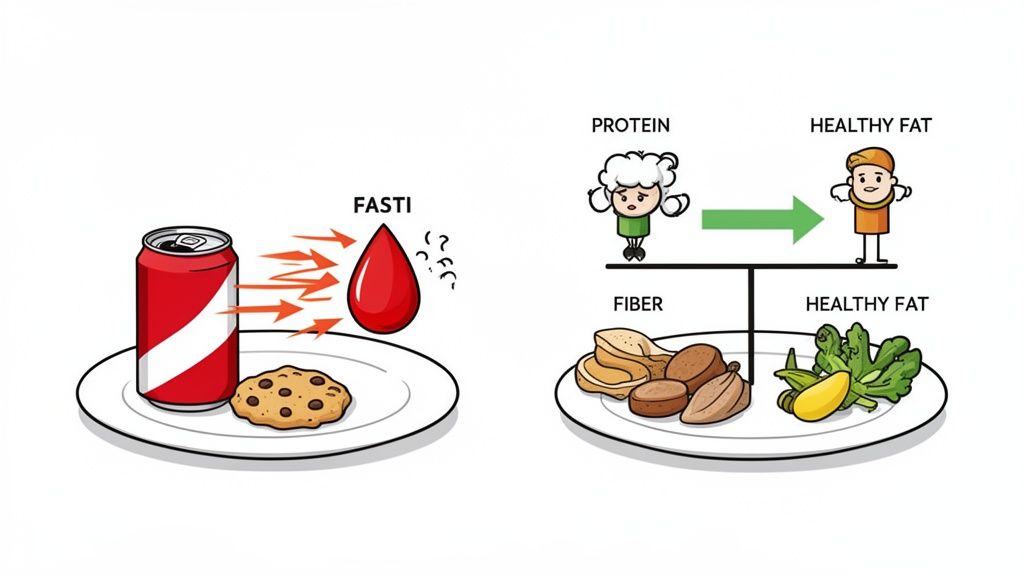
One of the biggest game-changers for post-sugar fatigue is the company that sugar keeps on your plate. Eating pure sugar on an empty stomach is like flooring the gas pedal in a race car—it hits your bloodstream incredibly fast, triggering a huge insulin surge and an equally dramatic crash.
But what happens when you add protein, fiber, and healthy fats into the mix? These nutrients act like speed bumps. They slow down digestion and the rate at which sugar enters your bloodstream, preventing those extreme highs and lows. The result is a much gentler energy curve.
- Protein: A chicken breast eaten with a sweet potato provides lasting energy.
- Fiber: The fiber in an apple slows down the release of its natural sugars.
- Healthy Fats: Adding avocado or nuts to a meal helps keep blood sugar stable.
Think about it this way: a slice of cake after a balanced dinner of fish, veggies, and quinoa will have a much smaller impact than chugging a can of soda on an empty stomach. The other nutrients create a buffer, shielding you from the full force of the sugar rush and the inevitable crash.
Your Body's Starting Point
Your physical state before you even take a bite of something sweet plays a massive role, too. If you’re already running on fumes, you’re setting yourself up for a much harder fall.
Take sleep debt, for instance. After a few nights of bad sleep, your body is already stressed. Your cells actually become more insulin resistant when you're tired, forcing your system to work overtime to manage blood sugar. This makes the resulting crash feel ten times worse.
It's also crucial to remember the surprising amount of hidden sugar in foods that can sneak into your diet, contributing to this cycle without you even noticing. By starting to connect these dots—from meal balance to sleep quality—you can begin to understand and finally manage your body’s unique response to sugar.
Actionable Strategies to Prevent the Post-Sugar Slump
Okay, now that you know the why behind the sugar crash, it's time for the good part: what you can actually do about it. The goal isn't to live a life devoid of treats, but to make smart, simple shifts that keep your energy steady.
You don’t have to throw your entire pantry out. Just a few key adjustments can completely change how your body handles sugar, helping you sidestep those dramatic energy spikes and the inevitable crash that follows.
Never Eat a “Naked Carb”
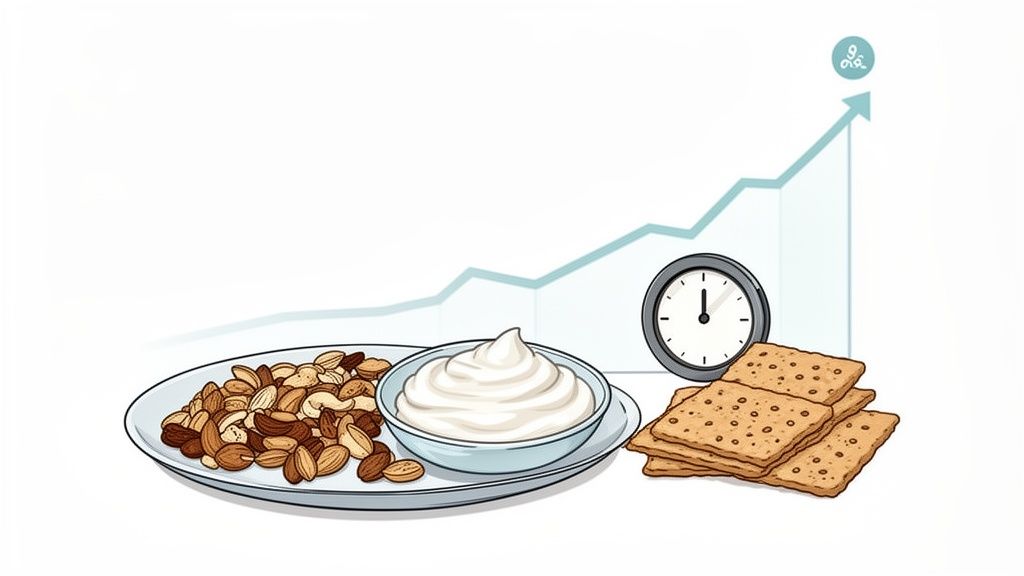
This is one of the most powerful rules you can follow. When you eat carbs—especially simple or sugary ones—all by themselves, your body digests them almost instantly. This sends a huge rush of glucose into your bloodstream. But when you pair those carbs with protein and fat, everything changes.
- Protein and fat act like the brakes, slowing down how quickly your body digests the carbohydrates.
- This means sugar enters your bloodstream slowly and steadily, not all at once.
- A gradual rise in blood sugar prevents that massive insulin surge, which means you won’t have the overcorrection that leads to the crash.
So, instead of just an apple, have it with a small handful of almonds. If you're craving crackers, top them with a slice of cheese or a smear of avocado. It's a simple trick, but it makes all the difference in keeping your energy stable.
The secret is to build meals and snacks that give you a slow, sustained release of energy—not a short, sharp burst. This is how you conquer that afternoon slump and stop wondering, "Why does sugar make me sleepy?" after every meal.
Choose Smarter Snacks and Time Your Meals
The snacks you reach for between meals can either be your best friend or your worst enemy. A candy bar is a one-way ticket to an energy nosedive. Instead, think about snacks that pack a punch with fiber, protein, and healthy fats.
For a more detailed look at this, our guide on how to stabilize blood sugar levels is packed with more ideas and strategies.
Don't forget about when you eat, either. Skipping meals lets your blood sugar dip too low, which is often why you suddenly crave a massive sugar hit later on. Eating regular, balanced meals is your best defense for maintaining consistent energy.
A few smart swaps can make a huge difference in your daily energy levels.
Smart Swaps to Avoid an Energy Crash
| Instead of This High-Sugar Choice... | Try This Blood Sugar-Friendly Alternative | Why It Works |
|---|---|---|
| Sugary Cereal | Oatmeal with nuts and berries | The fiber in oats and protein in nuts slow sugar absorption. |
| Candy Bar | A small handful of almonds and a square of dark chocolate | The protein and fat from almonds balance the small amount of sugar. |
| Soda or Sweetened Tea | Sparkling water with a squeeze of lime or lemon | You get the fizzy satisfaction without any of the crash-inducing sugar. |
| White Bread Sandwich | Whole-grain bread with lean protein and avocado | Whole grains offer more fiber, and the protein and fat add staying power. |
Making these kinds of trades consistently is how you build a foundation for stable, lasting energy.
Be Mindful and Hydrate
So much of our sugar consumption is driven by habit, not actual hunger. Before you grab something sweet, pause for a second. Ask yourself: am I really hungry? Or am I just bored, stressed, or tired? A moment of mindfulness can be surprisingly effective.
Also, don't underestimate the power of water. It's incredibly common to mistake dehydration for hunger or fatigue. Next time you feel that slump coming on, try drinking a big glass of water and waiting 10 minutes. You might just find that's all you needed.
To really keep your energy up and head off that post-sugar crash, getting the right nutrients is essential. You can explore some of the best vitamins for energy to see how they fit into a healthy, balanced approach.
Answering Your Questions About Sugar and Fatigue
As you start connecting the dots between what you eat and how you feel, some questions are bound to come up. It's totally normal. Getting into the details of how different sugars work in your body is the key to finally building habits that stick and give you real, lasting energy.
Let's dig into some of the most common questions I hear about sugar and that dreaded afternoon slump.
Does Fruit Make You Tired Too?
This is a great question because it gets right to the heart of the matter: it’s all about context. The sugar in an apple is technically the same stuff you'd find in a candy bar (fructose and glucose), but your body processes them in wildly different ways.
Think of it like this: an apple is a complete package. It has sugar, but it’s also packed with fiber and water. That fiber acts like a traffic cop, slowing down how quickly your body can break down and absorb the sugar. So, instead of a sudden, chaotic rush of glucose into your bloodstream, you get a gentle, steady trickle. This prevents that massive insulin spike and the inevitable crash, giving you sustained energy.
A candy bar, on the other hand, is what I call a "naked" sugar. There's no fiber, protein, or fat to slow it down. It hits your system like a lightning bolt, triggering the exact blood sugar rollercoaster you're trying to get off of.
How Long Does a Sugar Crash Usually Last?
There's no single answer, but for most people, the worst of a sugar crash—that intense, can't-keep-your-eyes-open feeling—lasts for about one to two hours. How long and how bad it gets really depends on a few things:
- What you ate: A sugary soda is a liquid express train to Crashville. A cookie, which has some fat and flour, might give you a slightly softer landing.
- Your own body: We all have different levels of insulin sensitivity. Your unique metabolism plays a huge role in how quickly you bounce back.
- What you do next: If you reach for another handful of candy to pull yourself out of the slump, you’re just getting back on the rollercoaster. Hydrating and having a balanced snack with some protein can help you recover much faster.
Even after the initial sleepiness fades, many people are left with a lingering brain fog and irritability that can easily sabotage the rest of the day.
Can I Boost My Energy Just by Cutting Out Sugar?
Cutting back on added sugar can absolutely transform your energy levels, but it’s good to have realistic expectations, especially at the beginning. You might actually feel more tired for the first few days as your body adjusts—that’s a classic withdrawal symptom. Just hang in there.
After that initial hump, usually a week or two, most people notice a massive difference. By getting off the spike-and-crash cycle, your blood sugar can finally level out. This gives you more consistent, reliable energy all day long. No more desperate searches for a 3 p.m. pick-me-up. It's less about finding a magical "boost" and more about removing what was draining your battery all along.
When Is It More Than a Simple Crash?
Look, feeling a little relaxed after a big Thanksgiving dinner is one thing. That’s often called postprandial somnolence, or a "food coma." But a true sugar crash feels much more intense and disruptive. The key is to listen to what your body is telling you.
It might be time to talk to a doctor if your post-meal fatigue is:
- Severe or debilitating: We’re talking about an overwhelming urge to sleep that gets in the way of your work, driving, or just living your life.
- Paired with other symptoms: If you’re also getting dizzy, shaky, anxious, sweaty, or feeling heart palpitations, that could be a sign your blood sugar is dropping too low (hypoglycemia).
- Happening after every meal: If even healthy, balanced meals leave you feeling wiped out, it might point to a deeper issue with how your body regulates blood sugar, like insulin resistance.
A doctor can help figure out if there's an underlying medical condition and give you advice that's specific to your health needs.