10 Actionable Workplace Wellness Challenges to Boost Team Health in 2026
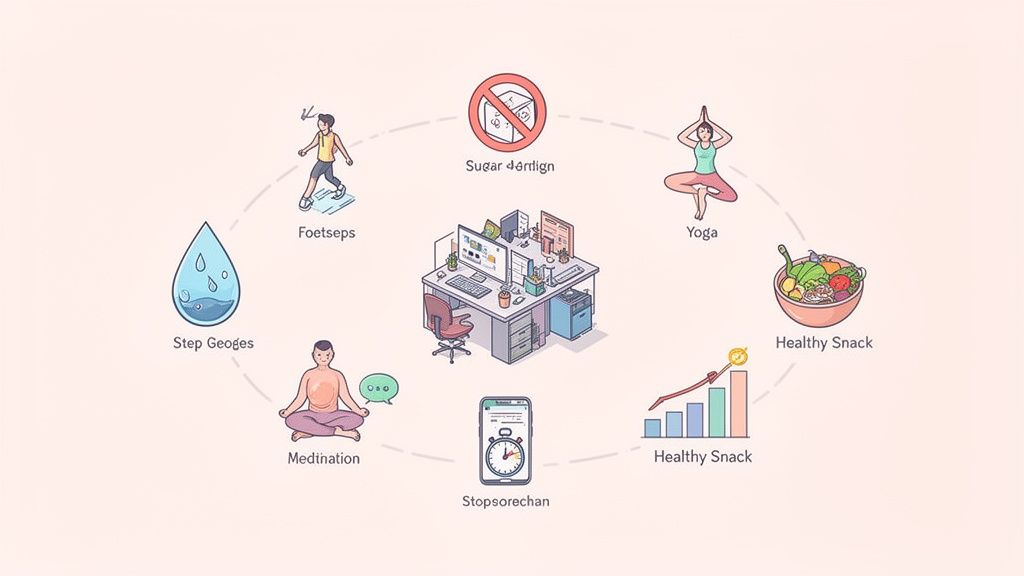
Traditional wellness programs often fall flat. A forgotten bowl of fruit in the breakroom or a one-off yoga session rarely creates lasting change. The result? Low engagement, wasted resources, and minimal impact on employee health and productivity. The key to a successful initiative lies in targeted, engaging, and well-structured programs that address specific health detractors. This guide provides a direct blueprint for meaningful workplace wellness challenges that deliver measurable results.
Instead of vague advice, you will find 10 detailed, actionable challenges focused on a significant, yet often overlooked, aspect of employee well-being: sugar consumption. High sugar intake is a primary driver of energy crashes, mood swings, and long-term health risks that directly affect focus and performance at work. We will provide everything you need to launch these initiatives successfully, from step-by-step implementation plans and communication templates to key metrics for proving ROI.
Each challenge is designed to be practical and sustainable, empowering your team to build healthier habits. You will learn how to create a supportive environment, foster friendly competition, and leverage tools like the StopSugar app to guide employees on their journey. These strategies form the foundation of a robust health culture. To further enrich your workplace wellness strategy beyond the challenges outlined here, consider integrating additional creative and engaging programs. For a broader perspective, explore these 12 High-Impact Employee Wellness Program Ideas for a more comprehensive approach. Let's get started.
1. 30-Day Sugar Detox Challenge
A 30-Day Sugar Detox is a structured, month-long initiative designed to help employees break the cycle of sugar dependency. Participants commit to eliminating or significantly reducing added sugars from their diet, fostering a new awareness of their eating habits and resetting their taste buds. This challenge directly addresses common workplace issues like afternoon energy slumps and brain fog by stabilizing blood sugar levels.
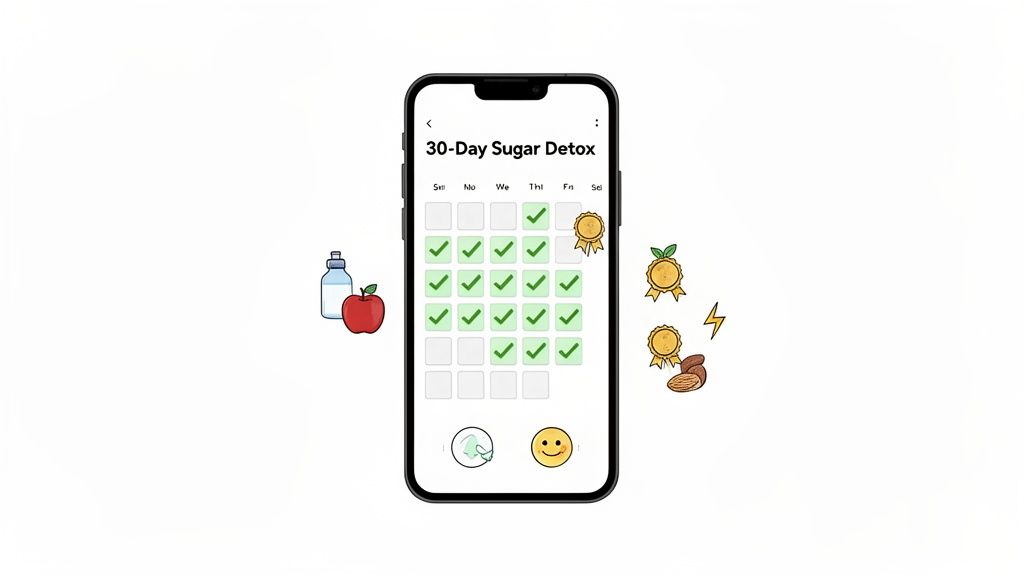
The core of this challenge is consistent tracking and community support. Employees can use an app like StopSugar to log daily sugar-free check-ins, monitor energy and mood fluctuations, and even document their journey through photos or journal entries. This digital component makes participation easy and quantifiable, transforming a personal goal into a shared, engaging experience.
Why It Works
This challenge is highly effective because it focuses on a single, impactful habit for a defined period. The 30-day timeframe is long enough to create lasting change but short enough to feel achievable. Companies like Google and LinkedIn have seen high engagement and completion rates (over 65% at Google) because the benefits, such as increased energy and mental clarity, are felt quickly.
How to Implement It
- Provide Resources Upfront: Before the challenge begins, distribute a comprehensive list of approved foods and healthy snack alternatives. This prevents initial confusion and sets employees up for success.
- Kickoff on a Monday: Starting the week with a new goal leverages natural psychological momentum and helps participants plan their meals over the weekend.
- Leverage Technology: Encourage the use of the StopSugar app for its "Panic Button" feature, which offers motivation during intense cravings. The app's tracking tools also provide a visual record of progress.
- Foster Community: Schedule weekly virtual or in-person check-ins for participants to share struggles and successes. This creates a powerful support system.
- Stock Healthy Options: Make success easier by providing healthy, sugar-free snack samples in the office breakroom. This removes temptation and reinforces the company's commitment to employee wellness.
2. Sugar-Free Workplace Snack Swap Program
A Sugar-Free Workplace Snack Swap is a peer-led initiative designed to educate employees on healthier snack choices while building a community around wellness. Participants bring their favorite processed, sugary snacks and exchange them for healthier, sugar-free alternatives provided by the company or fellow employees. This challenge directly tackles the prevalence of unhealthy office snacking and empowers staff to discover and share nutritious options.
The core of this program is collaborative discovery and tracking. Employees can use the StopSugar app to document the snacks they've swapped, discover new brand recommendations, and contribute to a shared database of approved alternatives. This transforms a simple exchange into an engaging, ongoing resource that helps everyone make better choices long-term.
Why It Works
This challenge is highly effective because it leverages social proof and peer-to-peer learning to drive behavioral change. Instead of just being told what to eat, employees actively participate in finding and validating healthier options. Salesforce saw over 1,800 employees participate in a similar program, reducing office vending sugar by 40%. Microsoft campuses also implemented snack swaps, leading to a 35% reduction in sugary beverage consumption. The hands-on, collaborative nature makes healthy eating a shared team goal.
How to Implement It
- Host Themed Swap Events: Launch the program with a themed monthly event, such as “Healthy Chocolate Alternatives” or “Salty & Savory Swaps,” to generate excitement and focus participation.
- Create a Central Hub: Set up a dedicated table or area in the breakroom for the swap. Take before-and-after photos of the snack selection to visually demonstrate progress.
- Leverage Technology: Encourage employees to use the StopSugar app's alternatives suggestion feature as a starting point. This provides a vetted list and helps participants find new products.
- Recognize Top Contributors: Create a “Snack Discoverer of the Month” award to recognize employees who find and share the most popular healthy alternatives.
- Provide Healthy Starters: To kick things off, stock the breakroom with a variety of approved options. For inspiration, check out this guide to delicious sugar-free snack ideas.
3. Energy Crash Awareness Campaign
An Energy Crash Awareness Campaign is a data-driven workplace wellness challenge designed to help employees connect their sugar intake directly to their productivity and well-being. Participants track their daily energy levels, identifying the patterns that lead to the dreaded afternoon slump. This initiative goes beyond simple diet advice by empowering staff to see firsthand how their food choices impact their focus and performance throughout the workday.
The core of this challenge lies in consistent, personalized data collection. Employees can use the StopSugar app's mood and energy tracker to log their feelings throughout the day, creating a visual map of their energy highs and lows. By correlating these slumps with meal and snack times, they gain powerful insights into the glycemic impact of their diet and learn to make more sustainable energy choices. You can learn more about how sugar intake directly causes the energy crash after eating and what to do about it.
Why It Works
This campaign is effective because it shifts the focus from restriction to awareness. It’s not about banning foods; it’s about understanding their effects. At General Electric, a 60-day energy tracking challenge led to a 22% increase in reported productivity. Similarly, an Accenture study found that employees who reduced energy crashes made 18% fewer errors in their work, demonstrating a clear link between stable blood sugar and performance quality.
How to Implement It
- Align with Business Goals: Launch the campaign during high-stress periods or before major project deadlines to clearly demonstrate the productivity impact of stable energy.
- Provide Healthy Alternatives: Remove the temptation of sugary pick-me-ups by stocking breakrooms with better options. To support this effort, you can provide resources like a guide on healthy snacks for work that boost focus.
- Encourage Active Breaks: Promote 15-minute walks as a go-to strategy for combating afternoon fatigue instead of reaching for a sugary drink or snack.
- Share Anonymized Data: Aggregate the energy tracking data (while protecting individual privacy) and share company-wide trends. Visualizing the collective "afternoon slump" can be a powerful motivator for change.
- Feature Employee Stories: Create and share before-and-after case studies from participating employees who have successfully overcome energy crashes. Peer success stories are highly influential.
4. Team-Based Competitive Sugar Reduction Leaderboard
A Team-Based Competitive Sugar Reduction Leaderboard transforms individual wellness goals into a dynamic, collaborative contest. Departments or small teams compete to achieve the highest percentage of sugar-free days over a set period, like 90 days. This approach leverages peer motivation and friendly competition, making it one of the most engaging workplace wellness challenges for larger organizations.
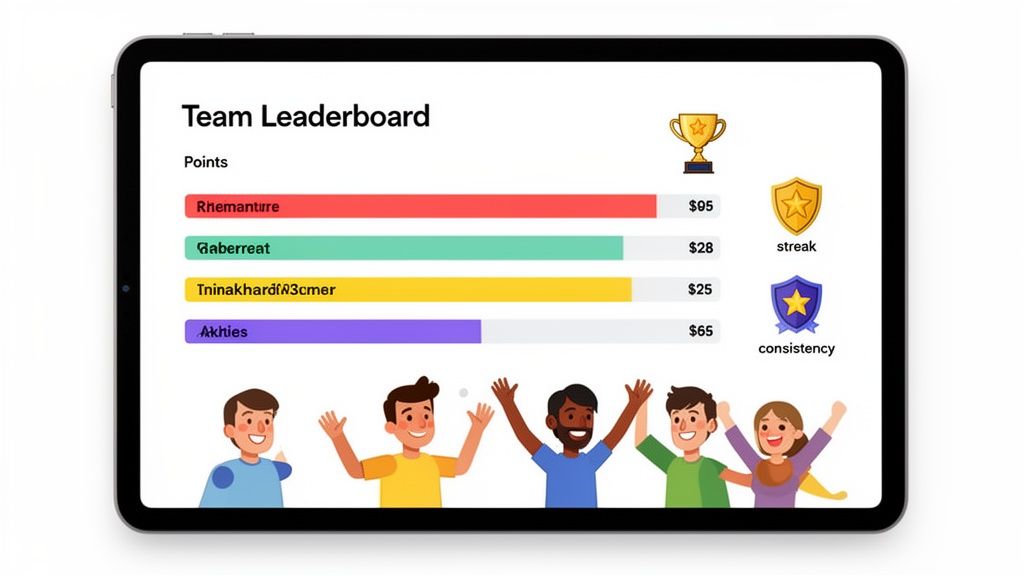
This challenge structure encourages teamwork and mutual accountability. The StopSugar app is central to its success, tracking team-wide metrics like consecutive sugar-free days, mood check-ins, and shared healthy habits. A live leaderboard provides real-time updates, fueling excitement and sustained participation as teams see their collective progress.
Why It Works
Competition adds a powerful layer of motivation that individual challenges sometimes lack. The team-based format fosters a strong sense of camaraderie and shared purpose, preventing participants from feeling isolated. Companies like Deloitte have seen 94% team participation using this model, while similar competitions at EY increased overall engagement from 34% to 81% by turning a personal journey into a collective mission.
How to Implement It
- Create Balanced Teams: Keep teams small and balanced, ideally with 5-8 people. This size is optimal for fostering strong group dynamics and ensuring everyone feels involved.
- Assign Team Champions: Designate a motivated "champion" for each team to lead daily check-ins, organize encouragement, and keep morale high.
- Utilize a Live Leaderboard: Leverage the StopSugar app's live leaderboard feature to display real-time team rankings. This visibility is key to maintaining competitive momentum.
- Celebrate All Achievements: Offer multiple prize tiers to recognize different milestones, such as "Most Consistent Team" or "Most Improved." This keeps more employees engaged.
- Offer Non-Food Rewards: Motivate teams with desirable non-food prizes like extra paid time off, wellness-related items, or preferred parking spots. Plan a final celebration event for all participating teams, regardless of their final placement.
5. Sugar-Free Lunch & Learn Educational Series
A Sugar-Free Lunch & Learn Educational Series is a recurring program designed to empower employees with knowledge about sugar's impact on health, energy, and productivity. These sessions, led by nutritionists, health coaches, or even knowledgeable employees, cover topics like identifying hidden sugars, reading nutrition labels, and understanding the psychology of cravings. This approach moves beyond a simple challenge by providing the "why" behind sugar reduction.
The core of this series is providing actionable, evidence-based information that employees can apply immediately. Participants can be encouraged to use the StopSugar app in real-time during sessions, for example, using the "Panic Button" alternatives feature when discussing how to handle afternoon slumps. This transforms passive learning into an interactive, tool-supported experience that builds lasting dietary intelligence, making it one of the most sustainable workplace wellness challenges.
Why It Works
This educational format is effective because it addresses the root cause of poor eating habits: a lack of knowledge and practical skills. Instead of just mandating behavior change, it equips employees to make informed choices. Companies like Johnson & Johnson have seen significant success with wellness series, with over 40% employee attendance and 52% reporting they made dietary changes within three months. This model fosters a culture of wellness that extends beyond a 30-day period.
How to Implement It
- Partner with Credible Experts: Invite registered dietitians or certified health coaches to lead sessions. This builds trust and ensures the information is accurate and safe.
- Feature App Integration: Dedicate a portion of each session to demonstrating how to use a specific StopSugar app feature, such as logging a meal or finding a sugar-free alternative, to reinforce practical application.
- Encourage Peer Storytelling: Invite employees who have successfully reduced their sugar intake to share their stories and tips. This adds a relatable, motivational element to the series.
- Provide Actionable Takeaways: End each session with a clear, simple action item that employees can implement that same day, such as "scan one pantry item for hidden sugars tonight."
- Record and Distribute: Record all live sessions and make them available on the company intranet. This ensures that employees with scheduling conflicts or in different time zones can still benefit.
6. Personal Health Metrics Challenge
A Personal Health Metrics Challenge is a data-driven initiative where employees track key health indicators to see the direct impact of their wellness efforts, such as reducing sugar intake. Participants monitor metrics like weight, blood pressure, and sleep quality, correlating them with their daily logs in the StopSugar app. This approach makes the benefits of healthy habits tangible and scientifically validated, moving beyond subjective feelings to showcase measurable improvements.
The challenge's power lies in connecting daily actions to concrete health outcomes. An employee might see their logged energy spikes in the StopSugar app align with a documented drop in their blood pressure or improved sleep scores. This creates a powerful feedback loop that reinforces positive behavior by demonstrating that small changes in diet yield significant, quantifiable results in personal health.
Why It Works
This challenge is highly effective because it makes wellness personal and evidence-based. Vague goals like "get healthier" are replaced with specific targets, such as lowering triglycerides. Companies see incredible engagement because the results are undeniable. For example, a Cisco health challenge saw 3,200 employees average an 8.3-pound weight loss and a 12-point reduction in blood pressure, making it one of the most impactful workplace wellness challenges.
How to Implement It
- Provide Confidential Health Screenings: Partner with a corporate health provider to offer optional, confidential screenings at the start and end of the challenge. This provides a clear baseline and endpoint for measurement.
- Normalize Health Tracking: Encourage executive leadership to participate openly. When leaders share their journey (within their comfort level), it reduces stigma and motivates broader participation.
- Focus on Aggregate Data: Share anonymized, aggregate results with the company to celebrate collective success without compromising individual privacy. Highlight stats like the company-wide average reduction in blood pressure.
- Celebrate Non-Scale Victories: Remind participants to track improvements in how their clothes fit, skin clarity, and daily energy levels. The StopSugar app's journaling feature is perfect for logging these qualitative wins.
- Integrate Mental Health Metrics: Include metrics for stress, mood, and anxiety. Participants can use the mood tracker in the StopSugar app to see how reducing sugar intake positively affects their mental well-being alongside physical health.
7. Sugar-Free Social Accountability Buddy System
The Sugar-Free Social Accountability Buddy System pairs employees for mutual support and encouragement throughout a 60 to 90-day challenge. Buddies connect weekly, share progress, and help each other navigate cravings, transforming a personal wellness goal into a collaborative effort. This peer-support model directly addresses the psychological hurdles of behavior change while strengthening workplace relationships.
At its core, this challenge leverages the power of accountability. Participants use the StopSugar app to track their journey and can share milestones directly with their buddy. Features like the app’s panic button become a shared tool, allowing partners to offer real-time encouragement during difficult moments. This system fosters a sense of shared responsibility and makes the long-term goal feel more manageable.
Why It Works
This approach is highly effective because it adds a layer of human connection to a personal health goal. The extended 60 to 90-day period is designed for deep habit formation, and the buddy system provides the sustained motivation needed to succeed. Companies like Bank of America saw a remarkable 81% completion rate with a buddy system, compared to just 54% for individual challengers, highlighting the power of peer accountability in workplace wellness challenges.
How to Implement It
- Match Buddies Strategically: Use a simple questionnaire about goals and personality to create compatible pairings. This increases the likelihood of a strong, supportive partnership.
- Provide Conversation Starters: Equip pairs with discussion templates and icebreakers to guide their initial meetings and ensure conversations are productive.
- Integrate Technology: Encourage buddies to use the StopSugar app to share progress and celebrate achievements with visible "Buddy Badges" for hitting key milestones.
- Schedule Check-in Time: Sanction brief, 15-minute buddy meetings during work hours to show company support and make it easy for employees to connect.
- Recognize Top Teams: Publicly celebrate outstanding buddy partnerships in company newsletters or meetings to motivate all participants and highlight success stories.
8. Habit Stacking & Replacement Challenge
A Habit Stacking & Replacement Challenge is a behavioral psychology-based initiative that teaches employees to systematically dismantle sugar habits. Instead of relying on willpower, participants identify their specific sugar triggers and then attach a new, healthier behavior to an existing routine, a method known as "habit stacking." This approach focuses on the science of sustainable behavior change rather than simple restriction.
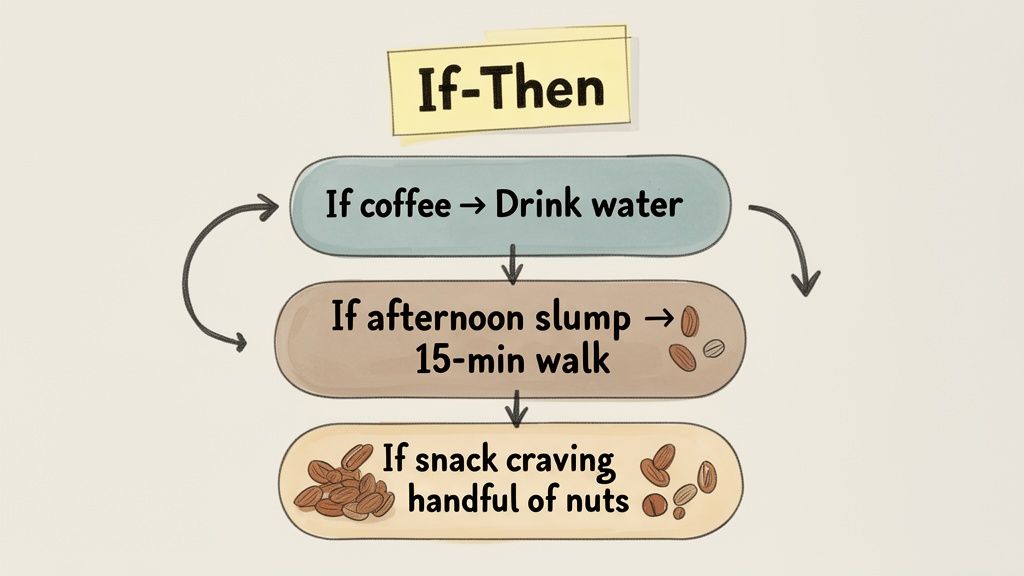
The challenge encourages employees to document triggers and track their replacement attempts, creating a conscious loop of awareness and action. For instance, instead of grabbing a cookie during the 3 PM slump, an employee might stack a new habit: "After I finish my afternoon meeting (existing habit), I will walk to the water cooler and drink a full glass of water (new habit)." The StopSugar app’s daily check-in and notes features are ideal for logging these "if-then" plans and monitoring their success rates.
Why It Works
This challenge is powerful because it addresses the root cause of behavior: the cue-routine-reward loop. Research from Stanford University on behavior change showed that habit stacking led to a 91% success rate, far surpassing the 46% rate for approaches based solely on willpower. It reframes the goal from "don't eat sugar" to "do this instead," which is a more effective and less intimidating instruction for the brain to follow.
How to Implement It
- Introduce "If-Then" Planning: Start with a workshop explaining the concept of habit stacking. Guide employees to create their first "if-then" plan, such as "If I feel a sugar craving, then I will listen to one song from my high-energy playlist."
- Start with an Easy Win: Encourage participants to identify and replace their easiest, least-entrenched sugar habit first. This builds momentum and confidence for tackling more challenging habits later.
- Track Triggers and Attempts: Instruct employees to use the StopSugar app's daily notes field to specifically document triggers (e.g., stress, boredom, a certain time of day). The goal is to track attempts at replacement, not perfection.
- Share Successful Stacks: Create a dedicated chat channel where team members can share their successful habit stacking examples. This creates a valuable, peer-sourced library of ideas.
- Reward the New Behavior: Pair the replacement habit with a positive, non-food reward. For example, after successfully choosing a healthy snack, take a five-minute break to stretch or look out a window. This helps solidify the new routine.
9. Leadership-Led Sugar Reduction Pledge Campaign
A Leadership-Led Sugar Reduction Pledge is a powerful, top-down workplace wellness challenge where senior leaders and managers publicly commit to reducing their sugar intake alongside their teams. This initiative transforms a typical wellness program into a core cultural value by demonstrating visible executive buy-in. Leaders share their personal goals, daily progress, and even their struggles, making the journey relatable and inspiring.
This approach normalizes the challenge and fosters a sense of shared purpose. When employees see their CEO or manager logging a sugar-free day in an app like StopSugar or sharing a moment of craving, it dismantles hierarchical barriers. This visible commitment signals that wellness is a genuine organizational priority, encouraging widespread participation and creating a supportive, non-judgmental environment.
Why It Works
This challenge is highly effective because leadership involvement drives authenticity and trust. When leaders participate, it’s no longer just another HR initiative; it's a company-wide movement. For example, when Salesforce CEO Marc Benioff publicly joined wellness challenges, participation increased by over 300%. Similarly, Microsoft saw 92% employee participation in a sugar reduction challenge led by its senior team, demonstrating the profound impact of leading by example.
How to Implement It
- Secure Visible Executive Commitment: Begin with a public pledge from the CEO and senior leadership team. Ensure they are the first to download and actively use the StopSugar app to track their journey.
- Encourage Vulnerable Storytelling: Create an internal communication series where leaders share honest updates, including their "fails" and learning moments. This humanizes leadership and encourages employees who may be struggling.
- Train Managers on Supportive Coaching: Equip managers to hold 1:1 check-ins focused on support and encouragement, not on performance or discipline. Provide them with resources to guide their teams effectively.
- Foster Peer-to-Peer Engagement: Use StopSugar’s "Team" feature to create small groups led by managers or department heads. This allows for more intimate support systems and friendly competition.
- Celebrate Progress at All Levels: Publicly recognize both leadership and employee milestones. Acknowledging a director’s successful sugar-free week has the same importance as celebrating a new hire’s first five-day streak.
10. Annual Health Impact Summit & Results Celebration
An Annual Health Impact Summit is a culminating event that transforms individual wellness wins into a powerful, company-wide cultural milestone. Held 90 to 180 days after a major challenge, this summit celebrates employee achievements, shares data-backed health improvements, and solidifies a long-term commitment to well-being. It’s where personal stories of transformation are shared, creating a powerful narrative of collective success.
The core of the summit is recognition and education. It’s an opportunity for employees to present their journeys, from overcoming sugar cravings to noticeable health metric improvements. The event can feature interactive booths with nutritionists, fitness experts, and even a StopSugar app specialist to discuss usage patterns and success strategies. This turns a wellness initiative from a one-time event into a sustained, celebrated part of the corporate identity.
Why It Works
This type of event drives long-term engagement by providing a highly visible platform for success. The anticipation of the summit motivates participants during the initial challenge, and the celebration reinforces positive behaviors. Companies like Humana have seen over 72% of participants sustain changes a year later after implementing similar summits. By showcasing real-world results and personal stories, it generates organic enthusiasm and dramatically increases enrollment for future workplace wellness challenges.
How to Implement It
- Showcase Diverse Stories: Invite employees of all achievement levels to share their experiences, not just those with the most dramatic transformations. This makes success feel accessible to everyone.
- Create Lasting Assets: Film video testimonials from participants and hire a professional photographer for the event. This content is invaluable for future internal marketing and recruitment efforts.
- Integrate Technology Insights: Invite a representative or use data from the StopSugar app to present insights on the most-used features and common success patterns, providing data-driven validation.
- Launch the Next Phase: Use the summit’s momentum to announce the next year's challenge or to launch ongoing support groups and buddy systems that continue the journey.
- Provide Take-Home Resources: Distribute resource kits with healthy recipe books, guides to sustaining habits, and advanced tips for using wellness apps like StopSugar. This equips employees for continued success.
10-Point Comparison: Workplace Sugar-Reduction Challenges
| Item | Implementation Complexity 🔄 | Resource Requirements ⚡ | Expected Outcomes 📊 | Ideal Use Cases 💡 | Key Advantages ⭐ |
|---|---|---|---|---|---|
| 30-Day Sugar Detox Challenge | Moderate — structured daily tracking, progressive levels | Low–Moderate: StopSugar app, coordinator time, snack samples | Short-term taste reset; measurable energy, sleep, mood gains within 30 days | Kickstarting behavior change, team cohesion, time-limited initiatives | Clear timeline and milestones, high engagement, science-backed taste reset |
| Sugar-Free Workplace Snack Swap Program | Low — weekly swaps and database upkeep | Low: volunteer coordination, app database, occasional samples | Immediate availability of healthier options; gradual culture shift | Low-budget offices seeking practical, peer-led change | Peer education, scalable, practical and immediately applicable |
| Energy Crash Awareness Campaign | Moderate–High — hourly logging, pattern analysis | Moderate: analytics, encouragement resources, healthy snacks | Reduced afternoon slumps; measurable productivity improvements over weeks | Organizations linking wellness to performance metrics | Direct productivity ROI, data-driven behavior change |
| Team-Based Competitive Sugar Reduction Leaderboard | High — scoring rules, team setup, live leaderboards | Moderate–High: app features, prize budget, team champions | High engagement and adherence during competition; social accountability | Competitive cultures, large teams wanting gamified engagement | Gamification drives participation, builds team bonds |
| Sugar-Free Lunch & Learn Educational Series | Low — recurring sessions and materials | Low: speakers, handouts, recording setup | Increased knowledge and intent; variable behavior change alone | Education-focused programs, onboarding, awareness campaigns | Expert credibility, low cost, supports other interventions |
| Personal Health Metrics Challenge | Moderate–High — device integration, biometric testing | High: health tests, device syncing, privacy safeguards | Tangible clinical improvements over 8–12+ weeks; strong motivation from data | Data-driven employees, chronic risk reduction initiatives | Measurable health outcomes, high credibility and motivation |
| Sugar-Free Social Accountability Buddy System | Low–Moderate — pairing, weekly check-ins | Low: coordination, app sharing features | Higher adherence (60–70%); improved retention and support | Employees needing emotional support and mutual accountability | Cost-effective, strong peer support, higher success rates |
| Habit Stacking & Replacement Challenge | Moderate — training, worksheets, guided practice | Low–Moderate: materials, facilitator or coach optional | Slower start but durable habit formation; long-term behavior change | Long-term habit change, those resistant to restriction | Sustainable, scientifically grounded, focuses on building alternatives |
| Leadership-Led Sugar Reduction Pledge Campaign | Moderate — executive coordination and visibility | Low–Moderate: leader time, communications support | Significant engagement lift; cultural normalization of wellness | Organizations seeking top-down cultural change and role modeling | Powerful cultural signal, increases psychological safety and participation |
| Annual Health Impact Summit & Results Celebration | High — event planning, data aggregation, presentations | High: event budget, analytics, speakers, logistics | Boosts morale, showcases results, supports maintenance if followed up | Capstone for large programs, recognition and planning for next steps | Celebrates success, generates testimonials, strengthens community |
Launch Your First Challenge and Transform Your Workplace Culture
You've explored ten comprehensive blueprints, each a unique path toward a healthier, more vibrant workplace. From the immediate impact of a 30-Day Sugar Detox to the collaborative spirit of a Team-Based Leaderboard and the educational power of a Lunch & Learn series, the potential for positive change is immense. The sheer volume of ideas can feel overwhelming, but the journey to a more engaged and productive workforce doesn't require launching all ten initiatives at once. The real power lies in starting with one, executing it brilliantly, and building unstoppable momentum.
The core message woven through each of these workplace wellness challenges is empowerment. It's about shifting the focus from restrictive corporate mandates to supportive, employee-driven initiatives. When you provide the right framework, tools, and encouragement, your team can achieve remarkable personal and collective health goals. This isn't just about reducing sugar intake; it’s about fostering a culture where well-being is a shared value, not just a line item in an HR budget.
From Blueprint to Action: Your Next Steps
The difference between a great idea and a transformative program is action. Now is the time to move from planning to implementation. Here is a simple, actionable path forward to launch your first successful challenge and start seeing tangible results.
- Step 1: Choose Your Starting Point. Review the ten challenges. Which one resonates most with your company's current pain points? Are employees complaining about the 3 p.m. energy slump (perfect for the Energy Crash Awareness Campaign)? Is there a strong desire for team connection (consider the Buddy System or Snack Swap)? Pick the challenge that offers the most immediate and relevant value to your team.
- Step 2: Customize and Communicate. Use the templates and communication copy provided as your foundation, but don't forget to infuse your company’s unique voice and culture. Announce the challenge with enthusiasm, clearly outlining the "why" behind the initiative. Emphasize the benefits: more energy, better focus, and a supportive community.
- Step 3: Leverage Technology for Support. A challenge without a tracking mechanism can quickly lose steam. This is where tools like the StopSugar app become invaluable. Encourage employees to use it to monitor their progress, find sugar-free alternatives, and connect with colleagues. Technology transforms a solitary effort into a shared, data-driven journey, making success far more likely.
- Step 4: Measure, Celebrate, and Iterate. From the outset, define what success looks like. Use the metrics we’ve discussed, from participation rates to qualitative feedback surveys. Celebrate every milestone, big or small, to keep morale high. After the challenge concludes, gather feedback and use those insights to make your next initiative even more impactful.
The Lasting Impact of a Single Challenge
Mastering the art of workplace wellness challenges is one of the most effective investments you can make in your people and your organization. A well-executed program does more than just improve physical health metrics. It sends a powerful message that you care about your employees as whole individuals. This fosters loyalty, boosts morale, and creates an environment where people feel supported to do their best work.
The journey starts today. Choose your challenge, rally your team, and take that first crucial step. You are not just launching a program; you are planting the seeds for a healthier, happier, and more resilient workplace culture. The positive ripple effects of this single decision will be felt long after the first challenge ends, paving the way for a future where employee well-being is the ultimate competitive advantage.