The Real Benefits of a Sugar Free Diet
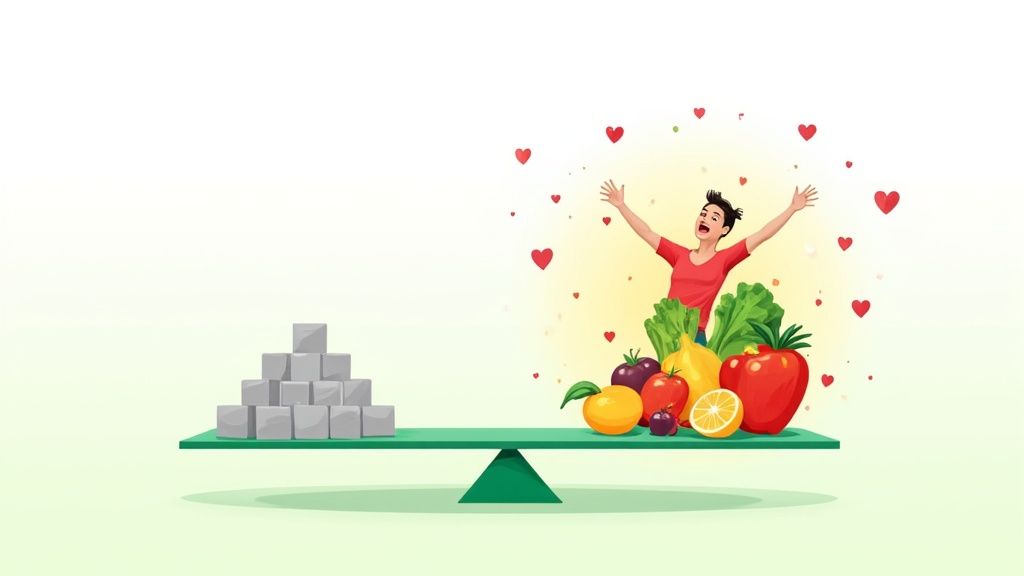
Going sugar-free is one of the most powerful things you can do for your health. We're not talking about a quick-fix diet based on deprivation, but a genuine lifestyle shift that unlocks sustainable weight management, steady energy all day long, and a dramatically lower risk for chronic diseases like type 2 diabetes. It's about taking back control and feeling your absolute best.
Your Life Beyond the Sugar Rush
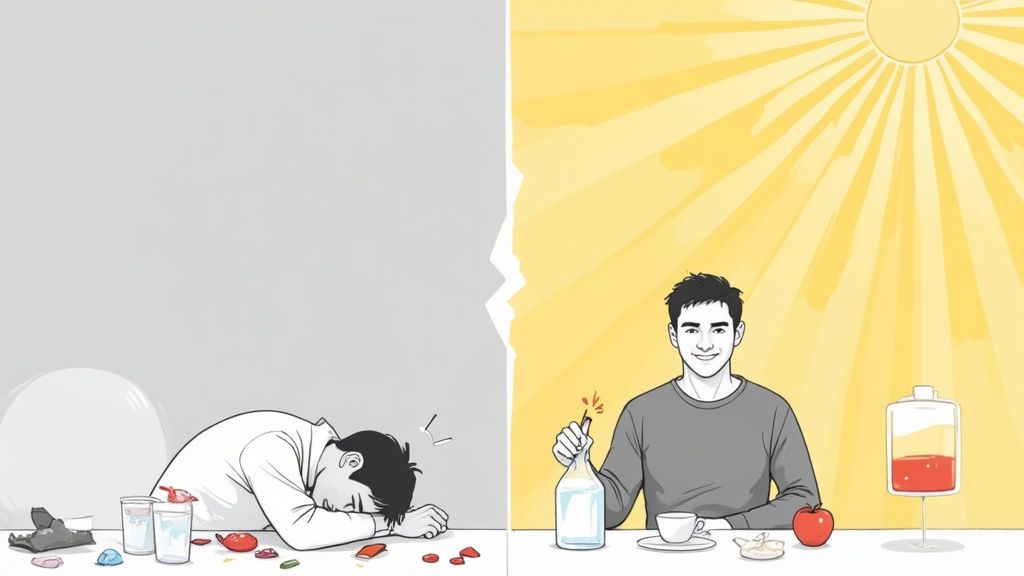
Does this sound familiar? It’s 3 p.m., your focus is shot, and you find yourself rummaging through the pantry for a cookie or a soda just to make it through the rest of the day. That cycle—a fleeting burst of energy followed by a hard crash—isn't just a normal part of life. It’s a direct result of a diet overloaded with added sugars.
Reclaiming Your Natural Energy
Those constant cravings and the dreaded afternoon slump are really just symptoms. In this guide, we’ll get to the root of the problem and explore the incredible benefits of cutting back on sugar. We'll skip the empty promises and show you exactly how reducing your intake affects your energy, your weight, and your overall sense of well-being.
Think of this less as a restrictive "diet" and more as a lifestyle upgrade. It’s about giving your body the high-quality fuel it actually craves, which leads to sharper focus, more stable moods, and a feeling of vitality you might have forgotten was possible.
A Practical Path to Success
Let’s be clear: this isn't about going cold turkey and vowing to never eat anything sweet again. That approach usually backfires. Instead, we’re focused on making smart, gradual changes that stick. You'll learn how to spot hidden sugars, discover delicious alternatives, and handle social events without feeling like you're missing out.
Here’s a quick look at what we'll cover:
- Understanding Sugar's Real Impact: We'll break down how it hijacks your body's energy regulation and metabolism.
- The Health Wins You Can Expect: From easier weight management to clearer skin, we'll detail the tangible benefits.
- Your Personal Action Plan: We’ll give you simple, practical steps to cut down on sugar without feeling overwhelmed.
To help you on your way, we'll also introduce you to smart tools like the StopSugar app. With features like daily check-ins and a "panic button" for intense cravings, it acts as a supportive partner in your pocket, helping you build a healthier, more vibrant life one day at a time.
How Sugar Really Affects Your Body
Ever grab a donut or a can of soda for a quick pick-me-up? You get a powerful jolt of energy almost immediately. It feels good, but it's a bit like taking out a high-interest loan. You get the cash (the energy) right away, but the payback is brutal.
That quick surge is the start of the "blood sugar rollercoaster." As sugar floods your system, your body releases a wave of insulin to deal with it. This hormone rushes the sugar out of your blood and into your cells, causing your energy levels to plummet just as fast as they rose. This is the dreaded sugar crash—that foggy, irritable feeling that has you reaching for another sugary fix just to feel normal again.
This up-and-down cycle does more than just wreck your mood and productivity. Over time, it tells your body to store that excess energy as fat, often right around your waist.
Not All Sugars Are the Same
It’s crucial to know that the sugar in an apple is a completely different story from the sugar spooned into your coffee.
- Natural Sugars: Think of the sugar in whole fruits and vegetables. It comes bundled with fiber, water, and other nutrients. That fiber acts like a brake, slowing down how quickly the sugar hits your bloodstream. The result is a steady, gentle release of energy, not a jarring spike.
- Free Sugars: These are the sugars added to foods during processing (like sucrose or high-fructose corn syrup) and the sugars in honey, syrups, and fruit juices. Because they don't have fiber to slow them down, your body absorbs them almost instantly. This is what triggers those sharp insulin spikes and sends you on that rollercoaster.
One of the biggest long-term problems with a high-sugar diet is chronic inflammation. Those constant blood sugar spikes can create a state of low-grade inflammation all over your body, which is a known contributor to many serious health issues.
Understanding Insulin's Role
Insulin is the key player here. Its job is to unlock your cells so they can absorb sugar from your blood for energy. But when you constantly bombard your body with free sugars, your cells can start to ignore insulin's signal. This is called insulin resistance.
You can learn more in our guide on what causes insulin spikes and how they throw your metabolism out of whack.
When your cells become resistant, your pancreas has to work overtime, pumping out more and more insulin just to get the job done. This vicious cycle not only leads to weight gain but is a major step on the path to type 2 diabetes. Understanding this process is the first real step toward appreciating what a sugar-free life can do for you. It’s about finally getting off the rollercoaster and letting your body find its natural balance again.
The Tangible Health Wins of Cutting Sugar
Knowing how sugar works in your body is one thing, but the real game-changer is seeing the health improvements for yourself. Going sugar-free isn't just about deprivation; it's about what you gain. Better health, consistent energy, and a genuine sense of well-being are all on the table.
One of the first things people notice is more sustainable weight management. It's not just about cutting empty calories, though that helps. Kicking added sugar helps re-tune the hormones that manage hunger, like ghrelin and leptin. This makes you feel full and satisfied, cutting down those constant cravings and making it easier to manage your weight without a fight.
Boosting Your Metabolic Health
Beyond the scale, slashing your sugar intake gives your metabolic health a major upgrade. Your metabolism is like your body's engine, and a high-sugar diet really gums up the works. When you cut back, you're giving that engine a much-needed tune-up.
This simple shift has a direct impact on your risk for several serious health problems:
- Reduced Risk of Type 2 Diabetes: When you stop the blood sugar rollercoaster, you give your pancreas a break. This helps prevent or even reverse insulin resistance, the root cause of type 2 diabetes.
- Lower Blood Pressure: Too much sugar is directly linked to higher blood pressure, which is a huge risk factor for heart disease. A low-sugar lifestyle is a great way to support a healthier heart.
- Decreased Systemic Inflammation: Chronic, low-grade inflammation is the quiet culprit behind many modern diseases. Cutting out sugar is one of the most powerful ways to put out that internal fire.
This is the classic sugar cycle we've all felt: the quick high followed by the hard crash. It’s a vicious loop that leaves you tired and reaching for another fix.
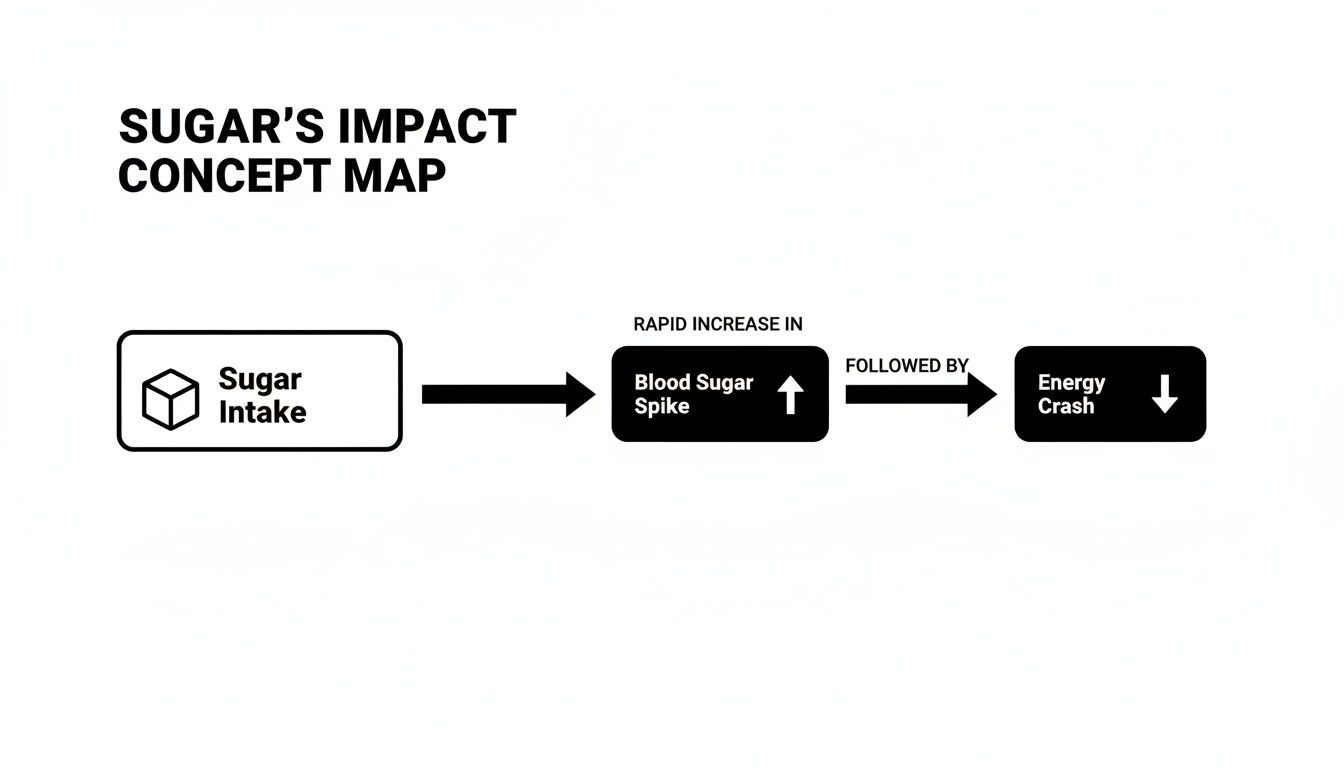
Relying on sugar for energy just doesn't work long-term. It's a cycle that guarantees you'll feel drained.
More Than Just Weight and Metabolism
The positive changes don't stop there—many of them are things you can see and feel every single day. For example, many people report getting clearer, more radiant skin once they cut back. High sugar intake can trigger inflammation and oil production that leads to breakouts.
Your dentist will thank you, too. Sugar is the favorite food for the bad bacteria in your mouth that cause cavities and gum disease. When you take away their fuel source, you dramatically improve your dental health.
To see these benefits in one place, here's a quick summary of how key health markers improve when you reduce your sugar intake.
Health Improvements from a Low-Sugar Diet
| Health Marker | Impact of High-Sugar Diet | Benefit of a Sugar-Free Diet |
|---|---|---|
| Weight | Encourages fat storage and hormonal imbalances leading to weight gain. | Promotes stable weight by reducing empty calories and balancing hunger hormones. |
| Blood Sugar | Causes sharp spikes and crashes, leading to insulin resistance over time. | Stabilizes blood sugar levels, reducing the risk of Type 2 Diabetes. |
| Heart Health | Linked to higher blood pressure, inflammation, and unhealthy cholesterol levels. | Supports lower blood pressure and better cardiovascular function. |
| Inflammation | Promotes chronic, low-grade inflammation throughout the body. | Significantly reduces systemic inflammation, lowering disease risk. |
| Skin Health | Can trigger acne, premature aging, and other inflammatory skin conditions. | Leads to clearer skin by reducing inflammation and hormonal triggers. |
| Dental Health | Feeds harmful bacteria that cause cavities and gum disease. | Starves decay-causing bacteria, resulting in fewer cavities and healthier gums. |
These aren't just minor tweaks; they represent a fundamental shift toward better long-term health, all from one simple change.
The global consensus on this is crystal clear. Study after study confirms that cutting free sugars is directly tied to a lower body weight, while adding more sugar leads to weight gain. This isn't just a wellness trend; it's a solid scientific fact.
This evidence is so strong that the World Health Organization (WHO) officially recommends that free sugars make up less than 10% of your total daily calories. They point to the overwhelming proof that less sugar means a healthier weight.
And just like cutting sugar, embracing other simple habits that offer health benefits, like drinking enough water, creates a domino effect. Each smart choice builds on the last, creating powerful momentum for a healthier you.
Your Action Plan for Going Sugar Free
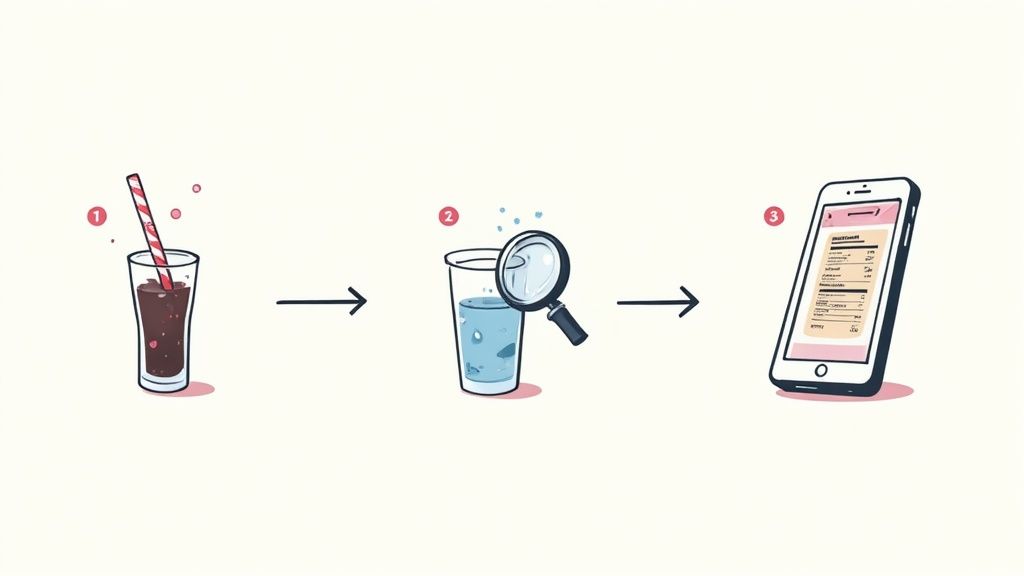
Knowing why you should cut sugar is one thing, but knowing how is where the real work begins. The good news is you don’t need a dramatic, overnight overhaul to succeed. The secret to a lasting sugar-free lifestyle is building small, sustainable habits that add up to massive results over time.
Think progress, not perfection. After all, you’re rewriting years of habits, and that’s a process that deserves patience. Let’s map out a simple, real-world plan, starting with the single biggest change you can make.
Start With Sugary Drinks
If you’re looking for the easiest, fastest win on this journey, this is it: eliminate liquid sugar. Sodas, sweetened iced teas, sports drinks, and those fancy coffee-shop creations are packed with “free sugars” that provide zero nutritional benefit. They are a primary culprit behind that blood sugar rollercoaster we talked about earlier.
When you swap these out for better options, you immediately slash your daily sugar intake and help get your energy levels back on an even keel.
- Water: The absolute best for hydration. Toss in some lemon, mint, or cucumber slices if you want a little flavor.
- Unsweetened Tea or Coffee: Enjoy them black or with just a splash of milk or unsweetened creamer.
- Sparkling Water: Craving that fizzy kick? This is your go-to, without any of the sugar.
Making this one change can give you a huge confidence boost and build the momentum you need to keep going.
Become a Label Detective
Once you've got the drinks handled, it's time to put on your detective hat and tackle the nutrition label. Food manufacturers have become masters of disguise, hiding sugar under dozens of different names to make it harder to spot.
Don't just scan for the word "sugar." Look for its many aliases. Anything ending in "-ose" (like dextrose, fructose, or maltose) is a dead giveaway. Also, watch out for terms like corn syrup, agave nectar, and cane juice.
The ingredients list is your most powerful tool. Ingredients are listed by weight, so if a type of sugar is one of the first three items, you can bet that product is a sugar bomb. Learning to spot these hidden sources is a critical skill for making this lifestyle stick.
Find Your Favorite Swaps
Going sugar-free doesn't mean your food has to be boring. The whole point is to find delicious, satisfying alternatives so you don't feel like you're missing out. Start experimenting to see what you enjoy in your coffee, baking, or cooking.
Popular Sugar Alternatives:
- Stevia: A plant-based, zero-calorie sweetener that's much sweeter than regular sugar, so a little goes a long way.
- Monk Fruit: Another natural, zero-calorie option that won't mess with your blood sugar.
- Erythritol: A type of sugar alcohol with almost no calories that’s typically easy on the digestive system.
Keeping these in your pantry makes it much easier to handle a craving when it strikes. This is where the StopSugar app can be a huge help, with its "Alternatives Suggestions" feature giving you healthy swaps on the go. For a deeper dive, check out our article on how to start a sugar free diet for even more tips and strategies.
How StopSugar Makes Your Journey Easier
Knowing why you should quit sugar is one thing, but actually doing it is a whole different ball game. When cravings hit hard and old habits creep back in, the journey can feel pretty lonely. That's where having a partner in your corner makes all the difference. We designed the StopSugar app to be that partner—your personal guide to success, right in your pocket.
You don't have to go it alone. The app tackles the biggest challenges head-on with simple, practical tools that give you support exactly when you need it. It’s all about turning the big, scary goal of quitting sugar into small, manageable daily actions.
Build Consistency with Daily Check-Ins
Real change doesn't happen overnight. It’s built on small, consistent steps, day after day. Our Daily Check-ins feature is your secret weapon for building accountability and self-awareness.
Every day, you just take a moment to log how you're doing and track your mood. This simple ritual helps you connect the dots between your choices and how you feel, celebrate the small victories, and keep your eye on the prize. It’s a powerful way to see your progress in real-time, reinforcing the very changes you’re working so hard to make.
Building a new habit is like carving a new path in a forest. At first, it takes effort to push through the undergrowth. But with each pass, the path becomes clearer and easier to follow. Daily check-ins are like walking that path every single day.
Navigate Cravings with Smart Support
Let's be real: intense sugar cravings can feel like a tidal wave, ready to knock you off your feet. That’s why we created the Panic Button.
When you feel a craving about to take over, one tap gives you immediate help. It might be a quick distraction, a motivational boost, or a simple breathing exercise to help you ride out the wave until it passes.
And for those moments at the grocery store or a coffee shop, the Alternatives Suggestions feature is your pocket guide to smart swaps. It’ll give you ideas for delicious, low-sugar options, like using stevia or monk fruit, so you never have to feel like you're missing out.
A Glimpse into the Future: Your AI Coach
We're always looking for new ways to make this journey smoother for you. Coming soon, StopSugar will feature an AI Coach that offers personalized guidance based on your own unique progress and patterns.
Imagine a coach that learns your personal craving triggers and gives you proactive strategies to stay ahead of them. It's the next step in making your transition to a healthier, sugar-free life not just possible, but sustainable.
Common Questions on the Sugar-Free Lifestyle
Starting any new way of eating brings up a lot of questions, and going sugar-free is no exception. It’s totally normal to wonder about things like cravings, whether you have to say goodbye to fruit forever, or if this is something you can actually stick with long-term.
Let's clear the air and tackle some of the most common concerns. Getting these answers upfront can turn what feel like huge roadblocks into small, manageable steps on your path to better health.
Do I Have to Give Up Fruit?
This is probably the biggest myth out there, and I’m happy to bust it. No, you do not need to avoid whole fruits. The natural sugar in an apple or a handful of berries is completely different from the refined stuff. It comes bundled with fiber, water, vitamins, and minerals.
That fiber is the key—it slows everything down, preventing the crazy blood sugar spikes you get from “free sugars” found in candy, soda, and processed snacks. So please, enjoy your fruit! It’s nature’s candy and a fantastic way to satisfy a sweet tooth.
What About Sugar Withdrawals?
Let’s be real: sugar withdrawals are a thing. But the good news is, they don’t last forever. As your body adjusts to a new normal without constant sugar hits, you might feel a bit off for a few days—think headaches, irritability, or some pretty intense cravings. It’s just your body recalibrating.
This adjustment period is actually a sign that your body is starting to heal. Getting through this initial phase is often the toughest part, but it’s where the real, lasting benefits of a sugar-free life begin to take shape.
Knowing what to expect makes it all feel much less daunting. We’ve actually put together a full guide on what to do when you're dealing with sugar withdrawal symptoms to help you get through it smoothly.
Will I Ever Be Able to Eat Dessert Again?
Of course! Going sugar-free isn't about a lifetime of deprivation. It's about getting smarter with your choices. You’ll soon discover an entire world of incredible desserts made with natural, zero-calorie sweeteners like stevia, monk fruit, and erythritol that won't send your blood sugar on a rollercoaster.
You can learn to bake your favorite treats with these swaps or find some fantastic sugar-free options at the grocery store. The key is to shift your thinking from, "I can't have that," to, "How can I make a healthier version?" For more great ideas and success stories, check out xlr8well's Blog.
Is a Sugar-Free Diet Safe for Everyone?
For the vast majority of people, cutting back on added sugar is one of the best things you can do for your health. The science on this is pretty clear. A fascinating study looked at sugar rationing in the UK during WWII and found that people exposed to lower sugar intake early in life had a 35% lower risk of type 2 diabetes and a 20% lower risk of high blood pressure as adults. You can discover more insights about these health findings on Science.org.
That said, if you have a specific medical condition like diabetes or if you’re pregnant, it’s always a good idea to chat with your doctor or a registered dietitian first. They can help you build a plan that’s safe and tailored just for you.