The Food Mood Connection Explained
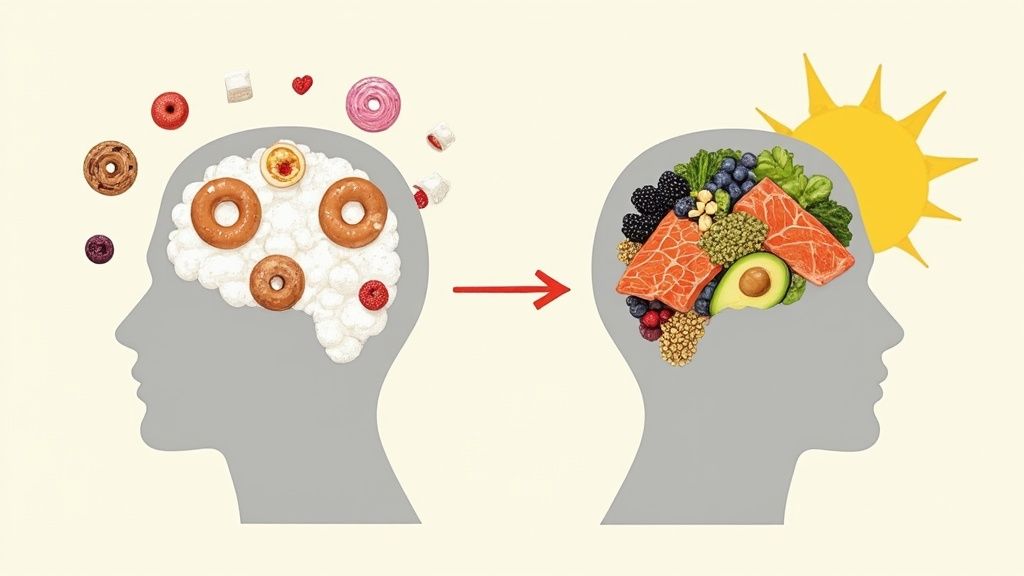
Ever had that moment where you feel cranky, tired, and just... off after a sugary lunch, and you can't figure out why? That's the food-mood connection hitting you in real-time. It’s not just in your head; it’s a direct biochemical conversation happening between your gut and your brain. The food you just ate is sending all the messages.
How What You Eat Actually Changes How You Feel
Think of your brain like a high-performance car. When you fill it with processed, sugary foods, it's like putting cheap, low-grade gas in the tank. It’s going to sputter, stall, and run poorly. But when you give it the right fuel—whole, nutrient-dense foods—it purrs along smoothly, keeping your energy steady and your emotions on an even keel.
This isn't just a nice metaphor; it's straight-up biology. The nutrients you get from food are the literal building blocks for neurotransmitters. These are the chemical messengers that control everything from your sense of happiness and motivation to how you handle stress.
The Brain-Building Blocks on Your Plate
Every time you eat, you have a chance to give your brain the raw materials it needs to create a positive mental state. Certain nutrients are absolute superstars here:
- Amino Acids from Protein: Think of tryptophan, found in foods like turkey and eggs. It's the precursor to serotonin, which you probably know as the "feel-good" neurotransmitter.
- Healthy Fats: Omega-3s, which are packed into foods like salmon and walnuts, are essential for building healthy brain cells. They also help reduce inflammation, a major factor linked to mood disorders.
- Complex Carbohydrates: Fiber-rich foods like oats and beans are your best friends for stable energy. They slow down how quickly sugar hits your bloodstream, which prevents those awful spikes and crashes that leave you feeling irritable and exhausted.
The science is crystal clear: what you eat directly impacts your brain's chemistry. A diet full of whole foods creates the perfect internal environment for a stable mood and sharp thinking.
Study after study backs this up. Research shows that people who eat more fruits and vegetables have a significantly lower risk of depression. In fact, one analysis found a preference for fruit was linked to a 21% reduced depression risk, while a preference for snacks increased the risk by a staggering 28%. You can dig into the fascinating details in the full study.
That sharp contrast really drives home how much your daily choices matter for your long-term mental health. A great first step is understanding how blood sugar affects mood swings.
Why Sugar Is the Biggest Threat to Your Mood
When it comes to the delicate link between food and mood, one ingredient stands out as the main culprit: sugar.
Eating refined carbs and sugary treats sends your body on a wild physiological ride that directly messes with your emotions and energy. It’s a vicious cycle that so many of us are stuck in without ever pinpointing the real cause.
It all starts with that tempting but temporary "high." After you have a sugary snack, glucose floods your bloodstream. You get a quick burst of energy and maybe even a moment of pleasure. But that feeling is just the setup for the inevitable crash. Your body, sensing the sugar overload, releases a rush of insulin to get all that glucose out of your blood fast.
The Inevitable Energy Crash
This rapid insulin response works a little too well. It often causes your blood sugar to plummet, a state known as reactive hypoglycemia. And that "crash" is where the emotional trouble really begins.
Suddenly, you might feel irritable, anxious, shaky, or just mentally foggy. The physical feelings from this sudden drop can even feel like an anxiety attack, leaving you overwhelmed and not quite like yourself.
This infographic shows just how direct the path is from your plate to your brain.
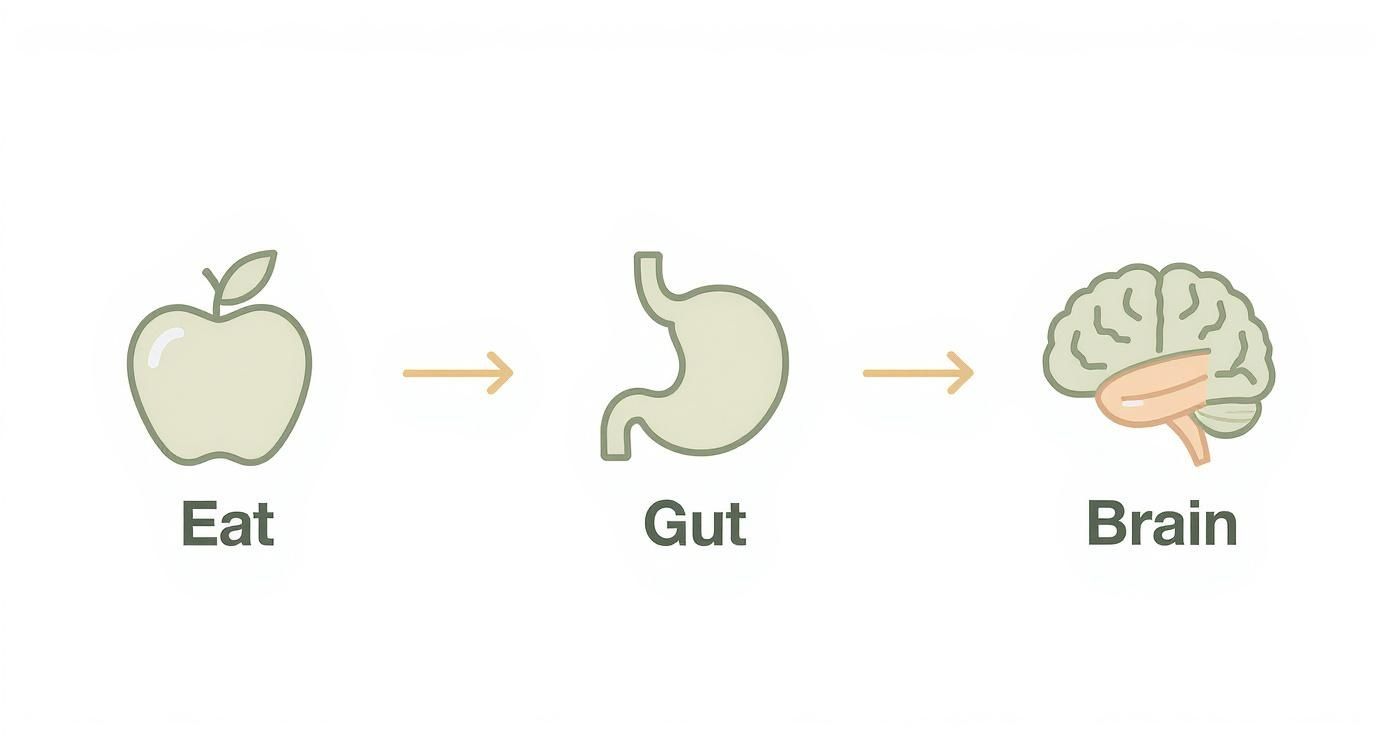
As you can see, the journey from your gut to your head is incredibly fast, showing how what you eat almost immediately starts to affect how you feel.
More Than Just a Crash
It’s not just about the short-term rollercoaster, either. A diet high in sugar fuels chronic inflammation throughout your body and brain. This kind of persistent, low-grade inflammation is increasingly being connected to long-term mood disorders, including depression. It gets in the way of producing crucial feel-good brain chemicals like serotonin and dopamine, which we need to feel happy and motivated.
The research linking high sugar intake to poor mental health is hard to ignore. Studies have found a clear connection between drinking sugar-sweetened beverages and a rise in anxiety and depression symptoms in teens. And with around 73% of the U.S. food supply made up of ultra-processed foods packed with added sugars, this is a massive problem affecting millions.
Over time, a high-sugar diet doesn't just cause temporary mood swings; it creates an internal environment where long-term mood disorders are more likely to develop and thrive.
Understanding this cycle is the first real step toward breaking free from it. Once you see how that donut or soda leads directly to an emotional low, you can start making more intentional choices. To get a better handle on the mechanics, check out our guide on what causes insulin spikes. Arming yourself with this knowledge is how you start building a way of eating that supports a stable, positive mood.
Building Your Mood-Boosting Plate
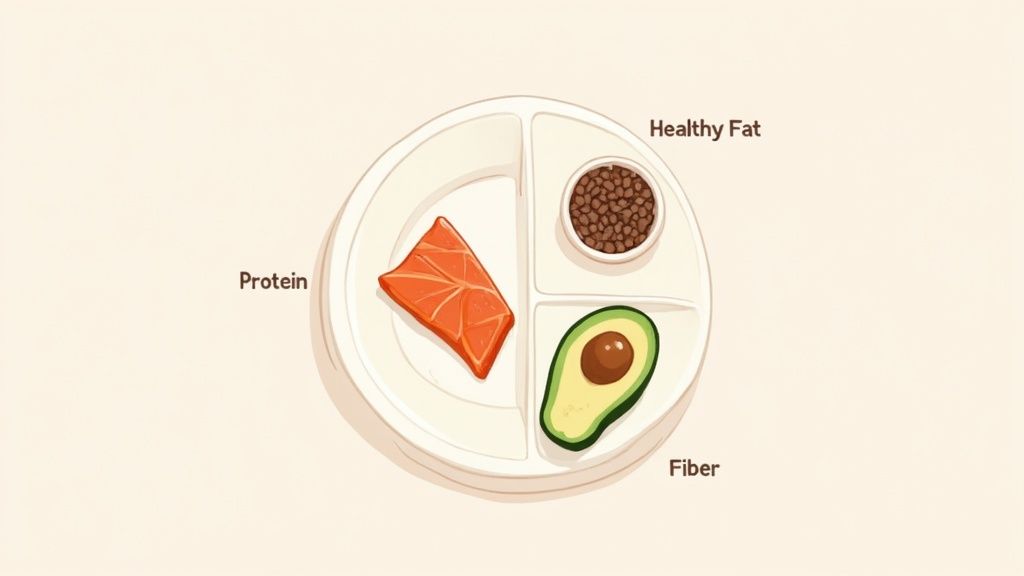
Okay, so we know what the problem is. Now for the good part: what to do about it. The best way to fight back against the mood swings caused by sugar and processed junk is to have a simple game plan for every meal.
Think of it as your nutritional toolkit for a happier, more stable mind.
At the heart of every mood-stabilizing meal are three key players: clean protein, healthy fats, and high-fiber carbohydrates. When you bring these three together on your plate, you create a powerful defense against blood sugar spikes and the dreaded energy crash that follows. It's the most reliable way to give your brain the steady fuel it needs to keep you feeling good.
The Power of Protein
Protein does more than build muscle—it’s absolutely critical for your brain chemistry. It's made up of amino acids, which are the raw materials your body uses to create mood-lifting neurotransmitters like serotonin and dopamine.
Adding a solid source of protein to your meals also helps you feel full and satisfied. This is huge for shutting down those nagging cravings that so often lead us right back to the sugary snacks we’re trying to avoid.
Fueling with Healthy Fats
For years, fat was the bad guy. We now know that was a huge mistake. Healthy fats are non-negotiable for brain health. In fact, your brain is nearly 60% fat! It needs a constant supply of good fats, especially omega-3s, to work properly.
These fats are amazing at fighting inflammation—a major trigger for mood issues—and they literally help build and maintain the structure of your brain cells. Think of them as essential maintenance for your mind.
The Fiber Advantage
Last but not least, we have high-fiber carbs. These are your secret weapon for getting off the energy rollercoaster for good.
Unlike a sugary donut that sends a tidal wave of glucose into your bloodstream, fiber slows everything down. It ensures sugar is absorbed gradually, giving you a smooth, steady stream of energy. No more dramatic highs followed by those awful crashes that leave you feeling cranky, tired, and unfocused.
A plate balanced with protein, fat, and fiber is your best defense against mood swings. It’s a simple formula for keeping your blood sugar stable and your mind clear all day long.
Let's break down exactly how to put this into practice. The table below shows how each component works and gives you plenty of great food ideas to get started.
Building Your Mood-Stable Plate
| Component | Role in Mood Stability | Excellent Food Sources |
|---|---|---|
| Clean Protein | Provides amino acids to build neurotransmitters like serotonin and dopamine, promoting feelings of well-being and satisfaction. | Chicken breast, turkey, salmon, eggs, lentils, chickpeas, tofu, Greek yogurt. |
| Healthy Fats | Crucial for brain structure (the brain is 60% fat). Omega-3s reduce inflammation, a known contributor to mood disorders. | Avocado, olive oil, walnuts, almonds, chia seeds, flax seeds. |
| High-Fiber Carbs | Slows sugar absorption into the bloodstream, preventing energy spikes and crashes that lead to irritability and fatigue. | Berries, leafy greens (spinach, kale), broccoli, sweet potatoes, quinoa, oats. |
This isn't just about "eating healthy"—it's about actively fueling your brain for a better mood. By making this balanced plate your default, you turn every meal into an opportunity to feel your best.
Want to explore more specific food ideas? Check out our complete guide on foods that stabilize blood sugar.
Actionable Swaps to Beat Cravings
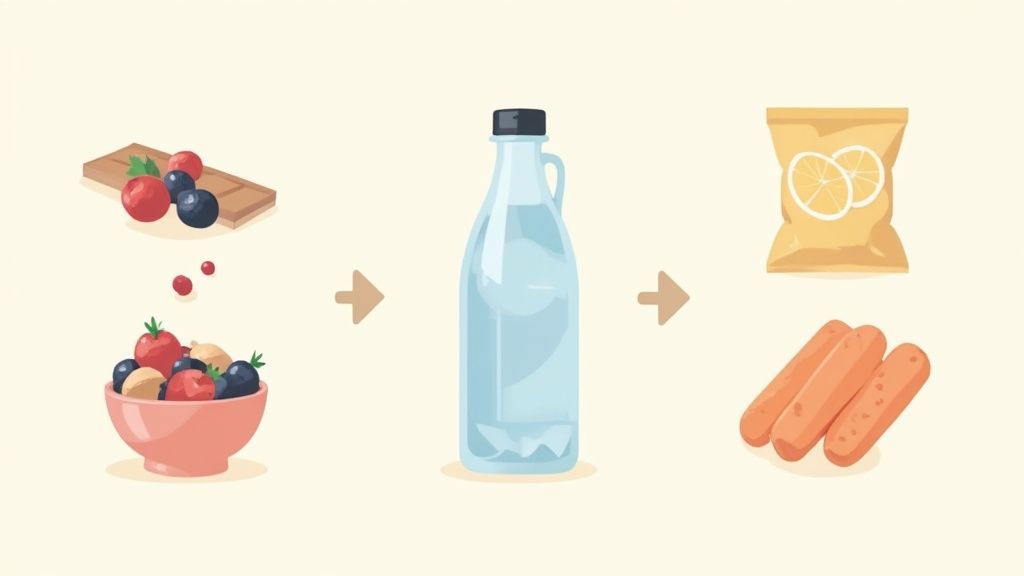
Knowing you need a balanced meal is one thing. Actually sticking to that plan when a massive craving hits? That’s a whole different ball game. Those urges can feel completely overwhelming, but they aren't just random attacks. They're usually your body’s response to a physical need or an emotional trigger, and you can absolutely learn to get ahead of them.
One of the biggest culprits behind a desperate need for sugar is a classic blood sugar dip. When your energy plummets, your brain screams for the fastest fuel it knows—and that’s sugar. It’s a core part of the food-mood connection. Other times, the craving is pure habit. You feel stressed, you reach for a cookie. Simple as that.
Smart Swaps for Common Cravings
The trick to beating cravings has little to do with willpower and everything to do with strategy. Instead of gritting your teeth and trying to ignore the urge, give your body something better that won't kick off that blood sugar rollercoaster.
Here are a few simple, satisfying swaps to get you started:
- Craving a Candy Bar? Grab a small handful of almonds and a few dark chocolate chips. You get protein and healthy fat from the nuts to level out your energy, plus the rich taste of chocolate with way less sugar.
- Need Something Salty and Crunchy? Ditch the potato chips for air-popped popcorn, roasted chickpeas, or seaweed snacks. They all deliver that satisfying crunch you're looking for but with a bonus of fiber and nutrients.
- Want Ice Cream? Try blending a frozen banana with a little unsweetened almond milk and a spoonful of cocoa powder. You end up with a creamy, sweet "nice cream" that's full of potassium and fiber.
Making these small changes consistently does something amazing—it starts to retrain your taste buds and breaks that exhausting cycle of craving and crashing. Before you know it, you’ll find yourself naturally reaching for these healthier options.
Beyond the Swaps: Mindful Strategies
On top of having smart swaps ready, a few simple habits can help stop intense cravings before they even start. First, stay hydrated. It's incredibly common to mistake thirst for hunger. Just sipping water throughout the day can make a huge difference.
Understanding the why behind your craving is half the battle. Are you truly hungry, or are you tired, stressed, or dehydrated? A moment of mindfulness can provide the answer and empower you to address the real need.
Meal timing is also a game-changer. Don't wait until you're absolutely starving to eat. That’s when you’re most likely to grab the fastest, most processed thing you can find. Eating balanced meals every 3-4 hours keeps your blood sugar steady, which in turn keeps your mood stable and your cravings in check.
Your Diet and Long-Term Mental Wellness
The connection between what you eat and how you feel goes way beyond a temporary sugar rush or a mid-afternoon slump. Think of your diet as a long-term investment in your mental resilience. One greasy meal won't ruin everything, but the cumulative effect of your food choices over months and years literally builds the foundation for your mental health.
It's a bit like building a house. Every meal is a brick. If you consistently use strong, nutrient-packed bricks—whole foods—you build a solid, stable structure. But a diet heavy on ultra-processed foods, refined sugars, and bad fats is like using cheap, crumbly bricks. Over time, that structure becomes weak and much more vulnerable to stress.
The Science of Dietary Patterns
A growing mountain of research shows a powerful link between what we eat over the long haul and our mental health. Diets built around whole foods consistently correlate with a lower risk of depression, while diets high in processed, inflammatory foods do the exact opposite.
This isn't just a coincidence; it's basic biochemistry at work.
Whole foods deliver the vitamins, minerals, antioxidants, and healthy fats your body needs to fight chronic inflammation—a known driver of mood disorders. On the flip side, processed foods often fuel inflammation, creating a constant, low-grade stress on your brain and body that wears down your mental defenses. Even things like food storage can matter; using safe containers like BPA-free plastic is a small but meaningful part of a health-conscious lifestyle.
What’s on your plate isn't just about managing your mood today. It's one of the most powerful and controllable tools you have for protecting your brain and nurturing your mental wellness for life. Every healthy choice strengthens that shield.
The evidence is pretty convincing. One huge study tracked over 10,000 students and discovered that those who stuck to a Mediterranean-style diet—lots of fruits, veggies, fish, and olive oil—had a stunning 42% reduced risk of developing depression. At the same time, other long-term studies have confirmed that diets high in inflammatory foods significantly increase the risk of depression. You can dive deeper into these findings on dietary patterns and mental health.
The message is clear: consistent, mindful eating isn't just a diet, it's a proactive strategy for taking care of your mental health for years to come.
Using StopSugar to Support Your Journey
Knowing you need to change your diet is one thing. Actually doing it, day after day, is a whole different ball game. It’s tough to go it alone, and turning all this new information into real-world habits is where most people get stuck.
This is where having a tool like the StopSugar app can make a huge difference. It's designed to be a partner in your pocket, helping you build a stronger food-mood connection with every meal. The app tackles the common roadblocks head-on, giving you practical features to help you stay in control.
Track Your Progress in Real Time
Seeing is believing, right? The most powerful way to understand how food affects you is to spot the patterns for yourself. Think of StopSugar's food and mood tracker as your personal detective.
- Uncover Hidden Sugars: Log what you eat and you'll quickly discover where sugar is hiding, often in the most unexpected places.
- Connect the Dots: After a meal, take a second to log how you're feeling. You'll start to see a clear, undeniable line between that 3 p.m. donut and the energy slump and crankiness that followed.
This kind of immediate feedback is a game-changer. It takes the science we've been talking about and makes it personal, showing you exactly how your choices are affecting you in real time.
The app doesn’t just give you a rulebook to follow. It shows you the results of your own actions, giving you the proof you need to stay motivated and build momentum.
Find Inspiration and Eliminate Guesswork
We’ve all been there—staring into the fridge, wondering, "What on earth am I supposed to eat now?" That single question can derail the best of intentions.
StopSugar takes the guesswork out of the equation with a library of delicious, mood-stabilizing recipes right in the app. You can stop stressing over meal plans and just start enjoying food that genuinely makes you feel great. It’s a simple way to build a new, nourishing routine that feels less like a chore and more like a path to feeling your best.
Got Questions About Food and Mood? We Have Answers.
It's one thing to understand the science, but it’s another to put it into practice. As you start paying more attention to how food affects your mood, a lot of real-world questions pop up. Let's tackle some of the most common ones.
How Long Until I Actually Feel a Difference?
This is probably the number one question, and the answer is layered. You'll likely notice a more stable, even-keeled energy within just a few days of cutting back on sugar and processed foods. That mid-afternoon slump might just disappear.
But for the deeper, more profound shifts in your mood, give it about two to three weeks. That’s the time it takes for your body and brain chemistry to really adjust and find their new normal. Think of it as a recalibration period. The key here is consistency, not perfection. Small, steady changes are what get you there.
Does This Mean I Can Never Eat My Favorite Treats Again?
Absolutely not. Let's be realistic—the goal isn't a rigid, joyless diet. It's about creating a lifestyle that feels good and is genuinely sustainable. A great way to think about it is the 80/20 approach.
If you're making nutrient-rich, mood-stabilizing choices 80% of the time, that leaves plenty of room for you to mindfully enjoy a favorite treat the other 20%. This balance is crucial. It lets you have that piece of birthday cake without feeling like you've failed or spiraling into guilt.
The most effective approach isn't about total elimination; it's about shifting the balance. Prioritizing nutrient-dense foods most of the time creates a strong foundation that isn't undone by an occasional indulgence.
I'm Overwhelmed. What's the Single Most Important First Step?
If you want to make one change that delivers the biggest and fastest results, look at what you’re drinking. The most powerful first step is to reduce or eliminate sugary beverages.
Sodas, sweetened coffee drinks, and even fruit juices are loaded with sugar that sends your blood glucose on a wild rollercoaster—and your mood right along with it. Swapping these for water, unsweetened herbal tea, or sparkling water can do more to stabilize your blood sugar than almost anything else. Start here. You’ll be amazed at how much better you feel, and how quickly.