Your Ultimate Fruit Chart Sugar Guide for Healthy Eating
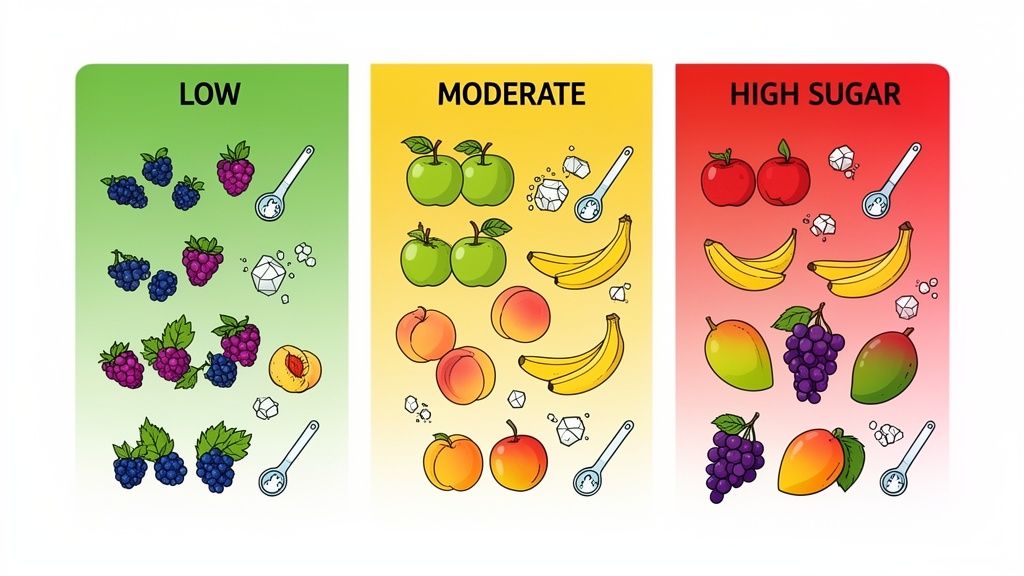
You've probably heard that some fruits are packed with sugar while others, like berries, are a safer bet. But which is which? Our fruit chart for sugar breaks it all down, showing you exactly how much sugar is in your favorite fruits so you can make smarter choices for your health.
Why Sugar in Fruit Isn't the Enemy
It’s easy to lump all sugars together, but the sugar in fruit is a completely different story. Unlike the refined sugar you find in processed foods, the natural sugar in an apple or a handful of berries comes with a team of helpers: fiber, vitamins, and water.
This natural packaging slows everything down. Your body absorbs the sugar more gradually, which helps you avoid the sharp blood sugar spikes and crashes that come from sweets without fiber.
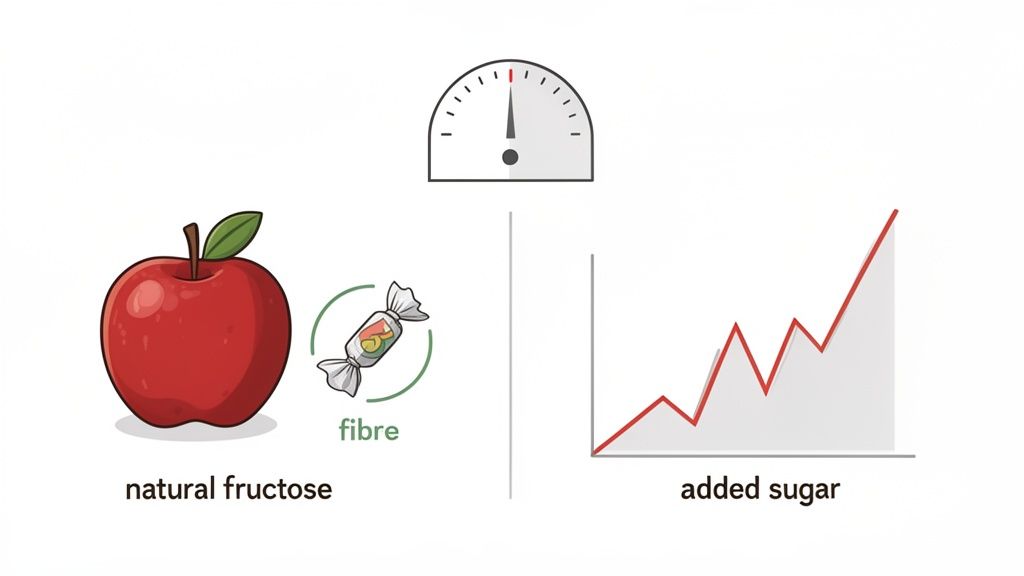
Grasping this difference is key to using our fruit sugar chart effectively. It’s not just about the total grams of sugar. If you want to dive deeper, our guide on the difference between glucose and fructose is a great place to start.
How to Read the Chart: Key Terms to Know
Before you jump into the numbers, let's quickly go over a few terms that will help you understand the real impact of fruit on your blood sugar.
- Fructose: This is simply the main type of natural sugar you'll find in most fruits.
- Glycemic Index (GI): Think of this as a speed rating. It’s a 0-100 scale that tells you how quickly a food raises your blood glucose.
- Glycemic Load (GL): This one is even more useful. It takes the GI and factors in a typical serving size, giving you a much more practical idea of a food's actual effect.
Of course, managing sugar isn't just about what you eat, but also what you drink. If you're looking for low-sugar beverage options, you might find some good tips in these guides on zero sugar seltzers.
How to Make the Most of This Fruit Sugar Chart
Think of this chart as your go-to reference for making smarter fruit choices. We've laid everything out so you can find what you need at a glance, helping you compare fruits quickly and easily.
You can scan the list for any fruit you're curious about. For each one, you'll find a typical serving size, the total sugar in grams, and its estimated Glycemic Index (GI). This setup lets you make a fair, apples-to-apples (and oranges!) comparison.
A Quick Example: The Humble Apple
Let's walk through how to use the chart with a classic fruit, the apple.
- Find "Apple" on the list: Look down the first column and you'll find it right away. The serving size is listed as one medium apple.
- Check the sugar content: The next column shows you exactly how much sugar you're getting. This is the number you'll want to log in the StopSugar app to stay on track with your daily goals.
- Note the Glycemic Index: This tells you how fast that apple is likely to affect your blood sugar levels.
- Glance at the "Smart Tips & Swaps": Here's where you get practical advice. For an apple, we might suggest pairing it with a handful of almonds to slow down sugar absorption or swapping it for a handful of berries if you need a lower-sugar option.
The Complete Fruit Chart for Sugar Content
Figuring out the sugar in fruit doesn't need to be a puzzle. I've put together this comprehensive chart to be your go-to reference, breaking down popular fruits by how much sugar they really contain. To make it easy, I’ve sorted everything into simple categories—Low, Moderate, and High Sugar—so you can quickly find what works for your health goals.
For each fruit, you'll see a standard serving size, the total sugar in grams, and its Glycemic Index (GI), which is a handy measure of how fast it might affect your blood sugar. I've also included a "Smart Tip" for every fruit with practical advice to help you enjoy nature's sweetness in a balanced way. Whether you're logging your meals in the StopSugar app or just trying to make a better choice on the fly, this guide has you covered.
This quick visual gives you a sense of how serving sizes and sugar content compare for a few common fruits.
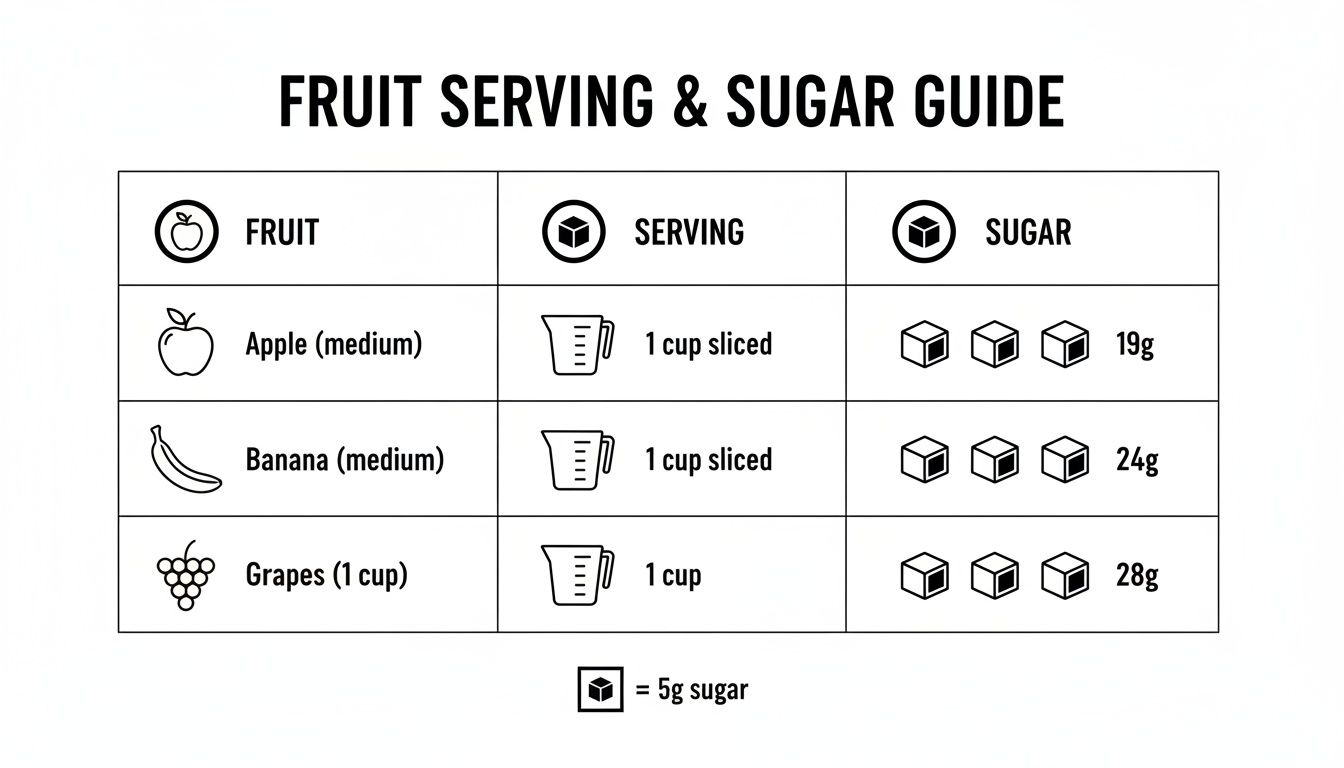
As you can see, the portion size makes all the difference. That's why being mindful of how much you eat is so important.
Fruit Sugar and Glycemic Index Reference Chart
Below is a detailed list of common fruits, organized by sugar content. Use it to make informed choices that align with your health and wellness goals. Remember, context is key—pairing fruit with protein or fat can help stabilize its impact on your blood sugar.
Low Sugar Fruits
These are your best friends when you want to keep sugar intake to a minimum. They're typically loaded with fiber and water, which helps you feel full and keeps blood sugar levels more stable.
| Fruit | Category | Serving Size | Total Sugar (g) | Glycemic Index (GI) | Smart Tips & Swaps |
|---|---|---|---|---|---|
| Avocado | Low | ½ medium | <1 g | ~40 | Smart Tip: Pair with toast or eggs for a filling, low-sugar breakfast that keeps you energized for hours. |
| Raspberries | Low | 1 cup | 5 g | ~32 | Smart Tip: Add to Greek yogurt instead of granola for a high-fiber, antioxidant-rich topping with minimal sugar. |
| Blackberries | Low | 1 cup | 7 g | ~25 | Smart Tip: Blend into a smoothie with spinach and protein powder for a nutrient-dense meal replacement. |
| Strawberries | Low | 1 cup (sliced) | 7 g | ~41 | Smart Tip: Muddle them into water for a natural flavor boost, swapping out sugary drinks. |
| Cantaloupe | Low | 1 cup (cubed) | 13 g | ~65 | Smart Tip: Its high water content makes it hydrating. Pair with prosciutto for a classic sweet and savory snack. |
Moderate Sugar Fruits
The fruits in this group strike a great balance, offering plenty of nutrients without a huge sugar hit. They’re a fantastic choice for daily eating, as long as you stick to the right portions.
A little pro-tip: always try to pair moderate-sugar fruits with a source of protein or healthy fat, like a handful of nuts or a slice of cheese. This simple trick can really slow down sugar absorption and help you avoid those dreaded energy crashes. It turns a quick fruit snack into something much more balanced and satisfying.
| Fruit | Category | Serving Size | Total Sugar (g) | Glycemic Index (GI) | Smart Tips & Swaps |
|---|---|---|---|---|---|
| Blueberries | Moderate | 1 cup | 15 g | ~53 | Smart Tip: A powerhouse of antioxidants. Mix with oatmeal for a slow, steady energy release. |
| Orange | Moderate | 1 medium | 12 g | ~43 | Smart Tip: Always choose the whole fruit over juice to get the fiber, which helps digestion and slows sugar uptake. |
| Apple | Moderate | 1 medium | 19 g | ~36 | Smart Tip: Dip slices in almond butter to add protein and healthy fats, creating a more balanced snack. |
| Peach | Moderate | 1 medium | 13 g | ~42 | Smart Tip: Grill peach halves for a delicious, naturally sweet dessert that doesn't need any added sugar. |
| Kiwi | Moderate | 1 medium | 6 g | ~52 | Smart Tip: Absolutely packed with Vitamin C. You can even eat the skin for extra fiber and nutrients! |
High Sugar Fruits
While these fruits are definitely still nutritious, they pack a much bigger sugar punch. It's best to enjoy them in smaller amounts, especially if you're actively watching your sugar intake or managing a condition like insulin resistance.
| Fruit | Category | Serving Size | Total Sugar (g) | Glycemic Index (GI) | Smart Tips & Swaps |
|---|---|---|---|---|---|
| Grapes | High | 1 cup | 23 g | ~59 | Smart Tip: Freeze them for a refreshing, portion-controlled sweet treat that can satisfy a candy craving. |
| Banana | High | 1 medium | 14 g | ~51 | Smart Tip: Use greener bananas. They contain more resistant starch and less sugar than fully ripe ones. |
| Mango | High | 1 cup (cubed) | 23 g | ~51 | Smart Tip: Add a small amount to a savory salsa with onions and cilantro to balance its intense sweetness. |
| Cherries | High | 1 cup | 20 g | ~63 | Smart Tip: Enjoy them fresh when they're in season. Pair with a small handful of walnuts to balance their impact. |
| Pineapple | High | 1 cup (cubed) | 16 g | ~59 | Smart Tip: Great for digestion due to bromelain. Eat it in smaller portions, maybe as a topping for plain yogurt. |
A Closer Look at High-Sugar Fruits
The fruits we've placed in the "high-sugar" category are loaded with vitamins, but they also pack a significant sugar punch that can mess with your energy levels. Knowing which ones they are helps you enjoy them in moderation, without derailing your health goals. It’s not about labeling them as "bad," but simply recognizing that portion control is everything.
Take bananas, for example. They're a perfect case study in how ripeness completely changes the sugar game. As a banana ripens, its starches break down into simple sugars. That's why a yellow, spotty banana tastes so much sweeter—and has a bigger impact on your blood sugar—than a greener one.
Why Some Fruits Need a Little More Caution
It's also worth noting how easy it is to overdo it with certain fruits. Think about grapes or cherries; you can pop them in your mouth by the handful, and before you know it, you've eaten a lot more sugar than you intended.
The goal is to be mindful, not to ban them entirely. A great trick is to pair these fruits with a protein or healthy fat source, like a handful of nuts or a scoop of Greek yogurt. This simple combo helps slow down the sugar absorption, preventing that dreaded energy spike and subsequent crash.
Bananas: The Post-Workout Powerhouse
Bananas get a lot of love as a healthy snack, but they come with a surprisingly high sugar count. A typical medium banana has about 12.8 grams of total sugar per 100 grams. Once you slice it up, you're looking at roughly 18 grams of sugar per cup, which is almost five teaspoons. You can find more details about the sugar content of popular fruits in reports like this nutritional breakdown from medicalnewstoday.com.
High-sugar fruits like bananas have a moderate glycemic index (GI), usually sitting between 51-62. This means they can raise your blood sugar faster than low-GI fruits, which makes them fantastic for refueling after a workout but not the best choice for a quiet afternoon snack.
Getting a handle on glycemic impact is a game-changer for managing your energy. If this is a new concept for you, our guide explaining what the Glycemic Index is is a great place to start. Armed with that knowledge and our fruit chart, you can be more strategic about when and how you enjoy these sweeter fruits.
Navigating Sugar in Tropical Fruits
Let's talk about tropical fruits. Who doesn't love the sweet, exotic flavor of a fresh mango or a juicy pineapple? While they're absolutely delicious, they also tend to be packed with sugar, which can lead to that all-too-familiar energy spike and crash—something most of us want to avoid.
The problem is, their incredible taste can make it easy to forget just how much sugar you're eating.

This happens because of their sugar makeup and Glycemic Index (GI). Pineapple, for example, has a fairly high GI of around 66, which means your body absorbs its sugar fast. That tropical sweetness can trigger cravings just like candy; a single cup can easily contain 17g of sugar or more. Getting familiar with the different types of sugars in produce can really help you understand these differences.
Smart Consumption Strategies
Don't worry, you can absolutely enjoy these fruits without derailing your health goals. It all comes down to a few smart adjustments, mostly focused on portion control and pairing them with other foods to slow down that sugar rush.
Here are a few simple tips that I always recommend:
- Pair with Protein: Instead of eating pineapple on its own, try a smaller portion with something like Greek yogurt or a handful of almonds. The protein helps slow down how quickly the sugar hits your bloodstream.
- Watch Serving Sizes: It's so easy to overdo it with tropical fruits, especially when they're mixed into smoothies or fruit salads. Try measuring out a specific amount, like a half-cup, instead of just eating straight from the container.
- Explore Alternatives: If you're craving that tropical vibe but want less sugar, papaya or guava are fantastic choices. For even more ideas, take a look at our complete low-fructose fruits and vegetables list.
By using these simple strategies, you can still get your taste of the tropics while staying on track with your goals.
Your Fruit Sugar Questions, Answered
It's completely normal to have questions when you start paying attention to the sugar in fruit. Let's clear up some of the most common ones so you can feel good about the choices you're making.
Is the Sugar in Fruit Actually Bad for You?
The short answer is no. The sugar you find in a whole piece of fruit isn't the same as the refined sugar in a candy bar. It comes naturally packaged with fiber, water, vitamins, and all sorts of good stuff that your body needs.
This natural combo is a game-changer because the fiber significantly slows down how quickly your body absorbs the sugar. That means you avoid the dramatic blood sugar rollercoaster that processed sweets can trigger. Still, the total amount of sugar does add up, so if you're managing your weight or blood sugar, being mindful of portions is always a smart move.
Which Fruits Are Best if I'm on a Low-Sugar Diet?
If you're keeping a close eye on sugar, berries are your best friend. Think strawberries, blackberries, and raspberries—they're all incredibly low in sugar and loaded with fiber.
A few other great choices might surprise you: avocados (yes, they're a fruit!), lemons, and limes are all on the low-sugar list. Melons, like cantaloupe, can also be a good option. Their high water content means the sugar is less concentrated, making them a perfectly refreshing treat.
How Much Fruit Should I Be Eating Each Day?
A good general target for most adults is around 1.5 to 2 cups of fruit per day. But honestly, the right amount for you depends on your lifestyle, how active you are, and what your specific health goals are.
If your main focus is cutting back on sugar, try to get most of your daily servings from the lower-sugar options in our chart. You'll still get all the amazing nutritional perks without overdoing the sugar. And don't forget, you can easily monitor your daily fruit intake using the StopSugar app to stay on track.