Healthy Eating Habits for Weight Loss That Actually Work
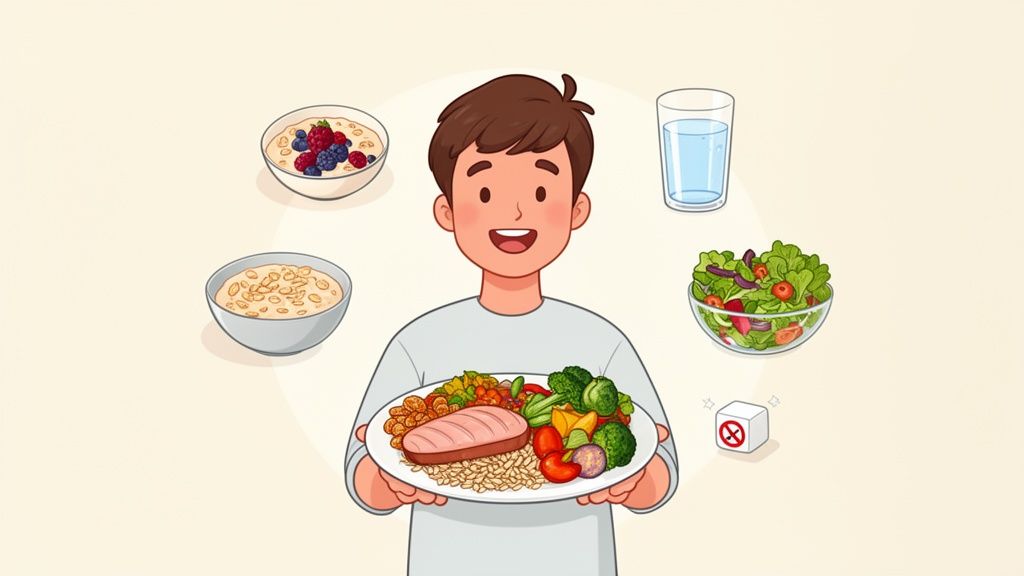
Let's be honest, trying to lose weight can feel like you're drowning in advice. Diets, calorie counting, "good" foods, "bad" foods... it's exhausting. The secret isn't some extreme, complicated plan. It's about making small, smart shifts in your daily routine—things like choosing real food over processed stuff, getting a handle on sugar, and drinking enough water.
When you focus on building these simple habits, you're not just aiming for a number on the scale. You're setting yourself up for a change that actually lasts.
Building Your Foundation for Lasting Weight Loss
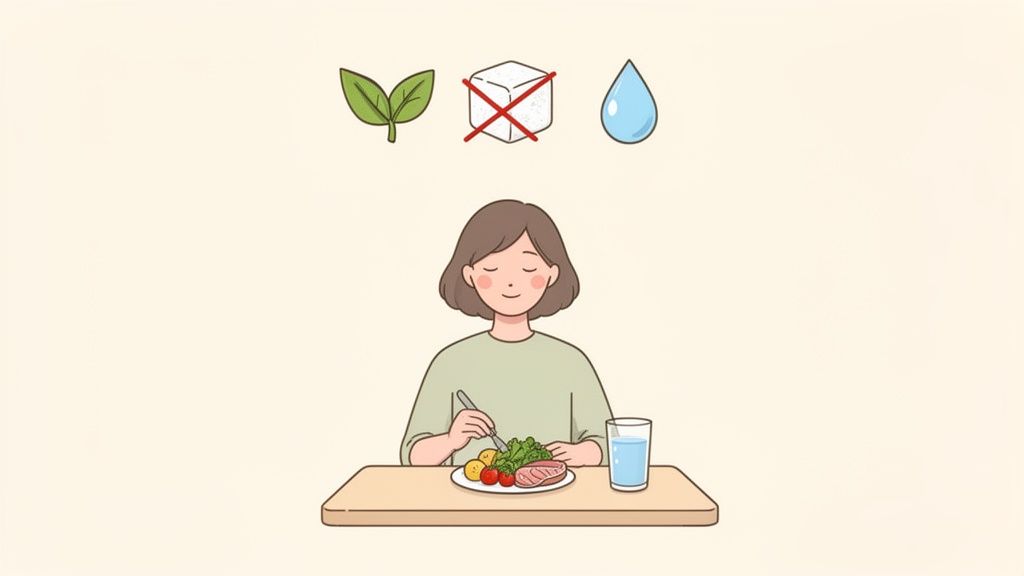
Forget the "all or nothing" mindset. The real path to sustainable weight loss starts with one powerful idea: focus on your habits, not just the scale. When you start reshaping your daily patterns and your relationship with food, healthy choices eventually become automatic.
This isn't a temporary fix. It's about creating a foundation so solid that you don't even have to think about it anymore.
The Power of Mindful Eating
One of the most effective changes you can make is to simply pay attention when you eat. That's it. This is called mindful eating, and it means tuning into the taste, the texture, and how the food makes your body feel.
When you slow down and listen to your body’s hunger and fullness cues, you naturally start to avoid overeating. It helps you untangle true physical hunger from those emotional cravings that pop up out of nowhere. Suddenly, eating becomes less about mindlessly finishing a plate and more about truly nourishing yourself.
Three Core Principles for Starting Your Journey
To get some quick wins and build momentum, let's zero in on three foundational habits. Think of these not as strict rules but as your guiding stars for making better daily choices. The table below breaks down these core principles, why they're so crucial, and a simple first step you can take for each one.
| Principle | Why It Matters | Simple First Step |
|---|---|---|
| Prioritize Whole Foods | Nutrient-dense and packed with fiber, whole foods like veggies, fruits, and lean proteins keep you feeling full and energized, preventing mindless snacking. | Add one extra serving of vegetables to your dinner plate tonight. |
| Manage Sugar Intake | Added sugars are just empty calories that spike your blood sugar, leading to energy crashes and more cravings. Cutting back is a game-changer. | Swap one sugary drink (soda, sweetened iced tea) for a glass of water today. |
| Stay Properly Hydrated | Water is vital for your metabolism. Our brains often confuse thirst with hunger, so staying hydrated can prevent unnecessary eating. | Keep a water bottle on your desk and take a few sips every time you look at it. |
Remember, this is all about progress, not perfection. Making small, consistent efforts in these three areas will add up to significant results over time. If you want to dig deeper into creating a solid routine, check out our complete guide on building healthy habits.
The global obesity crisis has reached staggering levels, highlighting just how important effective, sustainable eating strategies are. The World Obesity Federation's 2025 Atlas predicts the number of adults with obesity will climb to 1.13 billion by 2030—an increase of over 115% since 2010.
This is exactly where having a tool like the StopSugar app can make a real difference. It gives you a simple way to track your progress with daily check-ins and offers a lifeline when cravings hit, making the whole process feel less overwhelming right from the start.
How to Build a Plate for Health and Fat Loss
This is where the theory stops and real, lasting change begins. The single most practical way to create healthy eating habits for weight loss is to rethink how you build your plate, without getting bogged down by counting every single calorie.
Think of it as the "plate method"—a simple visual blueprint that makes putting together a balanced, fat-burning meal almost second nature.
The Anatomy of a Perfect Plate
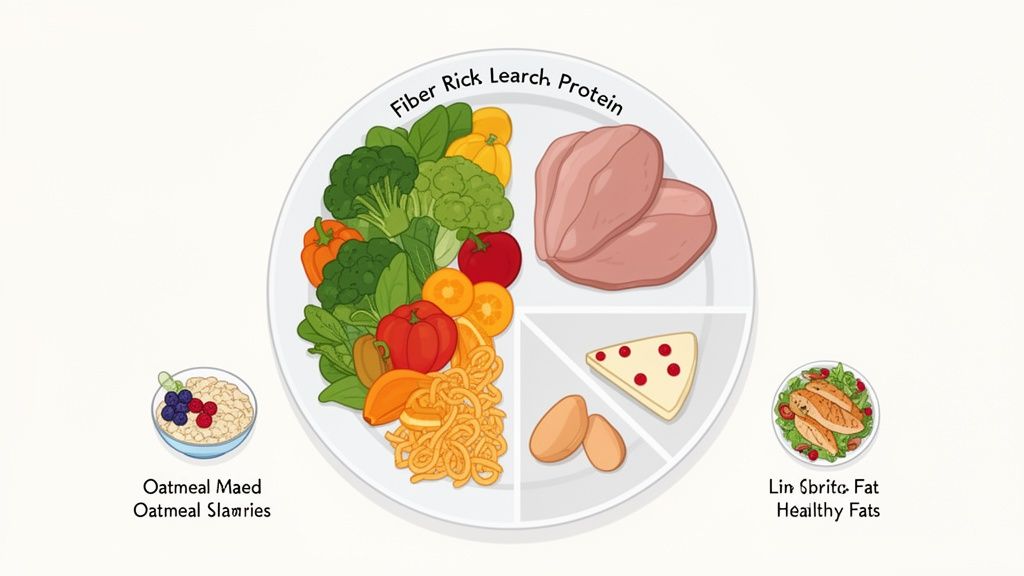
Imagine your dinner plate as a pie chart. Dividing it up this way is a game-changer because it ensures you’re getting the right mix of nutrients to feel full, stay energized, and support your weight loss goals.
Here's how to structure your meals for success:
- Fill Half Your Plate with Veggies: Start here. Load up on non-starchy vegetables like leafy greens, broccoli, bell peppers, or cauliflower. They’re high in fiber and nutrients but low in calories, so they fill you up without filling you out.
- Fill a Quarter with Lean Protein: Protein is your best friend for staying full and protecting your muscle as you lose weight. Think grilled chicken, fish, tofu, or a scoop of lentils.
- Fill the Last Quarter with Complex Carbs: Carbs aren't the enemy—you just need to choose wisely. This spot is for whole grains like quinoa, brown rice, or a small sweet potato to give you slow-release energy.
- Add a Dash of Healthy Fat: A thumb-sized portion is all you need. Healthy fats from avocado, nuts, seeds, or a drizzle of olive oil are essential for hormone balance and absorbing vitamins.
Suddenly, mealtime isn't a math equation; it's a simple assembly job. If you’re curious about the science behind why this balance works so well, check out our guide on what macronutrients and micronutrients are and why they matter.
By focusing on what you add to your plate instead of only what you take away, you cultivate a much healthier and more sustainable relationship with food. This small mental shift is incredibly powerful for long-term success.
Making Smart Swaps in the Real World
You don’t need a personal chef to eat this way. It all comes down to making small, smart swaps that compound over time.
For instance, instead of a standard deli sandwich on white bread for lunch, you could have a big, satisfying salad topped with grilled chicken, tons of fresh veggies, and a light vinaigrette. It's the same idea—protein, carbs, and veggies—just in a more nutrient-dense package.
This kind of practical approach is actually making a difference. In the United States, adult obesity rates have shown a encouraging dip, dropping from a high of 39.9% in 2022 to 37.0% in 2025. A big part of this shift is thanks to more people adopting strategies like cutting out added sugars and prioritizing whole foods. You can read more about these dietary trends on Gallup.com.
Time Your Meals to Boost Your Metabolism
It’s not just what you eat, but when you eat. Aiming for a meal or snack every 3-4 hours can do wonders for your blood sugar levels. This consistency helps you avoid those dramatic energy crashes that send you running for the nearest sugary treat.
This doesn't mean you need six huge meals. It’s about creating a predictable rhythm. This includes planning for smart snacks between meals, like these healthy snacks for runners that are great for anyone needing a sustained energy boost.
When your body knows when to expect fuel, your metabolism learns to run more efficiently. You're essentially training your body to become a better fat-burning machine.
Conquering Cravings and Emotional Eating
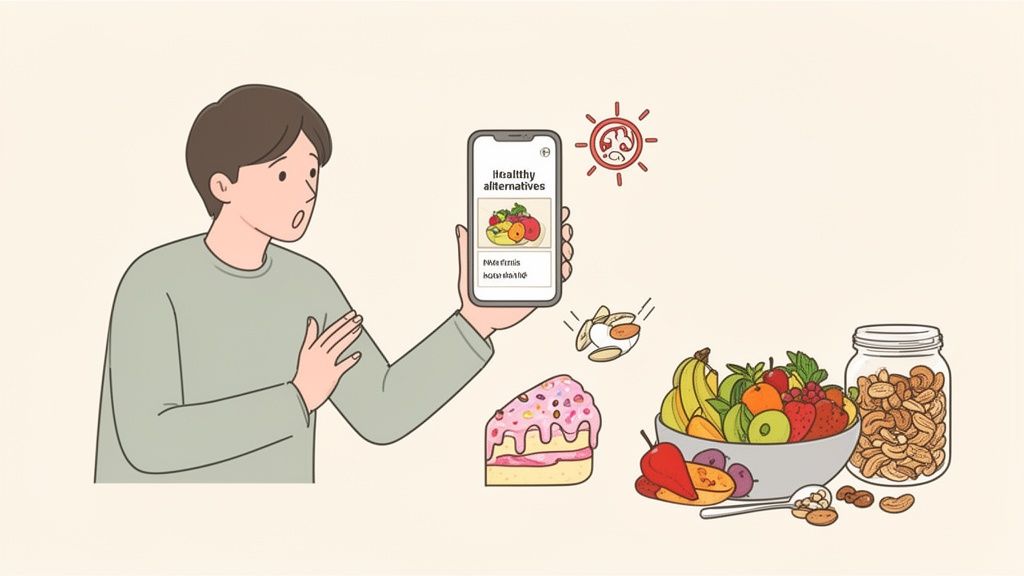
Let's be real. Even with the best meal plan in the world, sugar cravings and emotional eating can ambush you. One minute you’re on track, the next you’re fighting an overwhelming urge that seems to come out of nowhere.
The first thing to know is that this isn't about weakness. These intense urges are usually a biological or psychological response to a specific trigger. Maybe a stressful day at work always leads you to the ice cream aisle, or you can't imagine watching a movie without a bag of candy. Understanding what’s really behind the craving is the first step to taking back control.
Identifying Your Personal Triggers
To break the cycle, you need to become a bit of a detective. The next time a craving hits, don’t just give in—pause for a moment and ask yourself what’s really going on. This simple act of awareness is a game-changer for building healthy eating habits for weight loss that actually last.
Think about what was happening right before the craving started.
- How were you feeling? Stressed, lonely, bored, or maybe even happy and wanting to celebrate?
- What was your physical state? Were you genuinely hungry, with a rumbling stomach, or just tired and looking for a quick energy kick?
- What was the situation? Were you stuck at your desk after a tough meeting? Procrastinating on a project? Relaxing on the couch at the end of the day?
Try jotting these details down in a notebook or on your phone for a week. You might discover some surprising patterns. Maybe you only crave salty chips when you’re trying to avoid a task, which means the real problem isn't the chips—it's procrastination. We explore this in more depth in our article on how to deal with food cravings.
The key is to separate physical hunger from emotional wants. Physical hunger comes on gradually and can be satisfied by different foods, while emotional cravings are sudden, specific, and demand instant gratification.
Building Your Craving-Busting Toolkit
Once you know what your triggers are, you can create a real plan of attack. Instead of just gritting your teeth and relying on willpower, you can use proven strategies to navigate those difficult moments.
A simple but surprisingly effective technique is the 'five-minute rule.' When a craving strikes, tell yourself you can have the treat, but you have to wait just five minutes first. During that time, get up and do something completely different—take a short walk, drink a big glass of water, or text a friend. More often than not, the intensity of the urge will fade.
This is where having a tool like the StopSugar app can be a lifesaver. It’s like having an expert right in your pocket when you need one.
When a craving feels like it’s about to win, the app’s Panic Button offers immediate support, giving you a quick distraction or motivation to redirect your focus. Another incredibly helpful tool is the Alternatives Suggestions feature, which gives you satisfying, low-sugar swaps for your usual treats.
Instead of feeling deprived, you’re empowered with a better choice that still feels like a reward. This turns a moment that could have been a setback into another small victory on your journey.
Using Consistency and Tracking to Stay Motivated
That first wave of motivation feels incredible, but it's not what gets you to the finish line. Consistency is what turns those small, daily choices into real, lasting change. Building healthy eating habits for weight loss isn't about being perfect. It’s about showing up for yourself, especially on the days you don't feel like it.
This is exactly why tracking your habits is so much more powerful than just tracking your weight. The number on the scale can jump around for a million different reasons—water weight, a salty meal, you name it. But the act of making a healthy choice? That’s a win you can control, every single day.
Celebrate the Small Wins to Build Momentum
Real, lasting motivation isn't a lightning strike; it's built from proof. When you celebrate the small victories—like making it a full week without sugary drinks or grabbing an apple instead of a cookie during that 3 p.m. slump—you're wiring your brain for success.
Each little win sends a clear signal: "Hey, I can actually do this." This creates a positive feedback loop that makes the next healthy choice just a tiny bit easier. Trust me, acknowledging these milestones isn't just fluffy self-care; it's a core strategy for building the mental grit you need for the long haul.
The scale of this challenge is huge. In 2022, an estimated 2.5 billion adults were overweight, and 890 million of them were living with obesity. What’s really concerning is that only 7% of countries have health systems equipped to handle this. You can read more on these global health statistics from the World Health Organization. This is why having personal tools for awareness and tracking is more important than ever.
Make Accountability Your Daily Ritual
To make consistency stick, it needs to be an automatic, non-negotiable part of your day. This is where a simple tool like the StopSugar app can be a game-changer. The 'Daily Sugar-Free Check-in' feature is designed for exactly this.
It literally takes seconds to log whether you stuck to your goal. That simple tap becomes a ritual, a small promise you keep to yourself that reinforces your bigger commitment.
Tracking isn't about judging yourself. It’s about gathering data. When you have clear information on your habits, you can make smart decisions instead of just guessing what’s working.
When you start using the daily check-in alongside the app’s mood tracker, you'll start connecting the dots in a whole new way. You might see a clear pattern: on your sugar-free days, your energy is higher and your mood is more stable.
This kind of personal data is your secret weapon. It shows you what works for your body, helps you pinpoint your triggers, and gives you the power to get right back on track after a slip-up. It’s this self-awareness, built through consistent tracking, that fuels the kind of motivation that actually lasts.
Navigating Social Events and Real Life
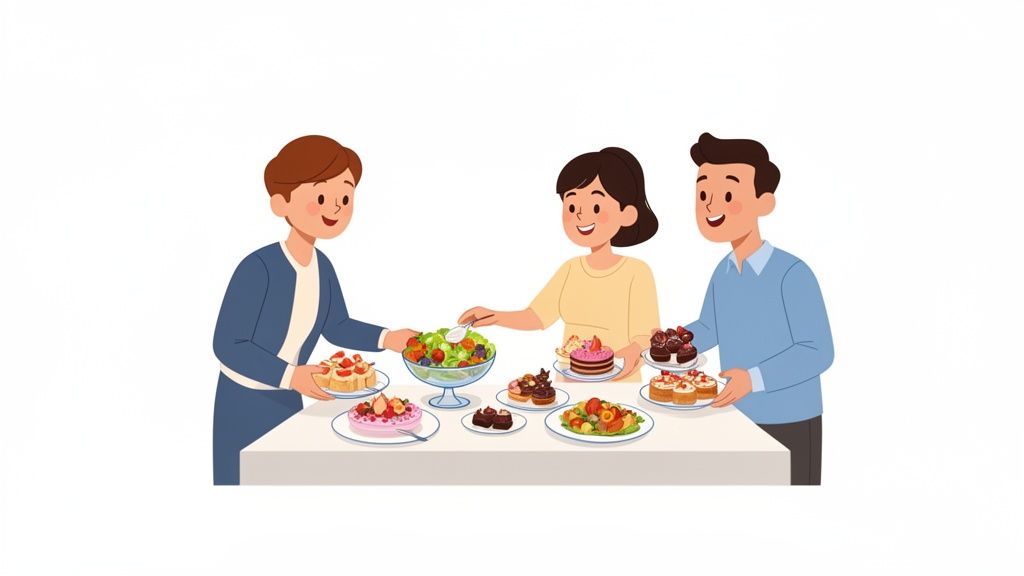
Let's be real: your new eating habits don't exist in a bubble. They have to survive birthday parties, work lunches, and holiday dinners. This is where even the most solid intentions can crumble, but it doesn't have to be that way.
With a little bit of planning, you can walk into any situation feeling confident and in control, without missing out on the fun. It’s not about avoiding these moments—it's about having a strategy to enjoy them.
Planning Ahead for Social Success
The best defense is a good offense. Walking into a social event with a game plan is the single most effective thing you can do to stay on track. This isn't about being rigid; it's about preventing those impulsive, "I'm starving!" decisions that we all regret later.
Here’s a simple mental checklist I run through:
- Have a healthy snack first. Never, ever show up to a party ravenous. A small, protein-packed snack like a handful of almonds or a Greek yogurt takes the edge off your hunger. This makes it so much easier to calmly survey the buffet instead of diving into the first thing you see.
- Scope out the menu online. If you're heading to a restaurant, a quick two-minute peek at the menu online is a game-changer. You can spot the healthier options ahead of time without feeling pressured by the waiter or your friends.
- Offer to bring a dish. Going to a potluck? Perfect. Volunteer to bring a healthy dish you genuinely enjoy. That way, you know for sure there’s at least one delicious, guilt-free option waiting for you.
Handling Conversations and Food Pushers
Sometimes, the hardest part of social eating isn’t the food—it's the people. You'll inevitably run into well-meaning friends or family who insist you "just have one bite." It helps to have a few polite, go-to phrases ready so you don’t feel cornered.
"That looks amazing, but I'm absolutely stuffed. Thank you, though!" "I'm focusing on my health and trying to cut back on sugar, but I really appreciate the offer!"
That's it. You don't owe anyone a lengthy explanation. A simple, firm, and friendly "no, thank you" is more than enough.
Building Your Support System
You don’t have to do this alone. In fact, you shouldn't. Sharing your goals with a trusted friend or family member can be a huge source of motivation. Having someone you can text for a little encouragement or to celebrate a small victory makes the whole journey feel less like a chore.
This is why we're so excited about the upcoming community features in the StopSugar app. We're building tools like shared challenges and achievements to help you connect with others on the same path. When you have that support, sticking to your healthy eating habits for weight loss feels less like a lonely battle and more like a team win.
Got Questions About Healthy Eating? Let's Get Them Answered.
Whenever you start something new, especially with food, questions are going to pop up. That’s a good thing! It means you're engaged and thinking things through. Let's tackle some of the most common things people wonder about when they start building healthy eating habits for weight loss.
"How Fast Will I Actually See Results?"
This is the big one, right? While everyone's body is unique, you'll probably feel better almost right away. Within the first week, many people notice they’re less bloated and have more consistent energy. As for the scale, you can often expect noticeable weight loss within 2 to 4 weeks of sticking with it.
But here’s a pro-tip: shift your focus from the scale to building habits that last. This is where celebrating non-scale victories is a game-changer. Using a feature like the StopSugar daily check-in helps you spot progress in other areas—like sleeping better or feeling happier—which are powerful signs you're on the right path.
"Do I Really Have to Give Up All My Favorite Foods?"
Nope! Not at all. In fact, trying to do that is a surefire way to burn out. A truly sustainable lifestyle change is all about balance, not banning foods you love. The goal is to learn how to fit those treats in smartly while making nutrient-rich foods your foundation.
It’s less about sacrifice and more about making clever swaps. For instance, maybe you trade that nightly bowl of ice cream for some Greek yogurt topped with fresh berries. You still get that creamy, sweet satisfaction, just in a way that serves your goals.
A good rule of thumb: if you can't see yourself sticking with this plan a year from now, it's too restrictive. The best plan is one you can actually live with.
This is exactly why the StopSugar app includes 'Alternatives Suggestions'. It’s designed to give you great-tasting swaps that hit the spot, so you never feel like you're missing out.
"What If I Have a Bad Day and Fall Off Track?"
First off, don't panic. It happens to everyone. One less-than-perfect day doesn't erase all your hard work. The most important thing is to avoid that "all-or-nothing" thinking, where one cookie turns into giving up for the rest of the week.
Just acknowledge it, figure out what might have triggered it (were you stressed? tired?), and then get right back on track with your next meal. Don't try to "make up for it" by skipping meals or over-restricting the next day. Just get back to your routine. Consistency over time is what creates real change, not perfection.
"Is Cutting Out Sugar the Only Thing I Need to Worry About?"
Slashing your added sugar intake is a huge first step and often has the biggest initial impact. It cuts out a ton of empty calories, stabilizes your energy, and helps get cravings under control. It’s like the master key to unlocking a healthier relationship with food.
But it’s not the only piece of the puzzle. For the best long-term results, you’ll want to pair a low-sugar approach with a diet full of lean protein, healthy fats, and lots of fiber from whole foods. When you focus on the quality of your entire diet, cutting back on sugar just becomes a natural part of the bigger picture.