A Guide to Finding Hidden Sugars in Food
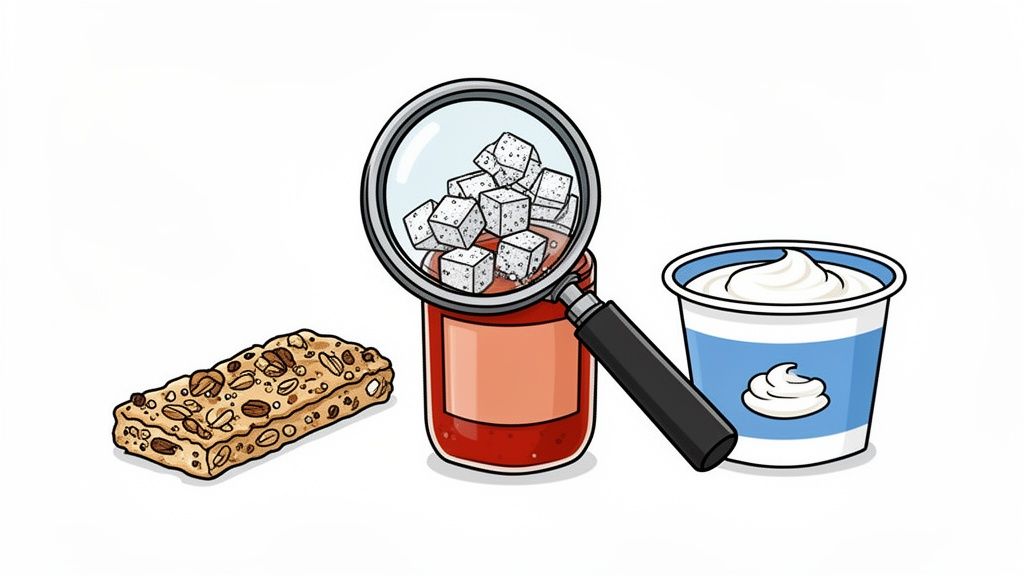
You think you're making a healthy choice. You grab a granola bar for a quick breakfast or a jar of pasta sauce for dinner. But what if that "healthy" bar has as much sugar as a donut? It's not an exaggeration—it's the sneaky reality of hidden sugars in our food.
The Sneaky Truth About Hidden Sugars in Food
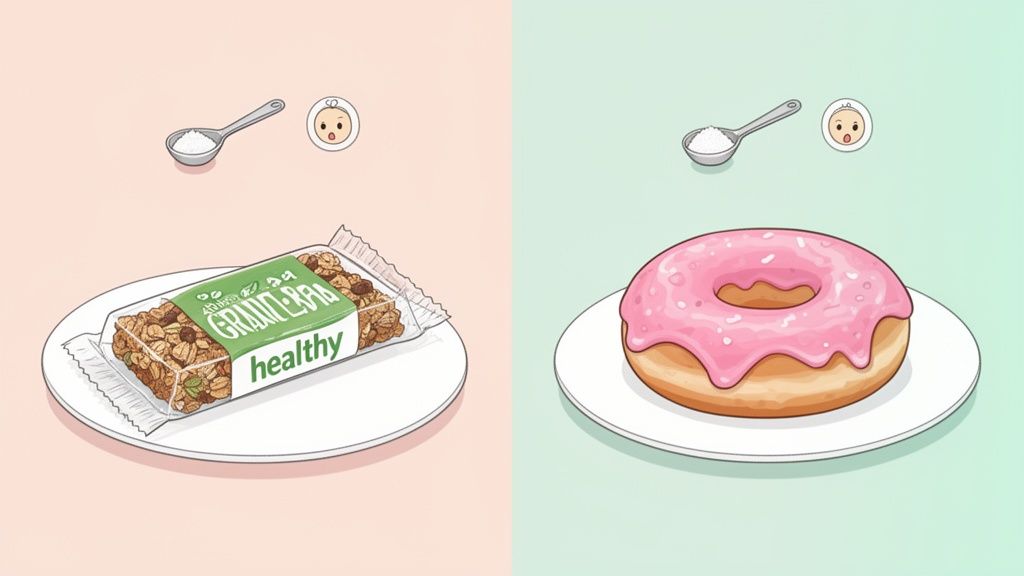
When we talk about hidden sugars in food, we’re not talking about the natural sweetness you find in a piece of fruit. We're talking about the sugars and syrups that are added to products during manufacturing, often where you least expect them.
Food companies have become experts at disguising these sweeteners. They hide them in plain sight on ingredient lists under dozens of different names, from dextrose and maltodextrin to high-fructose corn syrup. This turns a simple trip to the grocery store into a confusing decoding mission.
Why This Deception Matters
These unnoticed sugars have a bigger impact than just a few extra calories. If you've ever battled an afternoon energy slump, persistent brain fog, or felt like your health goals are always just out of reach, hidden sugars are very likely the culprit. They quietly undermine your best intentions, trapping you in a frustrating cycle of cravings and fatigue.
The real problem with hidden sugars is that they bypass your conscious decision-making. You might choose to eat a cookie, but you don’t consciously choose to consume extra sugar in your pasta sauce, bread, or salad dressing.
This unintentional sugar intake adds up—fast. Many popular snack bars, often plastered with health claims, are loaded with a surprising amount of it. In fact, just one bar can contain as much sugar as a third of a child’s daily recommended limit, as highlighted in research from Action on Salt and Sugar.
Taking Back Control
Learning where these sugars are hiding is the first real step toward taking back your health. This isn't about giving up all sweetness forever. It’s about being aware, making informed choices, and seeing through the marketing tricks.
We're going to give you a clear roadmap to do just that. You'll learn how to:
- Identify the many aliases sugar goes by on food labels.
- Understand which foods are most likely to contain sneaky sweeteners.
- Avoid the common traps food manufacturers set for shoppers.
By the end of this guide, you’ll feel more confident navigating the grocery store aisles. You'll have the knowledge to spot hidden sugars from a mile away and the tools, like the StopSugar app, to build new, healthier habits that actually stick.
Why Your Body Cringes at Hidden Sugars
It’s easy to wave off a little extra sweetness here and there, but your body doesn’t see it that way. When you eat hidden sugars in food, it’s like trying to heat your home with a pile of kindling instead of a solid log. The kindling—sugar—flares up hot and fast, giving you a quick burst of energy. But it burns out just as quickly, leaving you cold and scrambling for more fuel.
This is the classic "sugar crash" in action. A sugary snack sends your blood glucose soaring, and your pancreas responds by pumping out insulin to manage the spike. The system often overcorrects, causing your blood sugar to plummet. Suddenly, you feel sluggish, irritable, and can’t think straight.
This rapid up-and-down creates a vicious cycle. As your energy tanks, your brain screams for another quick fix, triggering powerful cravings for more sugar. You grab another sweet treat, and the rollercoaster ride begins all over again.
The Immediate Toll on Your Day
The short-term effects of this cycle can seriously mess with your daily performance. That mid-morning muffin or sweetened latte might feel like a helping hand, but it’s really just setting you up for a crash an hour later.
- Loss of Focus: With your blood sugar all over the place, it's nearly impossible to concentrate. Your brain is starved of a steady energy supply and struggles to keep up.
- Irritability and Mood Swings: Ever felt "hangry"? That’s low blood sugar talking. It can make you feel agitated and impatient, affecting your relationships at work and home.
- Persistent Cravings: Your body gets used to these quick hits of energy, making it even harder to resist unhealthy snacks and keeping the cycle going.
Think of it this way: your body craves stability. Hidden sugars throw it into chaos, forcing your system into a constant state of emergency that drains your mental and physical reserves.
Over time, this constant effort to manage sugar spikes takes a toll. Your cells can become less responsive to insulin, a condition called insulin resistance. If you want to dig deeper, you can learn more about how to reduce insulin resistance naturally.
The Long-Term Health Consequences
Beyond wrecking your day, a diet high in hidden sugars wages a quiet war on your long-term health. The damage isn't obvious at first, but it builds up over time, contributing to chronic conditions that can seriously impact your quality of life.
One of the biggest culprits is chronic inflammation. A little inflammation is a normal immune response, but a high sugar intake keeps your body in a constant state of low-grade alert. This systemic inflammation is a major player in many modern diseases.
This ongoing internal stress is linked to several serious health problems:
- Weight Gain: Your liver is incredibly efficient at converting excess sugar, especially fructose, into fat. This often leads to an accumulation of visceral fat—the dangerous kind that wraps around your organs.
- Increased Risk of Type 2 Diabetes: As insulin resistance gets worse, your pancreas can't keep up. Blood sugar levels remain high, eventually leading to a type 2 diabetes diagnosis.
- Heart Health Issues: High sugar intake can lead to higher triglycerides, unhealthy cholesterol levels, and high blood pressure—all significant risk factors for heart disease.
Seeing the connection—from a simple afternoon slump to serious chronic disease—is a powerful motivator. This isn't just about avoiding a temporary crash; it's about protecting your long-term health and reclaiming the steady, reliable energy you deserve.
The Many Disguises of Sugar on Food Labels
Time to become a sugar detective. The first step to spotting hidden sugars in food is knowing what to look for, but it’s rarely as simple as finding the word "sugar" on the ingredient list. Food manufacturers have become masters of disguise, using a whole dictionary of names to hide the sweeteners they add to their products.
This isn't an accident; it's a deliberate tactic. A shocking study found that two-thirds of all packaged foods in major supermarkets contain added sugars, often listed under more than 400 different names. It's a strategy that The George Institute calls "sugar by stealth", and it works because it leaves most of us in the dark.
Instead of trying to memorize an endless list, let’s group these aliases into a few memorable categories. It's a much better approach for making quick, smart decisions in the middle of a busy grocery aisle.
The "-Ose" Family
One of the most common ways to hide sugar is to use its scientific name, which almost always ends in "-ose." Think of these as sugar's formal names—they sound complex and a little intimidating, but they're all just sugar. You'll find this family in everything from breakfast cereals to crackers.
- Sucrose: This is just the scientific term for regular table sugar.
- Fructose: A sugar found in fruit, but it's often added in highly concentrated forms like high-fructose corn syrup.
- Dextrose: A simple sugar usually made from corn that is chemically the same as glucose.
- Maltose: Also called malt sugar, it's often found in molasses and used in brewing.
- Lactose: The natural sugar you find in milk and other dairy products.
If you spot any word ending in "-ose" near the top of an ingredient list, consider it a major red flag.
The Syrup Syndicate
Another popular costume for hidden sugar is the word "syrup." Syrups are just liquid sugars, plain and simple. They’re poured into processed foods to add sweetness, moisture, and texture, making them especially common in snacks, sauces, and drinks.
Here's an easy rule of thumb: if it's a syrup, it's a sugar. This mental shortcut helps you instantly identify added sweeteners without getting tangled up in the details of each type.
Keep an eye out for these common members of the syrup syndicate:
- High-fructose corn syrup
- Corn syrup solids
- Brown rice syrup
- Maple syrup
- Agave nectar
- Malt syrup
- Golden syrup
Even though some of these, like maple syrup or agave, are marketed as "natural," your body treats them just like any other added sugar.
This constant intake of hidden sugars has both immediate and long-term effects on your health.
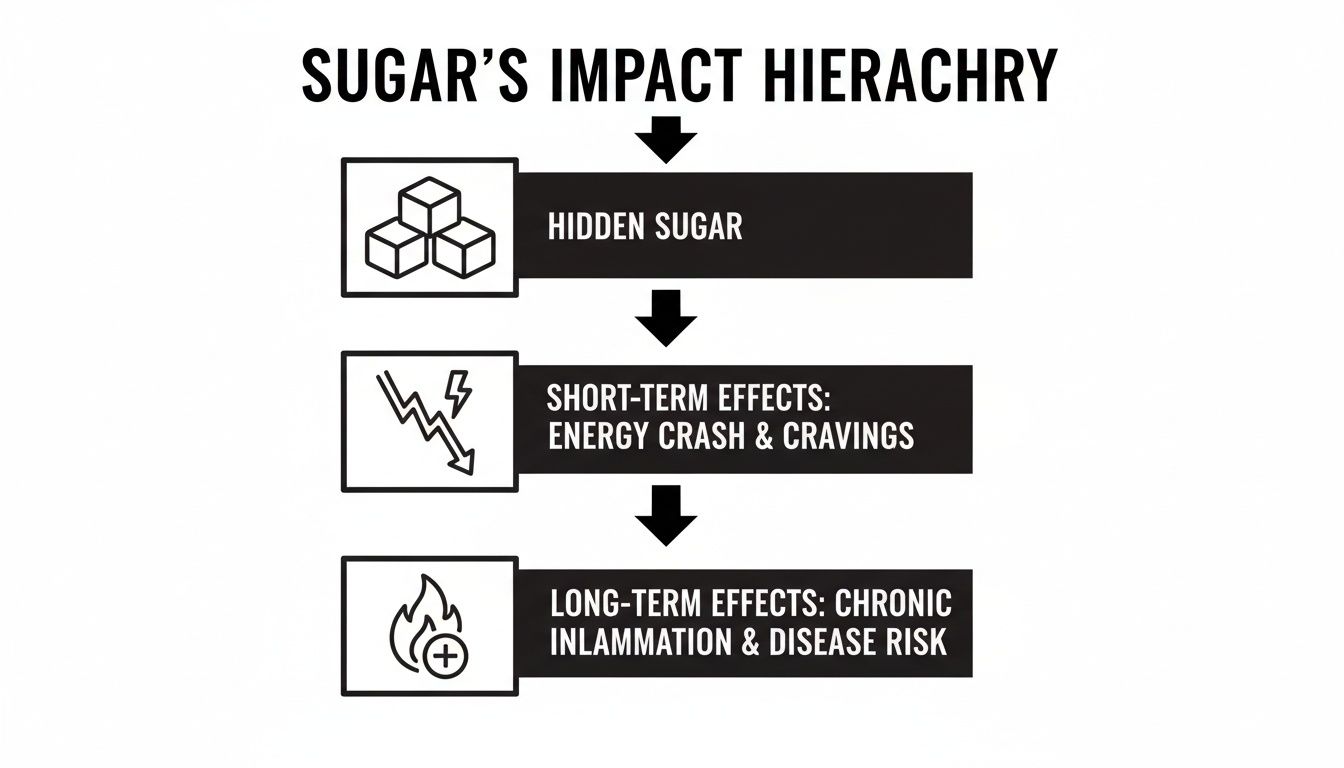
As you can see, what starts as a simple energy crash from these sweeteners can build into more serious problems down the road, like chronic inflammation.
Other Secret Identities to Watch For
Beyond the "-ose" family and the syrup syndicate, sugar has a whole host of other aliases that are even trickier to spot. These names often sound healthy or natural, which makes them particularly deceptive. Knowing what they are is key to getting a true picture of what’s in your food.
Here are a few more sneaky names you'll run into:
- Dextrin and Maltodextrin: Fine powders made from corn, rice, or potato starch. They're often used as fillers but add a hit of sweetness.
- Cane Juice and Cane Crystals: This sounds much better than "sugar," but it's just a less-processed version with the same impact on your body.
- Concentrated Fruit Juice: Don't let the word "fruit" fool you. The concentration process strips out all the fiber, leaving behind a pure sugar liquid.
- Molasses and Treacle: These are dark, syrupy byproducts from the sugar-making process.
- Barley Malt: A sweetener made from sprouted barley, commonly used in cereals and baked goods.
To make things easier, we’ve put all these names (and more) into a handy reference table.
Sugar's Secret Identities A Quick Reference Guide
This table breaks down the most common names for sugar you'll find on ingredient labels. Think of it as your cheat sheet for spotting hidden sweeteners when you're shopping.
| Category (e.g., Syrups, '-ose' Endings) | Common Names for Hidden Sugar |
|---|---|
| The "-Ose" Family | Dextrose, Fructose, Galactose, Glucose, Lactose, Maltose, Sucrose |
| The Syrup Syndicate | Agave Nectar, Barley Malt Syrup, Brown Rice Syrup, Corn Syrup, Corn Syrup Solids, Golden Syrup, High-Fructose Corn Syrup (HFCS), Malt Syrup, Maple Syrup, Molasses, Oat Syrup, Rice Bran Syrup, Treacle |
| "Natural" Sounding Sugars | Cane Crystals, Cane Juice, Coconut Sugar, Concentrated Fruit Juice, Date Sugar, Evaporated Cane Juice, Honey, Invert Sugar, Maple Sugar, Palm Sugar, Raw Sugar, Turbinado Sugar |
| Technical & Other Names | Barley Malt, Caramel, Dextrin, Diastatic Malt, Ethyl Maltol, Florida Crystals, Glucose Solids, Maltodextrin, Muscovado, Panela, Piloncillo, Sorghum Syrup |
Once you get familiar with these categories, reading an ingredient list feels less like a chore and more like solving a puzzle. You’ll no longer be fooled by fancy marketing terms and can finally make choices that align with how you want to feel.
How to Decode a Nutrition Label for Sugar
Knowing sugar’s many secret names is a great first step, but the real power comes from being able to read the numbers on the nutrition label. Think of the nutrition facts panel as your treasure map—it helps you see past the flashy marketing on the front of the box and find the real story on the back. It tells you exactly what you’re dealing with.
The label can look a little intimidating at first, but don't worry. Finding the sugar content is actually pretty simple. You just need to focus on two key lines: Total Sugars and the all-important Added Sugars. Getting the difference between these two is everything.
Total Sugars vs. Added Sugars
When you glance at the label, you'll see a line for Total Sugars. This number lumps together all the sugar in the product. That means it includes sugars that are naturally there—like lactose from milk or fructose from fruit—along with any sugars added during processing.
But right underneath, you’ll find the line that says Includes Added Sugars. This is the one you really want to watch. This number zeroes in on the sugars that were put in deliberately, like high-fructose corn syrup, cane juice, or maltodextrin. These are the true hidden sugars in food, the ones that add empty calories and nothing else.
For example, a plain Greek yogurt might have 7 grams of Total Sugars, which is just the naturally occurring lactose. But the vanilla-flavored version could have 18 grams of Total Sugars, with a note that says "Includes 11g Added Sugars." That extra 11 grams is your red flag.
Understanding this difference helps you separate the good from the bad. It lets you know if the sugar is part of a whole food or just unnecessary filler. For a deeper dive, check out our complete guide on how to read nutrition labels for sugar.
Turning Grams into Teaspoons
Let's be honest, grams can feel a bit abstract. What does 20 grams of sugar even mean? Here’s a super simple trick to make that number hit home:
Just divide the grams of added sugar by 4. That’s how many teaspoons you’re eating.
This little piece of math turns a vague number into a powerful visual. All of a sudden, you can actually picture the sugar you're about to eat.
Let’s try it with a common example:
- Find the Added Sugars: You pick up a "healthy" breakfast cereal, and the label says 12g of Added Sugars per serving.
- Do the Quick Math: 12 divided by 4.
- Picture the Result: 12 / 4 = 3.
That one bowl of cereal has 3 teaspoons of pure, added sugar. Visualizing someone dumping three actual spoonfuls of sugar into your breakfast is a lot more striking than just reading "12g" on a box, isn't it? This trick is your secret weapon for cutting through the noise and seeing exactly what you're getting.
Where Hidden Sugars Love to Hide
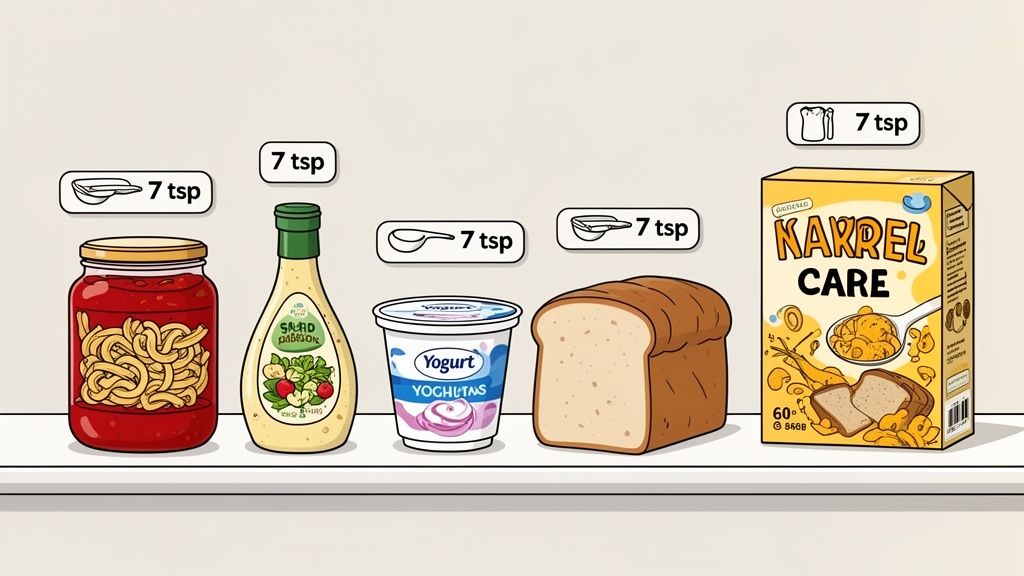
When you think of sugary foods, what comes to mind? Most of us picture the obvious stuff: soda, cookies, candy, maybe ice cream. And while those are definitely loaded with sugar, the real trouble comes from hidden sugars in food—the ones lurking where you least expect them. They are masters of disguise, especially in savory foods and products that are marketed as "healthy."
It's a common mistake to think that if something doesn't taste sweet, it must be low in sugar. But that's just not true. Food companies add sugar to an incredible range of products to boost flavor, improve texture, and even extend shelf life. This means you could be carefully avoiding the dessert aisle but still consuming a ton of added sugar throughout your day without even knowing it.
Savory Surprises in Your Pantry
Think about the staples you reach for every day. Many of them are packed with hidden sugars, quickly turning what seems like a nutritious home-cooked meal into a sugar bomb.
Take jarred pasta sauce. That "garden vegetable" marinara looks like a healthy shortcut, right? But check the label. A single half-cup serving can have 8 to 12 grams of added sugar. That’s almost three teaspoons of sugar before you’ve even boiled the pasta.
And it doesn't stop there. Other common culprits in the pantry include:
- Salad Dressings: That creamy ranch or zesty vinaigrette often has sugar to balance out the tartness. Just two tablespoons of a French or Catalina dressing can pack 5 to 7 grams of sugar.
- Ketchup and BBQ Sauce: These condiments are notorious. One tablespoon of ketchup can contain around 4 grams of sugar. BBQ sauce? It can easily have double that.
- Breads and Wraps: Even whole-wheat bread often has added sugar to help it brown and taste better. A single slice can have 2 to 4 grams, which adds up fast when you make a sandwich.
The real problem is how it all adds up. A little sugar in your bread, some in your pasta sauce, and a bit more in your dressing can easily equal the sugar in a candy bar—all from one savory meal.
The "Healthy" Food Trap
Maybe the most deceptive place to find hidden sugar is in the "health food" aisle. So many products promoted for their wellness benefits use sugar to make low-fat or high-fiber ingredients taste better. This creates a "health halo," making you think you're making a great choice when you’re actually just eating more sugar.
Flavored yogurt is a perfect example. A small container of fruit-on-the-bottom yogurt can contain a shocking 20 to 30 grams of sugar, and most of that is added. That's more sugar than you'd find in a full-sized chocolate bar.
Be on the lookout for these other "healthy" options, too:
- Breakfast Cereals and Granola: Many granolas and so-called "heart-healthy" cereals are absolutely loaded with sweeteners. It’s common to see cereals with 10 to 15 grams of added sugar per serving.
- Protein Bars and Snack Bars: These are often marketed as the ideal post-workout fuel, but many are just candy bars with some extra protein thrown in.
- Plant-Based Milks: Flavored almond, soy, or oat milks can have a surprising amount of added sugar to improve their taste and mouthfeel.
It's no surprise that ultra-processed foods (UPFs), which are often packed with these hidden sugars, have taken over our diets. In fact, UPFs now make up an incredible 73% of the US food supply and account for 60% of our daily calories, leading to serious health issues. You can read the full research findings on UPFs and sugar to see just how widespread the problem is. And to uncover even more sneaky sugar sources, check out our guide on other common foods with hidden sugars.
Your Action Plan to Conquer Hidden Sugars
Okay, so knowing where hidden sugars in food are lurking is one thing, but actually doing something about it? That’s where the real magic happens. This is the part where you turn what you’ve learned into lasting change.
The goal here isn't to deprive yourself. It's about taking back control. With just a few smart shifts, you can cut way back on your sugar intake without feeling like you're missing out on everything you love.
Honestly, the most powerful move you can make is to start cooking more at home. When you’re the one holding the spoon, you're the one in charge of the sugar. This one habit puts you right back in the driver's seat, steering you away from all those ultra-processed foods that pack the grocery store aisles.
Start with Simple, Sustainable Swaps
You don't have to throw out your entire pantry tomorrow. That’s a recipe for disaster. The real secret to building habits that actually stick is making small, consistent swaps. Think of it as upgrading your choices, one at a time. Progress, not perfection.
Here are a few high-impact swaps that are easy to start with:
- Yogurt Upgrade: See ya, flavored yogurts. Switch to plain Greek yogurt and toss in your own fresh berries, a dash of cinnamon, or some nuts. You get all the flavor and texture you crave without a boatload of added sugar.
- Smarter Sauces: Instead of grabbing that jar of pasta sauce, try using canned crushed tomatoes and adding your own garlic, onions, and herbs. For salad dressings, a quick mix of olive oil, lemon juice, and seasonings beats most bottled options hands down.
- Beverage Rethink: Sugary drinks are one of the biggest sugar traps out there. Try swapping your usual soda, sweetened tea, or juice for sparkling water with a squeeze of lime, a cozy herbal tea, or just good old-fashioned water.
These little changes might not seem like much, but they add up fast. For even more ideas on making these shifts second nature, check out our guide on how to reduce sugar in your diet.
The secret to a low-sugar lifestyle isn't about having superhuman willpower. It's about creating an environment where the healthy choice is the easy choice.
And if you want to take it a step further, you can even apply these principles with a solid guide to pre and post-workout nutrition to make sure every meal is fueling your goals.
Your Personal Ally: The StopSugar App
Let's be real—making these changes is way easier with a little backup. That's exactly what the StopSugar app is for. It’s designed to be your personal ally, helping you stay aware and navigate the tricky spots.
The app is great for connecting the dots between what you eat and how you feel. Use the daily check-ins and mood tracker to see firsthand how cutting back on hidden sugar affects your energy and focus. It creates a powerful feedback loop that makes you want to stick with it.
And for those moments when a monster craving hits? The ‘Panic button’ is there with immediate support to help you ride it out. If you just need a better option for a snack right now, the ‘Alternatives’ feature gives you smart suggestions on the spot. With tools like these, you’re never going it alone.
Got Questions About Hidden Sugars? We’ve Got Answers.
When you start digging into the world of hidden sugars in food, you're bound to have questions. It's totally normal to feel a bit overwhelmed at first. Let's clear up some of the most common points of confusion that come up on this journey.
Are Natural Sugars and Added Sugars Really That Different?
Yes, and this is probably the most important distinction to understand. Natural sugars are the ones that come as part of a whole food package, like the fructose in an apple or the lactose in a glass of milk. Those foods also bring fiber, vitamins, and minerals to the table, which helps your body process the sugar more slowly and gives you actual nutrition.
Added sugars are the ones manufacturers sneak in during processing. We're talking about the high-fructose corn syrup in your soda or the evaporated cane juice in that "healthy" granola bar. These are just empty calories with zero nutritional upside—and they’re the real culprits we call hidden sugars.
Think of it this way: your body handles the sugar from an apple and a candy bar completely differently. The apple's fiber is like a traffic cop, directing a slow, steady stream of energy. The candy bar, on the other hand, causes a chaotic pile-up—a huge energy spike followed by a nasty crash.
So, Are Artificial Sweeteners a Safe Bet?
That’s the million-dollar question, and the answer is… it’s complicated. On one hand, artificial sweeteners like sucralose and aspartame don’t have calories and won’t spike your blood sugar. On the other hand, the jury is still out on their long-term health effects.
For some people, they can actually ramp up cravings for super-sweet foods, which defeats the purpose. Others find they cause digestive upset. It’s best to see them as a temporary crutch, not a permanent solution. They might help you get over the initial hump, but the real goal is to train your taste buds to enjoy less intense sweetness overall.
How on Earth Do I Deal With Sugar Cravings?
First off, know that intense cravings are completely normal, especially during the first week or two. Your brain and body are literally rewiring themselves. The trick isn't to fight the craving with sheer willpower, but to outsmart it.
Here are a few proven strategies:
- Drink a Glass of Water: Dehydration often masquerades as a sugar craving. Give it a few minutes and see if the urge subsides.
- Load Up on Protein and Fat: Foods like avocado, nuts, or a hard-boiled egg will keep you feeling full and your blood sugar stable, which nips cravings in the bud.
- Have Go-To Snacks Ready: Don’t leave it to chance. Keep a stash of smart options like almonds, seeds, or a small container of plain Greek yogurt close by.
And remember, cravings are just temporary signals. They will pass. As your body adjusts, you'll find they become a lot quieter and much easier to manage.