How to Meal Plan for the Week for a Sugar-Free Lifestyle
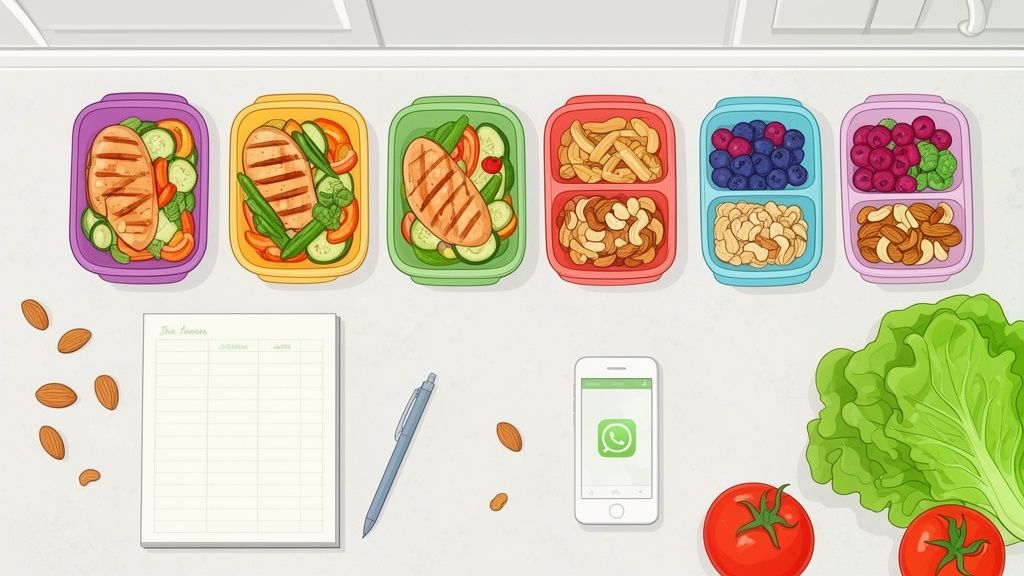
When you get serious about cutting down on sugar, the real game-changer is shifting from reacting to hunger pangs to proactively deciding what you'll eat. It's a simple but powerful strategy: pick your meals for the week, build a shopping list from that plan, and prep some ingredients ahead of time. This completely sidesteps those last-minute, sugar-fueled decisions.
Why Weekly Meal Planning Works Against Sugar
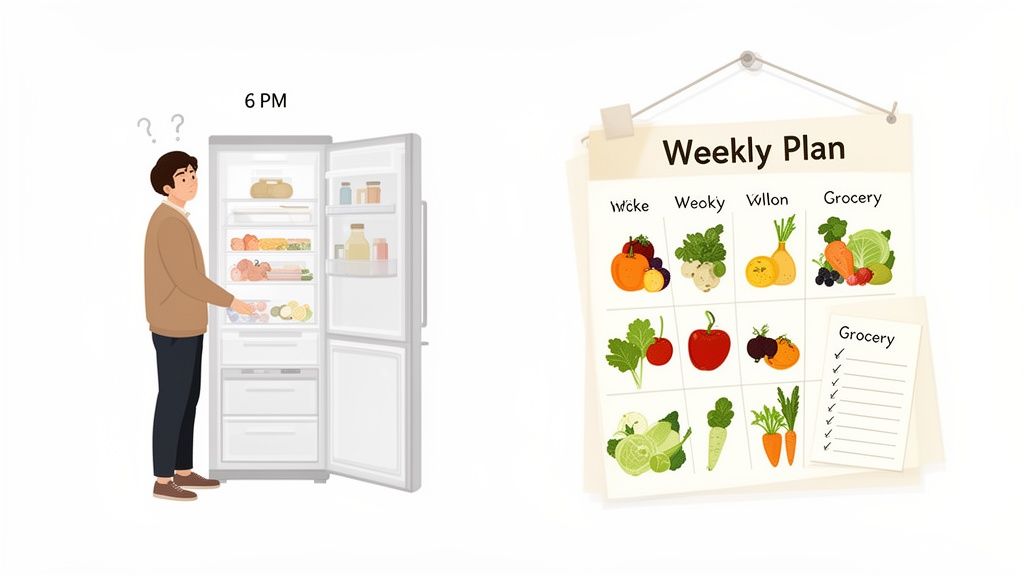
We’ve all been there. It’s 6 PM, you’re exhausted from a long day, and you're staring into a fridge with no real plan. That moment of decision fatigue is the weak spot where good intentions crumble, and the siren song of sugary, processed convenience foods becomes irresistible.
Think of meal planning as your secret weapon against this daily battle. It’s not just about getting organized; it’s a psychological tool that puts you back in the driver's seat. When you already know what’s for dinner, you eliminate the guesswork that hunger and exhaustion love to exploit.
The Power of Proactive Choices
Instead of making dozens of food-related decisions every single day, a meal plan boils it down to just a handful of healthy, pre-determined options. This simple shift frees up a ton of mental energy, making it so much easier to stick to your low-sugar goals.
When you plan ahead, you can intentionally design a menu that ticks all the right boxes:
- Nutritionally Balanced: You can make sure every meal has the protein, fiber, and healthy fats needed to keep your blood sugar stable and cravings under control.
- Convenient and Accessible: Having chopped veggies or cooked quinoa ready to go means a healthy meal comes together faster than waiting for takeout.
- Budget-Friendly: A focused grocery list stops you from grabbing those impulse buys—like sugary snacks and processed meals—that hurt both your health and your wallet.
With rising food costs and more people working from home, cooking meals is becoming the new normal. This makes meal planning not just a wellness strategy, but a financial necessity. You can find more insights about consumer eating habits and see how planning helps you hit both your health and budget goals.
A weekly meal plan is your personal roadmap. It guides you right past the sugary detours you’d normally take when you're tired, stressed, or just plain unprepared.
Using Tools to Stay on Track
Making this change doesn't have to be overwhelming. You don’t have to do it all with a pen and paper (unless you want to!). Modern tools are built to make the whole process easier. For instance, an app like StopSugar can turn planning from a dreaded chore into a supportive, guided experience.
It gives you instant ideas and keeps you accountable, turning a vague goal like "eat less sugar" into a clear, actionable plan for the week. This kind of structure is what builds consistency, and consistency is the only thing that creates habits that actually stick.
Setting a Realistic Foundation for Your Week
Before you even think about recipes or grocery lists, let’s talk about what success actually looks like. If you're wondering how to meal plan for the week, the real first step is getting your mindset right. Trying to completely change your diet overnight is a classic mistake and, honestly, a recipe for burnout.
The secret is to aim for small, almost effortless wins.
Maybe your goal this week is just to swap that sugary 3 PM soda for sparkling water with a squeeze of lemon. Or perhaps it’s trading your morning sweetened latte for a black coffee with a splash of real cream. These little shifts are where real, lasting change begins.
Audit Your Current Habits
To figure out where you’re going, you need to know where you are right now. Spend a couple of days just observing your eating habits—no judgment allowed. Your only job is to pinpoint your personal sugar traps.
Where does it sneak in? Is it the handful of candy from the office jar? The late-night bowl of cereal you have while watching TV? What about that flavored yogurt you thought was a healthy choice? Getting specific is everything. This isn't about feeling guilty; it’s about collecting data so you can build a plan that works for your life.
Success isn't about perfection; it's about progress. Aim to be 1% better each day. Swapping one sugary habit is a massive win that builds momentum for the next change.
This is where a good tool can make all the difference. For instance, the 'Daily Check-in' feature in the StopSugar app helps you connect the dots between what you eat and how you feel. You might realize that every time you have a sugary breakfast, you hit an energy wall by 10 AM, which sends you searching for another sugar hit. Finding those patterns is the key to breaking the cycle.
Set Your Weekly Intention
Okay, you've found a sugar trap. Now, make that your single focus for the week.
The trick is to frame it as a positive action. Instead of a negative command like, "I won't eat cookies," rephrase it as a positive choice: "I will have an apple with peanut butter for my afternoon snack." This simple switch makes you feel empowered and in control, not deprived.
It can be helpful to think of meal planning as a form of recurring task management. You're building a system to make healthy choices the easiest choices.
Let's see what this looks like in practice:
- Your Goal: Reduce afternoon sugar cravings.
- Your Action Plan: Pack three pre-portioned snacks like almonds, Greek yogurt, or cheese sticks to have ready before the craving hits.
- Your Support Tool: Use the StopSugar app's 'Alternatives' feature for fresh snack ideas if you get bored.
This focused, one-step-at-a-time method creates a solid foundation you can actually build on. You’re making a plan for the life you have right now, not some fantasy version of it. It’s this realistic approach that turns a short-term diet attempt into a long-term, successful new habit.
Building Your Simple Meal Plan Template
Okay, this is where the magic happens. Let's turn those goals you set into a real, working document. Forget those intense, complicated spreadsheets that feel like you need a degree to fill out. The easiest way to learn how to meal plan for the week is to create a simple, flexible grid you can just plug ideas into. Think of it less as a set of rules and more as a helpful guide to make your week run smoother.
All you need is a basic grid for the week: Monday through Sunday, with spots for breakfast, lunch, dinner, and a couple of snacks. This gives you a bird's-eye view of your week, so you can make sure you’ve got balanced, satisfying meals ready to go before you're starving. This little template will become your best friend, and it's meant to change as your schedule does.
Designing Your Plug-and-Play Grid
Let's start with the basics. The biggest mistake people make is trying to find seven brand-new, gourmet recipes for every single week. That’s a fast track to burnout. Instead, lean on categories and formulas you already know and love. This trick alone cuts down on decision fatigue and makes grocery shopping a breeze.
Here’s a simple way to think about structuring it:
- Breakfasts: Keep these fast and full of protein. Think Greek yogurt with a handful of berries, or a couple of scrambled eggs with spinach.
- Lunches: Go for things that are easy to pack or throw together in minutes. A big salad with a simple lemon vinaigrette or—my personal favorite—leftovers from last night's dinner.
- Dinners: Plan a mix. Have a few quick meals for crazy nights and one or two that are a bit more involved for when you have time. A sheet pan with sausage, peppers, and onions is an absolute lifesaver.
- Snacks: Simple is best here. A handful of almonds, an apple with a spoonful of nut butter, or a hard-boiled egg can be the perfect thing to stop a sugar craving in its tracks.
This kind of framework gives you consistency without making you feel like you're eating the same thing every day. You’re not locked into specific meals, just familiar patterns that take the guesswork out of eating well.
Smart Swaps and Instant Inspiration
So, what happens when you’re just not in the mood for what you planned? We’ve all been there. A good plan is a flexible one, which means having a backup. If you can't face another salad for lunch, swap it for a low-sugar soup. If you get home and the thought of cooking is too much, have an "emergency meal" ready to go, like a simple omelet.
This is where a tool can come in handy. For instance, the 'Alternatives' feature in the StopSugar app can give you a spark of inspiration right when you need it. If your planned "grilled chicken" sounds incredibly boring, a quick tap might suggest "tuna salad lettuce wraps"—something you can probably make with what you already have.
It's no surprise that people are leaning on technology for this stuff. The global diet and nutrition apps market was valued at USD 2.14 billion in 2024 and is expected to hit USD 4.56 billion by 2030. It just shows how much these tools are becoming a normal part of managing our health. You can read more about the rise of nutrition apps to see just how much tech is changing wellness.
A simple template can make a world of difference in seeing what a balanced day looks like. It helps you visualize where you might be defaulting to sugary habits and what a better swap could be.
Here is a sample daily structure to give you an idea:
Sample Sugar-Conscious Day Template
| Meal Time | Common High-Sugar Choice | Smart Low-Sugar Swap |
|---|---|---|
| Breakfast | Sugary cereal or a muffin | Scrambled eggs with avocado |
| Lunch | Sandwich on white bread with chips | Large salad with grilled chicken and vinaigrette |
| Snack | Granola bar or candy | Apple slices with natural peanut butter |
| Dinner | Pasta with sugary jarred sauce | Baked salmon with roasted broccoli and quinoa |
This table isn't a rigid rulebook, but a way to see how small, simple changes can drastically reduce your sugar intake without leaving you hungry.
Your meal plan template should be your assistant, not your boss. Its job is to serve you by making healthy choices easier, not to add another layer of stress to your week.
By using a simple grid and having some smart swaps ready, you’re building a system that can handle real life. This approach also naturally teaches you about nutrition—like how pairing protein with fiber-rich carbs keeps you full and energized. To learn more about that, check out our guide on the benefits of incorporating slow-release carbohydrates into your meals. A great template helps you put these powerful ideas into practice without even thinking about it.
Turning Your Plan Into Ready-to-Eat Meals
A well-thought-out meal plan is a great start, but it's only half the battle. The real magic happens when you turn that piece of paper into delicious, ready-to-eat meals waiting for you in the fridge. This is where a little bit of prep work can completely change the game for your entire week.
First things first: you need a smart shopping list, built directly from your meal plan. Instead of just jotting down random items, try organizing your list by the grocery store's layout—produce, protein, dairy, and pantry staples. This one small tweak helps you zip through the store efficiently and, more importantly, cuts down on those impulse buys from the sugary, tempting aisles.
This guide shows just how simple it can be to structure your daily meals.
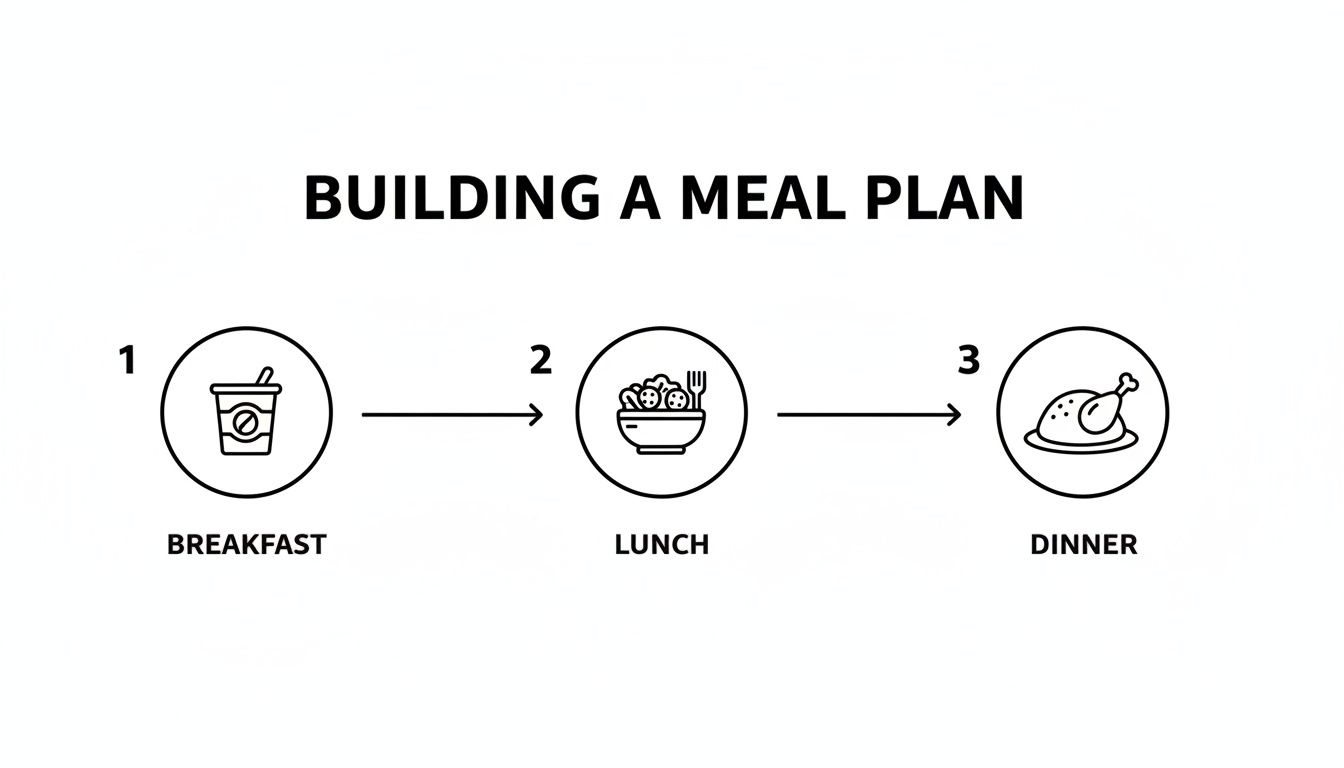
When you see your meals laid out from breakfast to dinner, you realize how a consistent structure makes the whole weekly planning process so much easier.
The Power Hour Prep Session
Once you’ve got all your groceries, it's time for what I call a "Power Hour." Don't worry, this isn't about cooking seven different dinners on a Sunday afternoon. It's all about strategic component prep—doing the small, high-impact tasks now that will save you a ton of time and stress later.
Adopting some simple meal prep for weight loss techniques can be a huge time-saver and helps keep your portions in check.
Here’s what your Power Hour could look like:
- Wash and Chop: Get all your veggies ready for the week. Chop up some onions, slice bell peppers, and wash a big batch of lettuce. Now they're ready to be tossed into salads, stir-fries, or sheet pan dinners in a flash.
- Cook Your Grains: Make a big pot of a versatile grain like quinoa or brown rice. This can be the base for your lunches or a quick side for dinners all week long.
- Prep Your Proteins: Grill a few chicken breasts to slice up for salads, or hard-boil a half-dozen eggs for a quick, protein-packed snack you can grab on the go.
The point of a Power Hour isn't to do all the cooking. It's about getting a head start, making it possible to throw together a fresh, healthy, low-sugar meal in under 15 minutes on a busy Tuesday night.
This proactive approach is becoming more popular as people turn to digital tools to support their health goals. The global meal planning app market was valued at around USD 1.2 billion in 2023 and is expected to hit nearly USD 3.6 billion by 2032. It’s clear that more and more people are using technology to manage their diets in our busy lives.
By setting aside just one focused hour, you stock your fridge with building blocks for the week ahead. This is the secret to making your low-sugar lifestyle feel not just manageable, but practically effortless. For more ideas, check out our guide on meal prep ideas for weight loss that fit perfectly into this system.
How to Handle Cravings and Stay Consistent
Let’s be real for a second. You can have the most beautiful, color-coded meal plan in the world, but cravings are still going to show up. It’s inevitable. Success isn’t about some kind of iron-willed perfection; it’s about having a smart plan for when you feel that resolve start to wobble.
An intense urge for something sweet doesn’t mean you’ve failed. It just means you’re human. The trick is to expect these moments and build a system to handle them. Instead of trying to white-knuckle your way through a craving, you can learn to ride the wave with strategies you’ve already prepared. It completely changes the game.
Your In-the-Moment Troubleshooting Guide
Cravings are creatures of habit, right? They love to pop up during that classic 3 PM slump when your energy nosedives, or right after dinner when your brain starts screaming for dessert. Pinpointing these triggers is half the battle.
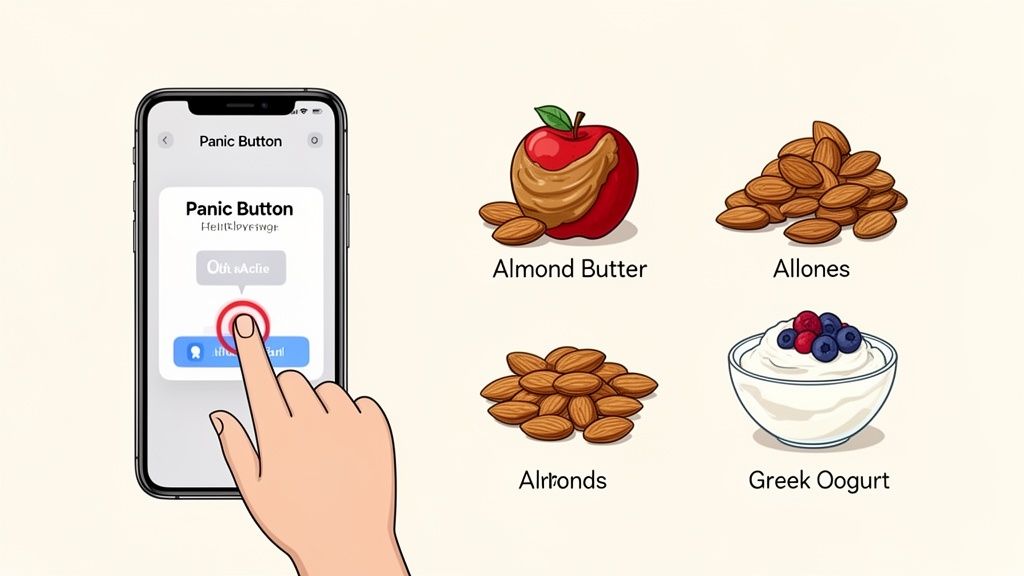
This is where having a tool in your back pocket can be a lifesaver. Take the 'Panic Button' feature in the StopSugar app, for example. It’s designed for exactly these moments. When a craving hits you like a ton of bricks, you just tap the button for instant help, getting smart alternatives that actually satisfy. It helps you make a better choice before you even have time to overthink it.
Your goal isn't to eliminate cravings forever, but to have a better response ready for when they arrive. A good plan gives you a pause button, providing just enough space to make a conscious choice instead of an impulsive one.
Sometimes, the best way to defuse a craving is to understand its root cause. If you want to dig a little deeper, our guide on how to reduce sugar cravings is packed with more strategies to keep you on track.
Arming Yourself with Satisfying Snacks
Honestly, your best defense is a good offense. Having go-to, low-sugar snacks ready to grab is non-negotiable. When a healthy option is the easiest option, you're so much more likely to choose it. Stock your kitchen with things that offer a good mix of protein and healthy fats—these are what truly stabilize your blood sugar and keep you feeling full.
Here are a few of my favorite, no-fuss snack swaps:
- Craving a cookie? Try a crunchy apple with a spoonful of natural almond butter. The fiber and protein combo really hits the spot.
- Want candy? Grab a small handful of almonds or walnuts. They give you that satisfying crunch and healthy fats that shut down hunger pangs.
- Dreaming of ice cream? Go for a bowl of plain Greek yogurt with a few fresh berries. It's creamy, packed with protein, and still feels like a treat.
Think of these not just as replacements, but as strategic upgrades. They actually nourish your body and help you sidestep that awful energy crash that always comes after a sugar binge. By planning for these moments, you’re building a truly resilient system that supports your goals without making you feel miserable.
Your Top Questions, Answered
Jumping into a low-sugar lifestyle always brings up a few questions. That's a good thing—it means you're thinking through the practical details. Here are my go-to answers for the most common hurdles I see people run into when they start meal planning.
What If I Get Bored Eating the Same Things Every Week?
This is a huge one. No one wants to eat grilled chicken and broccoli on repeat for the rest of their lives. The trick is to treat your meal plan as a flexible framework, not a rigid set of rules.
Think in broad categories. Instead of writing "Lemon-Herb Chicken with Broccoli" on your template for Monday, just write "Sheet Pan Dinner." This week, that might be chicken and broccoli. Next week, it could be sausage with peppers and onions. Same slot, totally different meal. It’s a simple shift that keeps things fresh without forcing you to start from scratch every Sunday.
Another easy win? Change up your sauces and seasonings. A simple salad feels completely different with a lemon-tahini dressing instead of a basic vinaigrette. And when you're truly stumped, the 'Alternatives' feature in the StopSugar app is perfect for finding new ideas that fit right into your plan.
How Do I Handle Eating Out or Social Events?
Real life happens, and a good plan has to account for that. If you know you've got dinner with friends on Friday, just leave that meal slot blank on your planner. Simple.
My best advice is to check out the restaurant's menu online before you go. It's so much easier to find a great, low-sugar option when you're relaxed at home, not starving and trying to decide with a server waiting. Heading to a party? Have a healthy snack before you leave so you don't show up ravenous. You could even offer to bring a delicious, sugar-free dish you know you'll love. It's not about missing out—it's about making a plan.
A good meal plan adapts to your life; your life doesn't have to revolve around your meal plan. Flexibility is the difference between a temporary diet and a lasting lifestyle change.
How Much Time Does Meal Prep Actually Take?
Honestly, it takes way less time than you think, especially when you factor in all the time and mental energy you save during a busy week.
You don't need to spend all of Sunday in the kitchen. Just block off one solid "Power Hour" to do some "component prep." This isn't about cooking seven full meals; it's about getting the building blocks ready.
- Wash and chop all your veggies for the week.
- Cook a big batch of a healthy grain like quinoa or brown rice.
- Grill a few chicken breasts to slice up for salads and wraps.
- Whip up a jar of homemade salad dressing.
With these pieces ready to go, you can throw together a fresh, healthy lunch or dinner in under 10 minutes. That small investment on a Sunday pays off every single day in less stress and fewer last-minute takeout orders.
What Are Some Easy Sugar-Free Snacks for Work Cravings?
Having the right snacks on hand is your best defense against the 3 p.m. slump and the siren song of the office vending machine.
The key is to make the healthy option the easiest option. Keep a stash of non-perishable goodies right at your desk—think individual packs of nuts, roasted chickpeas, or some sugar-free jerky. For the office fridge, stock up on things like hard-boiled eggs, single-serving plain Greek yogurt cups, or baby carrots and hummus. And if you're ever feeling a craving hit hard and don't know what to do, the StopSugar app's 'Panic Button' can give you some great ideas in a pinch to steer you away from a sugar crash.