Protein Intake for Weight Loss a Simple Plan That Actually Works
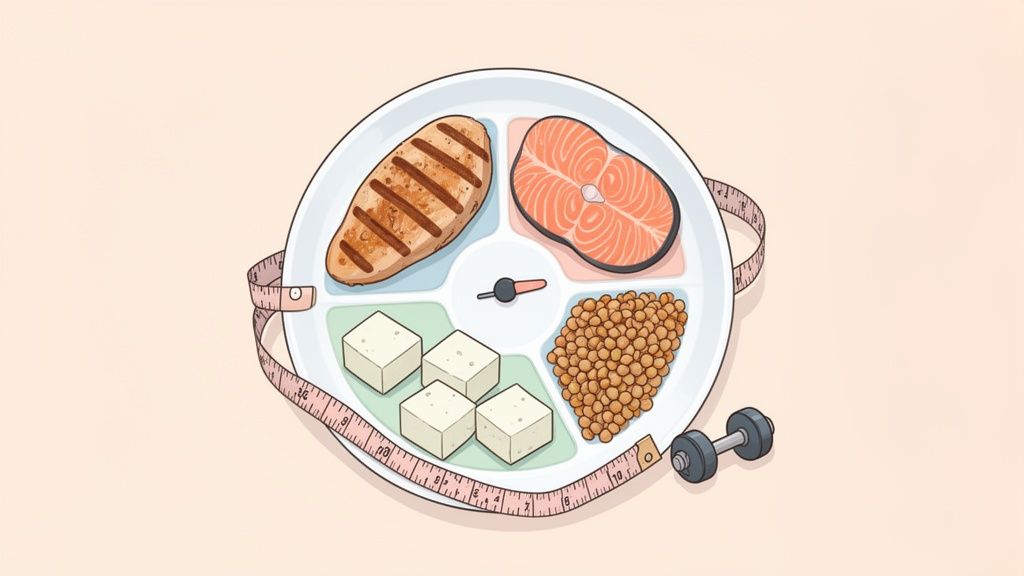
The real secret to losing weight isn't just about eating less—it's about eating smarter. When it comes to the protein intake for weight loss, making it a priority is probably the single best change you can make to your diet. Why? Because it helps you stay full, fires up your metabolism, and holds onto precious muscle.
Think of protein as the high-octane fuel that helps your body’s engine burn fat more effectively.
Why Protein Is Your Secret Weapon for Weight Loss
Trying to lose weight often feels like a constant fight against hunger, cravings, and a metabolism that seems to be slowing down. Protein is your best ally in this battle. Unlike carbs and fats, it tackles the problem from three different angles, making weight loss feel less like a chore and more like a natural, sustainable shift.
Let's dig into how it actually works.
The Triple-Threat Against Body Fat
First off, protein is the undisputed king of satiety—that feeling of being comfortably full and satisfied. When you eat a protein-rich meal, your body sends signals to your brain that you've had enough. This means fewer nagging hunger pangs and a much lower chance of reaching for those sugary snacks that can sabotage your efforts.
Next up is the Thermic Effect of Food (TEF). It sounds complicated, but it's simple: your body has to work harder (and burn more calories) to digest protein compared to fats and carbs. This gives your metabolism a nice little bump, helping you burn more calories throughout the day, even when you're just sitting at your desk.
Finally, when you're in a calorie deficit, you risk losing muscle along with fat. That's a big problem because muscle is metabolically active and helps keep your metabolism humming. Eating enough protein protects that hard-earned muscle, ensuring that the pounds you drop are coming from fat, not from your body’s calorie-burning machinery.
This infographic breaks down these core benefits perfectly.
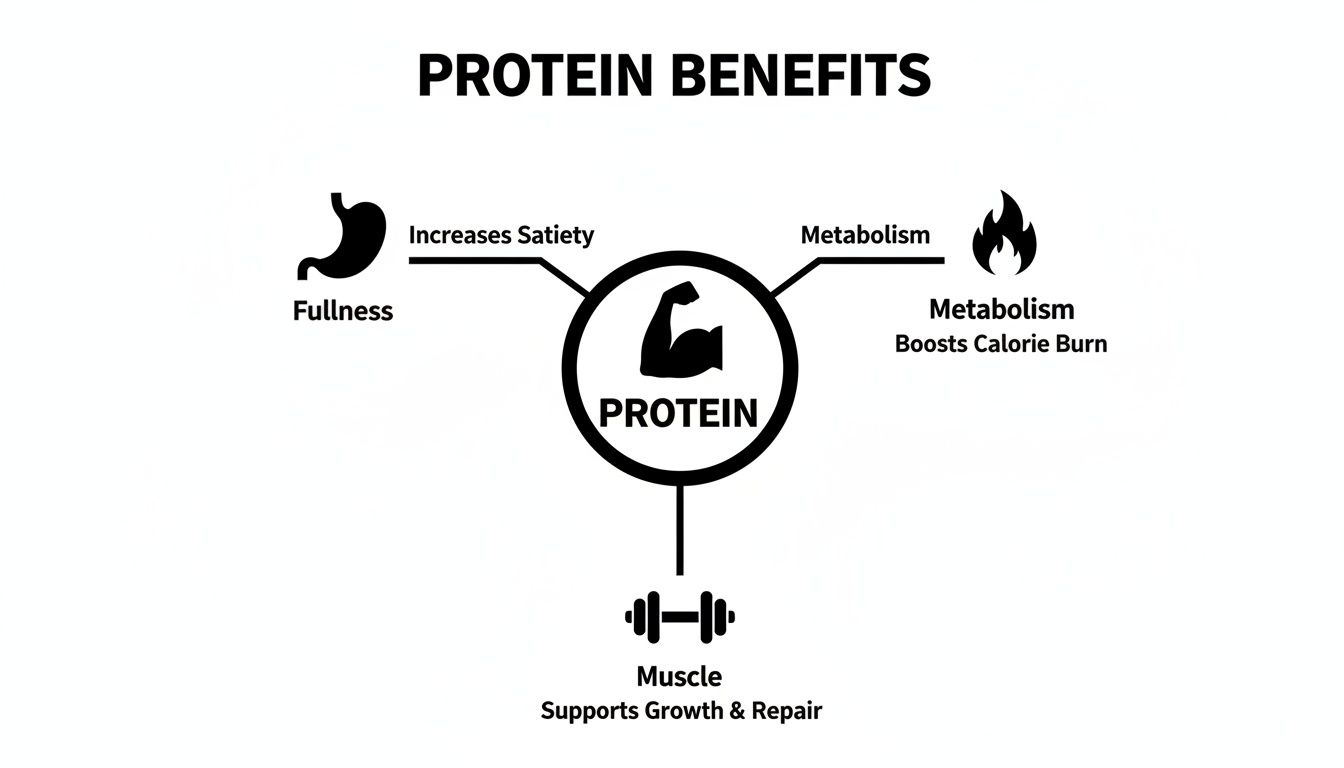
As you can see, protein’s power comes from this combination of keeping you full, boosting your metabolism, and protecting your muscle.
To see just how much of an edge protein gives you, here’s a quick comparison.
How Protein Outperforms Carbs and Fats for Weight Loss
| Benefit | Protein | Carbohydrates & Fats |
|---|---|---|
| Satiety (Feeling Full) | Very high. Protein is the most satiating macronutrient, significantly reducing hunger and cravings for hours. | Low to moderate. Often leads to quick energy spikes and crashes, triggering hunger sooner. |
| Thermic Effect (Calories Burned During Digestion) | High (20-30%). Up to 30% of the calories from protein are burned just to digest and process it. | Low (5-10% for carbs, 0-3% for fats). Very few calories are needed to process these nutrients. |
| Muscle Preservation | High. Provides the building blocks to protect and even build muscle tissue during a calorie deficit. | Low. Offers little to no support for muscle maintenance, increasing the risk of muscle loss during dieting. |
The takeaway is clear: protein is in a league of its own when your goal is effective and sustainable fat loss.
Making Healthier Choices Almost Effortless
On top of all the direct metabolic benefits, something interesting happens when you start eating more protein: your food choices naturally get better. When you feel genuinely satisfied after a meal, the siren call of sugary treats and refined carbs gets a whole lot quieter. This isn't just wishful thinking; there's solid science to back it up.
A fascinating Rutgers University study highlighted this exact effect. Dieters who increased their protein intake from 18% to 20% of their daily calories started making better food choices without even trying. While they lost the same amount of weight as a lower-protein group, they instinctively ate more green vegetables and cut way back on sugar and refined grains. You can read more about how protein influences healthier eating habits and see the data for yourself.
This shows that getting enough protein doesn't just change your body—it changes your behavior. It makes healthy eating feel less like a constant struggle with willpower and more like the easy, obvious choice.
Calculating Your Daily Protein Needs for Weight Loss
Figuring out exactly how much protein you need to lose weight can feel like a guessing game. Most of the standard advice you hear is geared toward just maintaining your health, not optimizing your body for fat loss while you're in a calorie deficit. When you're actively trying to slim down, your body has different needs—specifically, it needs more protein to protect your hard-earned, calorie-burning muscle.
Think of it like this: when you’re renovating a house (losing weight), you bring in extra support beams (protein) to make sure the core structure (your muscle) stays strong and doesn't get torn down along with the old walls. Just sticking to the standard amount isn't enough to prevent things from getting weak. That's why aiming for a higher protein target is so important for making sure the weight you lose is actually fat, not muscle.
The Evidence-Based Range for Fat Loss
It’s time to forget the old, one-size-fits-all guidelines. Modern research consistently shows that a higher protein intake is absolutely necessary during weight loss to preserve your lean body mass. This isn't just a theory; it's a physiological fact. When your body is low on calories, it starts looking for energy sources, and muscle tissue is an easy target without enough protein to protect it.
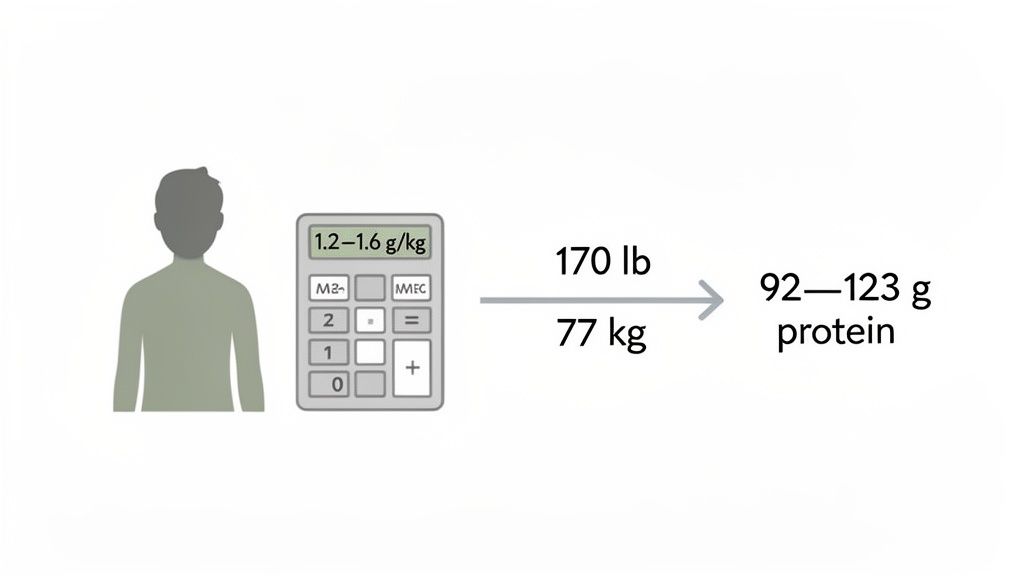
In fact, the scientific consensus has shifted quite a bit. A 2022 Consensus Statement from the International Protein Board directly challenges outdated advice, recommending 1.2 to 1.6 grams of protein per kilogram of body weight for anyone on a calorie-restricted diet. This extra amount acts as a shield, preventing your muscle from being broken down for fuel.
Hitting this higher target keeps your metabolism humming along, which makes your entire weight loss journey feel more effective and sustainable.
A Simple Step-by-Step Calculation
Don't worry, you don't need a degree in nutrition to figure this out. Calculating your personal protein goal is straightforward—just a simple three-step process to find your daily sweet spot.
Let's walk through it with an example for someone who weighs 170 pounds.
- Convert Your Weight to Kilograms (kg)
Just divide your weight in pounds by 2.2.
- Example: 170 lbs ÷ 2.2 = 77.3 kg
- Calculate the Low End of Your Range
Multiply your weight in kg by 1.2. This number is the minimum amount of protein you should aim for each day.
- Example: 77.3 kg x 1.2 = 92.7 grams of protein
- Calculate the High End of Your Range
Now, multiply your weight in kg by 1.6. This gives you the upper limit of your optimal range for weight loss.
- Example: 77.3 kg x 1.6 = 123.6 grams of protein
So, for a 170-pound person, the ideal daily protein intake for losing weight falls somewhere between 93 and 124 grams.
Your Personal Protein Target: Aiming for this specific range (1.2-1.6 g/kg) does more than just help the number on the scale go down. It gives you a steady stream of energy, helping you avoid the blood sugar crashes and frustrating fatigue that often come with low-calorie diets. It makes the whole process feel so much more manageable.
Why This Calculation Works
This method is so effective because it’s tailored to your body weight and specifically designed for the metabolic demands of being in a calorie deficit. When you hit this protein goal, you get a few key advantages that go way beyond just weight loss.
- It Protects Your Metabolism: By holding on to muscle, you keep your metabolic rate fired up, which means you burn more calories around the clock—even when you're resting.
- It Keeps You Fuller, Longer: Protein is the most filling macronutrient. It helps you naturally eat less throughout the day without feeling like you're starving.
- It Stabilizes Your Energy: A steady supply of protein helps regulate your blood sugar, which is key to preventing those energy dips that send you running for sugary snacks.
Understanding protein's role is a cornerstone of smart nutrition. If you're curious to learn more about how protein, carbs, and fats work together, check out our guide on what macronutrients and micronutrients are. This knowledge really empowers you to build a diet that works for your body and your goals.
Choosing the Best Low Sugar Protein Sources
Once you've figured out your daily protein target, the real fun begins: choosing where that protein comes from. And when weight loss is the goal—especially if you're cutting back on sugar—the quality of your protein sources is everything.
It’s a common misconception that all protein is created equal. The truth is, many protein-rich foods come with baggage, like hidden sugars and unhealthy fats, that can easily throw a wrench in your plans.
Think of it this way: you wouldn't build a house with bricks covered in sticky, sugary syrup. You'd want clean, strong bricks. Your body is no different. Lean, clean protein is the building material you need for a solid, healthy foundation.
Prioritizing Whole Food Proteins
The absolute bedrock of a high-protein, low-sugar diet is whole, unprocessed foods. These are your best bet because they deliver pure protein alongside essential vitamins, minerals, and fiber, without all the junk.
Whether you're an omnivore or plant-based, there are tons of fantastic options to fill your plate and help you nail your daily protein intake for weight loss.
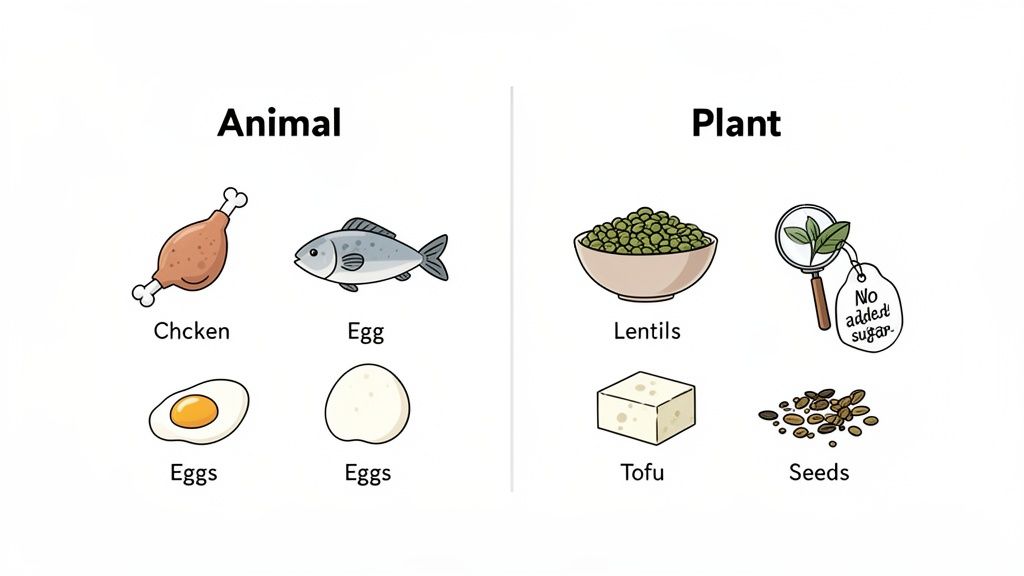
- Lean Animal-Based Proteins: These are the heavy hitters. They’re "complete" proteins, meaning they have all the essential amino acids your body can't make on its own. Stick to the good stuff: skinless chicken or turkey breast, lean cuts of beef like sirloin, fish like salmon and tuna, and of course, eggs. Plain Greek yogurt and cottage cheese are also excellent dairy choices.
- Nutrient-Dense Plant-Based Proteins: You can absolutely crush your protein goals on a plant-based diet. Lentils, chickpeas, black beans, tofu, tempeh, and edamame are all nutritional powerhouses. Nuts and seeds like almonds, chia seeds, and hemp seeds are also great because they pull double duty, providing both protein and healthy fats.
To give you a better idea, here's a quick look at some top-tier, low-sugar protein sources.
Top Low Sugar Protein Sources Per Serving
| Protein Source (100g serving) | Approximate Protein (grams) | Sugar Content |
|---|---|---|
| Chicken Breast (Skinless) | 31g | 0g |
| Salmon | 20g | 0g |
| Tuna (canned in water) | 25g | 0g |
| Eggs (2 large) | 13g | ~1g |
| Plain Greek Yogurt | 10g | ~4g (natural lactose) |
| Lentils (cooked) | 9g | 0g |
| Tofu (firm) | 8g | <1g |
| Almonds | 21g | ~4g |
This table just scratches the surface, but it shows how easy it is to find protein-packed options that won't spike your sugar intake.
How to Spot Hidden Sugars in Protein Products
This is where it gets tricky. The modern supermarket is a minefield of seemingly "healthy" products that are actually sugar bombs in disguise. Protein bars, shakes, and even flavored yogurts are notorious offenders.
Learning to read nutrition labels is your secret weapon.
Always flip the package over and find the "Added Sugars" line. That protein bar boasting 20 grams of protein might also be hiding 15 grams of sugar, making it little more than a glorified candy bar. Keep an eye out for sneaky sugar aliases like high-fructose corn syrup, cane sugar, dextrose, and maltodextrin.
Pro Tip: When you're grabbing a protein powder or shake, look for brands sweetened with stevia or monk fruit. Better yet, buy an unflavored powder and add your own natural flavor with a dash of cinnamon or a few berries.
Blending your own drinks at home is an even better way to control what goes into your body. For some easy and tasty ideas, check out our guide on delicious low-sugar, high-protein smoothies.
Making Smarter Everyday Choices
Weaving high-quality protein into your diet isn't about a radical overhaul. It’s about making small, consistent upgrades. A little more mindfulness in the kitchen and at the grocery store goes a long way.
Here are a few simple swaps to get you started:
- Instead of flavored yogurt, grab plain Greek yogurt and toss in a handful of fresh berries.
- Instead of pre-marinated meats, buy plain cuts and season them yourself with herbs and spices.
- Instead of a sugary protein bar, pack a handful of almonds and a hard-boiled egg for a quick snack.
- Instead of breaded chicken or fish, go for grilled, baked, or broiled versions to skip the extra carbs.
By focusing on whole foods and becoming a savvy label-reader, you put your protein to work for your weight loss goals, not against them. These little changes add up quickly, helping you build an effective and sustainable eating plan that you can actually stick with.
How to Time Your Protein Intake for Maximum Results
Alright, so you’ve figured out your daily protein number and you know which low-sugar sources to reach for. The next piece of the puzzle is timing. When you eat your protein can be just as crucial as how much you eat, turning a simple daily goal into a powerful strategy for crushing hunger and keeping your energy steady.
Think of it like this: your daily protein target is a full day's supply of bricks for a construction crew. You wouldn't just dump the entire truckload on-site at 7 AM and call it a day, right? Of course not. You’d schedule smaller, steady deliveries to keep the crew working efficiently from morning till night. Your body handles protein the exact same way.
Spreading your protein intake for weight loss evenly throughout the day gives your body a constant, reliable stream of amino acids. This approach keeps your muscles happy and, just as importantly, helps you feel full and satisfied between meals.
The Power of Even Distribution
One of the most common mistakes I see is people back-loading their protein, maybe with a massive steak for dinner. While you might technically hit your daily number that way, your body can only make good use of so much protein in one sitting for muscle repair. A huge surplus isn't used as effectively.
Spreading it out, on the other hand, puts you in the driver's seat of your appetite all day long. A protein-forward breakfast lays a solid foundation, helping you sidestep that classic mid-morning energy slump that sends you running for a sugary pick-me-up. Following it up with a balanced lunch and dinner keeps you feeling stable, making weight loss feel less like a constant battle against hunger.
The sweet spot for most people is 25-30 grams of protein at each main meal—breakfast, lunch, and dinner. This range has been shown time and again to maximize the signals that tell your brain you're full while effectively stimulating muscle protein synthesis (the process of repairing and maintaining muscle).
This steady supply is what helps you feel in control, not deprived.
What 25-30 Grams of Protein Looks Like
Getting that much protein into a meal is easier and more delicious than you might think. We're not talking about endless plates of plain chicken breast.
Here are a few real-world examples of what a meal with 25-30 grams of protein looks like:
- Breakfast: 3 eggs scrambled with spinach, plus a side of plain Greek yogurt.
- Lunch: A big salad topped with a 4-ounce piece of grilled salmon and a sprinkle of pumpkin seeds.
- Dinner: A 4-ounce serving of lean ground turkey mixed into a chili with black beans and quinoa.
See? These are satisfying meals that are perfectly built to help you nail your protein timing.
Don't Forget Smart Protein Snacks
Snacks are your secret weapon for bridging the gap between meals. They're your chance to keep that protein supply steady and your hunger locked down, preventing you from getting so ravenous that you overeat at your next meal. The key is picking snacks that deliver a protein punch without all the sugar you find in typical convenience foods.
Here are a few simple and effective ideas:
- A hard-boiled egg (~6g protein)
- A small handful of almonds (~6-7g protein)
- A single-serving cup of cottage cheese (~12-14g protein)
- A quality beef jerky stick (~9g protein)
By thoughtfully planning your meals and snacks to include these consistent doses of protein, you set your body up for success. You’ll be better equipped to burn fat, hold onto muscle, and keep hunger from running the show. It’s a methodical approach that makes your weight loss journey feel much more sustainable.
A Sample High Protein Meal Plan for Weight Loss
Knowing how much protein you need is the first step, but what does that actually look like on a plate? It's one thing to have a target number and another to hit it consistently.
To help you connect the dots, I’ve put together a simple one-day meal plan. This isn't about fancy recipes or ingredients you can't find. It’s a straightforward, practical example that packs in about 115 grams of high-quality protein using whole, low-sugar foods that require minimal cooking. Think of it as a roadmap to show you just how easy a high-protein day can be.
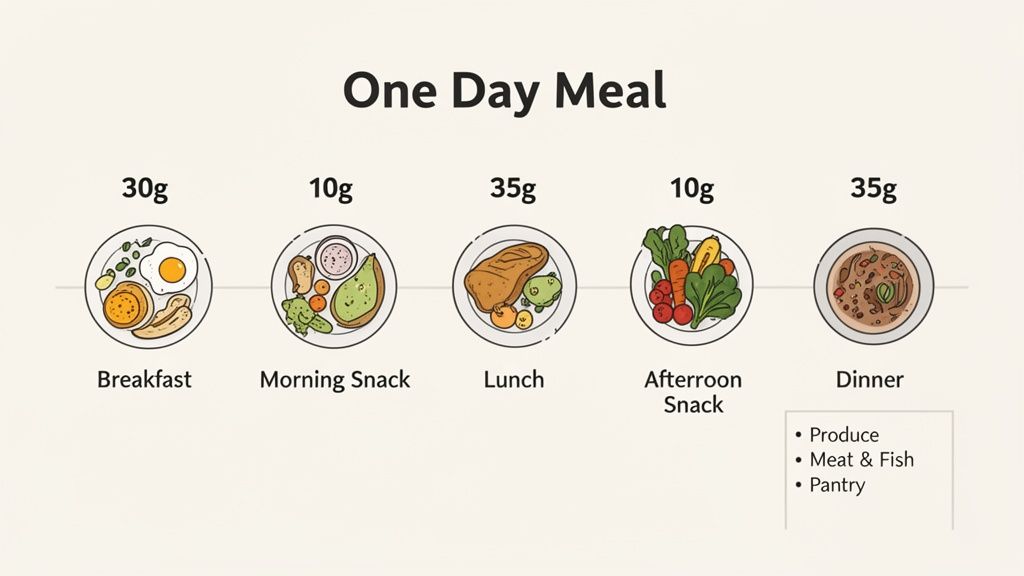
Your High Protein Day
Here’s a breakdown of the day. The goal is to spread your protein intake for weight loss out evenly, which helps keep you feeling full and supports your muscles all day long.
Breakfast (approx. 30g protein)
- Meal: 3 scrambled eggs cooked with a handful of spinach.
- Side: 1/2 cup of plain Greek yogurt topped with a few fresh berries.
- Why it Works: This powerful combo starts your day off right, helping you sidestep that classic mid-morning energy slump that so often leads to grabbing a sugary snack.
Lunch (approx. 35g protein)
- Meal: A big salad with mixed greens, cucumber, and tomatoes.
- Topped with: 4 oz of pre-cooked grilled chicken breast strips (that’s about the size of a deck of cards).
- Dressing: A simple drizzle of olive oil and fresh lemon juice.
- Why it Works: It’s light but surprisingly filling. The protein punch here is perfect for powering you through the rest of your afternoon without feeling weighed down.
Dinner (approx. 40g protein)
- Meal: 5 oz baked salmon fillet seasoned with your favorite herbs.
- Side: Steamed broccoli and a small serving of quinoa.
- Why it Works: Salmon is a superstar—it’s loaded with both protein and healthy omega-3 fatty acids. It’s a meal that supports your overall health and keeps you satisfied for hours.
Snacks (approx. 10g protein)
- Option 1: A hard-boiled egg.
- Option 2: A small handful of almonds.
- Why it Works: These are simple, grab-and-go options that bridge the gap between meals perfectly, keeping hunger pangs away without any added sugar.
This meal plan is just a template, not a strict set of rules. Think of it as a guide to show you what a balanced, high-protein day can look like. Don't be afraid to swap the chicken for turkey, the salmon for tuna, or the almonds for walnuts. Keeping things interesting is key to sticking with it!
If you're looking for more detailed guidance, you can find a great resource on creating an effective meal plan for weight loss.
Your Simple Shopping List
To make things even easier, here’s a quick shopping list organized by where you'll find things in the store. Going in with a plan is the best way to avoid those impulse buys that can derail your progress. A little prep goes a long way, and if you're ready to get organized, we have tons of meal prep ideas for weight loss that will save you a ton of time during the week.
Produce
- Spinach
- Mixed greens
- Cucumber
- Tomatoes
- Broccoli
- Berries (fresh or frozen)
- Lemons
Meat & Fish
- Chicken breasts (pre-cooked grilled strips are a huge time-saver)
- Salmon fillets
Dairy & Eggs
- A dozen eggs
- Plain Greek yogurt
Pantry
- Quinoa
- Raw almonds
- Olive oil
How to Track and Sustain Your Progress
Knowing what to eat is one thing, but actually doing it consistently is where the magic happens. To really get results with a higher-protein approach, you have to track your progress. This isn't about being restrictive or obsessive; it's about building awareness and seeing first-hand how your efforts pay off.
Think of it like this: tracking is your personal feedback loop. When you see your daily protein and sugar numbers, you start to connect the dots. You’ll notice how that high-protein breakfast kept you from raiding the pantry mid-afternoon, or how hitting your protein goal left you feeling energized instead of sluggish.
This simple act turns vague intentions into real, measurable results. It gives you the data you need to understand what your body responds to, transforming a "diet" into a sustainable way of life.
Turning Data Into Lasting Change
Just the act of writing down what you eat can be a powerful catalyst for change. A fascinating study from the University of Illinois drove this point home. They followed dieters and found that a whopping 41% of the people who consistently tracked their food lost an average of 12.9% of their body weight in just one year.
What was their secret? They consistently aimed for about 80 grams of protein and 20 grams of fiber within a 1,500-calorie plan. You can explore the study’s findings on protein and fiber density yourself—it’s a perfect example of how tracking provides a clear, data-driven roadmap to success.
Tracking isn't about hitting your numbers perfectly every single day. It's about gathering information so you can make smarter choices tomorrow. You stop guessing and start knowing.
Simple Tools for Staying on Track
Getting started with tracking doesn't have to be a huge production. The best tool is whichever one you'll actually use day in and day out.
Here are two solid options:
- The Classic Pen and Paper: Seriously, a simple notebook works wonders. Taking a few minutes at the end of the day to jot down your meals and ballpark your protein intake is a very hands-on way to stay mindful and reinforce your new habits.
- Modern Tracking Apps: An app like StopSugar can make the whole process effortless and accurate. You can log meals, see your protein and sugar totals in real-time, and even track how you’re feeling. It gives you instant feedback with very little effort.
In the end, it doesn't matter if you choose a journal or an app. The goal is to build a system that keeps you honest and engaged. Tracking lights the way forward, giving you the clarity and motivation you need to stick with it and finally reach your goals.
Common Protein Questions Answered
Starting a high-protein diet to lose weight always brings up a few questions. That's completely normal. Let's tackle some of the most common concerns so you can move forward with confidence.
Getting these details straight will help you navigate your new eating plan, turning what might seem like hurdles into simple, actionable steps.
Will Eating More Protein Harm My Kidneys?
This is probably the number one question I get, and for most people, it's a myth. If you have healthy kidneys, a high-protein diet within the recommended range for weight loss—that 1.2 to 1.6 g/kg of body weight we talked about—is perfectly safe. Your body is built to handle it.
The confusion comes from studies on people with pre-existing kidney disease. For them, a high protein load can be problematic. So, if you have any underlying health issues, especially with your kidneys, definitely chat with your doctor before making a big change.
Can I Get Enough Protein on a Vegan Diet?
You absolutely can. It just takes a little more planning to make sure you're getting a complete range of amino acids.
The trick is to build your meals around a variety of plant-based powerhouses. Make these your staples:
- Legumes: Lentils, chickpeas, and black beans are fantastic.
- Soy: Tofu, tempeh, and edamame are your friends.
- Whole Grains: Quinoa is a standout because it's a complete protein all on its own.
- Nuts and Seeds: Think hemp seeds, chia seeds, and almonds.
A classic strategy is food combining, like pairing rice and beans, to ensure you get all the essential amino acids your body needs in one meal.
Do I Need Protein Powder to Reach My Goals?
Not at all. Protein powder is a convenient supplement, but it's not a requirement. Your first priority should always be whole foods, because they offer so much more than just protein—vitamins, minerals, and fiber are all part of the package.
That said, if you're constantly on the go and find it tough to hit your protein target, a quality, low-sugar protein shake can be a lifesaver. Just make it a habit to read the nutrition label to dodge hidden sugars or funky additives.
What Happens If I Add Protein Without Reducing Calories?
This is such an important point. Protein is a powerful tool, but it doesn't create magic. At the end of the day, weight loss boils down to being in a calorie deficit—burning more than you eat.
If you just pile more protein onto your current diet, you're also piling on more calories, which will likely cause you to gain weight. The real strategy is to swap refined carbs and fats for lean protein. This helps lower your total calorie count while keeping you full and protecting your muscle mass.
If you find you need more personalized guidance to put all the pieces together, exploring professional fitness and nutrition coaching can make a world of difference in your results.