What Is Clean Eating A Simple Guide
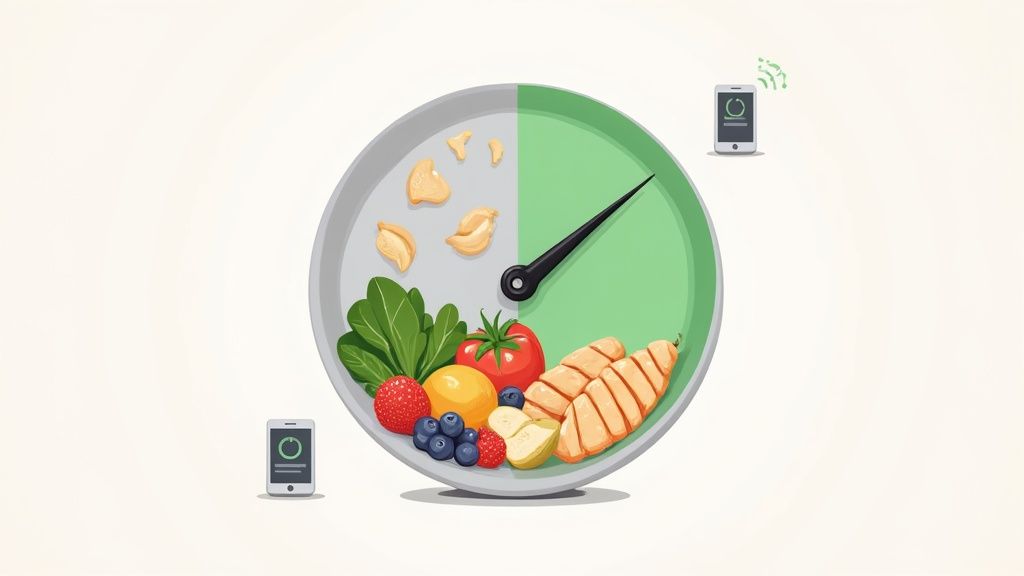
At its heart, clean eating is a lifestyle built around eating whole, minimally processed foods—the kind that are as close to their natural state as possible. It's less of a strict diet and more of a common-sense way to fuel your body with real, nutrient-rich ingredients.
Think of it as simply choosing food that looks like it came from a farm, not a factory.
What Does Clean Eating Actually Mean?
Let's cut through the noise and get straight to what clean eating is all about. It’s not some complicated set of rules designed to make you miserable. Instead, it’s a simple philosophy: eat real food.
Think about it like this: if you owned a high-performance car, you wouldn't fill the tank with cheap, sludgy fuel and expect it to run well, right? Your body is an infinitely more complex and valuable machine. It deserves premium fuel to perform at its best.

This approach is all about making mindful choices that help you feel your best, not depriving yourself. It's about knowing where your food comes from and appreciating how it was grown or raised.
A big part of clean eating is also choosing foods and drinks that are free from artificial additives and unwanted chemicals. This can even extend to simple daily choices, like opting for a high-quality, chemical-free decaffeinated coffee.
The Shift Toward Natural Ingredients
This isn't just another passing health trend. We're seeing a major shift in how people think about food. The growing demand for transparency and natural ingredients has pushed over half of consumers to recently rethink their eating habits.
Today, 40% of shoppers make fresh produce a priority, and 33% actively look for products without artificial ingredients. This is especially true for younger people—nearly half of all Millennials and Gen Z are willing to spend more on products with clean labels.
Clean eating nourishes your body with plentiful vitamins and minerals, high-quality protein, and healthy fats. This improves heart and brain health, assists with weight management, builds a stronger immune system, and increases energy levels.
Whole Foods vs. Processed Foods
The biggest difference to understand in clean eating is the one between whole and processed foods. Whole foods are things you can easily recognize: an apple, a sweet potato, a fillet of salmon. They're simple.
On the other end of the spectrum are heavily processed and ultra-processed foods. These usually come in a box or a bag with a long list of synthetic ingredients, added sugars, and preservatives you can't pronounce. To really get a handle on this key distinction, check out our guide on what ultra-processed foods are.
Making the switch is all about starting with small, sustainable swaps that add up over time.
To make it even clearer, here’s a quick summary of the core 'Do's and Don'ts' of a clean eating lifestyle.
Clean Eating At A Glance
| Core Principle | What It Means In Practice |
|---|---|
| Prioritize Whole Foods | Build meals around fruits, vegetables, lean proteins, and whole grains. |
| Read Labels Carefully | If the ingredient list is long and full of words you don't recognize, it's likely heavily processed. |
| Limit Added Sugars | Avoid sugary drinks, desserts, and packaged snacks with hidden sugars. |
| Cook More at Home | This gives you full control over the ingredients, oils, and seasonings you use. |
| Stay Hydrated with Water | Ditch the sodas and juices. Water is the cleanest fuel for your body. |
Ultimately, clean eating is about getting back to basics and honoring your body with the simple, nourishing foods it was designed to thrive on.
The Foundational Rules of Clean Eating
Clean eating isn’t some complicated diet with a long list of forbidden foods. It's much simpler than that. Think of it as a set of helpful guidelines—not rigid rules—designed to get you back to basics and make healthier choices feel second nature.
The main idea is to eat foods that are as close to their natural state as possible. Picture yourself in a grocery store. Clean eating means spending most of your time around the perimeter, where you find all the fresh produce, lean meats, and dairy. It's about steering clear of those middle aisles packed with processed, packaged goods.
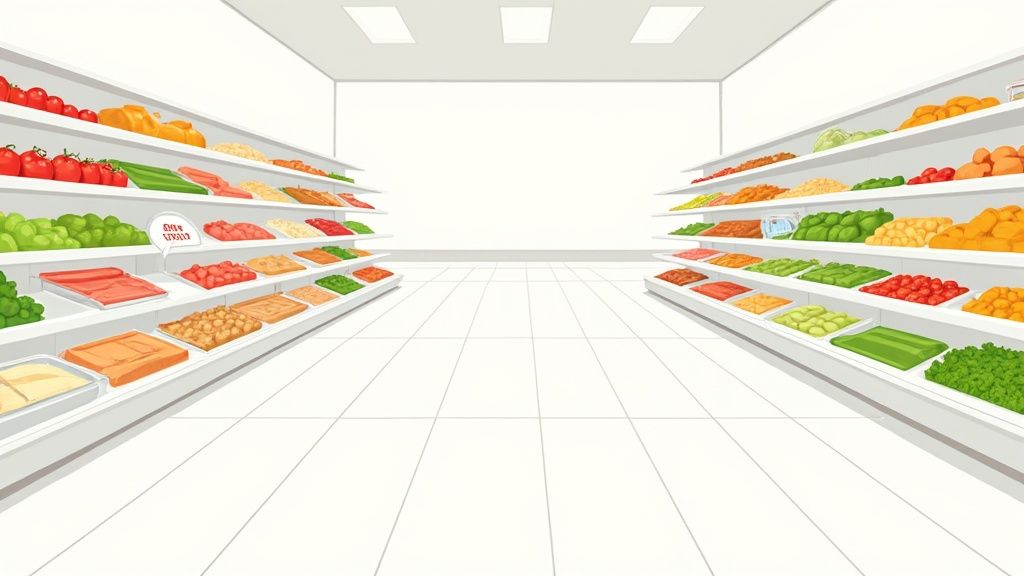
This one simple shift helps you fill your cart, and your plate, with foods your body actually recognizes and knows how to use for energy.
Prioritize Whole Foods
The cornerstone of clean eating is building your meals around whole foods. These are foods with just one ingredient, or very close to it. They're what your body is actually designed to run on, packed with the nutrients you need to feel your best.
A well-balanced plate should be a colorful mix of these powerhouses:
- Fruits and Vegetables: Try to eat the rainbow. Think leafy greens, bright bell peppers, vibrant berries, and citrus fruits to get a huge variety of vitamins and antioxidants.
- Lean Proteins: Protein is key for repairing muscle and keeping you feeling full and satisfied. Great sources include chicken breast, fish, beans, lentils, and eggs.
- Healthy Fats: These are crucial for brain health and fighting inflammation. You'll find them in avocados, nuts, seeds, and good old olive oil.
- Whole Grains: These guys give you slow-release, sustained energy. Choose brown rice, quinoa, oats, and whole-wheat bread over their refined white versions.
If you want to get into the nitty-gritty of how these all work together, our guide breaks down everything you need to know about what macronutrients and micronutrients are.
Read and Understand Food Labels
To really embrace clean eating, you have to become a bit of a food detective. Food labels are your secret weapon for figuring out what’s actually in your food. The goal is simple: look for a short ingredient list with words you can actually pronounce.
If the list is a mile long and filled with chemicals, artificial additives, and a dozen different names for sugar, that’s a red flag. It’s a sure sign the food is heavily processed and full of stuff your body doesn't need.
Limit Ultra-Processed Foods and Added Sugars
This one goes hand-in-hand with reading labels. Ultra-processed foods—things like sugary cereals, most frozen dinners, and packaged snacks—are engineered for a long shelf life, not for your long-term health. They're often stripped of important nutrients like fiber and loaded with empty calories from added sugars and unhealthy fats.
A clean eating approach is about reducing these foods, not banning them forever. It's about shifting the balance, so the vast majority of what you eat is whole and nourishing.
Making this change is one of the fastest ways to stabilize your energy levels. You'll say goodbye to those afternoon sugar crashes that leave you feeling drained and irritable.
Stay Hydrated with Water
Last but not least, one of the simplest and most effective habits you can adopt is drinking more water. Your body relies on it for just about everything, from flushing out toxins to getting nutrients where they need to go.
Sugary drinks like soda, juice, and sweetened coffees can add hundreds of empty calories to your day without offering any real nutritional value. Swapping them out for water is an easy win that supports every other part of your clean eating journey.
The Payoff: Benefits You Can Actually Feel
Let's be real—theories about long-term health are great, but what you really want are changes you can feel now. Clean eating isn't just an abstract concept; it's a way of living that can completely shift your day-to-day experience.
Think about that all-too-familiar 3 PM slump, when your energy tanks and you find yourself reaching for coffee or a sugary snack just to get through the afternoon. When you start fueling your body with whole foods instead of quick-fix sugars, you trade that rollercoaster for steady, reliable energy that lasts all day long.
And that's just the start. The benefits begin to stack up, affecting everything from how you think to how you feel.
Clearer Thinking and a Better Mood
The link between what you eat and how you feel mentally is incredibly strong. When you load up on nutrient-packed, clean foods, you're not just feeding your body—you're supporting a healthy gut, which has a direct line to your brain.
Once your system isn't constantly battling inflammation from processed junk and sugar, your mind is free to do its job. People who make the switch often notice a big difference:
- Laser-Sharp Focus: Tasks that used to feel overwhelming become easier to tackle without your mind wandering off.
- A More Even Keel: Say goodbye to the irritability and moodiness that come with blood sugar spikes and crashes.
- Lifting the Brain Fog: That cloudy, slow feeling starts to disappear, replaced by a sense of genuine alertness.
This isn't just a niche idea; it's a massive shift in how we view food. The global health and wellness food market was valued at an astounding $858.8 billion in 2023** and is expected to soar to **$1.6 trillion by 2030. People are actively looking for foods that boost focus, improve gut health, and stabilize their mood—going way beyond just a "healthy" label. You can dig into the data on this growing market on grandviewresearch.com.
Better Digestion and Effortless Weight Balance
Clean eating is one of the best things you can do for your digestive system. All those fiber-rich fruits, vegetables, and whole grains keep things moving smoothly, helping to cut down on annoying issues like bloating and discomfort.
Once you start giving your body the right fuel, it starts to find its own natural equilibrium. For many, this leads to weight management that feels natural, not forced.
You'll find yourself feeling genuinely full and satisfied after meals, which naturally quiets those cravings for sugary, processed snacks. It's not about restriction; it's about providing your body with what it actually needs to feel good. The result? You feel lighter, more comfortable, and full of energy from the inside out.
Busting Common Clean Eating Myths
The whole idea of "clean eating" can get a little messy, tangled up in myths that make it sound way too complicated, restrictive, or just plain impossible for real life. All this bad information creates roadblocks, often stopping people before they even get started. So, let’s clear the air and tackle some of the biggest misconceptions holding you back.
First up is the most common hurdle: the belief that you need a trust fund to eat clean. While it’s true that some specialty health food stores have sky-high prices, the real foundation of clean eating is built on simple, affordable basics. It’s more about shopping smart than buying expensive labels.
Myth 1: Clean Eating Is Too Expensive
This is a big one, but it's easily busted with a few savvy strategies. You really don’t need to buy everything organic or fill your cart with trendy, hard-to-pronounce superfoods to eat well.
Here’s how you can eat clean without draining your bank account:
- Embrace Frozen Produce: Seriously, the freezer aisle is your friend. Frozen fruits and veggies are picked at their prime and flash-frozen, which locks in all the good stuff. They're often cheaper than fresh, last for ages, and are perfect for tossing into smoothies, soups, and stir-fries.
- Buy Seasonal and Local: When fruits and vegetables are in season, there’s more of them, and that drives the price down. Hitting up a local farmer's market can also slash your grocery bill while supporting your community.
- Cook in Batches: Making a big pot of brown rice, quinoa, or a tray of roasted vegetables on a Sunday afternoon can save you a ton of time and money during the week. It’s the secret to making healthy meal prep feel effortless.
Even with everyone feeling the pinch financially, the desire for healthier food isn't going away. Globally, 36% of consumers are trying to prioritize clean eating, and 31% are actively steering clear of processed foods. The cost is a real issue, though—a whopping 69% of Americans say that the high price of healthy food makes it harder to stick to their goals. You can read more about this consumer trend at the Global Wellness Institute.
Myth 2: You Have to Be Perfect All the Time
This "all-or-nothing" mentality is a trap, and it’s the fastest way to burn out. Clean eating isn't about being perfect; it's about making progress. Life happens. There will be office parties, holidays, and crazy evenings when grabbing takeout is the only sane option.
A much healthier way to think about it is the 80/20 rule. Focus on eating clean, whole foods 80% of the time. For the other 20%, give yourself the grace to enjoy your favorite treats without guilt. This balance is what keeps you from feeling deprived and turns healthy eating into a lifestyle you can actually stick with.
Myth 3: It Takes Too Much Time and Effort
Between work, family, and everything else on your plate, who has hours to spend in the kitchen every day? The good news is, you don’t have to. A little bit of planning goes a very long way.
Simple meal prep—like chopping a bunch of veggies or cooking a batch of chicken on a Sunday—can slash your cooking time during the week. Clean eating can be as simple as baked salmon with roasted broccoli and a sweet potato, a meal that takes less than 30 minutes to throw together. It’s all about finding simple, nourishing recipes, not chaining yourself to the stove. With a bit of practice, it’ll become second nature.
Your Step-by-Step Plan to Start Eating Clean
Jumping into clean eating doesn't mean you have to flip your life upside down overnight. Far from it. The real secret is making a series of small, smart choices that add up over time. This simple plan will walk you through those first few steps, making the switch feel both natural and totally doable.
The best place to begin is where all your food habits start: your kitchen. Let's give your pantry and fridge a little reset to make room for foods that truly nourish you.
Start With a Pantry Clean-Out
Go ahead, open up those cupboards. Your mission is to spot the ultra-processed stuff. You'll know them when you see them—they usually come in flashy packages with ingredient lists a mile long, full of added sugars and words you can't pronounce.
You don't have to toss everything at once. The first step is just building awareness. Get good at spotting hidden sugars and weird chemicals by learning how to read nutrition labels. This guide will turn you into a label-reading pro. From there, try swapping out just one or two processed snacks a week. Ditch the sugary granola bars for a simple handful of nuts and dried fruit. Easy.
Create a Smart Shopping List
This is where the magic happens. A solid grocery store strategy makes all the difference, and the simplest one is to shop the perimeter of the store. This is where you'll find all the fresh, whole foods.
- Fresh Produce: Get colorful! Load up your cart with a wide variety of fruits and veggies.
- Lean Proteins: Swing by the meat and seafood counters for things like chicken, fish, and eggs.
- Dairy or Alternatives: Grab some plain yogurt, milk, or unsweetened non-dairy milks.
Sticking to the outer aisles helps you naturally sidestep the middle aisles, which are usually a minefield of processed snacks, sugary drinks, and packaged meals. It’s a simple trick that makes clean choices almost automatic. And if you've got a packed schedule, these on-the-go diet tips are a lifesaver for staying on track.
Make Simple, Impactful Swaps
You can start transforming your diet right now with a few easy swaps. Remember, this isn't about depriving yourself. It's about upgrading your choices to more nutrient-dense options that will leave you feeling great.
Here are a few simple one-to-one replacements you can make to start eating cleaner today.
Easy Clean Eating Swaps For Your Daily Meals
| Instead Of This | Try This Clean Swap |
|---|---|
| Sugary Breakfast Cereal | Oatmeal with fresh berries and a sprinkle of cinnamon. |
| White Bread or Pasta | 100% whole-wheat bread or whole-grain pasta. |
| Creamy, Bottled Salad Dressing | A simple mix of olive oil, lemon juice, and herbs. |
| Potato Chips | Air-popped popcorn or a handful of raw almonds. |
These little changes might seem small, but they add up fast, fueling your body with better ingredients without feeling like you're missing out.
It's also important to get past some of the common misconceptions that might be holding you back.
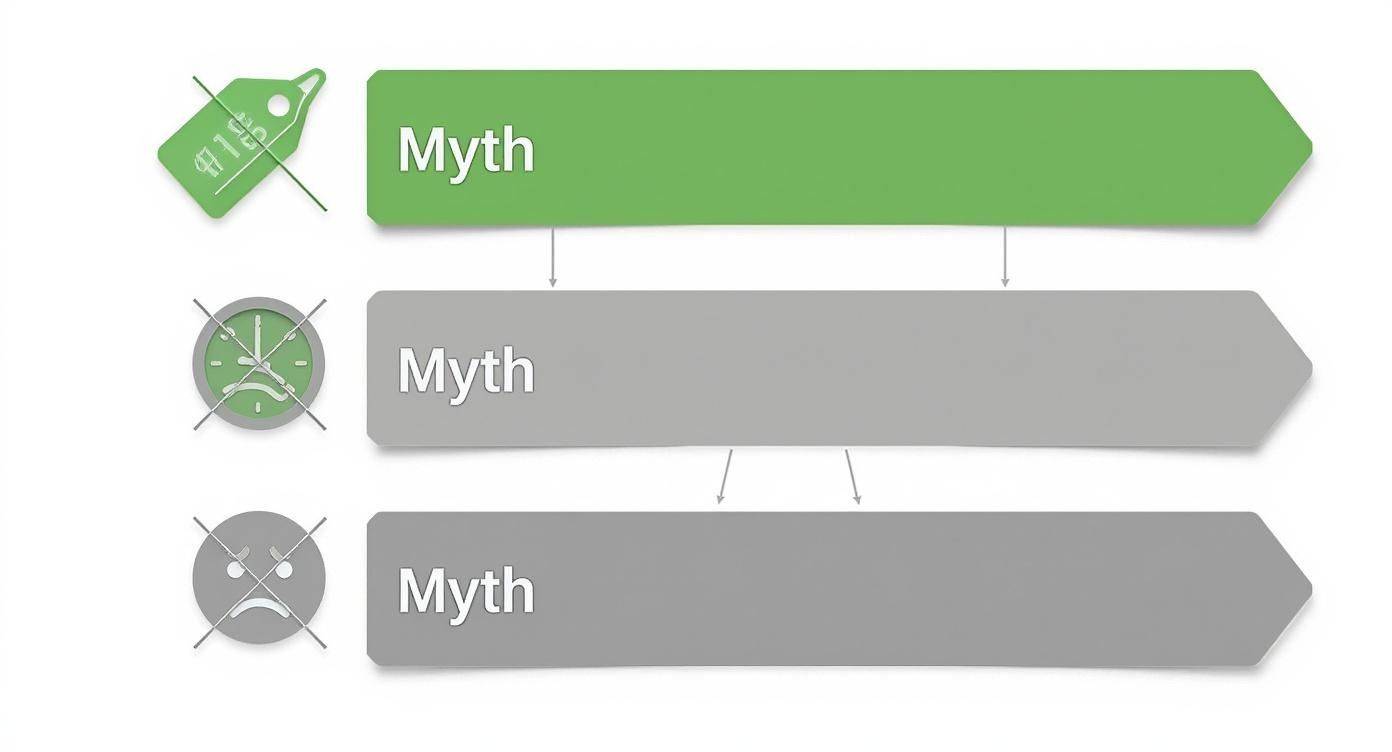
As you can see, clean eating is flexible, affordable, and absolutely possible even with a hectic lifestyle. It's not about being perfect; it's about making better choices, one meal at a time.
Your 3-Day Kickstart Plan
Ready to see what it feels like? Here’s a simple 3-day plan to give you a taste of clean eating.
- Day 1: Scrambled eggs with spinach for breakfast, a large salad with grilled chicken for lunch, and baked salmon with roasted broccoli for dinner.
- Day 2: Plain Greek yogurt with fruit for breakfast, a quinoa bowl with black beans and avocado for lunch, and turkey meatballs with zucchini noodles for dinner.
- Day 3: A smoothie with spinach, banana, and protein powder for breakfast, leftover quinoa bowl for lunch, and a hearty lentil soup for dinner.
See? It's just real food. Every small step you take is a big move toward a healthier, more energetic you.
Answering Your Clean Eating Questions
Whenever you start a new way of eating, you're bound to have questions. It’s totally normal. Think of this journey as an experiment—finding what feels best for your body. But it definitely helps to get clear answers to the common questions that pop up along the way.
Let’s dig into the practical stuff that comes up when you take clean eating from a cool idea and into your actual kitchen.
Does Everything I Eat Need to Be Organic?
Let's tackle the big one right away: the budget question. The short answer? Absolutely not.
While organic food is great if you can swing it, it’s not a mandatory part of eating clean. The real goal is to eat whole foods—the stuff that doesn't have a long list of ingredients. You can easily do that with regular, non-organic produce.
A really practical way to approach this is by using the "Dirty Dozen" and "Clean Fifteen" lists from the Environmental Working Group (EWG).
- The Dirty Dozen: This is a list of the 12 fruits and veggies that tend to have the most pesticide residue. If you’re going to spend a little extra on organic, these are the ones to focus on. Think strawberries, spinach, and apples.
- The Clean Fifteen: On the flip side, these are the items with the least amount of residue. Avocados, sweet corn, and onions almost always make this list, so you can feel good about buying them conventionally.
Using these guides helps you be strategic with your grocery money. It’s all about making better choices, not perfect ones.
How Can I Eat Clean at Restaurants?
Eating out is part of life! It doesn't have to throw a wrench in your plans. A little bit of forethought can make all the difference, so you can enjoy a meal with friends and still feel great about your choices. The trick is to be proactive, not reactive.
Take a peek at the menu online before you go. Look for simple words like "grilled," "baked," or "steamed." And never, ever be afraid to ask for what you want.
Most chefs are more than willing to make small tweaks. Asking for sauce or dressing on the side is a game-changer—it puts you in control. You can almost always swap fries for a side salad or some steamed veggies, too.
It’s these simple swaps that empower you to stick to your goals, no matter where you're eating.
Is Clean Eating the Same as Paleo or Keto?
This is a really common question, and it's easy to see why there's confusion. But no, they're not the same thing. While they might share some common ground, clean eating is a different animal altogether.
The best way to think about it is that clean eating is a flexible philosophy, whereas diets like Paleo and Keto are more like strict rulebooks.
- Clean Eating: The focus is on the quality of the food and how little it’s been messed with. It welcomes whole grains, beans, and dairy, as long as they’re in their simplest form and you feel good eating them.
- Paleo: This diet cuts out entire food groups—no grains, no dairy, no legumes. The idea is to eat more like our hunter-gatherer ancestors.
- Keto: This one is all about drastically cutting carbs to get your body to burn fat for energy instead. It’s a very specific metabolic goal.
The real beauty of clean eating lies in its adaptability. It’s not a rigid, all-or-nothing diet. It’s a sustainable approach that makes nutrient-dense, whole foods the star of the show without making you feel like you're missing out. That flexibility is exactly why it’s so much easier to stick with long-term.