What Is Refined Sugar and How Can You Avoid It?
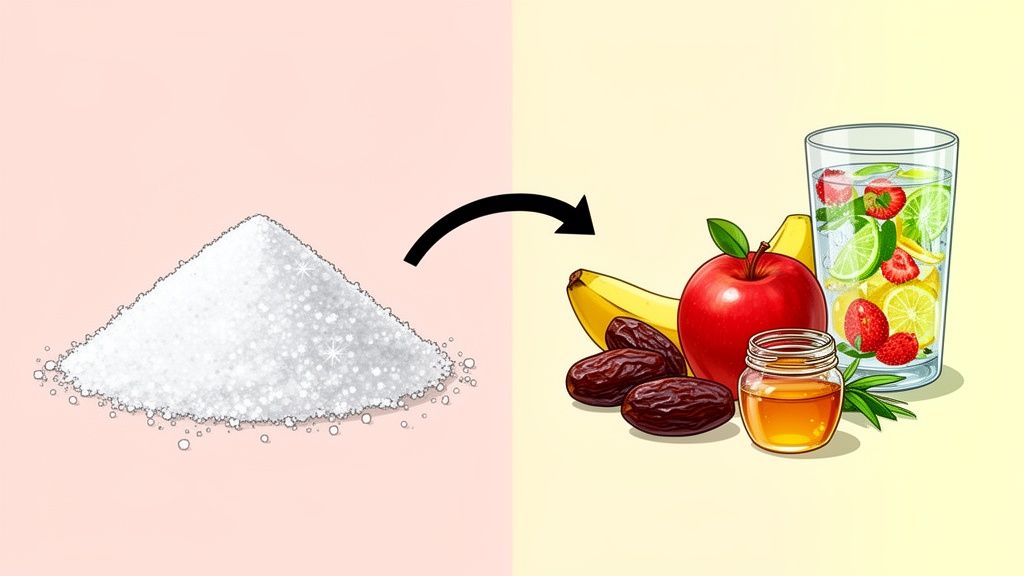
When you hear the term “refined sugar,” what comes to mind? For most of us, it’s that familiar white, crystalline stuff in the sugar bowl. But what does “refined” actually mean?
Essentially, refined sugar is a type of sugar that’s been heavily processed to remove everything but the pure, sweet crystals. It started out as a whole plant, like sugarcane or a sugar beet, but it’s been stripped of all its natural fiber, water, vitamins, and minerals.
Think of it like this: eating a whole sugarcane stalk is a bit like eating a whole apple. You get the sweetness, but it’s packaged with fiber and other nutrients. Refined sugar is what happens when you take that apple, boil it down, and process it until all you have left is a pile of concentrated apple-flavored sugar powder. All the good stuff is gone.
From Plant to Pantry: The Refining Process
So, what exactly happens during that refining process? It’s a multi-step journey designed to isolate one thing and one thing only: pure, concentrated sucrose.
It starts with crushing sugarcane or sugar beets to extract their juice. From there, the juice goes through a series of steps—boiling, filtering, and crystallization—that systematically strip away all the plant materials. What’s left is a product that’s nutritionally empty but intensely sweet.
Why Is It Everywhere?
This industrial process creates a cheap, stable, and versatile ingredient that food manufacturers absolutely love. It’s not just for sweetness; refined sugar plays several key roles in processed foods:
- Powerful Sweetener: It gives a consistent, strong sweet taste to everything from sodas to sauces.
- Natural Preservative: It helps extend the shelf life of products like jams, jellies, and canned goods.
- Texture and Appearance: It’s what gives cookies their snap, ice cream its smooth texture, and baked goods that perfect golden-brown color.
This utility has made refined sugar a cornerstone of the global food industry. Brazil and India lead the world in production, with Brazil alone churning out an incredible 43.7 million metric tons in a recent season, making up 24% of the world's total output.
The main issue with refined sugar is that it provides a blast of "empty calories." Your body is flooded with energy, but it gets none of the essential nutrients—like fiber, vitamins, or minerals—that whole foods provide to help you process that energy smoothly.
This refining process leaves us with pure sucrose, a molecule made of two simpler sugars: glucose and fructose. Grasping the difference between glucose and fructose is crucial to understanding why refined sugar impacts your body so differently than the sugar in a piece of fruit. Without fiber to slow things down, it hits your bloodstream like a tidal wave, leading to those infamous energy spikes and crashes.
How Sugar Is Transformed From Plant to Product
Ever wondered how a green sugarcane stalk or a lumpy sugar beet becomes those tiny, sparkling white crystals in your sugar bowl? It’s not magic—it's a multi-step industrial process designed to strip away every single part of the plant until only pure, concentrated sweetness is left.
This transformation is what makes refined sugar, well, refined. The journey starts with harvesting plants that are naturally packed with sugar, usually sugarcane or sugar beets. Once they leave the farm, they head to a mill where the real work begins.
From Harvest to Juice Extraction
First things first, you have to get the sweet liquid out of the plant fiber. To do this, the sugarcane stalks or sliced sugar beets are fed into powerful machinery.
- Crushing and Pressing: Massive rollers crush the plant material, literally squeezing out the raw, sugary juice. This initial liquid isn't pretty—it's murky and full of dirt, plant solids, and other impurities.
- Soaking: To get every last drop of sweetness, the leftover pulp is often soaked in hot water and pressed again.
At this point, you have a sweet liquid, but it's a far cry from the pure white sugar you buy at the store. It still needs a serious cleaning.
This diagram breaks down the basic journey from a whole plant to pure sugar crystals.
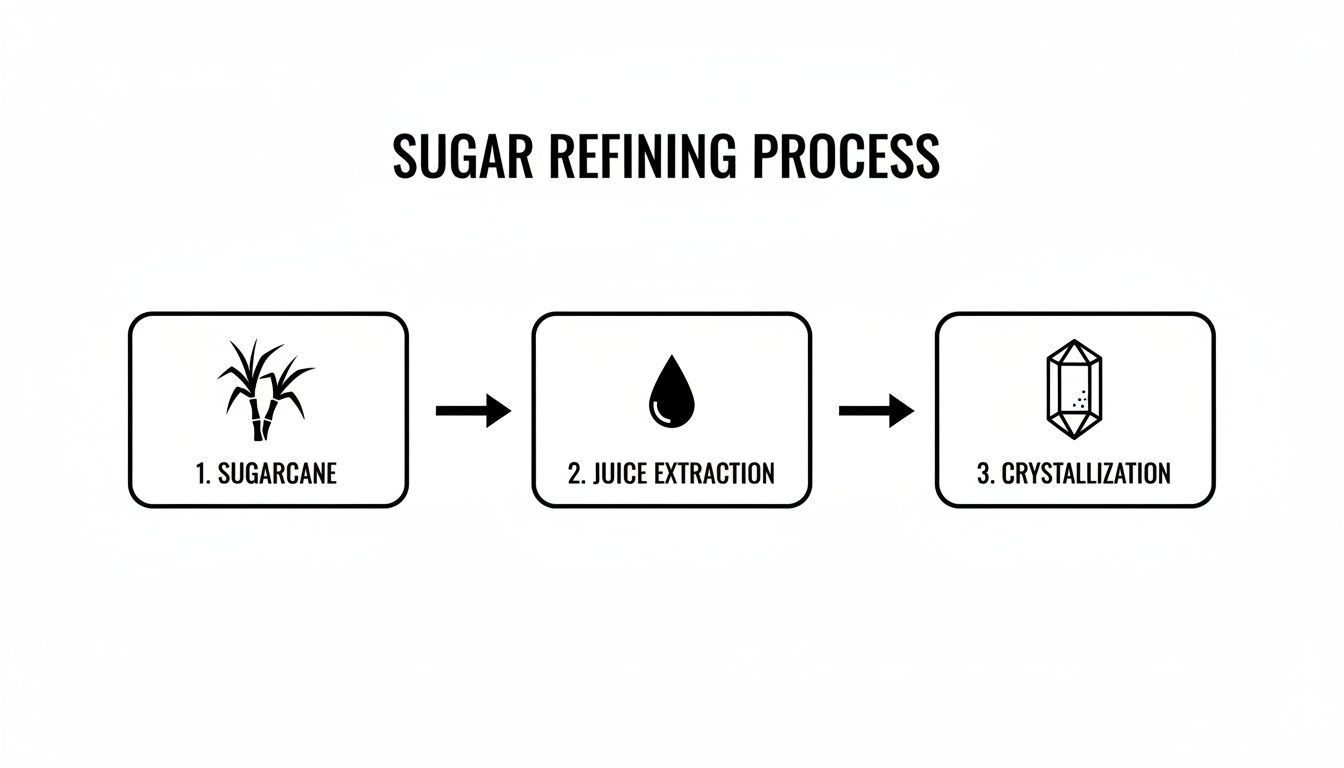
As you can see, the entire process is about removing everything that isn't sugar. This is precisely why refined sugar has none of the original plant's nutrients.
Clarifying and Crystallizing the Sugar
Next up, the raw juice goes through a major purification phase. It's heated, and things like lime are added to make all the non-sugar gunk clump together, making it easy to filter out. What’s left is a much clearer, lighter-colored liquid.
From there, the process moves into its final stages:
- Evaporation: The clarified juice is boiled in huge vats to get rid of most of the water. This transforms the thin juice into a thick, concentrated syrup.
- Crystallization: The syrup is cooled just right and then "seeded" with tiny sugar crystals. This encourages all the sucrose in the syrup to form into larger crystals.
- Centrifugation: This is the magic step. The crystal-syrup mix is spun at incredibly high speeds in a centrifuge. Think of it like a salad spinner on overdrive, flinging the dark, sticky molasses away from the solid sugar crystals.
The final steps might include another wash, a drying process, and sometimes filtering the crystals through carbon to get that iconic, pristine white color. The end product is 99.9% pure sucrose.
This modern refining process really took off with industrialization in the 19th century, and today, it operates on a massive scale. To get a sense of just how huge this global commodity is, you can explore historical sugar data from sources like Trading Economics.
What we end up with is a product engineered for maximum sweetness and shelf life, completely disconnected from the plant it came from.
How to Spot Hidden Sugars on Food Labels
Refined sugar is a master of disguise. Food manufacturers are well aware that "sugar" on an ingredient list is a red flag for many of us, so they’ve come up with dozens of other names to hide it in plain sight. It’s like a spy constantly changing costumes to blend into the crowd.
This means that even if you don't see the word "sugar" near the top of the ingredients, your food could still be packed with it. The key is to become a bit of a sugar detective when you're at the grocery store and learn to recognize its many aliases.
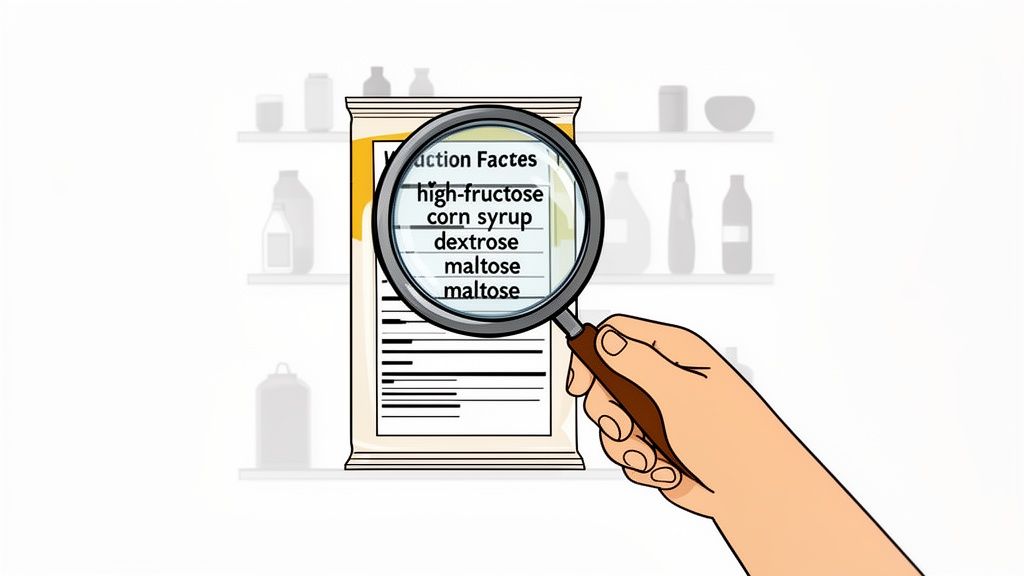
Learning the Language of Sugar
To get started, you just need to learn a few of sugar's most common code names.
A huge clue is any ingredient ending in "-ose." This is almost always a dead giveaway for sugar. You'll see words like sucrose (which is just table sugar), dextrose, fructose, maltose, and lactose. They're all different types of simple sugars, but your body treats them in a very similar way.
Another trick is to disguise sugar as a "syrup." Be on the lookout for these common culprits:
- High-fructose corn syrup
- Corn syrup or corn syrup solids
- Brown rice syrup
- Barley malt or malt syrup
- Agave nectar
- Cane juice or cane syrup
A good rule of thumb: If it sounds like a syrup or ends in "-ose," it's almost certainly a form of added sugar. Remember, ingredients are listed by weight, so the higher it appears on the list, the more of it is in the product.
To make this easier, here’s a quick reference table of the most common names sugar hides behind on nutrition labels.
Common Disguises for Refined Sugar
| Syrup-Based Names | Ends in '-ose' | Other Common Names |
|---|---|---|
| High-fructose corn syrup | Dextrose | Corn sweetener |
| Brown rice syrup | Fructose | Dehydrated cane juice |
| Corn syrup solids | Galactose | Evaporated cane juice |
| Agave nectar | Glucose | Fruit juice concentrate |
| Malt syrup | Lactose | Invert sugar |
| Cane syrup | Maltose | Molasses |
| Maple syrup | Sucrose | Dextrin |
Keep this list handy, and you'll get much better at spotting where sugar is sneaking into your diet.
Finding Sugar in Unexpected Places
Once you start looking, you’ll be amazed at where you find refined sugar—especially in foods we all think are healthy. Savory foods are often the biggest offenders because sugar is used to balance out salty or acidic flavors and improve the food's texture. This is a big reason why so many people find it hard to cut back.
For example, did you know that a single serving of some popular jarred pasta sauces can have more added sugar than a bowl of Frosted Flakes? It's a shocking discovery for most people. Learning about these foods with hidden sugar is one of the most important steps you can take to regain control over your diet.
Here are just a few surprising places where refined sugar loves to hide:
- Salad Dressings: Many bottled dressings, particularly the "fat-free" or "light" versions, pump up the sugar content to make up for the missing flavor from fat.
- Breads: Even your standard whole-wheat bread often has sugar or high-fructose corn syrup added to it.
- Yogurts: Flavored yogurts are notorious for this. Low-fat fruit yogurts can sometimes contain as much sugar as a candy bar.
- Ketchup and BBQ Sauce: These classic condiments get their signature sweet-and-tangy taste from a heavy dose of sugar.
By simply learning to read labels and recognize sugar’s many disguises, you can start making smarter choices that align with your health goals and finally avoid all those empty calories.
Understanding the Health Effects of Refined Sugar
When you eat refined sugar, it's like lighting a fire with gasoline. You get a sudden, intense burst of energy that your body can use almost instantly. This is why a sugary treat can feel so good when you're hitting that afternoon slump—it's a quick fix.
But that fire burns out just as fast as it starts. Because refined sugar has no fiber to slow it down, it floods your bloodstream all at once, sending your blood sugar levels soaring. Your body scrambles to manage this surge by releasing a ton of insulin, which quickly pulls the sugar out of your blood. The result is the dreaded "sugar crash," leaving you feeling even more tired, irritable, and mentally foggy than before.
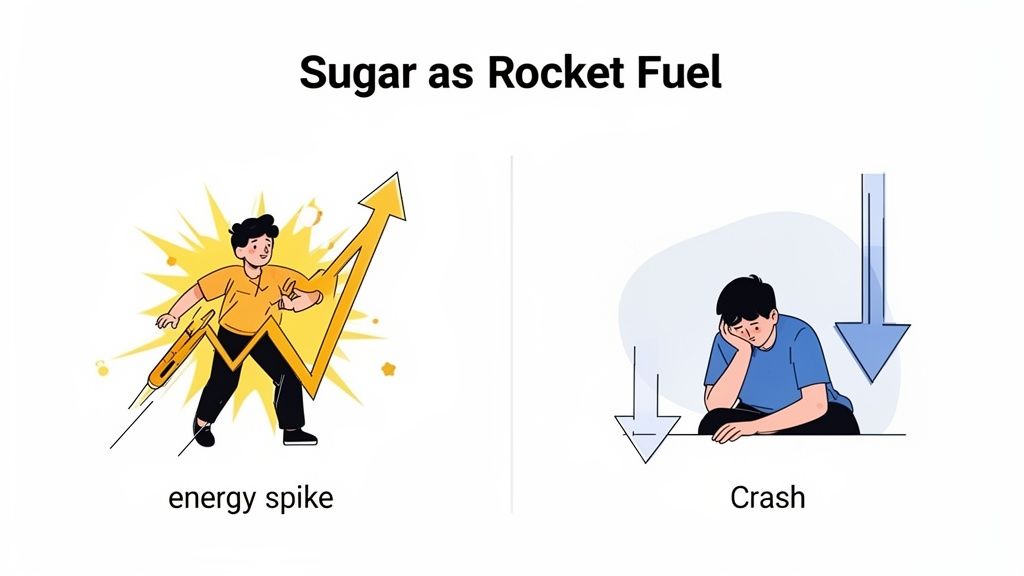
This rollercoaster of spikes and crashes can easily trap you in a vicious cycle. Once you crash, your brain screams for more quick energy, and those powerful cravings for another sugary snack kick in. This cycle messes with more than just your energy; it can throw your mood off-balance, too, often leading to feelings of anxiety and impatience.
The Impact on Your Weight and Metabolism
Refined sugar is the textbook definition of "empty calories." It packs a caloric punch but offers virtually zero nutritional benefits—no vitamins, minerals, fiber, or anything else your body truly needs. When you take in more calories than your body can use for immediate fuel, the extra gets stored away as fat.
Over time, this can lead to weight gain, especially around the midsection. But the problem runs much deeper than what you see on the scale.
- Insulin Resistance: Bombarding your body with sugar forces it to produce high levels of insulin constantly. Eventually, your cells can become numb to insulin's signals, a condition known as insulin resistance, which is a major stepping stone toward type 2 diabetes.
- Liver Strain: Your liver has to work overtime to process fructose (half of what makes up table sugar). A high-sugar diet can cause fat to build up in the liver, contributing to non-alcoholic fatty liver disease (NAFLD).
- Increased Cravings: Sugar can throw your hunger-regulating hormones out of whack, making you feel less full after eating and more likely to overdo it at your next meal.
Long-Term Health Risks
The damage from a high-sugar diet goes far beyond daily energy slumps and a few extra pounds. Consistently eating too much refined sugar is linked to a much higher risk for several serious, chronic health problems.
One of the first places you'll notice an issue is your mouth. Sugar is the favorite food of the harmful bacteria living on your teeth. As they feast, they produce acid that eats away at your tooth enamel, causing cavities. This is why knowing how to improve oral hygiene is so critical.
Beyond your smile, a diet high in refined sugar is a major risk factor for heart disease. It can lead to high blood pressure, inflammation, and unhealthy levels of triglycerides in your blood, all of which put serious strain on your entire cardiovascular system. Understanding these effects is the first step toward making smarter choices for your long-term health.
Practical Ways to Reduce Your Sugar Intake
Knowing that refined sugar isn’t great for you is one thing. Actually doing something about it is the real challenge. The idea of cutting back can feel huge, but it doesn't mean you have to flip your entire diet upside down overnight. Real, lasting change comes from making small, smart adjustments that add up.
Forget about being perfect. Just focus on making a few simple swaps to start. These first steps can slash your daily sugar intake without leaving you feeling like you're missing out. It's all about progress, not perfection.
Start with Smart Swaps
The single easiest place to start? Your drinks. For most of us, sugary beverages are a massive source of refined sugar we don't even think about, packing in empty calories with zero nutritional benefit.
Try targeting these usual suspects first:
- Ditch the Soda: A single can of soda can blow through nearly your entire recommended daily limit of added sugar. Try sparkling water with a squeeze of fresh lemon or lime instead—you still get the fizz, without the sugar bomb.
- Rethink Your Juice: Even 100% fruit juice is a concentrated sugar source because it's missing the fiber of the whole fruit. You're better off eating an actual orange and drinking a glass of water.
- Brew Your Own: Those fancy sweetened iced teas and coffee shop concoctions are notorious for being loaded with sugary syrups. When you make your own coffee or tea at home, you’re in complete control of what goes in.
These simple liquid swaps alone can cut dozens of grams of sugar from your daily diet. You might be surprised by how little you miss them.
A big part of this process is a mental shift. Don't think of it as "giving up" sugar. Instead, see it as gaining control over your energy, your mood, and your future health. It’s an active choice for a better you.
Become a Savvy Shopper and Cook
Most of the refined sugar we eat comes from processed, packaged foods. When you start paying attention to ingredients, you take back an incredible amount of power over your health.
Cooking more at home is a total game-changer. When you’re the chef, you decide what goes into every dish, from the main event down to the sauces and dressings. This is your ticket to dodging all the hidden sugars that manufacturers sneak into pre-made meals, jarred pasta sauces, and even salad dressings.
At the grocery store, make reading labels a non-negotiable habit. We already know sugar goes by many aliases. Get used to scanning ingredient lists for anything ending in "-ose" or any kind of syrup. Be especially skeptical of foods marketed as "healthy," like granola, protein bars, and flavored yogurts—they are often packed with refined sugar.
Prioritize Whole Foods for Natural Sweetness
When that craving for something sweet hits, turn to nature’s candy. A crisp apple, a handful of berries, or a creamy banana offers natural sweetness that comes bundled with fiber, vitamins, and water. This powerful combination slows the absorption of sugar into your bloodstream, helping you avoid the harsh energy spikes and crashes that refined sugars cause.
Making these changes isn't always easy, especially when a powerful craving kicks in. This is exactly where a tool like the StopSugar app can make a real difference. It’s built with features to get you through those tough moments, like:
- A "Panic Button" that gives you immediate strategies and distractions when you’re about to give in to a craving.
- Alternative Suggestions that help you find satisfying, healthier swaps for your go-to sugary snacks.
- Daily Check-Ins and a mood tracker that help you connect the dots between what you eat and how you feel.
By pairing these practical strategies with the right support, you can successfully break free from refined sugar and build healthier eating habits that will stick with you for life.
Exploring Healthier Sweeteners and Natural Alternatives
Once you decide to cut back on refined sugar, you're probably wondering, "So, what can I use?" It’s a great question. The goal isn't to live a life devoid of sweetness, but to get smarter about where that sweetness comes from. It's about trading those empty, nutrient-stripped sugars for better, more natural options.
The best place to start is with whole foods. Think puréed dates, mashed bananas, or unsweetened applesauce. These are fantastic for baking because they don't just add sweetness—they also bring along fiber, vitamins, and minerals. Because they're in their natural, whole form, your body digests them more slowly, which helps you avoid those nasty blood sugar spikes.
Choosing Natural Syrups and Zero-Calorie Options
When you need a liquid sweetener, pure maple syrup and raw honey are solid choices. Now, let's be clear: they're still sugar. But they're far less processed than white table sugar and even contain small amounts of minerals and antioxidants. The trick is to use them sparingly for a touch of flavor, not to drench your food in them.
Then you have the zero-calorie sweeteners that come from plants. These are great because they don't mess with your blood sugar levels at all.
- Stevia: This comes from the leaves of the Stevia rebaudiana plant. It's incredibly sweet, so you only need a tiny amount.
- Monk Fruit: Extracted from a small green melon, monk fruit sweetener is another fantastic zero-calorie option that's perfect for sweetening drinks and desserts.
Remember, the best alternative really depends on what you're trying to achieve. Whole-food sweeteners add nutrition, natural syrups offer flavor in moderation, and zero-calorie options give you sweetness without the metabolic downside.
Finding what works for you is a bit of an adventure. As you explore, you might even get curious about where natural sweetness originates, maybe even looking into cultivating fig trees for natural sweetness to get sweetness straight from the source.
If weight loss is your main focus, picking the right substitute becomes even more crucial. We've put together a guide on the best sugar substitute for weight loss to help you find the options that best fit your health goals.
Answering Your Top Questions About Refined Sugar
Alright, we've covered a lot of ground on what refined sugar is and how to cut back. But a few common questions always seem to pop up. Let's tackle them head-on to clear up any lingering confusion and bust some persistent myths.
So, Is Brown Sugar a Healthier Choice Than White Sugar?
This is probably one of the most common myths out there. The short answer? Not really.
Think of brown sugar as white sugar in a slightly different costume. It’s simply refined white sugar that has a little bit of molasses added back into it, which gives it that distinct color and flavor. While molasses does contain some trace minerals, the amount in a spoonful of brown sugar is so tiny it doesn't offer any meaningful health perks. At the end of the day, your body breaks them both down in almost the exact same way.
How Much Added Sugar Is Actually Okay to Eat?
It's helpful to have a target in mind. The American Heart Association has some clear guidelines on this.
They recommend women stick to no more than 25 grams (that's about 6 teaspoons) of added sugar per day. For men, the limit is a bit higher at 36 grams (or about 9 teaspoons).
If I Cut Out Refined Sugar, Does That Mean I Can't Have Any Sugar at All?
Absolutely not, and this is a crucial distinction to make. The focus here is on reducing added sugars—the kind that are manually put into foods during processing.
Natural sugars, like the fructose you get from a crisp apple or the lactose in a glass of milk, are a completely different story. These sugars come bundled with fiber, vitamins, minerals, and water, which help your body process them more slowly. So please, keep enjoying your fruit