why do i crave sweets: causes, signs, and solutions
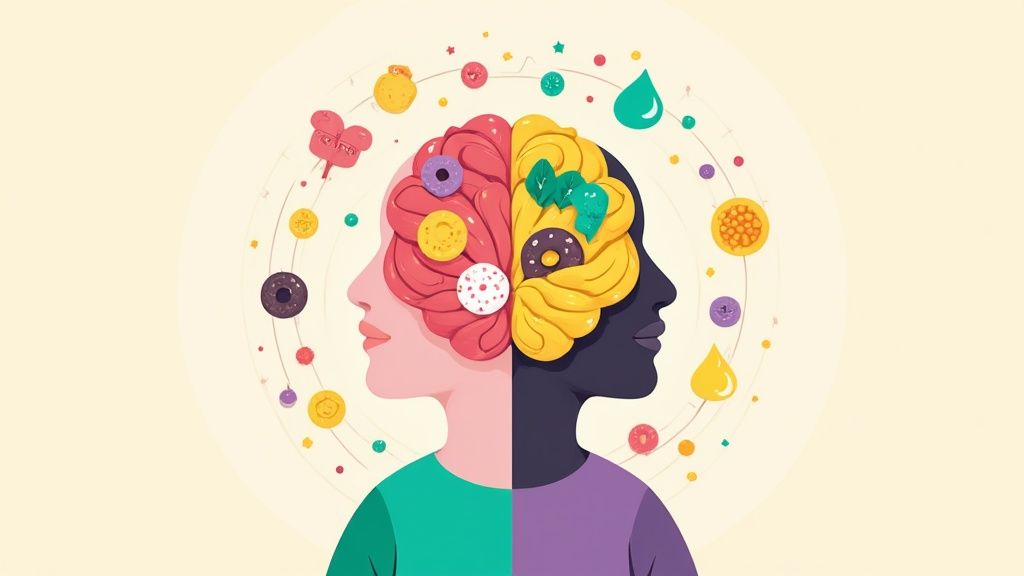
So, what's really going on when you ask, "Why do I crave sweets?" It's a fantastic question, and the answer isn't as simple as a lack of willpower. Think of your cravings less as a personal failing and more as a complex signal from your body. It's a powerful urge shaped by a fascinating mix of your biology, your daily habits, and even the world around you.
These factors don't work in isolation; they team up to create a powerful pull for sugar that can feel impossible to resist.
Decoding Your Sugar Cravings
That nagging, persistent desire for something sweet is more than just a fleeting thought—it's a message. To really get to the bottom of why you’re reaching for the cookie jar, we need to look at the whole picture. The reasons are often tangled together, weaving a complex web that influences your choices every single day.
To get started, let's break down the most common culprits behind sugar cravings. This table gives you a quick snapshot of the key triggers we'll be digging into.
A Quick Guide to Your Sugar Cravings
| Cause | How It Triggers Cravings |
|---|---|
| Blood Sugar Swings | When your blood glucose spikes and then crashes, your body panics and screams for another quick energy fix—and sugar is the fastest source. |
| Gut Health | The trillions of bacteria living in your gut can actually send signals to your brain, influencing your food preferences and demanding sugar to thrive. |
| Habit and Routine | If you always have a sweet treat after dinner, you’ve trained your brain to expect it. It becomes an automatic, conditioned response. |
| Stress and Emotions | Cortisol, the stress hormone, revs up your appetite for "comfort" foods. Plus, sugar provides a temporary boost to mood-lifting chemicals like serotonin. |
| Poor Sleep | Skimping on sleep messes with your appetite-regulating hormones, raises cortisol, and weakens the part of your brain responsible for self-control. |
| Nutrient Gaps | A lack of certain minerals, like magnesium or chromium, can throw your body's energy production out of whack, leaving you craving sugar. |
Now that you have the cheat sheet, let's visualize how these pieces fit together.
This diagram shows how your cravings sit right at the center, influenced by your internal biology, learned habits, and your environment.
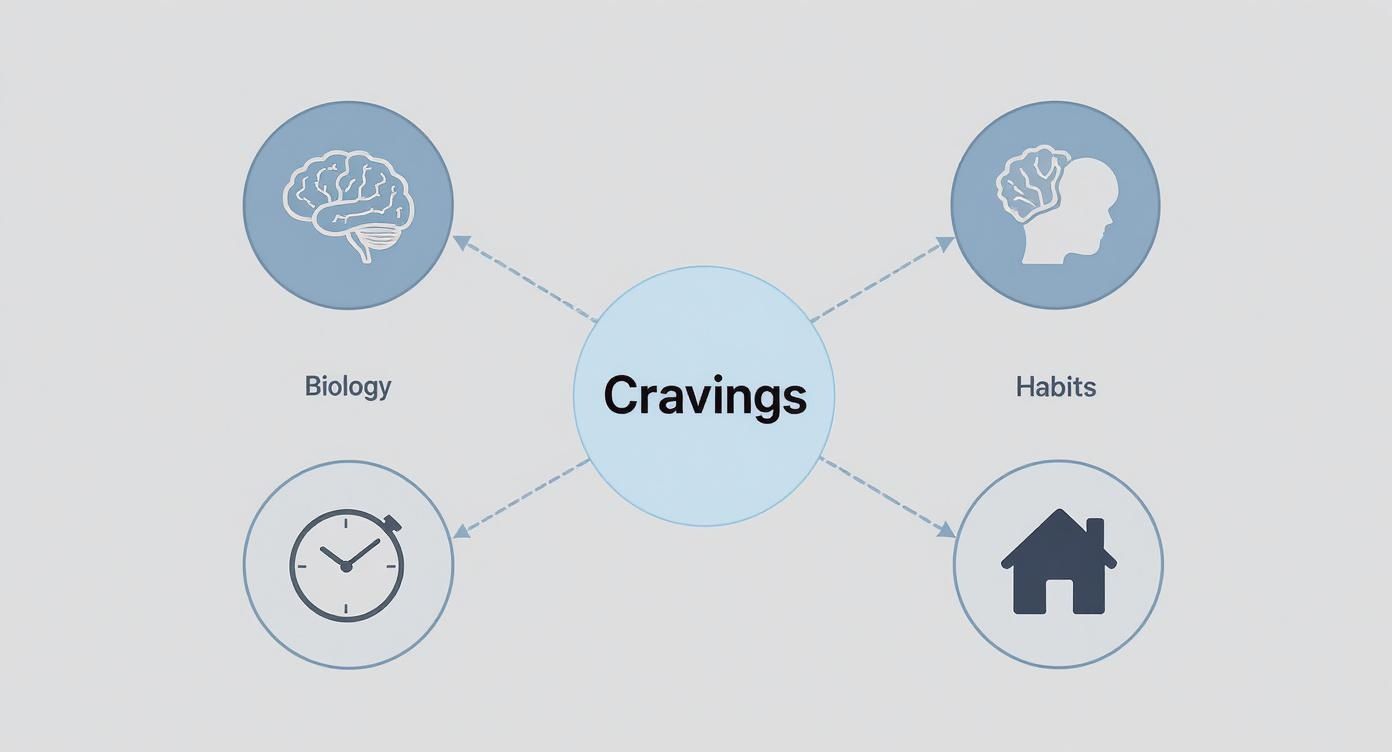
As you can see, it's all connected. A stressful day at work (your environment) can trigger a biological response (cortisol spike) that makes you reach for a brownie (a learned habit).
By understanding how each of these components works, you can finally start to untangle the cycle. In the sections ahead, we’ll dive much deeper into these triggers and give you practical tools to take back the driver's seat.
The Biology Behind Your Sugar Cravings
So, why do we crave sweets? It’s not just a lack of willpower. To really get to the bottom of it, we need to look under the hood at your body's internal wiring. These powerful urges are driven by a fascinating mix of brain chemistry, hormones, and even the tiny microbes living in your gut.
Think of your brain as having a built-in reward system. When you eat something sweet, it lights up and releases dopamine, a brain chemical that makes you feel pleasure and motivation. It’s your brain’s way of saying, “Hey, that was great! Let’s do it again.”
This creates a powerful feedback loop. The more sugar you eat, the more your brain starts expecting that feel-good dopamine hit, pushing you to seek it out over and over. This ancient system was designed to help us survive by rewarding us for finding energy-rich foods, but in today’s world of endless sugar, it can easily work against us.
The Blood Sugar Rollercoaster
One of the biggest physical drivers behind cravings is the blood sugar cycle. When you eat a sugary snack or drink, that sugar hits your bloodstream fast, causing a rapid spike in your blood glucose. You get that initial rush of energy and maybe even a temporary mood boost.
But what goes up, must come down. In response to all that sugar, your pancreas releases a flood of insulin to help move the glucose out of your blood and into your cells. Sometimes, this response is a bit too enthusiastic, and it pulls too much sugar out of your blood. The result is the dreaded "sugar crash."
Once your blood sugar crashes, your body panics. It thinks it's in an emergency and sends out frantic signals for a quick energy fix to get your levels back up. And what’s the fastest source it knows? More sugar. This is the spike-crash-crave cycle, and it's why cravings can feel so relentless.
Your Gut, Hormones, and Hunger Signals
The story doesn’t stop with your brain and blood sugar. The trillions of bacteria living in your gut—your gut microbiome—are also major players. It turns out that certain types of gut bacteria actually feed on sugar. Research suggests they can send signals to your brain, influencing your food choices and essentially demanding more of their favorite fuel.
On top of that, you have two key hormones that act like traffic cops for hunger: leptin and ghrelin. Leptin is the one that tells your brain you're full, while ghrelin is the "go" signal that says it's time to eat. A diet high in sugar can mess with this system and lead to leptin resistance. This means your brain stops getting the "I'm full" message properly, leaving you feeling hungry even when you’ve eaten enough. To see how different sugars play into this, explore the difference between glucose and fructose in our detailed guide.
This biological wiring is powerful, and our modern food environment has only made it stronger. Global sugar consumption hit a staggering 200.1 million metric tons in 2023—a huge jump from past years. It just goes to show how deeply embedded sugar is in our lives, constantly triggering these ancient pathways. Learn more about modern dietary sugar statistics.
How Your Daily Habits Can Secretly Fuel Cravings
While our biology definitely sets the stage, it’s our daily habits and lifestyle that truly direct the show. The real answer to "why do I crave sweets?" is often found in our routines, stress levels, and even how well we sleep.
These factors can stir up a perfect storm, making it feel almost impossible to walk away from a sugary treat.
Think about how you feel after a long, stressful day. Your body pumps out cortisol, the classic stress hormone that kicks you into "fight or flight" mode. That state demands quick energy, and your brain knows exactly where to get it: sugar. This is why you don’t typically crave a kale salad when you're stressed out—you want the instant comfort and energy rush from a cookie or a bowl of ice cream.
Over time, this response becomes a deeply learned behavior. Your brain starts to connect the feeling of stress with the rewarding, calming effect of sugar, creating a powerful loop that’s incredibly hard to break.
The High Cost of a Bad Night's Sleep
A rough night of sleep does more than just make you groggy; it actively sabotages your best intentions to eat well. When you’re sleep-deprived, two key hormones that manage your appetite get completely thrown out of whack.
Ghrelin, the "I'm hungry" hormone, spikes, while leptin, the "I'm full" hormone, takes a nosedive. This hormonal mess leaves you feeling hungrier than usual and less satisfied after you eat.
On top of that, a lack of sleep impairs your prefrontal cortex—the part of your brain in charge of sound judgment and self-control. It’s like trying to make smart financial decisions while your brain’s CEO is on vacation. Suddenly, the long-term goal of being healthy feels way less important than the immediate pleasure of that donut on the counter.
If you want to see exactly how your body responds to different foods and activities in real-time, exploring Continuous Glucose Monitoring (CGM) benefits can offer some incredible insights.
Nutrient Gaps and Deeply Ingrained Habits
Sometimes, a nagging craving for something sweet is your body’s clever way of signaling a deeper issue. Specific nutritional gaps can often masquerade as a full-blown sugar urge.
- Magnesium: This mineral is a powerhouse for regulating glucose and insulin. When you're running low, your body has a harder time managing energy, which can trigger cravings for quick-fix foods like chocolate.
- Chromium: This trace mineral helps insulin do its job more effectively, keeping your blood sugar from going on a rollercoaster ride. A deficiency can lead to intense sugar cravings as your body struggles to keep things stable.
- B Vitamins: These are crucial for converting your food into usable energy. A lack of B vitamins can leave you feeling sluggish, causing you to reach for sugar for that temporary lift.
Beyond what’s missing from your diet, simple conditioning plays a massive role. If you have a piece of cake after dinner every single night, you've trained your brain to expect that sweet reward. It’s no longer just a craving; it’s an automatic part of your routine. This is a huge reason why so many of us crave sweets at the exact same time every day.
Simple Ways to Stop a Craving Now
When a powerful sugar craving hits, it can feel like a tidal wave about to crash. But knowing why you're craving sugar is only half the battle. You also need a game plan for when that urge feels absolutely urgent.
The good news? You don't have to white-knuckle your way through it. There are simple, proven tactics you can use to get back in the driver's seat, often in just a few minutes.
The goal is to break the spell before the craving completely takes over. Think of it like a wave—it builds, crests, and then fades. Your job is to find a way to ride out that peak without wiping out. These strategies help by distracting your brain, shifting your physical state, or satisfying the underlying need in a much healthier way.
Distract Your Brain and Body
Honestly, one of the best things you can do is to just change the channel in your brain. Your mind can only focus on so much at once, so throwing a new activity into the mix can effectively crowd out the craving.
A short, brisk walk is a fantastic tool. Getting your body moving for just 5-10 minutes is often enough to dial down the craving's intensity. It gets your blood pumping, releases feel-good endorphins, and physically pulls you away from the kitchen cabinet that's calling your name.
A craving is often just a fleeting thought. By creating a brief pause—whether with a short walk, a quick chore, or a phone call to a friend—you give your logical brain a chance to catch up with your impulsive brain.
Hydrate and Reset Your Palate
Sometimes our bodies send us mixed signals. It's surprisingly common to mistake mild dehydration for a sugar craving. Before you grab a cookie, try drinking a big glass of water and just waiting a few minutes. You might be surprised at how often that simple act makes the urge disappear.
If water alone isn't doing the trick, try something with a strong, clean flavor to act as a hard reset for your taste buds.
- Herbal Tea: A warm cup of peppermint or ginger tea is great for this. It's soothing and the strong flavor helps cleanse your palate.
- Brush Your Teeth: It sounds almost too simple, but it works! That blast of mint from your toothpaste makes anything sugary sound pretty unappealing afterward.
For those moments when cravings feel tied to something deeper, like a nutrient gap, it might also be helpful to explore specific supplements that can help reduce sugar cravings. Combining these immediate tactics with smart food swaps gives you a powerful defense to manage cravings right when they happen.
Building Healthier Habits for Long-Term Success
Fighting cravings isn’t about winning a single battle. It’s about winning the war. While quick fixes can get you through a tough afternoon, the real victory lies in building habits that make those cravings weaker and less frequent over time.
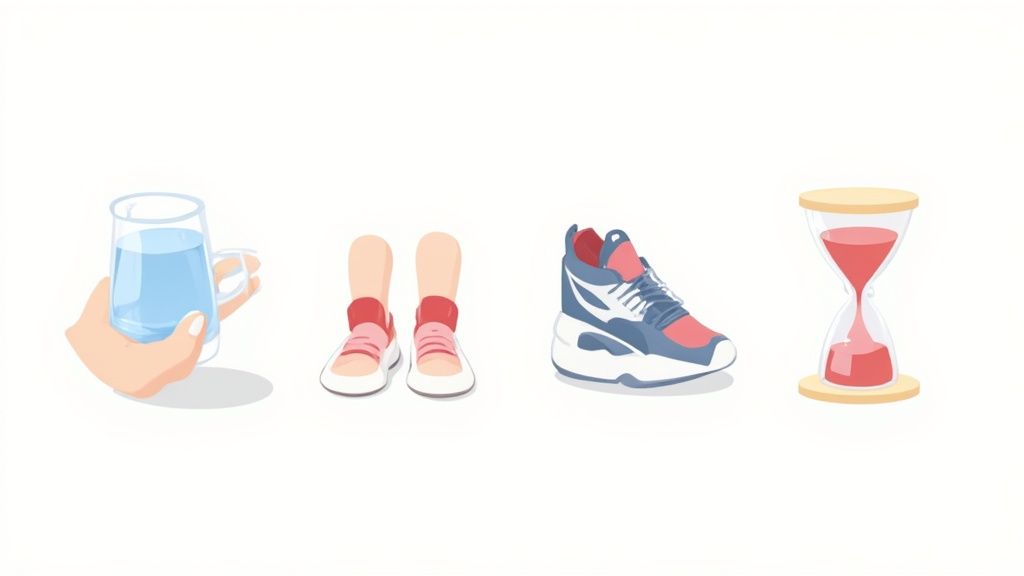
This is the long game. It's about slowly shifting your lifestyle so that healthy choices become second nature, not a chore. The goal is to create a body that isn't constantly screaming for a sugar hit in the first place, putting you back in control.
Stabilize Your Blood Sugar with Smart Meals
One of the best ways to get ahead of cravings is to build your meals around two key players: protein and fiber. Think of them as your blood sugar’s best friends.
Unlike a candy bar that sends your energy on a wild rollercoaster ride, protein and fiber slow everything down. They regulate how quickly sugar enters your bloodstream, giving you a steady, reliable wave of energy instead of a sharp spike followed by a crash. When your blood sugar is stable, your brain doesn't send out those frantic, must-have-sugar-now signals.
Here’s what that looks like on your plate:
- Prioritize Protein: Make sure every meal has a solid protein source, whether it's chicken, fish, tofu, beans, or a scoop of Greek yogurt.
- Fill Up on Fiber: Load up on non-starchy vegetables, whole grains, nuts, and seeds. They keep you full and satisfied.
- Stay Hydrated: Sipping water all day helps manage your appetite and can stop you from mistaking thirst for a sugar craving.
Improve Sleep and Manage Stress Proactively
What you do off your plate is just as important as what’s on it. Chronic stress and a lack of sleep create the perfect hormonal storm for intense sugar cravings. When you consistently get 7-9 hours of quality sleep, you allow your body to reset the hormones that control hunger and fullness.
Likewise, finding ways to handle stress that don't involve a cookie jar is a game-changer. Instead of reaching for a pint of ice cream after a rough day, you need a different kind of release valve.
Think of stress management as a skill you can build. Activities like a walk in nature, a 10-minute meditation session, or journaling can lower cortisol levels, reducing the biological drive for comfort foods.
Retrain Your Taste Buds Gradually
Going cold turkey on sugar often backfires, leading to a massive binge a few days later. A much smarter and more sustainable approach is to dial back your sugar intake slowly. This gives your taste buds time to adjust and start appreciating the natural sweetness in whole foods again.
Start with small, almost unnoticeable swaps. Maybe you switch that sugary breakfast cereal for oatmeal with berries or cut back from two sugars in your coffee to one. Over time, you’ll find that the super-sweet stuff you used to love starts to taste overpowering. The cravings just won't hit the same way.
To help you stay on track and turn these actions into automatic routines, something as simple as a daily habit tracker printable can make a huge difference.
Building these habits takes patience, but every small step weakens the hold sugar has on you. It's not about being perfect—it's about making consistently better choices that lead to lasting change.
When Your Cravings Might Signal a Deeper Issue
Most of the time, a sweet craving is just your body and brain doing what they’re wired to do. But every now and then, an intense, unrelenting craving can be your body’s way of waving a red flag. It’s important to know how to spot the difference.
If you find yourself asking "why do I crave sweets?" and the craving comes with other unusual symptoms, it’s time to listen a little more closely.
For example, constant sugar cravings that show up alongside extreme thirst, frequent urination, and unexplained fatigue can be early warning signs of insulin resistance or prediabetes. It’s a classic pattern: your body struggles to get sugar into its cells for energy, so it just keeps asking for more fuel. This is a clear signal to check in with a doctor.
Knowing When to Seek Professional Help
So, when does a sweet tooth cross the line into something you should get checked out? A good rule of thumb is when the cravings start to feel compulsive or negatively affect your quality of life.
If the urge for sugar feels overpowering and persistent, it might be more than just a bad habit. To understand if this sounds like you, it can be helpful to learn about the common signs of sugar addiction.
Pay special attention if your cravings are paired with significant mood swings, irritability, or brain fog. These symptoms can point to hormonal imbalances or nutrient deficiencies that a simple blood test can often uncover.
If any of this sounds familiar, your primary care doctor is the best place to start. They can rule out any underlying medical conditions and check for nutritional gaps. From there, a registered dietitian can be an incredible resource, helping you build a sustainable plan to get things back in balance and put you back in control.
Got Questions About Sugar Cravings? Let's Break It Down
Even when you know the science, those real-life moments of intense craving can leave you wondering, "But why is this happening to me, right now?" Getting to the bottom of these specific situations is key to finally feeling in control.
Let's tackle some of the most common questions we hear.
Why Do I Crave Sweets Right After a Meal?
Finishing a savory meal and immediately wanting something sweet is one of the most common complaints out there. More often than not, this is simply a deeply ingrained habit. Your brain has been conditioned to expect a sweet "reward" to signal that the meal is officially over.
The other big reason? Your meal might not have been balanced enough. If you didn't get enough protein and fiber, your blood sugar can take a little dip, even after a full meal. That dip sends a quick S.O.S. to your brain for the fastest energy it can find—sugar.
Can a Vitamin Deficiency Really Cause Sugar Cravings?
Yes, it absolutely can. Think of it like trying to run a car with the wrong kind of fuel. When your body is missing key minerals, its entire energy-management system gets thrown off kilter.
Deficiencies in magnesium, chromium, and zinc are often the top offenders. These minerals are crucial for regulating insulin and turning food into stable energy. When they're in short supply, your body struggles and sends out a frantic call for its favorite quick fix: sugar.
Why Are My Cravings So Much Worse at Night?
Ah, the nighttime sugar monster. It’s a classic for a reason, and it's usually a perfect storm of a few different factors.
First, your willpower is a finite resource. After a long day of making hundreds of decisions, your resolve is at its lowest. Psychologists call this decision fatigue. It's just harder to say "no."
It’s also a powerful habit. For many of us, relaxing on the sofa is mentally hardwired to snacking. On top of that, stress hormones can spike in the evening, and if you haven't slept well, the hormones that control hunger and fullness get completely out of whack, making that late-night urge feel overwhelming.