why do i feel tired after eating sugar: causes & solutions

That sudden wave of exhaustion after a sweet treat isn't just in your head. It's a very real biological event, and we have a name for it: the sugar crash.
Think of it like a rollercoaster. You eat something sugary, and your energy shoots straight up, which feels great for a moment. But what goes up must come down, and the steep, rapid drop on the other side is what leaves you feeling completely wiped out.
The Real Reason You Feel Tired After Sugar
So, what’s actually happening inside your body? Let’s break it down. Your body runs on fuel, and its favorite kind is a simple sugar called glucose. The hormone insulin acts like a key, unlocking your cells to let that glucose in for energy.
When you drink a soda or eat a candy bar, a huge amount of glucose floods your bloodstream all at once. This sudden sugar dump sounds an alarm, telling your pancreas to release a big wave of insulin to get things under control.
Insulin's job is to hustle all that extra sugar out of your blood and into your cells, where it can be used for energy or stored for later. The problem is, this emergency response isn't always precise. Sometimes, the pancreas overdoes it.
The Overcorrection and the Crash
This overcorrection is where the trouble starts. In its rush to clear the sugar, the massive insulin release can accidentally push your blood sugar levels too low. This state is often called reactive hypoglycemia. This is the "crash."
Suddenly, your brain and body are running on fumes, deprived of their main fuel source.
The tiredness you feel isn't just a feeling—it's your body's direct response to a metabolic and neurological event. When insulin overshoots the mark, it drives blood sugar too low, leaving your brain foggy and your body sluggish.
This rapid drop in blood sugar is what brings on those classic symptoms:
- Fatigue: Your cells are screaming for energy, making you feel drained.
- Brain Fog: Your brain uses a ton of glucose, so when it runs low, it struggles to focus.
- Irritability: Wild swings in blood sugar can have a direct and unpleasant impact on your mood.
The table below breaks down this cycle step-by-step.
The Sugar Crash Cycle at a Glance
This table shows exactly what happens in your body from the first bite to the final crash.
| Stage | What Happens in Your Body | How You Feel |
|---|---|---|
| 1. The Sugar Rush | Glucose floods the bloodstream after you eat a high-sugar food. | A quick burst of energy and alertness. |
| 2. The Insulin Spike | The pancreas releases a large amount of insulin to manage the sugar overload. | Still feeling good, maybe a little hyper. |
| 3. The Overcorrection | Insulin works too well, rapidly clearing too much glucose from the blood. | Energy starts to dip, focus wavers. |
| 4. The Crash | Blood sugar levels drop below normal, creating a state of low energy. | Exhausted, irritable, and mentally foggy. |
This isn't just theory; studies back it up. Research shows that just one hour after consuming sugar, people report feeling significantly less energetic and alert. This fatigue is a clear signal that your body is working overtime just to get back to a stable state.
In some cases, this sharp drop is a key symptom of a condition you can learn more about known as reactive hypoglycemia. At its core, that post-treat exhaustion comes down to this relentless cycle of spiking and crashing your blood sugar.
Understanding the Insulin Rollercoaster
Ever wonder why that afternoon donut leaves you wanting a nap an hour later? To get to the bottom of it, we need to look at two key players in your body's energy game: glucose and insulin.
Think of glucose—the simple sugar from your food—as the high-speed fuel for your body. Insulin, a hormone your pancreas produces, is the gatekeeper. It unlocks your cells to let that glucose fuel in so it can be used for energy.
When you eat something sugary, your bloodstream gets a sudden, massive flood of glucose. Your body senses this rush and hits the panic button. In response, your pancreas sends out a big wave of insulin to hurry up and get all that sugar out of your blood and into your cells.
The Overcorrection and the Crash
Here’s where things go wrong. In its rush to deal with the sugar overload, your pancreas often overdoes it. It pumps out way too much insulin, which then does its job a little too well. This insulin surge doesn't just clear the sugar from your blood; it keeps on working.
All that extra insulin pushes your blood sugar levels down, not just back to normal, but often below normal. This is the infamous "crash," a state called reactive hypoglycemia. Suddenly, your brain and body are running on empty, starved of their main fuel source. That’s the core reason you feel so tired after eating sugar.
A sugar crash isn't just a feeling; it's a real biological event. An over-the-top insulin response tanks your blood sugar, leaving your brain and body without the immediate energy they need to function at their best.
This whole up-and-down process is a simple but powerful cycle that takes you from a quick sugar high to a serious energy low.
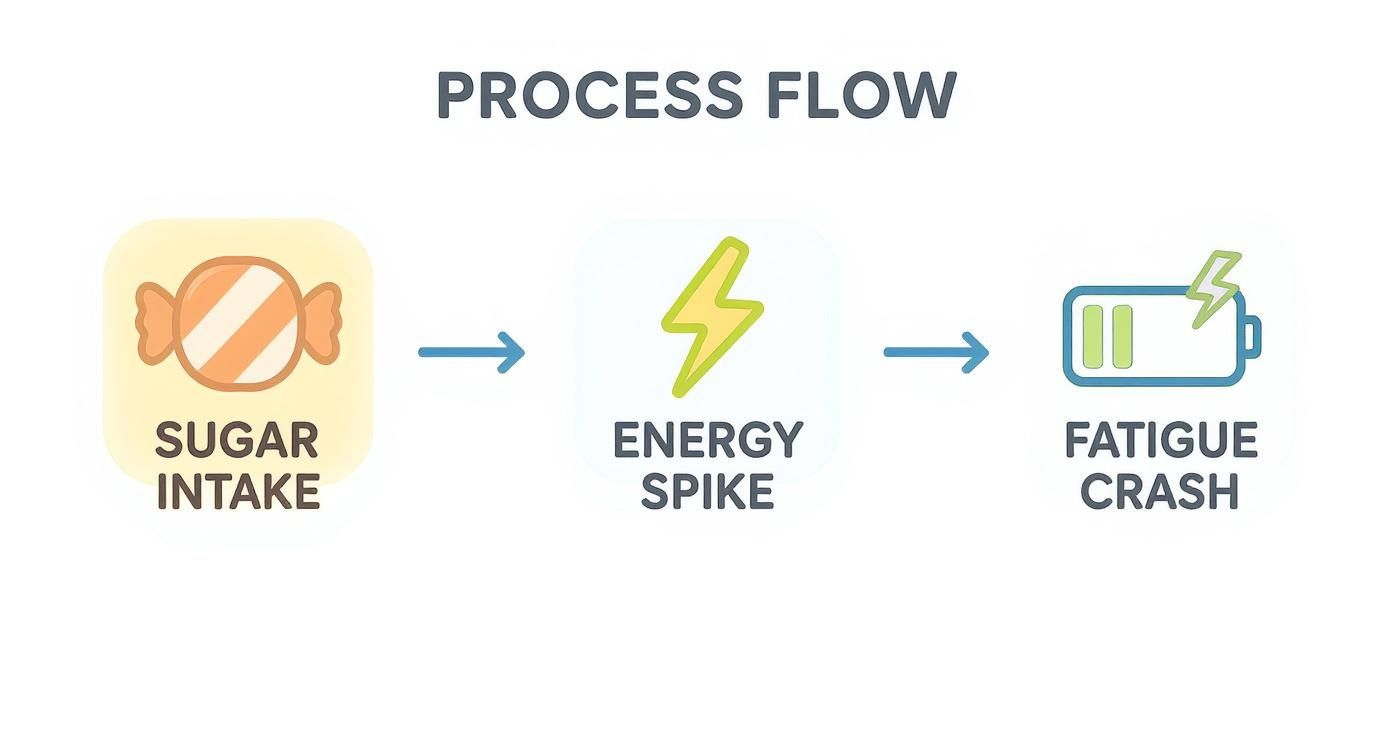
As you can see, it’s a fast trip from that temporary buzz to the inevitable fatigue that follows a sugar binge.
Symptoms of the Insulin Crash
When your blood sugar takes a nosedive, your body doesn't stay quiet about it. This lack of fuel hits you both physically and mentally, creating a familiar and frustrating set of symptoms.
- Overwhelming Fatigue: Your cells are crying out for energy, making even the smallest tasks feel like climbing a mountain.
- Brain Fog: Your brain is a huge glucose consumer. When its supply gets low, your thinking gets fuzzy and it's tough to concentrate.
- Irritability and Mood Swings: These wild blood sugar swings can mess directly with your mood, making you feel anxious or just plain grumpy.
- Shakiness or Dizziness: In a more severe crash, you might even feel physically unsteady as your body scrambles for energy.
This entire chain reaction is kicked off by that initial insulin surge. Getting a handle on how these hormones work is the first step toward reclaiming your energy. For a deeper dive, check out our guide on what causes insulin spikes and how they affect your body. Once you recognize the pattern, you can start making choices to get off this exhausting rollercoaster for good.
How Sugar Impacts Your Brain and Mood

That rollercoaster you feel after a sugary snack isn't just in your body—it’s playing out in your brain, too. The groggy, drained sensation that follows is tied directly to a complex dance of brain chemicals set off by that sweet treat.
When sugar hits your system, your brain gets a hit of a feel-good chemical called dopamine. This delivers a quick burst of pleasure and reward, which is why that donut or candy bar feels so good in the moment. The problem is, it’s a temporary high, and the crash is waiting just around the corner.
As your blood sugar plummets, so do your mood and mental sharpness. This is when the real fatigue settles in, affecting not just your body but your mind as well.
The Orexin and Dopamine Connection
The dopamine rush is only part of the story. Sugar has a much more direct impact on your ability to stay awake by messing with a key neurotransmitter called orexin.
Think of orexin as your brain's natural alertness signal. It’s the stuff that keeps you feeling sharp, focused, and engaged. When you consume sugar and your glucose levels spike, it essentially tells the neurons that produce orexin to go on a coffee break.
With less orexin activity, sleepiness starts to creep in. This is precisely why you might feel the urge to nap after a big, sugary meal, even if you slept well the night before. Your brain's internal "stay awake" switch has been flipped off.
The connection is simple but powerful: more sugar means less orexin, which leads directly to more drowsiness. It’s a biological chain reaction linking what’s on your plate to how alert you feel.
The mental fallout from a sugar high doesn't just stop at sleepiness. It often brings a few other unwelcome guests:
- Brain Fog: That frustrating feeling of not being able to think clearly or concentrate.
- Irritability: Mood swings can happen as your brain scrambles to rebalance its chemistry.
- Reduced Focus: Your ability to stick with a task just evaporates as your mental energy drains.
This whole cycle gets worse thanks to our modern eating habits. The average American adult consumes about 19.5 teaspoons of added sugar every single day—way more than what's recommended. This constant overload puts a ton of stress on the systems that manage our energy and mood, making that post-meal slump an all-too-common part of daily life.
Beyond just managing blood sugar, you can also build resilience against the brain fog from a sugar crash. Learning how to improve executive function can strengthen your cognitive abilities, making your mind sharper overall. Once you understand how sugar is pulling the strings in your brain, you can start making smarter choices that lead to steady energy and a clearer head.
The Link Between Sugar, Inflammation, and Fatigue
There’s more to the post-sugar slump than just blood glucose spikes and crashes. A sneakier, more drawn-out culprit is quietly draining your energy behind the scenes: inflammation. This isn’t the obvious swelling you get from a bump or a bruise, but a low-level, system-wide stress response.
Eating a lot of refined sugar on a regular basis can put your body's immune system on a constant, low-grade alert. It’s like a car alarm that keeps chirping all night—it never fully goes off, but it slowly wears down the battery.
This constant state of emergency puts a huge tax on your body’s resources. Your system has to work overtime just to keep things in balance, pulling energy away from the very processes that help you feel focused, alert, and vibrant. Over time, fighting this internal battle can leave you feeling deeply and persistently tired.
How Inflammation Saps Your Energy
The connection between inflammation and that wiped-out feeling goes all the way down to your cells. Specifically, chronic inflammation messes with your mitochondria, the tiny powerhouses responsible for generating energy.
Think of your mitochondria as little power plants within each cell. When they're running smoothly, you feel energized. But inflammation creates a hostile environment that essentially throws a wrench in the works, damaging these power plants and making them far less efficient.
When mitochondrial function drops, your overall energy production takes a nosedive. This is why the fatigue from a high-sugar diet can feel so profound—it’s a bone-deep exhaustion that a good night's sleep often can't fix. It provides a more chronic answer to the question, "why do I feel tired after eating sugar?"
"Overconsumption of sugar promotes chronic inflammation, which is implicated in fatigue and tiredness after eating. This low-grade inflammation can damage tissues and blood vessels, worsening energy metabolism and causing symptoms like tiredness and brain fog."
This creates a vicious cycle: a high-sugar diet fuels inflammation, which then sabotages your energy production, leaving you feeling perpetually worn out. The body's reaction to sugar is tied directly to insulin, which affects both blood sugar control and inflammation. In conditions like diabetes, where sugar metabolism is already compromised, over 50% of patients report constant fatigue, and inflammation is a key suspect. This shows that even for people without a diagnosis, the inflammatory kickback from sugar can seriously drain your energy.
You can learn more about the deep connection between your diet, fatigue, and blood sugar on ZOE.com.
Simple Ways to Prevent the Sugar Crash
Okay, so now you know why sugar crashes happen. The next step is learning how to stop them before they start. The good news is you don't have to cut sugar out of your life completely. It’s more about being smart with how and when you eat it to get off that draining energy rollercoaster for good.

Just a few small tweaks to what you eat—and when you move—can make a world of difference. You can soften sugar's impact and keep your energy on an even keel all day long, starting with what you put on your plate.
Pair Sugar With the Right Foods
Think of protein, fiber, and healthy fats as the brakes on your body’s sugar rollercoaster. When you eat sugary or starchy foods all by themselves, your body digests them in a flash, sending a rush of glucose into your bloodstream. But when you pair them with other foods, you slow that whole process way down.
It's a simple trick. Instead of grabbing an apple on its own, try eating it with a handful of almonds or a spoonful of peanut butter. That one small change gives you:
- Protein and Fat: These take much longer to digest, which means the sugar from the apple enters your bloodstream more slowly and steadily.
- Fiber: The fiber in both the apple and the nuts adds another layer of control, helping to stabilize your blood sugar for a gradual, sustained energy release.
This simple habit helps you sidestep the dramatic spike—and the inevitable crash—that leaves you feeling exhausted.
A well-balanced plate is your best defense against post-meal fatigue. Combining carbs with protein, fat, and fiber is the key to slowing down sugar absorption and enjoying sustained energy instead of a fleeting rush.
Making informed dietary choices, such as those recommended for a keto lifestyle, can offer powerful strategies for managing blood sugar by emphasizing restrictions on sugars and carbs to maintain stable energy.
Move Your Body After Meals
You don’t need to hit the gym for an hour to feel the benefits. One of the easiest and most effective ways to manage your blood sugar after a meal is just to get up and move. A brisk walk for just 15 minutes can work wonders.
When you start moving, your muscles begin pulling glucose directly from your bloodstream for fuel. This naturally lowers your blood sugar levels and helps prevent the big insulin surge that sets you up for a crash. So, instead of sinking into the couch after dinner, try a quick walk around the neighborhood. Your energy levels will thank you for it.
Hydration and Smart Swaps
Don't underestimate the power of water. Being dehydrated can make you feel tired all on its own, but it can make the symptoms of a sugar crash feel even worse. Sipping water consistently throughout the day is a simple but crucial part of keeping your energy stable.
Finally, think about making some smart food swaps. A candy bar delivers a fast, intense burst of energy, but it’s a guarantee you’ll be slumped over your desk an hour later. On the other hand, complex carbs like sweet potatoes, brown rice, and whole grains break down slowly, giving you a steady stream of energy that actually lasts.
These small, practical steps can add up to a huge difference in how you feel. For a deeper dive into managing meal-related slumps, check out our guide on how to beat the https://stopsugar.app/blog/energy-crash-after-eating.
Frequently Asked Questions
Even when you know the science, you might still have a few lingering questions about that post-sugar slump. Let's tackle some of the most common ones we hear.
How Long Does a Sugar Crash Last?
The length of a sugar crash really varies—it could be over in 30 minutes or drag on for a couple of hours. It all comes down to a few key things: how much sugar you had, your own metabolism, and what else you ate with it.
Think about it this way: a can of soda on an empty stomach will hit you fast and hard, leading to a quick, intense crash. But a sugary dessert after a big meal might cause a slower, more drawn-out feeling of tiredness as your body slowly tries to get back to normal.
Does Natural Sugar From Fruit Also Cause Fatigue?
It’s much less likely, and here's why. Fruit does contain sugar (fructose), but it's bundled up with fiber, water, and nutrients. That fiber is the key. It dramatically slows down how quickly the sugar enters your bloodstream.
Instead of a sharp, sudden spike, you get a much more gradual and gentle rise in blood sugar.
The fiber in a whole piece of fruit is like a slow-release mechanism for energy. It prevents the wild up-and-down rollercoaster that processed sugar creates. That’s why an apple gives you steady fuel, while a candy bar leaves you drained.
Keep in mind, though, that fruit juice is a different story. When the fiber is stripped away, your body absorbs the sugar almost as fast as it would from a soda, which can definitely lead to a crash.
Is This a Sign of a Medical Condition?
For most of us, feeling a bit sluggish after a sugary treat is just a normal biological reaction. It’s not usually a cause for alarm.
However, if your symptoms feel extreme—like you’re constantly dizzy, shaky, or overwhelmingly tired after eating—it could point to something more serious, like reactive hypoglycemia or prediabetes.
If you notice your crashes are consistently severe, it’s a good idea to talk to your doctor. They can help figure out what’s going on and give you advice that's right for you.