Zero Fructose Foods List: zero fructose foods list guide
Navigating the world of sugar can be overwhelming, especially when hidden fructose lurks in seemingly healthy foods. Fructose, unlike other sugars, is metabolized almost exclusively by the liver and is a key driver of weight gain, metabolic issues, and persistent energy crashes. Creating a clear zero fructose foods list isn't just about restriction; it’s about empowerment. It gives you a roadmap to building a sustainable way of eating that boosts your energy, clears your mind, and helps you feel in control of your health.
This comprehensive guide gets straight to the point. We provide a practical, categorized list of foods that are naturally free of fructose, helping you build delicious, satisfying meals without the sugar. You will learn exactly what to put in your shopping cart, from foundational proteins and healthy fats to flavor-packed spices that make a zero-fructose lifestyle not just possible, but genuinely enjoyable.
We'll cover everything you need to get started and succeed long-term, including:
- Safe Food Categories: Eight core groups of zero-fructose foods, from meats and fish to specific dairy and fermented options.
- Practical Meal Ideas: Simple ways to combine these foods for breakfast, lunch, and dinner.
- Hidden Fructose Sources: A look at common culprits where sugar unexpectedly hides.
- Quick Label-Reading Tips: How to spot fructose on ingredient lists in seconds.
This list is designed to be your go-to resource, simplifying your food choices and eliminating the guesswork. By focusing on what you can eat, you’ll discover a more vibrant, energetic way of living.
1. Meat and Fish (Zero-Fructose Protein Sources)
All unprocessed meats, poultry, and fish are naturally 100% free of fructose, making them a cornerstone of any zero-fructose eating plan. These protein powerhouses contain no sugars and are packed with essential nutrients your body needs to thrive. They provide a complete profile of amino acids, crucial for muscle repair, immune function, and overall cellular health.
Unlike carbohydrate-heavy meals that can lead to energy spikes and crashes, protein digests slowly. This helps stabilize blood sugar levels, providing sustained energy and promoting feelings of fullness, which can be a game-changer for anyone trying to manage cravings and reduce overall sugar intake. Including these foods in your diet is a fundamental strategy for building a fructose-free lifestyle. For a deeper understanding, discover more about how optimizing protein intake supports weight management.
Examples of Fructose-Free Proteins
Integrating high-quality animal proteins is simple. Focus on variety to get a wide range of nutrients:
- Grass-fed beef: A great source of iron, zinc, and vitamin B12.
- Wild-caught salmon: Rich in anti-inflammatory omega-3 fatty acids.
- Free-range chicken and turkey: Lean sources of protein perfect for versatile meals.
- Pasture-raised eggs: A complete protein source packed with choline for brain health.
How to Keep Your Proteins Fructose-Free
The key is to stick with unprocessed options. Many packaged and prepared meats contain hidden sugars that can derail your efforts.
- Avoid Pre-Made Marinades: Sauces like BBQ, teriyaki, and honey glazes are loaded with sugar (often high-fructose corn syrup). Opt for homemade rubs using herbs, spices, salt, and pepper.
- Check Processed Meats: Always read the labels on items like bacon, deli meats, and sausages. Look for "sugar," "dextrose," "corn syrup," or "fructose" in the ingredients list and choose brands that are explicitly sugar-free.
- Meal Prep Smart: Cook large batches of plain chicken breast, ground beef, or fish at the beginning of the week. This makes it easy to assemble quick, fructose-free meals without reaching for convenience foods.
2. Non-Starchy Vegetables (Nutrient-Dense, Low-Sugar Options)
Non-starchy vegetables are a vital part of any zero-fructose foods list, offering incredible nutritional value with virtually no sugar. These foods, including leafy greens, cruciferous vegetables, and peppers, are high in fiber, vitamins, and minerals. They provide bulk to your meals, helping you feel full and satisfied while keeping your blood sugar stable and your digestive system healthy.
Unlike their starchy counterparts (like potatoes and corn), these vegetables have a very low glycemic index, meaning they don't cause sharp spikes in blood glucose. Their high fiber content also slows digestion, which is crucial for managing cravings and maintaining consistent energy levels throughout the day. Integrating a wide variety of these vegetables is a cornerstone strategy for building a nutrient-rich, fructose-free diet.
Examples of Fructose-Free Vegetables
Loading your plate with colorful, non-starchy vegetables is easy and ensures you get a broad spectrum of micronutrients.
- Leafy Greens: Spinach, kale, and arugula are packed with vitamins A, C, and K.
- Cruciferous Vegetables: Broccoli, cauliflower, Brussels sprouts, and cabbage support detoxification.
- Peppers and Zucchini: Bell peppers and zucchini are versatile for roasting, grilling, or adding to salads.
- Cucumbers and Celery: High in water content, these are excellent for hydration and low-calorie snacking.
How to Maximize Vegetable Benefits
The way you prepare and consume vegetables can make a big difference in a fructose-free lifestyle. While they are naturally low in sugar, certain preparations and products can introduce unwanted fructose.
- Read Salad Dressing Labels: Many store-bought dressings, especially "fat-free" or "light" versions, contain added sugars, high-fructose corn syrup, or fruit purees. Stick to simple oil and vinegar dressings or make your own.
- Beware of Vegetable Juices: Commercially prepared vegetable juices often include fruit juice (like apple or grape) for sweetness. If you juice, focus only on non-starchy vegetables.
- Roast or Steam: Instead of boiling, which can leach nutrients, try roasting or steaming vegetables with herbs and spices to enhance their natural flavors without needing sugary sauces.
- Buy Frozen for Convenience: Frozen vegetables are just as nutritious as fresh ones and are a great, cost-effective way to ensure you always have fructose-free options on hand.
3. Nuts and Seeds (Natural Fats and Minimal Fructose)
Raw and unsalted nuts and seeds are nutrient-dense powerhouses that contain virtually zero fructose, making them an excellent addition to any low-sugar diet. Packed with healthy fats, plant-based protein, and dietary fiber, they offer a satisfying crunch and a wealth of health benefits. These foods are key for supporting hormonal balance, enhancing brain function, and providing long-lasting energy.
Unlike sugary snacks that cause sharp blood sugar spikes, the combination of fat, protein, and fiber in nuts and seeds promotes satiety and stabilizes glucose levels. This slow-digesting trio helps curb cravings and prevents the energy crashes often associated with high-sugar foods, making them a perfect choice for a zero fructose foods list. They are also incredibly convenient as a portable, satisfying snack.
Examples of Fructose-Free Nuts and Seeds
Incorporating a variety of nuts and seeds ensures you get a broad spectrum of minerals and healthy fats. Focus on raw, unsweetened options:
- Almonds: A fantastic source of vitamin E, magnesium, and fiber.
- Walnuts: Uniquely high in plant-based omega-3 fatty acids (ALA), which support brain health.
- Macadamia nuts: Rich in monounsaturated fats and one of the lowest-carb nuts available.
- Pumpkin seeds (pepitas): Loaded with magnesium, zinc, and iron.
- Sunflower seeds: An excellent source of selenium and vitamin E.
How to Keep Your Nuts and Seeds Fructose-Free
Choosing the right type of nuts and seeds is crucial, as many commercial products contain hidden sugars and unhealthy additives.
- Avoid Candied and Honey-Roasted Varieties: These are coated in sugar, honey, or syrup, completely negating their fructose-free benefits. Always opt for raw or plain roasted versions.
- Check Flavored Coatings: Savory coatings, such as "spicy" or "teriyaki," often contain sugar, dextrose, or maltodextrin. Read the ingredient list carefully to ensure no sweeteners are added.
- Mind Your Portions: While healthy, nuts and seeds are calorie-dense. Pre-portioning them into small containers or bags helps with portion control and makes them a convenient "panic button" snack for when sugar cravings strike. You can also pair them with cheese or vegetables for a more balanced mini-meal.
4. Healthy Fats and Oils (Ketogenic Foundation Foods)
Pure fats and oils are completely free of fructose and serve as a powerful energy source. Healthy options like olive oil, avocado oil, and grass-fed butter are essential for hormone production, absorbing fat-soluble vitamins (A, D, E, and K), and supporting brain health. They form the foundation of sustainable, low-sugar eating patterns by providing long-lasting satiety and stable energy, which helps eliminate the crashes and mood swings tied to sugar dependency.
Unlike carbohydrates, fats digest very slowly, which helps keep you feeling full and satisfied for hours. This prolonged feeling of fullness is a major advantage when you're working to reduce cravings and break the cycle of snacking on sugary foods. Incorporating high-quality fats into every meal is a key strategy for building a resilient, fructose-free diet that feels satisfying rather than restrictive.
Examples of Fructose-Free Fats
Adding these nutrient-dense fats is easy and enhances the flavor of your meals. Focus on high-quality, minimally processed sources:
- Extra virgin olive oil: Ideal for dressings and low-heat cooking, rich in heart-healthy monounsaturated fats and antioxidants.
- Avocado and avocado oil: A versatile source of monounsaturated fats, great for high-heat cooking and adding creaminess to dishes.
- Coconut oil and MCT oil: Rich in medium-chain triglycerides that provide quick, clean energy for the brain and body.
- Grass-fed butter and ghee: Excellent sources of fat-soluble vitamins and butyrate, which supports gut health.
How to Keep Your Fats and Oils Fructose-Free
While pure fats are naturally fructose-free, many commercial products mix them with sugary additives. Staying vigilant with labels is crucial.
- Avoid Flavored Oils and Dressings: Bottled salad dressings, marinades, and flavored cooking oils often contain added sugars, corn syrup, or fruit purees. Make your own simple vinaigrette with olive oil, vinegar, and herbs.
- Inspect "Lite" or "Low-Fat" Products: Many low-fat products compensate for the lack of fat by adding sugar, starches, and other fillers to improve taste and texture. Stick to full-fat versions of foods like butter and mayonnaise (check for sugar-free brands like Primal Kitchen).
- Choose Cooking Methods Wisely: Match your oil to the cooking temperature to preserve its quality. Use avocado oil for high-heat searing and extra virgin olive oil for drizzling over finished meals.
5. Dairy Products (Cheese and Full-Fat Options)
Full-fat, minimally processed dairy products are excellent additions to a zero-fructose foods list. Items like hard cheeses, unsweetened Greek yogurt, and whole milk contain virtually no fructose. They are rich in complete proteins, calcium, and, in the case of fermented options, beneficial probiotics that support gut health. These foods can satisfy cravings for creamy, comforting textures while helping to maintain stable blood sugar levels.
The key is choosing options without added sugars. While milk naturally contains lactose (a milk sugar composed of glucose and galactose), it does not contain fructose. This makes most plain, full-fat dairy a safe and nutrient-dense choice for those avoiding fructose. The fat and protein content also promotes satiety, keeping you full and satisfied for longer.
Examples of Fructose-Free Dairy
Focus on unsweetened and full-fat varieties to get the most benefit without hidden sugars:
- Aged cheeses: Varieties like cheddar, Parmesan, and Gouda have very little lactose and zero fructose.
- Unsweetened Greek yogurt: A protein powerhouse that supports gut health. Look for plain, full-fat versions.
- Grass-fed whole milk and cream: Great sources of fat-soluble vitamins like A, D, and K2.
- Kefir (unsweetened): This fermented drink is packed with even more probiotics than yogurt.
- Cottage cheese (full-fat, unsweetened): An excellent source of slow-digesting casein protein.
How to Keep Your Dairy Fructose-Free
The dairy aisle can be a minefield of hidden sugars, especially in products marketed as "healthy" or "low-fat." Vigilance is crucial for staying on track.
- Always Read Yogurt Labels: Flavored yogurts are notorious for their high sugar content, often containing 15-20 grams per serving. Stick to plain versions and add your own fructose-free toppings like nuts, seeds, or a tiny amount of low-fructose berries.
- Choose Full-Fat Over Low-Fat: When fat is removed from dairy products, sugar is often added to improve the flavor and texture. Full-fat options not only taste better but are also more satiating and less likely to contain added sweeteners.
- Be Wary of Flavored Milks: Chocolate, strawberry, and other flavored milks are loaded with sugar and should be avoided entirely on a zero-fructose diet. The same applies to sweetened coffee creamers and condensed milk.
6. Low-Glycemic Berries (Minimal Fructose Fruits)
While most fruits are high in fructose, certain low-glycemic berries can be included in minimal amounts for those transitioning away from sugar. These fruits contain significantly less fructose than their counterparts and are loaded with fiber, which helps slow down the absorption of their natural sugars. This makes them a strategic choice for satisfying a sweet craving without causing a dramatic spike in blood sugar.
Including a small portion of these berries can provide antioxidants and valuable micronutrients, making them a healthier indulgence than processed sweets. For anyone building a sustainable low-sugar lifestyle, they act as a "panic button" food, offering a sweet taste and sense of satisfaction that can prevent you from reaching for high-fructose snacks.
Examples of Minimal-Fructose Berries
When choosing berries, focus on those with the best fiber-to-sugar ratio. Always keep portion sizes in mind to manage your fructose intake effectively:
- Raspberries: Contains only about 4 grams of fructose per cup and are exceptionally high in fiber.
- Blackberries: Similar to raspberries, they offer around 4 grams of fructose per cup with a high fiber content.
- Strawberries: A popular choice with approximately 7 grams of fructose per cup.
- Cranberries: Very low in fructose but are extremely tart, so be mindful of sweetened varieties.
How to Keep Your Berries Low-Fructose
The way you consume berries is just as important as which ones you choose. The goal is to enjoy their benefits without accidentally adding fructose.
- Mind Your Portions: Stick to a serving size of ½ to 1 cup. This small amount is usually enough to satisfy a craving without overloading your system with sugar.
- Pair with Fat or Protein: Always eat berries with a source of healthy fat or protein, like a handful of nuts, a dollop of full-fat Greek yogurt, or a piece of cheese. This pairing further slows sugar absorption and stabilizes blood sugar.
- Buy Fresh or Unsweetened Frozen: Avoid canned berries in syrup or frozen varieties with added sugars. Read labels carefully to ensure you are only getting the fruit itself. For a complete guide, explore this extensive list of low-fructose fruits and vegetables.
7. Fermented Foods (Gut Health and Sugar Elimination Support)
Fermented foods are a powerhouse for gut health and a strategic tool for eliminating fructose from your diet. These foods undergo a process where microorganisms like bacteria and yeast break down their natural sugars, resulting in zero-fructose products packed with beneficial probiotics. A healthy gut microbiome, supported by these probiotics, is crucial for reducing sugar cravings, improving mood, and enhancing nutrient absorption, making these foods an essential part of any zero fructose foods list.
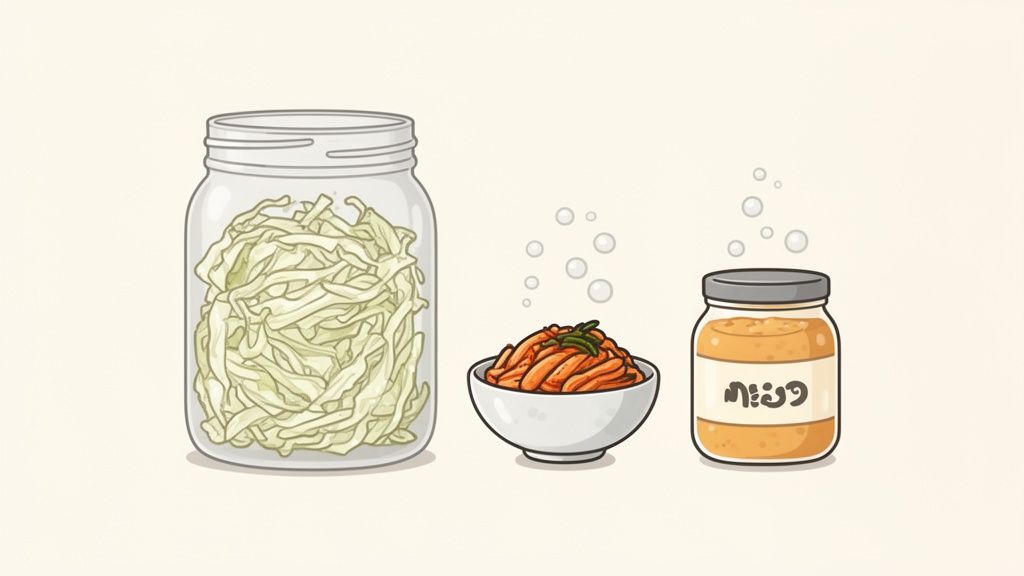
Consuming fermented foods helps rebalance the good bacteria in your gut. This can directly impact the signals your gut sends to your brain, helping to curb the intense desire for sugary treats. By strengthening your gut lining and improving digestion, these foods support overall metabolic health and make your transition to a sugar-free lifestyle much more sustainable. For a deeper dive into this connection, discover how probiotics can help you conquer sugar cravings.
Examples of Fructose-Free Fermented Foods
Adding these probiotic-rich foods to your meals can be simple and delicious.
- Sauerkraut: Fermented cabbage is a classic. Choose unpasteurized, refrigerated versions without added sugar.
- Kimchi: This spicy Korean staple is typically made from fermented cabbage and other vegetables.
- Miso: A fermented soybean paste that adds a rich, savory flavor to soups and dressings.
- Tempeh: A firm, fermented soybean cake that serves as an excellent high-protein, plant-based option.
- Kombucha: Be very selective. Many commercial brands are high in sugar, so look for those with 1-2 grams of sugar per serving.
How to Keep Your Fermented Foods Fructose-Free
The key is label awareness, as many commercial products contain hidden sugars to appeal to a wider audience.
- Read the Ingredient List: Always check for added "sugar," "cane juice," or "syrup." True fermented foods only need the vegetable, salt, and water.
- Start Small: If you're new to fermented foods, begin with one or two tablespoons per day to allow your digestive system to adjust.
- Make Your Own: Fermenting vegetables at home is cost-effective and gives you complete control over the ingredients. Cabbage for sauerkraut is a great starting point.
8. Herbs, Spices, and Natural Sweeteners (Flavor Without Fructose)
Herbs, spices, and specific natural sweeteners are essential tools for anyone transitioning to a zero-fructose lifestyle. These flavor enhancers add depth, variety, and satisfaction to your meals without containing any fructose or triggering the blood sugar spikes associated with sugar. They are critical for making your new way of eating enjoyable and sustainable, helping you overcome the flavor monotony that can often lead to sugar cravings.
Adding these ingredients to your pantry allows you to recreate your favorite flavors in a healthy way. By replacing sugar-laden sauces and seasonings with these natural alternatives, you maintain control over your fructose intake while still enjoying delicious, satisfying food. This makes them a vital part of any comprehensive zero fructose foods list.
Examples of Fructose-Free Flavor Enhancers
Focus on pure, unadulterated options to keep your diet completely fructose-free. These ingredients provide flavor and, in many cases, added health benefits:
- Herbs and Spices: Cinnamon, turmeric, ginger, garlic powder, onion powder, paprika, and oregano are all completely free of fructose and add immense flavor. Cinnamon, in particular, may help with blood sugar regulation.
- Stevia: A plant-derived, zero-calorie sweetener that does not impact blood sugar. It is intensely sweet, so a little goes a long way.
- Monk Fruit (Luo Han Guo): Another natural, zero-calorie sweetener derived from a small gourd. It provides a clean sweetness without the aftertaste some people associate with stevia.
- Erythritol: A sugar alcohol that is minimally absorbed by the body, resulting in virtually no impact on blood sugar or insulin levels. It has a taste very similar to sugar.
How to Keep Your Flavorings Fructose-Free
The key is to use pure ingredients and avoid pre-made blends that often contain hidden sugars. Reading labels is crucial for success.
- Avoid Seasoning Blends with Sugar: Many commercial spice blends, like taco seasoning or steak rubs, list "sugar" or "dextrose" as a primary ingredient. Create your own blends at home using individual spices.
- Choose Pure Sweeteners: When buying stevia, monk fruit, or erythritol, check the ingredient list. Some brands add fillers like maltodextrin or dextrose, which are not fructose-free. Look for products with only the sweetener listed.
- Start with Small Amounts: Natural sweeteners like stevia and monk fruit are far more concentrated than table sugar. Begin with a tiny amount and adjust to taste to avoid overwhelming your dish.
Zero-Fructose Foods: 8-Category Comparison
| Item | Implementation Complexity 🔄 | Resource Requirements ⚡ | Expected Outcomes ⭐📊 | Ideal Use Cases 💡 | Key Advantages ⭐ |
|---|---|---|---|---|---|
| Meat and Fish (Zero-Fructose Protein Sources) | Moderate 🔄🔄 — cooking and storage required | Higher cost; refrigeration and sourcing considerations | Stable blood sugar, strong satiety, muscle support ⭐⭐⭐📊 | Foundation protein for zero‑fructose diets; muscle building, meal base 💡 | Complete protein, nutrient‑dense, zero fructose ⭐ |
| Non-Starchy Vegetables (Nutrient-Dense, Low-Sugar Options) | Low 🔄 — simple prep (wash/chop) | Low cost; seasonal variation; frozen available | Improved digestion, low calories, minimal glycemic impact ⭐⭐📊 | Bulking meals, fiber and micronutrient boost, appetite control 💡 | High fiber, antioxidants, negligible fructose ⭐ |
| Nuts and Seeds (Natural Fats and Minimal Fructose) | Low 🔄 — ready-to-eat, portion control advised | Moderate cost; shelf‑stable; portable | Sustained energy and satiety; mindful portioning needed ⭐⭐📊 | On-the-go snacks, cognitive support, protein+fat pairing 💡 | Healthy fats, protein, portable, low fructose ⭐ |
| Healthy Fats and Oils (Ketogenic Foundation Foods) | Low 🔄 — select quality and match to cooking heat | Moderate cost per quality; high calorie density | Prolonged satiety, nutrient absorption, hormonal support ⭐⭐⭐📊 | Ketogenic or low-carb meals, dressings, cooking fats 💡 | Zero fructose; supports fat‑soluble vitamin uptake and hormones ⭐ |
| Dairy Products (Cheese and Full-Fat Options) | Low 🔄 — minimal prep; check labels | Variable cost; refrigeration; lactose sensitivity for some | Satiety, calcium and protein; probiotics if fermented ⭐⭐📊 | Comfort foods, calcium/protein source, fermented gut support 💡 | Complete protein, calcium, probiotic benefit (when fermented) ⭐ |
| Low-Glycemic Berries (Minimal Fructose Fruits) | Low 🔄 — ready-to-eat; portion control recommended | Seasonal and sometimes costly; fresh or frozen options | Sweet satisfaction with lower fructose; antioxidant benefits ⭐⭐📊 | Transition from high-sugar diets; dessert substitute with protein/fat 💡 | Lower-fructose fruit, high fiber-to-sugar ratio, antioxidant-rich ⭐ |
| Fermented Foods (Gut Health and Sugar Elimination Support) | Moderate 🔄🔄 — time and technique for home fermentation | Low cost homemade; store-bought vary (check for added sugar) | Improved gut microbiome, reduced cravings, better nutrient absorption ⭐⭐⭐📊 | Gut restoration, craving reduction, long‑term metabolic support 💡 | Probiotics, zero fructose when no sugars added, supports behavior change ⭐ |
| Herbs, Spices, and Natural Sweeteners (Flavor Without Fructose) | Low 🔄 — simple to add; dosage awareness | Low–moderate cost; concentrated amounts; brand quality varies | Improved palatability and adherence; may reduce relapse risk ⭐⭐📊 | Flavoring recipes, sugar substitutes, maintaining long-term compliance 💡 | Flavor variety without fructose; aids adherence and meal satisfaction ⭐ |
Putting Your Zero Fructose Plan Into Action
Navigating the world of nutrition can feel overwhelming, but your journey toward a low or zero-fructose lifestyle is now equipped with a clear roadmap. You've explored the foundational food groups, from zero-fructose protein sources like meat and fish to nutrient-rich, non-starchy vegetables. This comprehensive zero fructose foods list isn't just a collection of items; it's a powerful toolkit for reclaiming your metabolic health, stabilizing your energy levels, and building a sustainable, satisfying way of eating.
The core principle is simple: focus on what you can eat, not what you're eliminating. The sheer variety of delicious, fructose-free options means you're not depriving yourself. Instead, you're upgrading your nutrition with whole, unprocessed foods that fuel your body and mind effectively.
From List to Lifestyle: Your Actionable Next Steps
Making lasting change requires turning knowledge into consistent habits. Don't try to overhaul everything overnight. Instead, focus on small, manageable steps that build momentum and confidence.
1. The Kitchen Clean-Out and Restock: Your environment dictates your success. Start by dedicating one hour this week to auditing your pantry, refrigerator, and freezer. The goal is to identify and remove hidden sources of fructose.
- Read Labels: Look for high-fructose corn syrup, agave nectar, honey, fruit juice concentrate, and even "natural flavors" that can conceal sugar.
- Remove Temptation: Get rid of sugary condiments, sweetened yogurts, processed snacks, and sodas. You can't eat what isn't there.
- Strategic Restocking: Take your zero fructose foods list to the grocery store. Prioritize stocking up on versatile staples: eggs, chicken or fish, leafy greens, broccoli, avocados, olive oil, and a selection of nuts and seeds. A well-stocked kitchen is your best defense against impulse choices.
2. Master the Art of Meal Prep: Consistency is born from preparation. Planning ahead eliminates decision fatigue and ensures you always have a fructose-free option ready.
- Pick a "Prep Day": Choose a day, like Sunday afternoon, to prepare food for the next few days. This doesn't have to be complicated.
- Batch Cook Proteins: Grill several chicken breasts, hard-boil a dozen eggs, or bake a large piece of salmon.
- Wash and Chop Veggies: Prepare your non-starchy vegetables so they are ready to be steamed, roasted, or thrown into a salad. Store them in airtight containers for freshness.
- Portion Out Snacks: Create single-serving bags of almonds, walnuts, or pumpkin seeds. This makes grabbing a healthy snack as easy as reaching for a bag of chips.
3. Embrace Flavor Without Fructose: A common misconception is that a sugar-free diet is a bland one. This couldn't be further from the truth. Your new best friends are in the spice aisle.
- Herbs and Spices: Liberally use garlic powder, onion powder, smoked paprika, cumin, oregano, and cinnamon to add incredible depth to your meals.
- Healthy Fats for Flavor: Don't fear fat. Cooking with butter, ghee, or coconut oil and finishing dishes with a drizzle of high-quality olive oil adds richness and satisfaction.
- Acids for Brightness: A splash of apple cider vinegar or a squeeze of fresh lemon or lime juice can elevate the taste of vegetables and meats, making every bite more interesting.
The Bigger Picture: Beyond the Plate
Adopting a zero-fructose lifestyle is more than a dietary change; it's an investment in your long-term well-being. By consistently choosing from the zero fructose foods list, you're taking direct control over your energy, mood, and health. You are actively reducing inflammation, improving insulin sensitivity, and breaking free from the exhausting cycle of sugar cravings and crashes.
This journey empowers you to become an informed consumer, capable of seeing past misleading marketing and making choices that genuinely serve your body. Remember that progress, not perfection, is the goal. There will be challenges, but with your newfound knowledge and a kitchen stocked for success, you are fully prepared to meet them. Embrace this path as an act of self-care and get ready to experience the clarity and vitality that comes with nourishing your body, fructose-free.